Dubrovnik Bus Station: What Leaves From Gruž and How to Use It
Almost every bus journey in and out of Dubrovnik starts or ends at the Gruž station, next to the cruise and ferry port. Here is what the station actually does for you, how to reach the Old Town from it, and when a booked tour beats the bus entirely.
Short answer
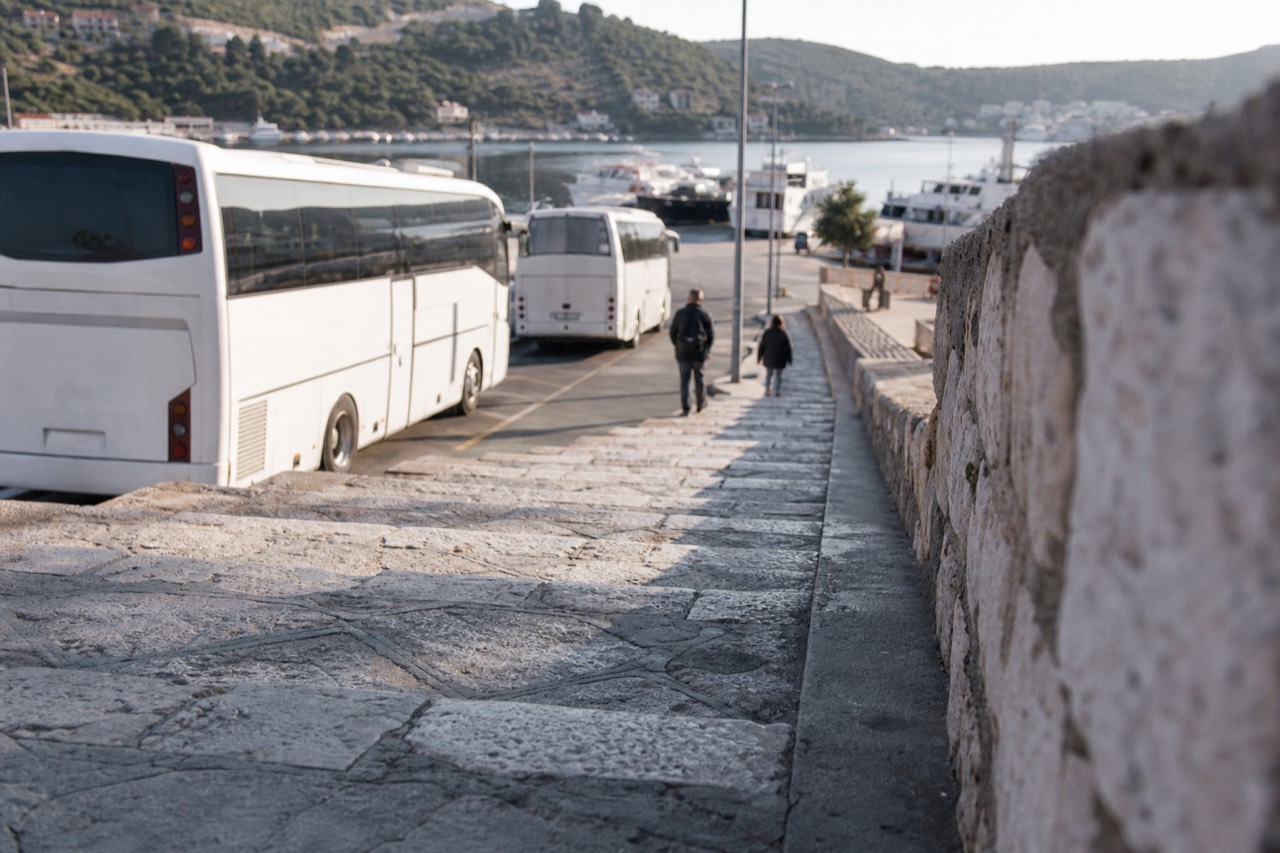
Dubrovnik's main bus station sits in Gruž, beside the cruise and ferry port, roughly a 29-minute walk from Hotel Komodor and a short local bus ride from Pile Gate at the Old Town. The adult City Walls ticket is 40 euro in main season, 1 March to 30 November, and the one-day Dubrovnik Pass costs the same 40 euro and adds ten more sights plus a 24-hour bus ticket.
Dubrovnik Bus Station: What Leaves From Gruž and How to Use It
Dubrovnik keeps its buses, its ferries and its cruise calls in one corner of the city. The main bus station sits in Gruž, the district around the cruise and ferry port on the northwestern side of town, and nearly every long-distance and local service touches it at some point. If you arrive by coach from Split or Mostar, you step off here. If you fly in and take the airport bus, this is where it terminates. And if you base yourself in Lapad, as many travellers do, the station is within an easy walk of the hotels along the bay.
I have watched hundreds of visitors do the same thing in the first ten minutes after arriving: look at the platform numbers, look at the sea, and realise the Old Town is nowhere in sight. It is not far, but it is not obvious either, and the answer changes depending on luggage, time of day and how much of the day you have left. This page walks through the station itself, the run into the Old Town, what to do once you are inside the walls, what food costs, and the day trips and tours that either start here or spare you the bus altogether.
Where Is the Dubrovnik Bus Station and What Leaves From It?
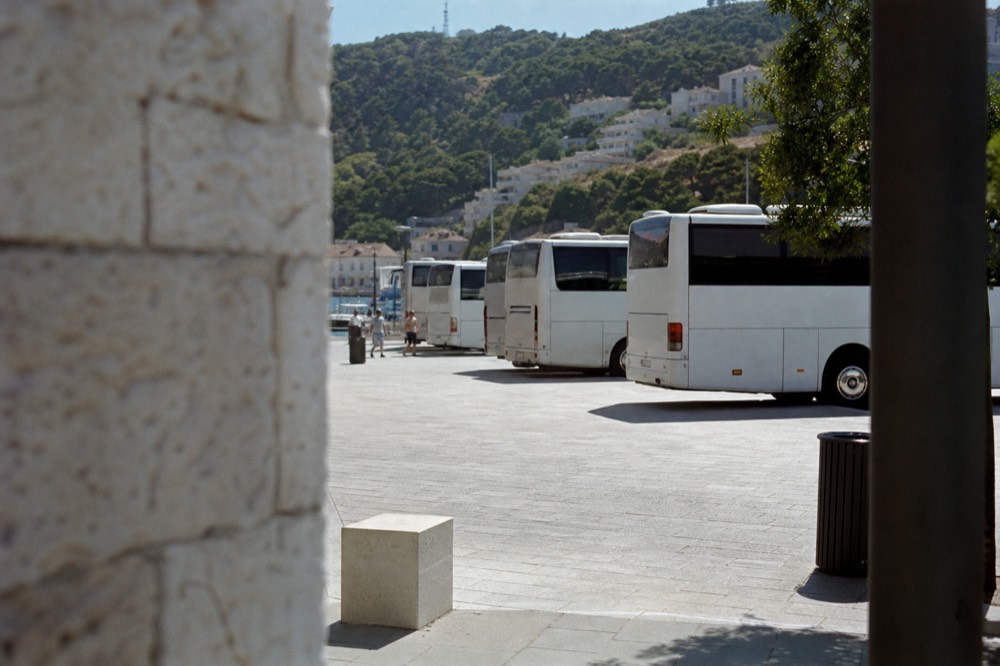
The main bus station is in Gruž, the port district northwest of the Old Town, sharing its stretch of waterfront with the cruise terminal and the ferry piers. Local city buses, regional coaches to Split and beyond, and the airport bus all serve it, and the ferry and cruise operations are a short walk away on the same waterfront. The station is not inside the walled city and never was; the Old Town has no coach access at all, so every long-distance passenger transfers to a local bus, a taxi or their own feet at Gruž.
The pairing of bus station and port is the single most useful thing to understand about the district. A traveller stepping off a coach from Split can be looking at a ferry to the Elaphiti Islands or a cruise check-in within minutes, without crossing the city twice. Hotel Komodor in Lapad sits about a 29-minute walk from the Gruž cruise and ferry port, which gives you a sense of the scale: Gruž, Lapad and the Old Town form a triangle you can cover by bus, taxi or a fairly flat walk along the shore.
What actually leaves from here falls into three groups. Local Libertas city buses run along the main corridor between Gruž, Lapad and Pile Gate at the edge of the Old Town, and the number 6 bus is the one Lapad hotel guests use rather than walking to Pile. Regional and international coaches connect Dubrovnik with Split, Mostar, Kotor and points beyond, and these are the services DIY day-trippers depend on. The airport bus terminates here too, which makes the station the natural first stop for anyone landing at Dubrovnik Airport, and the wider transport picture is covered in getting around Dubrovnik and the guide to Dubrovnik Airport.
How Do I Get to Dubrovnik Old Town From a Bus Station?
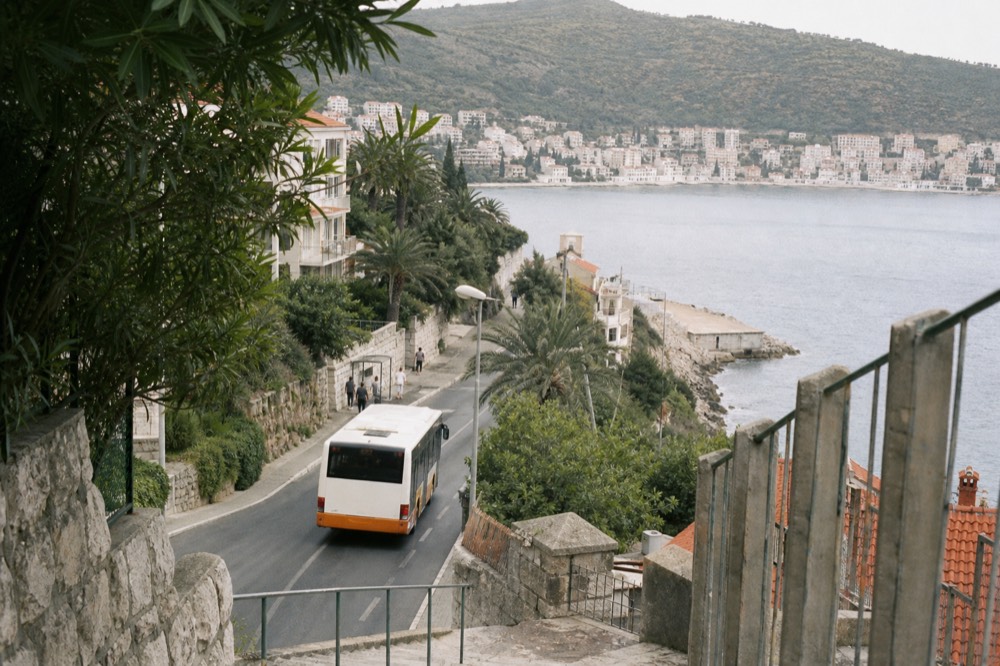
Take a local bus from the Gruž station toward Pile Gate, which sits directly outside the western entrance to the Old Town; the ride runs along the Lapad shoreline and finishes at the edge of the walled city. A taxi covers the same trip faster, and on foot it is a straightforward but warm walk of well over half an hour along the waterfront. The Old Town itself is fully pedestrianised, so whatever you choose, the last stretch is always on foot through Pile Gate or one of the other gates.
The Pile Gate side is the one most first-timers want. From Pile you step straight onto the Stradun, the 298-metre limestone main street whose final plan was fixed by the 1272 Statute, according to the Dubrovnik Tourist Board. Everything inside the walls, from the Rector's Palace to the Franciscan Monastery, sits within a few minutes' walk of that axis. If you are wondering which entrance suits your plans best, the guide to the best gate to enter the Old Town breaks down the options, including the quieter Ploče side.
Practical notes for the ride. Buy bus tickets before boarding if you can, because drivers sell them too but at a mark-up, and validate the ticket in the machine once aboard. Keep the ticket for the whole ride; inspectors do check. Luggage is your real decision point: with a suitcase, a taxi from the station rank to Pile saves you a crowded bus and a cobblestone slog, and the cost question is covered in detail in how much a taxi from the cruise port to the Old Town costs, since the port and the bus station share the same district.
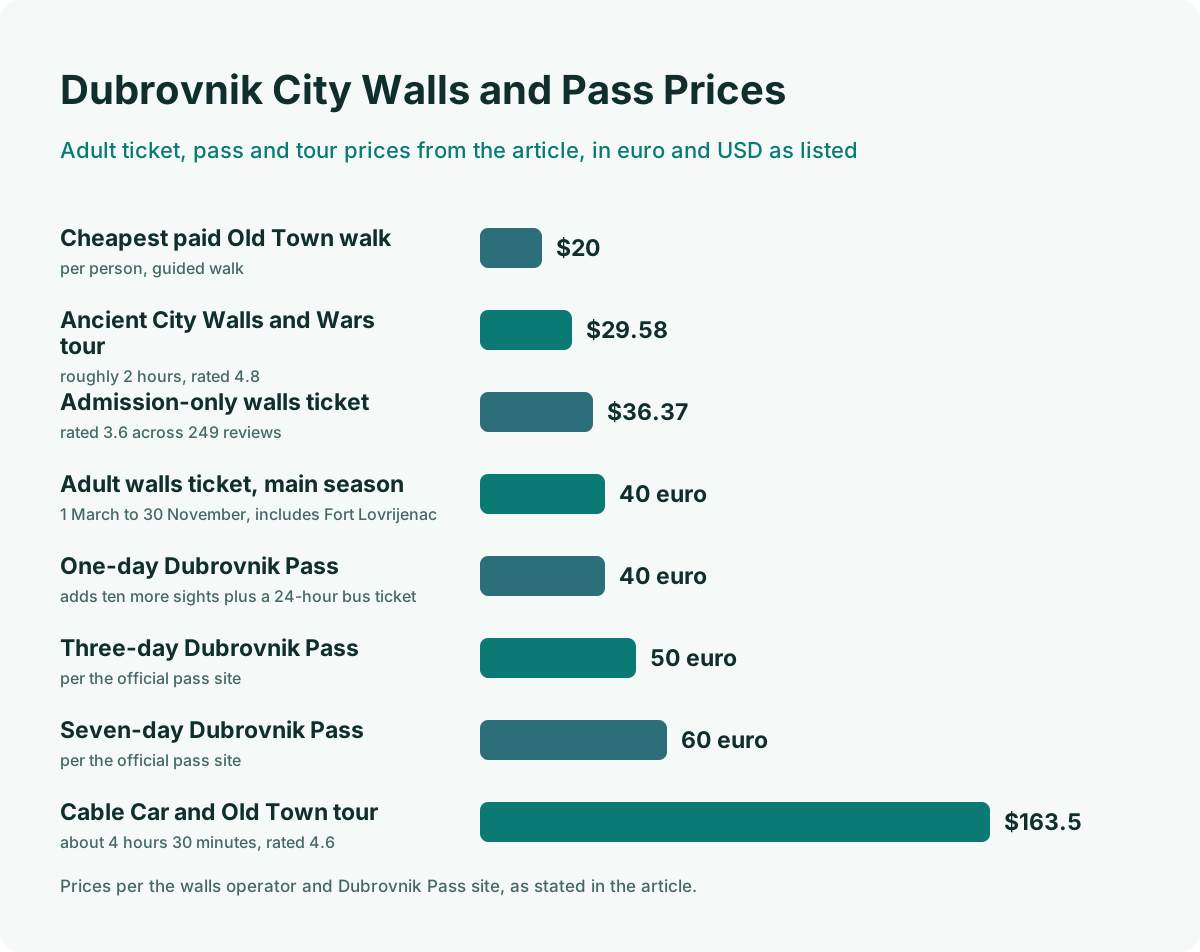
Once you are at Pile, resist the urge to plan the whole day on the spot. The first visit lands better with a guide who can put a thousand years of Ragusan history into ninety minutes, and the cheapest paid Old Town walk starts at $20 per person. The strongest version of that idea pairs the walk with the cable car: the Cable Car and Old Town Walking Tour runs about 4 hours 30 minutes, from $163.50 per person, rated 4.6 across 716 reviews, with the ride up Mount Srđ and a guided circuit of the city in one booking. Check availability if that shape appeals, and see the city's own Things to Do in Dubrovnik overview for the wider picture.
Is It Worth Doing the City Walls in Dubrovnik?
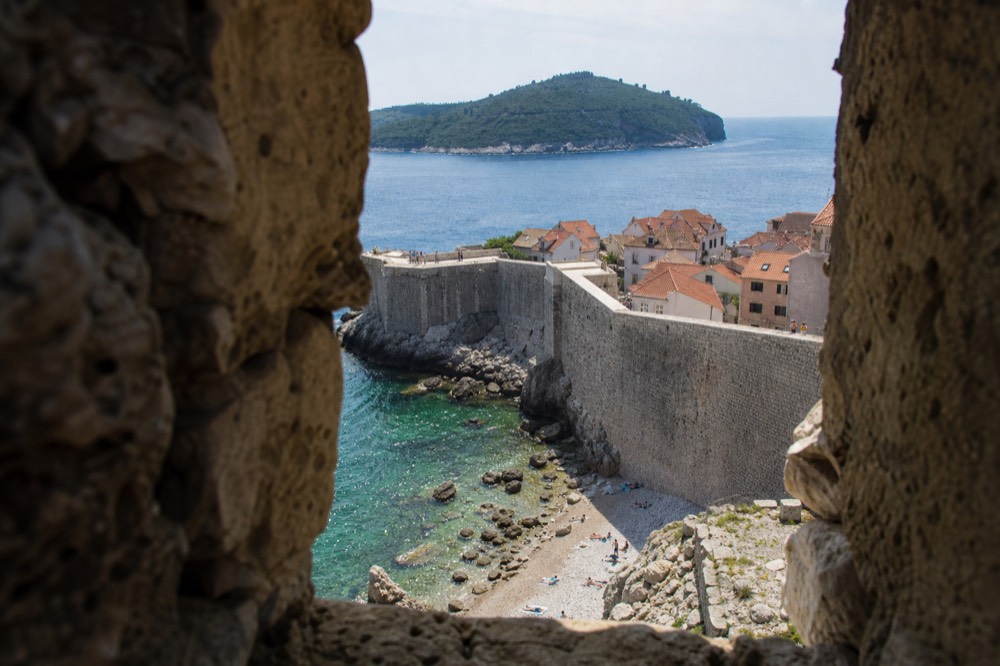
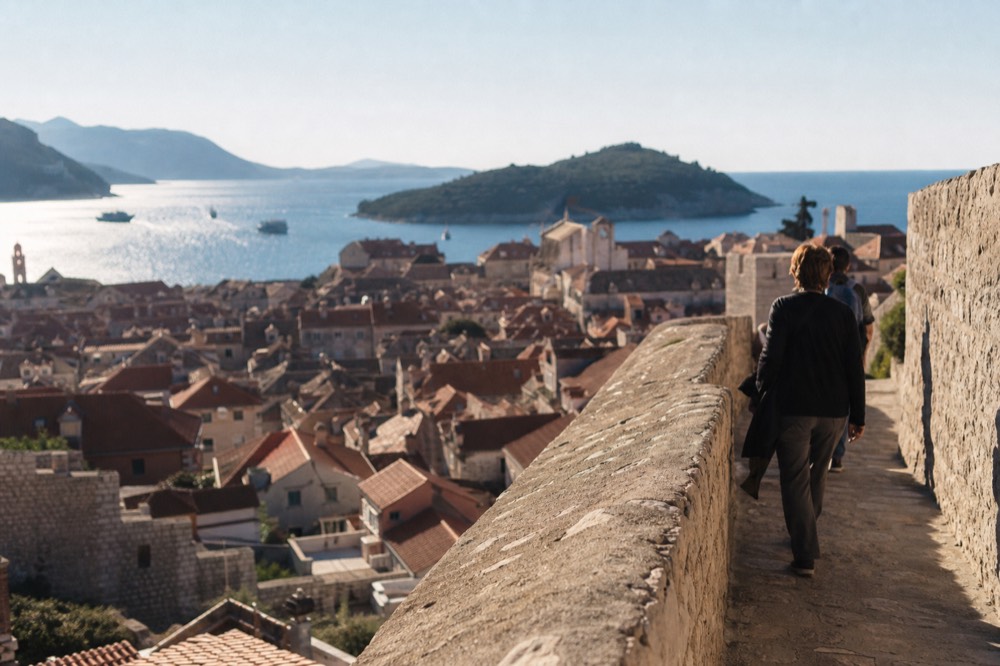
Yes, for almost every visitor the walls are the single best-paid sight in the city: a 1,940-metre circuit up to 25 metres high, wrapping the entire Old Town with unbroken views over rooftops, sea and fortresses. The adult ticket is 40 euro in main season, 1 March to 30 November, and 20 euro in December, and that 40-euro ticket already includes Fort Lovrijenac. The walls are the reason many people come to Dubrovnik at all, and they deliver.
The numbers behind the view come from the walls' own operator, the Society of Friends of Dubrovnik Antiquities, whose official site lists the full anatomy: 16 towers, 3 fortresses, 6 bastions, 2 corner fortifications, 3 bulwarks with rows of turrets, 3 moats, 2 flank fortresses, 1 breakwater and 2 drawbridges. The circuit reached its basic shape in the 13th century and was finished in 1660 with the Bastion of St Stephen. The main wall runs 4 to 6 metres thick on the land side and 1.5 to 3 metres on the sea side, which is why it has survived siege, earthquake and several million camera shutters.
The ticket structure rewards a little planning. There is no family ticket; the operator sells exactly two paid article types, adult and child 7 to 18, with under 6 free. The 40-euro adult ticket is the walls plus Lovrijenac combination, and it also covers the Western Outer Wall, closed December through February, and the Collection of Coins of the Republic of Ragusa on Gundulić Square. Lovrijenac bought on its own is 15 euro, and the fortress stands on a 37-metre-high sea rock, per the Dubrovnik Tourist Board's fortress page.
| Ticket | Main season (1 Mar to 30 Nov) | December |
|---|---|---|
| Adult, walls + Lovrijenac | 40 euro | 20 euro |
| Child 7 to 18 | 15 euro | 5 euro |
| Child 6 and under | free | free |
| Lovrijenac alone | 15 euro | 15 euro |
Timing matters more than ticketing. The operator's stated working hours at time of check were 08:00 to 19:30, and the crowd curve is brutal in the middle of the day: the official counting system's half-hourly read on 8 September 2026 showed 5,419 people in the Old Town at 08:00, a 7,739 peak at 10:00, and 7,205 still there at 11:00. Six counters at every Old Town entrance update a headcount every 15 minutes, and the official carrying capacity from the UNESCO assessment is 11,275 people. Walk the walls at opening or in the late afternoon and you share the parapet with a fraction of that crowd.
Can I Walk the Dubrovnik City Walls?
Yes, the walls are walked on foot only, in one direction, on a continuous stone circuit of 1,940 metres with steep stair sections and little shade, so wear real shoes and carry water. Most visitors complete the loop in about two hours, and the Ancient City Walls and Wars Walking Tour covers it with a guide in roughly 2 hours from $29.58 per person, rated 4.8 across 1,387 reviews. There is no train, no shortcut and no skip-the-line side door.
The circuit is genuinely physical. Stairs cluster near the towers, the stretch around Minčeta at the northwest corner is the steepest, and in July and August the midday stone radiates heat back at you. The operator's stated hours of 08:00 to 19:30 give you a wide window, but the smart play is the first hour after opening or the last two before close, when the light is better and the crowd curve has fallen from its 10:00 peak. A fuller treatment of the timing question lives in the best time of day to walk the walls.
Guided versus solo is a real choice. The admission-only ticket from $36.37 per person, rated 3.6 across 249 reviews, gets you on the parapet and nothing more, and the low rating mostly reflects ticketing friction rather than the stones themselves. A guided walk adds the stories: the wars, the sieges, the Republic that built all of this. The Ancient City Walls and Wars tour is the pure two-hour version, while the Cable Car, Walking Tour and City Walls Combo bundles the ride up Mount Srđ, the Old Town walk and the walls circuit into one 4-hour-30-minute package from $90.66 per person, rated 4.6 across 360 reviews, which suits anyone who wants the whole Dubrovnik highlight reel in a single day.
If you are weighing the walls against the Dubrovnik Pass, the arithmetic is clean. The one-day pass costs 40 euro, the same as the standalone walls ticket in main season, 1 March to 30 November, and adds ten more sights plus a 24-hour bus ticket; the three-day pass is 50 euro and the seven-day 60 euro, per the official pass site. In December the walls ticket drops to 20 euro and no pass tier is on sale at all, so the equivalence is a main-season claim only.
| Pass | Price | Sights | Transport |
|---|---|---|---|
| 1 day | 40 euro | Walls + Lovrijenac + ten more | 24h bus ticket |
| 3 days | 50 euro | Same, plus House Bukovac in Cavtat | 72h bus ticket + suburban coupons |
| 7 days | 60 euro | Same, plus House Bukovac in Cavtat | 168h bus ticket + suburban coupons |
Is It Expensive to Eat Out in Dubrovnik?
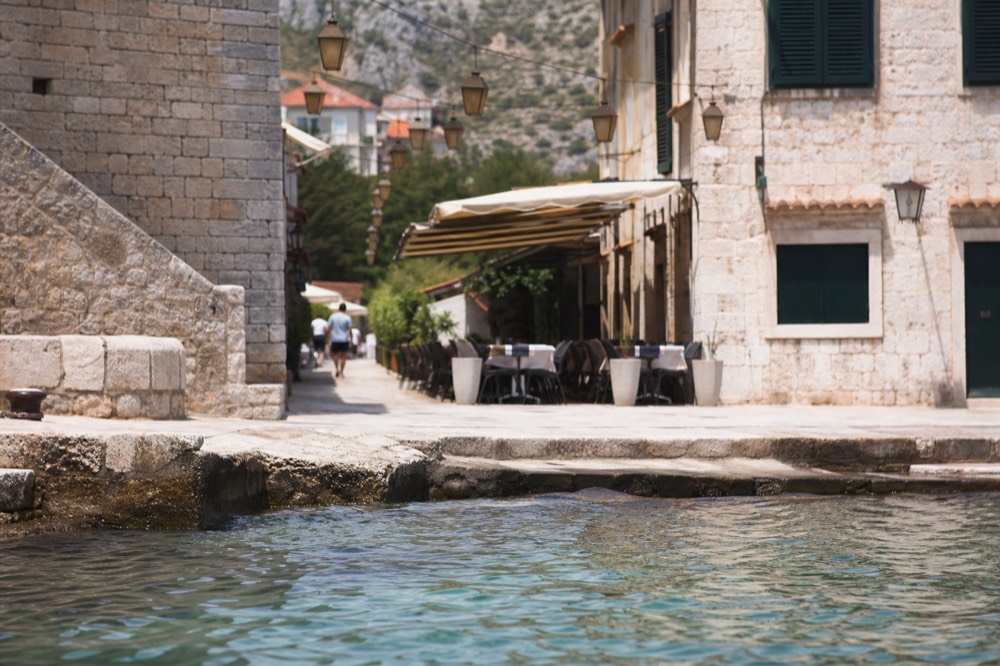
Yes, by Croatian standards Dubrovnik is the country's priciest table, and inside the Old Town a main course at a mid-range restaurant commonly runs well above what the same plate costs an hour up the coast. Eating well for less is entirely possible, but it means moving off the Stradun, leaning on konoba-style places, and treating the walled city's prime squares as somewhere to look at rather than lunch in. The premium you pay inside the walls is rent, not necessarily skill.
The honest framing is that Dubrovnik shares first place among Croatian destinations for overnight stays, about 4.2 million nights in 2025 according to the Croatian Bureau of Statistics, and demand of that scale prices the prime tables accordingly. Where locals and long-stay visitors actually eat, and how to find those rooms, is covered in where locals eat in Dubrovnik and hidden-gem restaurants in Dubrovnik. The short version: follow the side alleys off the Stradun, look for short menus, and expect the best value in Gruž and Lapad, conveniently close to the bus station.
Budgeting helps. A sit-down dinner inside the walls is a different spend from a bakery breakfast or a slice of pizza near the gates, and the per-day planning numbers are laid out in how much money you need per day in Dubrovnik. Tipping customs and whether cards are accepted everywhere are their own small questions, answered in do you tip waiters in Dubrovnik and whether Dubrovnik is cash-only.
One way to turn eating into the activity itself is a guided food walk. The Dubrovnik Food and Drink Walking Tour with a Local Guide runs about 3 hours from $165.64 per person and carries a perfect 5 across 704 reviews, with tastings and wines at every stop. A reviewer's verdict:
| Eating style | Where | What to expect |
|---|---|---|
| Bakery or street snack | Old Town gates, Gruž | Cheapest calories in the city, ideal before a walls walk |
| Konoba classics | Side alleys, Lapad, Gruž | Grilled fish and peka done properly, at fair local prices |
| Stradun terrace | Old Town main street | The view premium, worth it once for the sunset |
| Guided food walk | City-wide, 3 hours | From $165.64 per person, tastings and wine at every stop |
What Day Trips Leave From the Dubrovnik Bus Station?
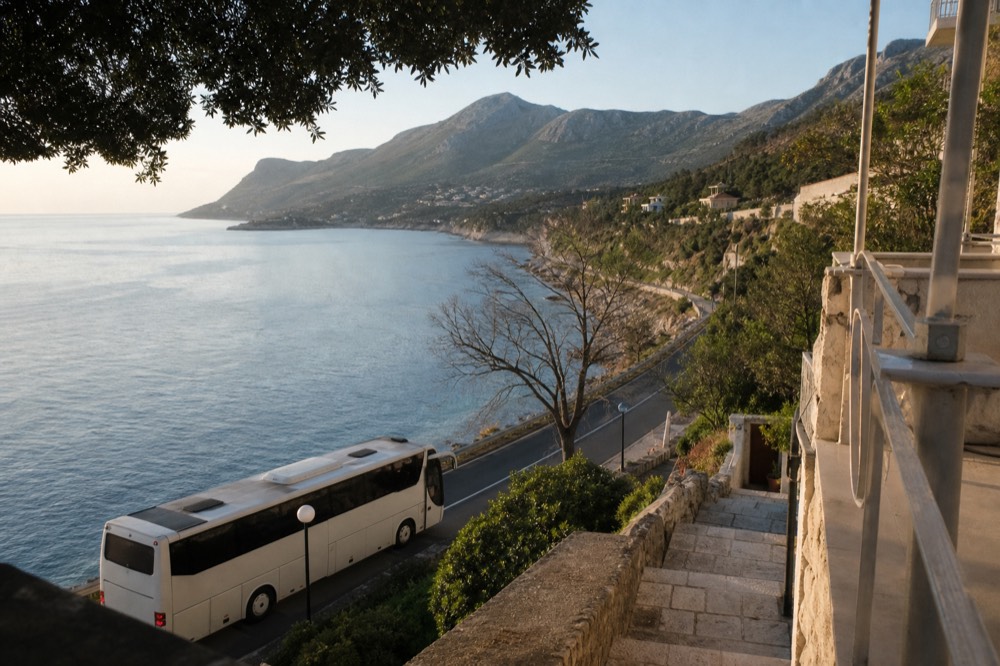
The Gruž station is the departure point for the classic DIY day trips: coaches to Mostar and Kravica in Bosnia and Herzegovina, to Kotor and the Bay of Kotor in Montenegro, to Ston and the Pelješac peninsula, and the long run north to Split. Each of these crosses an international border or takes the better part of a day, which is exactly why the guided versions, with border logistics handled, sell so well. The station is where the map of the region opens up.
Mostar is the big one. The border crossing, the change of currency, and the temptation to squeeze Kravica waterfall into the same day make the coach-plus-improvisation approach risky for a single day, and the guided Mostar and Kravica Waterfalls Day Tour from $53.19 per person, rated 4.8 across 1,254 reviews, removes all of it. A budget alternative runs from $35 per person, rated 4.6 across 10,019 reviews. A reviewer's summary of the day:
A long day and an early start, but well worth it. The tour guide Tina was excellent, keeping us well informed throughout the process. Bring euros! Mostar and the waterfalls are a must to see.
John_B
Montenegro is the other border run, with Kotor's fjord-like bay as the prize. The guided day trip runs from $58 per person, rated 4.4 across 5,611 reviews, and a semi-private version with an optional boat trip runs 11 to 12 hours from $70.99 per person. One guest on that trip noted the September border crossing took only 15 minutes, which is the variable that makes or breaks this route; in July the same crossing can eat an hour. The planning detail is in the guide to a Kotor day trip and whether the Montenegro day trip is worth it.
Domestic trips use the station too, but the islands mostly do not. The Elaphiti islands run on ferries and excursion boats from the port right beside the bus station, which is why the Gruž district works so well as a base: the full-day Elaphite islands cruise with lunch leaves from the waterfront, from $59.16 per person, rated 4.9 across 10,312 reviews. Ston and Korčula day trips, with oysters and wine, leave by road and can be done by coach, though the guided version from $81.69 per person bundles the tastings.
| Day trip | Guided price from | Rating | Border |
|---|---|---|---|
| Mostar and Kravica | $35 | 4.6 across 10,019 reviews | Bosnia and Herzegovina |
| Mostar and Kravica, small group | $53.19 | 4.8 across 1,254 reviews | Bosnia and Herzegovina |
| Montenegro day trip | $58 | 4.4 across 5,611 reviews | Montenegro |
| Montenegro, optional boat | $70.99 | 4.4 across 3,829 reviews | Montenegro |
| Ston and Korčula with wine | $81.69 | 3.8 across 131 reviews | None |
Should You Book a Tour Instead of the Bus?
For the border-crossing day trips, yes: a booked tour handles the crossing, the timing and the parking, and on a one-day visit that margin is the difference between seeing Mostar and standing in a queue at it. For the Old Town, the walls and the islands, the bus and ferry infrastructure works well enough that a tour is about depth, not necessity. The honest split is logistics on one side and storytelling on the other.
Think about what your day actually costs in hours. A DIY Mostar trip means a coach from Gruž, a border queue you cannot predict, and arrival in a town you must then decode alone. The guided version costs from $35 per person and hands you a guide who has done the crossing a thousand times. Inside Dubrovnik the calculus flips: the local bus to Pile is cheap and frequent, the walls ticket is bought at the gate, and the only thing a tour adds is the layer of history that turns stones into a story. That layer is what the Old Town walks, from $20 per person, actually sell.
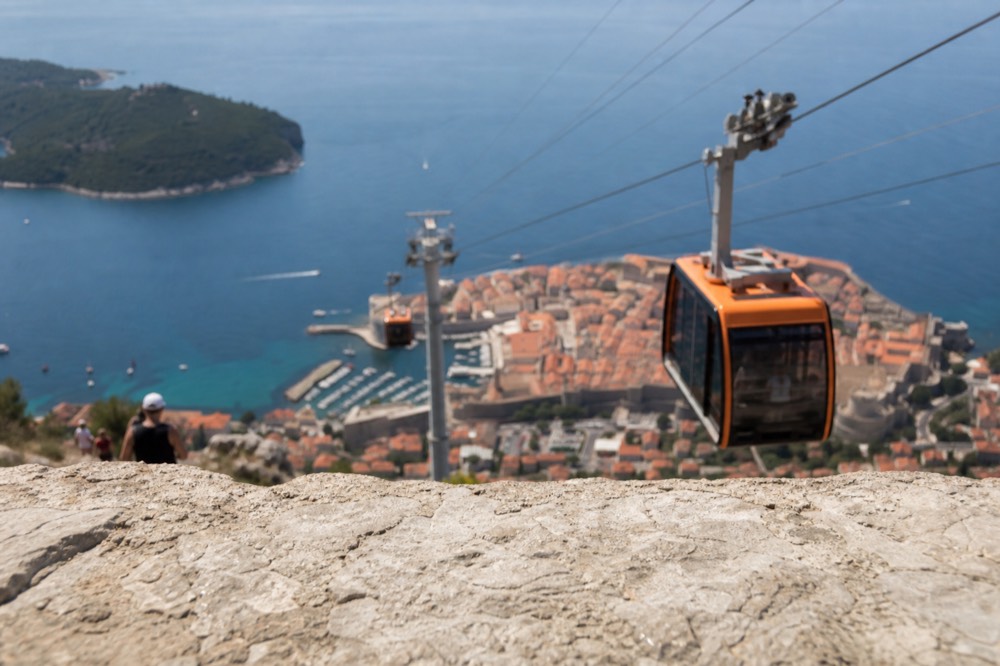
The cable car deserves its own sentence in this comparison, because it is the one attraction that pairs naturally with both approaches. The 2026 prices are 30 euro adult round trip, 17 euro one way, 8 euro round trip for a child 4 to 12 and free under 4, per the operator's price page. The ride covers 778.2 metres of track in 3 minutes 30 seconds, rising 367.0 metres to the upper terminal at 405.0 metres above sea level, and the operator claims a view range of up to 60 km on a clear day. You can buy that at the lower station, or take the Cable Car and Old Town Walking Tour from $163.50 per person and have the whole morning organised for you.
| Cable car ticket | 2026 price |
|---|---|
| Adult round trip | 30 euro |
| Adult one way | 17 euro |
| Child 4 to 12, round trip | 8 euro |
| Child 4 to 12, one way | 5 euro |
| Under 4 | free |
Timing around the crowds is the last piece. Cruise passengers peaked in September at 101,246 and October at 100,132 in 2025, above July's 96,072 and August's 87,385, according to the Port Authority's own statistics, and 461 cruise calls are scheduled for 2026. The Port Authority limits cruise passengers to 8,000 a day in most cases, per its crowd-management page. What that means for the bus station is simple: on the heaviest days, the local buses fill with excursion traffic by mid-morning, so do your Pile-to-Gruž or Old Town movement early or late.
Common Questions About the Dubrovnik Bus Station
How do I get to Dubrovnik Old Town from a bus station?
Take a local bus from the Gruž station toward Pile Gate, which stops directly outside the western entrance to the Old Town. A taxi from the station rank covers the same trip faster and is the better choice with luggage, since the Old Town is fully pedestrianised and the last stretch is always on foot.
Is it worth doing the city walls in Dubrovnik?
Yes. The 1,940-metre circuit is the city's defining experience, with the adult ticket at 40 euro in main season, 1 March to 30 November, and 20 euro in December. That ticket already includes Fort Lovrijenac, the Western Outer Wall and the coin collection, so there is nothing extra you need to buy.
Can I walk the Dubrovnik City Walls?
Yes, and on foot is the only way. The circuit is one-directional, about two hours for most visitors, with steep stairs near the towers and little shade. The operator's stated working hours at time of check were 08:00 to 19:30, and the first hour after opening is the calmest.
Is it expensive to eat out in Dubrovnik?
Yes, by Croatian standards it is the priciest table in the country, especially inside the Old Town where you pay a location premium on the Stradun. Moving your meals to konoba restaurants in the side alleys, Gruž and Lapad brings prices back toward normal without sacrificing quality.
Where is the Dubrovnik bus station?
The main bus station is in Gruž, the port district northwest of the Old Town, sharing its waterfront with the cruise terminal and the ferry piers. Regional coaches, the airport bus and local city buses all serve it.