Is Dubrovnik Cash Only?
No, Dubrovnik is not cash only. Here is how cards, cash and prices actually work in the city, plus what not to do, when to avoid the crowds and whether the beaches are any good.
Is Dubrovnik Cash Only?
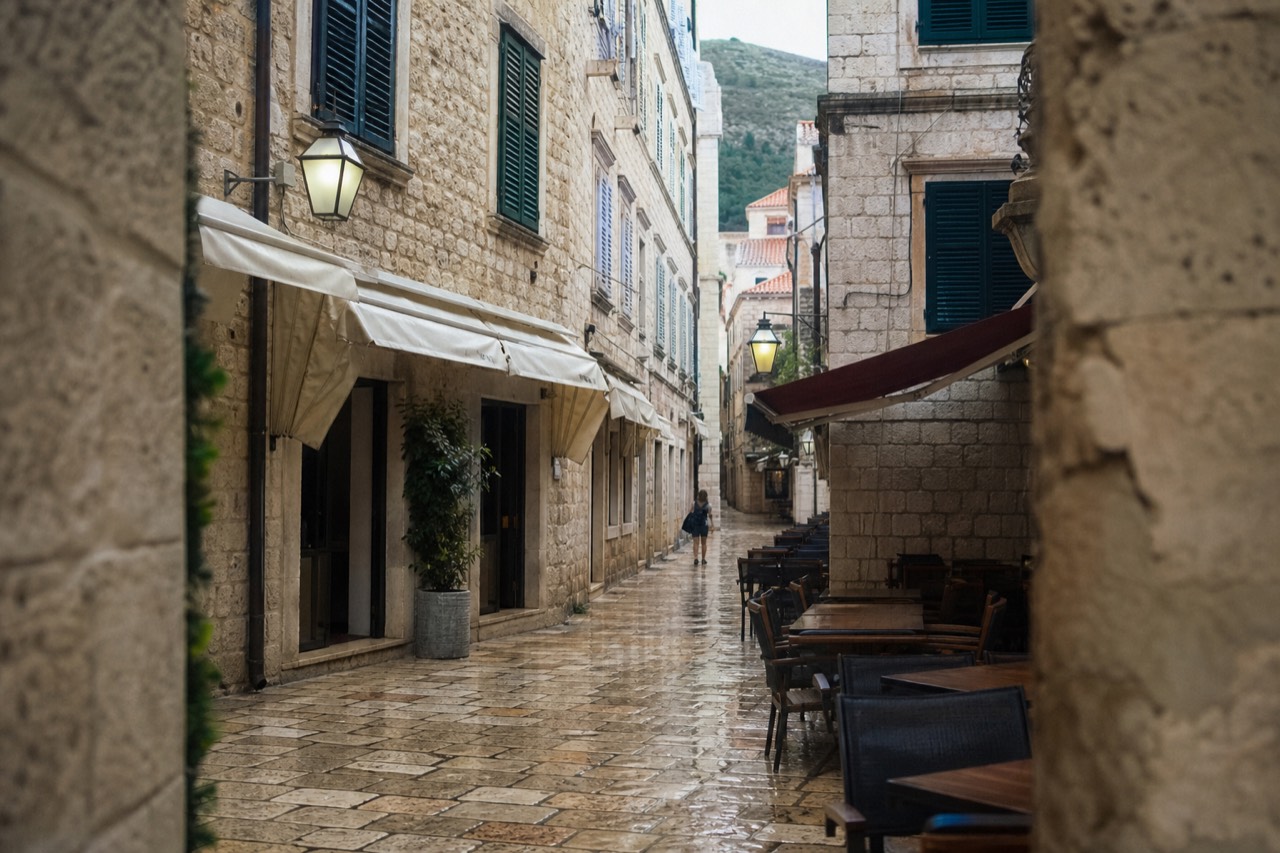
No, Dubrovnik is not cash only. Card payment is a normal, expected part of daily life in the city, and the vast majority of restaurants, shops, ticket desks and tour operators take cards without a second glance. Cash still matters in a few specific corners, mostly small bars, market stalls and the odd family-run konoba, so carrying some euro notes is sensible rather than essential.
I get this question from visitors almost every week, and the honest answer has two layers. The first layer is simple: you can pay by card for nearly everything a typical visitor buys in Dubrovnik. Museum and attraction ticketing has moved decisively to card and online sales, restaurants in and around the Old Town expect cards, and the major operators selling city walls tickets and the Dubrovnik Pass run their own webshops where you pay before you even arrive. The walls operator's own shop, for instance, sells the adult walls and Lovrijenac combination ticket at 40 euro in main season, 1 March to 30 November, and 20 euro in December, entirely online.
The second layer is where the question really comes from. Visitors hear "Croatia is expensive" and "Croatia is cash oriented" in the same breath, often from guides written years apart, and the two blur together. The expense part has some truth to it, and I cover the real numbers below. The cash-only part is essentially outdated. What remains is a short list of genuinely cash-friendly moments: a drink at a cliffside bar with no card terminal in reach, a handful of stalls at the Gruž market, tipping in cash because you prefer it that way, and small vendors at beaches and viewpoints who keep things simple.
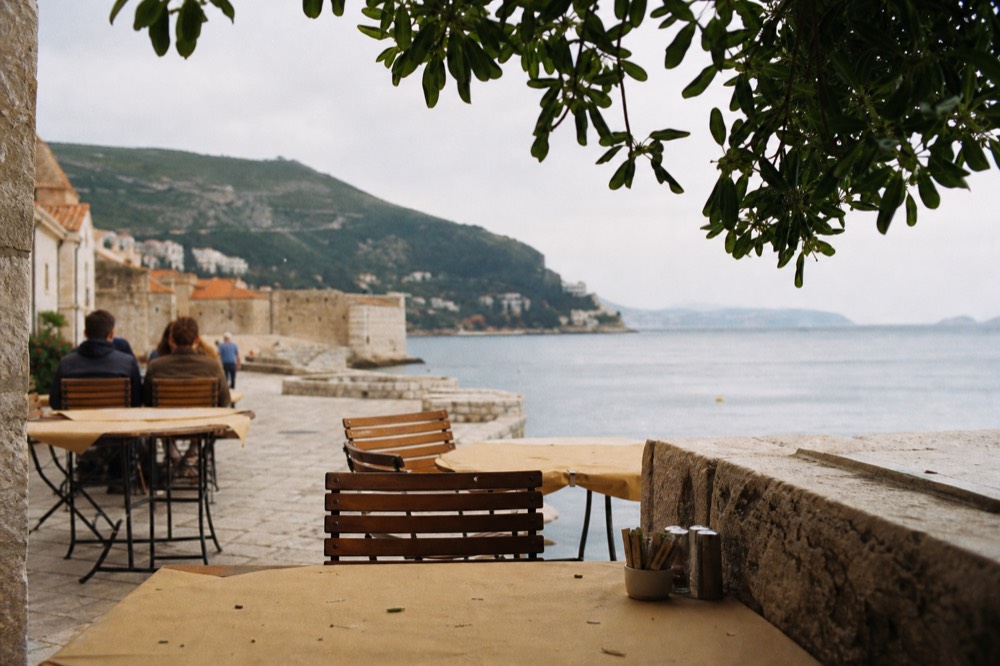
For planning purposes, treat cash as a comfort rather than a requirement. A modest amount of euro notes covers the cash corners, and a card covers everything else, including the big-ticket items. If you want a full breakdown of the currency itself, the guide to currency in Dubrovnik goes deeper than I do here, and the Dubrovnik trip cost guide puts real daily budgets against the prices you will actually face.
One more practical point that surprises people: contactless payment is normal at the till, and small purchases that would once have sent a waiter hunting for change are now tapped and done. The friction you may remember from older trips to the Adriatic coast has largely gone. What has not gone is the price level, which is a different question entirely, and one worth answering with real figures rather than folklore.
There is also a timing angle to the cash question that nobody plans for. The cash corners of Dubrovnik, the cliff bar, the beach kiosk, the market stall, are exactly the places you reach at the end of a long hot morning, when walking back uphill to find an ATM is the last thing you want to do. The ATMs inside the Old Town exist, but they tend to sit on the busiest streets and some charge poor exchange rates on card withdrawals, so the smart move is to withdraw once, at a bank machine near your accommodation or at the start of the day, and carry only what you expect to spend on small things. Visitors who plan their cash this way rarely think about money again for the rest of the trip, which is the goal.
A walking tour on your first morning is, honestly, one of the better money decisions you can make here, because a local guide points out the difference between the streets worth your time and the ones built to separate you from it. The Old Town Walking Tour with Local Guide runs from $20 per person and is rated 4.8 across 5,826 reviews, which makes it one of the best-value paid introductions to the city on the roster. Check availability alongside the full Old Town walk overview.
Is Buza Bar Dubrovnik Cash Only?
Buza Bar, the famous cliffside drinking spot outside the walls on the south side, has a long-standing reputation as a cash venue, and that reputation exists for good reason. The setting is a hole in the wall, a ladder of stone steps and a terrace over the sea, not a card-terminal kind of place. Bring euro notes if you want a drink here, and treat the walk down as part of what you are paying for.
This is the single most common "wait, is this place cash only?" moment in Dubrovnik, so it deserves its own answer rather than a vague clause. The bar's appeal is precisely its awkwardness: you leave the walled city through a small doorway in the fortifications, descend to a rocky ledge above the Adriatic, and drink with the sea directly below. Businesses like that do not always run modern tills, and visitors who arrive with nothing but a card have historically been turned away or left sheepish. The safe planning assumption is cash, and the guide to Buza Bar covers the practicalities of finding the doorway in the first place, which is half the adventure.
The wider lesson is that Dubrovnik's cash corners cluster where infrastructure is thin: cliff bars, beach kiosks, market stalls, and small family businesses where the owner is also the waiter. None of these will ruin a day if you miss them, but a pocket of small notes means you never have to choose between a swim and a cold drink. I usually suggest people keep a modest float of cash separate from their main wallet for exactly these moments, so it does not quietly disappear into restaurant meals.
It is worth being precise about why this matters psychologically. Most of your day in Dubrovnik will feel like any modern European city: you tap, you go, you forget about payment entirely. Then you climb down to a ledge over the sea, order a beer, and discover the one till in the city that wants paper. That contrast is exactly why the cash-only rumour survives, even though the bar is an exception rather than the rule. One awkward moment gets retold far more often than a hundred smooth card payments, and over a few seasons the exception hardens into a myth about the whole destination.
While we are on the subject of spending well, a guided walk is the cheapest way to learn where the city's money traps sit. The Old Town Walking Tour with Local Guide, from $20 per person and rated 4.8 across 5,826 reviews, is the natural pick, and free cancellation on the live listing means you can lock in a morning before your travel plans are final.
A review from Sophie sums up what a first-day walk does for the rest of your budget: "Alex was a fantastic guide, she explained the complex history of Dubrovnik to give a lasting impression of the history of the area. Really appreciated that she aimed for shaded areas on a boiling September day. The food recommendations for after were much appreciated too! Great tour for a first experience of the old town!" Those food recommendations are worth real money in a city where the wrong restaurant row can cost you double.
What Not to Do in Dubrovnik?
Do not arrive in peak season without bookings, do not buy a walls ticket you have not thought through, do not eat on the main drag at prime time, and do not assume every price you remember from a Croatia trip five years ago still holds. The avoidable mistakes here are almost all timing and ticketing mistakes, not safety ones. Dubrovnik is safe, walkable and forgiving, but it punishes improvisation in July.
The ticketing mistake is the one I see most often, so let us put real numbers on it. The adult city walls ticket is 40 euro in main season, 1 March to 30 November, and that price is the walls plus Fort Lovrijenac combination, with Lovrijenac alone at 15 euro if bought separately, per the walls operator's own site. The one-day Dubrovnik Pass also costs 40 euro in main season and adds ten more sights plus a 24-hour bus ticket, which makes the standalone walls ticket a poor buy for anyone visiting even two museums. That 40-euro equivalence is a main-season claim only: in December the walls ticket drops to 20 euro and no winter pass tier is on sale at all.
| Item | Main season (1 Mar to 30 Nov) | December |
|---|---|---|
| City Walls adult ticket (includes Lovrijenac) | 40 euro | 20 euro |
| City Walls child 7 to 18 | 15 euro | 5 euro |
| Dubrovnik Pass, one day | 40 euro | not on sale |
| Lokrum ticket (entry plus return boat) | 30 euro | 30 euro |
| Cable car adult round trip | 30 euro | closed January to March |
The eating mistake is simpler: the Stradun and the streets immediately off it carry the highest rents in the city, and the prices follow. Walk ten minutes, uphill or away from the water, and the same meal costs meaningfully less. The guide to cheap eats and the konoba guide map this out properly. The timing mistake I will come to next, because it deserves its own section.
One mistake that is purely financial: assuming you must pay a guide to see anything. You do not. Three pay-what-you-want walks run on GuruWalk, including a 1 hour 45 minute Old City walk rated 4.87 across 2,242 reviews, and they cost nothing except what you choose to give at the end. Between those, the $20 paid walk and the free things to do guide, a budget visit is entirely realistic.
A few smaller mistakes deserve a mention because they cost people money every single week. Do not buy water in single bottles inside the walls all day; the tap water in Dubrovnik is drinkable, and a refillable bottle pays for itself in two days. Do not take a taxi from the cruise port or the airport without agreeing the fare or confirming the meter, and check the taxis and Uber guide first, because the airport bus is a fraction of the price for most travellers. Do not change money at exchange offices advertising zero commission without checking the actual rate they post, because the rate, not the commission line, is where these offices make their margin. And do not plan a day around a single restaurant without a reservation in peak season, because the tables with a view go first and the walk-in options are the ones nobody booked.
When to Avoid Dubrovnik?
Avoid Dubrovnik in the peak cruise weeks of September and early October if crowd density is your main concern. Cruise passengers in 2025 peaked in September at 101,246 and October at 100,132, both above July's 96,072 and August's 87,385, so the conventional instinct to dodge July and August misses the actual busiest months. Midsummer heat is its own argument, but the crowds peak after the heat does.
This is the fact I end up explaining most often, because it runs against everything people assume. The Port Authority's own statistics show the September and October cruise numbers clearly ahead of July and August. The city counted 625,257 cruise passengers across 2025, up from 582,499 in 2024, and 461 cruise calls are scheduled for 2026. The Port Authority limits cruise passengers to 8,000 a day in most cases, and the official carrying capacity of the Old Town, from the UNESCO carrying-capacity assessment, is 11,275 people, tracked by six counters at the entrances updating every 15 minutes.
| Month, 2025 | Cruise passengers |
|---|---|
| July | 96,072 |
| August | 87,385 |
| September | 101,246 |
| October | 100,132 |
If you want the practical translation: cruise passengers are ship capacity, not people who actually walk ashore, so these figures describe the pressure on the schedule rather than a headcount in the Stradun. Still, the pattern holds. A September morning can feel busier than a July one, and the half-hourly counts bear that out: on one early September day the Old Town read 5,419 people at 08:00, peaked at 7,739 at 10:00, and still held 7,205 at 11:00. Going early works; going at 11:00 does not.
So when should you come? Late spring and October after the cruise peak, or winter if you want the walls nearly to yourself, accepting that the cable car closes January to March and the Western Outer Wall closes December through February. The best time to visit guide works through the whole calendar, and the national statistics release confirms the 4.2 million nights figure if you want the source.
The heat question deserves a straight answer too, because "avoid" can mean crowds or it can mean temperature, and they do not peak together. July and August are the hottest months, and the walls walk in particular is exposed stone with almost no shade, which is why so many people abandon half the circuit in the middle of the day. September is cooler and the sea is at its most swimmable, but it carries the heaviest cruise schedule of the year. October after the peak gives you the calmest combination of bearable heat, thin crowds and sea temperatures still around 21 degrees. If your dates are fixed in the middle of the busiest weeks, the answer is not to avoid the city but to avoid the middle of the day: walk the walls at opening, spend the afternoon on the water or at a beach, and come back to the Old Town in the evening when the day-trippers have gone.
Is Dubrovnik Good for Beaches?
Yes, but not in the postcard-sand sense most people picture. Dubrovnik's beaches are mostly stone shelves, pebble coves and concrete platforms built for swimming rather than sunbathing, and the water is exceptionally clear. If your definition of a good beach is warm, swimmable, beautiful water within walking distance of a historic city, Dubrovnik is very good indeed.
The water is the headline. The September average for this coast is about 23.6 degrees, a long-run average for 1991 to 2020 from the NOAA OISST dataset, not this year's beach reading, and sheltered bays run warmer: the Croatian met service's Dubrovnik buoy read 27.0 to 27.4 degrees on 8 September 2026 against that 23.6 September mean. August averages 25.8, July 24.9, June 22.5. The swimming season is genuinely long here, and the swimming season guide maps it month by month.
| Month | Average sea temperature |
|---|---|
| June | 22.5 degrees |
| July | 24.9 degrees |
| August | 25.8 degrees |
| September | 23.6 degrees |
| October | 21.0 degrees |
The beaches themselves: Banje sits closest to the Old Town with the walls behind you and Lokrum in front, Sveti Jakov is the small cove under a monastery that everyone photographs, and the Lapad bay beaches give you the most sand-like experience plus cafés and shade. Copacabana on the Lapad peninsula is the family-friendly pick. All of them are reachable by city bus, which matters when the August heat makes the walk back up from the Old Town feel like a penalty. The beaches guide compares them properly, and the Lapad beach guide covers the best swimming base if you would rather stay outside the walls.
Two practical notes that connect back to the money question. Beach shoes are worth the small purchase, because the pebbles at Sveti Jakov and the stone shelves elsewhere are genuinely hard on bare feet, and a cheap pair from a market stall is exactly the kind of cash purchase this article keeps mentioning. And the beach kiosks, the ones selling cold drinks, ice cream and rented loungers, are the second classic cash corner after the cliff bars, so the float of notes you keep for one will serve the other.
If you would rather see the coastline from the water than lie beside it, the kayaking guide covers the cave and island paddles, and a half-day on the water costs about the same as a beach day with rented loungers. Whichever way you spend the afternoon, the cash advice from the top of this article still applies: the beach kiosks and the cliff bars are the two places a card will let you down, so keep the small notes for exactly that.
Between the beaches, the walls and the viewpoints, the city sprawls across more vertical metres than its 24.7-hectare UNESCO core suggests, and the Hop-On Hop-Off Yellow Bus Tour with Audio Guide, from $35.46 per person and rated 4.9 across 1,147 reviews, connects the Old Town, the viewpoints and the Lapad beach zone without the uphill walking. For a fuller comparison of ways to see the city, the what to do besides Old Town guide and the wider Things to Do in Dubrovnik collection cover the rest of the roster.
Common Questions About Cash in Dubrovnik
Is Dubrovnik cash only?
No. Cards are accepted almost everywhere in Dubrovnik, including ticket desks, restaurants and tour operators. Carry a modest amount of euro cash for cliff bars, beach kiosks and market stalls, but a card-only visitor will manage fine with a little planning.
How Much Cash Should I Carry in Dubrovnik?
Enough for a day of small purchases: drinks at a cliff bar or beach kiosk, market snacks and cash tips. The big costs, from the 40-euro walls ticket to tours and restaurant meals, all take cards, so cash is a convenience float rather than a necessity.
Is Dubrovnik Expensive Compared With the Rest of Croatia?
Yes, it is one of the country's most expensive destinations, sharing first place in Croatia by overnight stays with Rovinj at about 4.2 million nights in 2025. Prices inside the walled city run noticeably higher than a ten-minute walk away, so where you eat and drink matters more than how you pay.
Do I Need to Book the City Walls in Advance?
Buying online from the operator's webshop avoids the ticket-office queue in peak months, and the same is true of the Dubrovnik Pass. The adult walls ticket is 40 euro in main season, 1 March to 30 November, and 20 euro in December, with no family ticket sold, only adult and child 7 to 18.
What Is the Busiest Time in Dubrovnik?
Cruise passenger numbers peak in September and October, not July and August: 101,246 in September 2025 and 100,132 in October, against 96,072 in July. If crowds are your concern, early mornings and the shoulder weeks outside those peaks are the calmest times to walk the city.