Currency in Dubrovnik: What Money to Bring and How to Pay
Dubrovnik runs on the euro, and almost everywhere takes a card. The money mistakes here are small and avoidable: the wrong ATM, the wrong season for a ticket comparison, and the months when the crowds peak later than everyone assumes.
Short answer
Croatia uses the euro. Cards are widely accepted in Dubrovnik, so carry a modest amount of cash for markets, small konobas and public toilets. The adult City Walls ticket is 40 euro in main season, 1 March to 30 November, and 20 euro in December. Avoid airport and Old Town exchange offices with poor rates, and decline any ATM that offers to charge you in your home currency.
What Currency Does Dubrovnik Use?
Dubrovnik uses the euro, the same currency as nineteen other European Union countries, so there is nothing exotic to arrange before you land. Prices are quoted in euro everywhere, from the 40 euro adult City Walls ticket to a coffee on the Stradun, and every cash machine dispenses euro notes. If you still hold old kuna, they are no longer money: the kuna was retired when Croatia switched, at a fixed conversion rate of 7.5345 kuna to one euro.
That fixed rate matters for one small group of readers. Anyone holding kuna from an older trip, or finding kuna prices in a dusty guidebook, can divide by 7.5345 to get the euro figure. Everyone else can ignore it entirely.
What trips people up is not the currency itself but the pricing rhythm of the city. The big-ticket items have a season split that most visitors never hear about. The adult City Walls ticket, which is actually a walls plus Fort Lovrijenac combination, costs 40 euro from 1 March to 30 November and drops to 20 euro in December, with children aged 7 to 18 at 15 euro and then 5 euro, and under 6 free. The operator sells exactly two paid ticket types, adult and child, and there is no family ticket, so ignore any blog that quotes you one. The operator's own shop at citywallsdubrovnik.hr is the source for all of this.
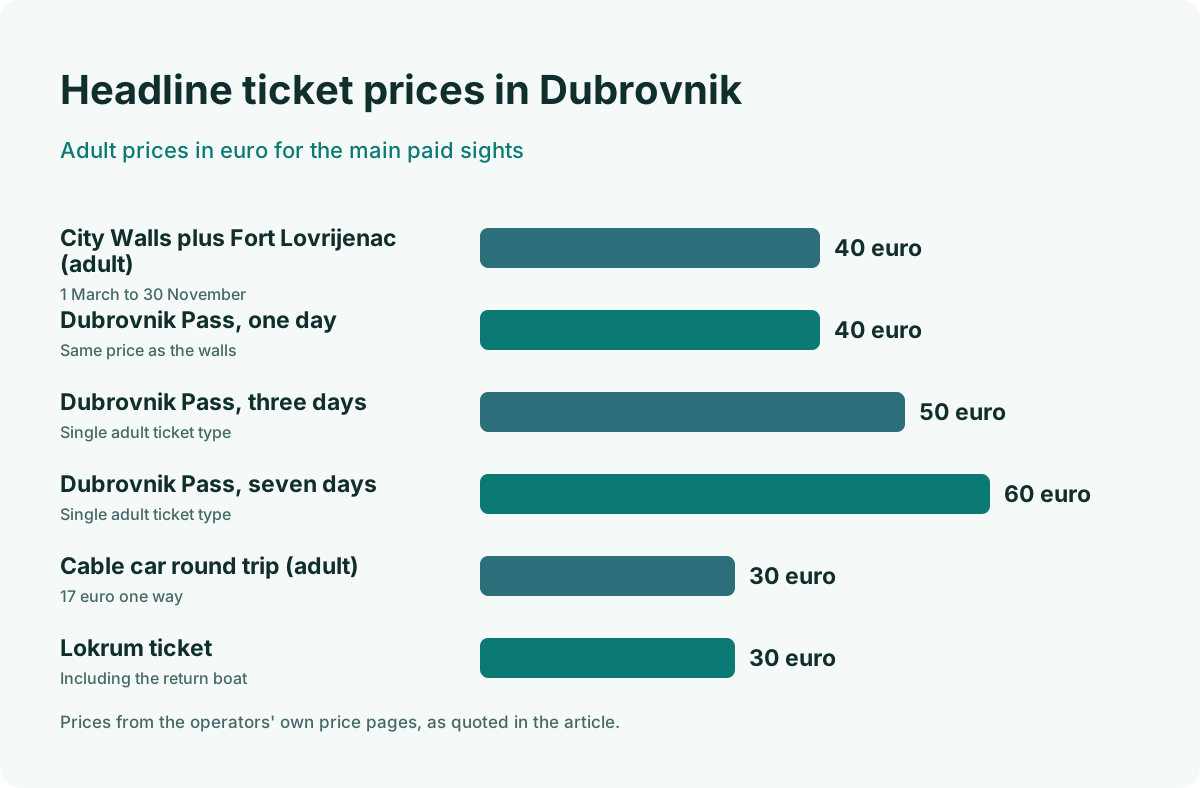
The Dubrovnik Pass follows the same seasonal logic. It costs 40 euro for one day, 50 euro for three days and 60 euro for seven days, sold for the 1 March to 30 November window in a single adult ticket type. Every tier lists the City Walls plus Lovrijenac Fortress as its first inclusion, and every tier allows a one-time visit to each institution. So the famous "the pass costs the same as the walls" line is true only in main season: in December the walls ticket halves to 20 euro while no winter pass is on sale at all. The official pass site, dubrovnikpass.com, carries the full inclusion list.
| Item | Main season (1 Mar to 30 Nov) | December |
|---|---|---|
| City Walls adult (walls + Lovrijenac) | 40 euro | 20 euro |
| City Walls child 7 to 18 | 15 euro | 5 euro |
| Child 6 and under | free | free |
| Dubrovnik Pass, 1 day | 40 euro | not on sale |
| Dubrovnik Pass, 3 days | 50 euro | not on sale |
| Dubrovnik Pass, 7 days | 60 euro | not on sale |
Should You Pay by Card or With Cash?
Pay by card almost everywhere, because card acceptance in Dubrovnik is close to universal: restaurants, shops, ticket offices, taxis and boat operators all take them. Carry a modest cash float of maybe 50 to 100 euro per person for the exceptions, which are market stalls, tiny konobas, public toilets, beach vendors and the odd cash-only café. The one rule that saves real money: always decline when an ATM or card terminal offers to charge you in your home currency.
That last sentence is the single most valuable line on this page. When a machine asks "would you like to be charged in dollars?" the answer is always no. Choosing your home currency triggers a poor exchange rate set by the machine's operator, a cost of several percent on every transaction. Choose euro, let your own bank do the conversion, and the same purchase gets noticeably cheaper.
ATMs deserve their own warning. The machines clustered around the Stradun and inside the Pile Gate area are mostly independent, privately operated cash machines with high fees, and some are placed precisely where tired tourists withdraw money without comparing. Bank-branded ATMs are the better choice, and withdrawing one larger amount beats four small ones, since the fixed fee hits every withdrawal. If your bank refunds foreign fees, so much the better.
Exchange offices, called mjenjačnica, are honest in Croatia but pointless for most travellers: their spread only beats your card if your card is bad. Skip the airport desks entirely. A card with no foreign transaction fee plus one sensible ATM withdrawal is the cheapest combination for essentially every visitor.
A note on tips, since it is a money question people ask constantly. Tipping in Croatia is appreciated but modest: round up a café bill, and leave roughly 10 percent in a proper restaurant if service was good. Nobody expects 20 percent American-style, and nobody will chase you for it.
| Payment situation | Best option | Why |
|---|---|---|
| Restaurant or konoba | Card | Universal acceptance, clean conversion |
| Ticket offices (walls, pass, Lokrum) | Card | Listed euro prices, no cash queue |
| Gruž Market stall | Cash | Small vendors often card-free |
| Public toilets | Cash coins | Small fixed charge, no card reader |
| Beach snack vendors | Cash | Card terminals rare on the rocks |
| Any ATM prompt to convert | Decline, choose euro | Home-currency conversion adds several percent |
If you want the city decoded rather than just paid for, a guided walk is money well spent, and the three below cover the main styles: a classic local-guide walk, a shorter discovery format, and a panorama ride for the days your feet give out.
How Much Money Do You Need per Day?
Plan on roughly 70 to 150 euro per person per day for a mid-range visit: about 15 to 25 euro for casual food, a one-off 40 euro walls ticket, and 20 to 60 euro for a paid activity such as a walking tour or kayaking. Budget travellers can get closer to 50 euro by walking and picnicking, while a food tour or island cruise pushes past that ceiling. These are planning ranges, not promises.
The structure of a Dubrovnik budget is unusual in one way: the sightseeing line can dwarf everything else. The walls at 40 euro cost more than most dinners, the cable car round trip is 30 euro per adult, and a Lokrum ticket is 30 euro including the return boat. Stack all three in one day and you have spent the price of three headline tickets before lunch. Spreading the big tickets across days, or buying the one-day pass at 40 euro to bundle the walls with ten more sights plus a 24-hour bus ticket, changes the arithmetic completely.
Here is what the headline items actually cost, from the operators' own price pages. The cable car, for instance, charges 30 euro for an adult round trip, 17 euro one way, 8 euro round trip for a child aged 4 to 12, 5 euro one way, and nothing at all under 4. The full technical and price detail sits on the operator's own timetable and price page.
| Paid item | Adult price | Notes |
|---|---|---|
| City Walls + Lovrijenac | 40 euro | Main season only; 20 euro in December |
| Dubrovnik Pass, 1 day | 40 euro | Walls plus ten sights plus 24h bus |
| Cable car round trip | 30 euro | One way 17 euro; child 4 to 12 round trip 8 euro |
| Lokrum ticket | 30 euro | Reserve entry plus return boat transfer |
| Lovrijenac alone | 15 euro | Already included in the walls ticket |
| Trsteno + Lokrum combined | 42 euro | Adds Trsteno Arboretum and a/c boat |
Tours are priced in dollars on the live listings, and the verified entry points are lower than most visitors expect. The cheapest paid Old Town walk starts at $20 per person, a two-and-a-half-hour kayak and snorkel tour starts at $35, and the most-reviewed island cruise, carrying 4.9 across 10,312 reviews, starts at $59.16 with lunch included. Those "from" prices are real floors, not teasers: they are what the listings actually sell at.
| Tour style | Verified from-price | Rating across reviews |
|---|---|---|
| Old Town walk, local guide | $20 | 4.8 across 5,826 reviews |
| 2h 30m kayak and snorkel | $35 | 4.9 across 3,619 reviews |
| Elaphite islands cruise with lunch | $59.16 | 4.9 across 10,312 reviews |
| Panorama zipline | $64 | 4.9 across 2,109 reviews |
| Food and drink walk, 3 hours | $165.64 | 5 across 704 reviews |
For the deeper planning picture, our one day in Dubrovnik itinerary sequences the paid items so the budget spreads sensibly, and the trip cost guide breaks down a full week by travel style.
What Not to Do in Dubrovnik?
Do not change money at the airport, do not accept an ATM's home-currency conversion, do not buy a "family ticket" for the walls because none exists, and do not trust a 2027 price for anything, because 2027 is not on sale yet. Add two behavioural ones: do not walk the walls at midday in summer, and do not try to drive into the Old Town, which is a pedestrian zone with no cars at all.
The money mistakes are covered above, but two deserve repeating because they are the ones I still watch visitors make every season. The first is the ATM conversion prompt, which quietly taxes every withdrawal for anyone who taps "yes" without reading. The second is buying tickets from resellers on the street instead of the operator's own shop or pass site: the price is the same or worse, and the refund terms usually are not.
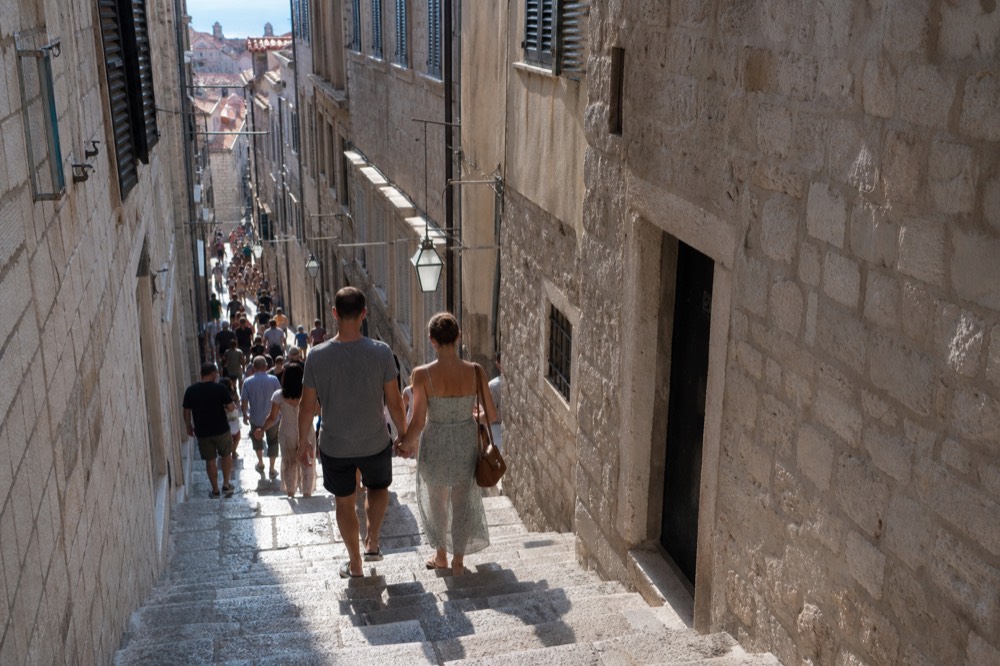
The behavioural mistakes cost time rather than money. Walking the walls between 11:00 and 15:00 in July means unbroken sun on a 1,940-metre circuit with almost no shade, and the operator's stated hours run 08:00 to 19:30, so an 08:00 start buys you cool air and empty photographs. Eating lunch directly on the Stradun means paying for the view twice, once in the bill and once in quality: two streets back, the same grilled fish costs meaningfully less. And feeding the pigeons or climbing on the fountains is not just frowned upon, it damages a UNESCO-listed site inscribed in 1979, one of the first Croatian entries on the list.
One more that people rarely see coming: do not plan a Lokrum trip around a late boat. Departures from the City Harbour run at 09:00, then every 15 minutes from 10:00 to 18:00, and the ticket office at Luža works 08:00 to 18:00. A ticket stays usable for three days, which is a genuinely useful piece of flexibility if the weather turns.
Is Dubrovnik Worth Visiting?
Yes, and the numbers back the enthusiasm rather than just the marketing. The Old Town is a UNESCO World Heritage Site of 24.7 hectares inside intact medieval walls, Dubrovnik recorded about 4.2 million overnight stays in 2025 to share first place among Croatian destinations with Rovinj, and the review scores on the city's tours run at 4.8 and 4.9 across thousands of guests. The honest caveat is cost and crowds, not quality.
Worth is a budget question as much as a beauty question, so let me answer it in money terms. The core experience, walking the walls and wandering the Old Town, costs 40 euro in main season and nothing like a theme-park day out elsewhere. Add a 20-dollar walking tour and you have the city's two best experiences for roughly 60 euro per adult. Against that, the same day with a food tour at $165.64 or a private guide can triple, so the "is it worth it" answer depends almost entirely on which version of Dubrovnik you buy. Other pages covering the same trip are gathered on Things to Do in Dubrovnik.
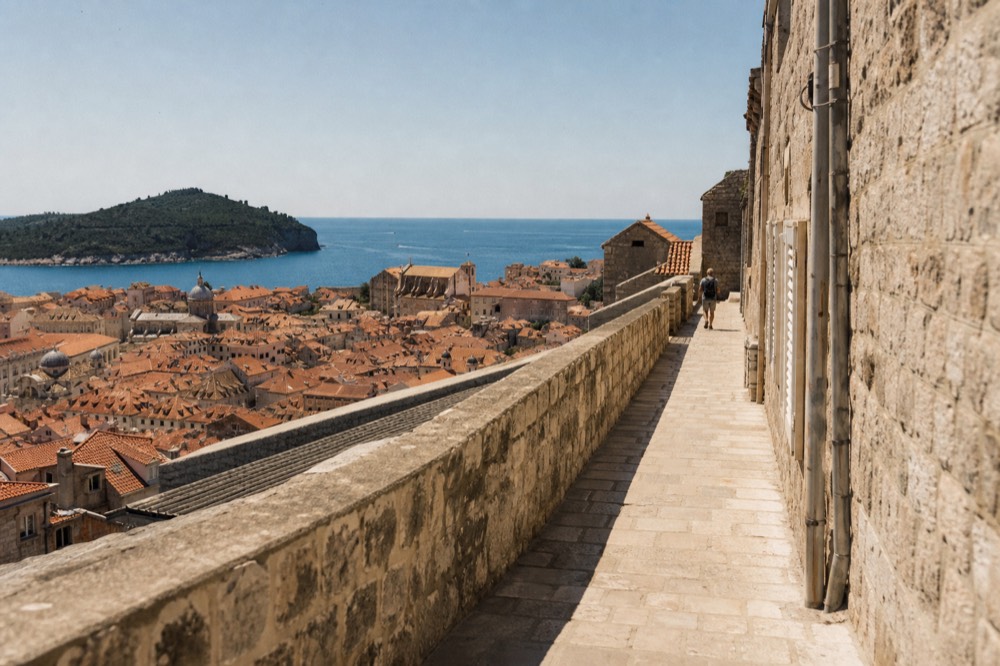
The city's scale helps the value case. The walled core is compact, the Stradun is 298 metres long, and almost everything worth seeing sits inside or just outside the walls, so you spend money on entries and food rather than transport. The city counted 41,562 inhabitants at the 2021 census, and the Old Town you walk through is a living district, not a museum set, which is exactly why the crowd pressure is a real management problem rather than a myth.
For a fuller argument in both directions, read our is Dubrovnik worth visiting guide, and for the first-timer version, first-timer mistakes to avoid covers the traps in detail.
When to Avoid Dubrovnik?
Avoid the peak cruise hours of September and October if crowd-free streets are your priority, which sounds backwards but is true: 2025 cruise passengers peaked in September at 101,246 and October at 100,132, above July's 96,072 and August's 87,385. Also avoid midday in high summer for the walls, and avoid January to March if the cable car is on your list, because it is closed those months.
That September and October peak is the single most useful planning fact on this site, and it comes straight from the Port Authority's own statistics. Everyone assumes August is the crush; in reality, the two autumn months bring more cruise passengers than the two core summer months. The full-year 2025 figure was 625,257 passengers against 582,499 in 2024, and 461 cruise calls are scheduled for 2026. The Port Authority's statistics page publishes the monthly breakdown.
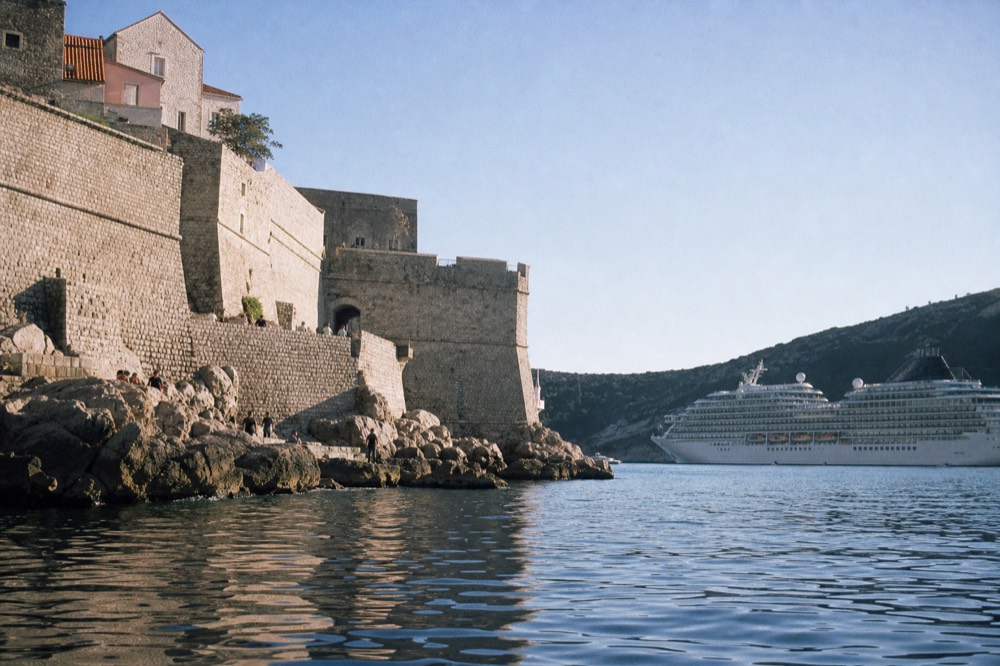
The city manages this well, which is the part most visitors miss. Cruise passengers are limited to 8,000 a day in most cases under the Port Authority's own rules, with a "2+1" berthing arrangement, and of 243 cruise days a year only 18 exceed 8,000 and only 4 go slightly over 10,000. About forty call requests were refused in a single season. On the ground, six counters at every Old Town entrance update a headcount every 15 minutes against an official carrying capacity of 11,275 people, and a real morning curve read in early September ran 5,419 people at 08:00, a 7,739 peak at 10:00, then 7,205 at 11:00. The practical lesson: early morning is calm even on busy days, and mid-morning is the worst window, not the afternoon.
For month-by-month detail, our best time to visit guide and the when to avoid Dubrovnik answer work through the whole calendar, including the December window when the walls ticket halves to 20 euro and no pass tier is on sale.
Is Dubrovnik Good for Beaches?
Yes, with an honest asterisk: Dubrovnik's beaches are scenic swimming spots rather than broad sandy expanses, mostly smooth rock, pebble and concrete platforms with water that is genuinely warm late into the year. The September long-run average for this coast is about 23.6 degrees and October about 21.0, so the swimming season stretches well past the crowds. If you want wide sand, you take a boat to Šunj beach on Lopud.
The water numbers deserve their caveat, because honesty about them is rare. Those figures are NOAA long-run open-water averages for 1991 to 2020, not a beach thermometer and not this year's water: sheltered bays run warmer, and the Croatian met service's own Dubrovnik buoy read 27.0 to 27.4 degrees on 8 September 2026 against that 23.6 September mean. July averages 24.9 and August 25.8, which is why swimming here feels Mediterranean rather than Atlantic.
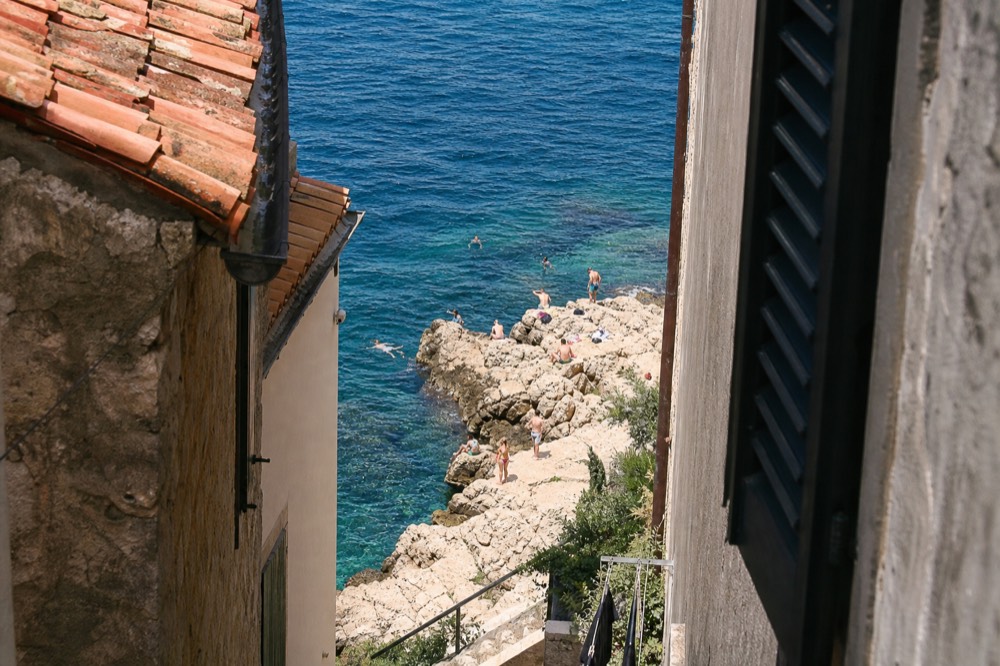
In money terms the beaches are the cheapest part of a Dubrovnik day. Banje sits minutes from Ploče Gate, the Lapad bay beaches are bus-friendly, and all the city beaches cost nothing to lie on, with sunbed rental as the only real expense. The paid version is the boat day: a Blue Cave and Šunj beach tour with drinks starts at $63.48, and the Elaphite cruise with lunch starts at $59.16. Our beaches guide ranks them properly, and swimming season in Dubrovnik gives the water temperatures month by month.
What Should You Budget for Tickets and Tours?
Plan on one headline ticket per day rather than three in a single morning: 40 euro for the walls or the one-day pass, 30 euro for the cable car or Lokrum, and one paid tour from 20 to 60 dollars depending on style. A three-day visit with the 50 euro pass, one boat cruise and one walking tour lands around 150 euro per adult in activities, which is a realistic and comfortable ceiling for most travellers.
The pass-versus-single-tickets decision is the biggest lever. In main season the one-day pass at 40 euro equals the walls ticket and adds ten more sights plus a 24-hour bus ticket, so it wins the moment you visit even two museums. The three-day pass at 50 euro adds suburban bus coupons usable for Cavtat, and the seven-day pass at 60 euro adds House Bukovac there too. Every tier includes the walls and Lovrijenac, once each. In December the calculation flips: the walls ticket drops to 20 euro and no pass tier exists, so buy single tickets then.
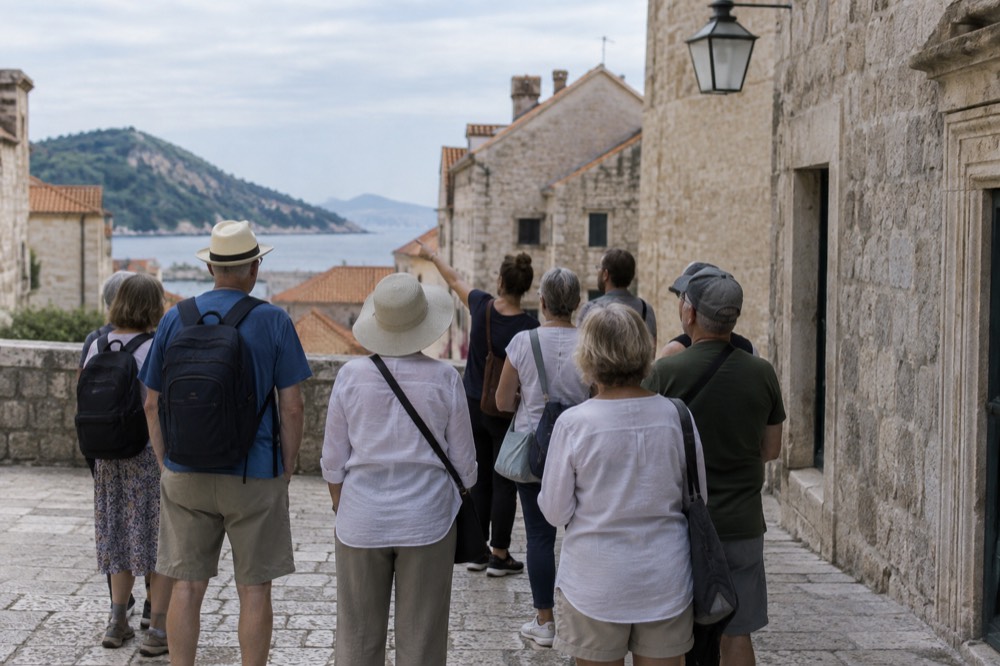
Tours reward early booking less for price than for slots: the best-reviewed walks and cruises sell out in peak weeks, and every listing on this site carries free cancellation, so there is no penalty for locking a day and adjusting later. Whatever you choose, pay by card in euro, decline any conversion offer, and keep your cash float for the market and the ice cream.
Whether your budget runs lean or loose, the three formats below cover the reliable core of a Dubrovnik visit: the local-guide walk, the shorter discovery format, and the panorama ride that saves your legs on day three.
Common Questions About Money in Dubrovnik
Does Dubrovnik use the euro or the kuna?
Dubrovnik uses the euro. The kuna was retired when Croatia adopted the single currency, converted at a fixed rate of 7.5345 kuna to one euro, and every price, ticket and ATM in the city now works in euro. Old kuna you may still have at home are no longer spendable currency.
Should I bring cash to Dubrovnik?
Bring a small cash float, roughly 50 to 100 euro per person, and rely on cards for the rest. Cards are accepted almost everywhere, including ticket offices and restaurants. Cash matters for market stalls, small konobas, public toilets and beach vendors, where card terminals are rare or absent.
Are ATMs in Dubrovnik safe to use?
Yes, but choose bank-branded machines over the independent ATMs clustered around the Stradun and Pile Gate, which charge higher fees. Withdraw one larger amount rather than several small ones, and always decline the machine's offer to charge you in your home currency, which adds several percent to every withdrawal.
How much does it cost to walk the Dubrovnik city walls?
The adult ticket is 40 euro in main season, 1 March to 30 November, and 20 euro in December. Children aged 7 to 18 pay 15 euro, then 5 euro in December, and under 6 is free. The ticket is a walls plus Fort Lovrijenac combination, and there is no family ticket.
Is the Dubrovnik Pass worth the money?
In main season, usually yes. The one-day pass costs the same 40 euro as the standalone walls ticket and adds ten more sights plus a 24-hour bus ticket, so it pays for itself with one museum visit. In December the walls ticket falls to 20 euro and no pass tier is on sale, so buy single tickets then.
Do I need to tip in Dubrovnik?
Tipping is appreciated but modest. Round up a café bill and leave roughly 10 percent in a restaurant when service was good. Nobody expects the 20 percent common in the United States, and service staff will not chase you for it.