Is Dubrovnik Worth Visiting? An Honest Local Answer
Dubrovnik is small, expensive and crowded at the wrong hour, and it is still one of the most rewarding city breaks in Europe. Here is the honest maths, from someone who lives here.
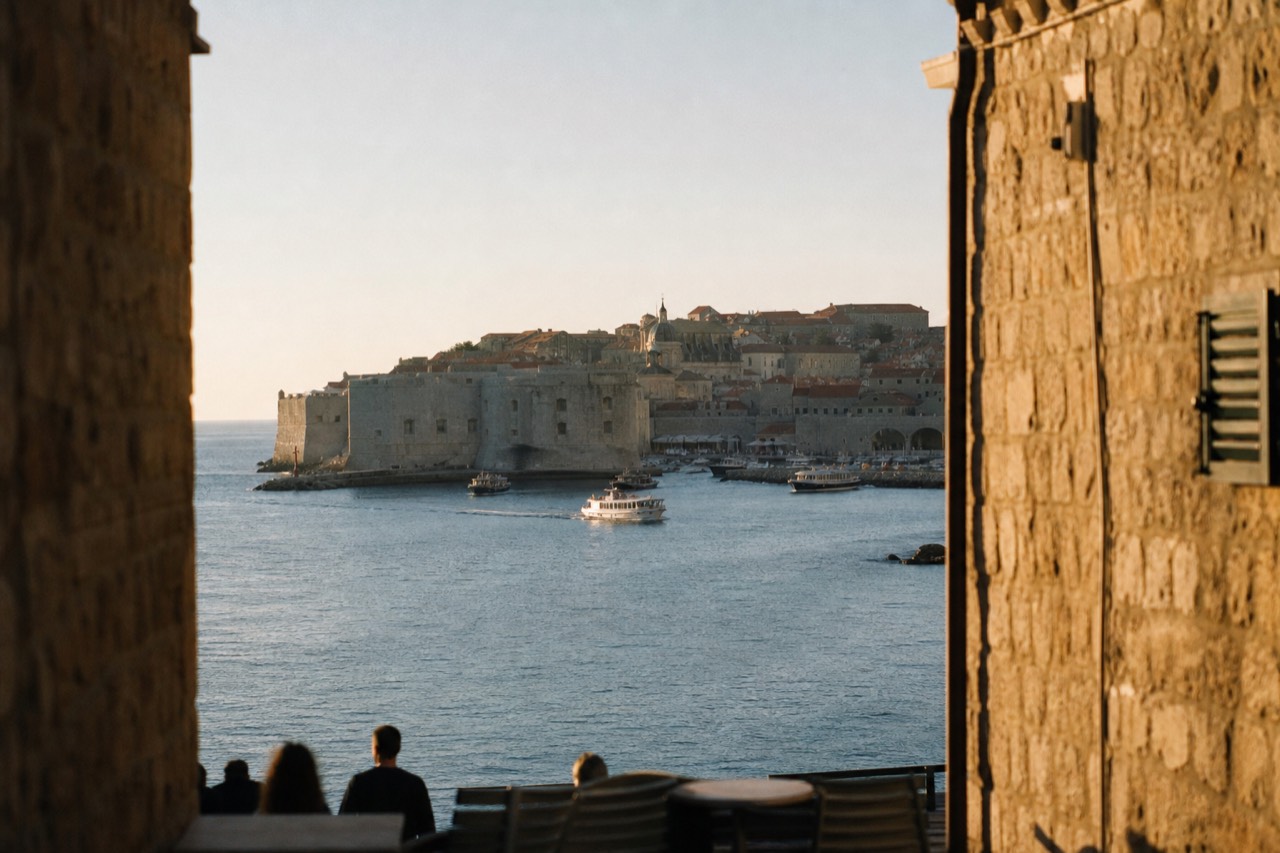
Short answer
Yes, for most travellers. The Old Town is a UNESCO site of 24.7 hectares with walls 1,940 metres long, and about 4.2 million overnight stays were recorded in 2025. Budget from $20 for a guided Old Town walk and 40 euro for the walls ticket in main season, and plan around the September and October cruise peak.
Is Dubrovnik Worth Visiting? An Honest Local Answer
I get asked this question on the Stradun most weeks, usually by someone holding a phone with three browser tabs open and a face that says the internet has confused them more than it helped. Half the articles call Dubrovnik a tourist trap, the other half call it paradise, and both halves are selling something. So here is the version I give friends: the city is genuinely extraordinary, it is genuinely crowded at the wrong hours, and whether it is worth it depends almost entirely on when you come and how you spend your first day.
The numbers first. The walled Old Town covers 24.7 hectares, inscribed by UNESCO in 1979 under criteria (i), (iii) and (iv). The walls run 1,940 metres, up to 25 metres high, and the circuit reached its final form with the Bastion of St Stephen in 1660. The city counted 41,562 inhabitants at the 2021 census, and the destination recorded about 4.2 million overnight stays in 2025, sharing first place in Croatia with Rovinj. A small town carrying that much weight is the whole story of Dubrovnik in one sentence.
Is Dubrovnik Worth Visiting?
Yes, for the large majority of travellers, and the reason is concentration: within a 24.7-hectare walled core you get a 1,940-metre wall walk, a Baroque main street of 298 metres, a fortress on a 37-metre sea rock, and a cable car climbing 367 metres to a panorama the operator measures at up to 60 km on a clear day. Very few cities pack that into a walkable half hour.
The honest caveat is that Dubrovnik rewards preparation and punishes improvisation. Arrive by cruise shuttle at 10:30 in July without a plan and you will queue for the walls behind thousands of people, pay 40 euro for the privilege, eat an average lunch at a premium, and leave wondering what the fuss was about. Arrive at 08:00, walk the walls before the heat, spend the afternoon on Lokrum or a boat, and you will understand why people come back.
The city also earns its keep beyond the postcard. Day trips radiate in every direction: Mostar and Kravica waterfalls, Montenegro's Bay of Kotor, the Elaphiti islands, Korčula, Ston and its oysters, Mljet National Park. I have planned itineraries for travellers who spent a week here and never ran out of day. That depth is part of the value calculation, and it is the part the "tourist trap" articles never mention.
For your first hours, a guide changes the arithmetic. The cheapest paid Old Town walk on this site's roster starts at $20 per person, rated 4.8 across 5,826 reviews, and the related tour below is the one I would point a first-timer at.
One guest review captures what a guide adds on a first visit: "Alex was a fantastic guide, she explained the complex history of Dubrovnik to give a lasting impression of the history of the area. Really appreciated that she aimed for shaded areas on a boiling September day. The food recommendations for after were much appreciated too! Great tour for a first experience of the old town!" If you would rather see the options side by side first, our guide to Dubrovnik walking tours compares the formats.
What Not to Do in Dubrovnik?
The four mistakes that ruin visits: walking the walls at midday in high summer, eating on the Stradun itself, arriving on a day when four cruise ships are scheduled, and treating Dubrovnik as a beach resort you never leave. Each one is avoidable with a schedule and a map, and none of them is the city's fault.
Let me take them in order, because this is where a local's advice actually saves a trip.
First, the walls at midday. The operator's stated hours run 08:00 to 19:30, and the difference between 08:00 and 12:00 is not subtle. The wall has almost no shade, the stone radiates heat, and the crowd counters tell the story: on a sample September day the Old Town held 5,419 people at 08:00, peaked at 7,739 at 10:00, and still carried 7,205 at 11:00. Start early or start after 17:00. There is no third good option in July and August.
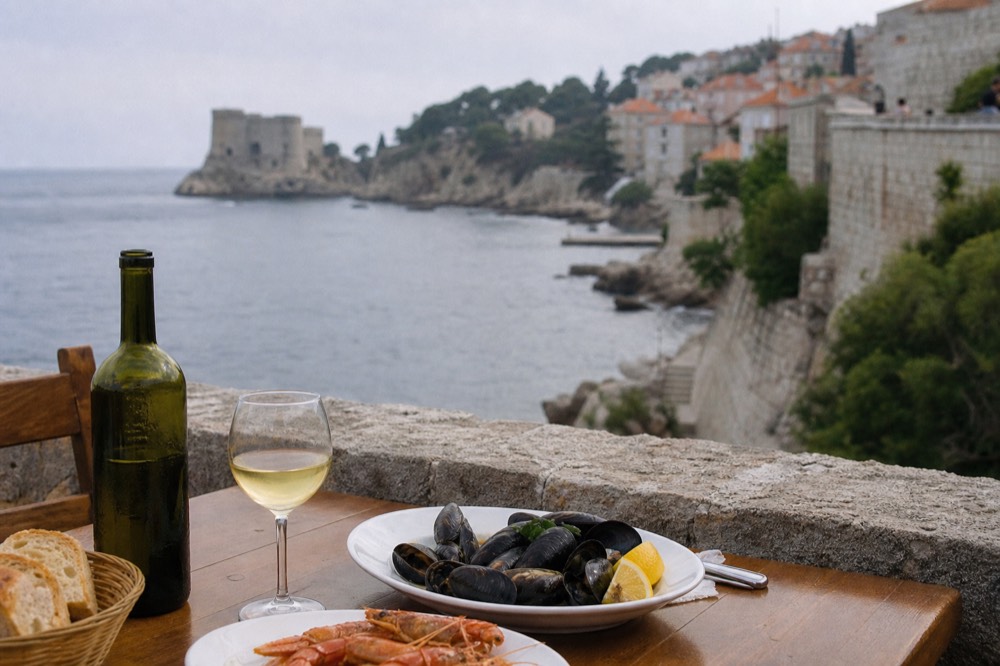
Second, the Stradun restaurants. The main street is 298 metres long and every table on it carries a view premium. Walk two streets in any direction, into Prijeko or past the Jesuit stairs, and the same kitchen tradition costs meaningfully less. Our Dubrovnik restaurants guide covers where the balance of quality and price actually sits.
Third, cruise timing. The Port Authority's own data shows 2025 cruise passengers peaked in September at 101,246 and October at 100,132, above July's 96,072 and August's 87,385. The counter-intuitive truth: early autumn, not midsummer, is the busiest cruise season. Before you commit to dates, check the Dubrovnik cruise schedule and avoid the handful of days with three or four ships in port.
Fourth, the beach-resort mistake. Dubrovnik's beaches are good, and I will defend them below, but the city's core product is the walled town, the sea approaches and the day trips. Come for two weeks and never leave the nearest sunlounger and you will both overspend and undersee.
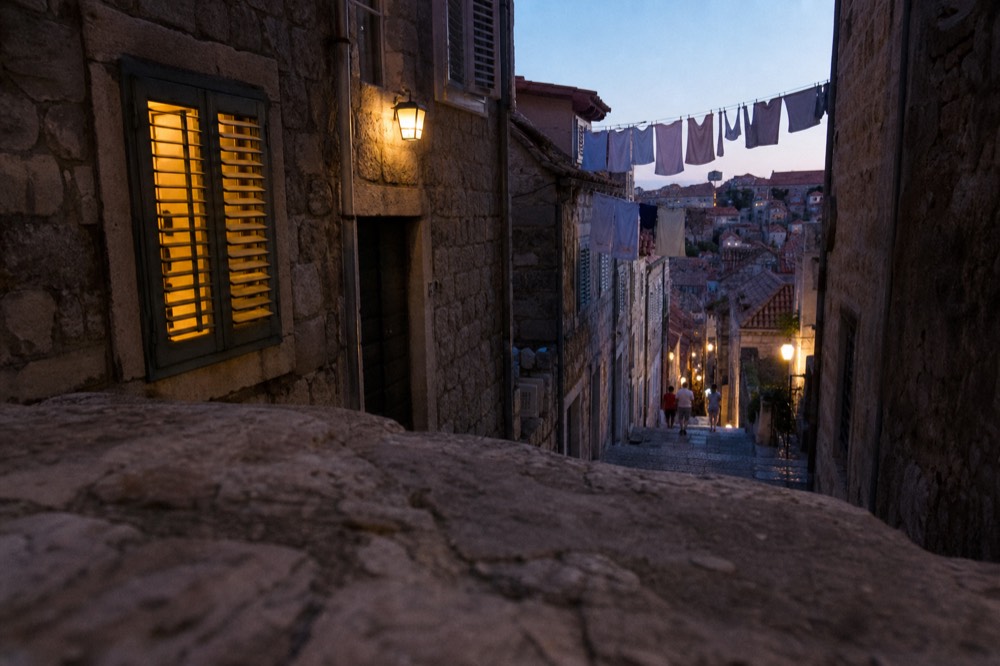
For orientation without the legwork, a panorama vehicle is a legitimate shortcut. The e-tuk-tuk tour runs about 1 hour 45 minutes, is rated 5 across 1,799 reviews, and covers viewpoints that would otherwise cost you an afternoon of stair-climbing.
When to Avoid Dubrovnik?
Avoid the four or five days a year when three or more cruise ships are scheduled, the middle of the day in July and August if you cannot tolerate heat and queues, and December through February if your trip depends on the cable car, which is closed January to March. Almost every other window is good, and some are superb.
The crowd question has real data behind it now, and the data is more interesting than the folklore. The Port Authority caps cruise passengers at 8,000 a day in most cases; of 243 cruise days a year only 18 exceed 8,000 and only 4 exceed roughly 10,000. So the city is not drowning every day. It is drowning on specific days, and those days are published. In the remaining 2026 season the busiest scheduled days are 6 October with 2 ships and up to 5,798 passengers, 29 September with 2 and 5,675, 30 September with 3 and 5,536, and 15 September with 4 and 5,273. Note those are ship capacities, not people who actually walk ashore, but the pattern is what matters: late September and early October are the peak.
| Month 2025 | Cruise passengers | What it means for a visit |
|---|---|---|
| July | 96,072 | Hot and busy, but cruise volume is below September |
| August | 87,385 | Hottest sea, peak land tourism, fewer cruise guests than July |
| September | 101,246 | The cruise peak of the year; check the schedule before booking |
| October | 100,132 | Second cruise peak, softer weather, sea still about 21.0 degrees |
| November | 28,480 | Quiet, many closures, short days |
Weather is the other axis. The sea temperature averages, from the NOAA long-run 1991 to 2020 series for this coast, run 24.9 degrees in July, 25.8 in August, 23.6 in September and 21.0 in October. Those are open-water averages, not beach readings: sheltered bays run warmer, and the Croatian met service's own Dubrovnik buoy read 27.0 to 27.4 degrees on 8 September 2026 against that 23.6 September mean. The swimming season is genuinely long here, which is one reason October is quietly one of the best months to come.
Winter is the honest weak spot. December has charm, the walls ticket drops to 20 euro, and the crowds vanish, but the cable car is closed January to March, the Western Outer Wall is closed December through February, and no Dubrovnik Pass tier is on sale at all. If your heart is set on the full experience, come between April and late October, and read our best time to visit guide for the month-by-month detail.
Is Dubrovnik Good for Beaches?
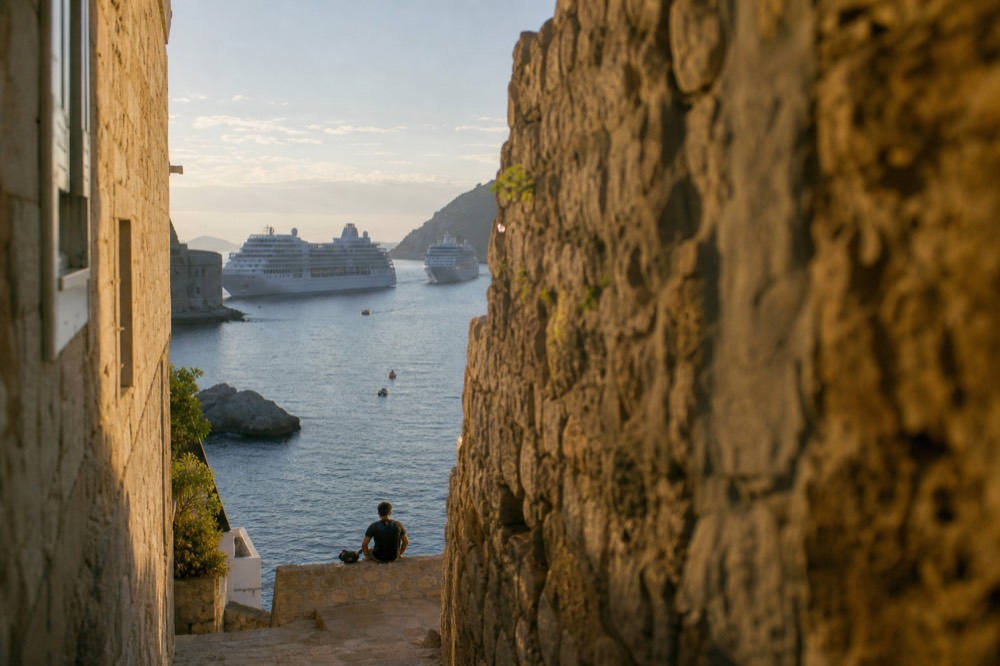
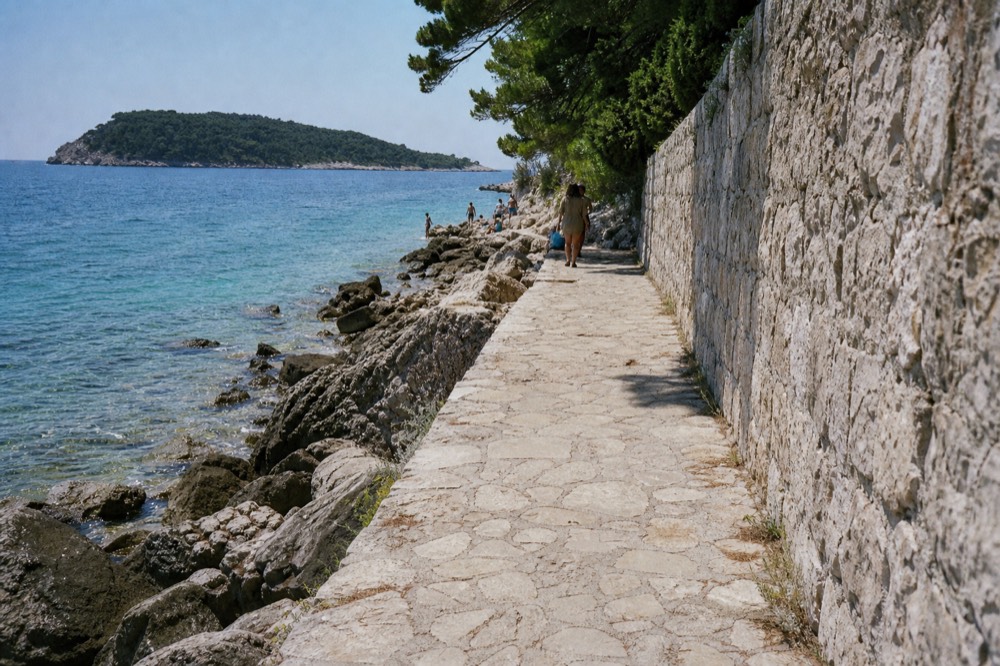
Yes, with an honest asterisk: Dubrovnik's beaches are rocky and pebbly rather than sandy, the water is exceptionally clear, and the swimming season runs from roughly May into October on the sea-temperature averages. If you need long sand for sandcastles, this is not your coast; if you swim rather than sunbathe, it is superb.
The swimming season is longer than most visitors expect. The open-water averages run 18.6 degrees in May, 22.5 in June, 24.9 in July, 25.8 in August and 23.6 in September, and the sheltered bays read warmer still. Locals swim comfortably into October, when the average is 21.0. Our swimming season guide has the month-by-month picture.
The beach map is varied. Banje sits closest to the Old Town with the classic wall-and-fortress backdrop. Sveti Jakov below the cliff requires a walk and rewards it with the best view of the walls from any beach. Lapad Bay and Copacabana on the Lapad side are the family-friendly options with shallow entries and facilities. And the best "beach day" of all is arguably not on the mainland at all: Šunj on Lopud, a shallow sandy stretch reached by boat, is the exception to the no-sand rule.
| Beach | Surface | Best for |
|---|---|---|
| Banje | Pebble and stone slabs | Proximity to the Old Town, the postcard view |
| Sveti Jakov | Pebble | The panorama, a quieter stretch, capable walkers |
| Lapad Bay | Pebble and concrete | Families, shade, cafés, easy parking |
| Copacabana | Pebble | Watersports, shallow water, children |
| Šunj, Lopud | Sand | A proper sandy beach day, reached by boat |
The boat dimension is where Dubrovnik's coast beats its shoreline. A full-day Elaphiti islands cruise with lunch starts from $59.16 per person and is the single most reviewed product on this site's roster, rated 4.9 across 10,312 reviews. It converts a beach question into an island-hopping answer, which is the better question here.
A guest review says it better than I can: "This was a wonderful day. Nice and shaded on the boat as we cruised on the cool adriatic. Loved seeing the neat Elphiti Islands and a wonderful way to get out the the heat and large crowds for a bit. They kept the drinks flowing and lunch was phenomenal and a generous portion. This is the way to cruise the Adriatic." Our Elaphiti islands guide covers the three islands and how to choose a boat.
How Expensive Is a Day in Dubrovnik?
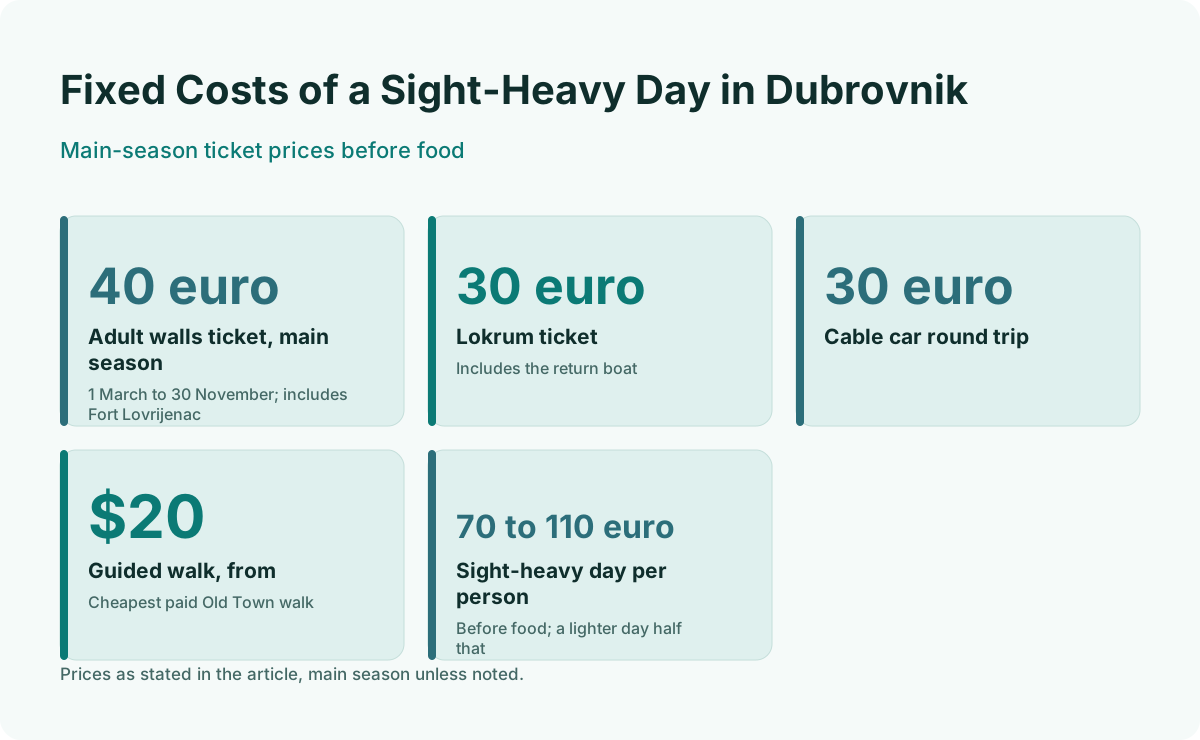
Count the fixed costs honestly: 40 euro for the adult walls ticket in main season, 30 euro for the Lokrum ticket including the return boat, 30 euro for a cable car round trip, and from $20 for a guided walk. A sight-heavy day runs 70 to 110 euro per person before food, and a lighter day half that.
The walls ticket deserves its own paragraph because it is the single biggest fixed cost and the most misunderstood. The 40 euro adult ticket in main season, 1 March to 30 November, is actually the walls plus Fort Lovrijenac combination, and it also covers the Western Outer Wall and the Collection of Coins of the Republic of Ragusa. Child 7 to 18 is 15 euro, under 6 is free, and there is no family ticket. In December the adult ticket drops to 20 euro and the child ticket to 5.
| Ticket | Main season, 1 Mar to 30 Nov | December |
|---|---|---|
| Adult, walls + Lovrijenac | 40 euro | 20 euro |
| Child 7 to 18 | 15 euro | 5 euro |
| Child 6 and under | free | free |
| Lovrijenac bought alone | 15 euro | 15 euro |
The Dubrovnik Pass is the counter-move, with one seasonal catch. A one-day pass costs 40 euro, the same as the walls ticket in main season, and adds ten more sights plus a 24-hour bus ticket; the three-day pass is 50 euro and the seven-day 60. But the pass is sold for the 1 March to 30 November window only, and in December the walls ticket falls to 20 euro while no pass tier is on sale at all, so the "pass costs the same as the walls" line is a main-season claim. Our Dubrovnik Pass guide works through the maths for each trip length.
| Pass tier | Price | Transport included |
|---|---|---|
| One day | 40 euro | 24-hour bus ticket |
| Three days | 50 euro | 72-hour bus ticket, suburban coupons |
| Seven days | 60 euro | 168-hour bus ticket, suburban coupons |
Food is the flexible line. A konoba dinner with local wine costs real money; a peka cooking lesson runs from $159.83 per person; the food and drink walking tour is from $165.64 and rated 5 across 704 reviews. But a bakery breakfast, a market lunch from Gruž and one proper dinner a day keeps costs sane. Our trip cost guide and budget Dubrovnik guide break down a realistic daily budget.
How Many Days Do You Actually Need?
Two full days covers the walls, the Old Town, one viewpoint and one boat or beach afternoon well. Three days adds Lokrum or an Elaphiti cruise without rushing, four lets you add a day trip to Mostar or Montenegro. One day is possible but you will spend it queueing and walking fast, and that is the version of Dubrovnik people wrongly call a trap.
The one-day version is the cruise-ship version, and it is the harshest test of the city. Disembark at 08:00, walk the walls early, see the Stradun and the Rector's Palace, ride the cable car or kayak around the walls, and you have genuinely seen the core. But you will have felt the crowd the whole time, because the counters show the Old Town climbing from 3,139 people at 07:00 to a 7,739 peak at 10:00 on a busy September day.
Two days changes the physics. Day one for the walls and the town, day two for the sea, either Lokrum (30 euro including the return boat, with departures at 09:00 then every 15 minutes from 10:00 to 18:00) or an Elaphiti cruise. Three days lets you slow down and take a sunset cruise or a kayak tour around the walls. Four or more, and the day trips open up: Mostar from $35 per person, Montenegro from $58, Korčula with wine tasting from $81.69.
| Days | What fits comfortably | Verdict |
|---|---|---|
| One | Walls early, Old Town, one viewpoint | Worth it only with an 08:00 start |
| Two | Walls, town, Lokrum or a beach afternoon | The minimum I recommend |
| Three | Add an Elaphiti cruise or kayak day | The sweet spot for most visitors |
| Four plus | Add Mostar, Montenegro or Korčula | Worth it, plan the border days |
Our how many days guide and the one day itinerary go deeper on scheduling, and the three days itinerary is the plan I most often hand to friends.
What Makes Dubrovnik Worth It Despite the Crowds?
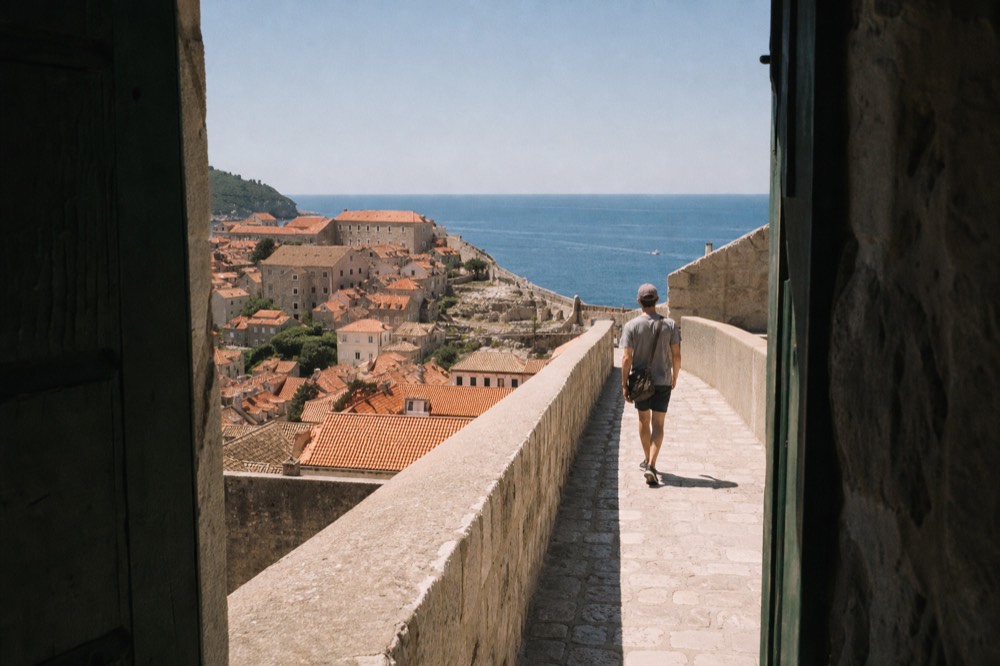
Three things survive the crowds intact: the wall walk itself, which is 1,940 metres of continuous view that no queue can diminish once you are on it; the sea approach, by kayak or boat, where the city reveals its scale; and the light on the stone in the early morning and late evening, when the day-trippers are gone and the town belongs to whoever stayed.
The walls are the anchor, and I will defend the 40 euro ticket. Sixteen towers, three fortresses, six bastions, up to 25 metres high, four to six metres thick on the land side: this is the best-preserved medieval defensive circuit on the Adriatic, and the ticket funds its maintenance.
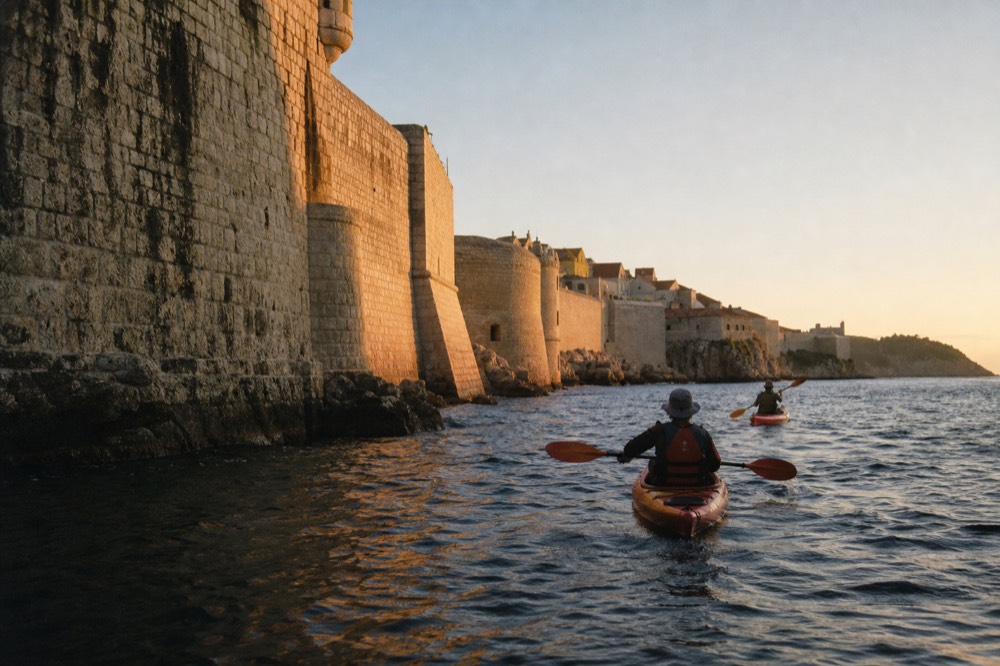
The sea approach is the second act most visitors miss. Kayaking around the walls and out to Betina Cave costs from $35 per person for a two-hour tour rated 4.9 across 1,518 reviews, and it is the only angle from which the city looks like what it was: a fortress that faced the sea. The zipline over the hillside, from $64 and rated 4.9 across 2,109 reviews, is the adrenaline version of the same idea.
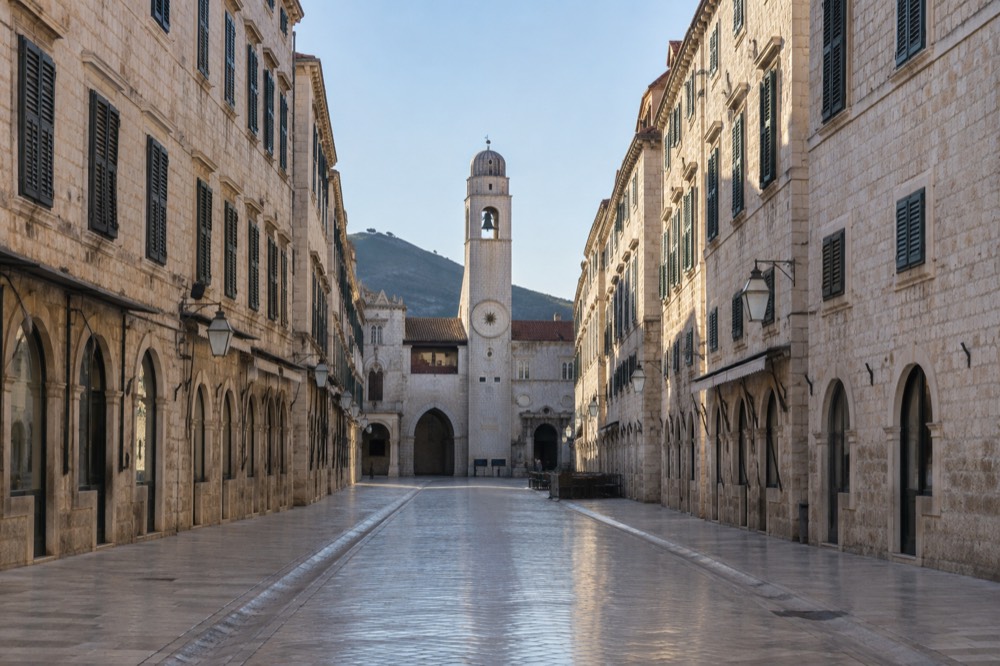
And the light. I have walked the Stradun at 07:00 in every month of the year, and the town at that hour, 298 metres of polished stone with a handful of locals and open cafés, is a different city from the one at noon. Anyone who calls Dubrovnik a tourist trap has only ever seen it at noon. Stay the night, or two, and you get the town the day-trippers never meet. That is the real answer to Things to Do in Dubrovnik being worth it: the product improves the longer you stay.
The Honest Verdict on Dubrovnik
Dubrovnik is worth visiting for anyone who will book around the crowd calendar, start early at least two mornings, and spend one day on the water. It is not worth it as a spontaneous midday arrival in peak cruise season with no plan and a tight budget, and it is not a sandy beach resort. Come for three days in late May, June, late September or October and it is close to unbeatable.
I want to be fair to the sceptics, because their complaints are real. Prices are high, and the walls ticket is a genuine 40 euro. Crowds are real, and the carrying capacity figure of 11,275 exists for a reason. Some restaurants on the main drags are cynical. All true. What the sceptics get wrong is the conclusion: those are arguments for planning, not for staying away. The Port Authority's own limits, 8,000 cruise passengers a day in most cases and about forty refused call requests in a season, mean the city is actively managing the problem, and the tools to dodge the worst days are public.
The verdict by traveller type is easier to give than a blanket yes. History and architecture travellers: unmissable. Families: very good, with the caveats in our Dubrovnik with kids itinerary. Beach-first travellers: good, not great, better once you add the islands. Budget travellers: possible in the shoulder season, punishing in August. Cruise passengers with one day: worth it, but only with an early start and a plan, which is exactly what our cruise day itinerary is for.
| Traveller type | Worth it? | The one thing to do |
|---|---|---|
| History and architecture | Unmissable | The walls at 08:00 with a guide |
| Families | Very good | Kayak or Lapad Bay, walls early |
| Beach-first | Good with islands | An Elaphiti cruise with lunch |
| Budget | Shoulder season only | Free GuruWalk Old City walk, December walls price |
| Cruise day-tripper | Yes, with a plan | Walls first, town second, cable car if time |
One more budget note that belongs in a verdict: the three GuruWalk walks, including the 1 hour 45 minute Ancient Old City tour rated 4.87 across 2,242 reviews, are free and pay-what-you-want, so even the thinnest budget gets a guided introduction. See this free tour on GuruWalk if the guided walls walk is out of reach this trip.
Common Questions About Whether Dubrovnik Is Worth Visiting
Is Dubrovnik worth visiting?
Yes, for most travellers. The walled Old Town is a UNESCO site of 24.7 hectares, the walls run 1,940 metres, and the city recorded about 4.2 million overnight stays in 2025. It rewards anyone who books around the cruise calendar and starts early at least twice.
What Not to Do in Dubrovnik?
Do not walk the walls at midday in high summer, do not eat on the Stradun itself, do not arrive blind on a day when three or four cruise ships are scheduled, and do not treat the city as a sandy beach resort. Each mistake is avoidable with a schedule.
When to Avoid Dubrovnik?
Avoid the handful of days with three or more cruise ships scheduled, mostly in late September and early October, and avoid December through February if the cable car matters, since it is closed January to March. Cruise passengers actually peaked in September 2025 at 101,246, above July and August.
Is Dubrovnik good for beaches?
Yes, with an asterisk: the beaches are pebbly and rocky rather than sandy, the water is very clear, and the swimming season runs roughly May into October, with open-water averages of 25.8 degrees in August and 23.6 in September. Šunj on Lopud is the sandy exception, reached by boat.
Is Dubrovnik too expensive to enjoy?
The fixed costs are real: 40 euro for the walls ticket in main season, 30 euro for Lokrum, 30 euro for a cable car round trip. But a one-day Dubrovnik Pass at 40 euro covers the walls plus ten more sights and a bus ticket, and free pay-what-you-want walks exist on GuruWalk.
How many days does Dubrovnik need?
Two days minimum for the walls, the town and a sea afternoon. Three days is the sweet spot, adding an Elaphiti cruise or Lokrum. Four or more opens up Mostar, Montenegro or Korčula day trips.