When to Avoid Dubrovnik?
When to avoid Dubrovnik: the months, days and hours that push the Old Town past its limits, plus where to skip and what not to do, from Port Authority crowd data.
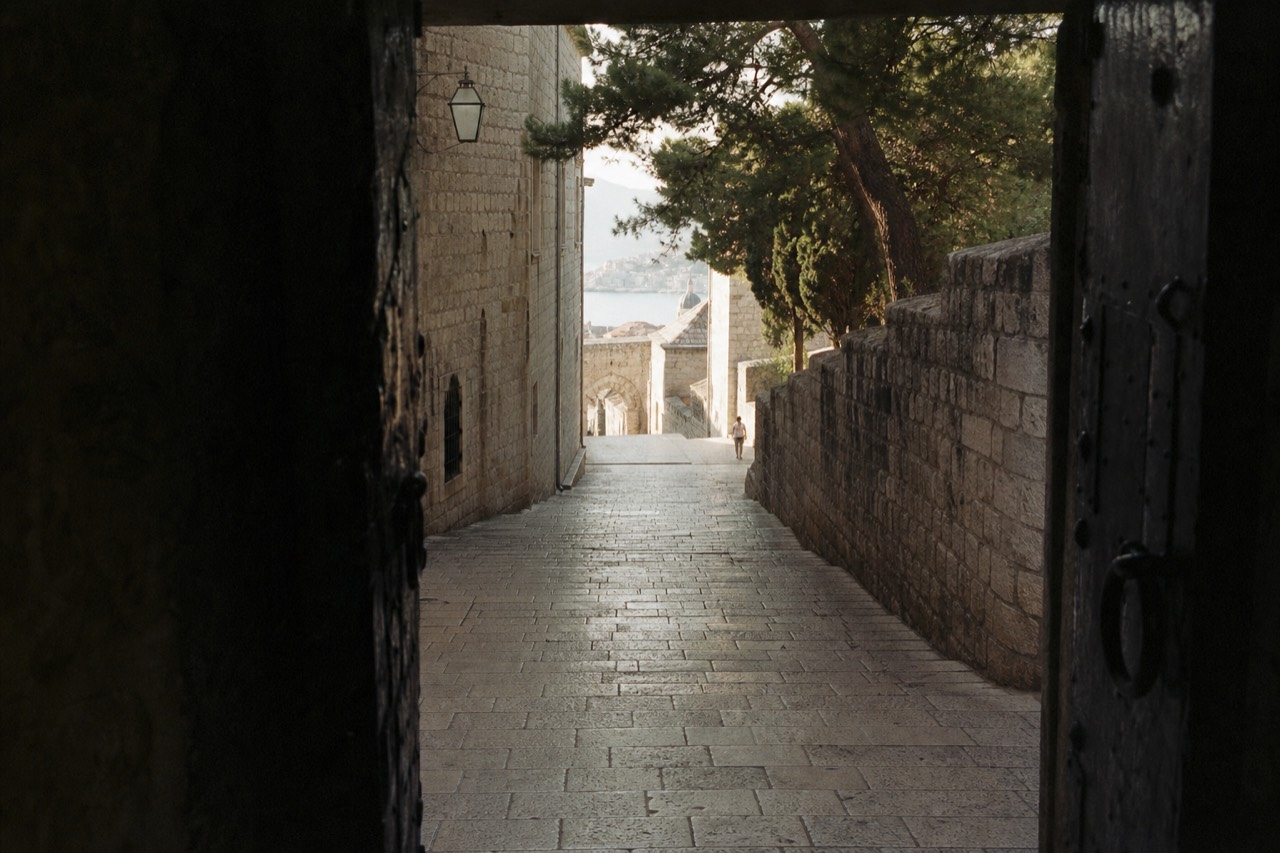
Dubrovnik's carrying capacity, the official ceiling from the UNESCO assessment for its historic core, is 11,275 people. On a busy September morning the counters at the Old Town gates have already logged 7,739 visitors by 10:00. That gap between what the city can comfortably hold and what a peak day delivers is the whole subject of this page, because the answer to "when to avoid Dubrovnik" is not a single month. It is a combination of season, cruise schedule, hour of day and street, and the good news is that all four are predictable if you know where the numbers come from.
I have walked these streets and walls with visitors since 2015, and the pattern holds every year: the city is rarely "unbearable" for more than a few hours at a stretch, and the people who have a bad time are almost always the people who arrived inside those hours without knowing they existed. So here is the calendar, the clock and the map, with the actual Port Authority and operator figures behind each claim.
When to Avoid Dubrovnik?
Avoid Dubrovnik in the peak cruise window of mid-June to early October, and especially late September, when 2025's cruise passenger total hit 101,246, its highest month of the year, ahead of July's 96,072 and August's 87,385. Also avoid the 10:00 to 15:00 hours inside the walls on any day with multiple ships in port, when the Old Town counters read near their daily peak. Shoulder months and early mornings stay genuinely pleasant.
The single most useful thing to understand about Dubrovnik crowds is that the folklore is wrong. Ask most travellers when the city is busiest and they will say July and August, high summer, school holidays, heat. The Port Authority's own monthly data says otherwise: in 2025, September delivered 101,246 cruise passengers and October 100,132, both above July's 96,072 and well above August's 87,385. The full year came to 625,257, up from 582,499 in 2024, and 461 cruise calls are scheduled for 2026.
Why do the shoulder months beat high summer? Two reasons. First, cruise lines extend their Adriatic season deep into autumn, and September's weather is still reliably warm, with a long-run September sea-surface average of about 23.6 degrees from the NOAA OISST 1991 to 2020 climatology. Second, land-based visitors also peak in September, because it combines good swimming weather with thinner flight prices than August. The two crowds stack.
That does not make September a month to cross off. It makes it a month to plan around, which is a different thing. The same logic applies to heat: August's long-run open-water average is 25.8 degrees and the air above it can be brutal on the unshaded walls, but the sea is at its warmest and the evenings are glorious. Every month in Dubrovnik trades one problem for another, and the table below shows the honest trade.
The real answer, then, is layered. Avoid the city if you can only visit inside the 10:00 to 15:00 window on a heavy cruise day. Avoid it if you cannot tolerate heat above 30 degrees on stone. Avoid it on the handful of days each year when the counters push toward the 11,275 capacity ceiling. For everyone else, the better question is not "which month" but "which month plus which hours plus which streets," and the rest of this page breaks each layer down.
If your dates are fixed and you land in the crowded window, the strongest move is to spend the peak hours on the water rather than inside the walls. A full-day island cruise removes you from the Old Town for the entire midday crush and returns you in the late afternoon when the day-trippers have gone.
For a deeper look at the calendar month by month, including the shoulder seasons in detail, the best time to visit Dubrovnik guide breaks down weather, sea temperature and crowds together, and the Dubrovnik in September guide covers the busiest cruise month specifically.
When to Avoid Cruise Ships in Dubrovnik?
Avoid cruise-ship hours in Dubrovnik between roughly 10:00 and 15:00 on days with two or more ships in port, when the Old Town headcount reads near its daily peak, 7,739 at 10:00 on one measured September day. The Port Authority limits most days to 8,000 cruise passengers, but 18 days a year exceed that and 4 days run slightly above 10,000, so check the schedule before you commit.
The Port Authority runs a booking system that, in most cases, caps cruise passengers at 8,000 per day, alongside a "2+1" berthing arrangement, one large ship in front of the Old City plus others at anchor. Of 243 cruise days a year, only 18 exceed the 8,000 estimate, and only 4 days a year run slightly above 10,000. About forty call requests were refused in a single season to hold that line. You can read the measures in the Port Authority's own words on its cruise destination page.
The city also counts heads directly. Six counters at every Old Town entrance update a headcount every 15 minutes, feeding the official Dubrovnik visitors platform. A real half-hourly curve read on 8 September 2026 shows exactly how a heavy day builds and drains:
| Time | People inside the Old Town |
|---|---|
| 04:00 | 1,200 |
| 06:00 | 1,725 |
| 07:00 | 3,139 |
| 08:00 | 5,419 |
| 09:00 | 7,297 |
| 10:00 | 7,739 (daily peak) |
| 11:00 | 7,205 |
Read that curve carefully, because it contains the single best piece of timing advice on this page. At 07:00 the Old Town holds 3,139 people. By 10:00 it holds 7,739, more than double, and it stays near that level through the early afternoon. The city you photograph at 07:30 and the city you push through at 12:00 are two different places, on the same day, three hours apart. Cruise passengers tend to come ashore mid-morning and return to the ships in the late afternoon, so the evening Old Town, after about 17:00, belongs mostly to people staying overnight.
The monthly picture matters just as much as the daily one. Here is the Port Authority's 2025 cruise passenger count by month, and note again where the peak sits:
| Month | Cruise passengers 2025 |
|---|---|
| January | 3,137 |
| February | 46 |
| March | 3,346 |
| April | 36,206 |
| May | 84,107 |
| June | 82,642 |
| July | 96,072 |
| August | 87,385 |
| September | 101,246 |
| October | 100,132 |
| November | 28,480 |
| December | 2,458 |
One honest caveat the numbers themselves demand: cruise passenger figures are ship capacity, not people who actually walk ashore. Write "up to X cruise passengers scheduled," never "X people will be in town," because some passengers never disembark at all. The remaining 2026 season schedule, for instance, holds 149 ship calls across 80 cruise days, 217,458 passengers by capacity, with the busiest single days being 6 October (2 ships, 5,798), 29 September (2, 5,675), 30 September (3, 5,536) and 15 September (4, 5,273). For day-by-day planning, the Dubrovnik cruise schedule guide tracks the calendar, and the broader overtourism in Dubrovnik explainer covers what the city is doing about the pressure.
If your only free day in town turns out to be one of those four-ship days, do not fight it inside the walls. Get on a boat. The Karaka, a full-sized replica sailing ship, runs an Elaphiti Islands cruise that carries you away from the Old Town for the whole midday window and brings you back for the quiet evening.
Where to Avoid in Dubrovnik?
Avoid the Stradun between 11:00 and 16:00, the Pile Gate entrance to the walls in late morning, and the Ploče-side wall stretches at midday in high summer. The Stradun is only 298 metres long and funnels nearly every visitor in a 24.7-hectare Old Town, so a street that takes four minutes to walk empty can take twenty at peak. Head for the back lanes of the north Old Town instead.
The geography of Dubrovnik crowding is remarkably consistent, and once you see it you cannot unsee it. The Old Town is a UNESCO World Heritage property, inscribed in 1979 under criteria (i), (iii) and (iv), covering just 24.7 hectares with a 1,188.6-hectare buffer zone, per the UNESCO listing. Inside that compact rectangle, the Stradun, the 298-metre main street whose final plan was fixed by the 1272 Statute, acts as the drain for everything: every walking tour starts near it, every café faces it, and every visitor walking between the two gates uses it.
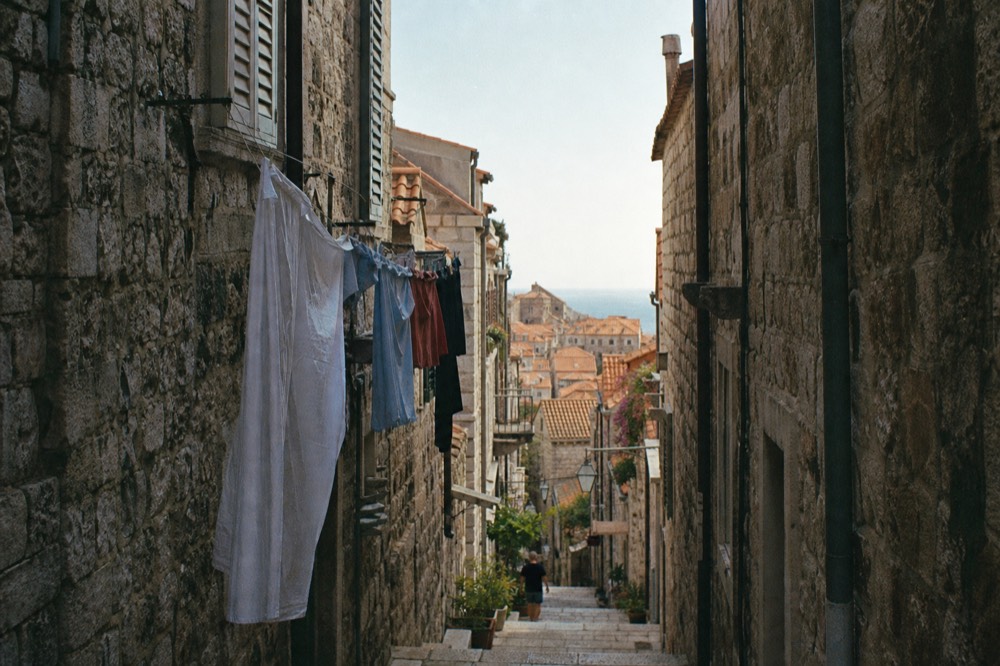
So the first rule of where to avoid is temporal as much as spatial. The Stradun at 08:00 is a wide, calm limestone promenade with café tables and cats. The same street at 13:00 on a two-ship day is a slow-moving column of people. The parallel streets one block north and south, the ones running through the quieter residential lanes, are typically carrying a fraction of the footfall even at peak, and they contain half the city's actual charm: tiny konobas, worn staircases, laundry lines, doors that have been opening onto the same alleys for centuries.
The second place to avoid is a specific queue, not a specific street. The Pile Gate side is where most walking tours and most independent visitors enter, so the ticket approach and the first stretch of wall climb concentrate there in late morning. The wall circuit itself, 1,940 metres long, up to 25 metres high, 4 to 6 metres thick on the land side and 1.5 to 3 metres on the sea side, is wide enough to absorb people once you are up on it. The pinch is at the stairs and the entry. Starting at opening time, 08:00 per the operator's stated hours, or entering from the quieter side, dissolves most of the crush.
The third is a heat problem rather than a crowd problem. The wall's southeast stretches, above the Ploče side and out toward the sea, have almost no shade, and in July and August, when the long-run open-water average is 24.9 and 25.8 degrees respectively and the air on bare stone is far hotter, midday up there is genuinely punishing. Walk the walls before 10:00 or after 16:00 in high summer, and spend midday in the water instead; the sea temperature table in the first section tells you which months actually reward that plan.
And the fourth is Buža-style cliff-bar territory at sunset in peak season: wonderful, but everyone in town has read the same recommendation. The counter-move is simple, and it is the one I give guests who ask me on the street: the city's edges are quieter than its spine. The northern lanes above the Franciscan Monastery, the pockets around the Sponza Palace side streets, the harbour quay once the fishing boats are in, all sit two minutes from the crush and feel like a different town.
A guided walk is the most efficient way to learn that geography in one morning instead of discovering it by trial over three days. The two-hour Ancient City Walls and Wars walk from Dubrovnik Walks runs from $29.58 per person and is rated 4.8 across 1,387 reviews, and a guide who knows the quiet stretches will time your circuit around the crowds rather than into them.
One guest on that same walls walk, linda_a, left a review that captures why a guide changes the experience: "This well organized tour helped put Dubrovnik's past (and present) into perspective. It's incredible that the city walls have withstood the test of time. Antun was a wonderful guide."
What Not to Do in Dubrovnik?
Do not drive into the Old Town (it is car-free), do not buy a walls ticket in December expecting a pass, do not plan a cable car visit between January and March (it is closed), and do not treat the Lokrum boat as a turn-up-and-go ferry without checking the schedule. Also do not round your budget around peak-season restaurant terraces on the Stradun.
The most common mistakes in Dubrovnik are not dangerous, they are just expensive or badly timed. The first is assuming the city works like a normal mid-size European town. It does not. The walled core is fully pedestrian, the wider city of 41,562 residents (2021 census) spreads across Lapad and Gruž, and everything you will actually want to see sits inside or beside those 24.7 hectares. Arriving by car and hunting for a space near Pile Gate in August is a losing game; the parking in Dubrovnik guide covers the realistic options, but the short version is: stay outside the walls and walk or bus in.
The second is a ticketing mistake that catches people in the shoulder edges of the season. The adult City Walls ticket is 40 euro in main season, 1 March to 30 November, and that price is actually a combination ticket covering the walls plus Fort Lovrijenac, the Western Outer Wall (closed December, January and February) and the Collection of Coins of the Republic of Ragusa. In December the adult ticket drops to 20 euro, child 7 to 18 is 5 euro, and under 6 is free; there is no family ticket, only adult and child 7 to 18. The Dubrovnik Pass costs 40 euro for one day, 50 for three days and 60 for seven days, and in main season the one-day pass costs exactly the same 40 euro as the standalone walls ticket while adding ten more sights plus a 24-hour bus ticket. But no winter pass tier is on sale at all, so the "pass costs the same as the walls" comparison is a main-season fact only. Do the sums for your dates, not for a generic "Dubrovnik."
The third is the cable car's closed season. The cable car, which lifts you 367.0 metres from the lower terminal at 38.0 metres above sea level to the Mount Srđ station at 405.0 metres over a 778.2-metre track in 3 minutes 30 seconds, is closed January to March. In summer it runs from 09:00 to midnight in June, July and August, and an adult round trip is 30 euro, with the operator's timetable and prices published on its own official price page. Planning a January panorama is planning a closed attraction.
The fourth is Lokrum logistics. The Lokrum ticket is 30 euro per person and covers both the reserve entry and the return boat transfer, whether you ride the official boat or arrange your own transport. Boats leave the City Harbour at 09:00, then every 15 minutes from 10:00 to 18:00, and the ticket office at Luža works 08:00 to 18:00, with a ticket staying usable for three days. What the schedule does not tell you is that the last boats back fill up on peak days, so do not treat the return leg casually in September.
The fifth is simply spending wrong. Terrace tables directly on the Stradun price in the view; the same kitchen one street over often does not. And the sixth, the one that ties this whole page together: do not schedule your one walls walk or your one Old Town wander between 11:00 and 15:00 on a heavy cruise day, because that is the one mistake that no amount of money fixes afterwards. The what to be careful of in Dubrovnik answer covers the smaller practical traps, from stairs to sun, in more detail.
Is Dubrovnik Worth Visiting?
Yes, emphatically, and the same data that shows when to avoid it shows why. A city that recorded about 4.2 million overnight stays in 2025, sharing first place among Croatian destinations with Rovinj, is not a place to skip, it is a place to time. Visit in the right month, walk early, spend peak hours on the water, and Dubrovnik delivers one of Europe's great city experiences.
The honest case against Dubrovnik is a case against bad timing, and it dissolves under planning. Yes, 625,257 cruise passengers came through in 2025, but they were spread across 243 cruise days and the Port Authority refused about forty call requests in a season to keep the daily ceiling near 8,000. Yes, the Old Town counters read 7,739 at 10:00 on a heavy September day, but they read 3,139 at 07:00 and 1,725 at 06:00 on the very same day. The crowds are a tide, not a wall, and tides have schedules.
The case for the city barely needs arguing but deserves specifics. The walls themselves, 1,940 metres of them, finished in 1660 with the Bastion of St Stephen, with 16 towers, 3 fortresses, 6 bastions, 2 corner fortifications, 3 bulwarks, 3 moats, 2 flank fortresses, 1 breakwater and 2 drawbridges, are a walk with no real equivalent in Europe. Fort Lovrijenac stands on a 37-metre sea rock across the bay. The sea is swimmable for most of the calendar, with long-run averages of 22.5 degrees in June, 24.9 in July, 25.8 in August and 23.6 in September, figures from the NOAA OISST 1991 to 2020 climatology, an open-water grid-cell average rather than a beach thermometer, and sheltered bays run warmer still; the Croatian met service's own Dubrovnik buoy read 27.0 to 27.4 degrees on 8 September 2026 against that 23.6 September mean.
| Month | Long-Run Average Sea Temperature | Verdict for Swimming |
|---|---|---|
| May | 18.6 °C | Bracing, for the committed |
| June | 22.5 °C | Comfortable |
| July | 24.9 °C | Warm, busiest land crowds |
| August | 25.8 °C | Warmest, hot on the walls |
| September | 23.6 °C | Warm, but peak cruise month |
| October | 21.0 °C | Still fine, second cruise peak |
The pattern in that table is the pattern of the whole page: the months with the best water are also the months with the most boats, and the trade is managed by where you spend your midday hours. That is exactly why the strongest "worth it" strategy is a hybrid one. Walk the walls at 08:00 when the counters are still climbing through the 5,419 they logged at that hour on the measured September day. Spend 11:00 to 16:00 on the water, on one of the island cruises that empties you out of the Old Town for the whole peak window. Come back at 17:00 to a city that has exhaled, and have dinner in a back-lane konoba rather than on the Stradun.
The Karaka pirate ship cruise is the version of that plan I point people toward most often, because the ship itself is part of the experience: a full-sized replica sailing vessel, eight hours out on the Elaphiti Islands, from $65 per person, rated 4.8 across 757 reviews, with lunch and swimming stops built into the day. You leave the crush behind at the exact hours it peaks and return for the golden evening.
For a wider comparison of every option on the water, from short sunset runs to full-day island circuits, the Dubrovnik boat tours guide lays out the fleet, prices and itineraries side by side, and the Elaphiti Islands guide covers the islands those cruises visit.
So, is it worth it? The city that inspired a thousand listicles is real, and the crowds that inspired a thousand complaints are equally real, and both fit inside the same 24.7 hectares. The visitors who love Dubrovnik are the ones who treated the crowd data as a planning tool rather than a spoiler: early walls, watery middays, evening lanes, shoulder months where possible, and a willingness to walk two streets off the Stradun. Do that, and you will wonder what the complainers were doing all day. Probably standing in line at 13:00.
If this page has one job, it is that: not to talk you out of Dubrovnik, but to talk you into arriving when the city can actually receive you. Pick your month with the cruise calendar open, pick your hours with the counter curve in mind, and the rest of the trip plans itself. And when you are ready to build the full itinerary around the quiet hours, Things to Do in Dubrovnik has the complete library, from the walls to the islands to the back-lane tables worth booking.
Common Questions About When to Avoid Dubrovnik
When to avoid Dubrovnik?
Avoid the midday hours of 10:00 to 15:00 on days with two or more cruise ships in port, and treat late September as the busiest window of the year: 2025's cruise passengers peaked in September at 101,246 and October at 100,132, above July and August. If you can choose freely, the quietest warm months are May, June and late October, and the quietest hours inside the walls are before 09:00 and after 17:00.
When to Avoid Cruise Ships in Dubrovnik?
Check the schedule before your visit, because the Port Authority caps most days at 8,000 cruise passengers but 18 days a year exceed that and 4 days run slightly above 10,000. The busiest scheduled days in the remaining 2026 season include 6 October (2 ships, 5,798 passengers by capacity) and 15 September (4 ships, 5,273). On any heavy day, be inside the walls before 09:00 and out on the water or back at your hotel by 11:00.
Where to Avoid in Dubrovnik?
Avoid the Stradun between 11:00 and 16:00, the Pile Gate wall entrance in late morning, and the unshaded southeast wall stretches at midday in July and August. The parallel lanes one block north and south of the Stradun carry a fraction of the footfall even at peak, and the northern Old Town above the Franciscan Monastery stays genuinely quiet.
What Not to Do in Dubrovnik?
Do not drive to the Old Town (it is car-free), do not visit between January and March expecting the cable car (it is closed those months), do not compare the Dubrovnik Pass to the walls ticket without checking the season, since the 40-euro equivalence holds only from 1 March to 30 November and no winter pass is on sale, and do not eat every meal on a Stradun terrace when the same kitchens charge less one street over.
Is Dubrovnik Worth Visiting?
Yes, if you time it. The city recorded about 4.2 million overnight stays in 2025, sharing first place in Croatia with Rovinj, and the crowds that put people off are concentrated into predictable hours and streets. Walk the walls at opening, spend the midday peak on an island cruise or at a beach, and return to the lanes in the evening, and Dubrovnik is one of the finest short-trip destinations in Europe.