What to Be Careful of in Dubrovnik?
Practical warnings for Dubrovnik: crowds, heat, stairs, prices, cruise days and pickpocketing, with honest advice on when to go and what to skip.
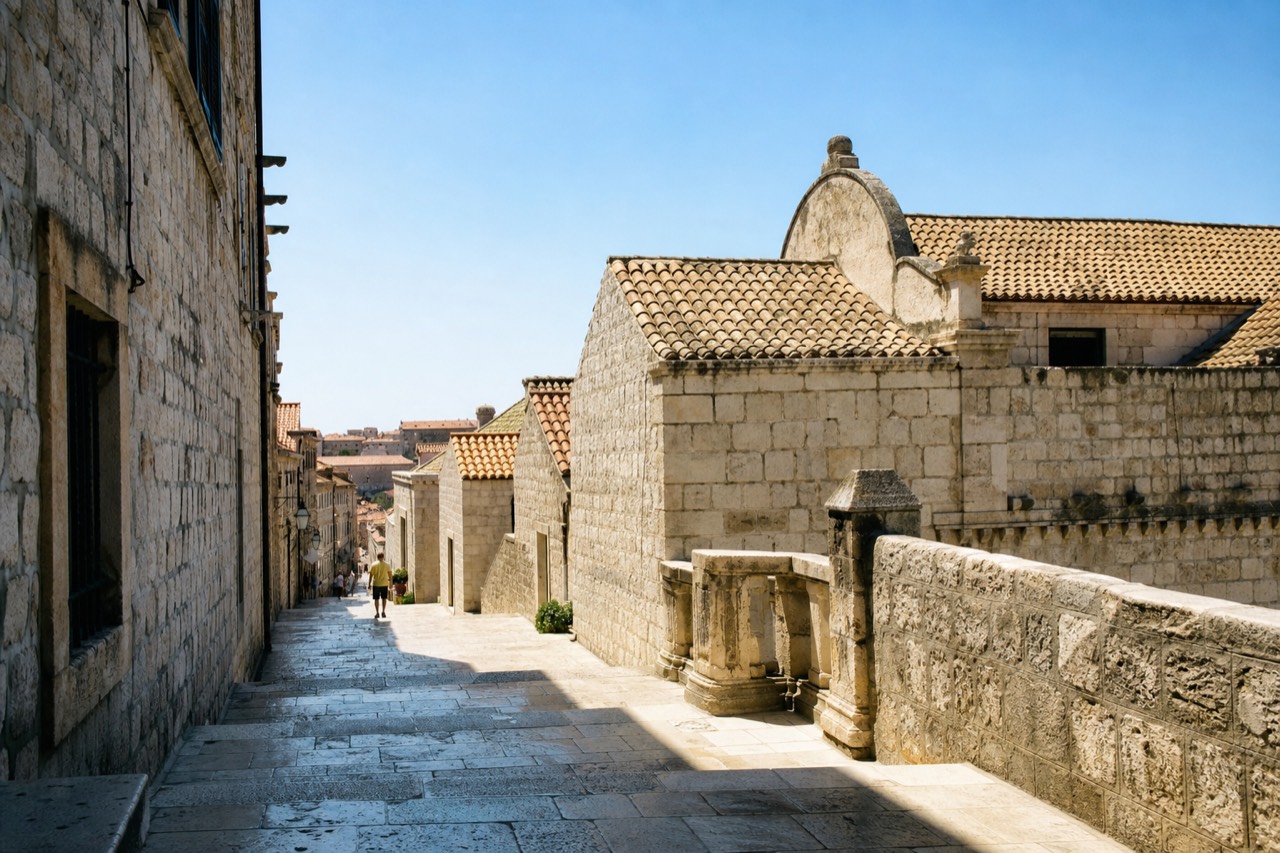
What to Be Careful of in Dubrovnik?
The main things to be careful of in Dubrovnik are midday heat on stone, cruise-day crowds between 10:00 and 16:00, polished limestone steps that turn slick when wet, and high-season prices that catch visitors off guard. Violent crime is essentially a non-issue here; the real risks are sunburn, twisted ankles and an empty wallet.
I have walked these streets with travellers since 2015, and the pattern never changes. People arrive having seen photographs of an empty Stradun at dawn and then meet the real Stradun at noon, when six electronic counters at the Old Town entrances are logging a headcount that updates every 15 minutes. On one September morning the count read 5,419 people at 08:00, climbed to 7,297 at 09:00, and peaked at 7,739 at 10:00. That is a normal Tuesday in September, not an anomaly, and it shapes everything else on this list.
The city's own counting system exists because the problem is real. The official carrying capacity for the Old Town, from the UNESCO carrying-capacity assessment, is 11,275 people, and the counters exist precisely so the city can see when it is approaching that ceiling. None of this makes Dubrovnik a place to avoid. It makes it a place to time well.
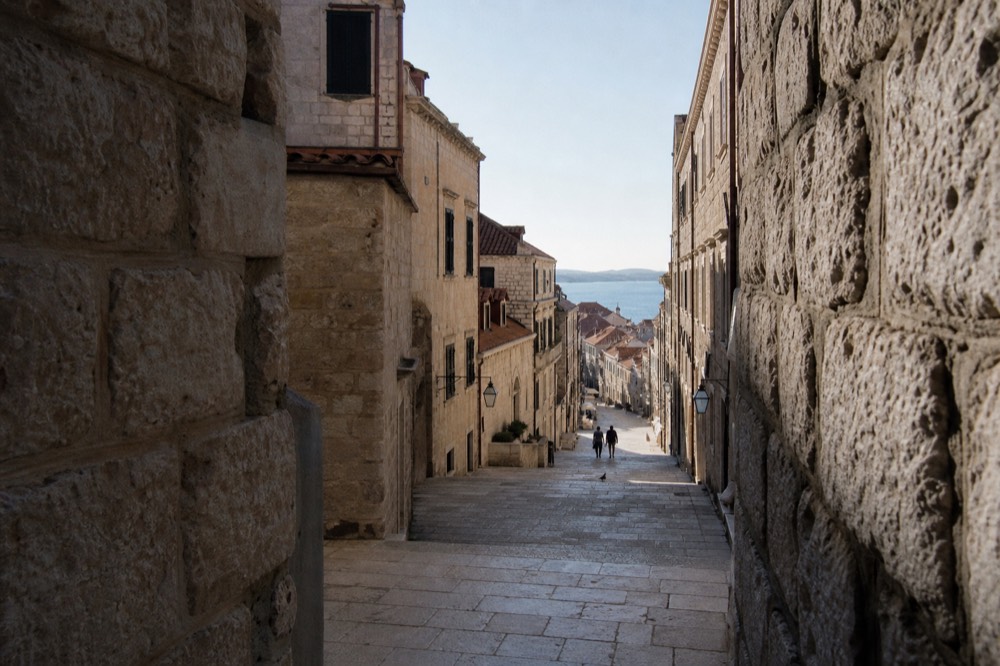
A few practical cautions before the detail. Wear real shoes, not flip-flops: the limestone is polished to a sheen by centuries of feet and it is treacherous in rain. Carry water on the walls, where there is little shade and no escaping the reflected heat. Book anything you care about ahead, because the best tours fill first on cruise days. And set a rough budget before you sit down at any restaurant with a view, because the view is priced in.
There is also a staircase problem that nobody warns you about. The Old Town is a bowl of stepped lanes, and the prettiest viewpoints, from the Jesuit steps to the lanes climbing toward the walls, are reached by stairs that keep going long after you expected them to stop. In August heat those staircases feel like a stair-climber in an oven. Pace yourself, and treat every climb as part of the day's exercise rather than a quick hop between sights. Anyone with knee trouble or limited mobility should plan a route around the flat spine of the Stradun and the Pile entrance, and our accessibility in Dubrovnik guide covers the terrain honestly.
If you want the walls explained rather than just walked, the guided options are the efficient route. The combo walk below pairs the Old Town circuit with the full walls loop in one morning.
What Not to Do in Dubrovnik?
Do not walk the walls at midday in summer, do not eat on the Stradun's first row of terraces if you care about price, do not drive into the Old Town (it is car-free), do not assume card payment works everywhere at market stalls, and do not show up in peak season without anything booked. Each of these mistakes is common, avoidable and expensive.
The midday walls walk deserves its own warning. The circuit is 1,940 metres long with almost no shade, the stone radiates heat, and the operator's stated hours run 08:00 to 19:30, which tells you the smart windows are the first and last two hours. A summer afternoon on those ramparts is an endurance event, not a stroll. Go at opening or after 17:00 and you get cooler stone, softer light and half the foot traffic. The walls reached their basic shape in the 13th century and were finished in 1660 with the Bastion of St Stephen, and the full circuit takes most people a solid two hours with photo stops, longer in heat. Budget the time and the water accordingly.
The Stradun itself is 298 metres long, and the terraces in that first row charge for location. Walk two streets back, into the side lanes off the Placa, and prices drop noticeably for the same food. The same logic applies to drinks: a bar with a direct view of the Luža square is renting you the view. If you are working out what a day here costs, our Dubrovnik trip cost breakdown has the honest numbers.
Pickpocketing exists but it is low-level and opportunistic, concentrated where crowds compress: at the Pile Gate entrance, inside the walls ticket queue, and at cruise-shuttle drop-off points. Ordinary city caution covers it. Keep valuables in a front pocket or a closed bag, and be most attentive in the squeeze points rather than on the open street. What catches more people is simpler: dehydration, sunstroke and blistered feet. The pharmacy on the Stradun does steady business in sunscreen and plaster, sold to people who assumed the sea breeze would be enough.
A note on tickets, because this is where the avoidable money leaks. The walls operator sells exactly two paid article types, adult and child 7 to 18, with under 6 free; there is no family ticket, so a family of four pays per person and should budget for it. The adult ticket is 40 euro in main season, 1 March to 30 November, and 20 euro in December. Anyone selling you a "discounted walls ticket" on the street is selling you nothing you cannot buy cheaper at the gate or online.
| Common mistake | Why it hurts | Do this instead |
|---|---|---|
| Walking the walls at noon in July or August | No shade, reflected heat, thickest queues | Start at 08:00 or go after 17:00 |
| Eating on the Stradun front row | You pay a premium for the location | Move two lanes back from the Placa |
| Driving to the Old Town | The core is car-free and parking is scarce | Park outside the core and walk in |
| Buying walls tickets on a cruise day at 11:00 | Long queues, sold-out time slots | Buy online the evening before |
| Flip-flops on polished limestone | The stone is slick, especially when wet | Closed shoes with grip |
One more thing not to do: do not treat the Dubrovnik Pass as automatically free money. The one-day pass costs 40 euro in main season, 1 March to 30 November, which is exactly the price of the standalone walls ticket in that window, and it adds ten more sights plus a 24-hour bus ticket. That is a strong deal if you will actually visit two or three of those museums. If you only want the walls, it buys you nothing extra. In December the standalone walls ticket drops to 20 euro while no pass tier is on sale at all, so the comparison flips entirely. Our full guide to the Dubrovnik Pass works through the maths.
Is Dubrovnik Worth Visiting?
Yes, and the reasons are structural: a walled UNESCO-listed Old Town of 24.7 hectares that survived intact, walls you can actually walk, an island-dotted coast within an hour by boat, and a food scene that justifies the prices if you book smart. The honest caveat is that it is worth visiting on its own terms, not as a cheap destination.
The Old City was inscribed by UNESCO in 1979 under criteria (i), (iii) and (iv), and it spent 1991 to 1998 on the List of World Heritage in Danger during the war, then was repaired. That history is visible if you know where to look, and it is part of what makes the place feel earned rather than manufactured. The city recorded about 4.2 million overnight stays in 2025, sharing first place among Croatian destinations with Rovinj. Places do not hold that position by accident.
Worth also depends on what you compare it to. If you want nightlife until dawn, Hvar wins. If you want the cheapest Adriatic holiday, Dubrovnik loses. If you want a compact, walkable, historically dense city where the sea is visible from a fortress wall and an island is a boat ride away, it is close to unmatched. For a longer argument both ways, read our piece on whether Dubrovnik Old Town is worth visiting.
The walls themselves are the anchor experience, and they justify the ticket price if you give them time. The 40 euro adult ticket in main season is the walls plus Fort Lovrijenac combination, and it also covers the Western Outer Wall and the Collection of Coins of the Republic of Ragusa. Lovrijenac, standing on its 37-metre sea rock, is included and most visitors never go, which is their loss: it is quieter and the view back at the city is the best one inside the ticket. The walls carry 16 towers, 3 fortresses, 6 bastions and 2 drawbridges along their 1,940 metres, up to 25 metres high in places, so this is a serious piece of military engineering, not a decorative parapet.
For context, the most common way people experience all of this in one go is the guided combo. The Old Town and Ancient City Walls combo tour runs about 3 hours 30 minutes, from $50.94 per person, rated 4.8 across 1,183 reviews, on top of your walls ticket. It exists because the walls without context are just a very long staircase with a view, and with context they are the story of a republic.
When to Avoid Dubrovnik?
Avoid the peak cruise window, mid-July to mid-August at midday, and avoid the busiest single cruise days if you can identify them. Counter-intuitively, September and October carry more cruise passengers than July and August, so "shoulder season" here needs a caveat: fewer crowds on the walls, but the port stays busy.
Here is the fact that surprises everyone. Port Authority data shows 2025 cruise passengers peaked in September at 101,246 and October at 100,132, above July's 96,072 and August's 87,385. The standard advice to visit in September for thin crowds is half right: the streets thin out, but the ships do not. The full-year 2025 total was 625,257 cruise passengers against 582,499 in 2024, and 461 cruise calls are scheduled for 2026, so the trend is upward.
The Port Authority limits cruise passengers to 8,000 a day in most cases, and of 243 cruise days a year only 18 exceed 8,000, with only 4 days slightly above 10,000. About forty call requests were refused in one season to hold that line. So the extreme days are rare, but they cluster, and the counting system means you can check predicted arrivals rather than guessing. The official Port Authority cruise measures page sets out the caps in the authority's own words.
What this means practically: mornings are the pressure point. The half-hourly curve I cited earlier, read on 8 September, showed the Old Town count climbing from 3,139 at 07:00 to a 7,739 peak at 10:00, then easing to 7,205 by 11:00. If you start your day at 08:00 you are ahead of the wave; if you start at 11:00 you are inside it. Cruise passengers are also ship capacity, not a guarantee of who walks ashore, so treat the scheduled numbers as an upper bound, not a census. The remaining 2026 season schedule holds 149 ship calls across 80 cruise days, and the busiest days in that window include 6 October with 2 ships and up to 5,798 passengers by capacity, and 29 September with 2 ships and up to 5,675.
| Period | 2025 cruise passengers | What to expect |
|---|---|---|
| July | 96,072 | Heat plus ships, thinnest patience |
| August | 87,385 | Hottest sea, hottest stone, busy port |
| September | 101,246 | Peak cruise month, best sea temperature balance |
| October | 100,132 | Still very busy by ship, cooler air |
| November | 28,480 | Quiet streets, many closures begin |
| December | 2,458 | Near-empty port, winter ticket prices |
Winter deserves its own caution in the other direction. The cable car is closed January to March, the Western Outer Wall is closed December through February, and the walls ticket drops to 20 euro in December while no pass tier is on sale at all. You will have the Stradun nearly to yourself, which some people love, but you should know what is shut before you book a January flight. Our Dubrovnik in winter guide lists the closures.
If your trip is fixed in the busy window, the workaround is altitude and timing. The cable car runs from a lower terminal at 38.0 metres to the Mount Srd station at 405.0 metres, a 367.0-metre rise in 3 minutes 30 seconds, and the operator states a view range of up to 60 km on a clear day. A late-afternoon ride up, after the midday crowds have drained back to the ships, is one of the calmest hours you can buy in this city. The adult round trip is 30 euro.
Is Dubrovnik Good for Beaches?
Honest answer: the beaches are decent, not world-class. They are mostly stone, concrete and pebble rather than sand, the water is exceptionally clear, and swimming is glorious from June through September. Come for the city and treat the sea as a bonus, not the headline, and you will not be disappointed.
The water is the strong half of the equation. The September average for this coast is about 23.6 degrees, from a NOAA long-run 1991 to 2020 open-water average, and August averages 25.8 degrees. Those are grid-cell averages, not beach thermometer readings, and sheltered bays run warmer: the Croatian met service's Dubrovnik buoy read 27.0 to 27.4 degrees on 8 September against that 23.6 monthly mean. For planning purposes, June at 22.5 degrees is the start of comfortable swimming and October at 21.0 degrees is the tail end.
The beaches themselves are a mixed bag. Banje sits right below the Old Town walls and is the most convenient and the most crowded. Sveti Jakov below the cliff requires a walk down a long staircase and rewards it with the best view of the walls from the water. Copacabana and the Lapad bay beaches are where families actually go, with more space and easier access from the hotel zone. Our guide to Dubrovnik's beaches compares them properly.
Two cautions specific to the water. First, sea urchins live around the rocks, and water shoes are cheap insurance on the stony coves. Second, the stone surfaces around beaches get brutally hot by midday, so the walk from towel to sea is often the most painful twenty seconds of the day. None of this is dangerous with basic preparation, but it surprises visitors who pictured sand. A third, smaller caution: shade is scarce and often paid for, in the form of rented loungers on the organised beaches, so a parasol from a shop is a sound investment for a family spending a full day by the water.
| Beach | Surface | Best for |
|---|---|---|
| Banje | Pebble and stone | Walls views, shortest walk from Old Town |
| Sveti Jakov | Pebble | The famous view, worth the staircase |
| Copacabana | Pebble and concrete | Families, water sports |
| Lapad bay | Pebble and concrete | Easy access, shade, cafes |
If your real goal is swimming in beautiful water rather than lying on a beach, the better move is a boat. The kayaking and snorkelling tours around Lokrum and Betina Cave get you into water you cannot reach from shore, and the island cruises combine swimming stops with lunch.
The overall verdict, then: careful, not fearful. Time the walls for morning, book ahead in the cruise window, budget for the view tax, wear shoes with grip, and check the arrival predictions before you commit to a day. Do that, and Dubrovnik repays every euro. For the wider picture of what this city offers beyond the caution list, start with Things to Do in Dubrovnik and build outward from the walls.
Common Questions About What to Be Careful of in Dubrovnik
What to be careful of in Dubrovnik?
Watch for midday heat on unshaded stone, cruise-day crowds between 10:00 and 16:00, polished limestone steps that are slick when wet, and high-season restaurant prices on the Stradun. Petty theft is rare and opportunistic. The bigger risks are dehydration, sunburn and poor timing, all of which are avoidable with an early start and real shoes.
Is Dubrovnik Safe to Walk at Night?
Yes. The Old Town is well lit, heavily policed and busy until late in the season, and violent crime is essentially absent. The genuine night-time hazard is the stone itself: the polished streets and staircases are hard to see after dark and treacherous in rain. Walk with a phone torch on the uneven lanes and you will be fine.
What Not to Do in Dubrovnik?
Do not walk the walls at midday in summer, do not eat on the Stradun's front-row terraces if price matters, do not drive into the car-free Old Town, and do not arrive in peak season with nothing booked. Also do not buy a one-day Dubrovnik Pass unless you will visit more than the walls, since in main season the pass and the walls ticket both cost 40 euro.
When to Avoid Dubrovnik?
Avoid mid-July to mid-August at midday if heat and crowds bother you, and note that September and October actually carry more cruise passengers than July and August, 101,246 and 100,132 in 2025 respectively. Avoid January to March if the cable car and full walls circuit matter to you, since both have winter closures.
Is Dubrovnik a Tourist Trap?
Parts of it behave like one: the front-row terraces, the souvenir rows and the peak-hour ticket queues. But the walls, the side-street konobas, Fort Lovrijenac and the islands are the real thing. The trap only catches people who never leave the first twenty metres of the Stradun. Walk two lanes back and the city changes character completely.