Where Do Locals Eat in Dubrovnik?
Where Dubrovnik locals actually eat, what they order, where the famous dine, and what a meal really costs, from a local specialist's perspective.
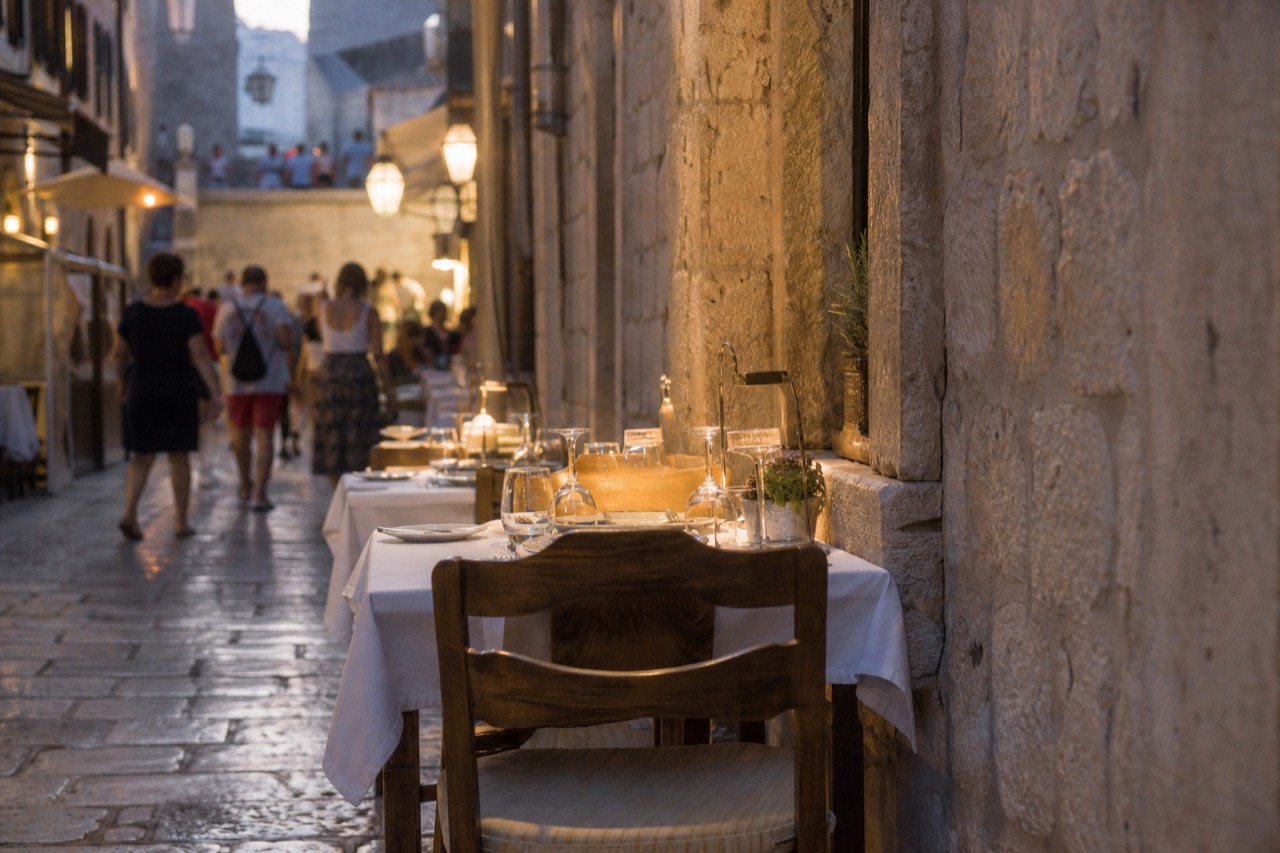
Where Do Locals Eat in Dubrovnik?
Locals eat mostly outside the walled Old Town, in Gruž, Lapad and the quieter residential streets above the city, and they eat earlier than visitors do. The Old Town has 24.7 hectares of UNESCO-listed ground and roughly four million visitor nights a year pressing on it, so residents treat it as a place to work and stroll, not a place to dine every night.
I have walked these streets with travellers since 2015, and the pattern never changes. Visitors assume the local life is inside the walls, behind the Stradun's polished limestone, and it partly is. But the people who live here, the city counted 41,562 of us at the 2021 census, do their everyday eating where the rents are sane and the menus are not translated into five languages. That means Gruž around the market and the port, Lapad around its long bay, and the small family places tucked into the residential blocks behind them.
The single biggest tell is timing. Dinner in a tourist restaurant on the Stradun starts at 19:00 because that suits flight schedules and cruise itineraries. A local table fills closer to 20:00 or later, and Sunday lunch, the real weekly ritual, is a long midday affair with family, not an evening event. If you walk past a konoba at 12:30 on a Sunday and see three generations around one table, you have found the right place, wherever it is.
The second tell is location logic. Everything inside the walls pays Old Town rent, and that rent is priced for a city that shared first place among Croatian destinations with Rovinj, at about 4.2 million overnight stays in 2025, according to the Croatian Bureau of Statistics. A ten minute bus ride west to Lapad or a fifteen minute walk to Gruž drops the price of the same grilled fish by a noticeable margin, because the landlord is not charging UNESCO prices. My standing advice to anyone planning a first visit is on the Things to Do in Dubrovnik homepage: budget your Old Town hours for sights and your meals for the neighbourhoods.
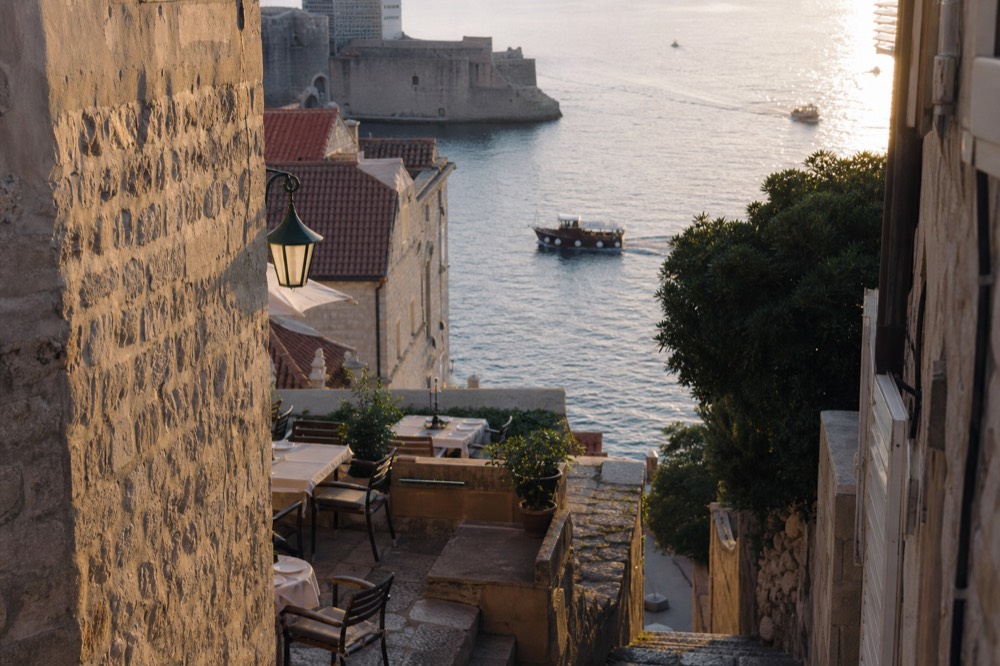
There is a middle category worth knowing about: the Old Town side-street places, one or two lanes off the Stradun, that survive on a mixed crowd of locals and repeat visitors. They are findable. Look for a short menu, a chalkboard rather than a laminated photograph album, and a waiter who does not stand in the doorway inviting you in. Locals also lean on the peka tradition, where you phone ahead in the morning so the cook can put the bell-shaped lid over coals for hours; that is a meal planned at breakfast, not chosen at 20:30.
A third tell, subtler than the other two, is what is on the neighbouring tables. A place full of locals will have bottles of house wine rather than cocktails, bread that arrives without being asked for, and a bill that comes only when you request it. Nobody here is rushing a table out for a second seating. If the staff let you linger over a coffee for forty minutes after the plates are cleared, you are being treated the way residents are treated, and that tells you more about a kitchen's audience than any review count can.
If you want the neighbourhood experience without the guesswork, a guided food walk is the shortcut. The Dubrovnik Food and Drink Walking Tour with a Local Guide runs about 3 hours, from $165.64 per person, rated 5 across 704 reviews, and moves you through local stops with a guide who knows the owners.
For a deeper route into the region's food culture, these three bookable experiences all take you to where the eating is genuinely local:
A few practical notes make the neighbourhood strategy easier to pull off. The Gruž market is at its best in the morning, when the stalls carry the day's catch and whatever vegetables and herbs are in season, so if you are staying anywhere with a kitchen, shop there rather than in the Old Town's small convenience shops. Around the port, the konobas serving the fishing and ferry crowd are among the most reliable in the city for simple grilled fish, and they do not blink if you order just a plate of anchovies and a carafe of white. In Lapad, the restaurants along the bay and just back from it fill with families on weekend evenings, and the walk from the bus stops takes minutes, not the steep climb some visitors expect.
One habit worth copying while you are here: order what the kitchen is actually good at. In a city this small, the fish is nearly always local and usually grilled over wood, the olive oil comes from groves up and down the coast, and the wine list leans toward small regional producers rather than imports. If a menu is heavy on photos and light on daily specials, that is the opposite of what the neighbourhood places do, and it is a fair signal that the kitchen is cooking for turnover rather than for neighbours. Ask what arrived that morning and order that, and you will eat the way the 41,562 of us do most nights of the week.
What Do Locals Eat in Dubrovnik?
Locals eat simply and seasonally: grilled or black risotto fish, seafood caught the same morning, peka baked under coals, pasta with shellfish, and vegetables from the Gruž market, with almost nothing fried in batter or arranged for photographs. The Dalmatian home table is closer to Italian coastal cooking than to what a cruise-ship menu calls Mediterranean.
The backbone is the grill. A whole fish, a handful of prawns, calamari, all cooked over charcoal with olive oil, lemon, parsley and salt, and that is the entire recipe. Black cuttlefish risotto is the dish locals order to test a kitchen, because it takes patience and cannot be faked. The shellfish comes from nearby Ston and its long tradition of oyster and mussel farming on the Pelješac channel, and the wine that accompanies it is usually Plavac Mali red or a local Pošip white, both grown an hour or less from the table.
Peka deserves its own paragraph because visitors constantly get it wrong. It is not a dish you decide to eat at 20:00. Meat or octopus is placed under a heavy metal dome, covered in embers, and left for two to three hours, which is why serious konobas want your order in the morning. Sunday is the classic day. When locals say they are having peka, they mean an event, not a menu item.
| What locals order | What it actually is | When it is eaten |
|---|---|---|
| Black risotto (crni rižot) | Cuttlefish risotto coloured and flavoured with its own ink | Any day, the kitchen-quality test |
| Peka | Meat or octopus with potatoes slow-baked under a coal-covered dome | Sundays and celebrations, ordered hours ahead |
| Grilled whole fish | Charcoal, olive oil, lemon, parsley, salt, nothing else | Everyday lunch or dinner |
| Shellfish from Ston | Oysters and mussels from the Pelješac channel farms | Weekends, with a local white |
| Green market vegetables | Whatever the Gruž stalls carry that week | Daily, cooked at home |
What locals do not eat is the photograph food: giant fried platters, seafood spaghetti drowning in cream, anything with a laminated picture on the menu. Our full what to eat in Dubrovnik guide goes dish by dish, but the one-line version is this: the shorter the menu, the closer the kitchen is to how the city actually eats. A place serving eight things is buying them fresh that morning. A place serving eighty things is storing most of them.
The Ston shellfish connection is worth taking seriously even on a short trip, because the oysters there come straight off the farms. The Oyster, Mussels, and Wine Tasting Tour in Ston pairs that shellfish with lunch and local wine, from $157 per person, rated 4.9 across 111 reviews on the live listing.
Where Do Celebrities Eat in Dubrovnik?
Celebrities in Dubrovnik eat at the same handful of high-profile spots everyone else does: the cliffside Buža bar above the sea, the restaurant terraces with Old Town or Adriatic views, and the hotel dining rooms of the grand properties just outside the walls. The city is small, 41,562 residents in total, so there is no hidden celebrity quarter, only tables with better views than others.
The honest reporting here is that Dubrovnik does not really do anonymous fine dining. When a film crew or a famous visitor is in town, and with the Game of Thrones legacy crews have been regulars for years, they gravitate to the places with the two things this city does better than anywhere: the view and the seafood. The Buža bar, clinging through a hole in the city walls above the open Adriatic, is the famous one, and our Buža bar guide covers it in detail. It is a drinks spot more than a dinner spot, but its terrace is the single most recognisable table-setting in the city.
For actual meals, the pattern is view-terrace dining on the Ploče side, where the old town rooftops and the island of Lokrum sit under you, and the hotel restaurants of the large properties at the eastern edge of the city. The cable car's hilltop restaurant on Mount Srđ is the other classic, 405 metres above the sea with a stated clear-day view range of up to 60 km. That is where you send a visitor you want to impress, and it is exactly where a visiting production sends its stars for a press photo.
None of this is a locals' secret, and that is the point. In a city this size, the celebrity answer and the postcard answer converge on the same terraces. What residents do instead is simpler: they take the same views for free, from the walls walk or the coastal path, and spend the money on the fish instead of the vista. The restaurants with a view guide lists the terraces if that is the experience you came for.
If the shellfish-and-wine side of that equation appeals more than the terrace itself, the Ston tour is the one to lock in early, since the small-boat and farm visits fill fastest in the shoulder months when the cruise calendar is at its busiest.
Where Do the Locals Eat in Croatia?
Across Croatia, locals eat at neighborhood konobas, the family taverns serving grilled meat and fish, and at home, with the market still anchoring daily shopping. In Dalmatia that means seafood and peka; in the interior it means hearty meat dishes, and everywhere it means eating what the region grows rather than what a visitor expects.
The konoba is the unit of Croatian eating. Originally a cellar for storing wine and oil, it became the family tavern, and the good ones still feel like somebody's cellar: stone walls, simple furniture, a menu your waiter can recite. In Dalmatia the konoba grills fish and bakes peka. In Slavonia and the interior, the same institution serves stews, roast pork and freshwater fish. The word is the constant; the menu follows the geography. Our konoba guide explains how to read one.
Croatians also eat at home far more than a visitor might guess from the packed summer terraces. The 4.2 million overnight stays Dubrovnik recorded in 2025 are overwhelmingly a warm-month phenomenon, and even in peak season the evening routine for many families is still a market dinner. That matters to you as a visitor for one practical reason: the truly local places are quiet in the shoulder months and full of regulars, while July and August push everyone, residents included, toward reservations. And the crowd pressure is not even shaped the way you would expect. Port Authority data shows cruise passengers in 2025 peaked in September at 101,246 and October at 100,132, above July's 96,072 and August's 87,385, per the Port Authority's cruise destination page. The eating-out calendar is busiest when most guidebooks tell you it is winding down.
| Region | What the local table looks like | The dish to look for |
|---|---|---|
| Dalmatia, including Dubrovnik | Grilled fish, shellfish, olive oil, peka ordered ahead | Black cuttlefish risotto |
| Pelješac and Ston | Shellfish straight off the farms, Plavac Mali reds | Oysters and mussels |
| Interior Croatia | Hearty meat cooking, stews, freshwater fish | Slow-cooked roasts |
| Istria and the north coast | Pasta with truffles, stronger Italian influence | Truffle pasta |
The regional thread most worth pulling from Dubrovnik is Pelješac. The peninsula supplies the city's shellfish and much of its serious red wine, and it is close enough that a food-focused day trip genuinely replaces a restaurant dinner. The Croatian Traditional Cuisine: Peka Cooking Lesson runs about 4 hours and teaches the coal-baked method itself, from $159.83 per person, with the details on the live listing.
Is Dubrovnik Expensive to Eat?
Yes, eating inside Dubrovnik's Old Town is expensive by Croatian standards, with restaurant prices closer to Western Europe than to the rest of the country, but the cost falls sharply one neighbourhood out. Gruž and Lapad run noticeably cheaper for the same ingredients, and market picnics or a morning peka order can feed you well for a fraction of a Stradun dinner.
The economics are not mysterious. Old Town rents are priced for a destination that shared first place in Croatia with 4.2 million overnight stays in 2025, and a restaurant recovers that rent through the menu. Add the short season, the logistics of supplying a pedestrian-only walled city, and a captive evening crowd, and you get prices that surprise people who have just arrived from elsewhere in Croatia. A simple grilled-fish dinner for two inside the walls, with a carafe of house wine, can easily cost what a full day of activities costs elsewhere in the country. Check the menu before you sit, every place posts one, and treat any menu without prices displayed as a warning.
The escape routes are the same ones locals use. Gruž, around the market and the port, is where the city's everyday food economy actually lives, and our Gruž market guide walks you through it. Lapad's restaurant rows run cheaper than the walls for the same grilled fish. Timing helps too: lunch menus are almost always kinder than dinner prices for identical food, and the market sells bread, cheese, olives and fruit for a picnic that beats most restaurant starters. If you want the region's signature shellfish at its source rather than at Old Town prices, the Ston oyster and mussel lunch, from $157 per person, includes the meal and the tasting in one price.
| Way to eat | Where it works best | Cost behaviour |
|---|---|---|
| Old Town restaurant dinner | Inside the walls | Highest, priced for the setting |
| Neighbourhood konoba | Gruž, Lapad, residential streets | Noticeably cheaper for the same food |
| Market picnic | Gruž market, then any viewpoint | A fraction of restaurant prices |
| Peka ordered in the morning | Family konobas, pre-booked | Set price, generous portions for a group |
| Food-focused day trip | Ston and Pelješac | Tour price includes the meal |
One more habit worth stealing from residents: they do not treat every meal as an occasion. Breakfast here is coffee and a pastry standing at a bar, not a hotel buffet, and that alone changes a daily budget. A standing coffee costs a fraction of the same cup carried to a terrace table, and nobody local thinks twice about it. Our budget Dubrovnik guide and the cheap eats guide cover the low-cost end street by street, including where the standing-coffee culture keeps prices honest.
Whether you eat your way through the neighbourhoods on your own or let a local walk you straight to the good tables, these are the three experiences that best match how Dubrovnik actually feeds itself:
Common Questions About Where Locals Eat in Dubrovnik
Where do locals eat in Dubrovnik?
Mostly outside the walled Old Town, in Gruž around the market and port, in Lapad around the bay, and in the residential streets above the city. They eat dinner later than visitors, around 20:00 or after, and they treat Sunday lunch as the week's main food event.
What Do Locals Eat in Dubrovnik?
Grilled whole fish, black cuttlefish risotto, shellfish from the Ston farms, and peka, meat or octopus slow-baked under a coal-covered dome that must be ordered hours ahead. The cooking is simple and seasonal, closer to Italian coastal food than to photographed tourist platters.
Where Do Celebrities Eat in Dubrovnik?
At the same high-profile spots as everyone else: the Buža bar on the cliff above the sea, the view terraces on the Ploče side, the grand hotel dining rooms just outside the walls, and the cable car's hilltop restaurant on Mount Srđ. In a city of 41,562 residents there is no hidden celebrity quarter.
Is Dubrovnik Expensive to Eat?
Inside the Old Town, yes, with prices closer to Western Europe than to the rest of Croatia. One neighbourhood out, in Gruž and Lapad, the same ingredients cost noticeably less, and market picnics or a pre-ordered peka can feed you well for a fraction of a Stradun dinner.
How Do You Spot a Restaurant Locals Actually Use?
A short menu, ideally on a chalkboard, no photographs, no waiter inviting you in from the doorway, and a crowd that arrives after 20:00 or fills the tables at Sunday lunch. If the kitchen asks you to order peka in the morning, that is the strongest sign of all.