What Is the Best Gate to Enter Dubrovnik Old Town?
Pile Gate is the iconic entry point for most visitors, but Ploče Gate is better for cruise passengers and those staying in the east. This local guide breaks down every gate, tells you which one to use for your trip, and covers everything else you need to know before you step inside the walls.
What Is the Best Gate to Enter Dubrovnik Old Town?
Pile Gate is the best gate for most visitors. It is the closest to the main bus stops, the cable car lower station, and the Stradun, and it is the one you see in every postcard. But Ploče Gate is better for cruise passengers and anyone staying in the Ploče area, and you should know about the other entries before you walk through the wrong one.
Any first-time visit to Things to Do in Dubrovnik starts at a gate, and the one you choose sets the tone. The Old Town is a walled peninsula with three main land gates, a small sea gate, and a handful of postern doors that locals use. Pile Gate (pronounced pee-leh) handles the heaviest foot traffic. It sits on the western side, directly below the bus stops and the taxi rank, and it opens onto a drawbridge and a stone bridge that leads you straight into the Stradun. The view from the bridge is the one that appears on every guidebook cover: the bell tower, the Church of St Blaise, and the polished limestone running the length of the main street.
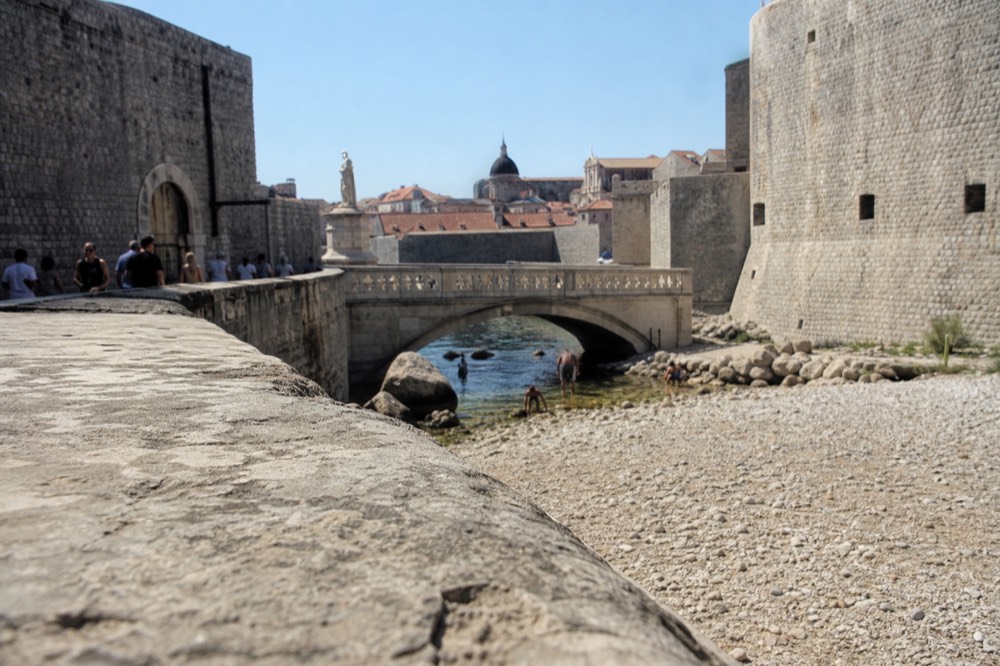
Ploče Gate is the eastern counterpart. It is less crowded, closer to the marina and the Excelsior Hotel, and the gate you will use if you walk from the cable car station or from the beaches in Ploče. It is also the closest gate to the cruise tender drop-off point, so anyone arriving by ship will save themselves a long walk along the outer wall by entering here. The gate itself is a double structure with a stone bridge and a smaller inner arch, and it leads you past the Dominican Monastery and the Ploče market before you reach the Luža Square end of the Stradun.
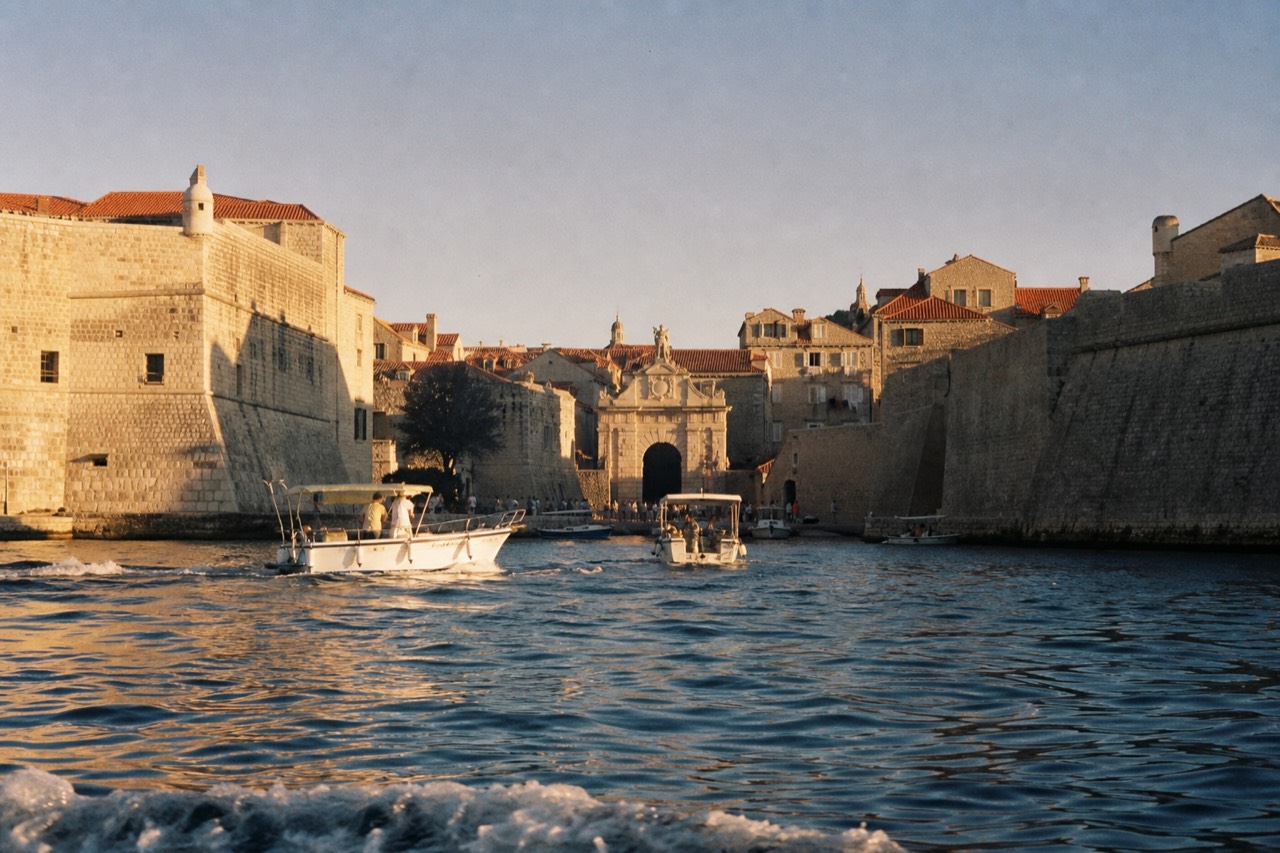
The third main gate is Buža Gate, sometimes called Buža II, a narrow opening in the northern wall that leads directly to the cable car lower station. It is not a grand entrance: it is a door-sized hole in the stone, easy to miss, and it was built specifically to give the city a new exit. If you are walking from the cable car and heading straight to the Stradun, Buža is the fastest route. From the sea, the Old Port gate under the Revelin Fortress is the entry point for anyone arriving by boat, including the Lokrum ferry and the water-taxi from Cavtat. Smaller gates like the Fish Market Gate and the Ponta Gate are used by locals and are not signposted for tourists. The full layout, with approach directions and the first thing you see, is worth keeping open on your phone until you have walked it once.
| Gate | Side | Closest landmark | Best for | Approach from |
|---|---|---|---|---|
| Pile Gate | West | Bus stops, taxi rank, cable car lower station | Most visitors, anyone arriving by bus or airport shuttle | Brsalje Square, the main bus terminal |
| Ploče Gate | East | Cable car upper station walk-down, Excelsior Hotel, marina | Cruise passengers, Ploče-area stays, cable car walkers | Frana Supila street, the Old Port road |
| Buža Gate | North | Cable car lower station | Shortcut from the cable car to the Stradun | Directly from the cable car exit |
| Old Port Gate | Sea, south-east | Lokrum ferry, water-taxi | Boat arrivals, Lokrum day-trippers | The Old Port harbour front |
The Old Town is compact, and the difference between the gates is a few minutes of walking. What matters is which direction you are coming from and how much you want to carry your luggage across the polished stone. Pile Gate also has the only proper taxi drop-off, so if you are arriving by cab from the airport or the ferry port, you will be dropped at Pile regardless of where you are staying. For a full walkthrough of the streets and the landmarks, the Old Town walking guide covers every lane and corner.
Is Dubrovnik Old Town Worth Visiting?
Yes, the Old Town is worth visiting for every traveller, even if you are only in Dubrovnik for a few hours. The Stradun, the limestone alleys, the UNESCO-listed architecture, and the density of stone staircases and medieval facades make it one of the most complete walled cities in the Mediterranean. It is compact, safe, and easy to walk, and the food and wine bars reward anyone who stays past the first hour.
The Old Town is the core of the city's identity. It was inscribed as a UNESCO World Heritage site in 1979, and the 24.7-hectare property is surrounded by the 1,940-metre city walls. The Stradun, 298 metres long, was laid out in its final form by the 1272 Statute, and the street's polished limestone and uniform Baroque facades are the result of a rebuild after the great earthquake. The area is a museum you walk through, and every alley leads to a church, a courtyard, or a staircase that climbs to a view.
The main question visitors ask is whether the crowds ruin it. The old town's carrying capacity is officially 11,275 people, and six counters at every entrance update the headcount every 15 minutes. On a September morning, the numbers climb from about 1,200 at 04:00 to 5,419 at 08:00 and peak at 7,739 by 10:00. That is busy, but the narrow streets absorb the flow, and the squares stay open. The busiest cruise days in September 2026 are scheduled for 15 September with four ships and up to 5,273 passengers, and 29 and 30 September with up to 5,675 and 5,536 passengers respectively. That is still well below the 8,000-passenger daily limit the Port Authority enforces, and out of 243 cruise days a year, only 18 exceed that number. The city walls guide explains the full circuit and the viewpoints.
The Old Town is also the base for the best walking tours. A 1.5-hour walk with a guide who knows the lanes and the stories is the fastest way to get your bearings, and it saves you from walking past a dozen unmarked doors without knowing what is behind them.
Should I Stay in Old Town or New Town in Dubrovnik?
Stay in the Old Town if you want to walk out of your door onto the Stradun, hear the church bells from your window, and have every restaurant within a few minutes. Stay in the new town, which includes Lapad, Babin Kuk, and Gruž, if you want a pool, a quieter evening, a beach, and a hotel that costs less per night. The Old Town is magical but cramped; the new town is comfortable but requires a bus ride.
The Old Town has a handful of small hotels, guesthouses, and apartments tucked inside the walls. Most are in converted stone houses, and many have no lift. The rooms are snug, the streets are narrow, and the noise from the bars and the early-morning deliveries can be surprising. But staying inside the walls means you can walk the Stradun at 07:00 before the crowds arrive, and you can have a glass of wine on a hidden terrace ten steps from your door. The closest hotel to the walls outside the Old Town is Hotel Excelsior, a luxury option in Ploče with a short walk to Ploče Gate.
The new town covers a lot of ground. Lapad is a leafy peninsula west of the Old Town, with a long promenade, a beach, and a concentration of mid-range hotels like Hotel Lapad. Babin Kuk is further out, at the tip of the peninsula, and is home to the larger resort hotels with pools and sea views. Gruž is the main ferry port and the local market area, and it has a growing number of good-value apartments and the budget-friendly Hotel Komodor, rated 7.8 out of 10 across 822 reviews. The full where to stay in Dubrovnik guide breaks down the neighbourhoods and the price ranges.
The choice comes down to a few trade-offs.
| Factor | Old Town | New Town (Lapad, Gruž, Babin Kuk) |
|---|---|---|
| Atmosphere | Stone alleys, bell towers, immediate historic feel | Residential, green, modern, less crowded |
| Noise | High in the evening, especially near the Stradun | Quiet, except near the Lapad strip |
| Price per night | High, often 30-50% more than a comparable new-town room | Lower, with more choice in the mid-range |
| Beach access | None; the nearest beaches are Banje and Sveti Jakov, a walk outside the walls | Lapad Beach is a short walk; Copacabana Beach is in Babin Kuk |
| Bus to Old Town | Not needed | Number 6 from Lapad and Gruž, 15-20 minutes; number 4 from Babin Kuk |
| Parking | Almost impossible; you park outside and walk in | Most hotels have parking; street parking is easier |
If you are here for one or two nights, the Old Town is worth the splurge. If you are here for a week and you want to swim, a hotel in Lapad with a pool and a sea view makes more sense. The number 6 bus runs every 10-15 minutes during the day and connects Lapad and Gruž to Pile Gate in about 15 minutes, so the commute is straightforward.
An Old Town walking tour is a smart move on your first morning, especially if you are staying outside the walls. It gives you a mental map of the lanes and the landmarks, and you will know exactly where to come back to in the afternoon.
What Is the Best Street in Old Town, Dubrovnik?
The Stradun (Placa) is the best street and the undisputed centre of the Old Town. It is 298 metres of polished limestone, lined with Baroque facades and the bell tower at the east end, and it is the street you will walk the most, the one you will photograph, and the one that every other alley leads to. But the side streets that climb the slope to the north are where the character of the old city lives.
The Stradun is the spine of the Old Town. It runs from Pile Gate to Luža Square, dead straight, and it was the main street of the Republic of Ragusa. The limestone slabs have been worn smooth by centuries of feet, and on a sunny day they reflect the light so brightly that the street looks like a mirror. The clock tower, the Onofrio Fountain, and the Church of St Blaise anchor the ends, and the cafés that line the street are a great place to watch the world walk by.
But the best street is not just one street. The Old Town is a grid of streets that run east-west, with steep staircases cutting north-south. Prijeko, one block north of the Stradun, is a restaurant row where the tables spill into the narrow lane and the kitchen windows open onto the stone. The street that runs from the Luža Square to the Ploče Gate, past the Dominican Monastery, is quieter and has a few hidden wine bars. The alleys that climb the hill toward the northern wall, like Od Puča and the streets around the Jesuit Stairs, are where you find the residential feel and the laundry lines that remind you people still live here.
The Stradun is also the street you see from above. The cable car ride to Mount Srđ gives you a view of the entire Old Town, and from 405 metres up, the Stradun is a pale ribbon running right through the middle. The Dubrovnik Cable Car runs from the lower station near Buža Gate to the top in 3 minutes 30 seconds, and a round-trip ticket is 30 euro for adults. The operator states a view range of up to 60 km on a clear day. The cable car guide has the full timetable and pricing breakdown.
A combined cable car and Old Town tour is a good way to get the full picture. You walk the streets with a guide, then you ride up and see how they all fit together, and the contrast between the close-up stone and the wide-angle view is one of the best experiences in the city.
How Do I Get from the Dubrovnik Airport to Old Town?
The fastest door-to-door option is a pre-booked private transfer, which costs from about 35-40 euro and takes 25-30 minutes to the Pile Gate drop-off. The cheapest is the airport shuttle bus, which runs to Pile Gate and the main bus station for 10 euro. Taxis and app-based rides are available but cost more than a pre-booked transfer, and there is no train.
The airport is in Čilipi, about 22 km south of the Old Town. The road follows the coast and then cuts inland, and the journey takes about 25 minutes with no traffic. The official airport shuttle bus is operated by Platanus and runs to the main bus station in Gruž and to Pile Gate, with a fare of 10 euro. The journey takes about 30-35 minutes depending on stops. The local bus line 27 is the cheapest option, but it stops more frequently and takes closer to 45 minutes. You can buy a ticket from the driver, and the fare is about 5 euro.
Taxis are available at the terminal, and the fare to the Old Town is typically 35-45 euro. The price is metered, but it is worth confirming the estimate before you get in. App-based services like Uber and Bolt operate in Dubrovnik, and a ride from the airport to Pile Gate usually costs between 30 and 40 euro depending on demand. The advantage of a pre-booked transfer is that a driver will meet you at the arrivals hall with a sign, and the price is fixed. The shared transfer listed on the live listings starts at $20 per person and takes about an hour, but it makes multiple stops.
| Option | Approx. cost | Time | Stops at | Best for |
|---|---|---|---|---|
| Airport shuttle bus (Platanus) | 10 euro | 30-35 min | Main bus station, Pile Gate | Solo travellers, budget |
| Local bus 27 | 5 euro | 40-45 min | Multiple stops, ends at Pile | Lowest budget, light luggage |
| Taxi | 35-45 euro | 25-30 min | Direct to your door | Groups, late arrivals |
| App ride (Uber/Bolt) | 30-40 euro | 25-30 min | Direct, pick-up at the terminal | Convenience, app payment |
| Pre-booked private transfer | 35-40 euro | 25-30 min | Direct, driver meets you | Worry-free, fixed price |
| Shared transfer | From $20 per person | 45-60 min | Multiple hotels | Budget, no rush |
The walk from the Pile Gate bus stop to a hotel inside the Old Town is a few minutes, but the stone is uneven, and wheeled luggage bounces loudly. If you are staying inside the walls, let your hotel know your arrival time: many will send someone to meet you and help carry your bags. The airport transfer guide covers every option in detail, including the bus schedules and the app-based alternatives.
Common Questions About the Best Gate to Enter Dubrovnik Old Town
What is the best gate to enter Dubrovnik Old Town?
Pile Gate is the best gate for most visitors because it is the closest to the main bus stops, the cable car lower station, and the Stradun, and it is the one you see in every postcard. But Ploče Gate is better for cruise passengers and those staying in the Ploče area, and Buža Gate is a shortcut from the cable car.
Is Dubrovnik Old Town Worth Visiting?
Yes, the Old Town is worth visiting for every traveller, even if you only have a few hours. The Stradun, the limestone alleys, and the UNESCO-listed architecture make it one of the most complete walled cities in the Mediterranean. A walking tour helps you get your bearings and see the hidden corners you would miss on your own.
Should I Stay in Old Town or New Town in Dubrovnik?
Stay in the Old Town for the atmosphere and the convenience of walking out your door onto the Stradun. Stay in the new town (Lapad, Babin Kuk, Gruž) for a pool, a quieter evening, and a lower price per night. The number 6 bus connects the new town to Pile Gate in about 15 minutes.
What Is the Best Street in Old Town, Dubrovnik?
The Stradun is the best street and the undisputed centre of the Old Town. It is 298 metres of polished limestone, lined with Baroque facades and the bell tower at the east end. The side streets that climb the slope to the north, like Prijeko, are where the character of the old city lives.
How Do I Get from the Dubrovnik Airport to Old Town?
The fastest option is a pre-booked private transfer, which takes about 25-30 minutes and costs from 35-40 euro. The cheapest is the airport shuttle bus at 10 euro, or the local bus 27 at about 5 euro. Taxis and app rides are available and cost 30-45 euro.
Is the Old Town easy to walk for someone with limited mobility?
The Stradun is flat and wide, but the side streets are steep and have many stairs. The main gates have ramps, and the Old Port gate is accessible. A walking tour that sticks to the main streets is manageable, but the full city walls are not wheelchair-accessible.