Dubrovnik City Walls: Tickets, Timing and How to Walk Them
The walls are the single most-booked paid attraction in Dubrovnik, and the one thing almost every visitor asks about. Here is what the ticket costs, what it includes, how long the walk really takes and how to time it so you are not doing it in the midday crush.
Short answer
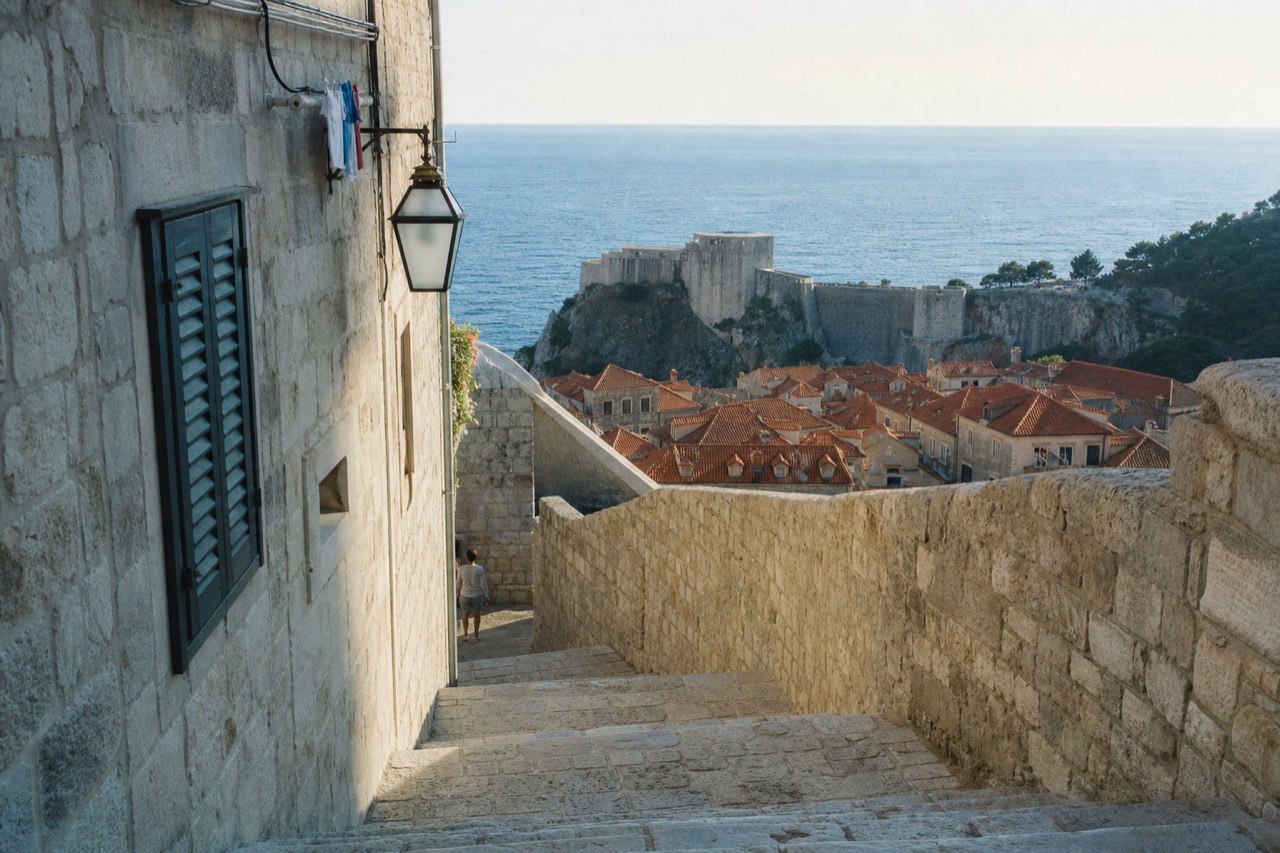
The Dubrovnik city walls circuit is 1,940 metres and takes most people 1.5 to 2 hours. An adult ticket costs 40 euro in main season, 1 March to 30 November, and includes Fort Lovrijenac. Walk early or late: the Old Town headcount peaks at 7,739 at 10:00 on a busy September day.
The numbers behind Dubrovnik's walls are the kind that stop you mid-sentence. The circuit runs 1,940 metres, stands up to 25 metres high, and packs in 16 towers, 3 fortresses, 6 bastions, 2 corner fortifications, 3 bulwarks with rows of turrets, 3 moats, 2 flank fortresses, 1 breakwater and 2 drawbridges. Its shape was settled in the 13th century and the last stone, the Bastion of St Stephen, went up in 1660. I have walked this circuit more times than I can count with visiting friends, and it never stops being the best 40 euro in the city, when it is timed well.
This page answers the questions people actually ask: whether it is worth it, how long it takes, what the ticket includes, when to go and whether a guide adds anything. Everything here comes from the operators' own sites, the Port Authority's counters and the UNESCO record, not from a brochure.
Is It Worth Going on the City Walls in Dubrovnik?
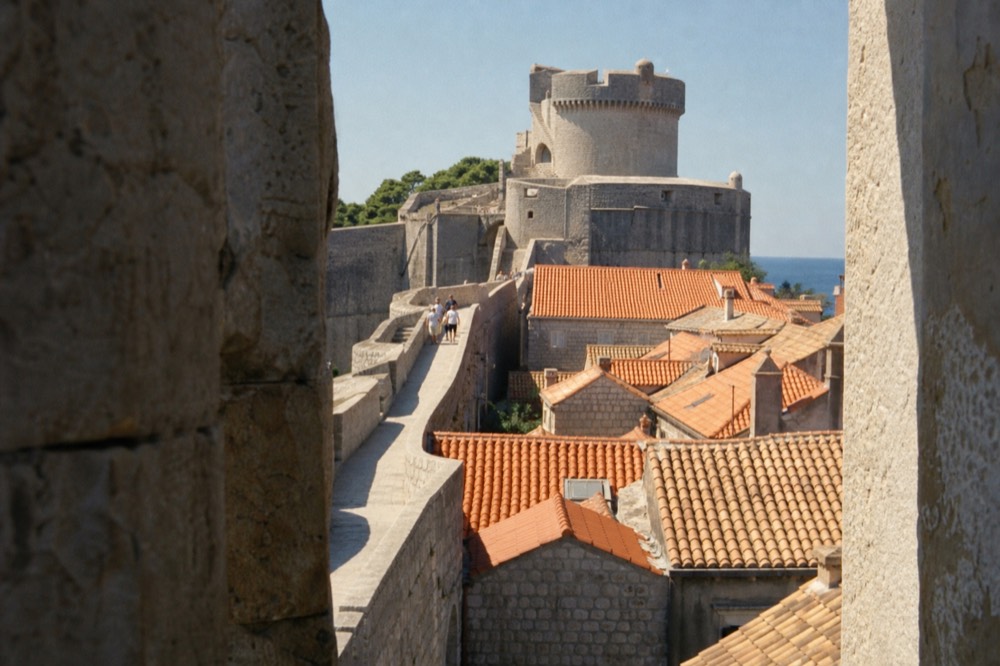
Yes, for almost everyone. The walls are the single best view of the Old Town, the rooftops, the Adriatic and Lokrum in one circuit, and there is no other place in the city where you look down on the Stradun's 298 metres of polished limestone. The 40 euro main-season ticket stings, but it bundles Fort Lovrijenac and two more sites, and the walk itself is the memory most visitors take home.
The honest caveat is physical. This is not a flat promenade: the circuit is a continuous stone staircase in places, with long climbs between the Pile Gate entrance and Minceta Tower at the far end, and almost no shade between 11:00 and 16:00 in summer. If you have knee trouble or you are travelling with very small children, you may prefer the Western Outer Wall section or a shorter partial route, and I cover both below.
The other caveat is crowds. The Old Town's six entrance counters update a headcount every 15 minutes, and on 8 September 2026, a genuinely busy day, the count climbed from 5,419 people at 08:00 to a 7,739 peak at 10:00, easing only slightly to 7,205 by 11:00. The official carrying capacity for the whole Old Town, from the UNESCO carrying-capacity assessment, is 11,275. Walk at 08:00 or after 17:00 and the walls feel like a medieval city. Walk at 11:00 in July and they feel like a queue with a view. Worth it either way, but wildly different experiences.
For the full price breakdown and pass comparison, see the city walls tickets guide, and if you are weighing the bundled sightseeing card, the Dubrovnik Pass explained page covers it in detail.
| Walls measurement | Figure |
|---|---|
| Total circuit length | 1,940 m |
| Maximum height | up to 25 m |
| Thickness, land side | 4 to 6 m |
| Thickness, sea side | 1.5 to 3 m |
| Shape reached | 13th century |
| Final construction | 1660, Bastion of St Stephen |
How Long Does It Take to Walk the City Walls of Dubrovnik?
Most visitors need 1.5 to 2 hours for the full circuit without stopping long, and 2.5 to 3 hours with photo breaks, a drink at the halfway café and a proper look at Fort Minceta. The circuit is 1,940 metres, but the staircases mean you are climbing far more than the flat distance suggests. Fit walkers do it in an hour; families with slower legs should budget three.
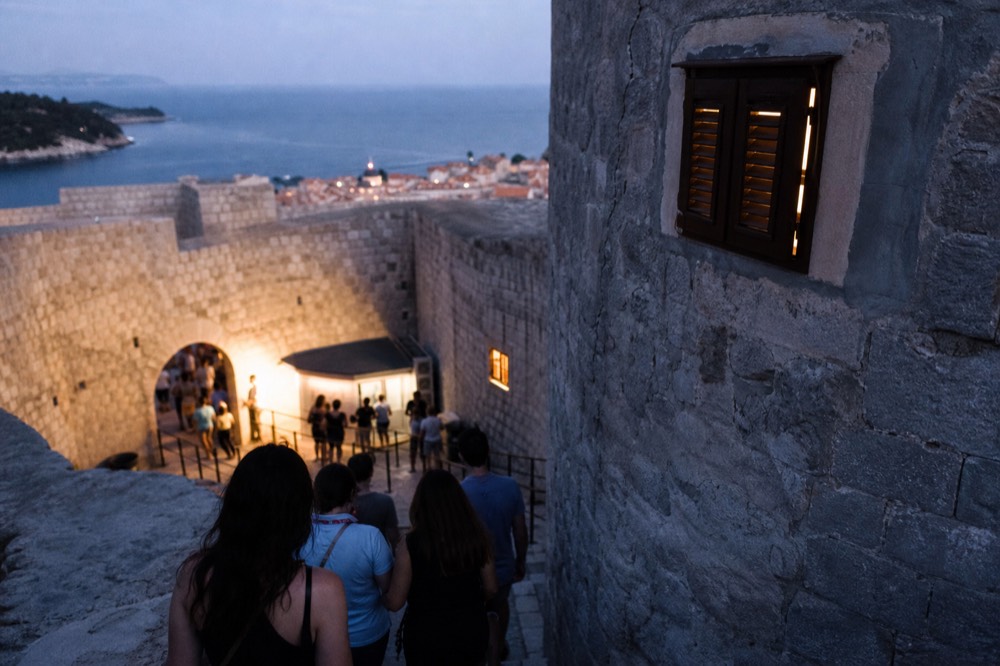
Direction matters more than most guides admit. The standard route runs anticlockwise from the Pile Gate entrance, which front-loads the hardest climb to Minceta Tower and then gives you a long, descending, sea-level stretch past Lovrijenac views back toward the harbour. Doing the stairs first, in the cooler part of the morning, is the right call in summer. The operator's stated hours at time of check were 08:00 to 19:30, so a 17:30 start gives you two hours of golden light and thinner crowds.
If two hours sounds like more than your legs or your schedule allow, you do not have to skip the walls entirely. The ticket also covers the Western Outer Wall at Bokar, a shorter, quieter stretch with the same sea views, though note it is closed in December, January and February. Some visitors walk the main circuit in the morning, rest through the midday heat, and use the Lovrijenac visit, which the same ticket covers, in the late afternoon when its west-facing rock catches the light.
A guided walk changes the time budget slightly. A typical guided walls tour runs about 2 hours, because a guide sets a steadier pace and builds in stops at the towers where the stories live. The Ancient City Walls & Wars Walking Tour from Dubrovnik Walks is exactly that format, from $29.58 per person, rated 4.8 across 1,387 reviews, ticket typically bought separately. Read more on the guided walls walk tour page, or Check availability.
| Walking style | Realistic time | Best for |
|---|---|---|
| Full circuit, no stops | 1 to 1.5 hours | Fit walkers, early starters |
| Full circuit with breaks | 2 to 3 hours | Most visitors, photographers |
| Guided walls walk | about 2 hours | First-timers who want context |
| Western Outer Wall only | 30 to 45 minutes | Short visits, tired legs |
What Does the City Walls Ticket Include and Cost?
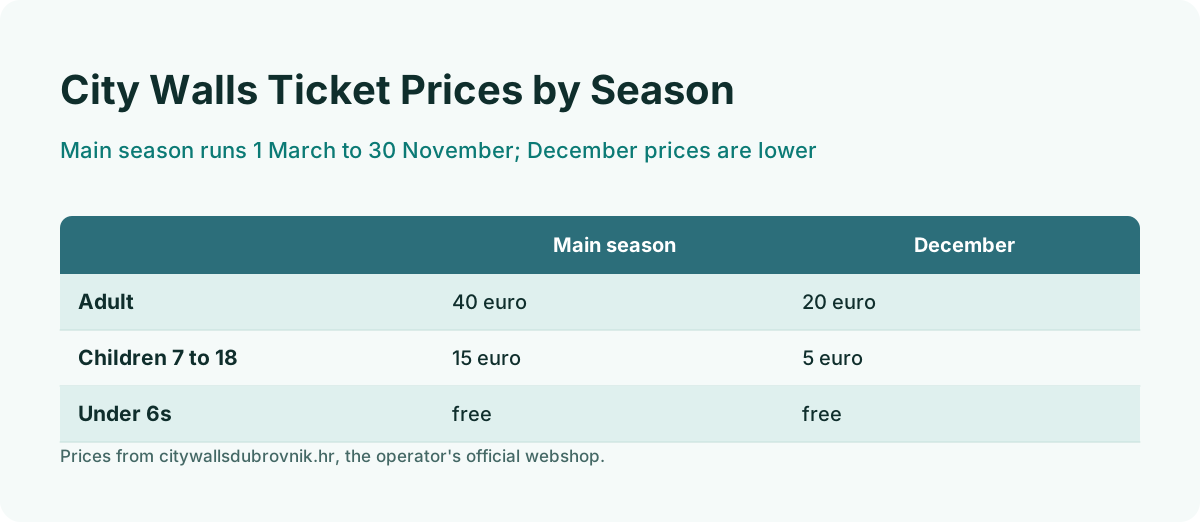
An adult ticket costs 40 euro in main season, 1 March to 30 November, and 20 euro in December. That 40 euro ticket is actually a combination: the walls plus Fort Lovrijenac, plus the Western Outer Wall and the Collection of Coins of the Republic of Ragusa at Gundulic Square 6. Children 7 to 18 pay 15 euro, then 5 euro, and under 6s are free. There is no family ticket.
Those prices come straight from the operator's own webshop, the Society of Friends of Dubrovnik Antiquities, whose official city walls page carries the monument's details and whose shop sells the tickets. Two things trip people up. First, there is no cheaper walls-only ticket: the 40 euro article is internally named "adult walls + Lovrjenac", so if you skip the fortress you are not getting a discount. Second, Lovrijenac bought alone is 15 euro, which matters if you are deciding whether to buy the combined ticket or just the fortress.
The Dubrovnik Pass comparison is where the arithmetic gets interesting, and it is a main-season comparison only. A one-day pass costs the same 40 euro as the walls ticket between 1 March and 30 November, and adds ten more sights, including the Rector's Palace, the Maritime Museum and the Franciscan Monastery Museum, plus a 24-hour bus ticket. In December the standalone walls ticket drops to 20 euro and no winter pass tier is on sale at all, so the "pass costs the same as the walls" line is true for ten months of the year and false for the other two. The pass is sold as "SUMMER 2026, 01.03.2026 to 30.11.2026" in one ticket type only, ADULT PASS (7+), through the official pass site.
| Ticket | Main season (1 Mar to 30 Nov) | December |
|---|---|---|
| Adult walls + Lovrijenac | 40 euro | 20 euro |
| Child 7 to 18 | 15 euro | 5 euro |
| Child 6 and under | free | free |
| Lovrijenac alone | 15 euro | 15 euro |
| One-day Dubrovnik Pass | 40 euro | not on sale |
One more inclusion worth knowing: every pass tier lists "City Walls + Lovrjenac Fortress" as its first inclusion, and every tier allows a one-time visit to each institution, the walls included. So you cannot walk the walls twice on one pass, but you can walk them once and spend the rest of the day in museums that would otherwise add up fast.
When Is the Best Time of Day to Walk the Walls?
Start at 08:00, opening time, or after 17:00. The Old Town's counters show the crowd curve plainly: on a busy September day the count was 5,419 at 08:00, peaked at 7,739 at 10:00 and was still 7,205 at 11:00. Before 09:00 you share the wall top with a fraction of the people, the stone is cool underfoot and the light comes in low over the Adriatic for photographs.
That curve is not a guess. Six counters at every Old Town entrance update a headcount every 15 minutes, and the official carrying capacity from the UNESCO assessment is 11,275 people. Even the 10:00 peak sits below capacity, but the wall top is a narrow strip of stone, and a headcount near the peak translates into a slow, single-file shuffle on the staircases.
Season matters as much as hour, and here is the fact that surprises nearly everyone: cruise passengers in Dubrovnik peaked in September 2025, at 101,246, and October, at 100,132, both above July's 96,072 and August's 87,385. The Port Authority's own monthly data says autumn, not high summer, is the busiest cruise season, so do not assume a September visit buys you empty walls. The full-year 2025 figure was 625,257 cruise passengers, and 461 cruise calls are scheduled for 2026. Those are ship-capacity numbers, not a promise of how many people actually walk ashore, but the direction is clear: early morning wins in every month.
| Time slot | Crowds | Heat | Verdict |
|---|---|---|---|
| 08:00 to 09:30 | lowest | cool | best overall slot |
| 09:30 to 12:00 | peak | building | avoid in July and August |
| 12:00 to 16:00 | busy | hottest, no shade | worst combination |
| 17:00 to 19:30 | easing | cooling | golden light, relaxed pace |
Guided Walk or Walk Alone: Which Is Better?
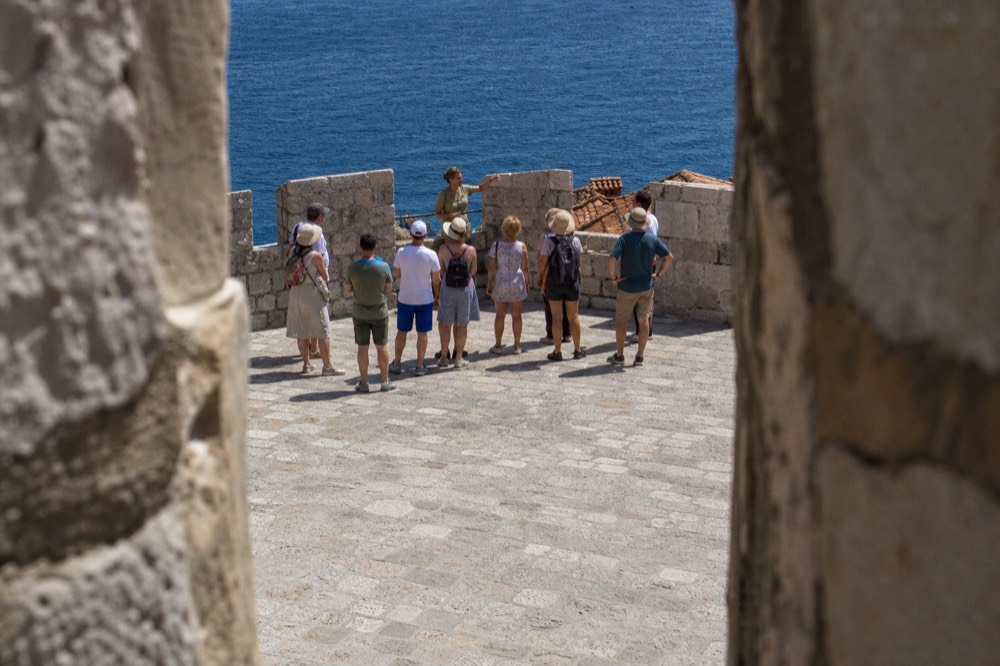
Walk alone if you want pace control and photographs; take a guided walk if you want the walls to mean something. A guide turns Minceta from a round tower into the story of the 1660 completion, the sieges and the Republic's defence logic, and Dubrovnik Walks' 2-hour walls tour, from $29.58 per person and rated 4.8 across 1,387 reviews, is the established format. The admission-only ticket option also exists, from $36.37.
The choice is really about what you will remember. Walking alone, you get the route, the views and the freedom to linger at Buza-adjacent viewpoints. Walking with a guide, you get the wars, the engineering and the reasons the wall is 4 to 6 metres thick on the land side but only 1.5 to 3 metres on the sea side, where attack by sea was never the real threat. One recent guest review of the walls wars walk sums up the difference: it, "helped put Dubrovnik's past (and present) into perspective."
This well organized tour helped put Dubrovnik's past (and present) into perspective. It's incredible that the city walls have withstood the test of time. Antun was a wonderful guide.
linda_a
There is also a middle path that many first-timers miss: the combo tour. Dubrovnik Walks runs an Old Town and Ancient City Walls combo, about 3 hours 30 minutes, from $50.94 per person, rated 4.8 across 1,183 reviews. You get the street-level orientation of the Old Town first, then the walls with the geography already in your head. For a one-day visit it is arguably the most efficient structure in the city. Details are on the Old Town and walls combo tour page.
If your budget is tight or you simply prefer your own company, the admission-only route is completely legitimate. Gulliver Travel sells a city walls admission ticket product, from $36.37 per person, rated 3.6 across 249 reviews, and the operator's own webshop sells the same 40 euro ticket directly. What the resold admission product mostly adds is a skip-the-line convenience at peak times.
| Option | Price from | Length | Rating |
|---|---|---|---|
| 2-hour guided walls walk | $29.58 | 2 hours | 4.8 across 1,387 reviews |
| Old Town and walls combo | $50.94 | 3 hours 30 minutes | 4.8 across 1,183 reviews |
| Walls admission only | $36.37 | 1 to 3 hours | 3.6 across 249 reviews |
| Old Town walk, local guide | $20 | about 1 hour 30 minutes | 4.8 across 5,826 reviews |
What Will You Actually See on the Circuit?
The anticlockwise route gives you, in order: the Pile-facing ramparts above the bowling green, the climb to Minceta Tower with the whole Old Town at your feet, the sea-side stretch with Lokrum and the Adriatic, the harbour panorama above the Old Port, the view down on Fort Lovrijenac standing on its 37-metre sea rock, and finally the long descent back to Pile. The picture changes completely from one tower to the next.
The Stradun seen from above is the shot most people come for: 298 metres of pale limestone running from Pile to the clock tower, laid out like a ruler by the 1272 Statute that fixed the final plan of both the city and its main street. The rooftops are the second surprise. After the 1991 to 1998 period when the Old Town sat on the UNESCO List of World Heritage in Danger, following the siege damage, the distinctive pale-orange tiles you see from the wall top are largely replacements, and the few darker, weathered patches are the survivors.
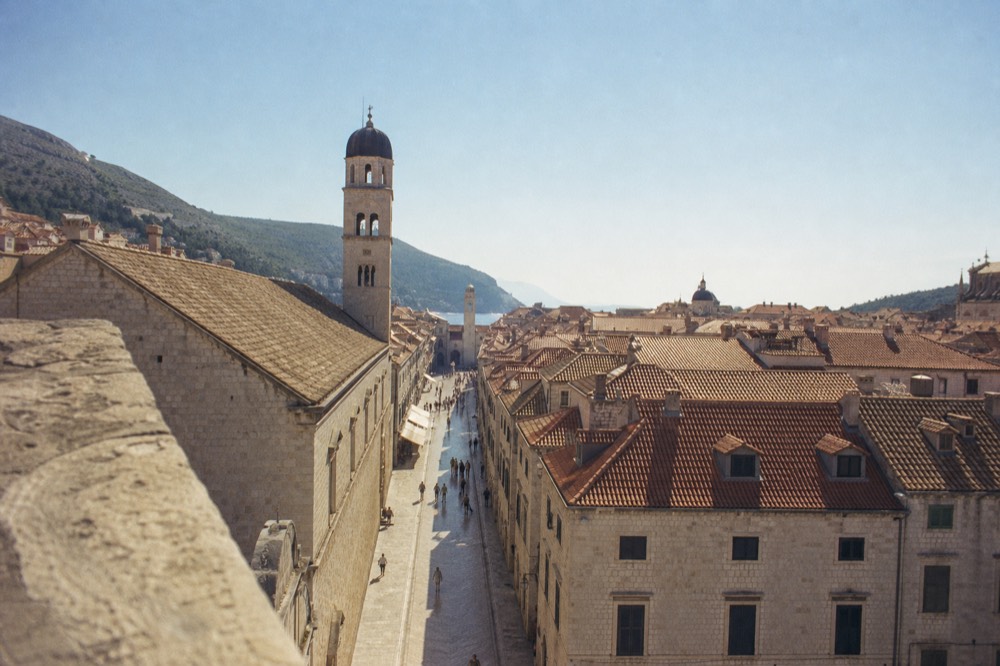
The Old Town itself was inscribed by UNESCO in 1979 under criteria (i), (iii) and (iv), reference C 95bis, covering a 24.7-hectare property with a 1,188.6-hectare buffer zone, per the UNESCO listing. From the wall top you can read that boundary with your own eyes: the dense terracotta of the property, then the modern city beyond it, then the sea. On a clear day the cable car's upper station on Mount Srd, 405 metres above sea level, is visible to the north, and Lokrum's green outline sits just offshore to the southeast.
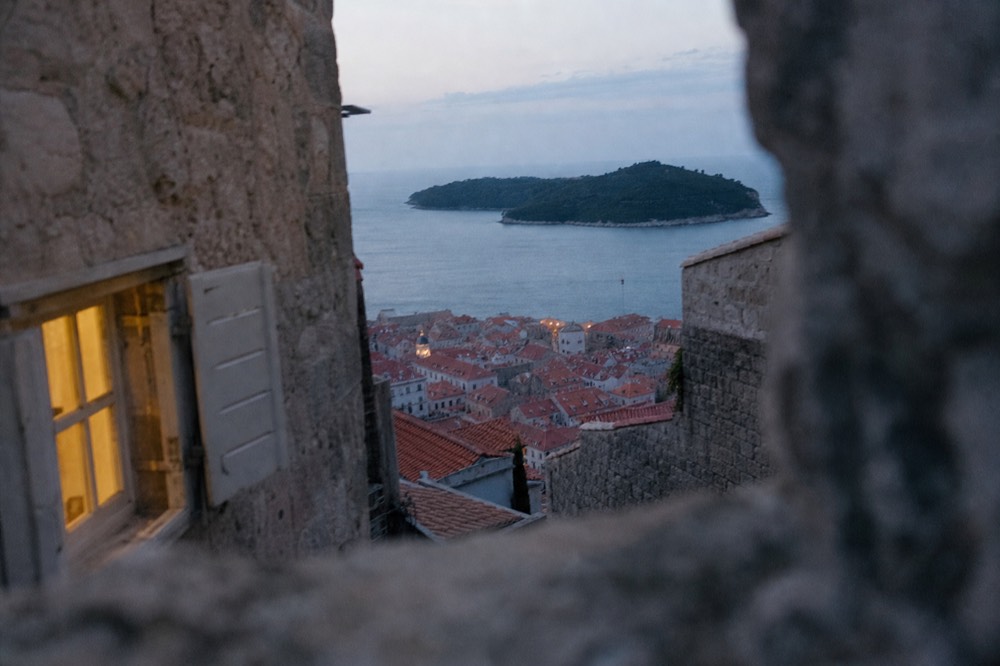
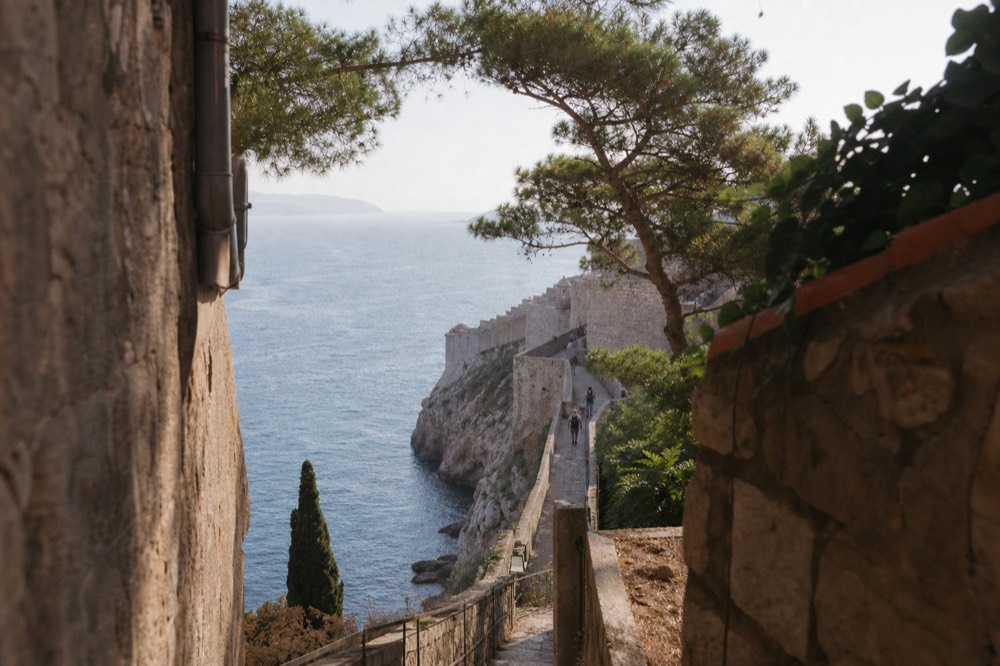
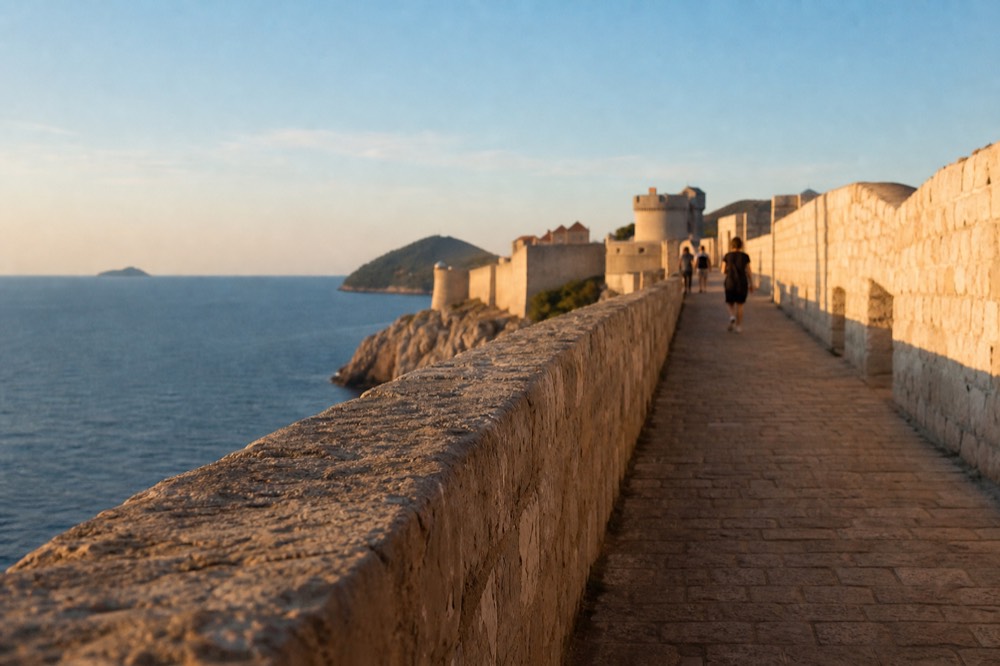
Do not rush the sea-side stretch between the Bokar bastion and the St John fortress. This is where the wall drops closest to the water, where swimmers at the rocks below look impossibly small, and where the late-afternoon light turns the stone gold. It is also the flattest part of the circuit, a mercy after the Minceta stairs, and the spot where most people take their best photograph of Lovrijenac across the small bay.
Practical Tips for Walking the Walls
Bring water, sun protection and shoes with grip; the stone is polished smooth on the staircases and there is almost no shade between the towers. Enter at Pile Gate for the standard anticlockwise route, buy tickets online in peak months to skip the booth queue, and plan the Lovrijenac visit for a different part of the day, since the same ticket covers it. Toilets and a small café sit roughly halfway around the circuit.
Water first: the café is a welcome sight on a hot day but it is the only one, and a 25-metre-high stone wall in July is an oven. One litre per person is the minimum I would carry in summer. Shoes second: flip-flops are the cause of most of the stumbles I have seen on the descent near Pile, because centuries of feet have worn the steps into shallow, slippery bowls.
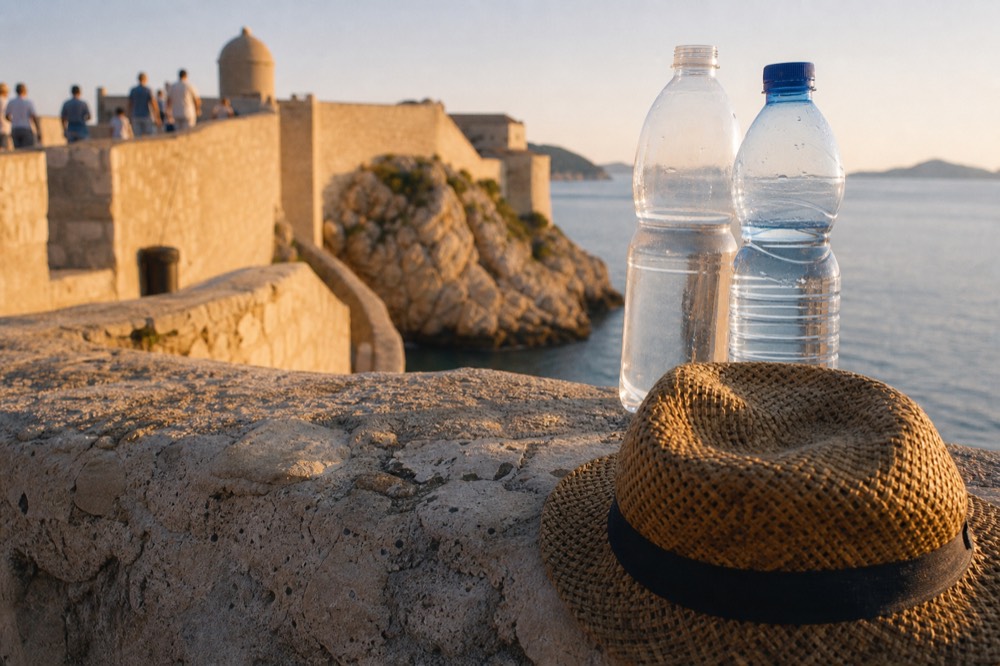
Timing your Lovrijenac visit matters because the fortress stands on a 37-metre sea rock on the far side of the bay, reached by a path outside the walls near Pile, and its west-facing position is at its best in the afternoon. Doing walls in the morning and Lovrijenac at 17:00 is the natural rhythm, and it spreads the climbing across the day. The Collection of Coins of the Republic of Ragusa at Gundulic Square 6, also included in the ticket, is a 20-minute stop most people never bother with, which is exactly why it is quiet.
Accessibility, honestly stated: this is not a wheelchair or stroller circuit. The staircases are steep, the walkway narrows to single file in places, and there are no lifts or bypasses. If full mobility is not on the table, the Western Outer Wall section at Bokar is shorter and gentler, and the views from Mount Srd via the cable car, 367 metres of rise in 3 minutes 30 seconds, give you the panorama without a single staircase. For more on planning around the terrain, the walkability guide is blunt about what this city asks of your legs.
For anyone planning a longer stay, the walls pair naturally with the rest of the old-town-and-walls cluster: the best things to do overview puts the circuit in context, and this whole site, Things to Do in Dubrovnik, exists to answer exactly these timing questions.
| Entrance | Route direction | Notes |
|---|---|---|
| Pile Gate | standard anticlockwise start | main entrance, steepest climb first |
| Old Port (St John fortress) | clockwise start | quieter booth, stairs come at the end |
| Western Outer Wall, Bokar | short separate stretch | closed December to February |
Common Questions About the Dubrovnik City Walls
Is it worth going on city walls in dubrovnik?
Yes. The walls are the best single view in the city and the experience most visitors rank as the highlight of their trip. The 40 euro main-season ticket is steep, but it includes Fort Lovrijenac, the Western Outer Wall and the coin collection, and there is no other place to see the Old Town's rooftops, the Stradun and the Adriatic in one circuit.
How Long Does It Take to Walk the City Walls of Dubrovnik?
Plan on 1.5 to 2 hours for the full 1,940-metre circuit without long stops, and 2.5 to 3 hours with photographs and a drink at the café. Fit walkers finish in an hour; families and anyone pacing themselves in heat should budget three.
Is It Worth Doing the City Walls in Dubrovnik With a Guide?
A guide changes what the walk means rather than how long it takes. The 2-hour walls wars walk, from $29.58 per person and rated 4.8 across 1,387 reviews, covers the sieges, the engineering and the Republic's defence logic, which the panels along the route only hint at. Walk alone if pace and photographs matter more to you.
Can You Buy City Walls Tickets in Advance?
Yes. The operator's own webshop sells the 40 euro adult and 15 euro child 7 to 18 tickets online, and resold admission products add skip-the-line convenience at peak times. In July, August and September, buying ahead saves a real queue at the Pile booth.
Do the Walls Ticket and the Dubrovnik Pass Cost the Same?
In main season, 1 March to 30 November, yes: the one-day pass is 40 euro, the same as the walls ticket, and adds ten more sights plus a 24-hour bus ticket. In December the walls ticket drops to 20 euro and no winter pass tier is on sale, so the comparison only holds for the main season.