Where to Stay in Dubrovnik: Best Areas and Hotels for Every Kind of Trip
Dubrovnik is a small city with sharply different neighbourhoods, and the one you pick shapes your whole trip. Here is how the areas compare, what hotels cost, and how to match the base to your itinerary.
Short answer
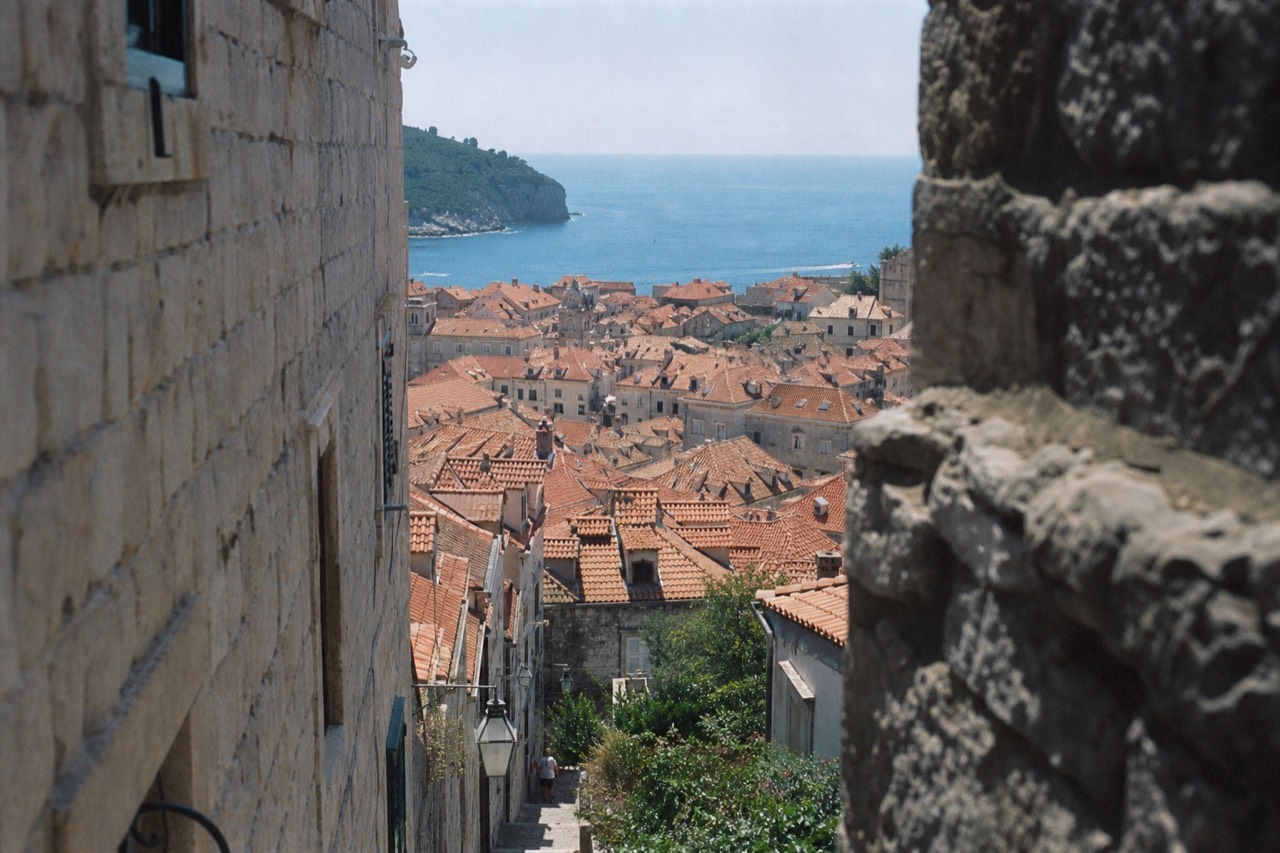
Stay inside or just outside the Old Town if it is your first visit and you want the walls, Stradun and Lokrum on foot. Choose Lapad for beaches and family space at lower prices, Ploče for sea-view luxury near Banje beach, or Gruž for ferries, the port and day trips. The adult walls ticket is 40 euro in main season and the one-day Dubrovnik Pass costs the same.
Where to Stay in Dubrovnik: Best Areas and Hotels for Every Kind of Trip
Dubrovnik packs a UNESCO-listed walled city of 24.7 hectares, a port that handled 625,257 cruise passengers in 2025, and a string of beach suburbs into a municipality of just 41,562 residents. Where you sleep inside that small map matters more than in almost any other Mediterranean city I know. I have walked these streets with travellers since 2015, and the single most common planning mistake I see is booking a hotel for the wrong trip: cruise passengers paying Old Town premiums for a six-hour stop, families hauling suitcases up stone staircases that have no ramps, couples in a business district a bus ride from everything they came for.
This guide compares every area that makes sense as a base, names the hotels worth booking in each, and tells you what a room realistically buys you. It also answers the four questions travellers actually type, because they are subtly different questions: best area overall, best for a first visit, best for quiet, best for beaches. For the full spread of activities across the city, start with Things to Do in Dubrovnik and work backwards to the base that suits them.
Which Area of Dubrovnik Is Best to Stay In?
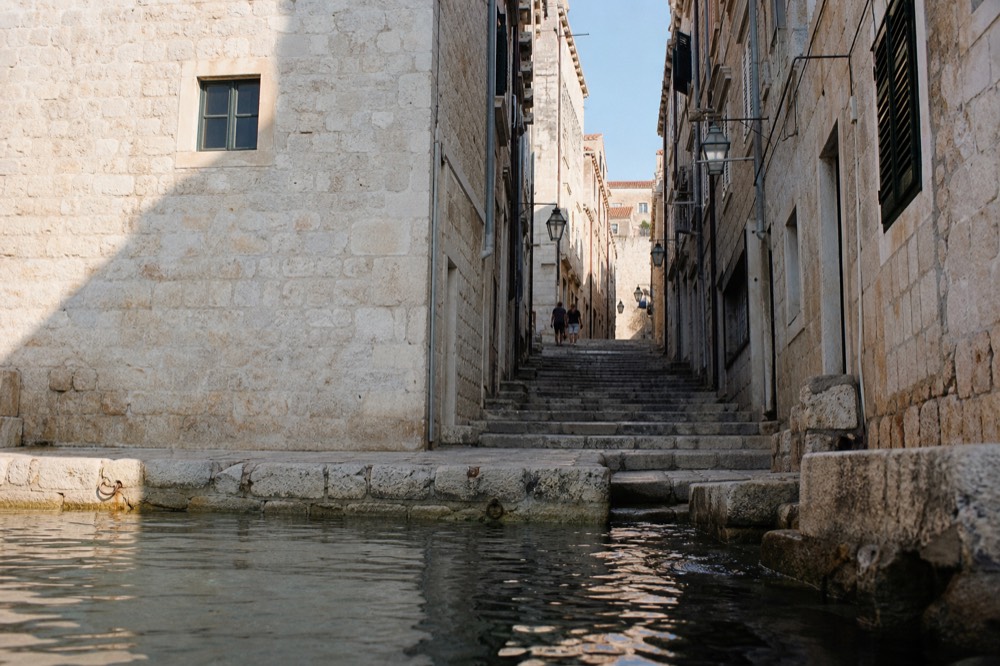
For most travellers the best area to stay in Dubrovnik is the Old Town itself if the trip is short and sightseeing is the point, and Lapad if the trip is longer, beach-focused or family-focused. Ploče splits the difference with luxury hotels a ten-minute walk from the Ploče gate, while Gruž suits ferry passengers and day-trippers. Every area is connected by a frequent city bus network, so no choice strands you.
The honest starting point is that Dubrovnik's neighbourhoods are not interchangeable versions of the same city. The walled Old Town, inscribed by UNESCO in 1979 under criteria (i)(iii)(iv), is a car-free zone of limestone lanes where the main street, the Stradun, runs 298 metres from Pile to Luža. Nothing about staying there resembles a normal hotel district: deliveries happen by trolley, taxis stop at the gates, and your last hundred metres are on foot, possibly up stairs.
Lapad, west of the centre, is the opposite: a leafy peninsula of hotels, pine-shaded bays and a proper promenade, built up around beaches rather than monuments. Ploče sits immediately east of the Old Town, climbing the hillside above Banje beach, close enough to walk everywhere but quiet at night. Gruž is the working quarter around the cruise port, ferry terminal and bus station, and Babin Kuk is the quietest hotel zone of all, out on the peninsula near Copacabana beach.
| Area | Character | Best for | Trade-off |
|---|---|---|---|
| Old Town | Car-free walled city, monuments on your doorstep | First visits, short trips, romantics | Highest prices, stairs, crowds by day |
| Ploče | Hillside above Banje beach, ten minutes to the walls | Luxury seekers, sea views | Steep lanes, premium rates |
| Lapad | Beach resort peninsula with promenade and bays | Families, longer stays, beach holidays | Bus or 40-minute walk to Old Town |
| Gruž | Port quarter with ferry terminal and market | Day-trippers, ferry passengers, value | Least atmospheric at night |
| Babin Kuk | Quiet hotel zone near Copacabana beach | Peace, pools, self-catering | Furthest from the Old Town |
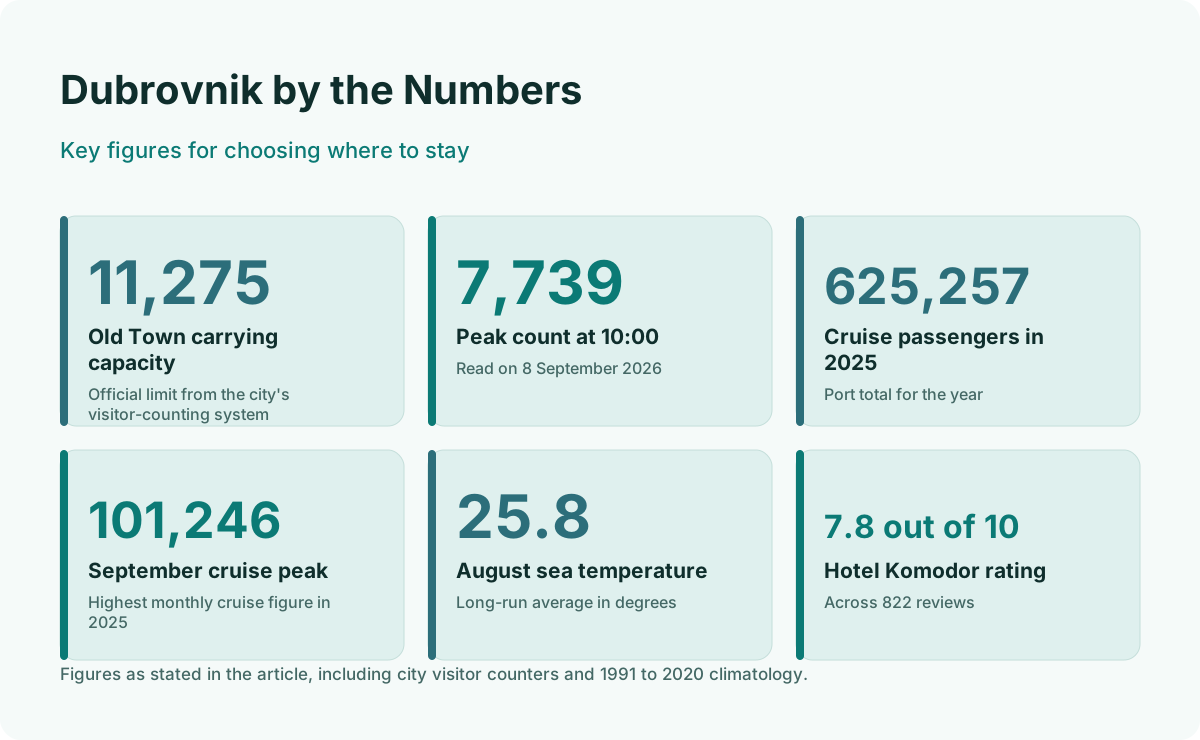
One structural fact should anchor the decision: the city's own visitor-counting system, six counters at every Old Town entrance updating every 15 minutes, puts the official carrying capacity of the historic core at 11,275 people. On a busy September morning the count reaches 7,297 by 09:00. If you sleep inside the walls you have the place to yourself early and late, and you share it with day visitors in between. If you sleep outside, the arithmetic reverses.
What Is the Best Area of Dubrovnik to Stay In for a First Visit?
A first-time visitor should stay in or beside the Old Town: inside the walls for atmosphere, or in Ploče or at Pile for a real bed a short walk from the Pile gate. You only need to be inside the walls if you want the early-morning and late-evening city, because everything first-timers come for, the walls circuit, the Stradun, the Rector's Palace and the Lokrum boat, is reached on foot from these three bases.
The case for sleeping inside the walls is simple arithmetic about hours. The walls circuit, 1,940 metres long and up to 25 metres high, opens at 08:00 by the operator's stated hours, and the Old Town is at its best before the excursion crowds arrive. Stay 300 metres away and you will queue at the gate with everyone else; sleep inside and the dawn city is yours, with the Stradun polished limestone empty except for a few locals and cats.
The case against is equally simple: money and luggage. Old Town rooms are the most expensive in the city per square metre, often small, frequently up one or more flights of stone stairs with no lift, and reached on foot from whichever gate is nearest your address. If your trip is three nights and mobility is fine, it is worth every euro. If you are travelling with children, a lot of bags, or a tight budget, Ploče or the Pile side puts you ten minutes from the gate with a normal hotel around you.
Whichever side of the wall you choose, do one thing on your first morning: take a guided walk before you plan anything else. The local-guide Old Town walk runs from $20 per person and is rated 4.8 across 5,826 reviews, and a good guide will hand you a mental map you use for the rest of the stay. You can also read our first-timers planning guide before you commit to an area.
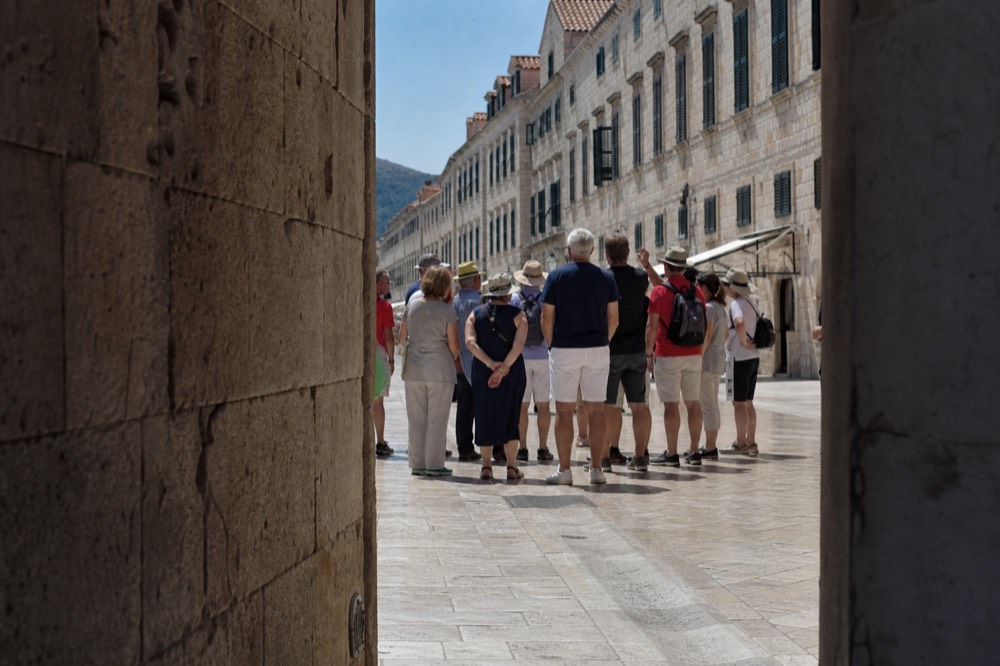
A guest who took the local-guide walk put the value of that first-morning orientation better than I can:
Alex was a fantastic guide, she explained the complex history of Dubrovnik to give a lasting impression of the history of the area. Really appreciated that she aimed for shaded areas on a boiling September day. The food recommendations for after were much appreciated too! Great tour for a first experience of the old town!
Sophie
What Is the Best Area in Dubrovnik to Stay for Peace and Quiet?
For quiet, the best area to stay in is Babin Kuk, the low-rise hotel peninsula near Copacabana beach, followed by the residential upper slopes of Lapad. Inside the walls, quiet exists only before 09:00 and after 19:00, because the same lanes that are silent at dawn carry the day-visitor flow from mid-morning. Gruž is quiet at night but working by day, so it suits early risers catching ferries rather than sleepers.
Quiet in Dubrovnik is a function of distance from the Pile and Ploče gates. The day-visitor surge enters through those gates, peaks mid-morning and drains back out by early evening. A real count read on 8 September 2026 shows the pattern: 5,419 people inside the core at 08:00, a 7,739 peak at 10:00, and 7,205 still there at 11:00. Sleep inside the walls and you live inside that curve; sleep two kilometres away and you visit it on your own schedule.
Babin Kuk is the furthest of the hotel zones from the gates and the most deliberately resort-like: larger properties, pools, pine woods and the long curve of Copacabana beach. Nothing about it is historic, which is precisely the point. Families with small children and travellers who want to sleep with the window open do best here, accepting a bus ride to the Old Town.
Upper Lapad, above the bay promenade, offers a middle path: apartments and mid-range hotels in a residential streetscape, a ten-minute downhill walk to the beaches, and enough restaurants that you are not trapped in the hotel. The Lapad peninsula has its own detailed write-up in our Lapad area guide, worth reading before you book anything on the west side.
| Area | Daytime noise | Night-time noise | Quietest hours |
|---|---|---|---|
| Old Town | High, day-visitor flow | Low after restaurants close | Before 09:00, after 22:00 |
| Ploče | Moderate near Banje | Low | Mornings |
| Lapad bay | Moderate, beach life | Low, promenade closes early | Evenings |
| Upper Lapad | Low, residential | Very low | All day |
| Babin Kuk | Low, resort zone | Very low | All day |
| Gruž | Port and market activity | Low | After 18:00 |
What Is the Best Area to Stay in Dubrovnik for Beaches?
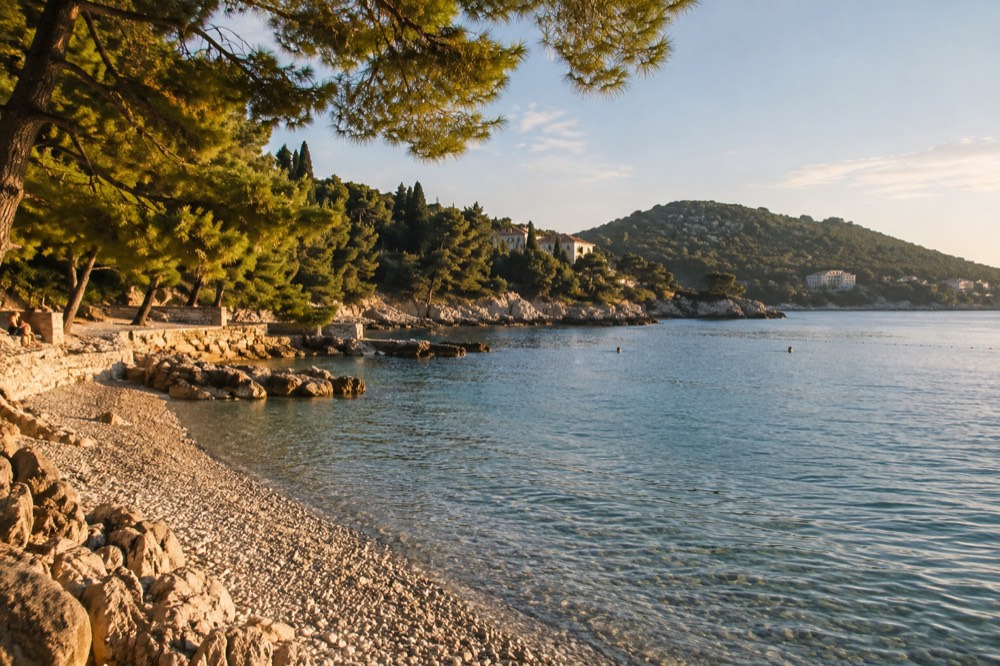
For a beach holiday the best base is Lapad, whose peninsula holds the city's main swimming bays with hotels and apartments around them, with Babin Kuk and Copacabana beach close behind. Ploče is the pick if you want one beach, Banje, within sight of the walls. The Old Town itself has no real beach, only rocks and the Buža bar terraces at the wall's edge.
Swimming shapes the Dubrovnik summer, and the sea is genuinely warm: the long-run August average for this coast is 25.8 degrees, September 23.6, from a 1991 to 2020 open-water climatology, and sheltered shallow bays like Lapad's run warmer still on calm days. If your days will be built around swimming rather than sightseeing, base yourself where the water is.
Lapad's bay beaches sit at the end of a pedestrian promenade lined with cafes, and the hotels around them range from budget three-stars to mid-range full-service properties. Hotel Komodor, a budget three-star a short walk from the bay, scores 7.8 out of 10 across 822 reviews and is a fair example of what Lapad budget pricing buys: simple rooms, sea air, and the number 6 bus to Pile Gate rather than a walk. Check current rates at Hotel Komodor if that profile fits your trip.
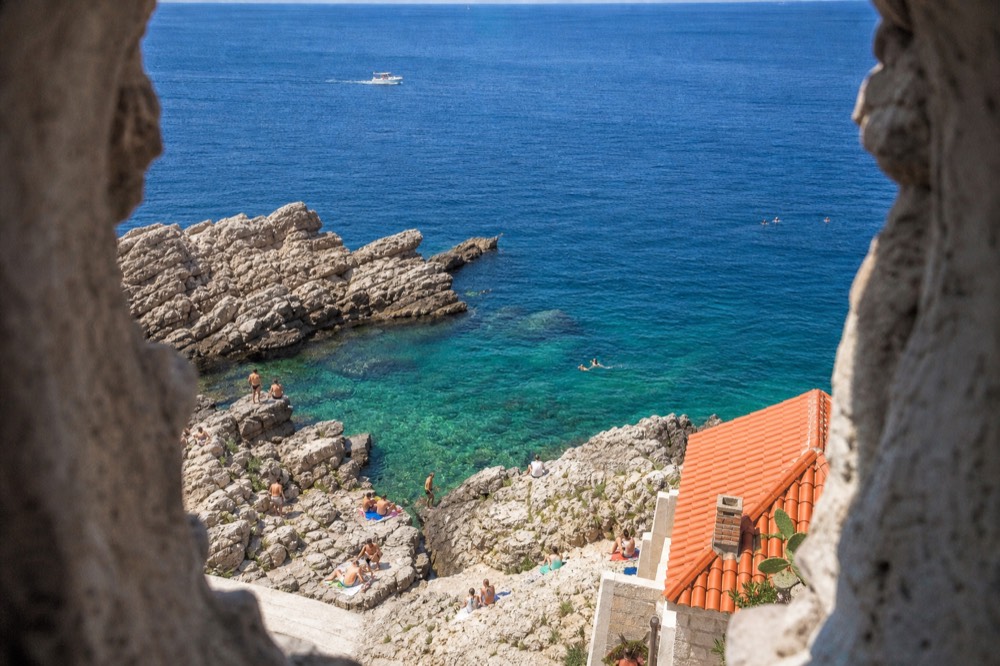
Ploče's Banje beach is the postcard: pebbles and a beach club with the walls across the water. Our Ploče area guide covers the hotels on that hillside, where the luxury tier of the city's accommodation sits. If you book there, you trade a beach-holiday base for the best morning walk in Dubrovnik: down through the Ploče gate and along the Stradun before the crowds.
| Area | Main swimming spot | Beach type | Walk from room to water |
|---|---|---|---|
| Lapad | Lapad bay beaches | Sand and pebble, cafes, shade | Minutes for bay-front hotels |
| Babin Kuk | Copacabana beach | Pebble, long, shallow entry | Minutes |
| Ploče | Banje beach | Pebble, beach club, wall views | Downhill from most hotels |
| Old Town | Rock ledges, Buža terraces | Rock, deep water, no sand | Varies by address |
| Gruž | Local coves toward Babin Kuk | Rock and concrete platforms | Short, unglamorous |
How Much Do Hotels in Dubrovnik Cost, and Where Is the Value?
Dubrovnik hotel prices run high for Croatia and peak in July and August, with Old Town rooms the most expensive, Lapad the value tier and Gruž the cheapest. The city recorded about 4.2 million overnight stays in 2025, sharing first place in Croatia with Rovinj, so demand is real and last-minute summer rates reflect it. Book two to three months ahead for summer.
I will not print invented nightly rates, because hotel pricing in Dubrovnik moves weekly with demand, and a number that is true the week I write it is wrong the week you read it. What is stable is the structure. The Old Town commands the top of the market because supply is physically capped by the walls. Ploče's luxury hotels sit just under it. Lapad spans the widest range, and Gruž and Babin Kuk hold the floor.
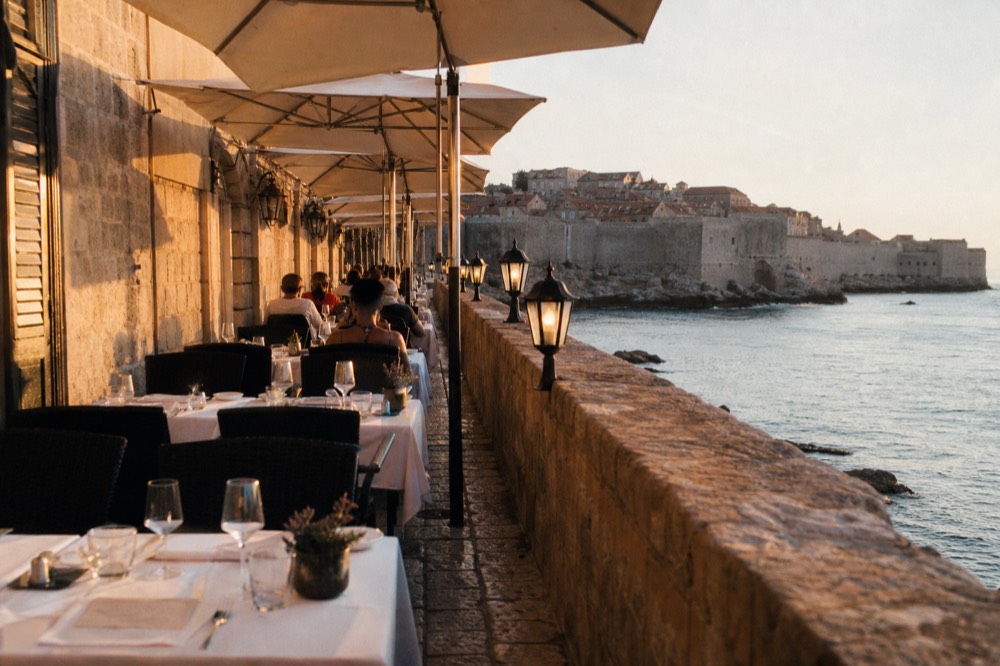
For a concrete anchor inside that structure: Hotel Komodor in Lapad, the budget pick, rates 7.8 out of 10 across 822 reviews and sits about a 29-minute walk from the Gruž cruise and ferry port, with the number 6 bus to Pile Gate. Mid-range travellers should price Hotel Lapad, the peninsula's established mid option, before anything inside the walls. At the top of the market, Hotel Excelsior in Ploče is the classic luxury address within walking distance of the Old Town gates.
Check rates at Hotel Excelsior
| Hotel | Area | Tier | What you get for it |
|---|---|---|---|
| Hotel Komodor | Lapad | Budget, three-star | 7.8 out of 10 across 822 reviews, walk to the bay, bus to Pile Gate |
| Hotel Lapad | Lapad | Mid-range | Established full-service base near the promenade |
| Hotel Excelsior | Ploče | Luxury | Sea-view rooms a short walk from the Ploče gate |
Timing matters more than area when it comes to the bill. The counter-intuitive fact about Dubrovnik's visitor peaks is that cruise passengers, 625,257 of them in 2025, peaked in September at 101,246 and October at 100,132, above July's 96,072 and August's 87,385. Hotel pricing follows the sun, not the cruise calendar, so late September can pair warm sea, 23.6 degrees as the long-run average, with day crowds at their annual maximum. If you want quiet streets and swimming together, June and early July are the better overlap.
Old Town or Outside: How Do You Actually Decide?
Decide by trip length, luggage and evening appetite. One to three nights with light bags and a taste for atmospheric evenings: stay inside the walls. Four nights or more, children, a car, or a wish to swim daily: stay in Lapad or Babin Kuk and bus in. The price gap pays for a lot of dinners, and the bus network makes the trade painless.
The question behind the question is usually money, so let me frame it honestly. The premium for a room inside the walls buys you the car-free dawn city, the ability to drop back to your room at midday, and the evening Stradun outside your door. It does not buy you a bigger room, parking, or a taxi to the door, because none of those exist inside a fortified medieval city. The premium for Lapad buys you space, a pool, a beach and a lower rate, and costs you a bus ride and the loss of the evening atmosphere.
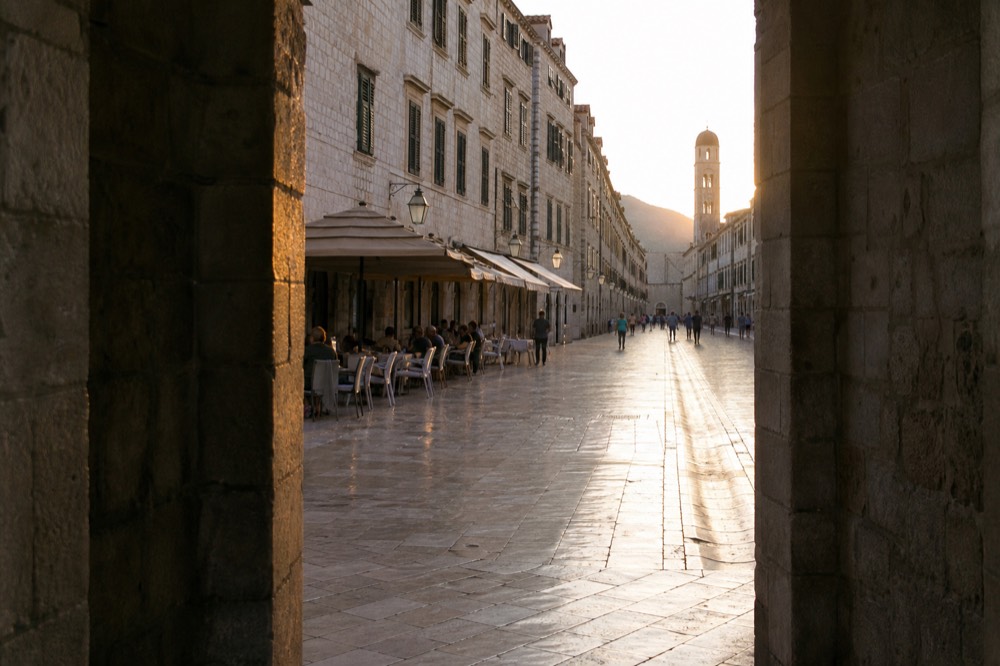
There is a third answer that suits a specific traveller: Ploče, or the Pile side just outside the gate. You keep the walkable Old Town and gain a real hotel with a lift, a pool and a taxi rank. Our Old Town versus outside comparison works through the trade in detail for readers stuck between the two.
How Do You Get Around from Each Area?
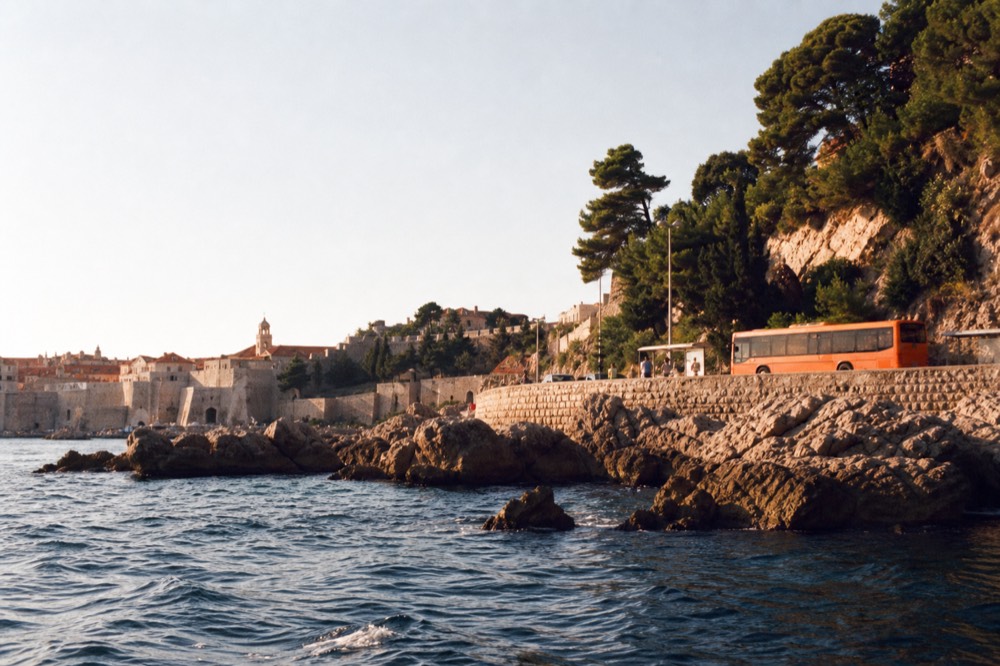
Every area connects to the Old Town by a frequent city bus network, with Ploče and Pile walkable, Lapad and Babin Kuk a 10 to 20 minute ride, and Gruž served by both buses and the port. Taxis and ride-hailing work everywhere but cannot enter the walled city, so the last stretch inside the walls is always on foot. The one-day Dubrovnik Pass includes a 24-hour bus ticket.
The bus is the honest backbone of a Dubrovnik stay outside the walls. Lines from Lapad and Babin Kuk converge on Pile, the gate-side stop at the foot of the walls, and the same network links Gruž and the port. Fares are modest and the one-day Dubrovnik Pass, 40 euro in the summer season from 1 March to 30 November, bundles a 24-hour bus ticket with the walls and ten more sights, the same 40 euro the standalone walls-plus-Lovrijenac ticket costs. Check what the pass covers on the official pass site before you decide, because in December no pass tier is on sale while the walls ticket drops to 20 euro.
If stairs are the problem rather than distance, one product solves it neatly: the e-tuk-tuk panorama ride, an open electric tuk-tuk tour rated 5 across 1,799 reviews from $59.24 per person, which covers the viewpoints above the city without a single staircase. It is a sensible first afternoon for anyone based in Lapad or Babin Kuk who wants to see the geography before walking it.
| Area | Old Town access | Typical mode | Notes for the stay |
|---|---|---|---|
| Old Town | On foot, you are inside | Walking | Taxis stop at the gates only |
| Ploče | Walk, about ten minutes to the gate | Walking | Steep lanes, fine with light bags |
| Pile side | Walk, minutes to Pile gate | Walking | Closest outside-the-wall base |
| Lapad | Bus to Pile | City bus | Number 6 and related lines, frequent in season |
| Babin Kuk | Bus to Pile | City bus | Longest ride, quietest nights |
| Gruž | Bus, or 30-minute walk | City bus | Ferry terminal and bus station on the doorstep |
Where Should You Base Yourself for Day Trips?
For day trips by ferry or bus, base yourself in Gruž, where the ferry terminal, the long-distance bus station and the cruise port sit within walking distance of each other. For boat tours, which depart from the Old Town harbour or Gruž depending on the operator, Lapad and Gruž both work. For land tours to Montenegro, Bosnia or Ston, pick-up points cluster at Pile and Gruž, so any base on the bus spine is fine.
The day-trip logic can flip your whole accommodation decision. If your itinerary is half Dubrovnik and half Elaphiti islands, Mljet, Lokrum, Mostar or the Bay of Kotor, then Gruž stops being the least glamorous area and becomes the most practical one: you walk to your ferry instead of catching a 07:00 bus with your bags. Our day trips overview lists what is reachable in a day from the city, and our Gruž port area guide covers the quarter in detail.
The most popular island day out is the full-day Elaphite Islands cruise, eight hours with lunch included, rated 4.9 across 10,312 reviews and from $59.16 per person. Guests consistently single out the escape it offers from the midday heat and crowds of the walled city.
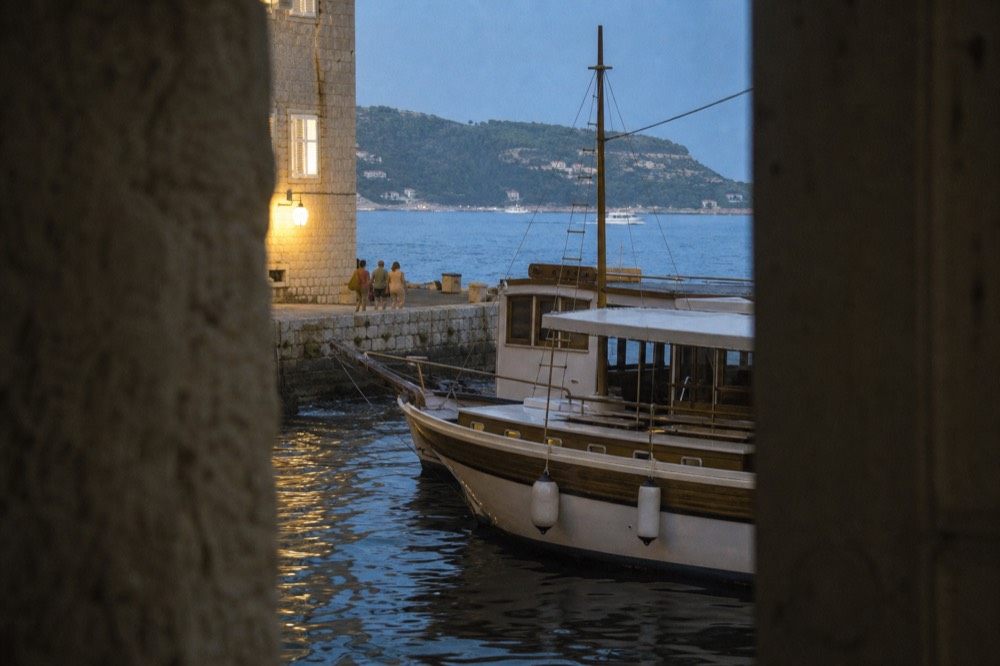
Lokrum is the one island trip that rewards an Old Town or Ploče base specifically: the reserve's own boats leave the City Harbour at 09:00, then every 15 minutes from 10:00 to 18:00, and the 30 euro ticket covers both entry and the return transfer. Anyone staying inside the walls is a five-minute walk from the departure point, which is why I tell Old Town guests to keep a Lokrum afternoon in reserve for whenever the cruise crowds peak.
| Day trip | Departs from | Best base for it |
|---|---|---|
| Lokrum reserve | Old City Harbour | Old Town or Ploče |
| Elaphiti islands cruise | Gruž or Old Town harbour | Gruž, Lapad or Old Town |
| Mljet National Park | Gruž area | Gruž |
| Mostar and Kravica | Bus-based, pick-ups at Pile and Gruž | Any base on the bus spine |
| Montenegro and Kotor | Bus-based, pick-ups at Pile and Gruž | Any base on the bus spine |
| Ston and Korčula | Bus-based from Gruž | Gruž |
One planning note if day trips are central to your stay: the Port Authority's own cruise-destination page explains the 8,000-passenger daily limit and the refused call requests behind it, and the busiest remaining 2026 cruise days cluster in late September and early October. Booking a boat tour on those dates in advance is not paranoia, it is arithmetic.
Common Questions About Where to Stay in Dubrovnik
Which Area of Dubrovnik Is Best to Stay In?
Old Town for short, sightseeing-heavy first visits; Lapad for families, beaches and value; Ploče for luxury near the walls; Gruž for ferries and day trips; Babin Kuk for the quietest nights. All connect to the centre by frequent city buses, so the choice shapes comfort more than access.
What Is the Best Area of Dubrovnik to Stay In for a First Visit?
Inside the walls if your bags are light and your stay is one to three nights, otherwise Ploče or the Pile side for a real hotel within a ten-minute walk of the gate. You gain the dawn and evening city either way, and a guided Old Town walk on the first morning maps the lanes around your room.
What Is the Best Area in Dubrovnik to Stay?
It depends on the trip you are planning: quiet belongs to Babin Kuk and upper Lapad, beaches to Lapad and Babin Kuk, atmosphere to the Old Town, luxury to Ploče, and practical day-trip access to Gruž. Match the base to the majority of your days, not to your arrival day.
What Is the Best Area to Stay in Dubrovnik?
For most readers the answer is Lapad: it holds the city's widest range of hotel prices, its main swimming bays, and a frequent bus to Pile Gate. Choose the Old Town instead only when atmosphere outweighs price, space and stairs for your particular trip.
Is It Better to Stay in Old Town Dubrovnik or Outside?
Inside the walls you pay a premium for the car-free dawn and evening city but carry your bags up stone lanes. Outside, in Lapad, Ploče or Babin Kuk, you gain space, pools and lower rates and lose the evening atmosphere to a bus ride. Three nights or fewer with light luggage favours inside; longer or family stays favour outside.
Where Should You Stay for Day Trips from Dubrovnik?
Gruž, where the ferry terminal, the long-distance bus station and the cruise port cluster together. Boat tours to the Elaphiti islands and Mljet, and bus tours to Mostar, Montenegro and Ston, all depart from or pick up at Gruž or Pile, so any base on the bus spine works too.