Is It Better to Stay in Old Town, Dubrovnik or Outside?
Old Town puts the walls and the Stradun on your doorstep but costs more and means stairs and crowds. Here is how to decide between staying inside the walls or in Lapad, Ploče and beyond.
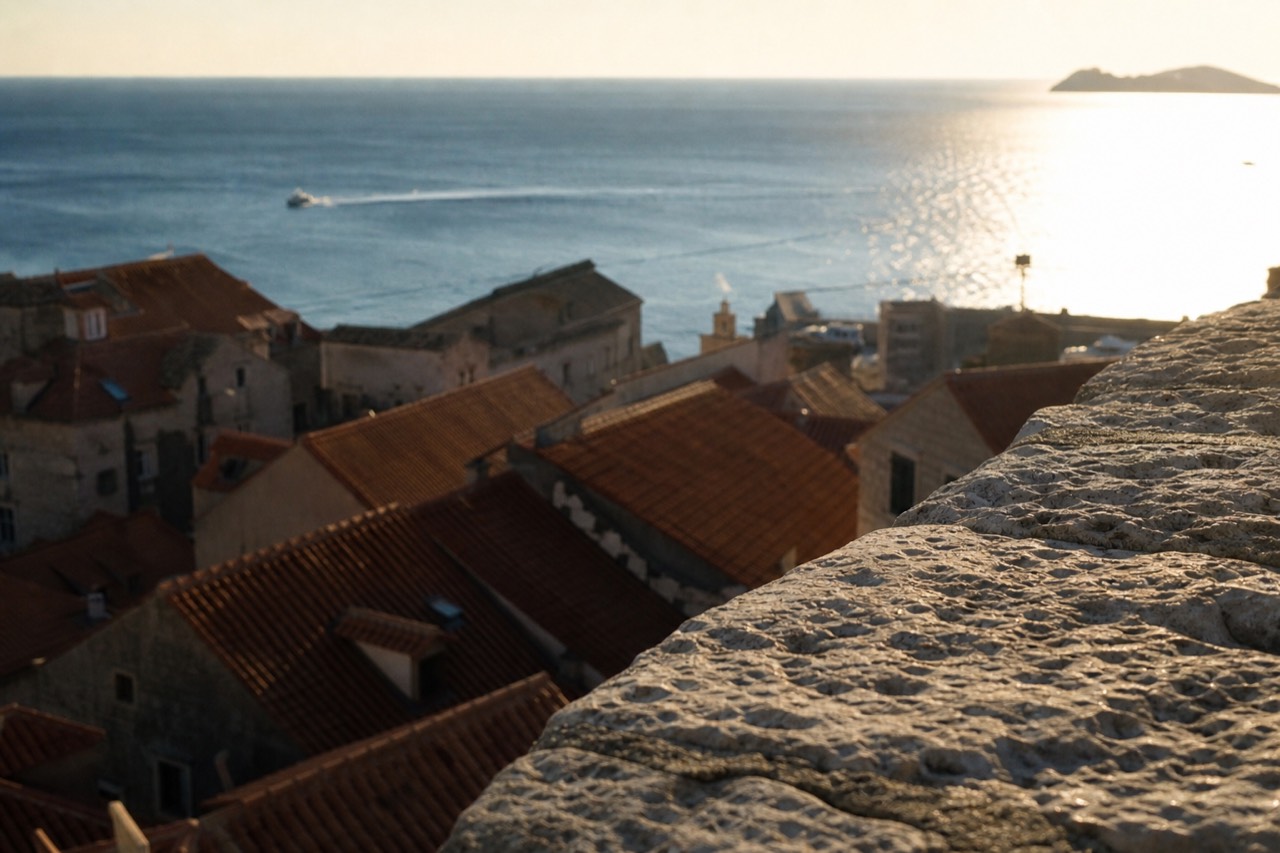
Is It Better to Stay in Old Town, Dubrovnik or Outside?
The honest answer is that outside is the better base for most visitors, and Old Town is the better base for one specific kind of trip. If you are in Dubrovnik for a single night, or you want the city at dawn and midnight when the day-trippers are gone, sleep inside the walls. If you are staying three nights or more, want a beach, a pool or simply a quiet room, base yourself in Lapad or Ploče and walk in.
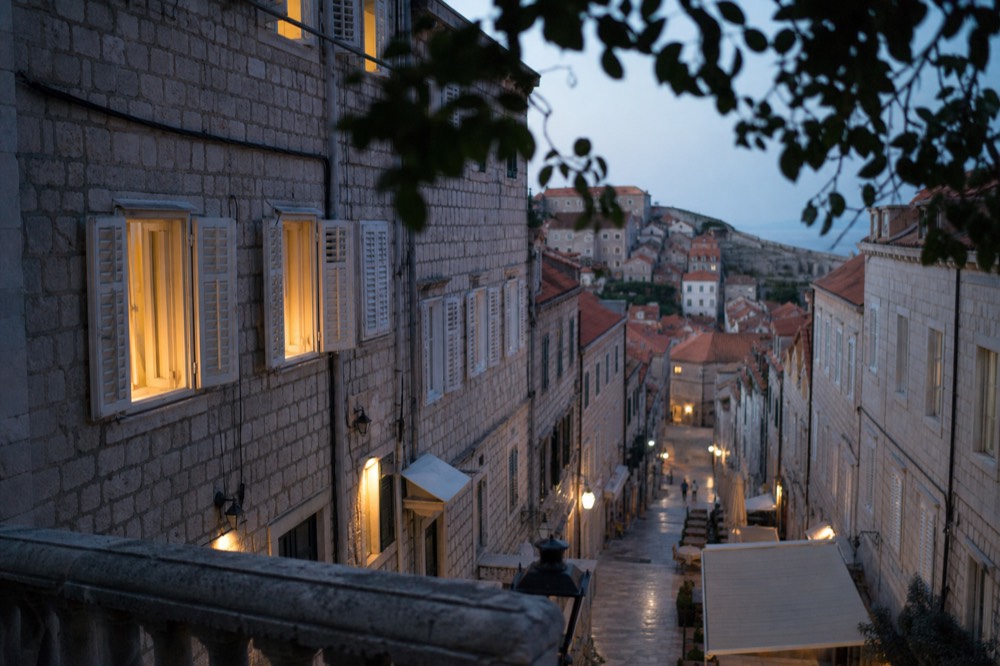
I have walked these streets with travellers since 2015, and the pattern repeats every season. People book a room inside the walls imagining candlelit evenings on the Stradun, then discover that their "charming attic room" sits above a bar terrace and sits at the top of ninety stone steps with no lift. The Old Town is a car-free medieval city, 24.7 hectares of it inscribed by UNESCO in 1979. That is exactly what makes it magical and exactly what makes it an awkward hotel district.
The counter-argument is real, though. The walled core is small, the Stradun, 298 metres long, is the spine of it, and staying inside means you own the place at 06:00, when the counters at the gates still read low, and after 21:00, when the excursion groups have gone. Guests who sleep outside only ever see those hours if they make a point of it.
There is no wrong answer here, only a mismatched one. A family of four with a rental car and a beach agenda will be miserable dragging suitcases through the Pile Gate crush. A couple on a one-night romantic stop will find Lapad's hotel strip pleasant but beside the point. This page walks through the trade-offs, the Lapad question specifically, the cost gap, and a simple decision framework, so you can match the base to the trip you are actually taking. For the wider picture of everything the city offers once you have chosen a bed, Things to Do in Dubrovnik is the site's full starting point.
If you want the fuller neighbourhood picture, the complete where-to-stay area guide covers every district in detail, and this page is the short, decision-focused version of it.
Is It Better to Stay in Old Town, Dubrovnik or Lapad?
Lapad wins for stays of three nights or more, for families, and for anyone who wants a beach, a pool or a room that costs less per night. Old Town wins for atmosphere, walkability to the sights, and the experience of the city at dawn and after dark. Lapad is the peninsula about 3 kilometres west of the walls, built around hotels, pine-shaded bays and a pedestrian shopping street, and it is where a large share of Dubrovnik's beds actually are.
The practical differences are stark. Lapad has beaches you can walk to in swimwear: the main Lapad bay beaches sit at the end of a promenade lined with cafés, and the whole area is flat enough for strollers and slow mornings. Old Town has no real beach of its own, just the rocks at Buža and the pebbles at Banje on the Ploče side, and swimming inside the walls is not a thing. Lapad has proper hotel infrastructure, from budget three-stars up through mid-range resorts, with the kind of square footage and balconies that walled-city buildings physically cannot offer.
Old Town, meanwhile, has the thing Lapad cannot manufacture: you open your shutters onto a 13th-century street plan. The city's shape was largely reached in the 13th century and its final bastion finished in 1660, and you feel that age in the thick of it, not from a bus window. You are also zero minutes from the walls entrance, the Rector's Palace, the Franciscan Monastery and every restaurant worth queueing for, and you can pop back to your room at midday, which families with small children quietly rank as the single biggest luxury in travel.
For a concrete budget anchor: Hotel Komodor, a budget three-star in Lapad, scores 7.8 out of 10 across 822 Expedia reviews, sits about a 29-minute walk from the Gruž cruise and ferry port, and connects to Pile Gate by the number 6 bus rather than a hot uphill walk. A comparable nightly rate inside the walls generally buys a smaller room on a noisier lane. Hotel Lapad is the mid-range step up in the same area, and it is the kind of property, with grounds and a terrace, that simply does not exist inside a medieval core.
Here is the comparison in one view:
| Factor | Old Town (inside the walls) | Lapad |
|---|---|---|
| Atmosphere | Medieval, car-free, cinematic | Resort suburb, pine-lined, relaxed |
| Beach access | None inside; Banje and Buža rocks nearby | Walkable bays along the whole peninsula |
| Room size and price | Smaller rooms, higher rates, many stairs | Larger rooms and grounds for less |
| Luggage | Hand-carry over stone steps, no cars | Taxi to the door at most properties |
| Night noise | Bar terraces and echo off stone | Quiet residential streets |
| Sights distance | On your doorstep | Bus or 40-minute walk to Pile |
| Best for | 1 to 2 nights, romantics, photographers | 3+ nights, families, beach holidays |
One Lapad caveat worth knowing before you book: the peninsula is bigger than it looks on a map, and a Lapad address can mean a 15-minute walk just to reach the bay promenade. Ask for the walking time to the beach street before you commit, because "Lapad" covers everything from seafront hotels to hillside apartments above the main road.
Should You Stay in Old Town, Dubrovnik or Outside?
Stay outside the walls if your trip runs longer than two nights, if you have a rental car, if you sleep lightly, or if your itinerary is built around day trips, because the bus station and the ferry port both sit outside anyway. Stay inside if your trip is short, if late-evening ambience matters more than sleep quality, and if you want the city entirely to yourself in the early morning. The "outside" option is not one place: it is Lapad, Ploče, Gruž and Babin Kuk, each with a different character, and the right one depends on what your days look like.
Ploče is the outside option that behaves most like an inside option. It is the district immediately east of the Old Town, on the other side of the Ploče Gate, and it holds both the beach at Banje and the city's luxury tier. From a Ploče base you can walk into the Old Town in a few minutes, downhill, and you sleep in a modern building with a sea view instead of an old stone house with a shared courtyard. For travellers who want proximity without the medieval logistics, Ploče is usually the answer, and the Ploče area guide covers it in detail. The luxury pick there is Hotel Excelsior, which sits close enough to the walls that the walk home from dinner takes minutes.
Gruž is the practical outsider's choice. It is the port district, home to the cruise and ferry terminal, the long-distance bus station and the excellent morning market. It is less pretty, noticeably cheaper, and unbeatably convenient if your itinerary involves Elaphiti island cruises, the Lokrum boat, or buses to Montenegro, Mostar and the Pelješac peninsula. The trade is a 30 to 40 minute walk, or a short bus ride, to the Old Town.
Babin Kuk, at the far end of the Lapad peninsula, is the resort answer: big hotels, concrete-and-pine beaches, and a genuinely holiday-like remove from the crush. It suits travellers whose Dubrovnik is one part of a lazy coastal week rather than the whole point of the trip.
The crowd mathematics are worth putting on the table too, because they are the strongest argument for sleeping inside. Six counters at every Old Town entrance update a headcount every 15 minutes, and the official carrying capacity of the historic core is 11,275 people. On a measured September morning the count climbed from 5,419 at 08:00 to a 7,739 peak at 10:00. If you sleep outside, that 10:00 peak is the city you experience. If you sleep inside, you get 06:00, when the same count read 1,725, and the light on empty limestone is the best photograph of your trip.
Should I Stay in Old Town, Dubrovnik or Outside?
Stay inside Old Town only if your trip is short, you can carry luggage up steps, and you want to walk everywhere at night; otherwise base yourself outside the walls in Lapad or Gruž, where hotels, parking, and prices are friendlier, and catch a bus or short taxi into the old city for day visits. One or two nights, a couple, a first visit, and you want the magic: inside the walls. Three nights or more, or travelling with children, or with a car: outside, in Lapad or Ploče. A day-trip-heavy itinerary: Gruž. A beach-first holiday: Babin Kuk or Lapad bay. If two of those descriptions apply to you at once, pick the one attached to the longer list of your priorities.
Let me make it concrete, because the abstract version of this question is what keeps people paralysed. The suitcase test alone settles half the cases: there are no cars, no taxis and no porters inside the walls, so whatever you pack, you carry, up stairs that were built for defence rather than luggage. A family with two large suitcases and a stroller will lose an hour and a good mood at the Pile Gate. The same family in Lapad takes a taxi to the lobby.
The noise test settles most of the rest. Stone is a sound mirror. A single bar terrace on a narrow lane projects into every bedroom facing it, and Old Town lanes are nothing but narrow lanes. If you sleep lightly, either book a courtyard-facing room inside the walls with that specified in writing, or sleep outside and visit in the evening. There is no third option, and earplugs are a plan, not a solution.
The timing test matters more than people expect. The counter-intuitive fact about Dubrovnik crowds is that September and October are the peak cruise months, ahead of July and August, so "I'll come in autumn to avoid the crowds" does not work the way it does elsewhere. What actually protects you is the clock: before 08:00 and after 20:00, the Old Town belongs to the people sleeping in it. That is the inside-the-walls product, and it is genuinely worth paying for, on a short trip.
Once you have chosen your base, the first move on the ground is the same either way: a guided orientation walk. You can read more in the Old Town walking tours overview.
What Does Staying Inside the Walls Actually Cost?
Expect the same room category to cost noticeably more inside the walls than in Lapad or Gruž, and budget for sightseeing separately: the adult City Walls ticket is 40 euro in main season, 1 March to 30 November, and 20 euro in December, while the one-day Dubrovnik Pass is also 40 euro in main season and adds ten more sights plus a 24-hour bus ticket. Lodging inside the walls buys location, not square footage, and the premium is the price of waking up inside a monument.
The sightseeing math is where outside-based visitors can claw value back. The one-day Dubrovnik Pass, at 40 euro in main season, costs exactly the same as the standalone walls ticket between 1 March and 30 November, and it layers on the Rector's Palace, the Maritime Museum, the Franciscan Monastery museum and more, plus a 24-hour bus ticket that covers the Lapad-to-Pile run. A Lapad guest with a one-day pass gets transport and culture in one purchase. In December the equation flips: the walls ticket drops to 20 euro and no pass tier is on sale at all, so never let anyone sell you the "pass costs the same as the walls" line for a winter trip.
Here is a planning snapshot. Room rates move constantly, so treat the lodging rows as relative, not quoted prices, and check the live listing or the hotel's own site for your dates:
| Item | Inside the walls | Outside (Lapad, Ploče, Gruž) |
|---|---|---|
| Room for the same budget | Smaller, often attic or courtyard | Larger, often with balcony or pool |
| Coffee and breakfast | Tourist-priced on the Stradun | Local-priced in Lapad and Gruž |
| City Walls adult ticket | 40 euro main season, 20 euro December | |
| One-day Dubrovnik Pass | 40 euro, main season only, includes walls and bus | |
| Cable car adult round trip | 30 euro, per the operator's price page | |
| Getting to the Old Town | You are there | Bus fare or a 30 to 40 minute walk |
Two costs nobody prices in until they are here. First, food: eating inside the walls is uniformly more expensive than eating in Lapad or Gruž, and the difference compounds over four dinners. Second, time-as-cost: an outside base adds a bus ride or a walk to every Old Town evening, which is a small tax on spontaneity. Some visitors happily pay it for a swim before dinner; others resent it by day three. Know which one you are.
The cable car is worth a line because it doubles as a transport argument. The ride covers 778.2 metres of track in 3 minutes 30 seconds, from a lower terminal at 38.0 metres to Mount Srđ at 405.0 metres, and an adult round trip is 30 euro per the operator's timetable and prices page. From the top you can see the whole lodging question laid out at once: the tiny walled core, the Lapad peninsula wrapped in green, Gruž and its port. It is the best orientation viewpoint in the city, whichever side you sleep on.
Which Base Suits Which Traveller?
Families and beach lovers should base themselves in Lapad, history and atmosphere seekers in the Old Town, and anyone chasing nightlife or day trips in and around Gruž, because each district plays to a different kind of trip. The right base is the one that matches what you actually plan to do, not the postcard version of what you imagine doing. Short romantic stay: Old Town. Family with kids: Lapad. Luxury with a view and a short walk in: Ploče. Day-trip-heavy itinerary: Gruž. Beach-first week: Babin Kuk. Budget stretch: Gruž or upper Lapad. That table is the whole article compressed, and it holds up across seasons.
| You are... | Base | Why |
|---|---|---|
| One or two nights, first visit | Old Town | Dawn and midnight are what you are paying for |
| Family with children | Lapad | Flat streets, beaches, pools, stroller-friendly |
| Couple, comfort-first | Ploče | Minutes from the gate, modern buildings, sea views |
| Island and day-trip planner | Gruž | Ferry port and bus station on your doorstep |
| Beach holiday with city days | Babin Kuk | Resort strip, relaxed pace, bus to town |
| Light sleeper, any trip | Anywhere but a Stradun-side lane | Stone amplifies every terrace |
Whichever you pick, book early for the shoulder season. September and October are the busiest cruise months of the year, 101,246 and 100,132 cruise passengers in 2025 respectively, both ahead of July, and the cruise schedule guide shows how to check whether a big-ship day lands on yours. Rooms inside the walls are a fixed, small supply, and they go first exactly when the town is fullest.
For the practical side of getting from your chosen base to everything else, the getting around Dubrovnik guide covers buses, taxis and walking times, and the Lapad area guide goes deeper on the peninsula than this page can.
If you do end up outside the walls, one habit converts a good stay into a great one: go into the Old Town twice a day, once early and once late, and spend the midday hours at your beach or pool when the counters peak. You get the monument at its best and the resort at yours. That is the outside-base playbook in a sentence, and it is why, for most trips of three nights or longer, I would book Lapad or Ploče and not think twice.
A walls walk also belongs on your first full day whichever base you choose. The Ancient City Walls and Wars Walking Tour runs about 2 hours, from $29.58 per person, rated 4.8 across 1,387 reviews, and it pairs the circuit with the military history that explains why the walls are shaped the way they are.
The trio below covers the three ways most visitors spend their first day in the city: an orientation walk, the walls circuit, and a cable car and museums combination that suits outside-based visitors who want to bundle the transport and the culture in one purchase.
Common Questions About Staying in Old Town or Outside Dubrovnik
Is it better to stay in Old Town, Dubrovnik or outside?
Outside is better for most trips of three nights or longer, because you get more room, quieter nights and often a beach for less money. Old Town is better for short stays of one or two nights, when you want the city at dawn and after dark without a bus ride home. Match the base to the trip length and the party, not to the postcard.
Is It Better to Stay in Old Town, Dubrovnik or Lapad?
Lapad suits families, beach holidays and longer stays, with walkable bays, larger rooms and flat streets. Old Town suits short, atmospheric visits where proximity to the walls and the Stradun matters more than space or sleep quality. If you are torn and staying three nights or more, take Lapad and visit the Old Town morning and evening.
Can You Drive Into Dubrovnik Old Town?
No. The walled core is entirely car-free, so taxis and rental cars stop at the gates, typically Pile or Ploče, and you carry your luggage from there. This is the single biggest practical argument for an outside base for anyone travelling with heavy bags, children or mobility constraints.
Is Dubrovnik Old Town Noisy at Night?
It can be, sharply. Bar terraces echo off stone, and lanes are narrow, so a single terrace can dominate a courtyard. If you book inside the walls, request a courtyard-facing room in writing, and accept that some nights will carry sound anyway. Light sleepers should base outside and come in for the evening.
Which Area Outside the Walls Is Closest to the Old Town?
Ploče, immediately east of the Ploče Gate, is the closest outside district, with a walk into the core of a few minutes and the Banje beach on its doorstep. Lapad and Babin Kuk need a bus or a 30 to 40 minute walk, and Gruž is the farthest but the most convenient for ferries and buses.
Does the Dubrovnik Pass Help if You Stay Outside the Walls?
Yes. In main season, 1 March to 30 November, the one-day pass costs 40 euro, the same as the standalone walls ticket, and adds ten more sights plus a 24-hour bus ticket that covers the Lapad-to-Pile run. In December the walls ticket drops to 20 euro and no pass tier is on sale, so the comparison only holds in the main season.