Lapad Dubrovnik: Beaches, Hotels and the Local Side of the Bay
Lapad is where Dubrovnik goes to swim. This is the peninsula west of the Old Town where most of the city's hotels, its best family beaches and its watersports operators sit, and it answers the question every visitor asks within a day of arriving: where is the water, and where is the shade.
Short answer
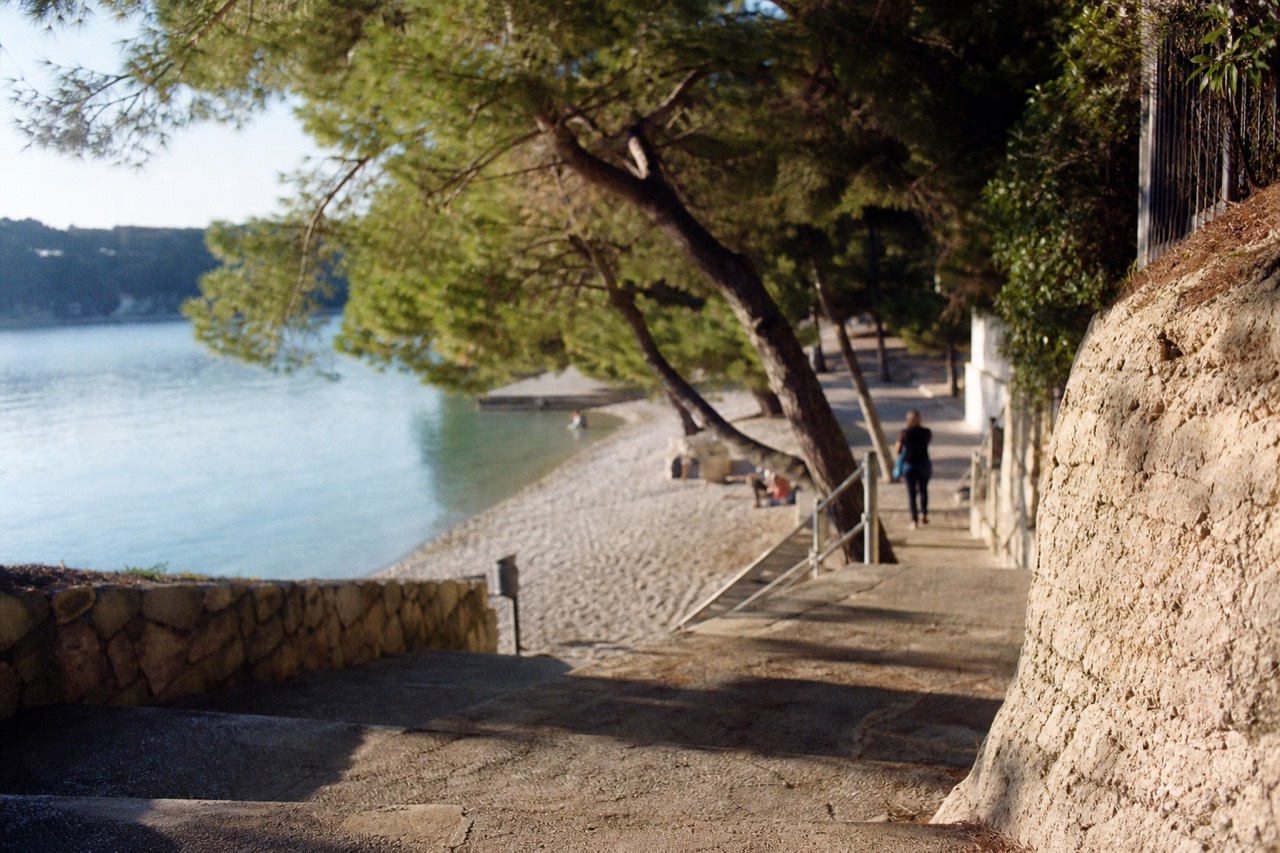
Lapad is the hotel and beach peninsula about 3 km west of the Old Town. Its centrepiece is Lapad Bay, a horseshoe of pebble beaches backed by pines. The budget pick is Hotel Komodor at 7.8 out of 10 across 822 reviews; the Old Town is 15 minutes away by bus or a 40 minute coastal walk.
I have walked the Lapad peninsula in every month of the year, and I can tell you the honest version up front: this is not the postcard Dubrovnik of the Stradun and the walls. It is the working half of the city, the part with the hotels, the pine trees, the ice cream queues and the swimming. Most visitors sleep here, swim here, and take a bus into the walled town, and that rhythm is exactly right for a summer week.
What Is Lapad and Why Do People Stay There?
Lapad is a peninsula on the western side of Dubrovnik, roughly 3 km from the Old Town, holding most of the city's hotel capacity, its largest beaches and a residential neighbourhood of apartment blocks, cafes and pine-shaded walking paths. People stay here because it is quieter, greener and often cheaper than sleeping inside the walls, while the Old Town stays a short bus ride away.
The peninsula hangs off the mainland west of Pile, wrapped by the sea on three sides. Its heart is the Uvala, Lapad Bay, a horseshoe of pebble and concrete bathing areas at the end of a long pedestrian avenue closed to cars. Around that avenue sits the concentration of hotels, from big resort blocks to small family places, and behind them the residential streets where a good share of Dubrovnik's 41,562 residents actually live.
The city as a whole recorded about 4.2 million overnight stays in 2025, sharing first place among Croatian destinations with Rovinj, and a large share of those nights are slept in Lapad. The neighbourhood exists for exactly this reason: the walled Old Town has a property area of just 24.7 hectares and very little room for beds, so the city grew its accommodation out here, where the bays are.
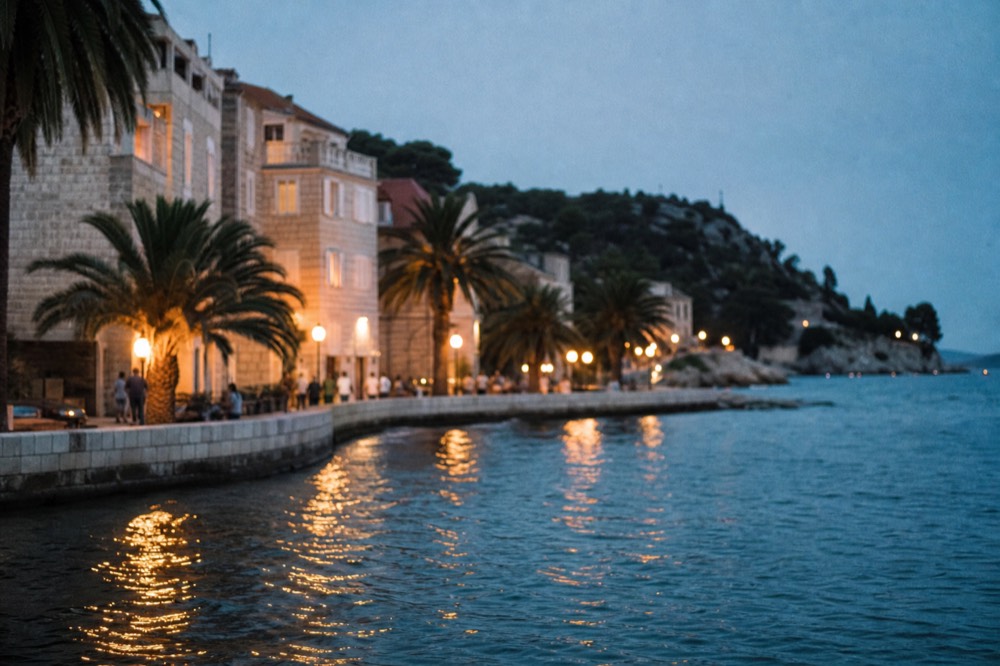
What you get in exchange for the commute is space. The Old Town is stone, stairs and heat; Lapad is flat along the bay, shaded by pines, and built around the water rather than above it. Families with small children, anyone who wants a beach afternoon every day, and anyone travelling in a car, which is nearly impossible to park inside the walls, all end up here. If you are still deciding between the two, the question of where to stay in Dubrovnik for first-timers goes into the trade-offs in more detail.
One thing to set expectations on: Lapad is not photogenic in the Dubrovnik-postcard sense. It is handsome in a Mediterranean-resort way, all pines, umbrellas and evening strolls. Come here to swim and sleep, go to the Old Town to gasp.
What Is the Best Beach in Dubrovnik?
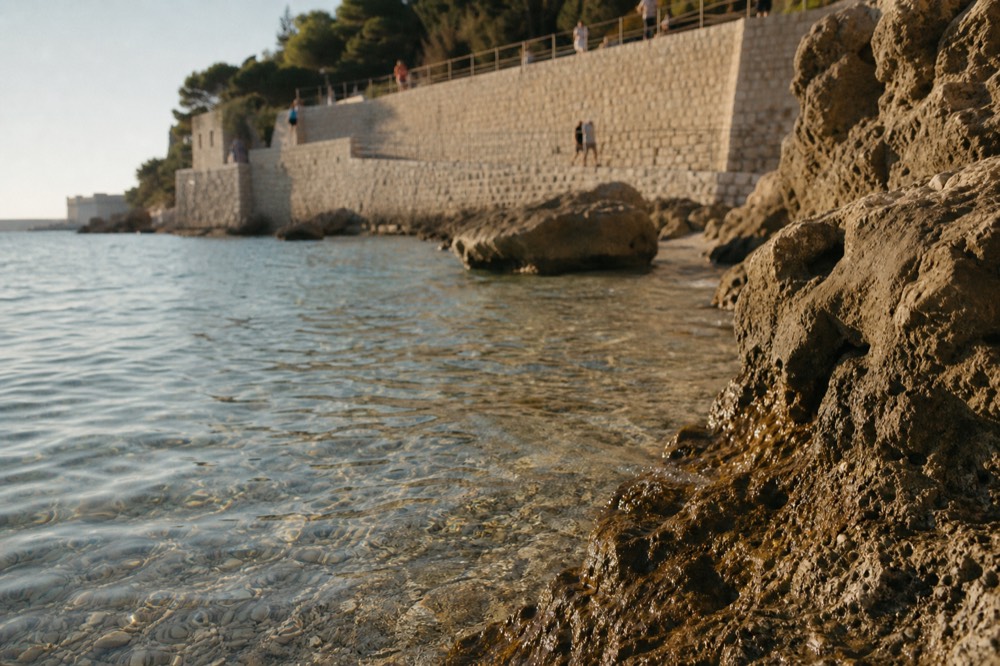
For most visitors the best beach in Dubrovnik is Copacabana Beach on the Lapad peninsula's western shore, because it combines a sandy-gravel entry that is gentle underfoot, calm water inside a protected cove, full facilities including a cafe and watersports rental, and easy bus access. For pure scenery the title goes elsewhere, but for a day of actual swimming, Copacabana wins.
I will be blunt about what "best" means here, because the answer changes with who is asking. Dubrovnik's beaches are pebble and rock, not sand, and the differences between them are about entry gradient, shade, facilities and crowds rather than sandcastle material. Copacabana, sitting on the northwestern side of Lapad near the Babin Kuk end, has the most forgiving entry of the big accessible beaches and the most infrastructure around it.
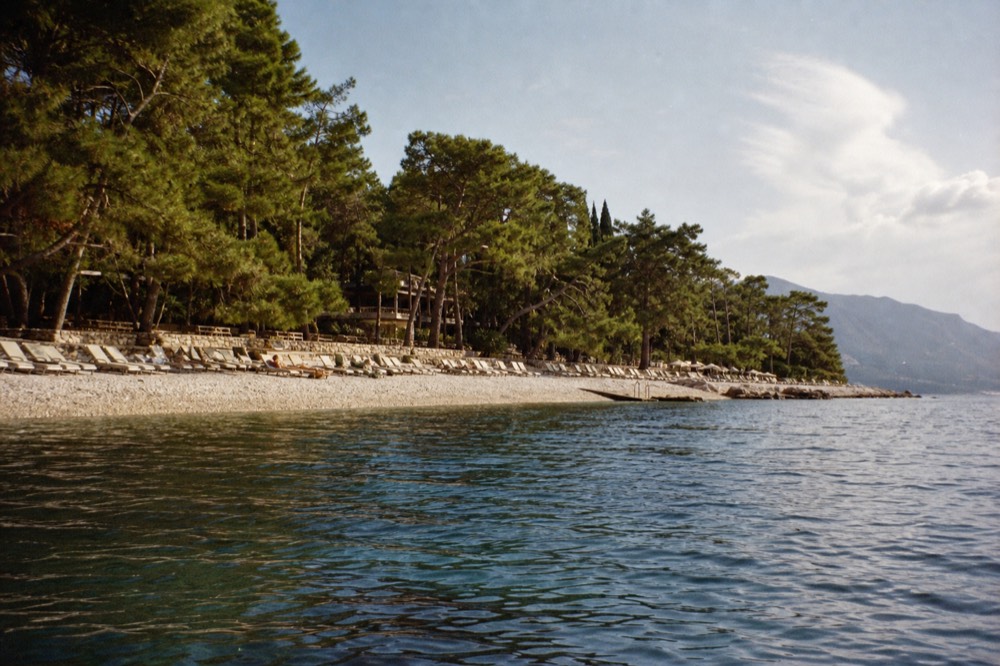
Inside Lapad Bay itself, the beaches along the Uvala are a chain of concrete platforms and pebble patches, some hotel-managed with sunbeds, some free. The water is calm because the bay is enclosed, and the pine trees behind give real shade by late afternoon. This is where most Lapad hotel guests spend their beach hours, and it is a perfectly good answer for anyone who wants to swim 40 metres from their room.
The honest competition comes from outside the peninsula. Banje Beach, below the Old Town on the Ploče side, has the famous view back at the walls and is the beach everyone photographs, but it is small, busy and you pay for the privilege. Sveti Jakov, below the cliff path past Ploče, is the most spectacular of all, a cove looking straight at the Old Town skyline, but it sits at the bottom of a long staircase that filters out anyone with tired knees or a stroller. Our guide to Dubrovnik's beaches compares all of them properly.
| Beach | Area | Surface | Best for | Main drawback |
|---|---|---|---|---|
| Copacabana | Lapad / Babin Kuk | Sand-gravel mix | Families, watersports, easy entry | Busy in July and August |
| Lapad Bay (Uvala) | Lapad | Pebble and concrete platforms | Hotel guests, calm swimming, shade | Concrete sections, not scenic |
| Banje | Ploče | Pebble | The Old Town view, people-watching | Crowded, paid sunbeds |
| Sveti Jakov | Ploče | Pebble | Scenery, a proper destination beach | Long stairway down and back up |
| Copacabana alternatives at Babin Kuk | Babin Kuk | Rock and pebble | Quieter swimming, sunsets | Fewer facilities |
If your day will be built around the beach rather than around sightseeing, base yourself at the Babin Kuk or Lapad Bay end and treat the Old Town as the excursion, not the other way round. The visitors who complain about Dubrovnik's beaches are usually the ones day-tripping to a pebble cove in flip-flops and expecting sand.
What Is the Nicest Beach in Dubrovnik for Families?
For families the nicest beach in Dubrovnik is the Lapad Bay shoreline, because the enclosed water is calm, the pine trees give shade through the hottest hours, food and toilets are steps away, and the flat pedestrian avenue means no stairs with a stroller. Copacabana, at the Babin Kuk end, is the close second and the better watersports base.
The difference between "best" and "nicest" is the difference between a beach that impresses and a beach that works. With children, the beach that works is the one where you can set up under a tree, see the water entry, buy a cold drink without a hike, and walk everything flat. The Uvala delivers all four. The bay's shape also means no waves even when the open sea outside is choppy, which matters more than any view when a four-year-old is involved.
Copacabana adds watersports to that package. Kayak and jet-ski operators work off this stretch in summer, and the jet ski and watersports options around the peninsula are covered in their own guide. The entry is the gentlest of the big beaches, a sand-gravel mix rather than pure pebble, which small feet tolerate better.
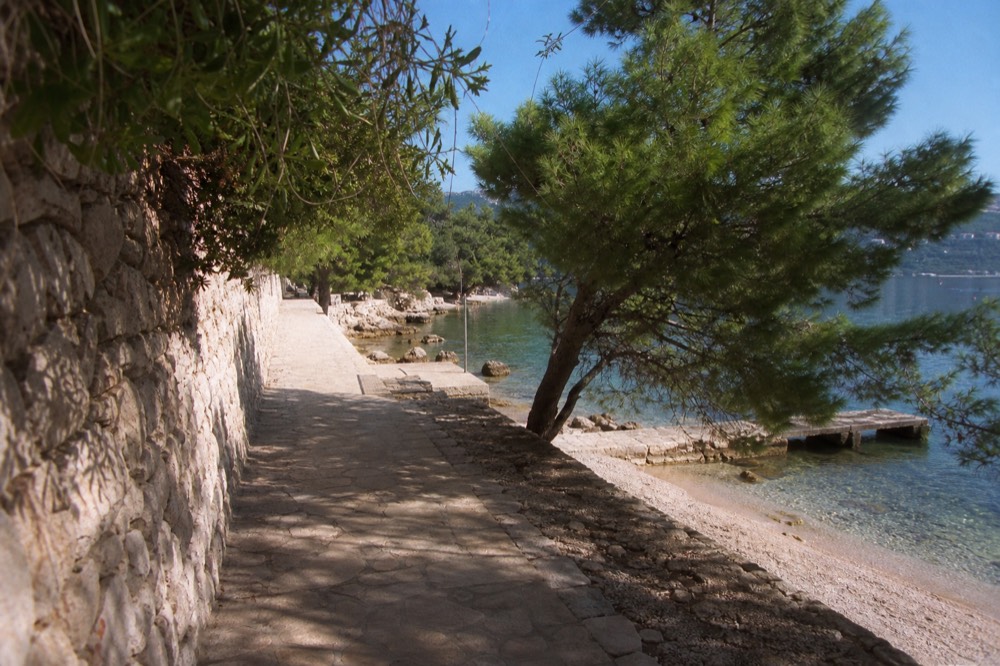
Practical notes from walking this shore many times: arrive before 10:00 in July and August if you want shade without paying for a sunbed, because the free shaded spots under the pines go first. Water shoes earn their place in the suitcase on every Dubrovnik beach, and the sea floor here is pebble, not sand. And the bay faces west, so the late afternoon is the golden hour here, with the sun dropping over the open Adriatic rather than behind the hills.
For a structured day on the water rather than a beach day, the kayaking options from this coast are strong. The two-hour kayak tour of Lokrum Island and Betina Cave runs from $35.49 per person and is rated 4.9 across 1,518 reviews, and the day and sunset kayak tours with snorkelling start at $36.5 per person with a 4.9 rating across 4,286 reviews. Both put you on the water this side of the city before crossing toward the island.
Is Lapad a Nice Part of Dubrovnik to Stay In?
Yes, Lapad is a nice part of Dubrovnik to stay in for most travellers: it is quieter and greener than the Old Town, it has the city's main beaches on the doorstep, hotel prices are generally lower than inside the walls, and the Old Town is 15 minutes away by frequent bus. The trade is atmosphere: you sleep in a resort neighbourhood, not a medieval one.
The honest case against Lapad is evening atmosphere. After dinner the Uvala goes quiet, and if you want to wander into a bar at midnight you will be taking the late bus or a taxi back from the Old Town. The case for Lapad is everything else: sleep without cruise-day crowds below your window, a swim before breakfast, room to breathe, and parking if you have a car.
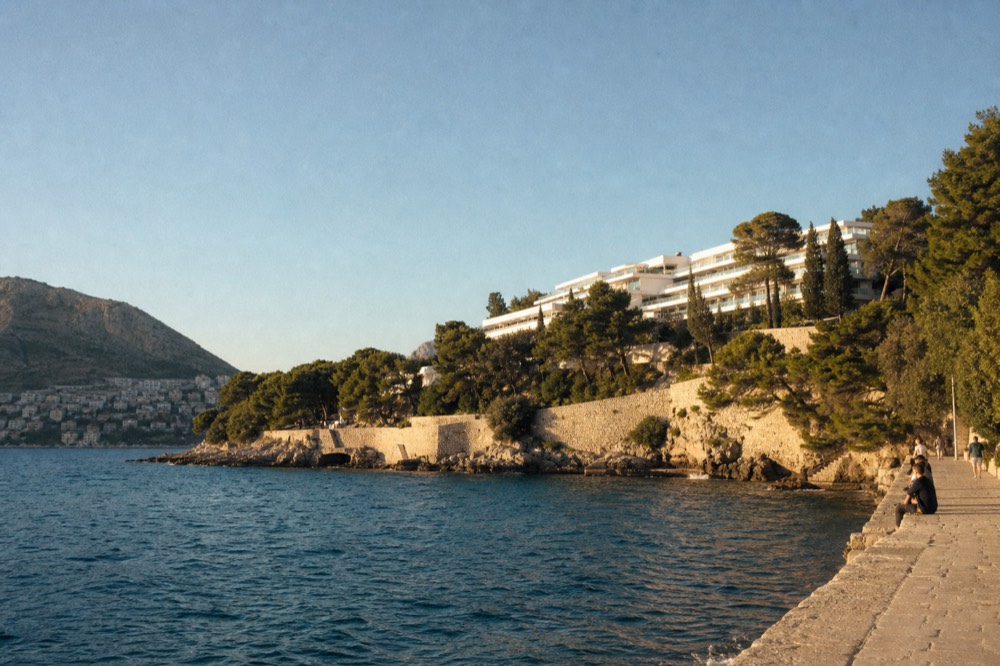
The hotel spread runs from budget three-star places to full resort blocks. On the budget end, Hotel Komodor sits in Lapad, rated 7.8 out of 10 across 822 reviews, about a 29-minute walk from the Gruž cruise and ferry port and connected to Pile Gate by the number 6 bus rather than a walk. The mid-range pick is Hotel Lapad, and anyone wanting luxury inside the walls' orbit should look at Ploče instead, where Hotel Excelsior sits a short walk from the Old Town.
| Hotel | Tier | Area | Rating | Notes |
|---|---|---|---|---|
| Hotel Komodor | Budget three-star | Lapad | 7.8 out of 10 across 822 reviews | Number 6 bus to Pile Gate; about 29 minutes on foot to Gruž port |
| Hotel Lapad | Mid-range | Lapad | On the live listing | Close to the Uvala beach shoreline |
| Hotel Excelsior | Luxury | Ploče | On the live listing | Walkable to the Old Town, for comparison |
Who should not stay here? Anyone on a one-night stop, a cruise passenger with a single day, or a traveller who wants to be inside the walls when the day-trippers leave at dusk, which is the Old Town's best hour. For those trips, Ploče or the Old Town itself pay for themselves. For a week with beach afternoons, Lapad is the right answer, and this page sits beside our Old Town area guide so you can weigh the two honestly. Whichever side you pick, the full Things to Do in Dubrovnik catalogue on this site covers the walls, the islands and the day trips that fill the rest of your week.
What Is the Most Beautiful Beach in Dubrovnik?
The most beautiful beach in Dubrovnik is Sveti Jakov, the pebble cove below the Ploče cliffs, because it looks directly at the walled Old Town and Lokrum across the water, with a terraced monastery garden above and the open Adriatic beyond. It is a beauty you pay for in stairs, and it is not on Lapad, but nothing on the peninsula matches its view.
Beauty and convenience rarely share a beach. Sveti Jakov's view, the Old Town skyline floating above the sea with Lokrum behind it, is the single most photographed beach vista in the city, and the cove itself is a proper golden pebble beach rather than a platform. The cost is the approach: a long paved stairway descends the cliff, and you climb it again in the afternoon heat with everything you brought.
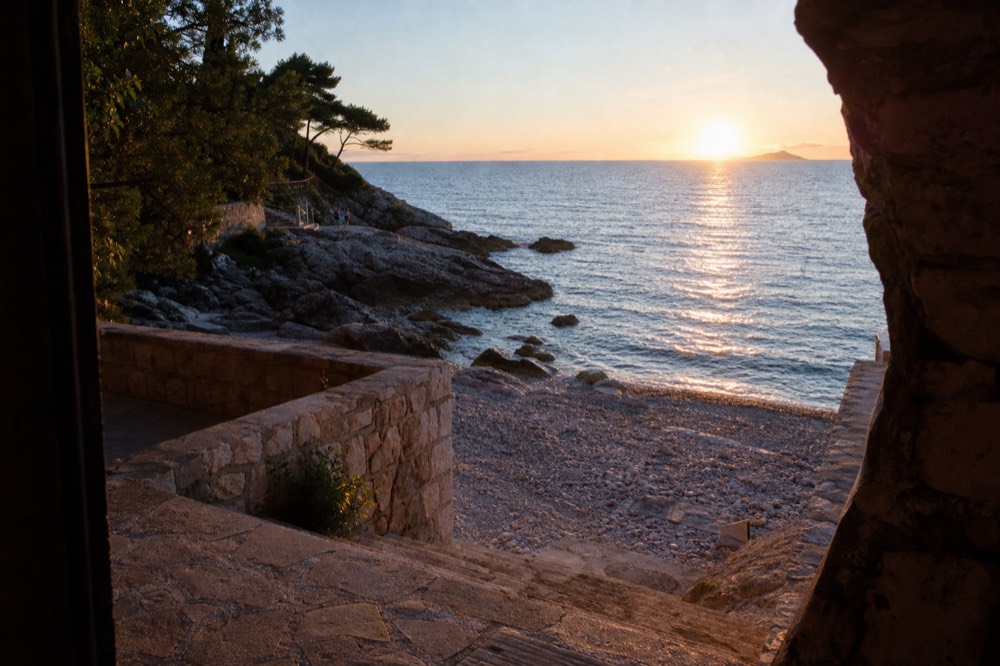
On the Lapad side, the closest thing to a beautiful beach is the rocky western shore of the peninsula at sunset, where the sun drops into the open sea and the water goes copper. It is a quieter kind of beauty, without a monument in it, and if your holiday is built around evening swims and golden-hour photographs rather than postcard landmarks, this shore delivers more usable beauty than a stairway cove ever will.
If the view is what you are after, there is a third answer that is not a beach at all: the cable car. The upper terminal on Mount Srđ sits 405.0 m above sea level, reached in 3 minutes 30 seconds over a 778.2 m track, and the operator states a view range of up to 60 km on a clear day, per the official timetable and prices page. The adult round trip is 30 euro in 2026. From up there you see every beach in this article at once, Lapad's bays included, which is a useful way to decide which one to walk to tomorrow.
When Is the Best Time to Swim from Lapad?
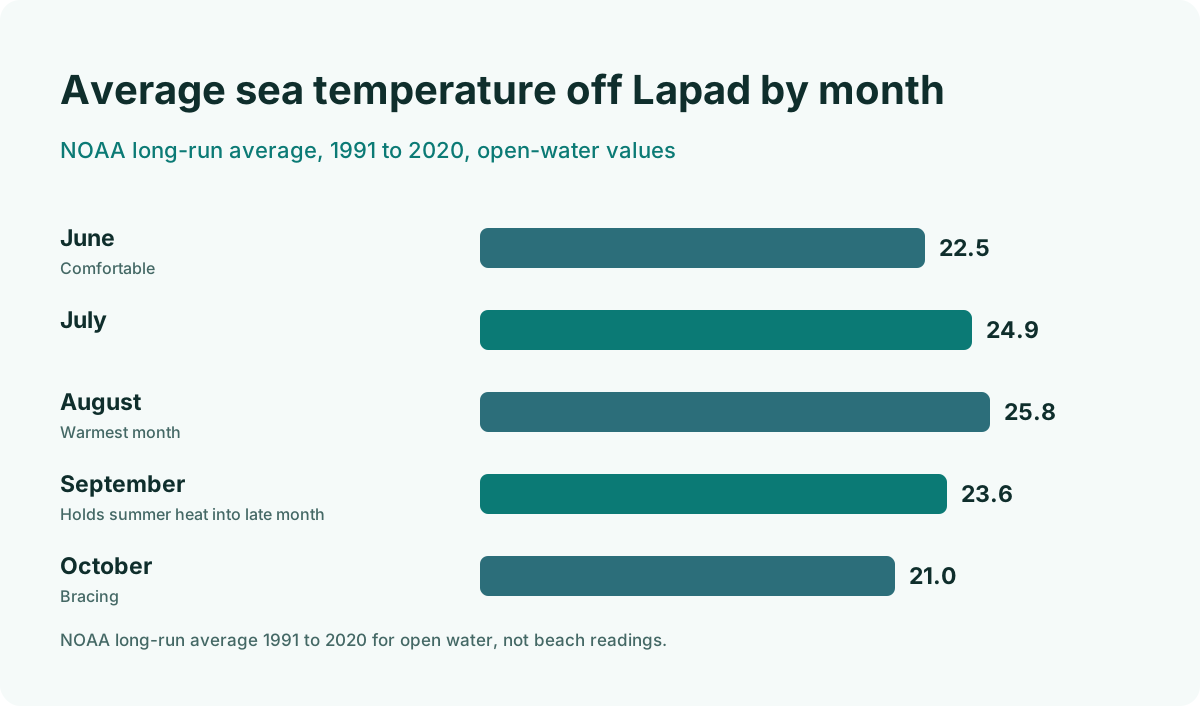
The best swimming months off Lapad are July, August and September, when the long-run average sea temperature for this coast runs 24.9, 25.8 and 23.6 degrees respectively. June at 22.5 is comfortable, October at 21.0 is bracing, and the sea is genuinely warm into late September, which is why September is a smarter beach month than most visitors plan for.
A caveat that matters: these figures are a NOAA long-run average for 1991 to 2020, an open-water climatological value, not a beach thermometer and not this year's water. Sheltered shallow bays like Lapad's run warmer than the open-sea average in high summer; the Croatian met service's Dubrovnik buoy read 27.0 to 27.4 degrees on a day in early September against a 23.6 September mean, and that gap between open water and a sheltered bay is exactly what you feel swimming off the Uvala.
| Month | Average sea temperature | Swimming verdict |
|---|---|---|
| May | 18.6 | Cold, for the brave |
| June | 22.5 | Comfortable |
| July | 24.9 | Warm |
| August | 25.8 | Warmest |
| September | 23.6 | Warm, and the town is calmer |
| October | 21.0 | Bracing, short swims |
September deserves a special word. The sea holds its summer heat, the beach crowds thin, and the cruise calendar, counter to every instinct, does not: Port Authority data shows cruise passengers peaked in September at 101,246 and October at 100,132 in 2025, above July's 96,072 and August's 87,385. Those passengers concentrate in the Old Town, not on Lapad's beaches, so a September base here gives you warm water and an uncrowded bay while the day-trip crowds queue at Pile.
How Do You Get from Lapad to the Old Town?
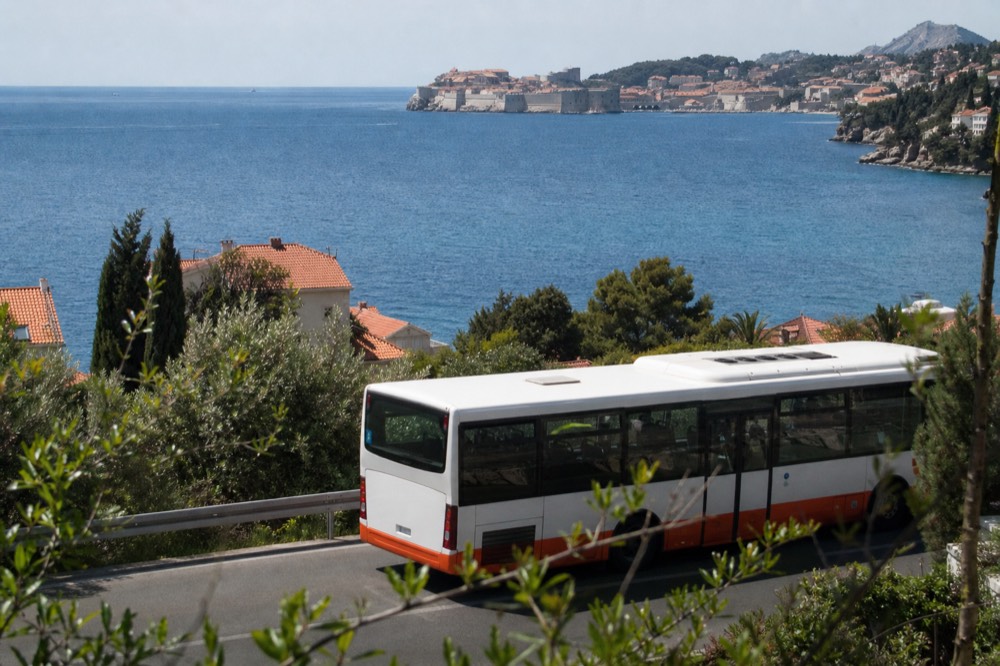
Lapad connects to the Old Town by frequent city buses, roughly a 15 minute ride to Pile Gate, by taxi or rideshare in about 10 minutes, and on foot in around 40 minutes along the coastal path via the Gruž side. Buses run late into the evening in summer, and the number 6 is the workhorse route for the peninsula's hotel zone.
The bus is the honest default. Dubrovnik's city buses run from Lapad's hotel avenues down to Pile, the gate at the western end of the Stradun, and the ride is short, cheap and frequent through the day. Buy tickets before boarding rather than from the driver, and keep the ticket for the whole ride. In peak summer the buses fill, but they also run often enough that the next one is rarely a long wait.
Walking works better than people expect, in one direction. The route from the Uvala toward Pile runs along the shore past Gruž and the port, flat almost the whole way, and takes around 40 minutes at a stroll. I would walk it toward town in the morning and bus back after dinner, because the evening return after a long day on stone is where the taxi earns its money. Rideshare and taxis operate in the city; our taxis and Uber guide covers fares and pickup spots in detail.
| Option | Time to Old Town | Best used |
|---|---|---|
| City bus (number 6 and related routes) | About 15 minutes to Pile | The default, all day and evening |
| On foot via the coastal path | About 40 minutes | Mornings, or any time you want the walk |
| Taxi or rideshare | About 10 minutes | Late evenings, luggage days, tired legs |
| Hop-on hop-off bus tour | 1 hour 30 minutes full circuit | Orientation on day one |
For orientation on your first day, the hop-on hop-off yellow bus tour with audio guide runs the panorama circuit from $35.46 per person, rated 4.9 across 1,147 reviews. And once you are at Pile, the Discover the Old Town walking tour is the best-value introduction on the roster: from $23.68 per person, about 1 hour 30 minutes, rated 4.9 across 4,987 reviews. Check availability alongside our Old Town walking tours overview.
What Else Is There to Do Around Lapad?
Beyond the beaches, Lapad offers watersports rental off Copacabana, sunset walks along the Uvala promenade, tennis and seaside cafes, and easy access to boat trips from Gruž port and the Old Town harbour, including the Elaphiti Islands cruises. It also makes a calm base for day trips to Mljet, Ston and the Elaphiti chain, all of which depart from this side of the city.
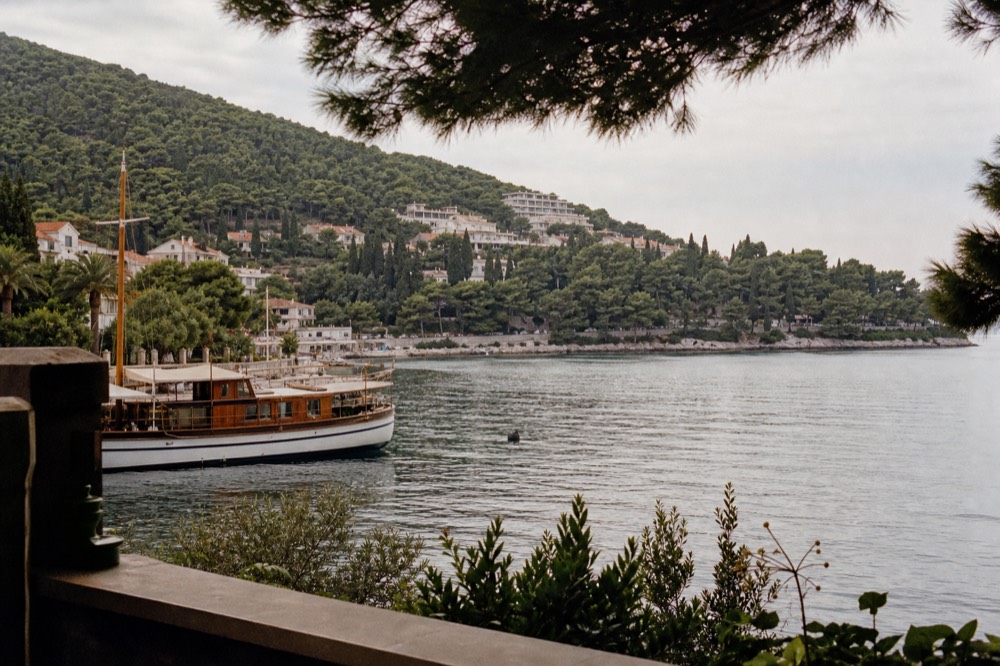
The Uvala promenade is the neighbourhood's living room. In the evening it fills with the slow pre-dinner walk, ice cream in hand, and there is nothing to do on it except exactly that, which is the point. Cafes and konobas line the avenue, and the pine-shaded benches at the bay's end are where you watch the water go dark.
The bigger excursions all leave from within reach of Lapad. Gruž port, the cruise and ferry harbour, is the closer of the two departure points and is about a 29-minute walk from the Hotel Komodor end of the peninsula. The full-day Elaphite Islands cruise with lunch runs 8 hours from $59.16 per person and is the most reviewed trip on the roster, rated 4.9 across 10,312 reviews; the Koločep, Lopud and Šipan islands it visits are covered in our Elaphiti Islands guide.
For a day with height instead of water, the panorama zipline on the slopes above the city runs from $64 per person, rated 4.9 across 2,109 reviews. And if you want the walls done properly rather than wandered, the two-hour Ancient City Walls and Wars walking tour costs from $29.58 per person, rated 4.8 across 1,387 reviews, with the walls' own official site carrying the full monument details. The walls circuit is 1,940 metres long, up to 25 metres high, and the adult ticket is 40 euro in main season, 1 March to 30 November, dropping to 20 euro in December.
A word on timing before you book anything: the walls are best walked early, when the stone is still cool and the cruise crowds have not yet climbed. The operator's stated hours are 08:00 to 19:30, and an 08:00 start puts you at the top of the circuit with the light still low over the Adriatic. Pair the walls walk with a morning bus from Lapad and you will be back on the beach by early afternoon, which is the whole point of basing yourself on this side of the city.
Common Questions About Lapad in Dubrovnik
Is Lapad a Nice Part of Dubrovnik?
Yes. Lapad is quieter and greener than the Old Town, holds the city's main beaches and most of its hotel capacity, and connects to the walled town by a 15-minute bus ride. You trade medieval atmosphere for space, shade and swimming, which suits families and longer stays.
What Is the Best Beach in Dubrovnik?
For a full swimming day, Copacabana Beach on Lapad's western shore, for its gentle entry, calm cove and facilities. For scenery, Sveti Jakov below Ploče, with the Old Town view, reached by a long stairway. For families, the Lapad Bay shoreline itself.
How Far Is Lapad from the Old Town?
About 3 km. The bus to Pile Gate takes roughly 15 minutes, a taxi about 10, and the flat coastal walk via Gruž takes around 40 minutes.
Can You Swim at the Beaches in Lapad in September?
Yes, comfortably. The long-run average sea temperature for this coast is about 23.6 degrees in September, and sheltered bays like Lapad's typically run warmer than that open-water average. The beach crowds also thin after August.
is lapad a nice part of dubrovnik?
Yes. It is the hotel and beach peninsula west of the Old Town: calm, pine-shaded, flat along the bay, with the number 6 bus to Pile Gate. It is the right base for a beach-first week and the wrong one for a single night inside the walls.
Do You Need a Car in Lapad?
No. Buses, taxis and your own feet cover the peninsula and the Old Town. A car mainly helps for Pelješac, Ston or Montenegro day trips, and hotel parking in Lapad is far easier than anything inside the walls.