Best Beaches in Dubrovnik: Where to Swim on the Adriatic
Dubrovnik is not a sandy beach town, and knowing that before you arrive changes everything about how you enjoy the coast.
Short answer
Yes, Dubrovnik has good beaches, but they are pebble and rock, not sand. The sea is warm enough for swimming from June through September, with a long-run September average of about 23.6 degrees. Banje and Lapad beaches sit closest to the Old Town, while the Elaphiti islands hold the region's best sand at Sunj.
Dubrovnik gets sold as a walled city, a filming location, a cruise stop. All true. But the city sits on the Adriatic, and the Adriatic here is absurdly clear, deep blue a hundred metres from shore and green-gold in the shallows. The catch, and it is the one thing every visitor should know before packing, is that almost none of it is sand. What you get instead are pebble beaches, rock platforms and concrete ledges, and once you adjust to that, the swimming is some of the cleanest in the Mediterranean.
I have walked this coastline for years, from the rocks below the walls to the coves past Lapad, and the honest answer to most beach questions is: it depends on the day, the month and what you call a beach. This guide covers the four questions I hear most often, with real numbers on water temperature, crowds and how the coast compares with Split.
Is Dubrovnik Good for Beaches?
Yes, but not in the way most first-time visitors expect. Dubrovnik's beaches are pebble and rock rather than sand, the water is exceptionally clear, and the swimming season runs roughly June through September. If you want a long sandy stretch with sunbeds for hire, you will find it only outside the city, on the Elaphiti islands. For everything else, Dubrovnik delivers.
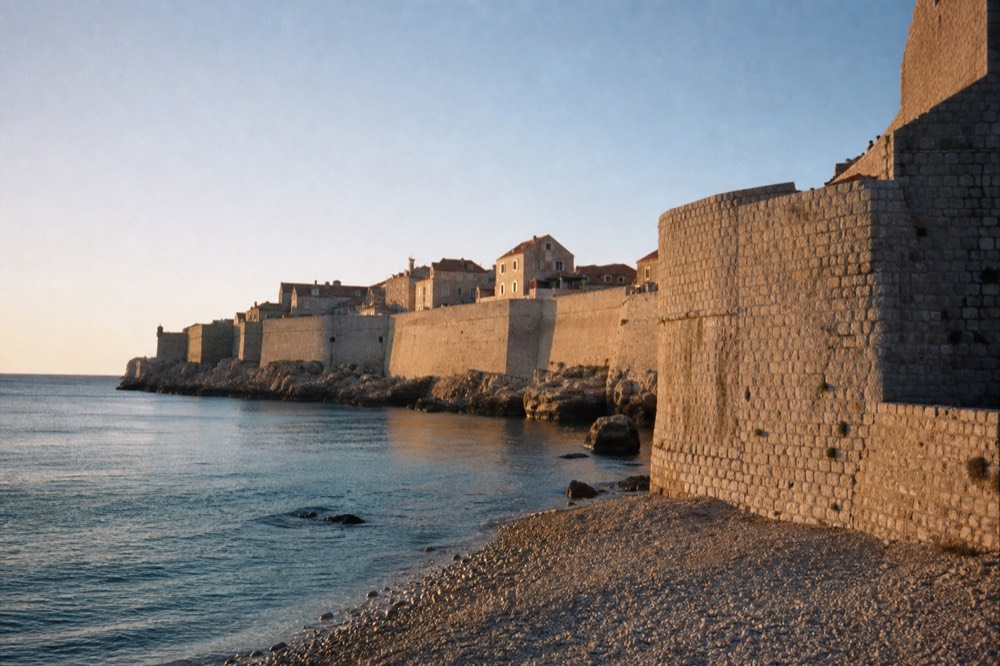
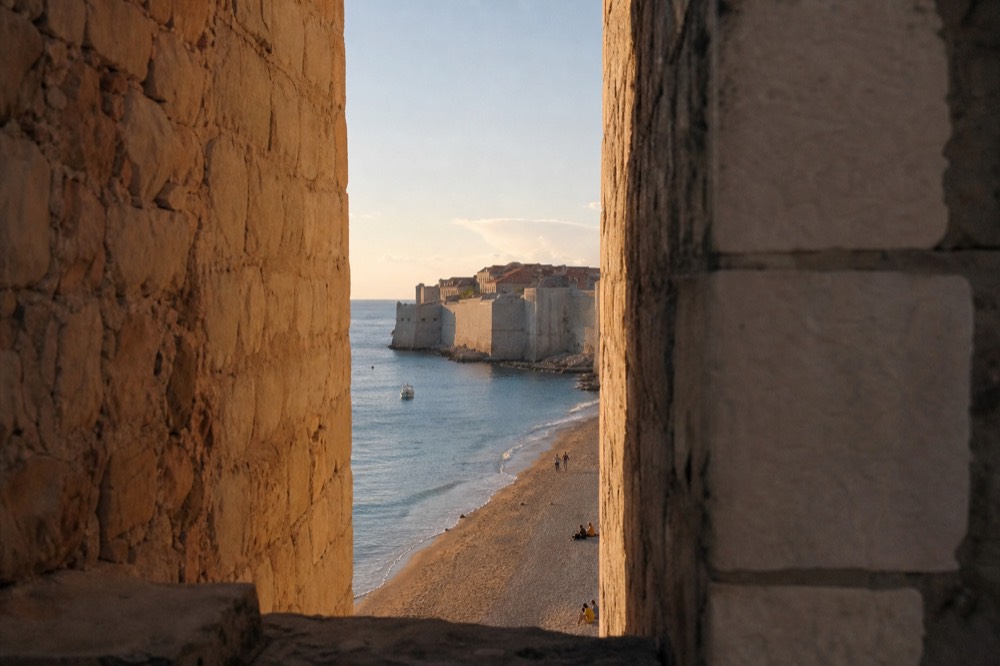
The city's own beaches divide into three groups. East of the Old Town, below Ploče, sits Banje, the famous one, pebbly, polished and photogenic, with the walls behind you and Lokrum in front. West along the Lapad peninsula you get a string of bay beaches, more family-friendly, shaded by pines, with cafés and shallow entries. And then there are the rocks: the ledges below Buža bar where people jump straight into deep water, and a dozen unnamed platforms locals use without a second thought.
The pebble question matters for practical reasons. Water shoes earn their keep here, because the stones at the waterline are rounded but hard underfoot, and the sea drops away quickly, which is also why the water stays so clean. There is no long shallow shelf collecting silt. You are swimming in open Adriatic within a few strokes.
| Beach | Surface | Setting | Best for |
|---|---|---|---|
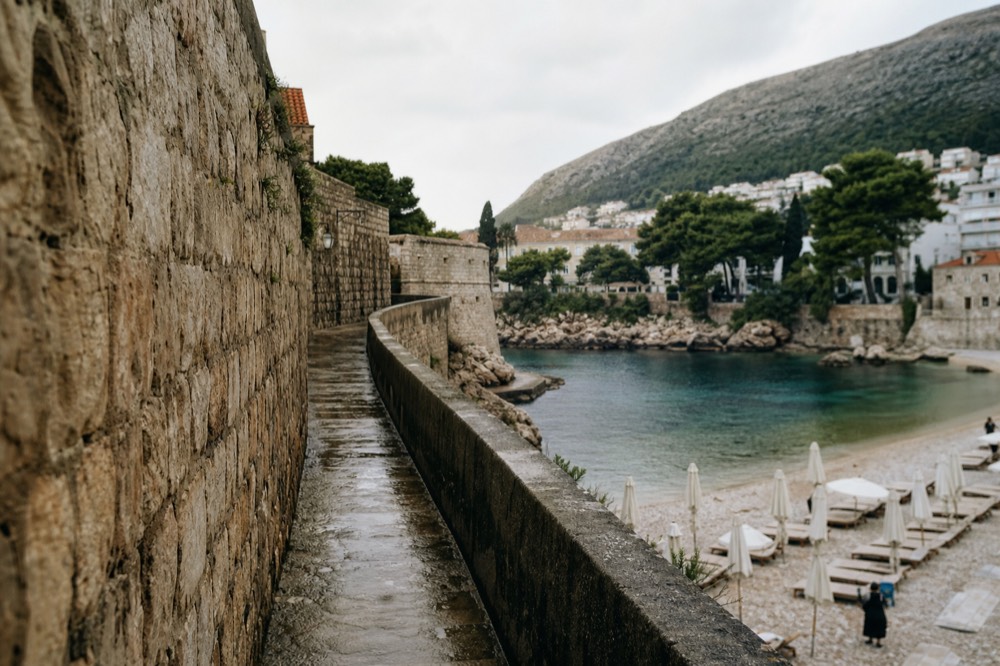
| Banje | Pebble | Directly below the Old Town walls, view of Lokrum | The postcard swim, closest to the centre |
| Lapad bay beaches | Pebble and concrete | Pine-shaded bays on the peninsula | Families, easy entries, cafés |
| Copacabana | Pebble | West end of Lapad, open to the bay | Watersports, longer stays |
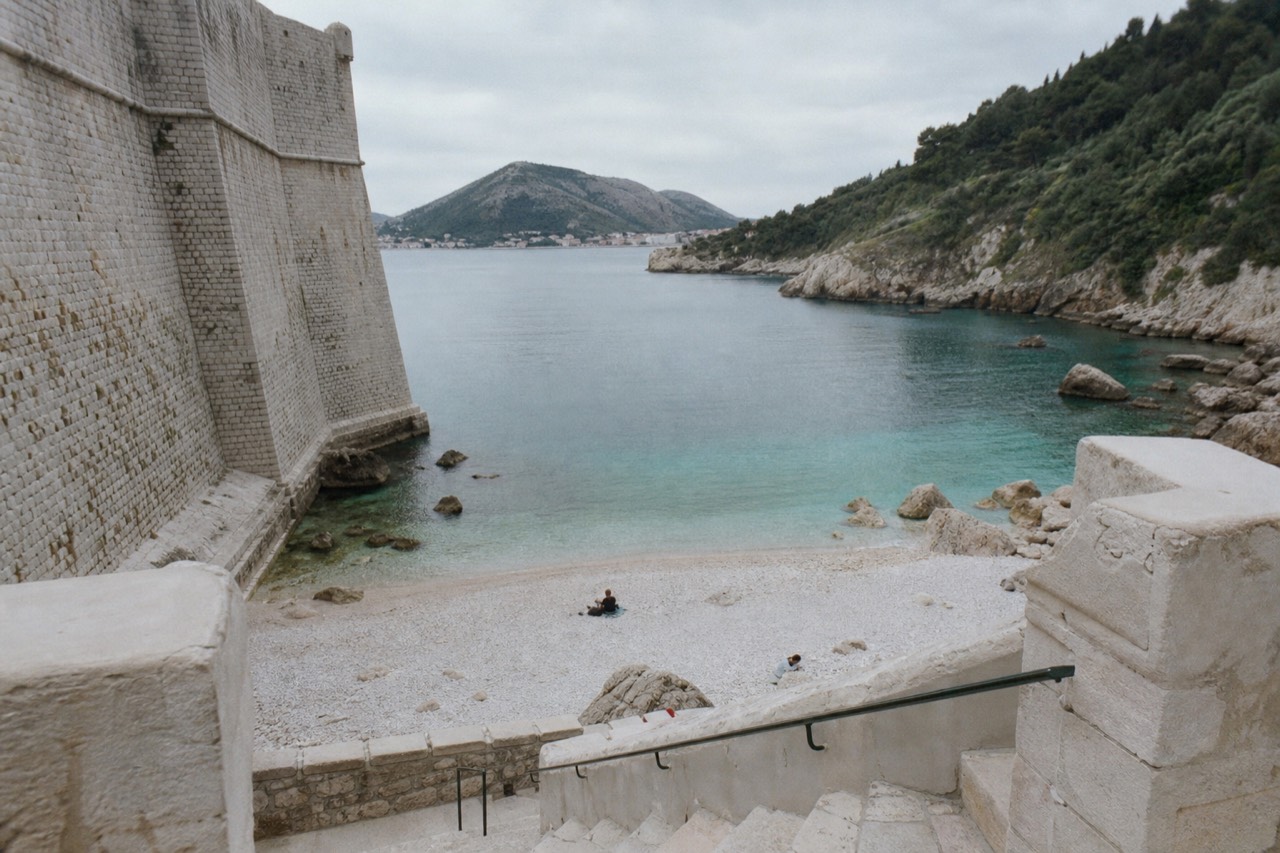
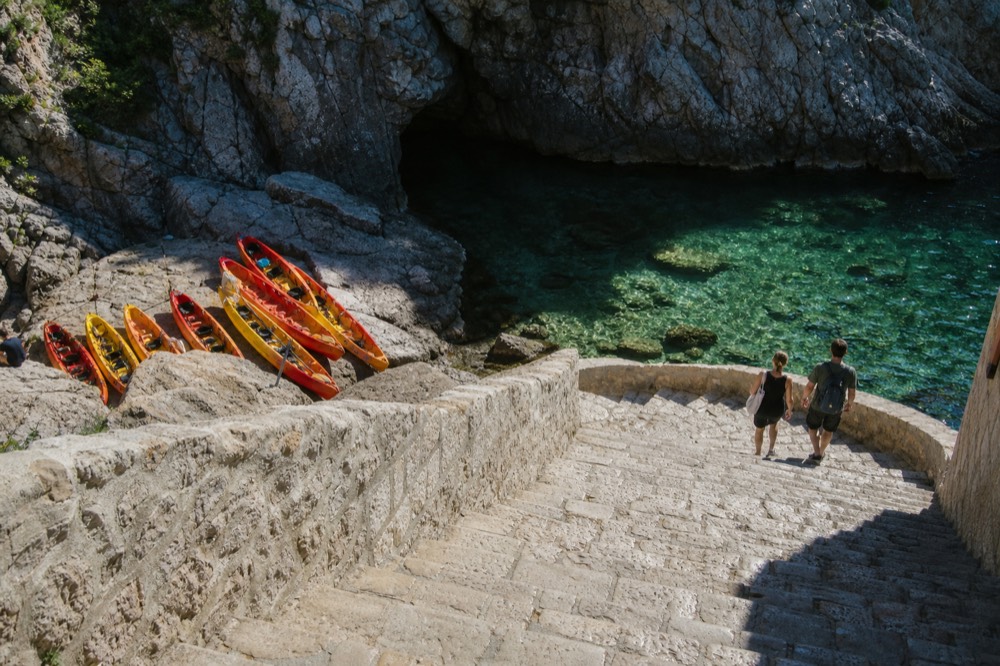
| Sveti Jakov | Pebble and rock | Small cove below a monastery, view over the Old Town | A quieter half day, strong legs for the stairs |
| Rocks below Buža | Rock platform | Cliff edge on the south side of the walls | Jumping in, a drink after |
One more thing worth saying plainly: Dubrovnik is busy, and the beaches nearest the centre feel it. The city recorded about 4.2 million overnight stays in 2025, sharing first place among Croatian destinations with Rovinj, according to the Croatian Bureau of Statistics. The pebble strip at Banje on a July afternoon is a shared experience. Walk twenty minutes further, or take a boat, and it thins out fast.
Can You Swim in Dubrovnik Beaches?
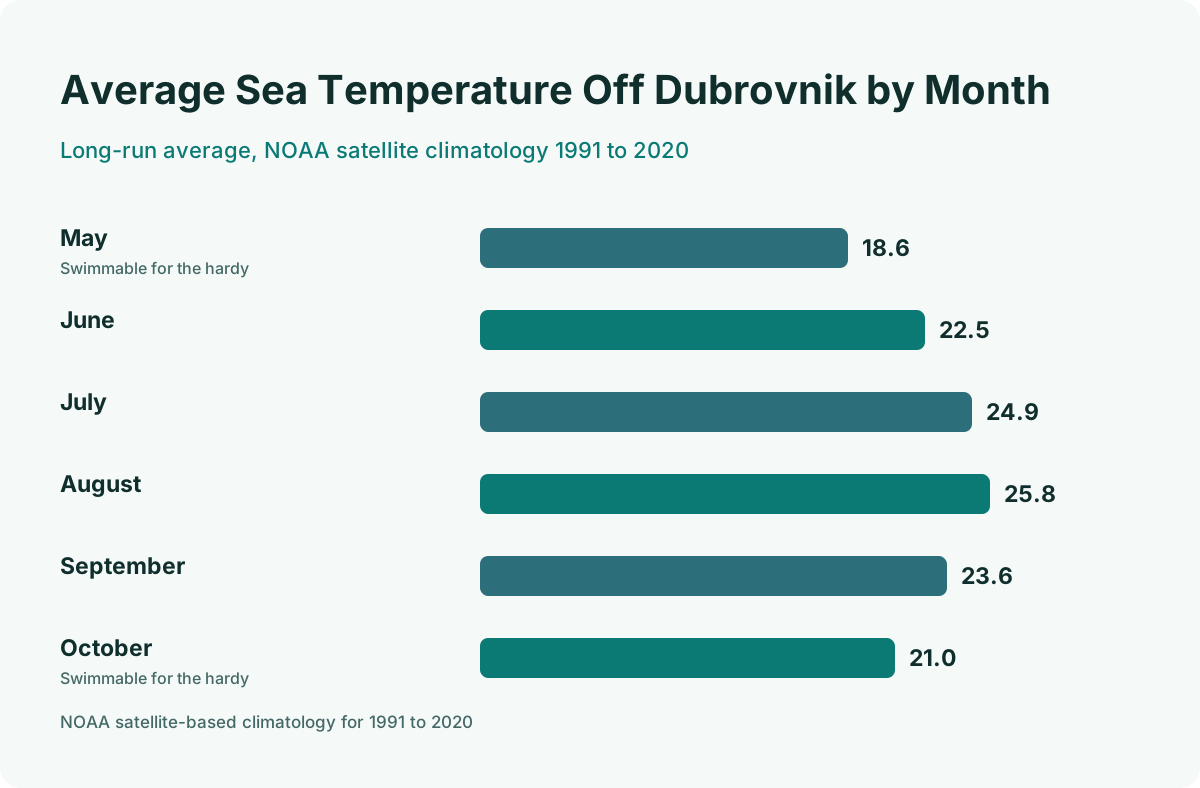
Yes, and for longer than most people guess. The long-run average sea temperature off this coast is 22.5 degrees in June, 24.9 in July, 25.8 in August and 23.6 in September, so the water is genuinely warm through the whole summer. May at 18.6 and October at 21.0 are swimmable for the hardy rather than the average visitor.
Those numbers come from NOAA's satellite-based climatology for 1991 to 2020, a long-run average for this stretch of open water, not a beach thermometer and not this year's reading. An independent European dataset corroborates them within about a degree, and the practical difference shows up on calm days: sheltered shallow bays run warmer. On 8 September 2026 the Croatian met service's own Dubrovnik buoy read 27.0 to 27.4 degrees against a 23.6 September average, which tells you exactly how much a protected bay in high summer can exceed the open-water mean.
| Month | Average sea temperature | Swimming verdict |
|---|---|---|
| May | 18.6 degrees | Bracing, short swims |
| June | 22.5 degrees | Comfortable |
| July | 24.9 degrees | Warm, peak season |
| August | 25.8 degrees | The warmest month |
| September | 23.6 degrees | Still lovely, thinner crowds |
| October | 21.0 degrees | Swimmable for many, cooling fast |
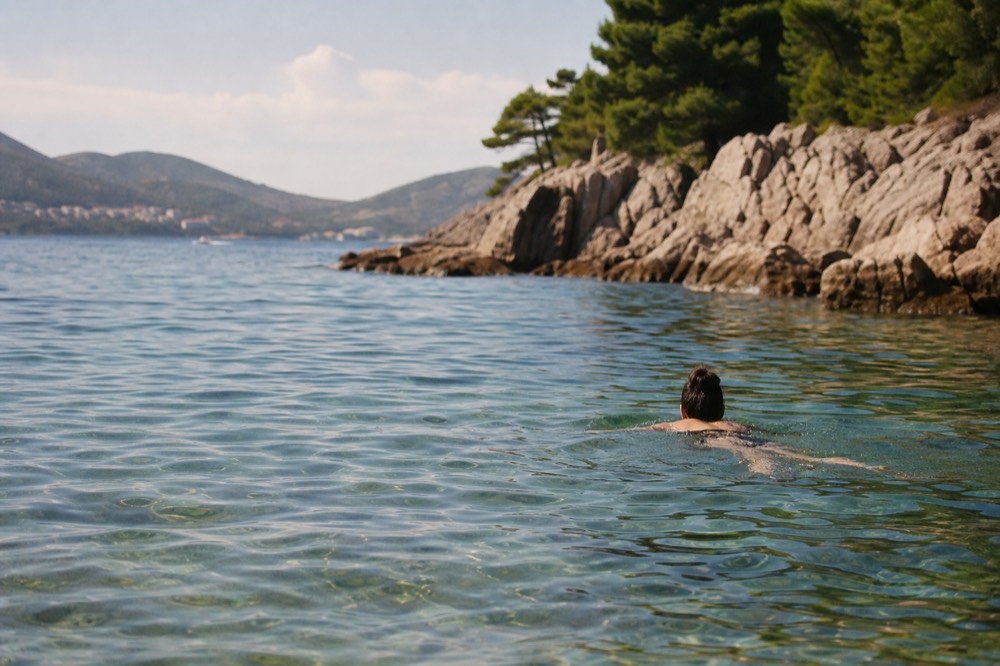
The other half of the swimming question is water quality, and here the news is all good. The Adriatic along this coast is clean, clear and deep close in, which is why snorkelling is a standard activity rather than a special trip. The coves around Lokrum and the Betina Cave sea cave are the classic spots, reachable by kayak from a beach launch, and the water clarity is the reason the kayak-and-snorkel tours are among the best-rated products in the whole city.
That points to the honest local secret about swimming here: the best water is usually not at the beach. It is a hundred metres offshore, in a cave mouth or off a rock nobody can walk to. The guided day and sunset kayak tours with snorkelling, from $36.50 per person and rated 4.9 across 4,286 reviews, exist precisely for that reason, and they launch from beaches you can walk to. For more on the routes, see our guide to kayaking in Dubrovnik.
If you would rather swim from land and skip the equipment entirely, pick your beach by depth. Lapad's bays shelve gently enough for children; Banje and Sveti Jakov drop off quickly, which suits confident swimmers; the rock platforms suit anyone who wants to jump in and climb straight out. Our September swimming answer page goes deeper on the shoulder season, which is quietly the best time to combine warm water with room on the stones.
Which Dubrovnik Beach Should You Pick?
Match the beach to your day, not to a ranking. Banje for the shortest walk and the famous view, Lapad for families and shade, Sveti Jakov for quiet and stairs, the Buža rocks for a jump and a drink, and the Elaphiti islands for the only real sand at Sunj. Most visitors end up using two or three of these across a week.
I will be specific, because this is where generic guides go vague. If you are staying in or near the Old Town, Banje is a five-minute walk from Ploče Gate and you will share it. If you are in Lapad, the peninsula's bay beaches are on your doorstep and they are genuinely nicer for a long day: pines for shade, shallow water for children, cafés for lunch. Sveti Jakov is the local favourite for its view back over the walled city, but you earn it, the path down is a staircase, and you climb it again on the way back up.
The Buža rocks deserve a paragraph of their own, because there is nothing else like them. You go through a hole in the city wall on the south side, order a drink on the cliff terrace, and swim off the rocks in deep, gin-clear water with the wall above you. It is not a beach in any official sense. It is one of the most memorable swims in Croatia, and our Buža bar guide covers the practical details.
| If you want | Go to | Trade-off |
|---|---|---|
| Closest beach to the Old Town | Banje | Crowded in July and August |
| Shade and shallow water for children | Lapad bay beaches | A bus or a 30-minute walk from the centre |
| A quiet swim with a view | Sveti Jakov | Stairs down and back up |
| To jump straight into deep water | Buža rocks | No sand, no space to spread out |
| Genuine sand | Sunj on Lopud | A boat trip, half a day or more |
For the sand, the honest answer is to leave the city. The Elaphiti islands hold the region's sandy shallows, above all Sunj on Lopud, a shallow sandy bay that is exactly what people picture when they say "beach". The full-day Elaphite islands cruise with lunch, from $59.16 per person and rated 4.9 across 10,312 reviews, is the most-reviewed product in the entire region for good reason: it stacks three islands, a boat day and lunch into one ticket. Our Elaphiti islands guide covers doing it independently if you prefer ferries.
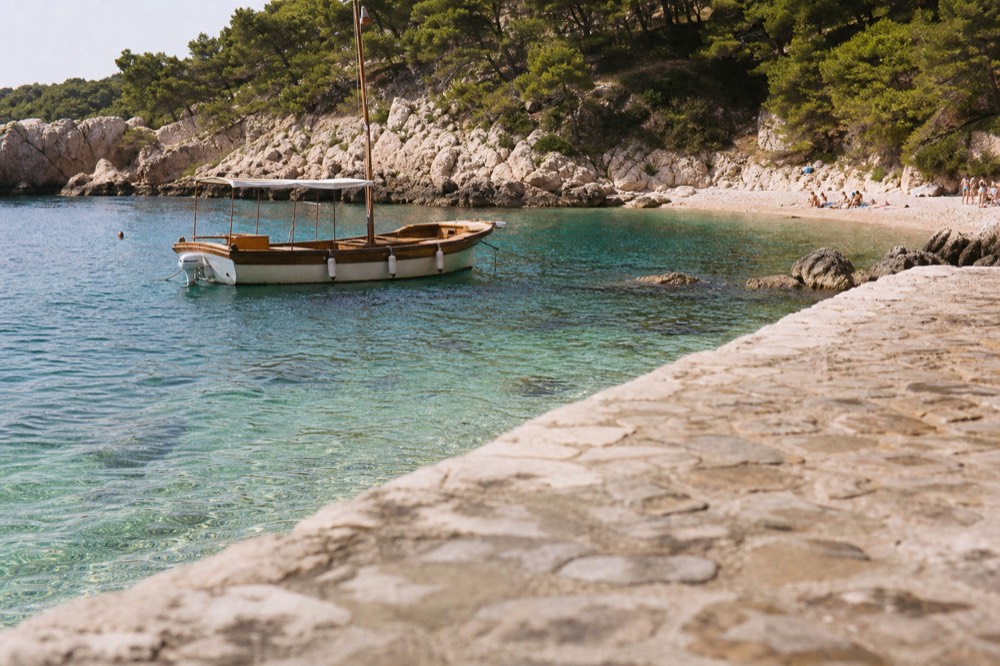
A word on timing, because it changes everything. The city counts visitors at every Old Town entrance with six counters updating every 15 minutes, and the official carrying capacity for the historic core is 11,275 people, per the Dubrovnik visitors platform. On a measured September day the count climbed from 5,419 people at 08:00 to a 7,739 peak at 10:00. The beaches follow the same curve an hour later. Swim before 10:00 or after 16:00 and you will have a different experience of the same stones.
Are the Beaches Better in Split or Dubrovnik?
Neither city wins outright, because they offer different things. Split has the sandy beach at Bačvice and a longer, easier beach strip west of centre, while Dubrovnik has more dramatic settings, cleaner and clearer water, and the island option. If a classic sandy beach day is the priority, Split edges it; for scenery and swimming quality, Dubrovnik does.
The comparison gets argued constantly, and it is worth being precise about why. Split's coast is lower, flatter and more accessible: Bačvice is a genuine sandy bay a short walk from the Diocletian's Palace core, and the strip running west through the Marjan foothills gives you beach after beach with cafés and shallow entries. It feels like a beach town that happens to have a Roman palace in the middle.
Dubrovnik is the opposite trade. The beaches are smaller, stonier and more theatrical: a pebble cove under medieval walls, a cliff platform through a hole in the fortifications, a monastery beach looking back at the whole city. The water, in my experience of both coasts, is clearer around Dubrovnik, partly because the beaches drop into deeper water quickly. And Dubrovnik holds the trump card of the Elaphiti islands, real sand within a boat ride.
| Factor | Split | Dubrovnik |
|---|---|---|
| Sand | Yes, at Bačvice and nearby bays | Almost none in the city, sand on the islands |
| Water clarity | Good | Exceptional, deep water close in |
| Setting | Flat city coast, easy access | Walls, cliffs and coves |
| Walkable from centre | Yes, several beaches | One or two, the rest need a bus or boat |
| Island escape | Ferries to the central Dalmatian islands | Elaphiti islands, including sandy Sunj |
The honest tiebreaker is what your trip is for. If you are basing yourself somewhere for a week of lazy beach days with children who need sand and shallow water, Split is the easier machine for that. If Dubrovnik is your destination, and for most people it is, the beaches here are not a compromise, they are a different genre, and the swimming is arguably better. Our Dubrovnik versus Split comparison works through the whole decision, not just the coastline.
What About Swimming Off Lokrum and the Islands?
Lokrum is the best half-day swimming trip from Dubrovnik: a forested island reserve ten minutes off the coast with rocky swimming spots, and its 30 euro ticket covers both reserve entry and the return boat. Beyond it, the Elaphiti islands and the Betina Cave sea cave hold the region's most memorable water.
Lokrum works like this. Boats leave the City Harbour at 09:00, then every 15 minutes from 10:00 to 18:00, and the ticket office at Luža in the Old City Port works 08:00 to 18:00. The 30 euro per person ticket covers the reserve and the return transfer whether you use the official boat or your own transport, and it stays usable for three days. There is no sand, but there are rocky swimming platforms on the south side, deep clear water, and enough shade to make a hot afternoon bearable. Our Lokrum island guide covers the rest.
Then there is the cave. Betina Cave, a sea cave on the Lapad side of the entrance to the old port, is the swimming spot you cannot walk to, which is exactly its charm. The two-hour kayak tour of Lokrum island and Betina Cave, from $35.49 per person and rated 4.9 across 1,518 reviews, paddles you there and gives you a swim break inside the cave mouth.
For a full day rather than an afternoon, the islands win. Lopud's Sunj bay is the sandy one, Koločep is the green quiet one, and Šipan is the one with the least development. You can do them by public ferry or by cruise, and the cruise version is the more popular choice by a wide margin. One recent guest review of the Elaphite cruise puts the appeal better than I can:
This was a wonderful day. Nice and shaded on the boat as we cruised on the cool adriatic. Loved seeing the neat Elphiti Islands and a wonderful way to get out the the heat and large crowds for a bit. They kept the drinks flowing and lunch was phenomenal and a generous portion. This is the way to cruise the Adriatic.
Shelby_S
When Is the Best Time of Day for a Dubrovnik Beach?
Before 10:00 or after 16:00, in every month that matters. The Old Town's own counters show the daily crowd peaking at 10:00, the beaches fill an hour behind that curve, and the midday sun on stone is fierce from June to August. An early morning swim also gets you the calmest water before the afternoon breeze picks up.
The crowd data is worth internalising, because it applies to the beaches as much as the Stradun. On that measured September day the count was 3,139 at 07:00, 5,419 at 08:00, 7,297 at 09:00 and 7,739 at 10:00, before easing to 7,205 by 11:00. Cruise passengers are a big part of that curve, and the counter-intuitive fact is that September and October, not July and August, were the two busiest cruise months of 2025 at 101,246 and 100,132 passengers, per the Dubrovnik Port Authority. Autumn water is warm and the town is not empty.
| Time of day | What you get |
|---|---|
| 07:00 to 10:00 | Empty stones, calm water, cool air, the best swim of the day |
| 10:00 to 13:00 | Peak crowds, hardest sun, the time to be on a boat instead |
| 13:00 to 16:00 | Warmest water, busiest beaches, shade at a premium |
| 16:00 to sunset | Thinning crowds, golden light, the rocks at Buža at their best |
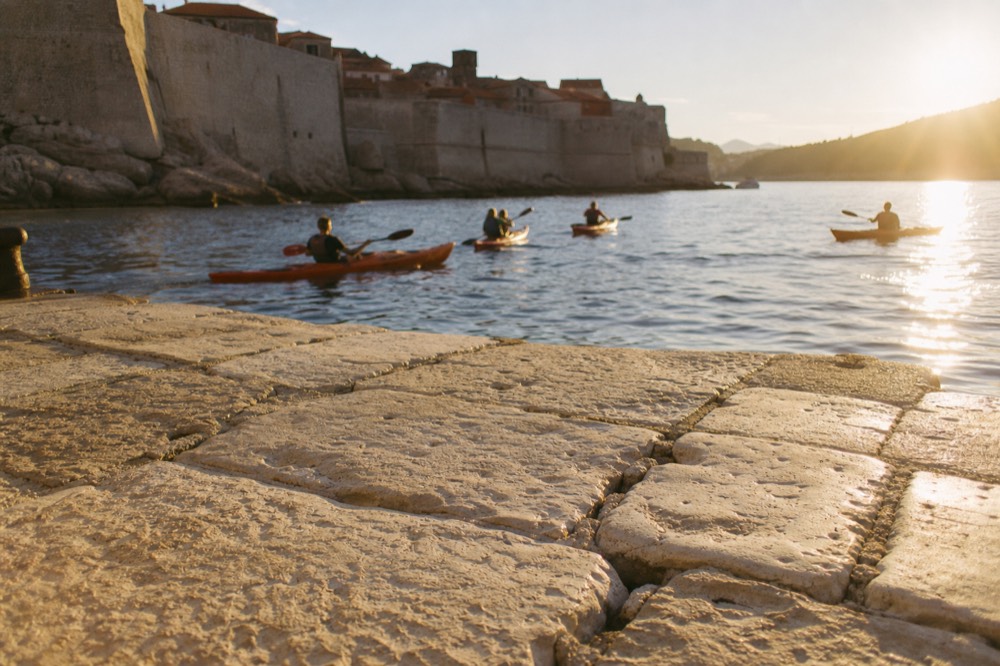
The sunset slot deserves its own mention, because it is when the kayak tours earn their price. Paddling west along the walls as the light goes low, then swimming in a cove on the way back, is the single best water experience available in the city, and it is the reason the day-and-sunset kayak format exists as a product. The shorter two-and-a-half-hour kayak and snorkel tour, from $35 per person and rated 4.9 across 3,619 reviews, covers the same logic on a tighter schedule.
What Should You Bring to a Dubrovnik Beach?
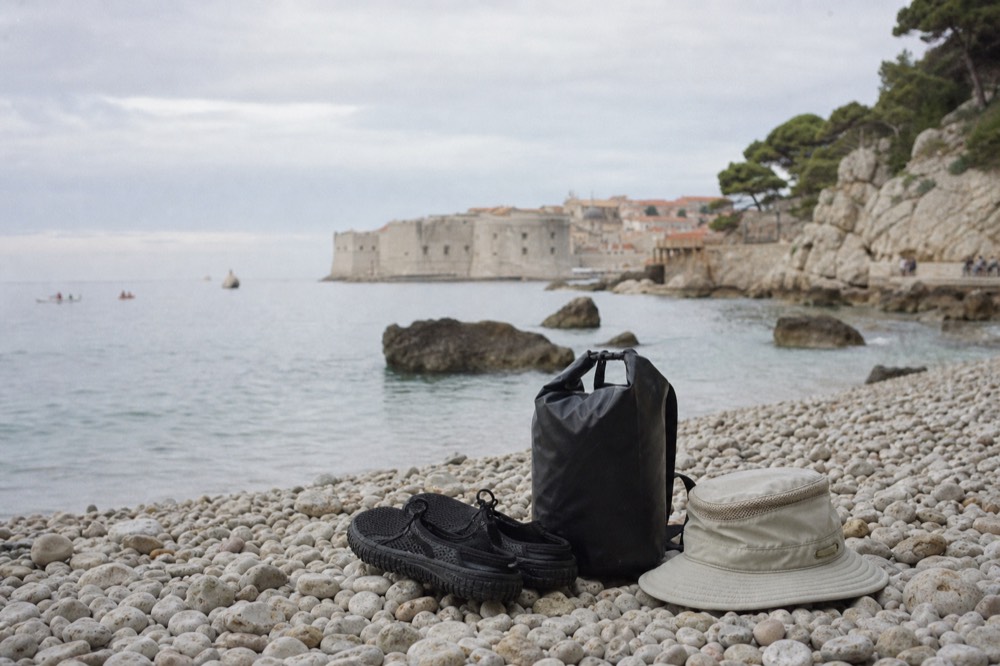
Water shoes, a dry bag and more water than you think you need. The pebbles are hard underfoot, the sun reflects off stone and sea, and shade is scarce on every beach except the Lapad bays. Everything else, sunbeds, umbrellas, cafés, exists at Banje and Lapad but not at the rocks or the island coves.
The packing list is short and unforgiving. Water shoes first, because every entry is stone. A hat and high-factor sunscreen second, because the Adriatic sun off white stone is a different animal from a grassy beach at home. A dry bag third, if you are swimming off rocks or kayaking, because there is nowhere to leave anything. And cash or a card for the beach cafés, which are fairly priced for what they are but are sometimes the only food within a twenty-minute walk.
Two closing practicalities. The sea urchins are real but avoidable: they sit in the darker rocky patches, and water shoes plus looking down solves nearly every case. And the jellyfish question comes up every summer: the Adriatic here occasionally sees them, usually harmless moon jellies, and on the rare days they arrive in numbers the kayak and boat crews know before anyone else, which is one more quiet argument for booking a guided swim rather than guessing from the shore. For the full planning picture beyond the coast, start with Things to Do in Dubrovnik and work outward.
Common Questions About Dubrovnik Beaches
Is Dubrovnik good for beaches?
Yes, with an asterisk. The city's beaches are pebble and rock rather than sand, the water is exceptionally clear, and the swimming season runs from June through September. If you specifically want sand, the Elaphiti islands, above all Sunj on Lopud, are the answer, and they are a short boat trip away.
Can you swim in Dubrovnik beaches?
Yes, and the season is long. The long-run average sea temperature is 22.5 degrees in June, 24.9 in July, 25.8 in August and 23.6 in September. Those are open-water averages rather than beach readings, and sheltered bays in high summer often run warmer, with the local buoy reading 27.0 to 27.4 degrees on one September day.
Are the beaches better in Split or Dubrovnik?
Split wins on sand and accessibility, with the sandy bay at Bačvice walking distance from its centre. Dubrovnik wins on setting and water clarity, with beaches below the walls, cliff platforms and the Elaphiti islands on the doorstep. If a classic sandy beach day is the priority, choose Split; for dramatic swimming, choose Dubrovnik.
Are beaches nicer in split or dubrovnik?
Nicer depends on what you mean. Split's beaches are easier and sandier, better for small children and lazy days. Dubrovnik's are stonier and more spectacular, with cleaner, deeper water and the island escape option. Plenty of visitors do both cities and swim happily in each.
Which is the closest beach to Dubrovnik Old Town?
Banje, a pebble beach directly below the walls on the Ploče side, a few minutes from the gate. It is the most convenient and the most crowded, especially between 10:00 and 16:00 in July and August. For a quieter swim with a view, Sveti Jakov is the local pick, reached by a staircase below the monastery.
Do you need water shoes for Dubrovnik beaches?
Bring them. Almost every entry is over rounded but hard pebbles or rock, and sea urchins sit in the darker rocky patches. Water shoes solve both problems and cost a fraction of a twisted ankle on the waterline.