Dubrovnik vs Split: Which Croatian City Should You Choose?
Two coastal heavyweights, one holiday decision. Here is how Dubrovnik and Split actually compare on beauty, cost, crowds and day trips, from someone who plans trips around both.
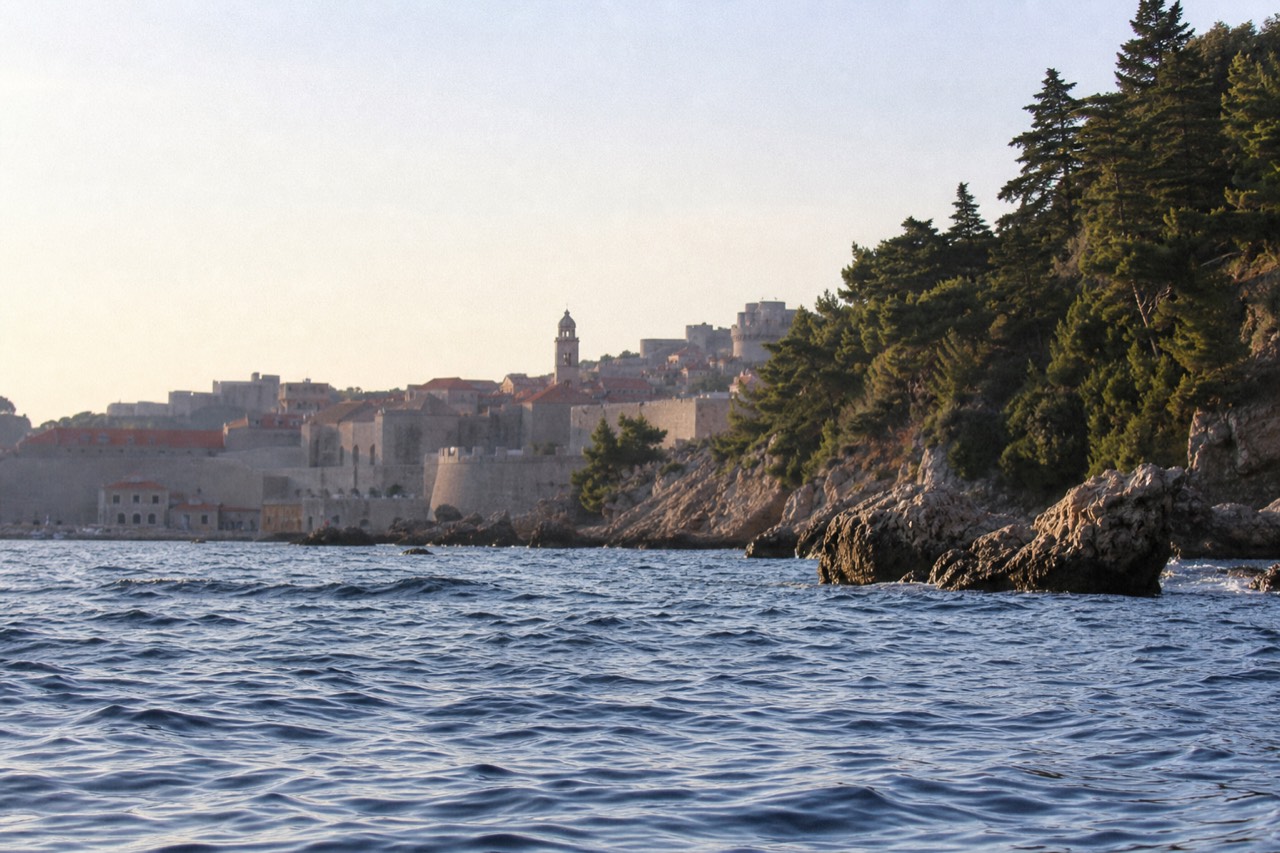
Short answer
Dubrovnik is prettier and more compact, Split is cheaper and better connected. The Dubrovnik City Walls ticket is 40 euro in main season and the cable car round trip is 30 euro, while Split's Diocletian's Palace core is free to wander. Most visitors split a week between the two.
Dubrovnik vs Split: Which Croatian City Should You Choose?
Croatia's two most famous coastal cities sit at opposite ends of the Dalmatian coast, and travellers keep asking me which one deserves their limited days. It is a fair question, because the honest answer changes depending on the month, the budget and whether you care more about postcard views or street life. I have walked both cities in every season since I started guiding in 2015, and the differences are starker than the brochures admit.
Dubrovnik is a small, fiercely protected museum of a city. Split is a living port town with a Roman emperor's palace at its centre and a much bigger transport web around it. Neither is a wrong choice, but they reward different trips. This guide compares them on the things that actually decide a holiday: looks, cost, crowds, day trips and how much you can see in a single day.
One number frames the whole debate. Dubrovnik recorded about 4.2 million overnight stays in 2025, sharing first place among Croatian destinations with Rovinj, and it does that inside a walled core of just 24.7 hectares, the UNESCO-inscribed property area. Split absorbs its visitors across a far larger urban footprint. Everything else, the prices, the crowds, the pace, follows from that difference in scale.
What Is Prettier, Split or Dubrovnik?
Dubrovnik is prettier, and it is not particularly close. The walled Old Town, inscribed by UNESCO in 1979 under criteria (i)(iii)(iv), is a complete marble-and-limestone ensemble with the Stradun running 298 metres through its heart, and the walls rise up to 25 metres above the sea on the outside. Split's beauty is real but partial: a spectacular Roman core surrounded by an ordinary working city.
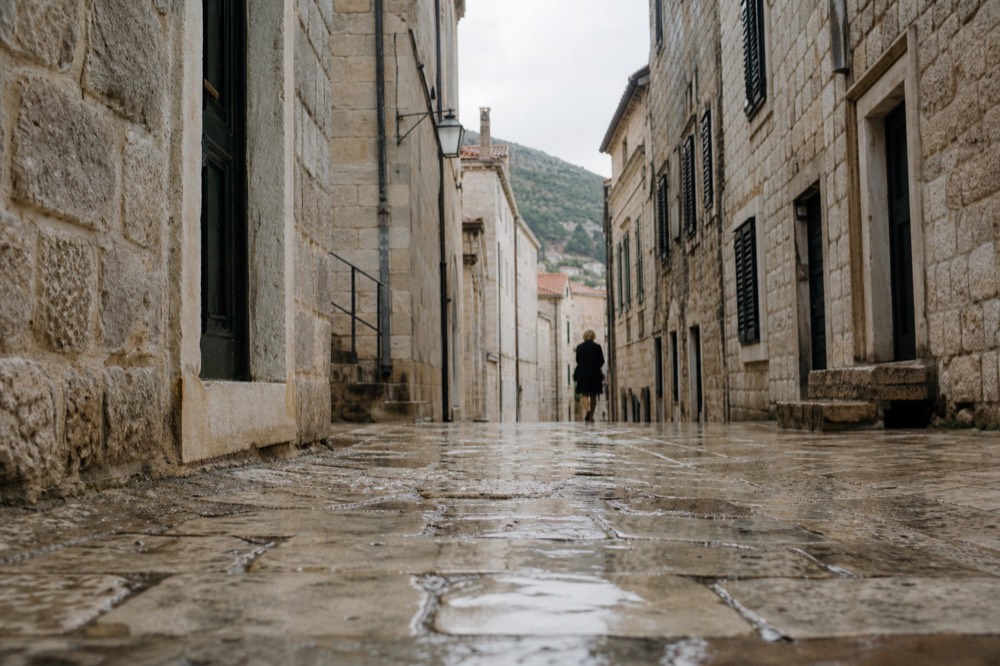
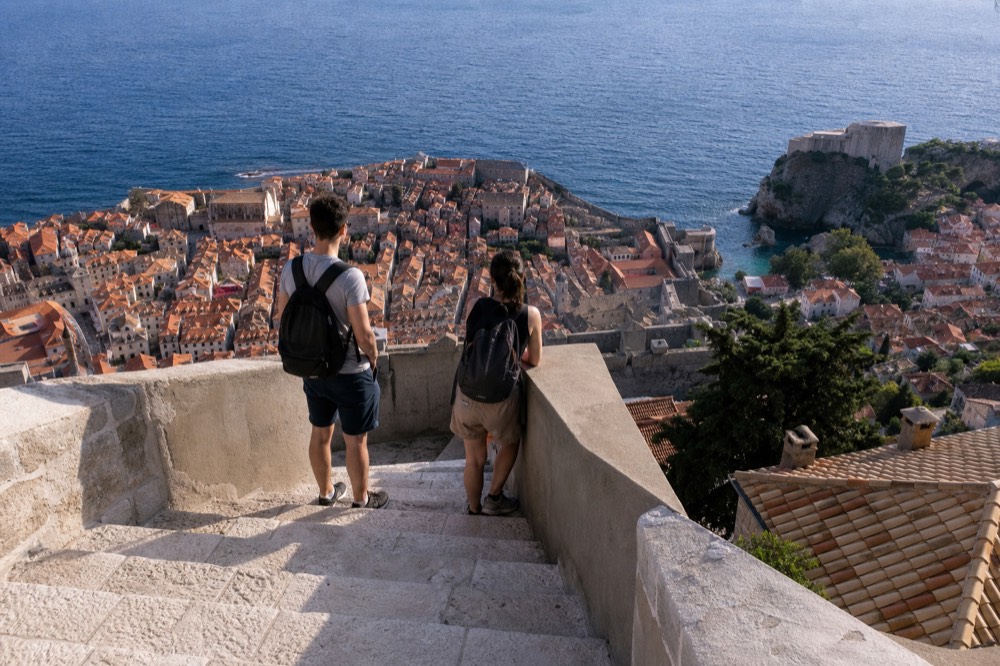
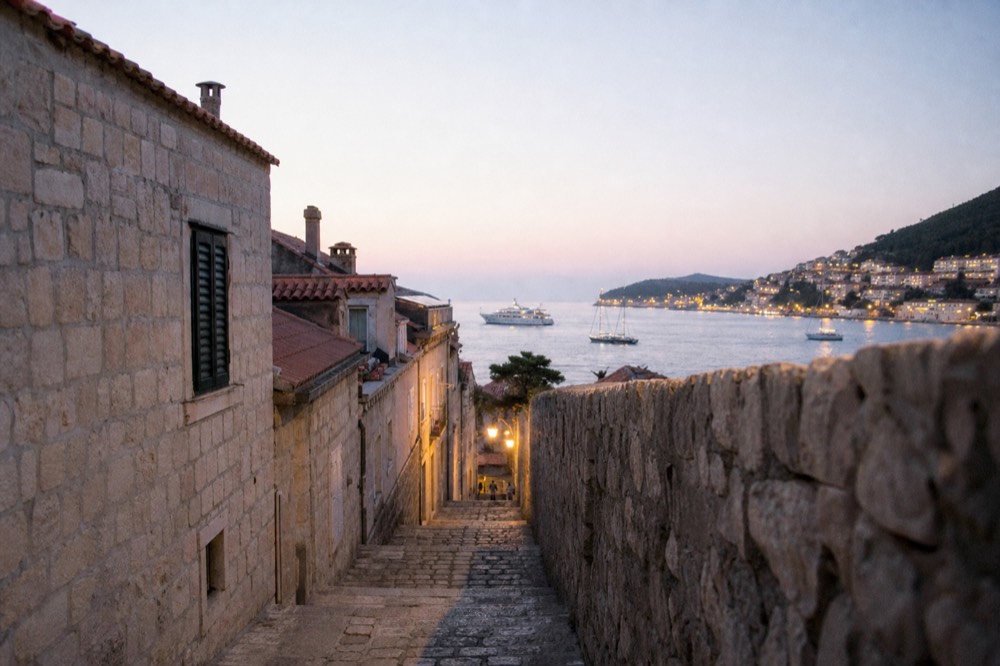
Let me be precise about what each city gives your eyes. In Dubrovnik the whole Old Town reads as one composition: the 1,940-metre wall circuit with its 16 towers and 6 bastions, the baroque facades rebuilt after the earthquake and the wars, the terracotta rooftops you see from Mount Srd. The city's plan was fixed by the 1272 Statute, and the discipline of that medieval grid still shows in every street you walk. Stand at the Pile end of the Stradun at 07:00 and you understand why people cross oceans for this view.
Split's trump card is Diocletian's Palace, a Roman complex so intact that people still live inside it. The Peristyle, the cellars, the cathedral bell tower rising over the narrow lanes, these are genuinely world class, and the palace is free to wander in a way Dubrovnik's walls are not. But step outside the palace perimeter and you are in a normal Croatian city, with traffic, apartment blocks and a working port. Some travellers love that honesty. Others feel let down.
The verdict most visitors reach: Dubrovnik photographs better and feels like a single sustained experience; Split feels like a city that happens to contain a wonder. If beauty is your top criterion and you have to pick one base, pick Dubrovnik. If you want beauty plus urban energy, Split earns its case, and my Dubrovnik vs Split overview on the homepage of this site goes deeper on where to base yourself.
The crowd point matters for a beauty contest. Dubrovnik's looks come bundled with the most concentrated visitor pressure on the Adriatic, and the Port Authority limits cruise passengers to 8,000 a day in most cases precisely because of it. Split takes cruise traffic too, but it spreads across a wider city. If you want Dubrovnik's beauty without the crush, walk early: the counters show the Old Town holds just 5,419 people at 08:00 and is past its 10:00 peak by mid-afternoon.
Which Is Cheaper, Dubrovnik or Split?
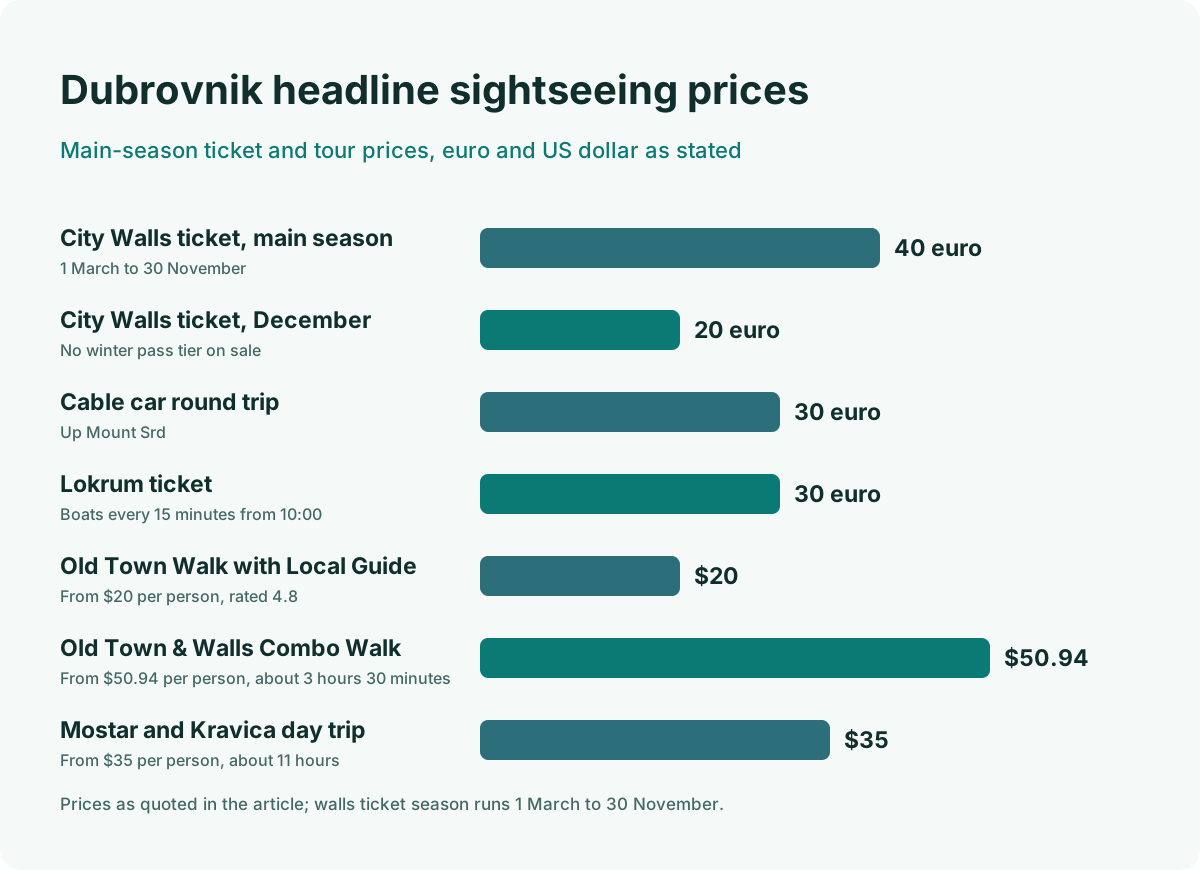
Split is cheaper, mainly on accommodation and food, while headline sightseeing prices in Dubrovnik are the ones that sting. The Dubrovnik City Walls ticket is 40 euro in main season (1 March to 30 November) and 20 euro in December; the cable car round trip is 30 euro; a Lokrum ticket is 30 euro. Split's palace core costs nothing to walk through.
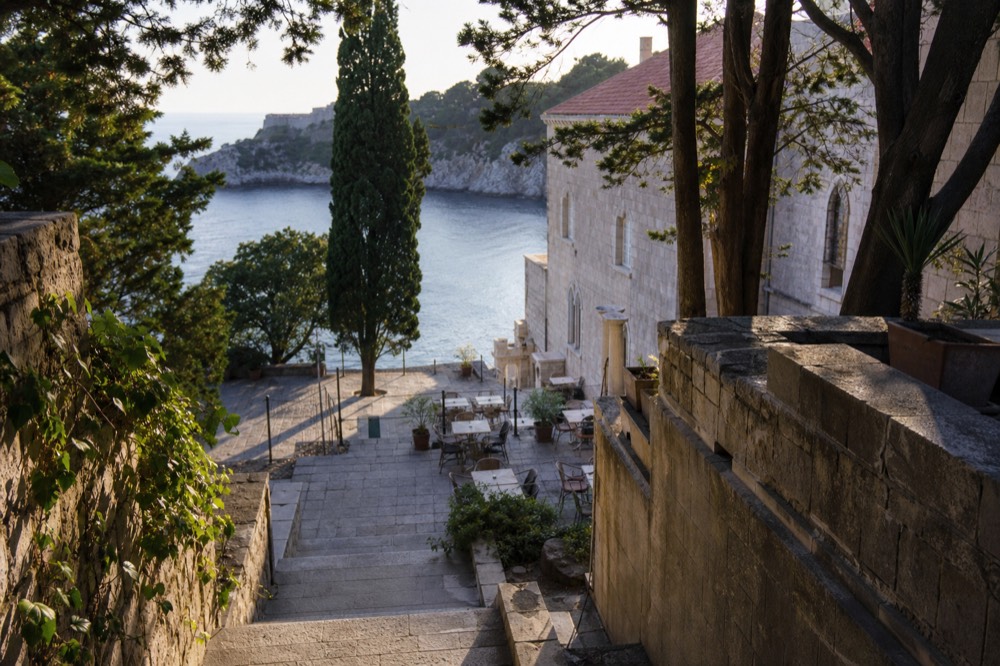
Yes, Split and Dubrovnik are both asking the same question, and the answer is the same: Split wins on cost. But the gap is not uniform, and knowing where it actually sits saves real money. Accommodation is the biggest difference. Everything inside or near Dubrovnik's walls carries a premium, and I point budget travellers towards Lapad or Gruž, both of which keep you on a bus line for a fraction of the Old Town rate. Split's room stock is larger and its peak-season rates run meaningfully lower.
Sightseeing is where Dubrovnik's prices concentrate. Here is what the main ticketed sights actually cost, from the operators' own shops:
| Dubrovnik sight | Main season price | Notes |
|---|---|---|
| City Walls + Fort Lovrijenac (adult) | 40 euro | 1 March to 30 November; 20 euro in December |
| City Walls (child 7 to 18) | 15 euro | 5 euro in December; under 6 free; no family ticket exists |
| Fort Lovrijenac alone | 15 euro | Stands on a 37-metre sea rock |
| Dubrovnik Pass, 1 day | 40 euro | Same price as the walls in main season, adds ten more sights and a 24-hour bus ticket |
| Dubrovnik Pass, 3 / 7 days | 50 / 60 euro | Adds suburban bus coupons and House Bukovac in Cavtat |
| Cable car, adult return | 30 euro | One way 17 euro; child 4 to 12 return 8 euro |
| Lokrum Island | 30 euro | Covers reserve entry and return boat transfer |
Note the season qualifier on the pass comparison, because it is the single most misquoted fact on this topic. The 40-euro one-day pass equals the walls ticket from 1 March to 30 November only. In December the walls ticket drops to 20 euro and no winter pass tier is on sale at all, so "the pass costs the same as the walls" is false in December. If you are comparing cities on a winter trip, Dubrovnik suddenly gets cheaper. The official pass site lists the full inclusions.
Daily costs follow the same pattern. A sit-down dinner for two with wine in Dubrovnik's Old Town runs noticeably above the equivalent in Split's centre, and the gap widens the closer you eat to the Stradun. My honest planning advice, which I give every guest who asks: budget your Dubrovnik days around two or three paid sights rather than trying to do everything, and eat one street back from the main drag. The budget Dubrovnik guide breaks the daily numbers down in detail.
For the comparison in one view:
| Cost line | Dubrovnik | Split |
|---|---|---|
| Old core entry | Walls ticket 40 euro main season | Palace core free to wander |
| Budget accommodation | Premium; Lapad and Gruž soften it | Wider, cheaper room stock |
| Mid-range dinner for two | Higher, worst near the Stradun | Lower across the centre |
| Signature viewpoint | Cable car 30 euro return | Marjan hill, free on foot |
| Island escape | Lokrum 30 euro, boats every 15 minutes from 10:00 | Regular local ferries at commuter prices |
Cheaper does not mean better value, and that distinction decides a lot of trips. Split's free palace is extraordinary, but Dubrovnik's 40-euro walls walk is a two-hour circuit with the Adriatic on one side and the whole city below you, and it consistently rates as visitors' single best memory of the city. Pay for the walls, walk Marjan's equivalent for free in Split, and you have balanced the books.
One cost angle Split cannot answer: Dubrovnik sits within day-trip range of two other countries. That is not a reason to choose it on price alone, but it does mean a Dubrovnik base can replace a second hotel night in Bosnia or Montenegro, which changes the arithmetic of a multi-country itinerary.
What Can I See in Dubrovnik in One Day?
In one well-planned day you can walk the full 1,940-metre City Walls circuit, cross the Stradun and the Rector's Palace quarter, ride the cable car up Mount Srd, and still swim off Lokrum or a beach before sunset. The walls need about two hours, the cable car ride itself is 3 minutes 30 seconds, and Lokrum boats leave every 15 minutes from 10:00 to 18:00.
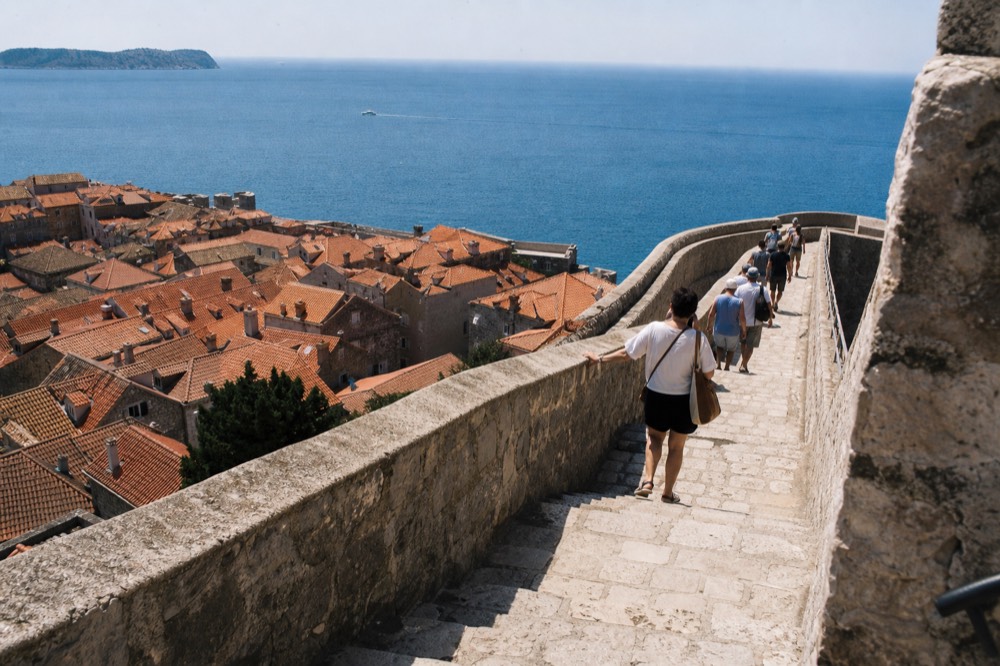
This is the question that decides the comparison for short trips and cruise passengers, and Dubrovnik answers it better than almost any city its size. Everything worth seeing sits inside or on the edge of those 24.7 hectares. Start at the walls by 08:00, when the operator's stated hours begin and the counter data shows the Old Town at just 5,419 people; you will share the parapet with a fraction of the 10:00 crowd. The circuit runs 1,940 metres, up to 25 metres high, and the ticket already includes Fort Lovrijenac across the bay.
Come down, walk the Stradun's 298 metres, and let yourself get lost in the side lanes toward the main street the 1272 Statute fixed. The Rector's Palace, the Sponza Palace and the Franciscan Monastery complex, home to one of the oldest pharmacies in Europe, all sit within a few minutes' walk of each other. If you bought the one-day Dubrovnik Pass at 40 euro, most of these are already covered, which is exactly the scenario the pass is built for.
By mid-afternoon, ride the cable car from the lower terminal at 38.0 metres to the Mount Srd station at 405.0 metres, a 367.0-metre rise over a 778.2-metre track, with the operator quoting a view range of up to 60 km on a clear day. Or take the Lokrum boat from the City Harbour, first at 09:00 then every 15 minutes from 10:00, for gardens, peacocks and swimming coves. Either choice fits before dinner.
A sample day, with realistic timings:
| Time | What to do | Cost |
|---|---|---|
| 08:00 | City Walls circuit, entrance near Pile | 40 euro, includes Lovrijenac |
| 10:30 | Stradun, Rector's Palace quarter, monastery | Free to walk; sights on the pass |
| 13:00 | Lunch a street back from the Stradun | Moderate |
| 15:00 | Cable car up Mount Srd | 30 euro return |
| 17:30 | Swim at a beach or Buža-side rocks | Free |
| 20:00 | Dinner in the Old Town | Moderate to high |
Split can also fill one day well: the palace cellars, the Peristyle, Marjan hill at sunset. But its highlights are more spread out and its magic is slower to find. If you genuinely have a single day and want the maximum concentrated return, Dubrovnik is the stronger performer. Cruise passengers weighing exactly this trade-off should read the cruise port to Old Town guide for the transfer timings.
If one day is all you have, a guide compresses it further. The Old Town Walk with Local Guide runs from $20 per person and is rated 4.8 across 5,826 reviews, and the Old Town & Walls Combo Walk covers both in about 3 hours 30 minutes from $50.94 per person, rated 4.8 across 1,183 reviews. Either one turns a tight day into a structured one, and both sit on the operator's live listing with free cancellation.
Which City Has Better Day Trips?
Dubrovnik's day-trip range is the strongest argument for basing yourself there: Mostar and Kravica in Bosnia and Herzegovina, Kotor and the Bay of Kotor in Montenegro, the Elaphiti Islands, Mljet National Park and the Pelješac peninsula, all inside a day. Split counters with its own islands, but it cannot offer two international borders before dinner.
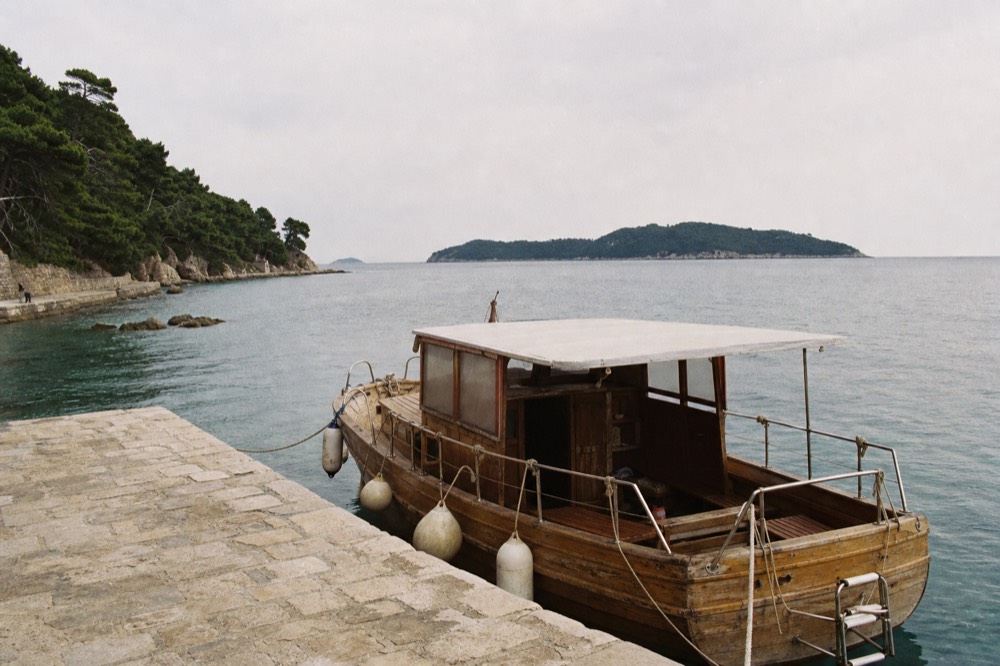
Split's island network is genuinely superb: Hvar, Brač, Šolta and Vis sit on regular ferry lines, and island hopping from Split is easier and cheaper than from Dubrovnik. If your holiday is built around beaches and boats, Split is the better hub, no argument. But Dubrovnik's day-trip list is more varied, and the border crossings are what make it unique in Croatia. Other pages covering the same trip are gathered on Things to Do in Dubrovnik.
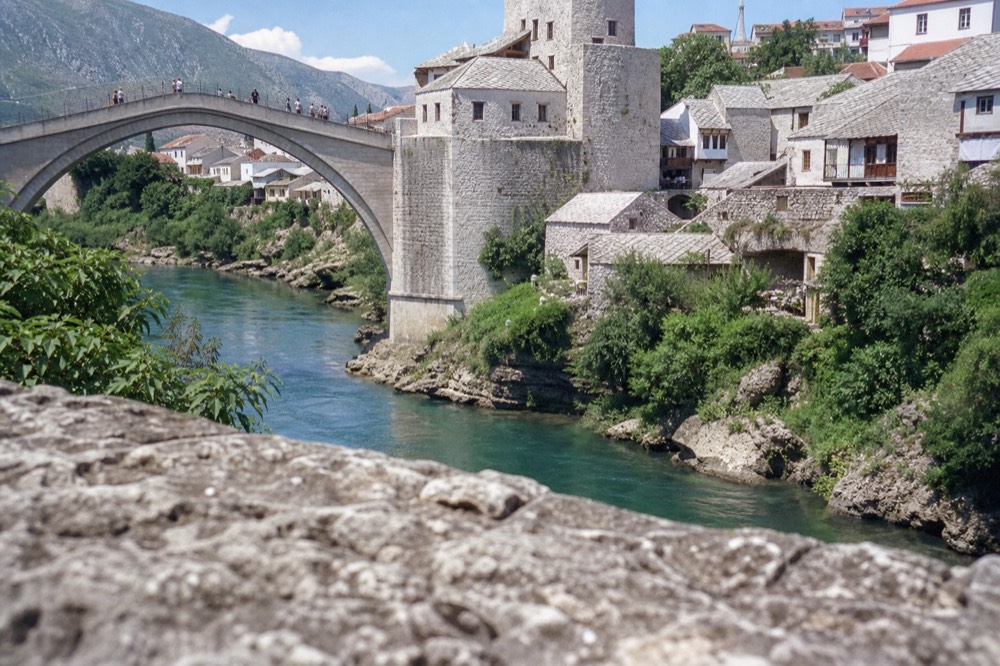
The Mostar and Kravica day trip is the flagship. It runs about 11 hours from $35 per person, rated 4.6 across 10,019 reviews, and packs the Stari Most bridge, the Kravica waterfalls and a swim stop into one long day. The small-group version from ROCK TOURS runs from $53.19 per person, rated 4.8 across 1,254 reviews, if you want fewer people in the van. Bring euros for Mostar, as every guide on the route will tell you.
Montenegro is the second border trip. The standard day trip runs from $58 per person, rated 4.4 across 5,611 reviews, and the version with an optional boat trip in Kotor runs 11 to 12 hours from $70.99 per person, rated 4.4 across 3,829 reviews. The border queue is the variable, and one recent review on the live listing noted it took only 15 minutes in September, though summer weekends can run far longer.
On the water side, the Elaphiti Islands cruise is Dubrovnik's most-booked boat day: 8 hours from $59.16 per person, rated 4.9 across 10,312 reviews, with a fish-picnic lunch on a family boat. The Karaka pirate-ship version runs from $65 per person, rated 4.8 across 757 reviews, and the Mljet National Park trip stretches to 10 hours from $153.99 per person, rated 4.9 across 397 reviews. Split simply has no equivalent to standing under a waterfall in Bosnia and being back for a late dinner on the Stradun.
Here is the day-trip comparison in one table:
| Day trip | From Dubrovnik | From Split |
|---|---|---|
| Another country by land | Mostar (BiH) and Kotor (Montenegro), both routine | Not practical in a day |
| Flagship boat day | Elaphiti cruise, 8 hours, from $59.16, 4.9 across 10,312 reviews | Hvar and the Pakleni islands, frequent departures |
| National park island | Mljet, 10 hours, from $153.99 | Kornati, longer crossings |
| Waterfalls | Kravica, combined with Mostar | Krka, easy half-day |
| Wine region | Pelješac and Konavle, half-day possible | No comparable region in range |
How Do the Crowds and the Seasons Compare?
Split absorbs crowds across a big city; Dubrovnik concentrates them into 24.7 hectares, and its peak is later than you think. Cruise passengers in 2025 peaked in September at 101,246 and October at 100,132, above July's 96,072 and August's 87,385, and the Old Town's official carrying capacity is 11,275 people.
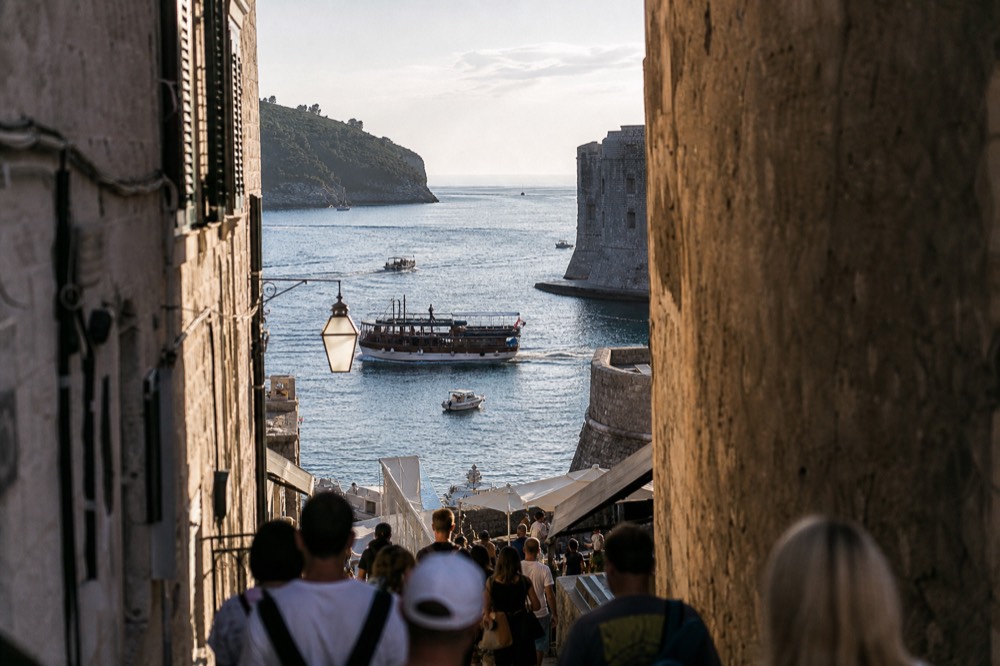
The counter-intuitive fact worth building a trip around: September and October, not July and August, are Dubrovnik's busiest cruise months, per Port Authority statistics. The sea is still warm, the September average is about 23.6 degrees as a long-run open-water figure, and sheltered bays run warmer still, so the crowds follow the good weather rather than the school holidays. If you want Dubrovnik quiet, come in April, May, late October or a winter week, when the walls ticket also drops to 20 euro.
Dubrovnik's crowd management is now genuinely sophisticated. Six counters at every Old Town entrance update a headcount every 15 minutes, the Port Authority limits cruise passengers to 8,000 a day in most cases, and about forty call requests were refused in a single season. On a sample September morning the count read 3,139 at 07:00, 5,419 at 08:00, a 7,739 peak at 10:00, then 7,205 at 11:00. The practical lesson: your first two hours in the city are worth more than your next four.
Split has crowd pressure around the palace and the Riva at peak times, but it never reaches the density-per-square-metre of Dubrovnik's core, because there is simply more city to spill into. If you are sensitive to crowds and travelling in July or August, that is a real argument for Split. If you can travel shoulder-season, Dubrovnik at 07:00 beats almost anywhere in Europe.
Dubrovnik vs Split: The Verdict
Choose Dubrovnik if beauty, concentration and international day trips drive your trip; choose Split if budget, nightlife and island hopping do. The strongest itinerary for a week or more uses both, connected by the coastal bus or ferry, with Dubrovnik as the finale so the trip ends on the prettier note.
After a decade of planning trips around both cities, my rule of thumb is simple. Give Dubrovnik two to three nights: one for the walls and the Old Town, one for the islands or a border day trip, one slow morning for Lokrum or the cable car. Give Split one to two nights unless islands are the whole point of your holiday. The how many days in Dubrovnik guide works through the timing in detail.
The final scoreboard:
| Criterion | Winner | Why |
|---|---|---|
| Beauty | Dubrovnik | A complete walled ensemble; UNESCO-inscribed since 1979 |
| Cost | Split | Cheaper beds and meals; free palace core |
| One-day sightseeing | Dubrovnik | Walls, Stradun, cable car and Lokrum all in range |
| Day trips | Dubrovnik | Two borders plus the Elaphiti and Mljet |
| Island hopping | Split | Hvar, Brač and Vis on regular lines |
| Crowds in high summer | Split | More city to absorb visitors |
| Nightlife | Split | Bigger, later, more local |
Whichever city you pick, the booking advice is the same: reserve the walls walk, the border day trips and the island cruise ahead in July, August and September, because those are the months when the boats and vans actually fill. Free cancellation is standard on the live listings for the trips above, so there is no penalty for locking a date early and adjusting once you see the weather.
Common Questions About Dubrovnik vs Split
What Is Prettier, Split or Dubrovnik?
Dubrovnik. The walled Old Town is a single complete ensemble with the 298-metre Stradun at its heart and walls up to 25 metres high facing the sea. Split's Diocletian's Palace is spectacular but sits inside an ordinary working city, so its beauty is concentrated rather than continuous.
Which Is Cheaper, Dubrovnik or Split?
Split. Accommodation and meals run lower, and the palace core is free to walk. Dubrovnik's headline sights carry fixed costs: 40 euro for the walls in main season, 30 euro for the cable car return, 30 euro for Lokrum. In December the walls ticket drops to 20 euro, which narrows the gap.
Is Split or Dubrovnik cheaper?
Split, on almost every line except international day trips, which only Dubrovnik offers. Budget travellers in Dubrovnik can soften the cost by staying in Lapad or Gruž and buying the 40-euro one-day Dubrovnik Pass, which covers the walls plus ten more sights and a 24-hour bus ticket in main season.
What Can I See in Dubrovnik in One Day?
The full 1,940-metre walls circuit, the Stradun and Rector's Palace quarter, the cable car to Mount Srd at 405 metres, and a swim at Lokrum or a beach. Start the walls at 08:00 to beat the crowd, which peaks around 10:00.
Can You Combine Dubrovnik and Split in One Trip?
Yes, easily. They are connected by coastal bus and by ferry, and most travellers do Split first and finish in Dubrovnik so the trip ends on the stronger visual note. A week split as four nights Dubrovnik and three Split, or the reverse, covers both comfortably.
When Is the Best Time to Visit Dubrovnik?
May, June, late September and October balance warm sea against manageable crowds. Note that cruise passengers actually peak in September and October, above July and August, so for real quiet aim for April, May or November, or a December week when the walls ticket is 20 euro.