Dubrovnik on a Budget: What a Cheap Trip Actually Costs
Dubrovnik has a reputation for prices that bite, and some of it is earned. But the core of the city, the part people fly here for, is mostly free to walk, and the paid parts are few enough to choose between. This is the honest budget guide: what costs nothing, what is worth paying for, and where the traps are.
Short answer
A budget Dubrovnik trip works because the expensive part, the walled Old Town, is free to enter and walk. The adult City Walls ticket is 40 euro in main season, the cable car round trip is 30 euro, and a free pay-what-you-want walking tour on GuruWalk is rated 4.87 across 2,242 reviews. Sleep in Lapad, eat where locals eat, and two days can cost very little.
Where to Stay in Dubrovnik on a Budget?
The budget answer is Lapad, not the Old Town. Hotel Komodor in Lapad is a three-star budget option rated 7.8 out of 10 across 822 Expedia reviews, and the number 6 bus connects the peninsula to Pile Gate cheaply. Inside the walls you pay a heavy premium for carrying luggage up stone steps, and the same money buys a sea-view room and breakfast a short bus ride away.
I send budget travellers to Lapad every time, and not out of nostalgia. The peninsula has its own beaches, its own café strip and its own price level, and the number 6 bus connects it to Pile Gate in a ride that costs a fraction of one Old Town cappuccino. The trade is simple: you give up the fantasy of stepping out of your door onto the Stradun, and you gain an extra day of budget, sometimes two.
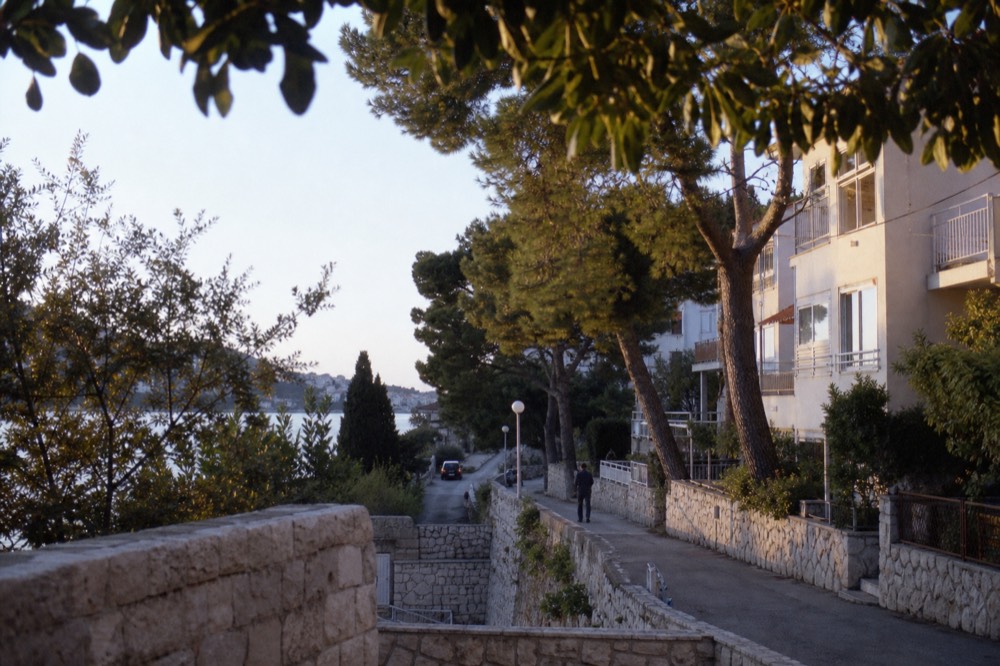
The Old Town premium is real and it compounds. A room inside the walls on a summer weekend can cost several times what the same bed costs in Lapad or Gruž, and the walls amplify every cost: no cars, so every delivery and every suitcase goes up stairs by hand, and that labour is priced into everything from groceries to laundry. Gruž, around the port and the market, is the second budget pick, less polished than Lapad but cheaper again, with the Gruž market right there for picnic supplies.
For the three price tiers, this is roughly what to expect per night for two people in the shoulder season:
| Area | Character | Budget fit |
|---|---|---|
| Old Town | Inside the walls, stone buildings, stairs everywhere | Poorest, big premium for location |
| Ploče | Upmarket side, near Banje beach | Luxury tier, rarely cheap |
| Lapad | Beaches, café strip, bus to Pile Gate | Best value for most budgets |
| Gruž | Port, market, residential | Cheapest of the four |
If you want the compromise that most budget travellers end up happy with, look at Hotel Komodor for the budget tier and Hotel Lapad for a mid-range step up, both in Lapad. If one splurge is in the plan, Hotel Excelsior in Ploče is the classic one, but that is a different article's budget. For a fuller neighbourhood breakdown, the where to stay guide covers every area in detail.
One more saving that people miss: apartments with kitchens. Gruž and Lapad are full of them, and with the market ten minutes from the port, breakfast and a picnic lunch stop being line items at all.
What Is Free in Dubrovnik?
More than you would expect: entering and wandering the entire walled Old Town costs nothing, the Stradun, the alleys, the harbours and the viewpoints outside the walls are all free, and three pay-what-you-want walking tours on GuruWalk, including one rated 4.87 across 2,242 reviews, mean you can have a guided Old Town experience for whatever you choose to hand over at the end.
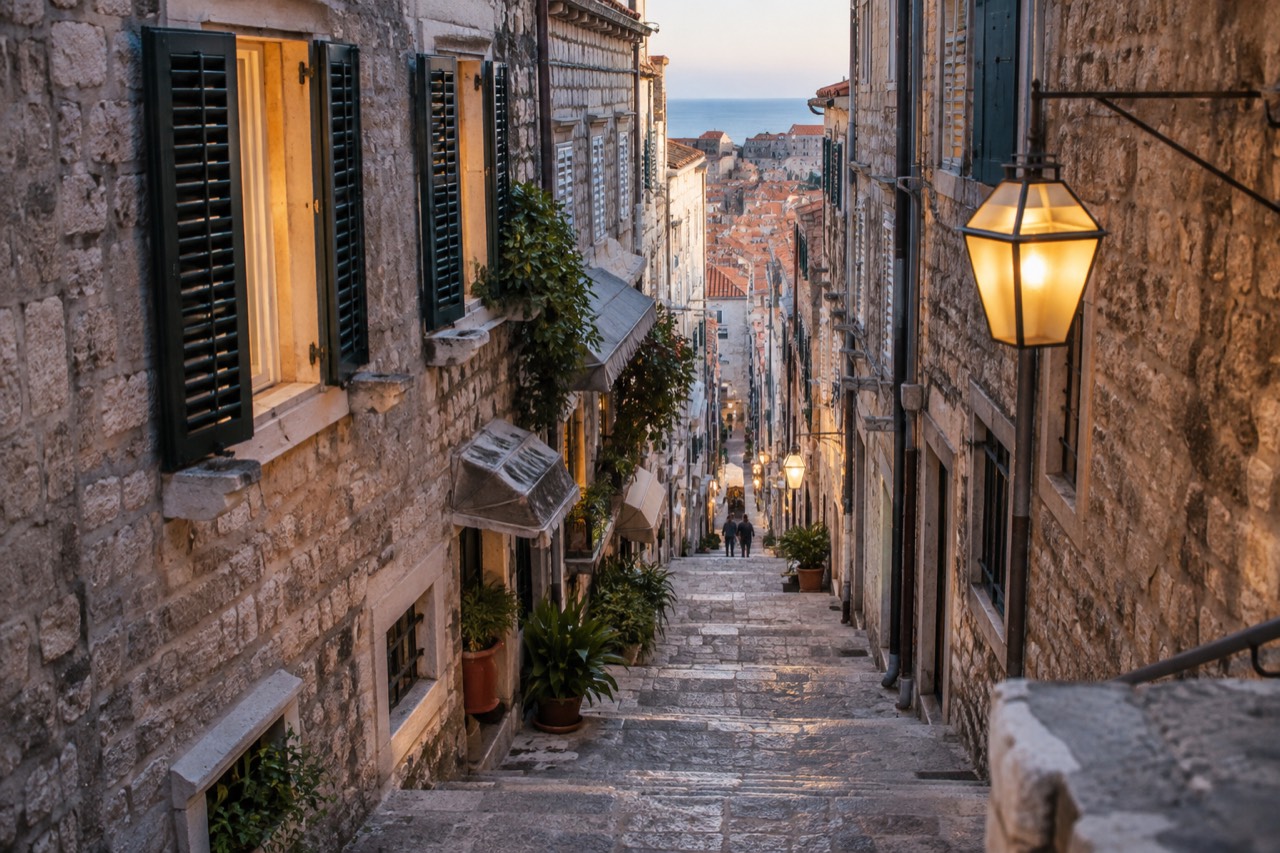
Start with the thing that surprises people: the walls are a ticket, but the city they enclose is not. You can walk through Pile Gate, down the Stradun, all 298 metres of it, up to the Jesuit stairs, along to the old port and out to the rocks below Buža, and never show a ticket. The free things to do guide lists dozens of these, but the short version is that the single best experience in Dubrovnik, aimlessly getting lost in the lanes off the Stradun, costs exactly nothing.
The guided walks deserve a special mention, because they are the budget traveller's secret weapon. Three free, pay-what-you-want tours run on GuruWalk, and they are genuinely free, not free-with-an-asterisk: you book, you walk, and at the end you pay what you think the walk was worth, including nothing. The ratings are real signals of quality, not discount quality: the Ancient Old City walk is rated 4.87 across 2,242 reviews, the Magical Dubrovnik Nights history and legends walk is rated 4.9 across 288 reviews, and the free Game of Thrones and history walk is rated 4.74 across 444 reviews.
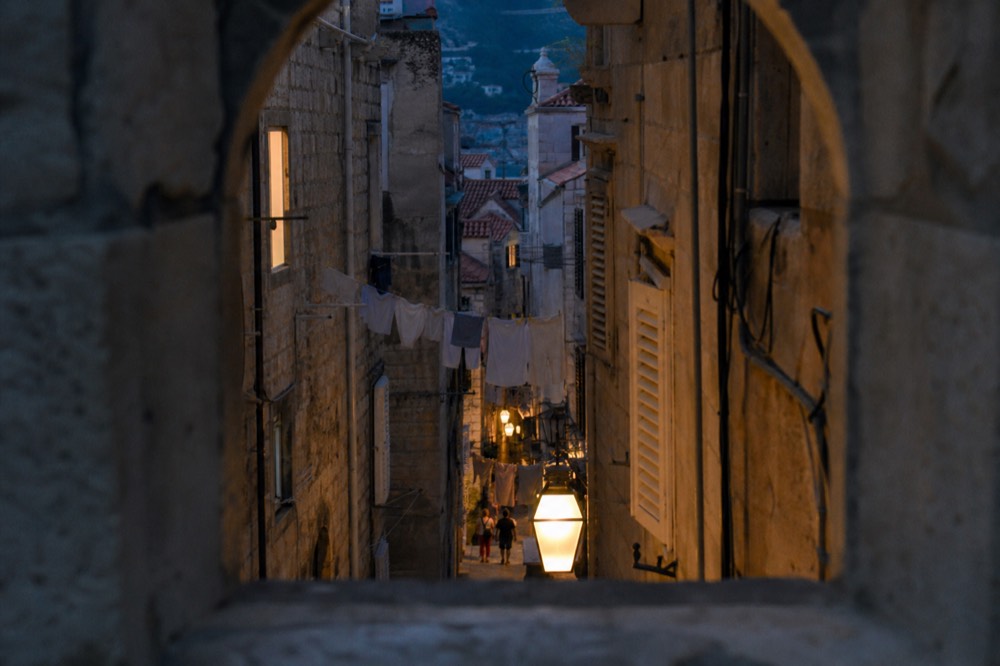
The night walk is the one I would pick on a tight budget, and not only because it is free. Evening is when the day-trip crowds drain out through Pile and Ploče gates and the stones hold the day's heat, and the history-and-legends format suits the atmosphere of the lanes after dark. You can see the night walk's details on its tour page or See this free tour on GuruWalk to check the next departure.
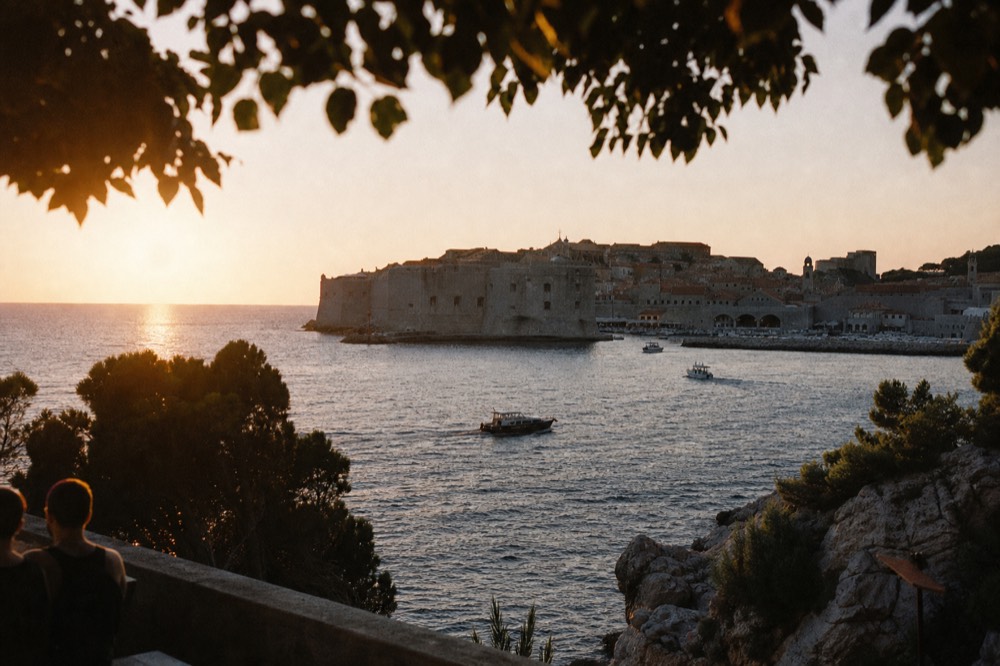
Beyond the walks, the free list is long. The views from the bridge at Pile, the beaches at Lapad Bay, swimming off the rocks, the harbor at Gruž with the fishing boats, the sunset from the breakwater, and the whole spectacle of the city walls seen from outside, which many photographers argue is the better angle anyway. The walls are 1,940 metres long and up to 25 metres high, per the operator's own site, and you can admire every metre of that from street level without a ticket.
Here is the compact free list, with the paid upgrade beside it for honesty:
| Free experience | Paid upgrade if you want it |
|---|---|
| Walk the entire Old Town, all lanes and gates | Guided walk, from $20 per person |
| See the walls from outside at Pile and Ploče | Walk the walls circuit, 40 euro adult main season |
| Free history and legends walk on GuruWalk | Walls and wars guided walk, from $29.58 |
| Swim at Lapad Bay and the rocks | Kayak and snorkel tour, from $35 |
| Sunset from the breakwater or Buža rocks | Sunset cruise, from $23.66 |
What Not to Do in Dubrovnik?
The three budget killers are eating on the Stradun, buying the walls ticket without knowing what it includes, and taking taxis for trips the bus already covers for pocket change. The Stradun restaurants charge for the view, the walls ticket at 40 euro main season is a walls-plus-Lovrijenac combination rather than a basic entry, and the local bus network reaches Lapad, Gruž and the port for a fraction of a taxi fare.
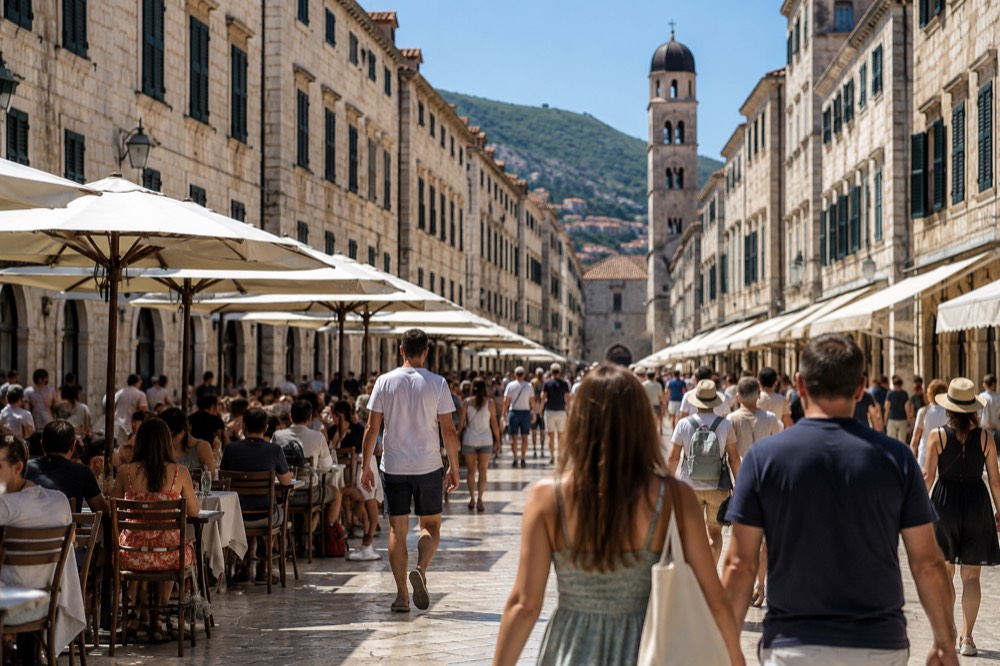
Let me take these one at a time, because each has a fix. The Stradun is the most expensive strip of pavement in the city. Walk thirty metres into any side street and the same coffee, the same beer and often better food cost meaningfully less, and the cheap eats guide maps exactly where. The rule I give visitors: if you can see the Stradun from your table, you are paying rent on the view.
The walls ticket deserves understanding rather than avoidance. The adult ticket is 40 euro in main season, 1 March to 30 November, and drops to 20 euro in December, with children 7 to 18 at 15 euro then 5 euro, and under 6 free, per the operator's official site. What many buyers do not realise is that the 40 euro is not a bare entry fee: it is the walls plus Fort Lovrijenac combination, and it also covers the Western Outer Wall and the Collection of Coins of the Republic of Ragusa. There is no family ticket, only adult and child 7 to 18, so budget families should do the arithmetic per person rather than hunting for a bundle that does not exist.
The third trap is transport. Taxis from the airport and around town add up fast, while the bus network is frequent and simple. The getting around guide has the full comparison, but the headline is that bus rides cost a couple of euro and the airport bus is a fraction of a taxi. Walking covers the Old Town entirely, and Dubrovnik is compact enough that most visitors never need a car at all.
| Trap | What it costs you | The budget fix |
|---|---|---|
| Stradun terrace restaurants | Premium on every plate | Side-street konobas, two streets in |
| Walls ticket bought blindly | 40 euro without knowing inclusions | Check the combination inclusions first |
| Taxis everywhere | Multiple fares a day | Local buses and your own feet |
| Bottled water all day | A few euro, every day | Dubrovnik tap water is drinkable, carry a bottle |
| Peak-season everything | Top rates on rooms and flights | Shoulder months, same city |
One more thing not to do: do not skip the paid walks entirely out of thrift and then resent the city for feeling like a maze. The cheapest paid Old Town walk starts at $20 per person and is rated 4.8 across 5,826 reviews, and the free GuruWalk option exists precisely for the zero-euro budget. A guided hour or two early in your trip orients you, and orientation is what turns expensive wandering into cheap, confident wandering.
That free Ancient Old City walk, 1 hour and 45 minutes on GuruWalk and rated 4.87 across 2,242 reviews, is the thriftiest orientation there is: pay what you think it was worth at the end, and you leave with a mental map that saves you money for the rest of the stay.
Is Dubrovnik Worth Visiting?
Yes, Dubrovnik is worth visiting, and a tight budget makes the case stronger rather than weaker. The city recorded about 4.2 million overnight stays in 2025, tying with Rovinj for first place among Croatian destinations. The walled Old Town, a UNESCO site since 1979 covering 24.7 hectares, can be walked for free, while the 40 euro walls ticket matches the one-day Dubrovnik Pass, which adds ten sights and a 24-hour bus ticket.
The worth question usually comes from sticker shock, and the honest answer is that the sticker is smaller than the rumour. Dubrovnik's expensive reputation comes from its peak-season hotels and its prime-terrace restaurants, both of which a budget traveller can simply decline. What you cannot decline, the Old Town itself, the light on the limestone, the sea from the walls, the islands on the horizon, is either free or a one-time 40-euro decision. The full index of guides sits on Things to Do in Dubrovnik.
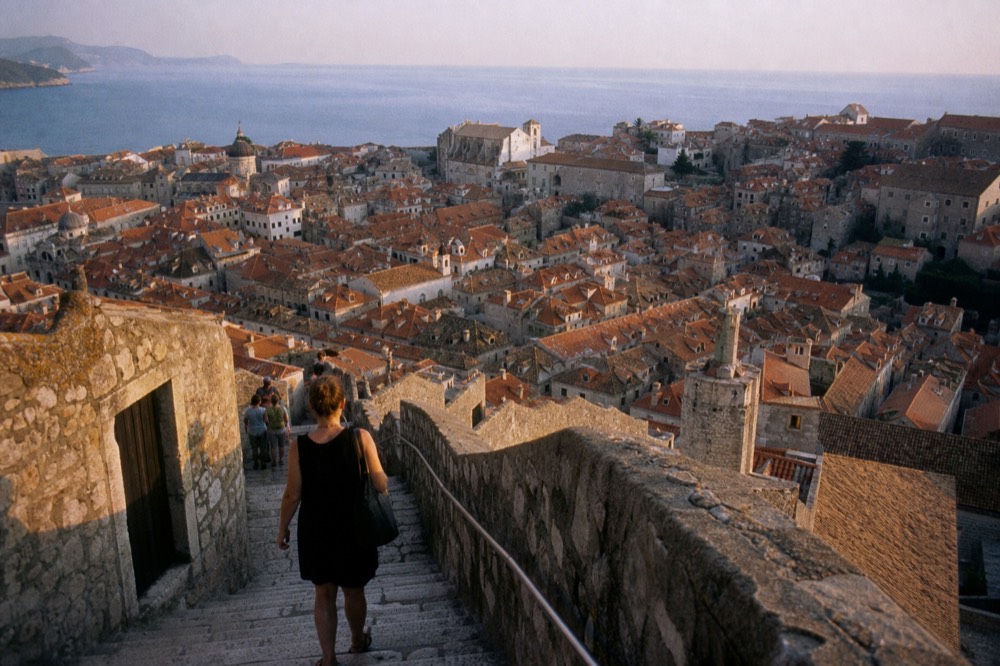
For the walls, the arithmetic is worth doing out loud. The circuit is 1,940 metres, up to 25 metres high, 4 to 6 metres thick on the land side and 1.5 to 3 metres on the sea side, with 16 towers, 3 fortresses and 6 bastions along the way, and the operator's stated hours at time of check were 08:00 to 19:30. Most people spend two unhurried hours on it. If a guided version appeals, the Ancient City Walls and Wars walk runs about 2 hours from $29.58 per person, rated 4.8 across 1,387 reviews, and that price does not include the walls ticket itself, so compare it against the pass before booking.
This well organized tour helped put Dubrovnik's past (and present) into perspective. It's incredible that the city walls have withstood the test of time. Antun was a wonderful guide.
linda_a
The pass comparison is where budget travellers win or lose. The one-day Dubrovnik Pass costs 40 euro, the same as the standalone walls ticket in main season, and adds the Rector's Palace, the Maritime Museum, the Franciscan Monastery Museum and more, plus a 24-hour bus ticket, per the official pass site. Three-day and seven-day tiers cost 50 and 60 euro. Two warnings travel with that arithmetic: every tier allows only a one-time visit to each sight, including the walls, and the 40-euro equivalence is a main-season claim, because in December the standalone walls ticket drops to 20 euro while no winter pass tier is on sale at all. The Dubrovnik Pass guide works through the whole decision.
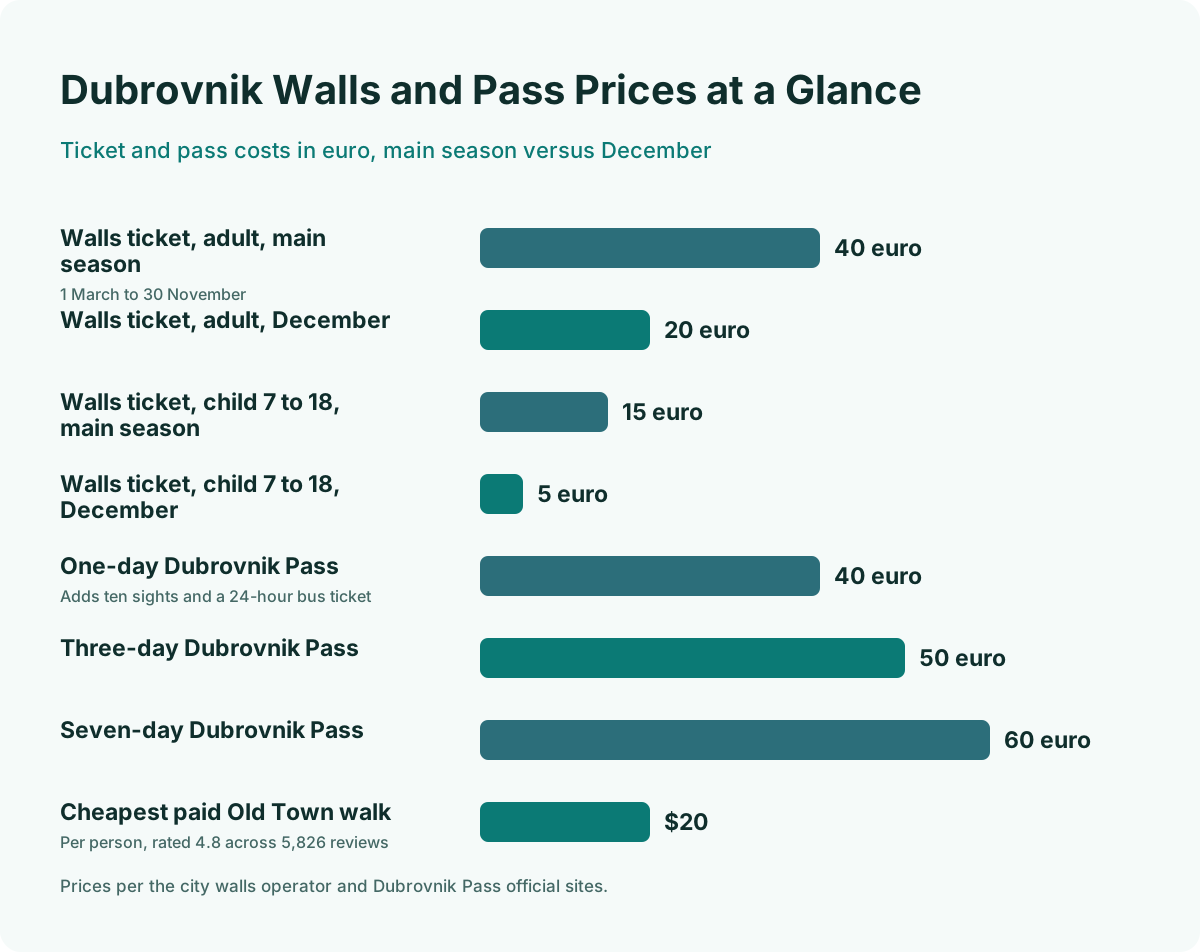
| Ticket | Main season price | What it covers |
|---|---|---|
| City Walls adult | 40 euro | Walls, Lovrijenac, Western Outer Wall, coin collection |
| City Walls child 7 to 18 | 15 euro | Same coverage, child rate |
| Dubrovnik Pass 1 day | 40 euro | Walls plus ten more sights, 24h bus |
| Dubrovnik Pass 3 days | 50 euro | Same sights, 72h bus, suburban coupons |
| Cable car adult return | 30 euro | Round trip to Mount Srđ station |
| Lokrum island | 30 euro | Reserve entry and return boat |
Is it worth it? The city out-punches its price tag for anyone willing to walk, eat one street in, and treat the big tickets as choices rather than obligations. Even the crowd problem has a shape you can plan around: the Port Authority's own data shows September and October 2025 each carried more cruise passengers than July or August, so the "quiet shoulder season" is partly a myth, but the counting system's half-hourly curve shows the Old Town peaking near 7,739 at 10:00 and easing by evening, which is exactly when the free night walk runs.
Cheap Days Out: Budget Eats and Low-Cost Trips
The budget day in Dubrovnik runs on bakeries, the Gruž market and konobas off the main drag, with a full day of eating for the price of one Stradun dinner, and the cheapest worthwhile trips are the ones the bus and the public boats already serve: Lapad's beaches, Gruž market and the coastal paths, all reachable for a bus fare or on foot.
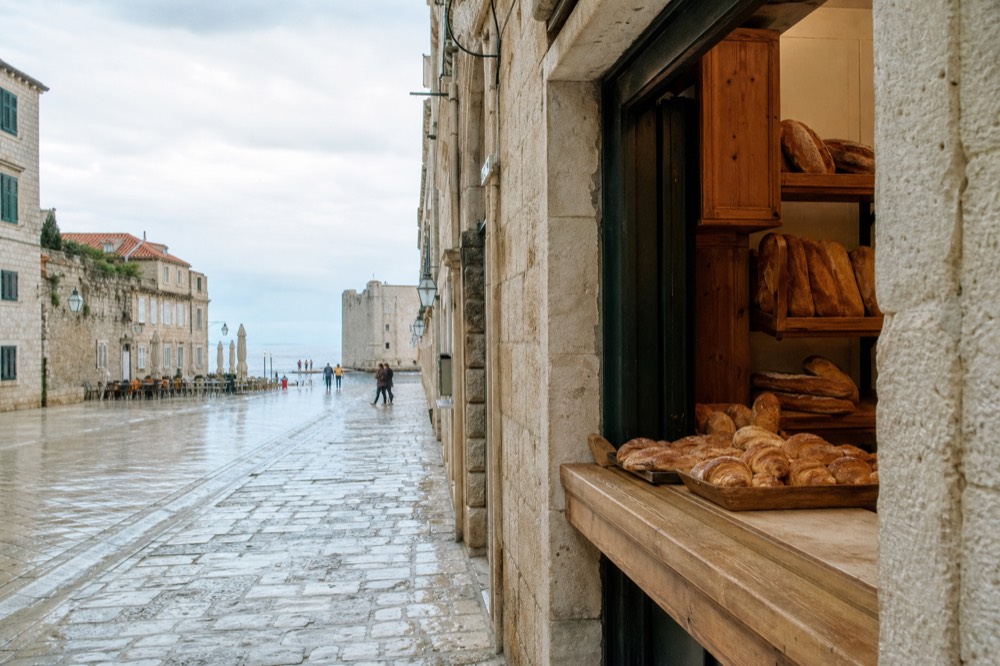
Food first, because it is the daily cost. Breakfast at a bakery, a pekara, costs a couple of euro for pastry and coffee. Lunch from a market stall or a slice shop keeps you under ten euro. Dinner at a side-street konoba is where the remaining budget should go, and the konoba guide explains the format: simple grilled fish or meat, local greens, house wine by the decilitre. The what to eat guide names the dishes worth ordering so you do not pay for trial and error.
| Meal | Budget approach | Typical planning range |
|---|---|---|
| Breakfast | Bakery pastry and coffee | A few euro, check the counter |
| Lunch | Market stall, slice shop, sandwich bar | Under about 10 euro |
| Dinner | Side-street konoba, daily menu | Roughly 15 to 25 euro with wine |
| Water | Tap water, refillable bottle | Free |
| Wine | House wine by the decilitre | A few euro per glass |
Days out come next. The cheapest are free: the coastal path around Lapad, the beaches, the walk up to viewpoints above the city. One step up, the public ferry network from Gruž opens the Elaphiti islands for the price of a boat ticket rather than a cruise fare, and the Elaphiti islands guide covers which island suits a small budget, with Lopud the classic car-free, sandy-beach choice. If one paid trip earns its place on a tight budget, the full-day Elaphite cruise with lunch starts at $59.16 per person and is rated 4.9 across 10,312 reviews, the most reviewed product in the city, but that is a treat line, not a default.
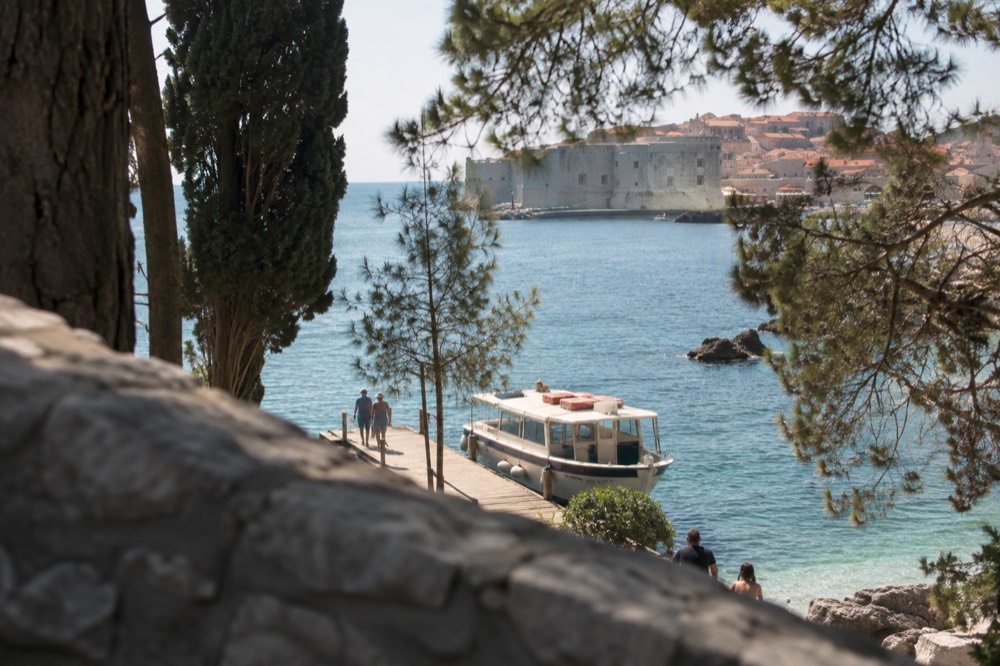
Swimming costs nothing and the season is long. The sea's long-run September average is about 23.6 degrees, an open-water climatological figure rather than a beach reading, and sheltered bays run warmer still, so the free beach season stretches well past the crowds. The swimming season guide has the month-by-month detail.
How to Do Dubrovnik on a Budget Without Missing It?
Yes, you can do Dubrovnik cheaply: sleep in Lapad or Gruž, eat from bakeries, the market, and side-street konobas, and join the free GuruWalk night walk plus the free Old City walk. Spend an hour outside the walls at dawn or dusk, then make one deliberate paid choice, usually the 40-euro walls ticket or the same-priced one-day pass. Everything else that makes the city famous costs nothing to see.
Here is a worked day, so the numbers feel concrete rather than optimistic. Morning: bakery breakfast, free wander of the lanes while the counting system shows the crowds still climbing. Midday: market picnic or a slice shop. Afternoon: free beach or the coastal path, or the walls if that is your one paid choice. Evening: the free Magical Dubrovnik Nights walk, pay what you think it was worth, then a modest konoba dinner two streets off the Stradun. The only line items that day are food and, optionally, one ticket.
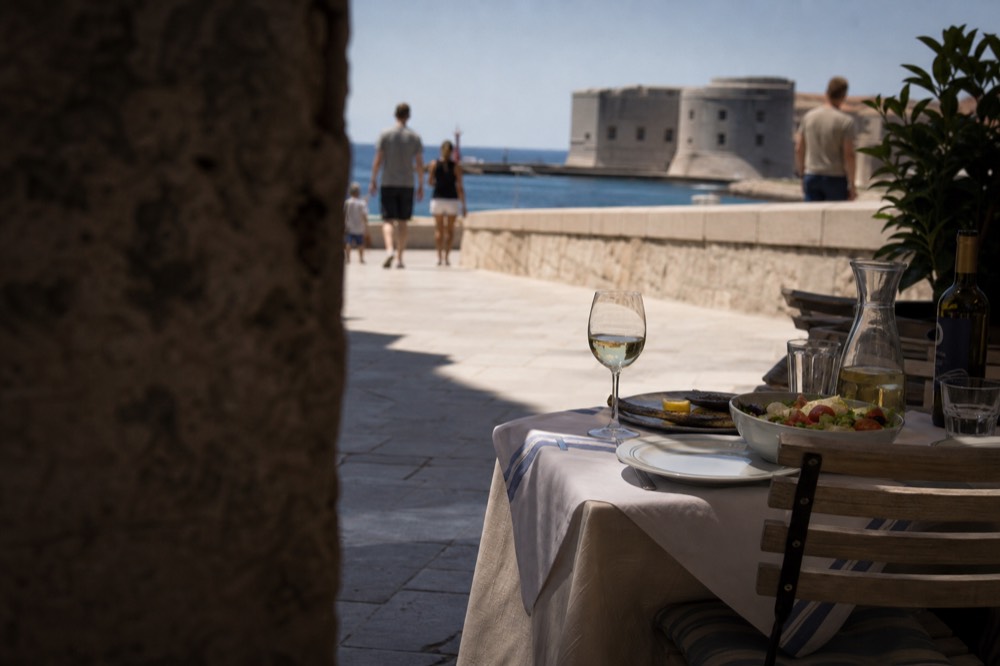
The mindset matters more than the arithmetic. Dubrovnik punishes the traveller who arrives unprepared and buys everything at street price at peak hour, and rewards the one who books a room a bus ride out, walks the free city first, and then chooses one or two paid experiences deliberately. The walls, the cable car, Lokrum, a cruise, a kayak: each is a good day, and no budget requires all of them. Choose the one that matches your trip, decline the rest without guilt, and the city gives away its best view, its best light and its best swimming for nothing.
If you want the full planning picture beyond the budget lens, the site's best things to do roundup ranks the paid and free together, and the first-timers guide covers the practical basics. Whatever you pick, walk the lanes at night at least once. That hour is free, it is the city at its most itself, and it is the memory most visitors keep.
Common Questions About Dubrovnik on a Budget
Can You Visit Dubrovnik on a Budget?
Yes. The walled Old Town is free to enter and wander, three pay-what-you-want walking tours run on GuruWalk, and sleeping in Lapad or Gruž instead of inside the walls cuts accommodation costs sharply. The main paid decision is the City Walls ticket at 40 euro in main season, which is optional.
What Is Free in Dubrovnik?
Walking the entire Old Town, the Stradun, the harbours, the viewpoints from outside the walls, the beaches and swimming from the rocks. Three free walking tours run on GuruWalk, including the Magical Dubrovnik Nights walk rated 4.9 across 288 reviews, where you pay what you think it was worth.
How Much Does the Dubrovnik City Walls Ticket Cost?
The adult ticket is 40 euro in main season, 1 March to 30 November, and 20 euro in December. Children 7 to 18 pay 15 euro, then 5 euro, and under 6 is free. The 40-euro ticket is a walls plus Fort Lovrijenac combination and also covers the Western Outer Wall and the coin collection. There is no family ticket.
Is the Dubrovnik Pass Worth It on a Budget?
In main season, often yes: the one-day pass costs the same 40 euro as the standalone walls ticket and adds ten more sights plus a 24-hour bus ticket. The catch is that every sight, the walls included, can be visited only once per pass. In December the walls ticket drops to 20 euro and no winter pass tier is on sale, so the comparison only holds in main season.
Where Is the Cheapest Place to Stay in Dubrovnik?
Gruž around the port and the market is generally the cheapest area, with Lapad the best value compromise thanks to its beaches and the number 6 bus to Pile Gate. Hotel Komodor in Lapad is the budget hotel pick, rated 7.8 out of 10 across 822 Expedia reviews. Inside the Old Town you pay a large premium for the location.
What Is the Cheapest Month to Visit Dubrovnik?
Outside the July and August peak, but note the counter-intuitive cruise data: September and October 2025 each carried more cruise passengers, 101,246 and 100,132, than July or August. Room rates still fall in the shoulder months even as cruise numbers rise, and the free parts of the city are free in every month.