Gruž Market Dubrovnik: A Local Shopping Guide
Gruž Market is where Dubrovnik feeds itself. While the Old Town fills with day visitors, the stalls by the cruise port sell figs, olive oil and fish to the people who actually live here, and it is the single best place to understand what the city eats.
Short answer
Gruž Market sits on the Gruž waterfront about 29 minutes on foot from Hotel Komodor in Lapad, beside the cruise and ferry port. The adult City Walls ticket is 40 euro in main season, 1 March to 30 November. A one-day Dubrovnik Pass costs the same 40 euro and adds ten more sights plus a 24-hour bus ticket.
The market at Gruž opens early, sells out by early afternoon, and does not care whether you have ever heard of it. That is precisely the point. I have walked past these stalls on hundreds of mornings since I started guiding here in 2015, and the rhythm never changes: fishing boats unload at the quay, growers from the Konavle valley and the Pelješac peninsula stack their crates, and by nine the regulars have already done their shopping. Visitors who base themselves only inside the walls rarely see any of it.
This guide covers the market itself and the shopping questions that cluster around it: what is genuinely worth buying in Dubrovnik, what the city does well and badly as a shopping destination, the mistakes I watch travellers make every season, and one question that keeps landing in my inbox, the walk up to the Panorama restaurant above the cable car. There is also a practical section on timing, because crowd pressure in this city follows a pattern most guidebooks still get wrong.
What Is Gruž Market and Why Do Locals Shop There?
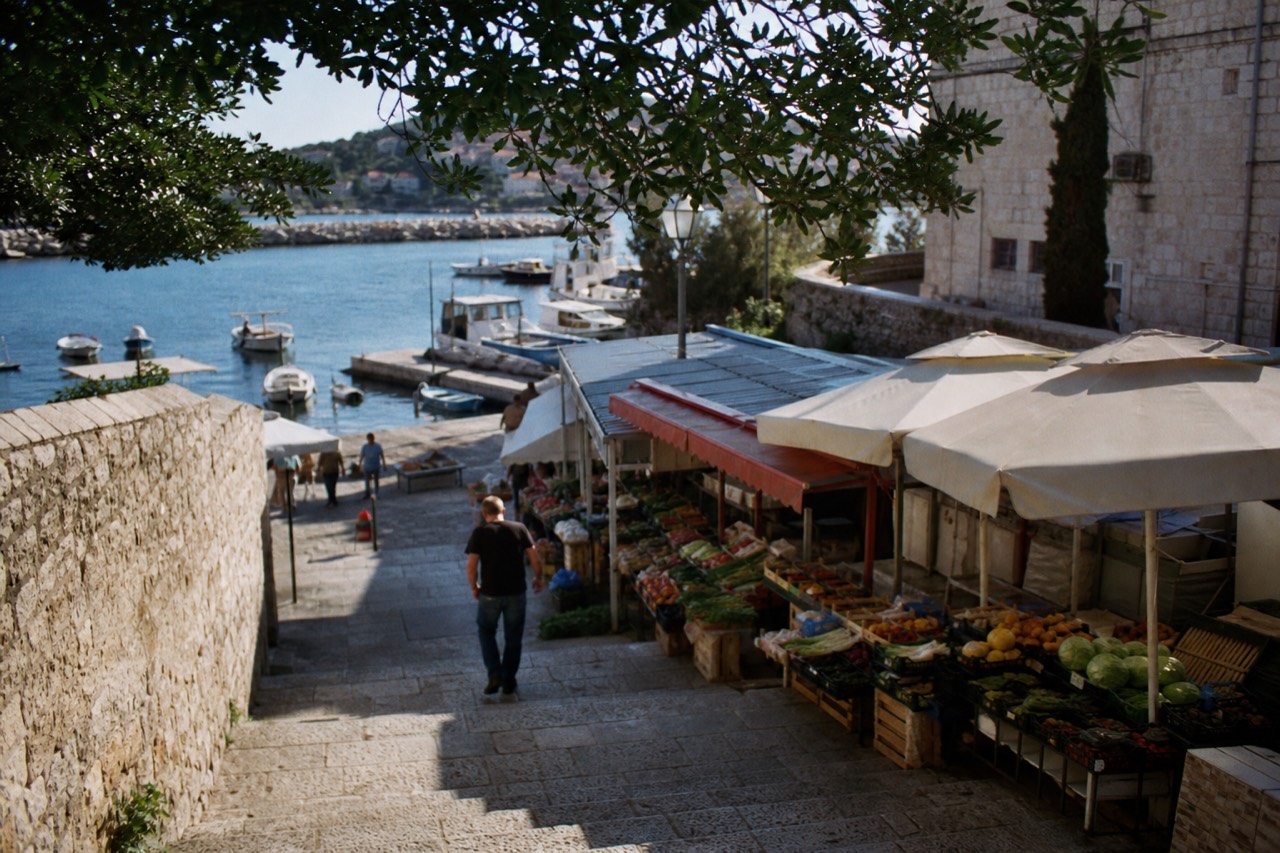
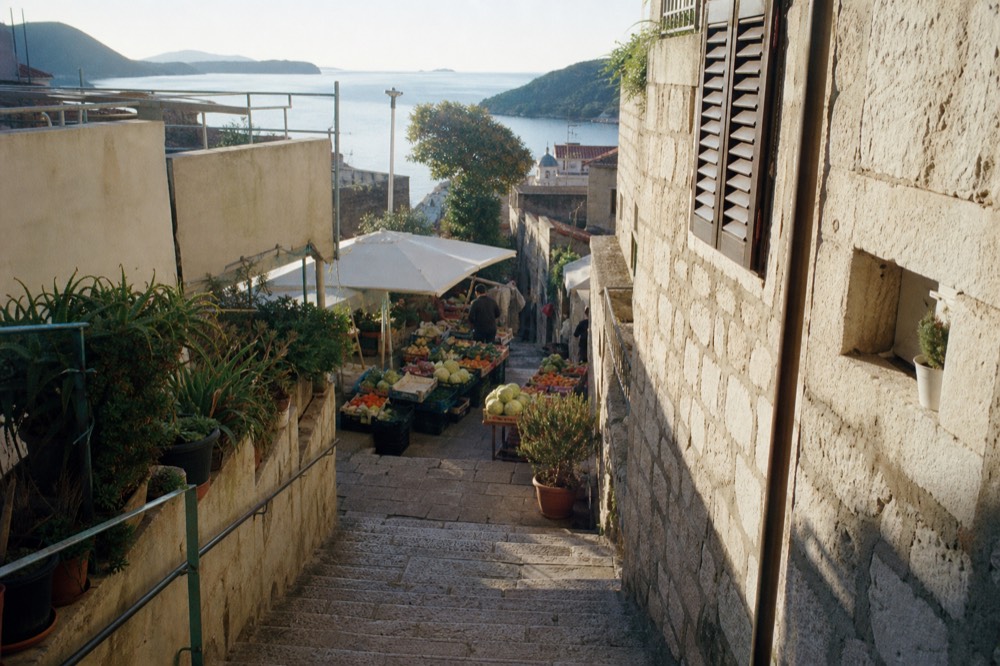
Gruž Market is Dubrovnik's working produce market, held on the waterfront beside the cruise and ferry port in the Gruž neighbourhood, roughly a 29-minute walk from Hotel Komodor in Lapad. It is where the city's restaurants and households buy figs, tomatoes, herbs, olive oil, honey, cheese and fresh Adriatic fish, and it runs on a rhythm set by the boats and the growers rather than by tourism.
The geography matters more than visitors expect. Gruž is not the Old Town. It is the functional district where the port, the main bus station and much of the year-round population sit, and the market is its commercial heart. The stalls sit a short walk from where cruise ships berth, which creates an odd daily spectacle: thousands of passengers step ashore within sight of a market that exists almost entirely for locals, and most of them walk straight past it toward the walls.
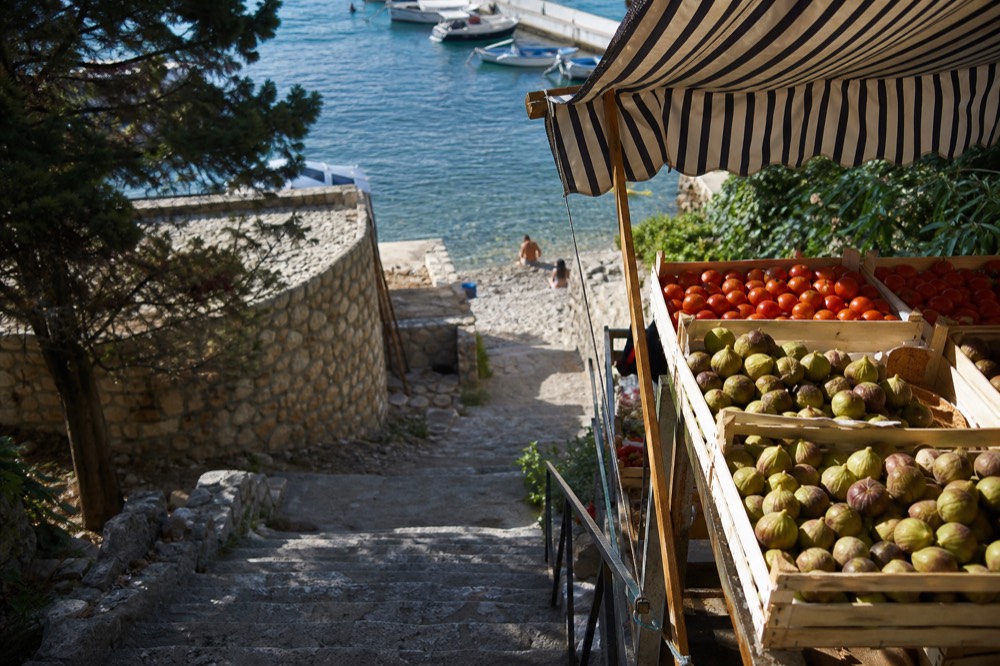
What you find depends on the season, not on a fixed stall list. Late summer brings figs, watermelons and bunches of herbs. Autumn is grape and olive territory, and the olive oil sold here in unlabelled bottles is often from the grower's own trees on Pelješac or in Konavle. The fish stalls sell whatever came in that morning, priced by the kilo, and the vendors will tell you honestly what is local and what was trucked in. Ask. They enjoy being asked, and it is the fastest Croatian lesson you will get.
I always tell visitors to come here before they shop anywhere inside the walls, for one reason: price and provenance. A jar of honey or a bottle of oil bought at the market from the person whose family made it costs less and means more than the same item in a Stradun souvenir window. If you want the full food-and-drink context, our guide to Dubrovnik food tours and tastings covers the guided version of the same route.
What Not to Do in Dubrovnik?
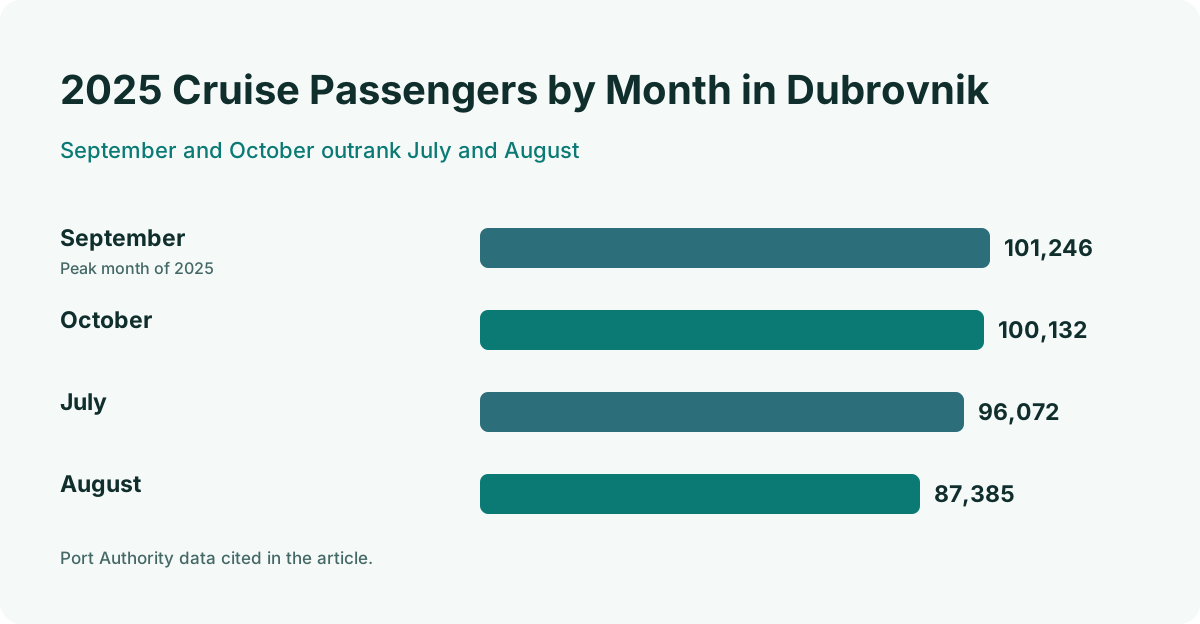
The three mistakes that cost visitors the most are walking the walls at midday in high summer, buying food souvenirs inside the Old Town instead of at Gruž Market, and assuming July and August are the busiest months. Port Authority data shows 2025 cruise passengers peaked in September at 101,246 and October at 100,132, above July's 96,072 and August's 87,385, so late September can be more crowded than midsummer.
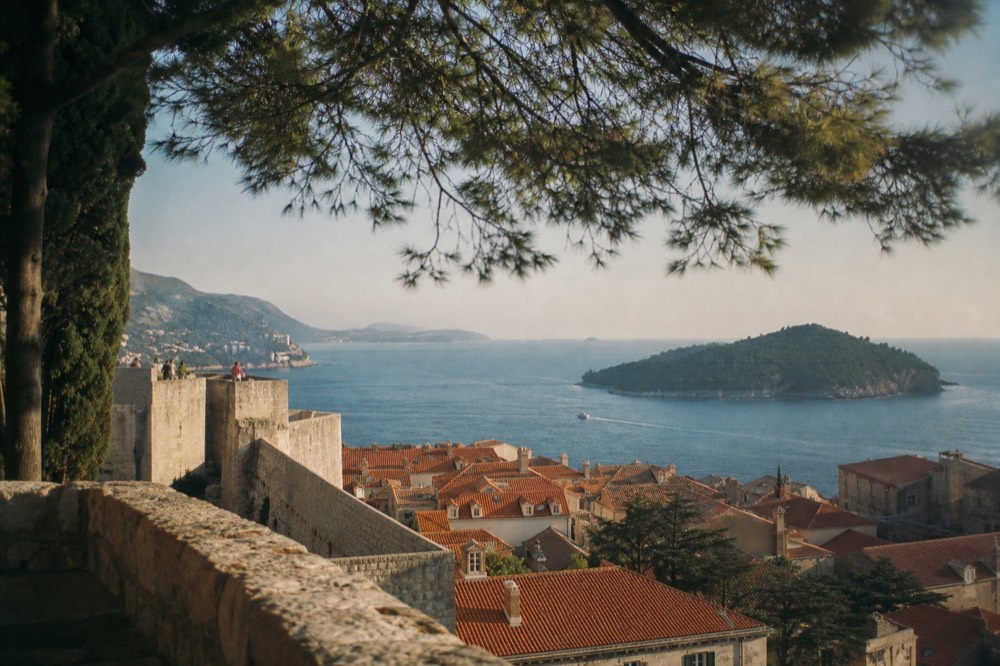
Start with the walls. The circuit is 1,940 metres long, up to 25 metres high, and almost entirely unshaded stone. The operator's stated hours at the time of check were 08:00 to 19:30, and the first two hours are cooler, emptier and photographically better anyway, because the light comes across the Adriatic rather than straight down. Walking it at 13:00 in August is how people end up exhausted, sunburnt and unable to enjoy anything else that day.
The second mistake is shopping geography. Souvenir shops inside the walls pay some of the highest rents in Croatia, and the prices reflect it. Anything edible, honey, oil, lavender, dried figs, wine, costs meaningfully less at Gruž Market or in the shops of Gruž and Lapad. Anything inauthentic, the mass-produced trinkets that appear in every Adriatic town, is not worth buying anywhere.
The third is calendar-based. Because September and October outrank July and August for cruise passengers, the "come in autumn to avoid crowds" advice is only half true. Autumn is a wonderful time to come, but check the schedule rather than assuming. The Port Authority limits cruise passengers to 8,000 a day in most cases, and of 243 cruise days a year only 18 exceed that number, so most days are manageable, but the peaks are not where people expect them. The details are on the Port Authority's cruise destination page.
A fourth mistake deserves its own sentence: doing everything in one day. Dubrovnik punishes the single-day itinerary because the walls, the Old Town, a beach and an island trip cannot all be done well before dark. If you only have one day, our one-day Dubrovnik itinerary shows what to cut.
What Is Worth Buying in Dubrovnik?
The buys worth carrying home are local olive oil, especially from Pelješac and Konavle growers at Gruž Market, Plavac Mali and Dingač wines, lavender and honey products, dried figs, sea salt, and a hand-made item such as filigree jewellery or a traditional Konavle embroidery piece. Skip the generic trinkets, the shell jewellery and anything with the Old Town printed on it that you could buy in any Croatian port.
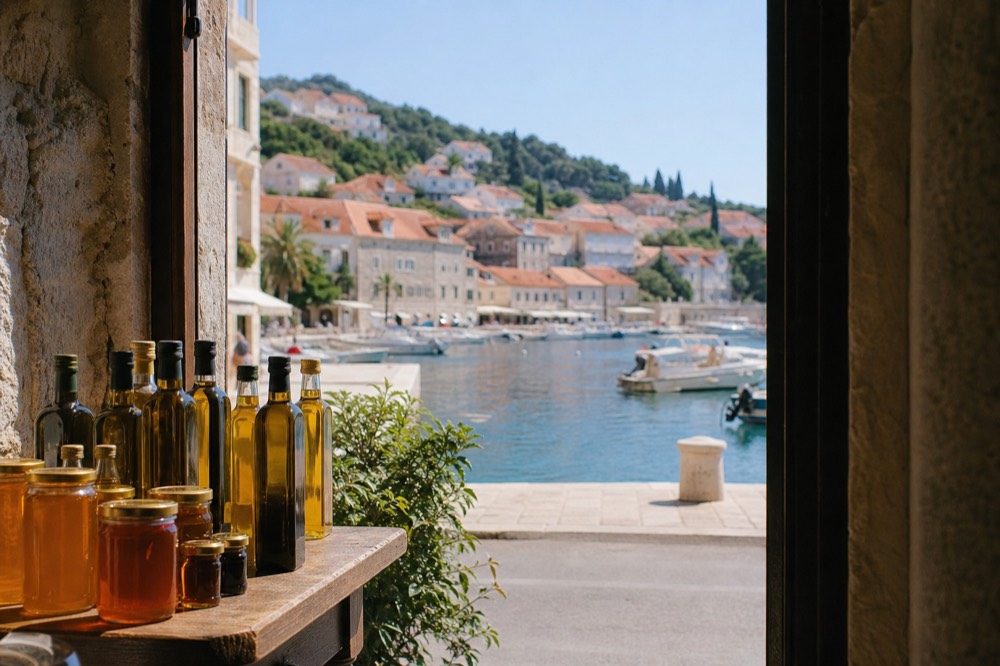
Food is where this city earns its shopping reputation. Olive oil is the headline: the southern Dalmatian coast produces strong, peppery greens, and the market is the cheapest honest place to buy them. Wine comes next. Plavac Mali is the region's signature red, and its most concentrated expression, Dingač, grows on steep Pelješac slopes; both travel well and cost far less here than at home. Our guide to Plavac Mali explains what to look for on a label.
Non-food buys are thinner on the ground but real. Filigree jewellery, fine twisted-silver work with a long history on this coast, is made by a handful of workshops and sold at prices that reflect the hours involved. Konavle embroidery, traditionally part of the region's folk costume, appears on smaller pieces like table linens. Both are the kind of thing you buy from the maker, not from a rack.
| Buy | Where | Why it is worth it |
|---|---|---|
| Olive oil | Gruž Market, Pelješac producers | Grower-direct price, single-origin southern Dalmatian oil |
| Plavac Mali / Dingač wine | Market, wine shops, cellar doors | Regional reds that cost far less at source |
| Dried figs and honey | Gruž Market | Local, light to carry, honest pricing |
| Filigree jewellery | Workshops in the Old Town | Hand-made craft with a regional tradition |
| Konavle embroidery | Konavle region, craft sellers | Distinctive textile craft, not a mass souvenir |
If you would rather taste your way to a decision than read labels, the three-hour Food and Drink Walking Tour with a Local Guide, from $165.64 per person and rated 5 across 704 reviews, moves through the city's food stops with a guide who explains exactly what is local and what is not. It is the guided version of everything this section describes, and it ends near enough to the market to finish your own shopping afterwards.
For the deeper regional story, the oyster, mussel and wine tasting tour in Ston, from $157 per person and rated 4.9 across 111 reviews, takes you to the shellfish farms at the head of the Pelješac channel, the same peninsula that grows much of the oil and wine sold at Gruž.
Is Dubrovnik Good for Shopping?
As a fashion and brand destination, honestly, no: Dubrovnik has a small retail footprint dominated by tourist-orientated shops, and anyone expecting Milan or even Split-scale retail will be disappointed. As a food and craft destination, yes: the market, the wine shops, the jewellers and the food producers make it one of the better small-city shopping trips on the Adriatic, provided you shop for what the region actually makes.
The Old Town's commercial streets, above all the Stradun, that famous 298-metre limestone promenade, carry a mix of jewellers, linen shops, wine merchants and souvenir outlets. Quality varies enormously within a few doors of each other. The linen and the jewellery are the strong categories; the racks of printed t-shirts and generic magnets are the weak ones. A useful rule: if the shop's entire stock fits a single theme the owner cares about, it is probably worth your time.
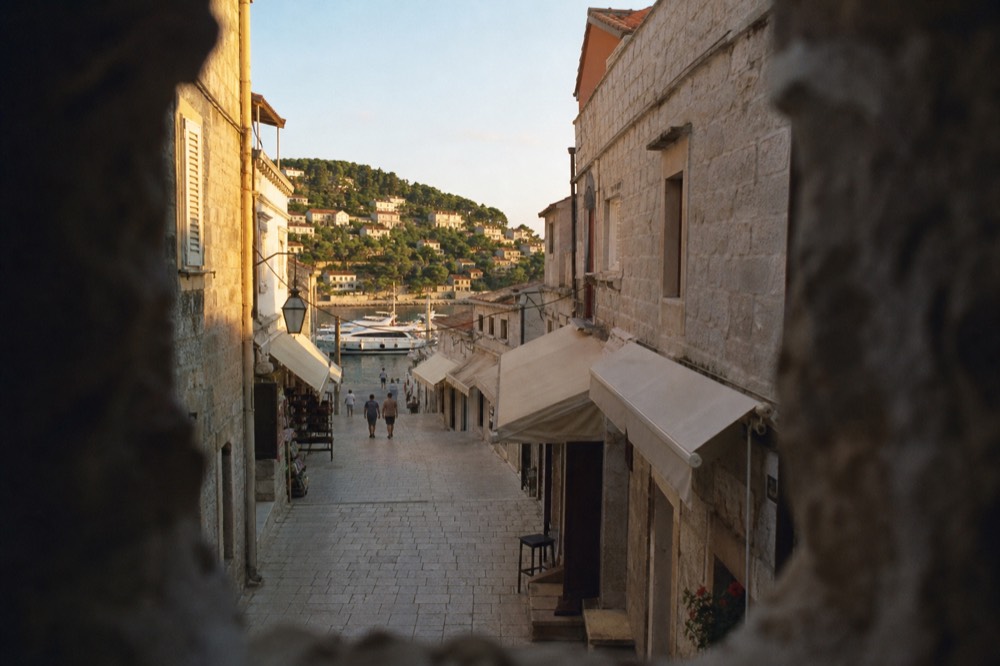
Gruž itself is the locals' shopping district, with the market, practical shops and better prices, and it is where I send people who actually want to buy something rather than browse. Lapad adds a pleasant pedestrian shopping street in a residential setting. If retail is a genuine part of your trip, our Dubrovnik shopping guide maps the neighbourhoods in detail.
One practical note for cruise passengers and short-stay visitors: the hop-on hop-off yellow bus tour with audio guide, from $35.46 per person and rated 4.9 across 1,147 reviews, connects the panoramic viewpoints with the city stops and saves your legs for the shopping rather than spending them on the climbs. It pairs naturally with a Gruž morning, since the port sits right beside the market.
Shopping sorted, the one thing worth locking in before you leave the district is the walls themselves. A guided circuit turns the ramparts from a photo walk into a history lesson, and morning departures line up neatly with a market-first start: stalls by nine, walls by ten, while the Old Town is only just reaching its visitor peak. The card below covers the two-hour walls and wars walk, and I come back to it in the day-plan section with the full details.
How Long Does It Take to Walk Up to the Panorama Restaurant in Dubrovnik?
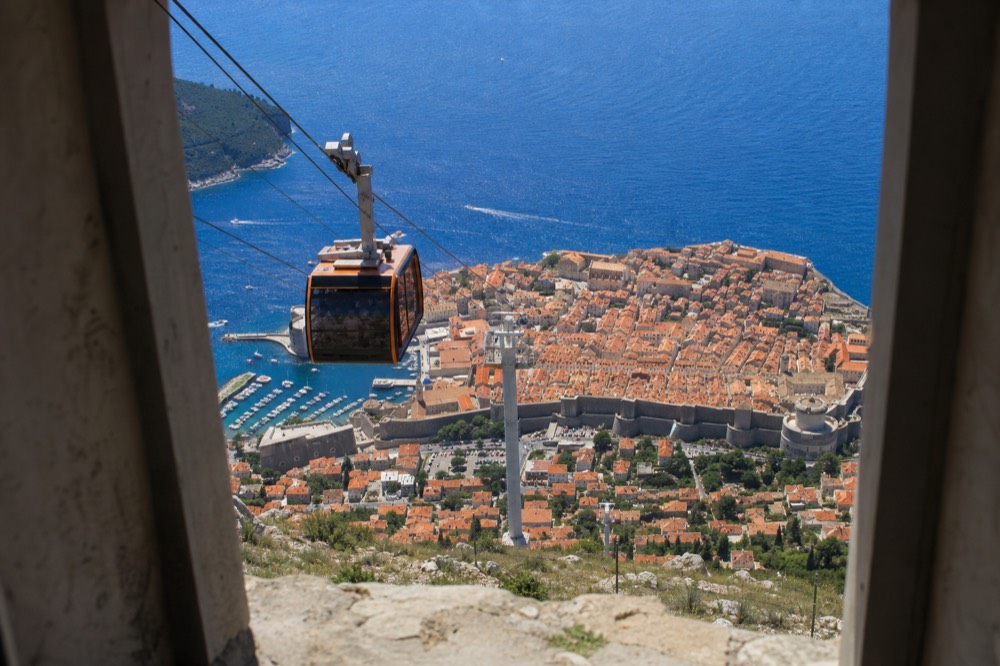
No reliable published time exists for walking from the Old Town up to the Panorama restaurant at the top of the cable car. What is verified is the geometry: the lower cable car terminal sits at 38.0 metres above sea level, the upper terminal at 405.0 metres, a 367.0-metre rise that the cable car covers in 3 minutes 30 seconds. On foot, that is a sustained, steep, unshaded mountain path, not a stroll.
The honest answer for most visitors is to ride up and, if you are feeling strong, walk down. The path exists and locals use it, but it climbs the flank of Mount Srđ on loose stone in sections, and in summer heat it is genuinely hard work. The restaurant at the top, Panorama, sits beside the upper terminal with the view the operator describes as reaching up to 60 km on a clear day, about 37 miles.
| Cable car, 2026 | Price |
|---|---|
| Adult round trip | 30 euro |
| Adult one way | 17 euro |
| Child 4 to 12 round trip | 8 euro |
| Child 4 to 12 one way | 5 euro |
| Under 4 | free |
The one-way adult ticket at 17 euro is the pragmatic choice if you want to earn your lunch with a descent on foot rather than a climb. Note the seasonal timetable: the cable car is closed January to March, runs 09:00 to 21:00 in April, and extends to midnight in June, July and August, with reductions from October. Our Mount Srđ guide has the full breakdown, and the operator's own timetable and price page carries the current table.
When Is the Best Time to Visit Gruž Market?
Go in the morning, ideally before 10:00, because the stalls thin out by early afternoon and the best produce goes first. For the crowd picture around the market and the Old Town, the counting system tells a clear story: on a real September morning the Old Town held 5,419 people at 08:00, peaked at 7,739 at 10:00, and was back to 7,205 by 11:00, against an official carrying capacity of 11,275.
The market's clock and the city's clock are different, and that is the useful trick. The stalls are at their best early, while the Old Town is still filling. By the time the counting system registers the mid-morning peak, you can already be carrying your oil and figs back to your room and heading for the walls or the beach. It is the single easiest scheduling win in Dubrovnik.
The day of the week matters less than the hour, but the season matters a lot. A September or October visit coincides with the peak cruise months, so the market-before-nine strategy earns its keep twice over then. And if you are swimming as well as shopping, the sea is part of the planning: the September average for this coast is about 23.6 degrees, a long-run open-water figure rather than a beach reading, and sheltered bays run warmer.
| Month, 2025 | Cruise passengers | Month, 2025 | Cruise passengers |
|---|---|---|---|
| January | 3,137 | July | 96,072 |
| February | 46 | August | 87,385 |
| March | 3,346 | September | 101,246 |
| April | 36,206 | October | 100,132 |
| May | 84,107 | November | 28,480 |
| June | 82,642 | December | 2,458 |
Those are Port Authority figures, and they are ship capacity, not people who actually walk ashore. Even so, the shape is unmistakable: the two busiest cruise months of 2025 came after summer ended.
How Does Gruž Fit Into a Day in Dubrovnik?
The pattern that works is market first, walls second, water or viewpoint in the afternoon. Shop Gruž before 09:00, drop your purchases, then walk the 1,940-metre wall circuit while the light is still kind, and finish with a swim, a kayak or the cable car. It sequences the city's three best experiences around their weakest hours and turns a crowded day into a calm one.
The walls deserve the middle slot for reasons beyond the shade. A guided walk turns the circuit from a photo route into a history lesson, and the fortifications make far more sense with someone explaining them. The 2-hour City Walls and Wars Walking Tour, from $29.58 per person and rated 4.8 across 1,387 reviews, is the version I point people toward, because it covers the walls and the wars that shaped them without eating the whole day.
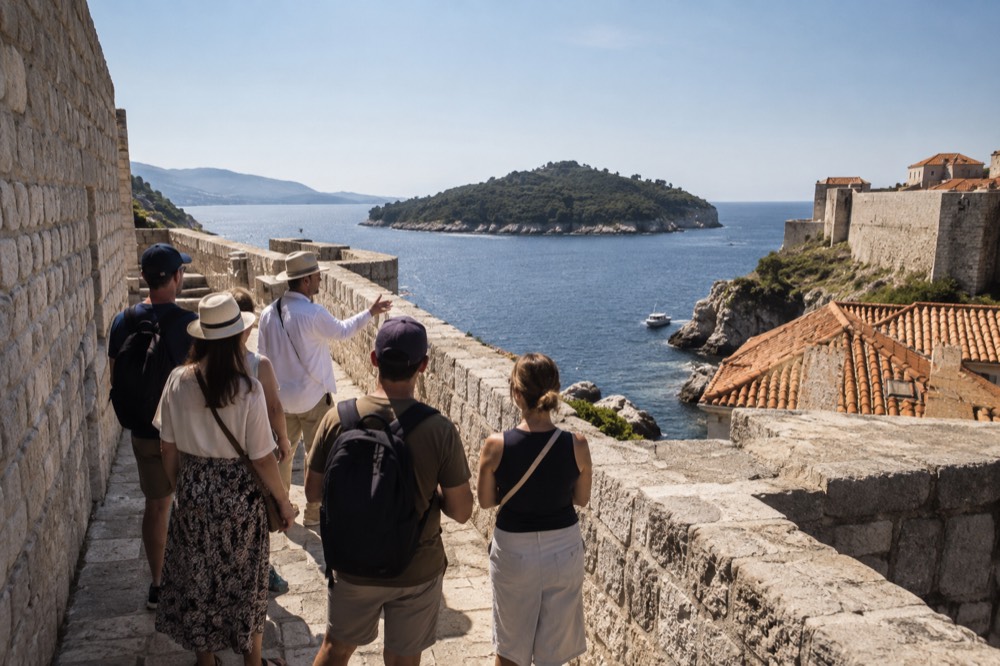
This well organized tour helped put Dubrovnik's past (and present) into perspective. It's incredible that the city walls have withstood the test of time. Antun was a wonderful guide.
linda_a
Afternoon options depend on your energy. A sea kayaking tour of Lokrum Island and Betina Cave, from $35.49 per person and rated 4.9 across 1,518 reviews, gets you onto the water looking back at the walls you just walked. The cable car gives the panorama instead. Either way, you end the day having seen Dubrovnik from street level, wall height and sea or summit, which is the complete set.
Should You Buy a Dubrovnik Pass Before a Market Day?
In main season, 1 March to 30 November, the one-day Dubrovnik Pass costs 40 euro, exactly the same as the standalone adult walls ticket, and adds ten more sights plus a 24-hour bus ticket, so it is the better buy for any day that includes more than the walls. In December the walls ticket drops to 20 euro and no pass tier is on sale at all, so the comparison flips completely.
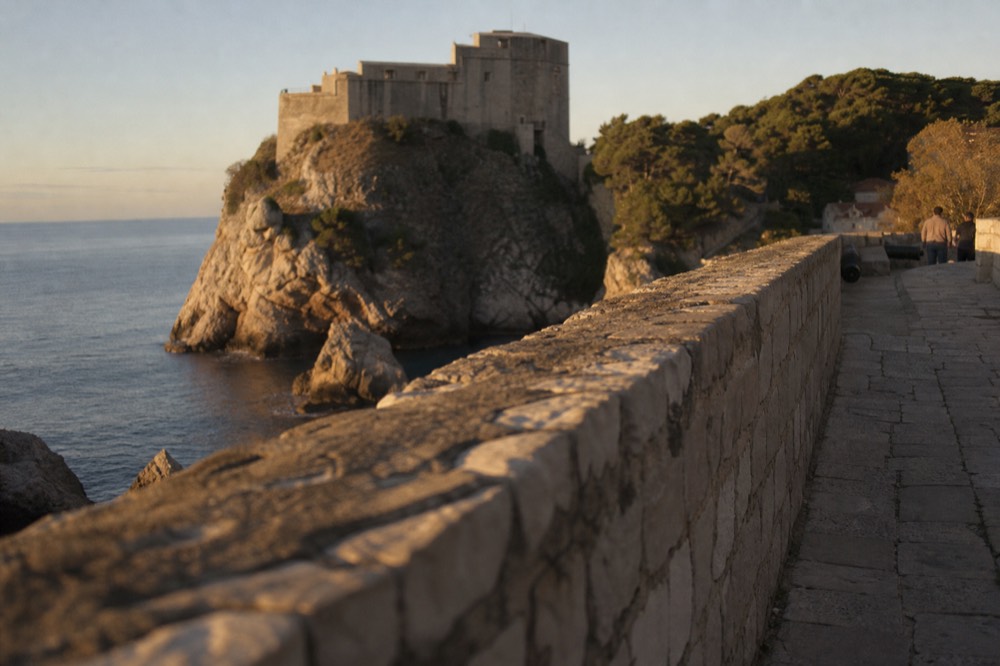
The walls ticket itself is the walls plus Fort Lovrijenac combination, and it also covers the Western Outer Wall, closed December through February, and the Collection of Coins of the Republic of Ragusa. Lovrijenac bought alone is 15 euro. There is no family ticket: the operator sells exactly adult and child 7 to 18 tickets, with under 6 free. The full price structure is on the walls operator's own site.
| Dubrovnik Pass | Price | Includes |
|---|---|---|
| One day | 40 euro | City Walls + Lovrijenac, ten sights, 24-hour bus ticket |
| Three days | 50 euro | Same sights, suburban bus coupons, House Bukovac in Cavtat |
| Seven days | 60 euro | Same sights, suburban bus coupons, House Bukovac in Cavtat |
Every tier lists City Walls + Lovrijenac Fortress as its first inclusion, and every tier allows a one-time visit to each institution, the walls included. The pass is sold as "SUMMER 2026, 01.03.2026 to 30.11.2026" in one ticket type only, ADULT PASS (7+), on the official Dubrovnik Pass site. A market morning, a walls circuit and a museum or two is exactly the day the one-day pass was built for.
For more on planning the whole stay, start with Things to Do in Dubrovnik and work outward from there, or read our guide to how many days you need before you commit to an itinerary.
Common Questions About Gruž Market and Shopping in Dubrovnik
Where Is Gruž Market Located?
On the Gruž waterfront, beside the cruise and ferry port and the main bus station, in the district about a 29-minute walk from Hotel Komodor in Lapad. It is the functional, year-round side of Dubrovnik, not the walled Old Town.
What Is Worth Buying in Dubrovnik?
Local olive oil, Plavac Mali and Dingač wines, dried figs, honey, lavender products, sea salt, filigree jewellery and Konavle embroidery. Buy food items at Gruž Market or in Gruž and Lapad shops rather than inside the walls, where rents push prices up.
Is Dubrovnik Good for Shopping?
For fashion and brands, no. For food, wine and hand-made craft, yes, and the market is the centre of that side of the city. Shop for what the region produces and the trip justifies itself.
What Not to Do in Dubrovnik?
Do not walk the walls at midday in high summer, do not buy food souvenirs inside the Old Town at marked-up prices, and do not assume July and August are the peak months. Cruise passengers peaked in September and October 2025, ahead of both midsummer months.
How Long Does It Take to Walk Up to the Panorama Restaurant in Dubrovnik?
No verified walking time is published, and the climb is a steep 367.0-metre rise on a mountain path. The cable car covers it in 3 minutes 30 seconds, and a one-way adult ticket at 17 euro lets you ride up and walk down instead.
When Should I Go to Gruž Market?
In the morning, before 10:00. The stalls are fully stocked early, the best produce sells first, and you will be finished shopping before the Old Town reaches its mid-morning visitor peak.