Jet Ski and Watersports in Dubrovnik: What to Know Before You Ride
Dubrovnik's water is warm, clear and busy, in that order. This guide covers what a jet ski day here actually looks like, what the rules and risks are, and what to book instead if you would rather keep the engine off.
Short answer
Yes, jet ski rentals and guided jet ski tours operate around Dubrovnik, launching mainly from beaches in the Lapad and Babin Kuk area. Prices sit on the operator listings rather than in any published tariff. The sea season runs roughly May to October: the September average is about 23.6 degrees, and the water is at its warmest in August at 25.8.
Can You Rent Jet Skis in Dubrovnik?
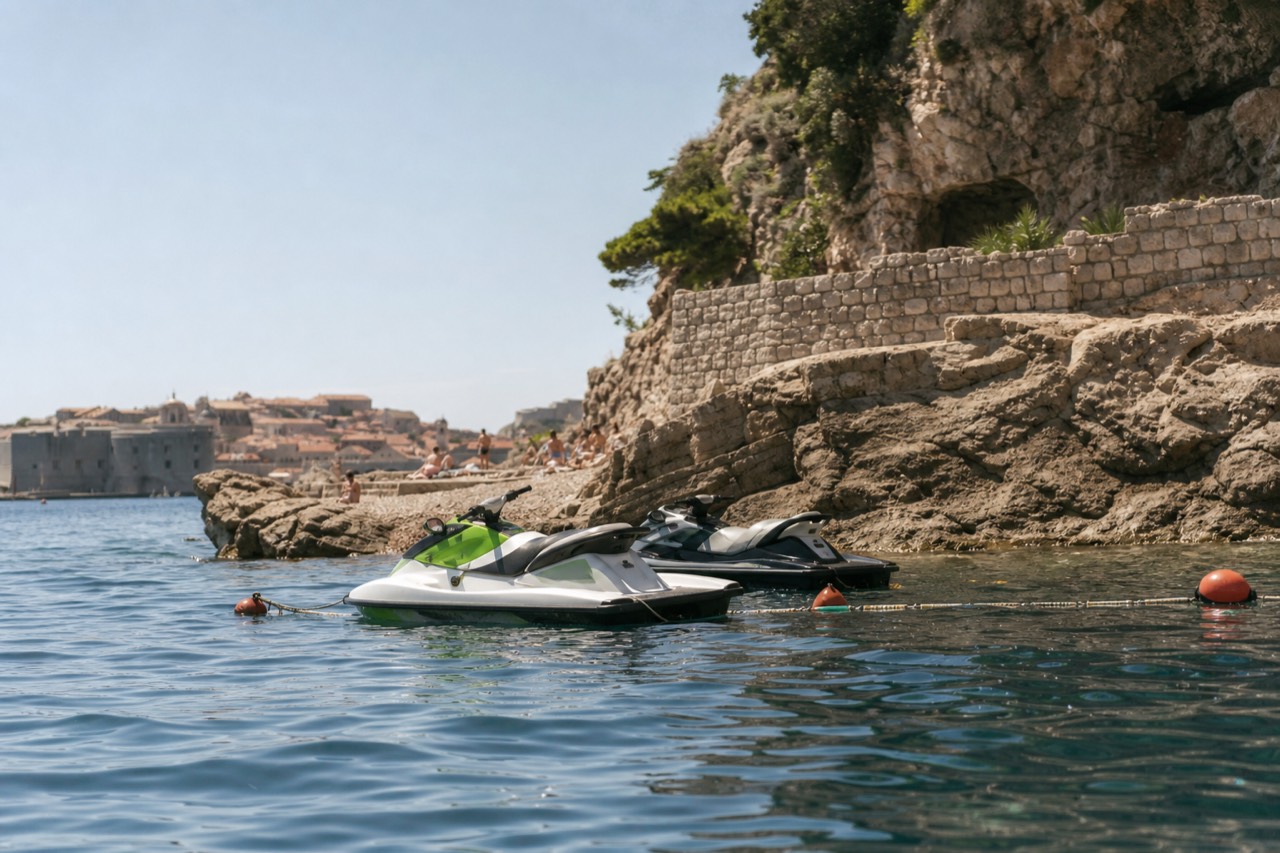
Yes, jet skis are rented in Dubrovnik, mostly from beach concession stands along the Lapad bay and the Babin Kuk peninsula, and through guided jet ski safari products booked online. Rental is sold per block of time on the spot, while guided tours list their price on the live listing. Neither the city nor the tourist board publishes an official tariff, so any figure you read elsewhere should be treated with caution. I have walked this coast for years and the pattern never changes: a row of machines on a floating pontoon or a beach slipway, a sign with time blocks, and a queue that grows after noon. What most first-time visitors miss is that the two products are quite different. A bare rental gives you a machine and a bounded riding area. A guided safari takes you around the headlands and, in some cases, toward Cavtat or the Elaphiti islands, with a skipper leading and a support boat nearby.
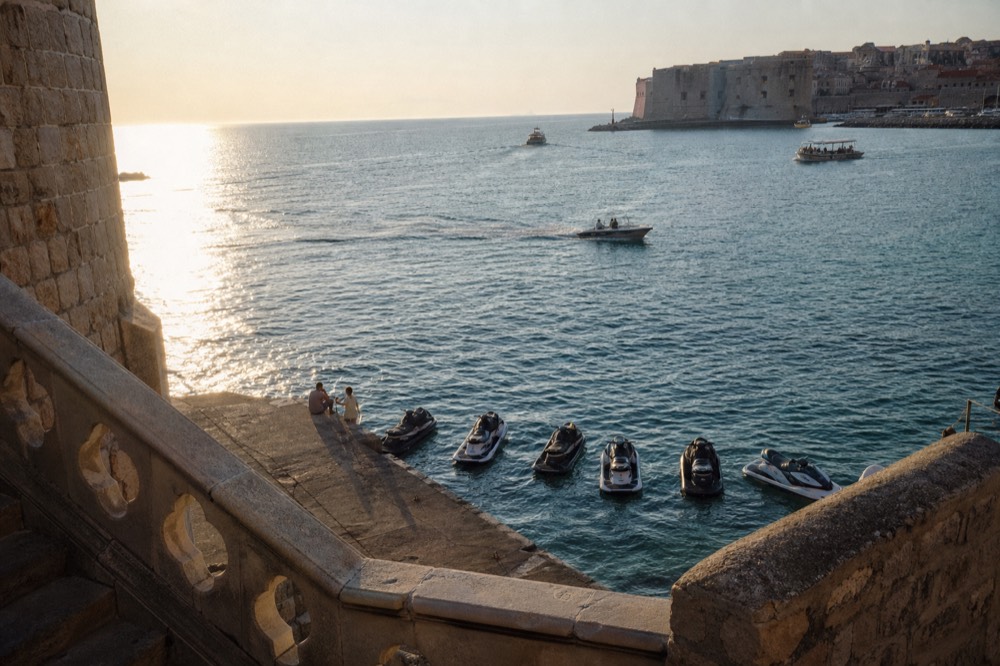
The honest planning note is this: none of the 43 verified products on this site is a jet ski rental, so I will not quote you a jet ski price. That is deliberate. Prices at beach stands move with the season and the operator, and a number copied from a forum post is worse than no number at all. What I can tell you firmly is what surrounds the jet ski decision: the swimming season, the crowd curve, the beaches, and the quieter water products whose prices and ratings are verified. If riding a machine is the priority, book the guided version through an operator listing rather than a cash stand, because a listing carries cancellation terms and insurance in writing.
For context on the water itself, the Croatian met service's Dubrovnik buoy read 27.0 to 27.4 degrees on 8 September 2026, against a September long-run average of 23.6 degrees. Sheltered bays run warm in high summer. That is the water you would be riding over.
Where Do Jet Skis and Watersports Actually Run?
The activity zone runs from the Copacabana and Sunset beaches at Babin Kuk, down the Lapad bay around Uvala, and out along the coast toward Sveti Jakov and the Lokrum reserve. Jet ski safaris typically loop the Elaphiti direction or south past the cliffs. Inside the Old Town port itself, powered watercraft are effectively off limits: the harbour serves the Lokrum boats, which leave at 09:00, then every 15 minutes from 10:00 to 18:00.
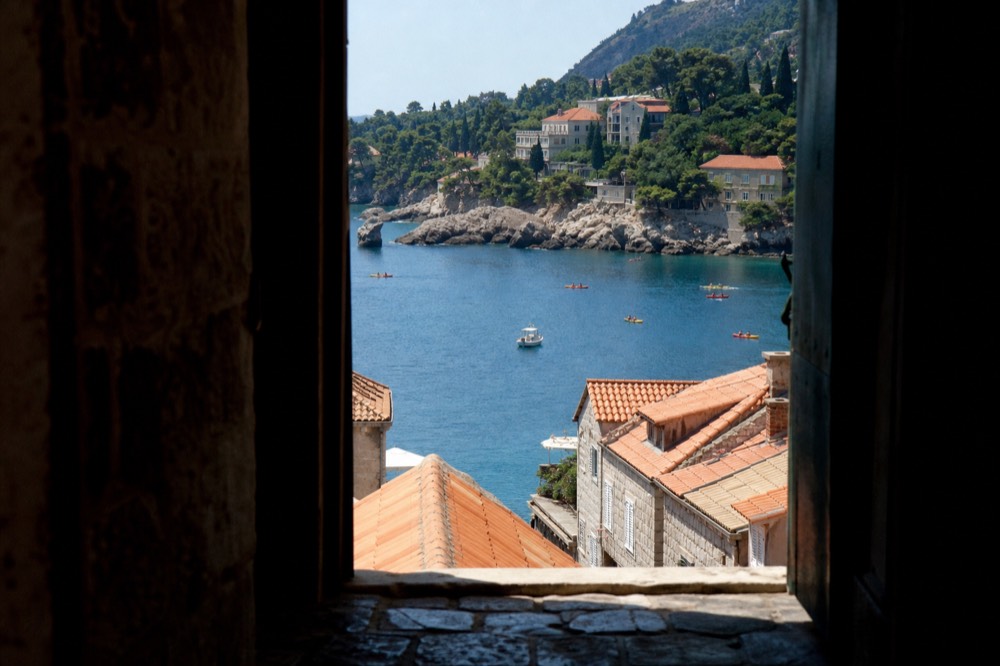
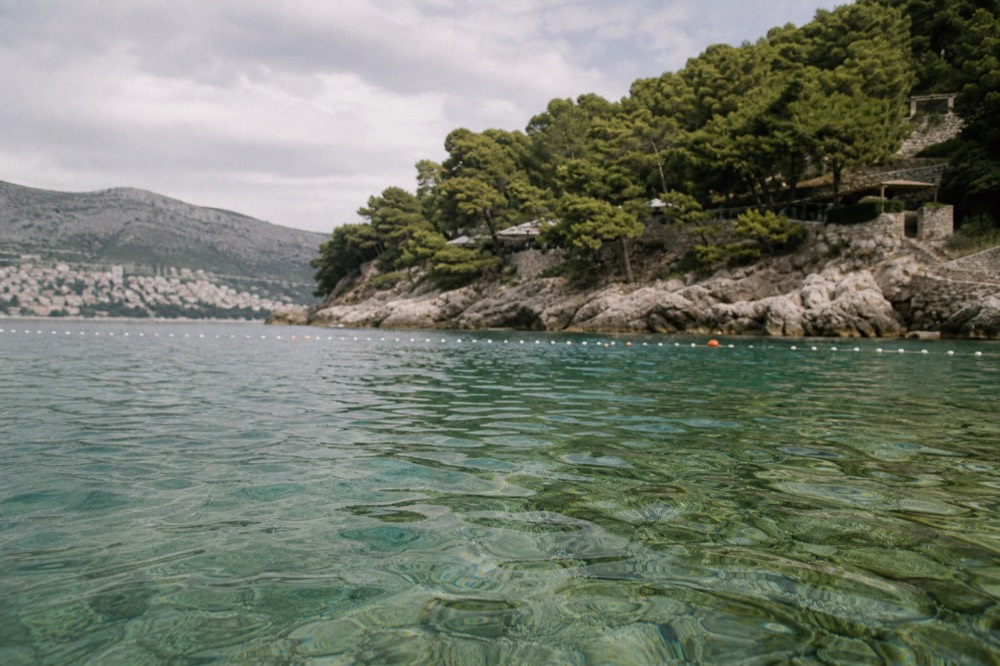
Geography does most of the work here. The walled Old Town sits on a peninsula with almost no beach, so the water-sports economy grew up in the bays west and north-west of it. Babin Kuk, at the end of the Lapad peninsula, holds the widest stretch of managed water: the Copacabana beach area carries the largest concentration of rental stands, and the water there is shallow and marked off with buoys. Lapad's Uvala bay is smaller and calmer. Further out, the beaches guide covers the full run of options from rocky ledges to pebble coves.
The riding itself is bounded. Croatian watersport concessions operate inside marked zones, and a safari that leaves the zone goes with a guide. If your mental picture is carving freely along the whole coast, adjust it: the realistic product is a defined area for rentals, or a follow-the-leader route for tours. That is not a Dubrovnik quirk, it is how licensed concessions work on this entire coast.
Before you commit money to an engine, it is worth seeing what the quieter end of this same coastline offers. These are the three water-and-view products I would put in front of anyone weighing a jet ski booking:
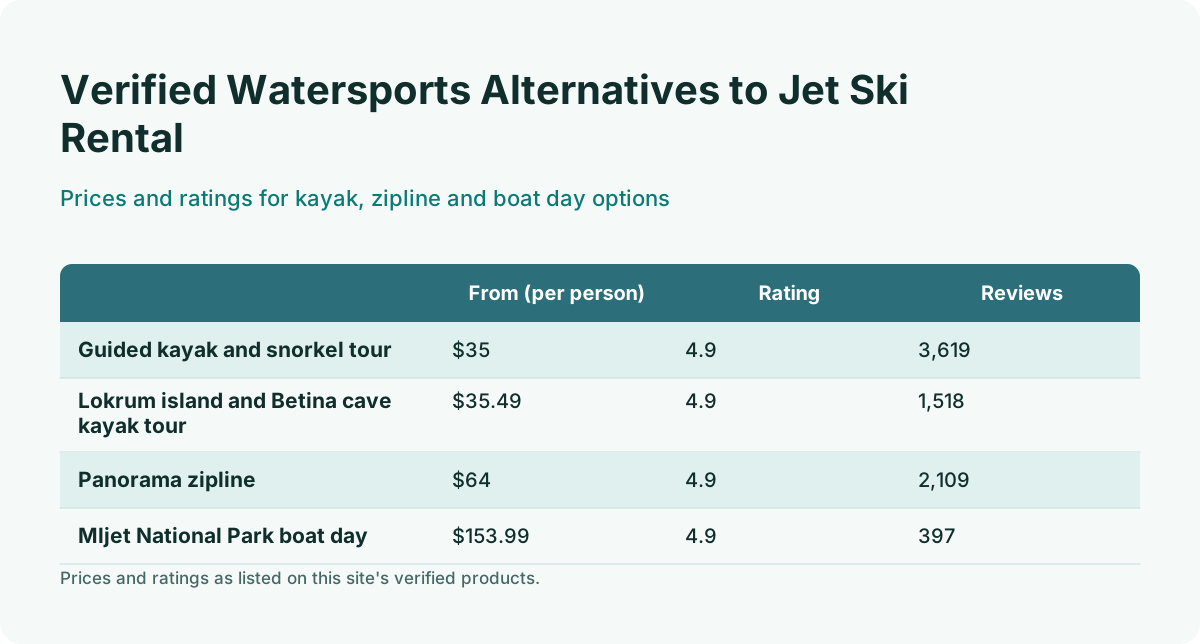
The kayak option, from $35 per person and rated 4.9 across 3,619 reviews, covers the same near-shore water a jet ski zone occupies, with a snorkel stop built in. The zipline, from $64 and rated 4.9 across 2,109 reviews, gives you the speed and the panorama without touching the sea at all. The Mljet boat day, from $153.99 and rated 4.9 across 397 reviews, is the choice if what you actually want is a lot of water between you and the crowds.
What Not to Do in Dubrovnik?
Do not ride or swim outside marked zones, do not book water sports from an unlicensed stand with no paperwork, and do not plan a jet ski or beach day around a cruise-peak date without checking the crowd forecast first. The same applies to the classic mistakes: attempting the city walls at midday in August, and assuming the sea is calm because the sky is clear. The Bura wind can change coastal water conditions fast.
The licensing point deserves a plain sentence. A legitimate concession hands you a signed agreement, a life vest and a briefing, and the machine is insured. A man with a jet ski on a trailer and a card reader is not that. If anything about the setup feels improvised, walk away, because an injury on an uninsured machine in a foreign country is a very expensive afternoon. Booking through an operator's live listing at least leaves a record.
The crowd point is the one I press hardest, because it is the least intuitive. Dubrovnik counts visitors in its historic core with six counters at every Old Town entrance, updating a headcount every 15 minutes, and the official carrying capacity from the UNESCO assessment is 11,275 people. On 8 September 2026 the count read 5,419 at 08:00, peaked at 7,739 at 10:00, and still held 7,205 at 11:00. The overtourism picture matters less at the beaches, but it matters a lot for anything that starts or ends in the Old Town, including the port where the Lokrum boats leave.
When to Avoid Dubrovnik?
Avoid the cruise-peak days of September and October if crowds are your main concern, because 2025 cruise passengers peaked in September at 101,246 and October at 100,132, above July's 96,072 and August's 87,385. For water sports specifically, avoid January to March, when the cable car is closed, the sea averages 14.3 to 14.2 degrees, and most beach concessions simply do not operate.
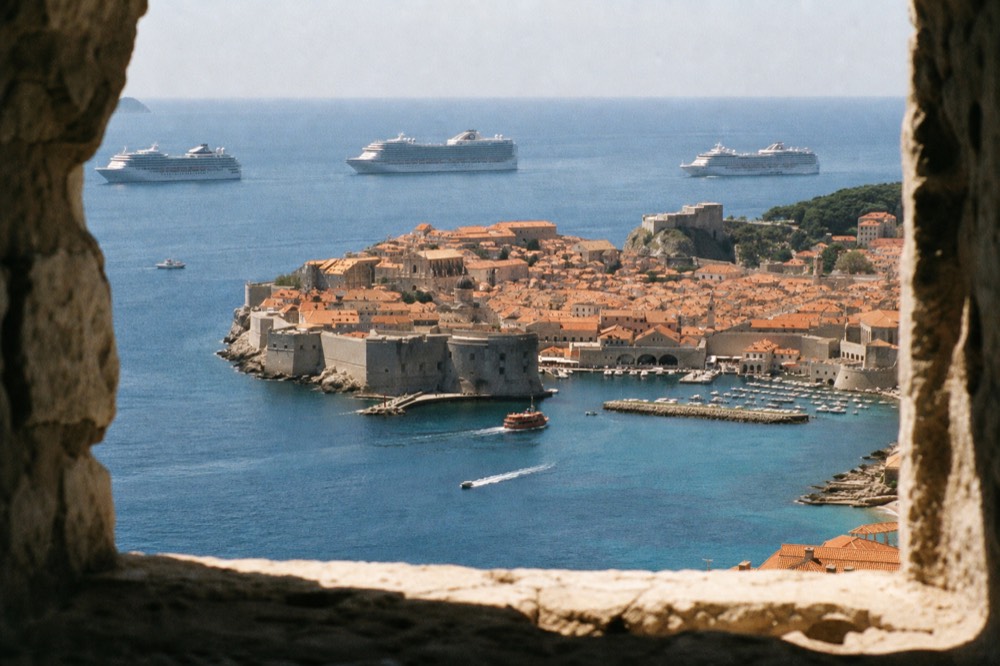
That September and October peak surprises nearly everyone. The trade story is that summer is busiest, but the Port Authority's own monthly figures say otherwise, and they are worth reading in full. The Port Authority limits cruise passengers to 8,000 a day in most cases, refuses about forty call requests a season, and reports that of 243 cruise days a year only 18 exceed 8,000 and only 4 exceed roughly 10,000, per its own cruise destination page. The full year 2025 came in at 625,257 passengers, against 582,499 in 2024, and 461 cruise calls are scheduled for 2026. Note that these passenger figures are ship capacity, not people who actually walk ashore, so write "up to X scheduled", never "X people will be in town".
| Month 2025 | Cruise passengers | What it means for the water |
|---|---|---|
| July | 96,072 | Hot, busy, all concessions open |
| August | 87,385 | Warmest sea, peak beach crowds |
| September | 101,246 | Busiest cruise month, sea still about 23.6 degrees |
| October | 100,132 | Second busiest, sea about 21.0 degrees |
| November | 28,480 | Quieter, most stands closing |
| December | 2,458 | Water sports effectively over |
For the water-sports question specifically, the sweet spot is late June or early September: the sea is at or near its warmest, the stands are all open, and if you pick a non-cruise day the beaches are manageable. The best time to visit question is really two questions, one for the town and one for the water, and they have different answers.
Is Dubrovnik Good for Beaches?
Yes, but not in the sand-and-sunbed postcard sense. Dubrovnik's beaches are pebble and rock, with the main swimming areas at Babin Kuk, Lapad bay, Sveti Jakov and a string of coves reachable on foot or by boat. The Old Town itself has no real beach, only the rocks below the walls and the Buža bar ledge, so beach days mean heading west or taking a boat.
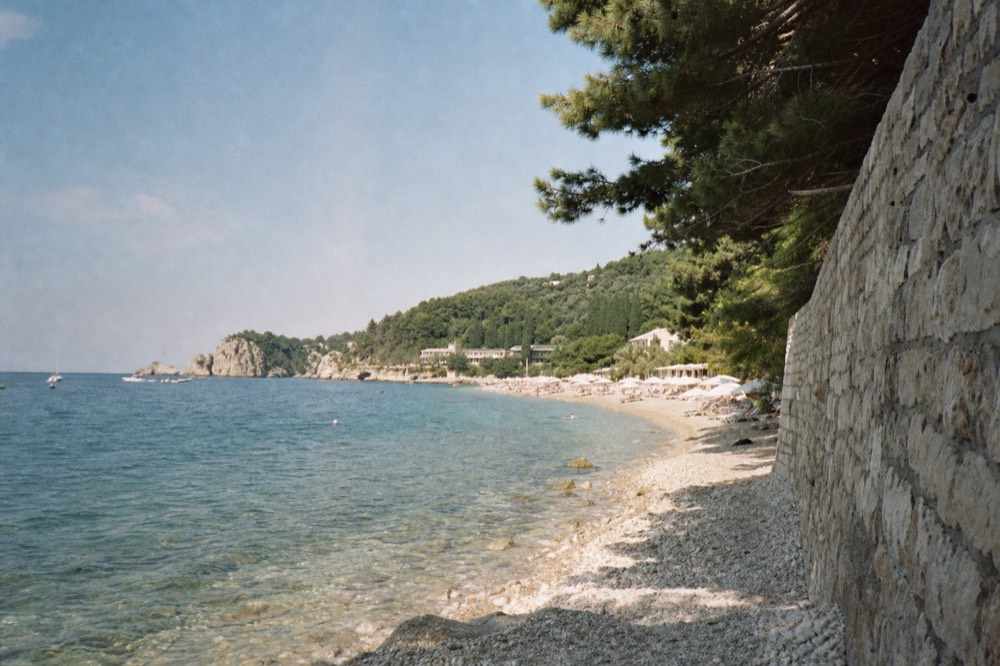
This matters for a jet ski plan because it decides where your day starts. If you are staying inside the walls, the nearest proper water-sports beach is a bus ride or a half-hour walk away. The Lapad beach and Babin Kuk strips are where the concessions cluster, and they are also where you would swim anyway. Sveti Jakov, below the cliffs on the south side, has the best view of the walls from the water but no rental stands of its own. The Tourist Board's own lovrijenac page notes the fortress standing on a 37-metre sea rock, which tells you what the south shore is: dramatic, steep and better admired from a boat than ridden up to.
| Area | Beach type | Water sports | Best for |
|---|---|---|---|
| Babin Kuk, Copacabana | Pebble and concrete | Yes, the widest offer | Rentals and families |
| Lapad, Uvala | Pebble | Yes, smaller stands | Combining swim and ride |
| Sveti Jakov | Pebble, steep access | No stands | Views and quiet swimming |
| Old Town rocks and Buža | Rock ledge | No | A quick dip, not a beach day |
| Lokrum island | Rock coves | No powered craft | A boat day with swimming |
The honest comparison is with Croatia's sandy north, and Dubrovnik loses it. What Dubrovnik wins is water clarity and the setting: swimming here means clear water against limestone, with a fortress or a wooded island in view. If a sand beach is the priority, this is the wrong coast. If clear water and a dramatic shoreline are the priority, it is hard to beat.
How Long Is the Water Season Really?
The swimming and water-sports season runs from about May to October. The long-run monthly averages put June at 22.5 degrees, July at 24.9, August at 25.8, September at 23.6 and October at 21.0. Those are NOAA open-water climatology figures for 1991 to 2020, not beach thermometer readings, and sheltered bays run warmer, as the Dubrovnik buoy's 27.0 to 27.4 degrees on 8 September 2026 shows.
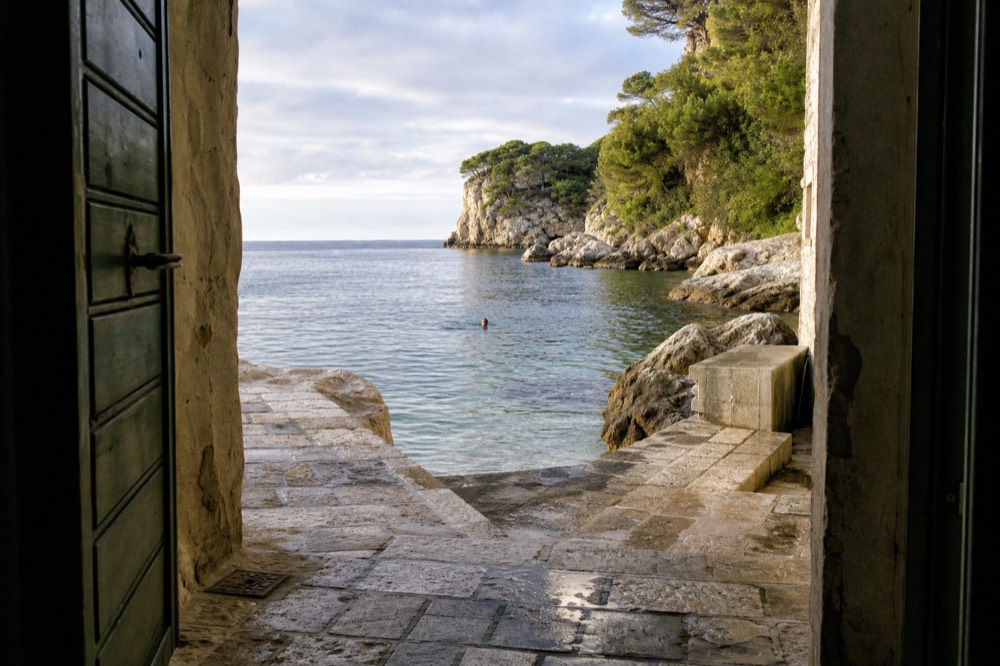
I want to be precise about what those numbers are, because most sites print them carelessly. They are a long-run average for a grid cell off this coast, produced by NOAA's OISST v2.1 dataset over 1991 to 2020, and independently corroborated by an EU marine dataset that reads within about 1 degree in the months that matter: August 24.90 and September 23.15. They are not this year's water and not a Croatian government figure. A sheltered bay in August will feel warmer than 25.8, and open water after a wind will feel cooler. The swimming season guide unpacks this in more depth.
| Month | Average sea temperature | Water sports reality |
|---|---|---|
| April | 15.4 | Wetsuit water, few stands open |
| May | 18.6 | Season opens, thin crowds |
| June | 22.5 | Full season, manageable crowds |
| July | 24.9 | Peak everything |
| August | 25.8 | Warmest water, warmest air |
| September | 23.6 | Best balance of warmth and space |
| October | 21.0 | Still swimmable, stands closing |
For a jet ski day, June and September are the months I would point anyone at. The water is warm enough that falling in is a pleasure rather than a shock, and the stands are fully staffed. October works for swimming but the rental offer thins out week by week as the season winds down.
What If You Would Rather Not Ride a Jet Ski?
The strongest alternatives are the guided kayak and snorkel tour from $35 per person, rated 4.9 across 3,619 reviews, the panorama zipline from $64 rated 4.9 across 2,109 reviews, and the Mljet National Park boat day from $153.99 rated 4.9 across 397 reviews. All three deliver the speed, the water or the panorama that draws people to jet skis, with verified prices and cancellation terms on the live listing.
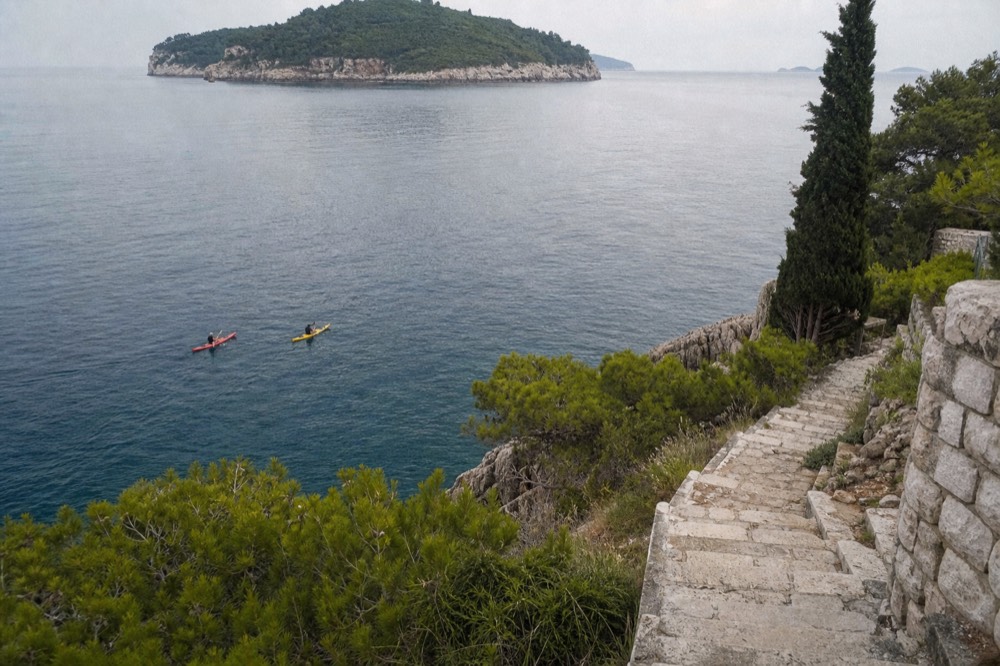
The kayak tour is the one I would hand most people. It runs about 2 hours 30 minutes, launches from the same bays the jet ski stands occupy, and includes a snorkelling stop. Because it is human-powered, it can go where machines cannot, along the base of the cliffs and into the caves. A sister product, the 2-hour kayak tour of Lokrum island and Betina cave, from $35.49 and rated 4.9 across 1,518 reviews, reaches the cave beaches under the Lokrum cliffs.
The zipline is the surprise pick. It runs from the Srđ hillside above the city, and its selling point is the same one jet ski marketing leans on: speed with a view. Rated 4.9 across 2,109 reviews and priced from $64, it trades water for altitude. One reviewer put it plainly:
The panorama zipline in Dubrovnik is really worth an excursion. You have an excellent view over Dubrovnik. You feel very well taken care of by Bobby, Matteo, and Dennis. Excellent organization! I would do it again anytime.
Sophia
The Mljet day is the big-water option. Ten hours, three islands and a national park, from $153.99 per person. If the reason you wanted a jet ski was to feel distance from the town, this does it more thoroughly than any machine loop can.
How Should You Actually Book a Water Day?
Book guided products online through the operator's live listing, with cancellation terms in writing, and leave cash-only beach rentals for spontaneous short rides. Check the cruise calendar before locking a date, aim for June or September, and confirm your pickup beach is walkable from where you are staying. For anything priced on the listing rather than published, treat the listing itself as the source of truth.
The planning sequence I use with visitors is simple. First fix the date against the crowd picture: the remaining 2026 season schedule holds 149 ship calls across 80 cruise days, and the busiest days in that window include 6 October with 2 ships and up to 5,798 passengers by capacity, and 15 September with 4 ships and up to 5,273. Second, fix the water product: guided if it is your first time on this coast, rental only if you have ridden before and just want machine time. Third, fix the logistics: Babin Kuk is a bus ride from the Old Town, and a morning slot beats an afternoon one both for wind and for queue length.
| Decision | Better choice | Why |
|---|---|---|
| Rental vs guided tour | Guided for first-timers | Route, briefing and insurance included |
| Booking channel | Operator's live listing | Cancellation terms in writing |
| Time of day | Morning | Calmer water, shorter queues |
| Month | June or September | Warm sea, thinner crowds |
| Backup plan | Kayak or boat tour | Runs when wind closes the machine zone |
Have a backup, because wind closes jet ski zones while kayaks in sheltered bays often still run. The Bura arrives fast on this coast, and a cancelled ride with no alternative is a lost day. This is the real argument for booking at least one structured product alongside any rental: if the machines stop, your day does not.
Whether you came for the engine or the shoreline, the coastline is the reason any of it works. The same clear water that makes a jet ski loop fun makes a kayak tour quietly unforgettable, and the same cliffs that look good from a saddle look better from a cave you swam into. For everything else on this coast, start with Things to Do in Dubrovnik and work outward.
Common Questions About Jet Ski and Watersports in Dubrovnik
Can you rent jet skis in Dubrovnik?
Yes. Rentals run from beach concessions mainly in the Babin Kuk and Lapad bay areas, sold in timed blocks on the spot, and guided jet ski safaris can be booked through operator listings. No official tariff is published, so check the price where you book rather than trusting secondhand figures.
What not to do in Dubrovnik?
Do not ride or swim outside marked zones, do not rent from a stand that offers no paperwork or insurance, and do not schedule a beach or water-sports day onto a cruise-peak date without checking the crowd forecast. Also avoid the city walls at midday in high summer.
When to avoid Dubrovnik?
Avoid the peak cruise months of September and October if crowds are your main worry: 2025 cruise passengers peaked in September at 101,246 and October at 100,132, above July and August. For water sports, avoid January to March, when the sea averages 14.3 to 14.2 degrees and most concessions are closed.
Is Dubrovnik good for beaches?
Yes, with a caveat: the beaches are pebble and rock rather than sand. The main swimming areas are at Babin Kuk, Lapad bay and Sveti Jakov, and the water clarity is excellent. The Old Town itself has no real beach, only rocky ledges below the walls.
How warm is the sea for water sports?
The long-run averages put June at 22.5 degrees, July at 24.9, August at 25.8, September at 23.6 and October at 21.0. These are open-water climatology figures, not beach readings, and sheltered bays run warmer in high summer.
What is the best alternative to a jet ski tour?
The guided sea kayaking and snorkelling tour, from $35 per person and rated 4.9 across 3,619 reviews, covers the same coastline with a swim stop, and it can reach cliffs and caves that machines cannot.