Getting Around Dubrovnik: Buses, Taxis, Cable Car and Car Rental
Dubrovnik is small, steep and mostly car-free, so getting around well is about choosing the right mode for each leg: feet inside the walls, buses and taxis for the suburbs, and the cable car for the hill.
Short answer
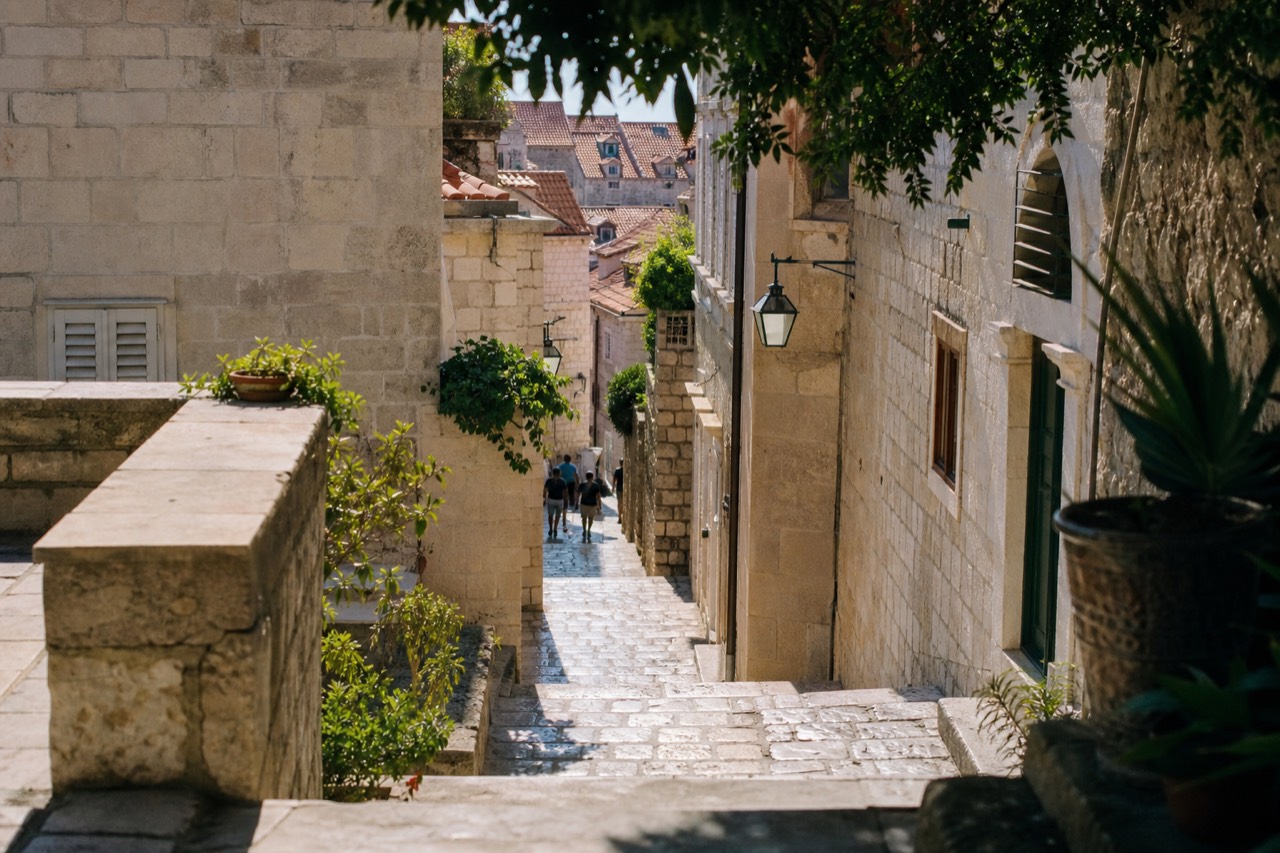
Walking covers almost everything inside the Old Town, which is 24.7 hectares and closed to most traffic. Buses and taxis handle Lapad, Gruž and the airport; the shared airport transfer starts at $20 per person. The cable car costs 30 euro round trip for an adult. A rental car only pays off for day trips.
The first thing that shapes every plan in this city is geography. Dubrovnik stacks vertically: a walled Old Town on a spur of rock, residential Lapad and Babin Kuk wrapped around a bay to the west, the Gruž cruise and ferry port further out, and Mount Srđ looming 405 metres above it all. I have walked these streets with travellers since 2015, and the single most common mistake I see is treating the city like a place you drive around. You mostly do not. You walk, you ride a bus along the coastal road, and occasionally you let a cable car do the climbing for you.
This guide compares every mode honestly: feet, buses, taxis and rideshares, the cable car, e-tuk-tuks, hop-on-hop-off buses, and a rental car. Prices below come from the operators' own sites and from verified tour listings, so nothing here is guesswork.
What Is the Best Way to Get Around in Dubrovnik?
Walking is the best way to get around Dubrovnik for everything inside and near the Old Town, which is a compact 24.7-hectare UNESCO property where cars are largely excluded. For Lapad, Gruž and the airport you take a bus, a taxi or a transfer. The cable car handles the one climb worth paying for, at 30 euro per adult round trip. A car is a day-trip tool, not a city tool.
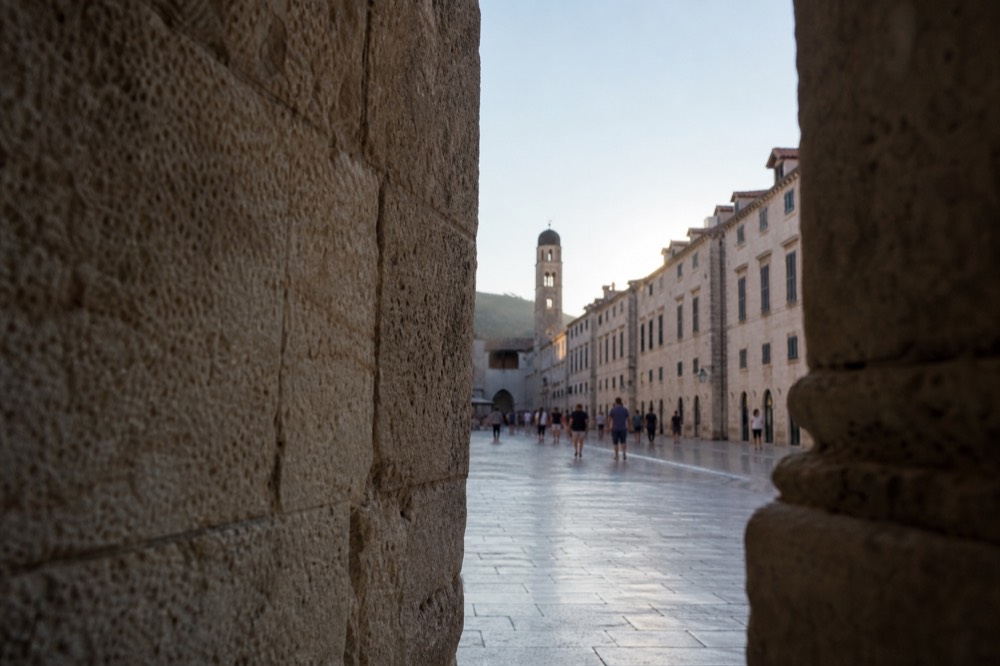
The Old Town's scale is the whole argument. The Stradun, the main street that everything else hangs off, is 298 metres long, and the Tourist Board notes the 1272 Statute fixed the plan of both the city and that street. You can cross the entire walled core on foot in well under twenty minutes if you do not stop, and you will stop constantly, because every side lane off the Stradun hides a staircase, a cloister or a bar. That is the point.
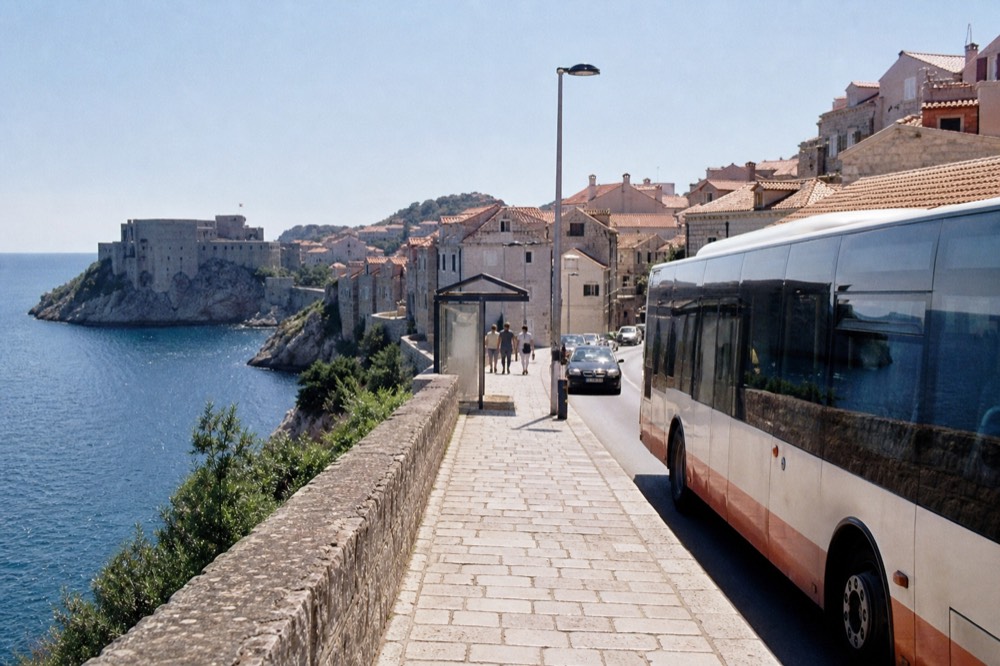
Outside the walls the logic changes. Lapad's beach strip, the Gruž port, Babin Kuk and the airport sit along a coastal axis served by city buses, and taxis and rideshares fill the gaps. The city's bus network is included in the Dubrovnik Pass in a useful way: every pass tier carries a public bus ticket, 24 hours on the one-day pass, 72 on the three-day, 168 on the seven-day, and the longer tiers add suburban coupons you can use for a ride to Cavtat. If you are buying a pass anyway for the walls and museums, the transport is a genuine bonus rather than a gimmick.
Here is how the modes stack up against each other:
| Mode | Best for | Watch out for |
|---|---|---|
| Walking | Old Town, Pile to Ploče, city walls circuit | Steps and heat; limestone is slippery when wet |
| City bus | Lapad, Babin Kuk, Gruž, suburbs | Seasonal crowds at Pile Gate stops |
| Taxi or rideshare | Door-to-door legs, early flights | Agree the fare or meter before setting off |
| Cable car | Mount Srđ views and sunset | Queues midday; closed January to March |
| E-tuk-tuk | Guided panorama loops without walking | Booked as a tour, not a taxi |
| Rental car | Day trips to Ston, Korčula, Montenegro | Parking near the Old Town is scarce and paid |
One planning note that surprises people: the busiest visitor pressure is not midsummer. Port Authority data shows cruise passengers peaked in September and October of 2025, ahead of July and August, so if you are timing a visit around crowd levels, read our best time to visit guide rather than assuming August is the peak.
Is It Worth It to Rent a Car in Dubrovnik?
For most visitors staying three days or fewer, a rental car in Dubrovnik is not worth it: parking near the Old Town is scarce and paid, and every headline sight is walkable or bus-served. A car earns its cost only when your itinerary is built on day trips, to Ston, the Pelješac wineries, Korčula or Montenegro, where a guided tour or a car both beat the bus schedule.
The arithmetic is straightforward. Inside the walls there is nowhere to drive, and the streets immediately outside are a maze of one-way lanes, stairs and residents' parking. Every hour your car sits in a paid garage is an hour it is not earning anything. Meanwhile the day trips that justify a car are exactly the day trips this site covers in depth, and several of them run as tours that include the driving, the border paperwork and a guide.
The strongest counter-argument to renting is the wine country. The Ston and Korčula day trip with wine tasting runs about 11 hours and starts from $81.69 per person, rated 3.8 across 131 reviews, and it bundles a boat leg, a tasting and the famous Ston walls into one ticket. Doing that independently by car means you plan the ferry, the tasting appointments and the parking yourself, and the designated driver does not taste. If wine is the reason you would rent, let someone else drive.
There is a middle case: staying a week, based in Lapad or outside the city, and wanting the freedom to chase weather and quiet coves. Then a car for three or four of those days makes sense, picked up in the city rather than at the airport so you are not paying for days it sits idle. Our car rental guide goes deeper on that trade-off.
Is a Dubrovnik Cable Car Worth It?
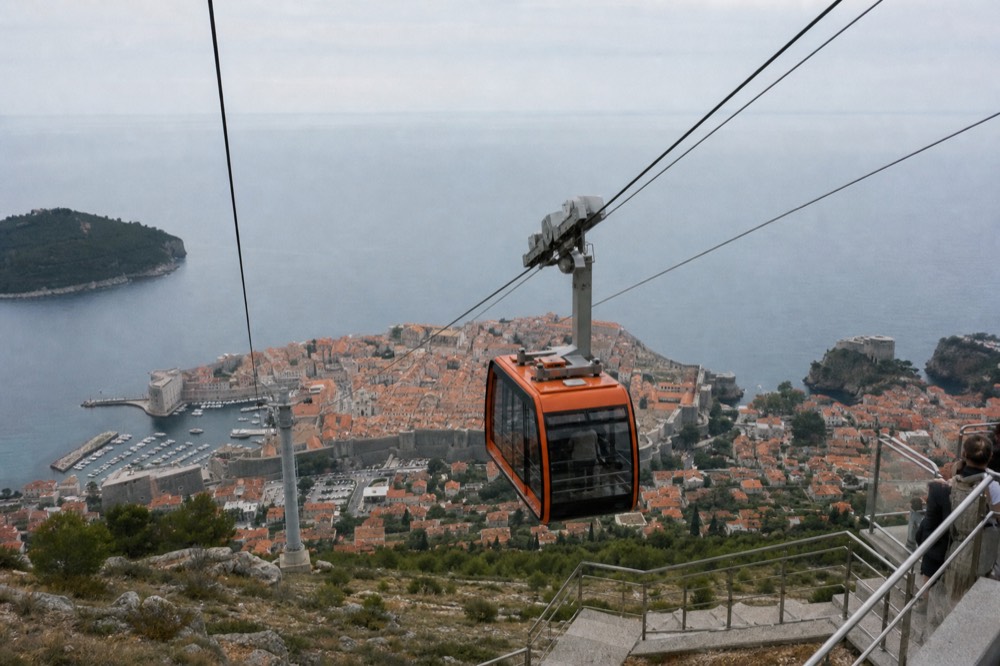
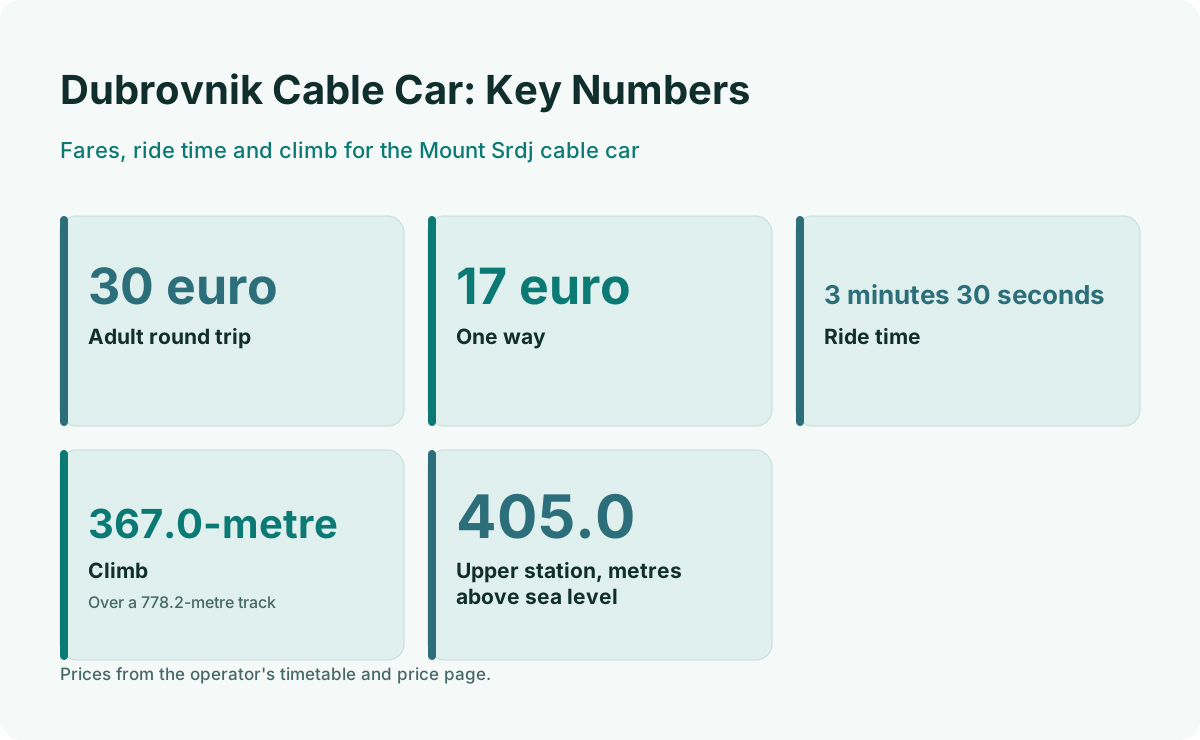
Yes, the cable car is worth it for nearly every visitor: it is the fastest and most comfortable way to reach Mount Srđ, rising 367 metres in 3 minutes 30 seconds, and an adult round trip costs 30 euro, 17 euro one way. Go at opening or near sunset, and skip it entirely from January to March when it is closed.
The engineering alone justifies the fare. The lower terminal sits 38.0 metres above sea level and the upper station 405.0, a 367.0-metre climb over a 778.2-metre track, travelled at 6.5 metres per second in two cabins that each carry 32 plus 1 people. The system dates from 1969 and reaches up to 40 metres above the ground at its highest point. On a clear day the operator advertises a view range of up to 60 km, roughly 37 miles, which takes in the Elaphiti Islands and the Montenegrin coast on the best afternoons.
| Cable Car Ticket | Round Trip | One Way |
|---|---|---|
| Adult | 30 euro | 17 euro |
| Child 4 to 12 | 8 euro | 5 euro |
| Under 4 | free | free |
Prices come from the operator's own timetable and price page, which also carries the monthly schedule. The shape of that schedule matters more than most visitors realise: the cable car is closed January to March, runs 09:00 to 21:00 in April, stretches to midnight through June, July and August, then trims back through September and October.
The one-way ticket deserves a mention, because you can pair a cable car ascent with a walk down, which is what our can you walk down from the cable car answer covers in detail. The path is rough stone and unshaded, so the one-way-plus-walk combination suits early risers, not midday crowds.
If you would rather combine the ride with a proper orientation, the Cable Car Ride and Old Town Walking Tour runs about 4 hours 30 minutes, from $163.50 per person, rated 4.6 across 716 reviews, and folds a guided walk of the Old Town into the same ticket. One recent guest put it better than a spec sheet can:
Great tour with a great guide. Terrific views from the cable car. The old town is fascinating. We walked part of the wall because it was very hot. Sara was a fabulous guide and gave us recommendations for lunch and what else we should see.
Fred_W
Booking that combination is a decision worth making early rather than on the day, because the cable car queue at midday in high summer can eat an hour of your itinerary on its own. A pre-booked tour slot skips the general ticket line, and the guided Old Town leg means you start the walk with the city's layout already explained. It suits first-time visitors especially well.
A cheaper sibling is worth knowing about too: the Cable Car, Walking Tour and City Walls Combo, from $90.66 per person and rated 4.6 across 360 reviews, which stacks the walls circuit onto the same afternoon. Our cable car tickets guide compares the standalone options if you would rather buy direct.
Where Can I Rent a Car in Dubrovnik?
You can rent a car in Dubrovnik at the airport, at desks around the Gruž port area and through city-centre agencies, but the airport carries the widest fleet and the longest hours. Pick up in the city if the car is only for day trips, and at the airport only if you are driving on arrival day, since airport rentals price in convenience.
The practical decision is less about which company and more about where the counter sits. Airport pickups let you drive straight off a late flight, which helps if you are heading to Ston or the Pelješac peninsula the next morning, but you pay for days the car sits in a garage if you then spend two days walking the Old Town. City desks, clustered around Gruž and the main road, let you rent for exactly the window you need.
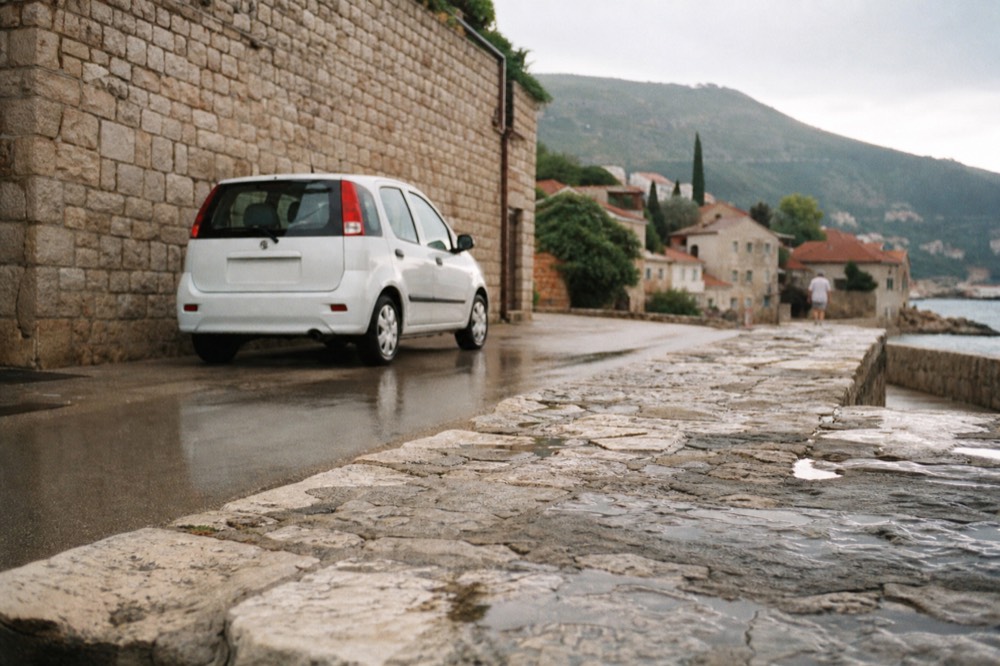
Book ahead in summer regardless of where you collect. Dubrovnik recorded about 4.2 million overnight stays in 2025, sharing first place among Croatian destinations with Rovinj, and the fleet thins out in exactly the weeks you want it. Cross-border paperwork matters too if Montenegro or Bosnia and Herzegovina are on your list: confirm in writing that the rental agreement permits the border crossing, because not every fleet does.
How Do You Get Between the Airport, Cruise Port and Old Town?
The shared airport transfer starts at $20 per person and is the cheapest organised link to the Old Town, while taxis and rideshares run door to door. Cruise passengers dock at Gruž, from where buses, taxis and a 25-minute-plus walk along the shore connect to Pile Gate; Lokrum boats leave the Old City Harbour at 09:00 and every 15 minutes from 10:00 to 18:00.
The airport sits well outside town, so nobody walks that leg. The shared departure transfer, rated 4.5 across 57 reviews, is the budget anchor, and private transfers and taxis scale up from there. Our airport to Old Town guide breaks the options down stop by stop, and the airport bus page covers the timetable option.
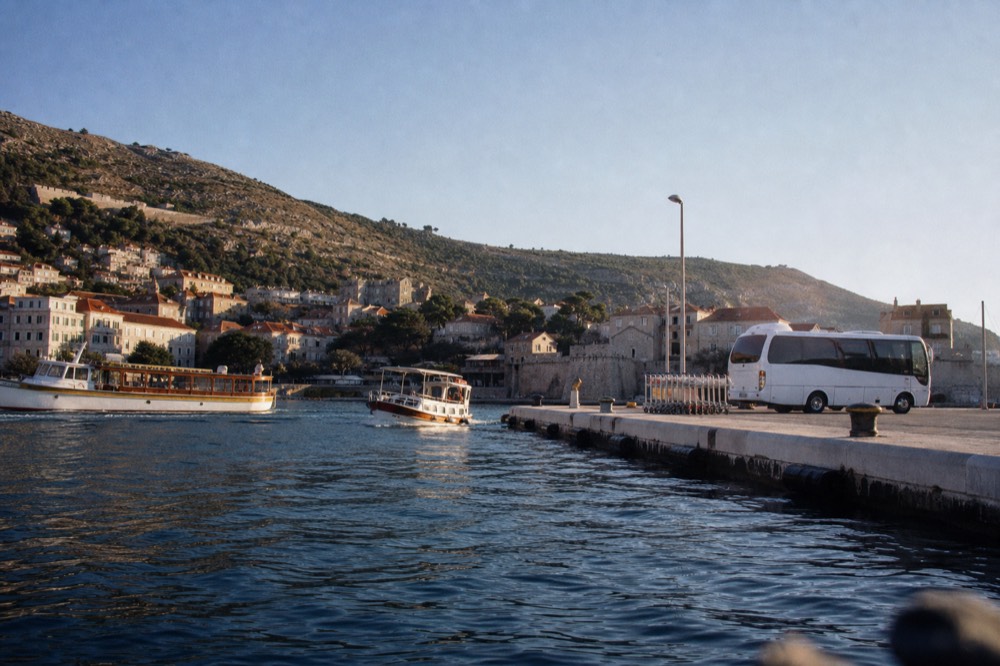
Cruise days deserve their own arithmetic. The Port Authority limits cruise passengers to 8,000 a day in most cases, and of 243 cruise days a year only 18 exceed that number, but even a normal day funnels thousands of people from Gruž toward Pile Gate at once. The Port Authority's own cruise destination page sets out those limits, and our cruise port to Old Town guide maps the connections. If your ship is in port, leave the organised shuttle queue and walk ten minutes to the local bus stops, which move faster on peak days.
| Route | Cheapest organised option | Notes |
|---|---|---|
| Airport to Old Town | Shared transfer, from $20 per person | Rated 4.5 across 57 reviews; drops at set stops |
| Cruise port to Old Town | Local bus from Gruž | Shuttle queues are longest right after docking |
| Old Town to Lokrum | Official boat, included in the 30 euro Lokrum ticket | 09:00, then every 15 minutes from 10:00 to 18:00 |
| Old Town to Mount Srđ | Cable car, 17 euro one way | Walking down is free but rough underfoot |
The Lokrum line in that table is worth pausing on, because the 30 euro ticket covers both the reserve entry and the return boat transfer, whether you ride the official boat or arrange your own transport. The ticket office at Luža in the Old City Port works 08:00 to 18:00, and a ticket stays usable for three days. Our Lokrum ferry guide has the full schedule detail.
Do You Need a Bus Pass or the Dubrovnik Pass to Get Around?
You do not need a bus pass just to get around, since single bus rides are cheap and the network is simple, but the Dubrovnik Pass bundles transport with sightseeing: 40 euro for one day including a 24-hour bus ticket, 50 euro for three days with suburban coupons, 60 euro for seven. The pass is a main-season product, sold for 1 March to 30 November, with no winter tier on sale.
The pass's transport value is real but secondary. The one-day pass costs the same 40 euro as the standalone walls ticket in main season, and the walls ticket is actually the walls plus Fort Lovrijenac combination, so the comparison is honest: same price, plus ten more sights and a day of buses. In December the standalone walls ticket drops to 20 euro and no pass tier is on sale at all, which is why every sentence comparing the two carries the season.
| Dubrovnik Pass Tier | Price | Transport included |
|---|---|---|
| One day | 40 euro | 24-hour bus ticket |
| Three days | 50 euro | 72-hour bus ticket plus suburban coupons |
| Seven days | 60 euro | 168-hour bus ticket plus suburban coupons |
Every tier lists the City Walls and Lovrijenac Fortress as its first inclusion and allows a one-time visit to each institution, walls included, so plan the walls walk for a day the pass is active. The three-day and seven-day tiers add House Bukovac in Cavtat, which pairs neatly with the suburban bus coupons for a Cavtat afternoon. Full detail is on the official Dubrovnik Pass site, and our is the pass worth it analysis runs the numbers for different trip lengths.
Can You Walk Everywhere in Dubrovnik?
Inside the Old Town and its immediate approaches, yes, you can walk everywhere: the walled core is 24.7 hectares, the Stradun is 298 metres end to end, and cars are largely excluded. Beyond that, walking still works along the coastal strip to Lapad, but the hills, the summer heat and the distances to Gruž and the airport make buses and taxis the sensible choice.
Walkability is Dubrovnik's quiet superpower and its hidden tax. The superpower: everything a first-time visitor lists, the walls, the Rector's Palace, Onofrio's Fountain, the Franciscan Monastery, Buža Bar, sits within a fifteen-minute walk of anywhere else inside the walls. The tax: the city is built on a rock, so "a short stroll" routinely involves stone staircases, and the polished limestone that glows so beautifully in photographs turns slick after rain.
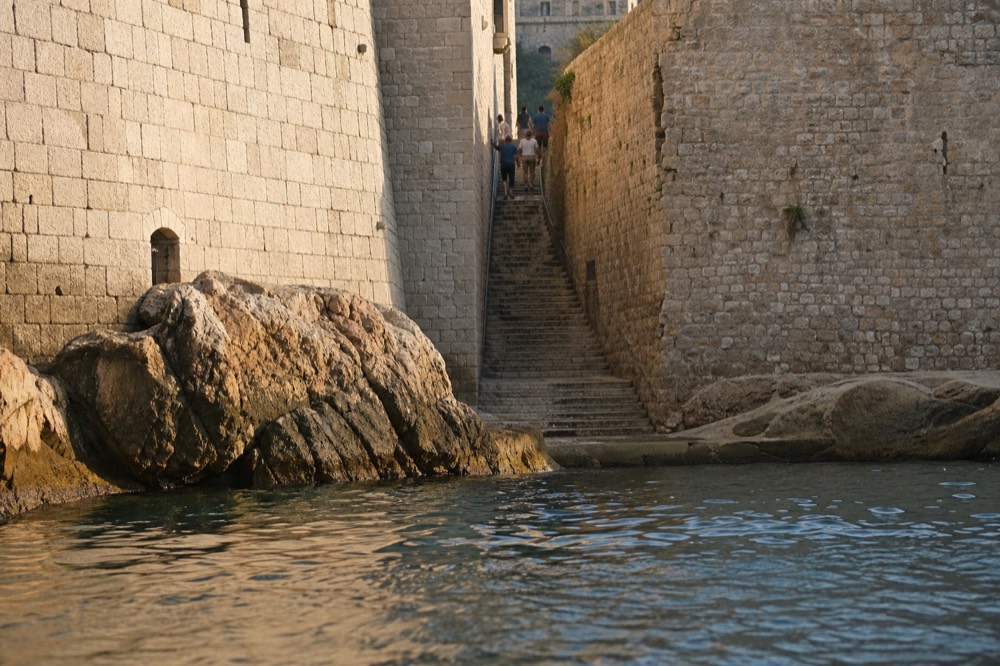
The walls circuit itself is the biggest walk most visitors attempt, 1,940 metres of it, up to 25 metres high, with the operator's stated hours running 08:00 to 19:30. The walls operator's own page describes the full circuit, and our city walls tickets guide covers pricing, including the December drop to 20 euro. Wear real shoes; the stone is unforgiving in flip-flops.
For the flat-terrain days, our walkability guide maps which neighbourhoods let you skip buses entirely, and one day in Dubrovnik shows how much ground a determined walker covers between breakfast and sunset.
What About Taxis, Rideshares and Panorama Tours?
Taxis and rideshares work well in Dubrovnik for door-to-door legs, especially early mornings and airport runs, and they fill the gaps the bus schedule leaves. For sightseeing without walking, three guided formats do the job instead: the e-tuk-tuk panorama tour from $59.24 per person, the hop-on-hop-off bus from $35.46, and the convertible panorama bus from $34.77.
The e-tuk-tuk is the one locals recommend to visitors with mobility limits or small children, because it threads the hills above the Old Town that no bus route reaches. It runs about 1 hour 45 minutes, from $59.24 per person, and holds a perfect 5 across 1,799 reviews, which is about as strong a signal as this market gives.
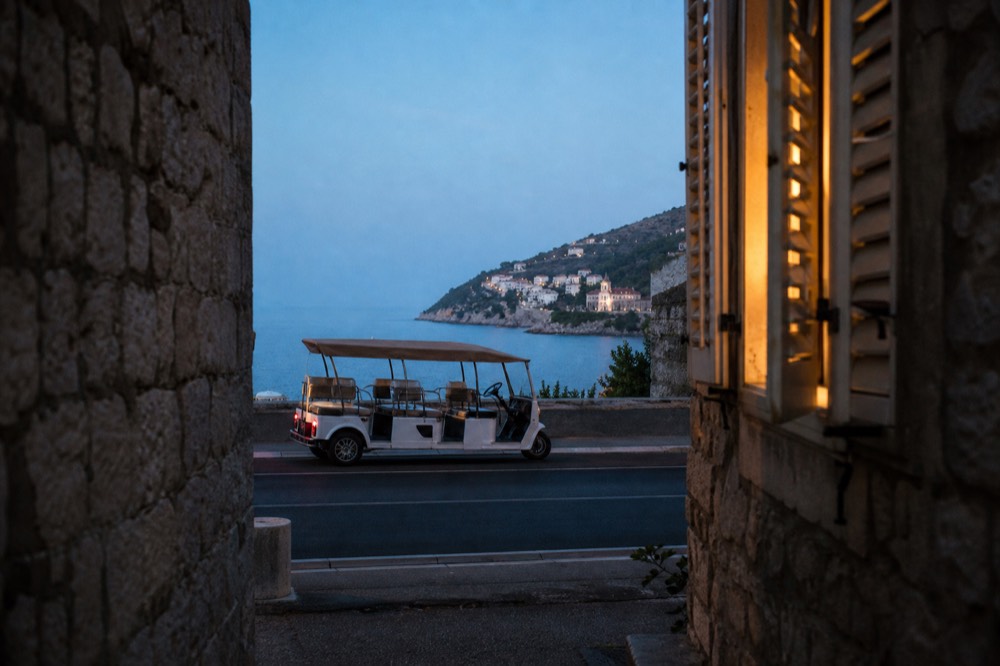
The hop-on-hop-off yellow bus with audio guide, from $35.46 per person and rated 4.9 across 1,147 reviews, suits visitors who want the panorama loop with the freedom to jump off at a viewpoint, while the convertible panorama bus at $34.77 and rated 4.6 across 796 reviews is the same idea in an open-top format. Neither replaces a taxi; they are sightseeing products that happen to move you.
A note on taxis themselves: ranks sit at Pile Gate, at the bus station in Gruž and outside the airport, and rideshares operate in the city as covered in our taxis and Uber guide. Agree the fare or confirm the meter before the car moves, which is standard advice anywhere on the coast.
Which Combination Should You Actually Book?
For a typical three-day visit, the winning combination is simple: walk everywhere inside the walls, buy the one-day Dubrovnik Pass at 40 euro for a walls-and-museums day with the bus ticket thrown in, ride the cable car at 30 euro round trip for sunset, and take the shared airport transfer at $20 per person on departure day. Add a guided day trip only if wine or Bosnia is on your list.
That package costs less than a single night in a mid-range hotel and removes almost every logistics decision from your trip. The trio below covers the two most popular combinations, the cable car walk and the walls combo, plus the wine-country day trip for the one day a car or a coach genuinely helps.
| Product | Length | From (per person) | Rating |
|---|---|---|---|
| Cable Car Ride and Old Town Walking Tour | 4 hours 30 minutes | $163.50 | 4.6 across 716 reviews |
| Cable Car, Walking Tour and City Walls Combo | Combo ticket | $90.66 | 4.6 across 360 reviews |
| Ston and Korčula Day Trip with Wine Tasting | 11 hours | $81.69 | 3.8 across 131 reviews |
Whatever you book, keep the geography in mind: almost every tour meeting point in the city is a walk from the Old Town, at Pile Gate, at the City Harbour or on the Gruž quay, and the Things to Do in Dubrovnik homepage maps which experiences start where. Get the legs right and the city shrinks to a very manageable size.
Common Questions About Getting Around Dubrovnik
What Is the Best Way to Get Around in Dubrovnik?
Walking, for everything inside and near the Old Town. The walled core is a 24.7-hectare UNESCO property where cars are largely excluded, and the Stradun runs just 298 metres end to end. Use city buses, taxis or a transfer for Lapad, Gruž and the airport, and the cable car, at 30 euro per adult round trip, for Mount Srđ.
is it worth it to rent a car in dubrovnik?
Usually not for stays of three days or less, because parking near the Old Town is scarce and paid and the headline sights are walkable or bus-served. A car pays off when your itinerary is built on day trips to Ston, the Pelješac wineries, Korčula or Montenegro, and even then a guided tour often beats driving yourself.
Is a Dubrovnik Cable Car Worth It?
Yes for most visitors. It climbs 367 metres in 3 minutes 30 seconds, an adult round trip costs 30 euro, and the operator advertises views of up to 60 km on a clear day. Ride at opening or near sunset, buy the 17 euro one-way ticket if you plan to walk down, and remember it is closed January to March.
Where Can I Rent a Car in Dubrovnik?
At the airport, at desks around the Gruž port area and through city-centre agencies. The airport carries the widest fleet and longest hours; city desks let you rent only for the days you actually need the car. Book ahead in summer, and confirm cross-border permission in writing if Montenegro or Bosnia is on your route.
Does the Dubrovnik Pass Include Transport?
Yes. Every tier includes a public bus ticket: 24 hours on the one-day pass at 40 euro, 72 hours on the three-day pass at 50 euro, 168 hours on the seven-day pass at 60 euro. The three-day and seven-day tiers add suburban bus coupons usable for a trip to Cavtat. The pass is sold for the main season, 1 March to 30 November, with no winter tier on sale.
How Do Cruise Passengers Get From the Port to the Old Town?
Cruise ships dock at Gruž, from which organised shuttles, local buses and taxis connect to Pile Gate. On heavy days the shuttle queues move slowly, so walking ten minutes to the local bus stops is often faster. The Port Authority limits cruise passengers to 8,000 a day in most cases, and 2025 passenger numbers actually peaked in September and October rather than July and August.