How to Get From Dubrovnik Airport to the Old Town
The airport sits well south of the city, so the last stretch of your journey is a real decision: bus, shared transfer, taxi or ride app. Here is how each one works, what it costs, and how to time your arrival against the crowds.
Short answer
The cheapest bookable option is a shared airport transfer from $20 per person. Local buses and taxis also run the route, with taxi and ride-app fares on the listing rather than fixed. Allow roughly 40 minutes of driving in normal traffic, more when several cruise ships coincide with flight arrivals.
Dubrovnik Airport sits in Čilipi, well south of the city, and the drive north is one of the few parts of a Dubrovnik trip where the logistics genuinely matter. I have watched travellers step off a delayed evening flight into a taxi queue stretching past the terminal doors, and I have watched others walk straight onto a pre-booked shared van. The difference is almost never luck. It is planning.
This guide covers the full run from the airport to the Old Town: what each option costs, how long it takes, how the bus station fits in, and whether the Old Town is worth the effort once you arrive. It also covers timing, because Dubrovnik is a cruise city and the day you land changes what you walk into.
How Do I Get From the Dubrovnik Airport to Old Town?
You have four realistic options: a pre-booked shared transfer from $20 per person, the public airport bus, a taxi from the rank at the terminal, or a ride app booked on arrival. The drive itself is the same road for everyone, so the real differences are price, waiting time and whether you have a guaranteed seat when a flight lands late. Most visitors choose a shared transfer or the bus.
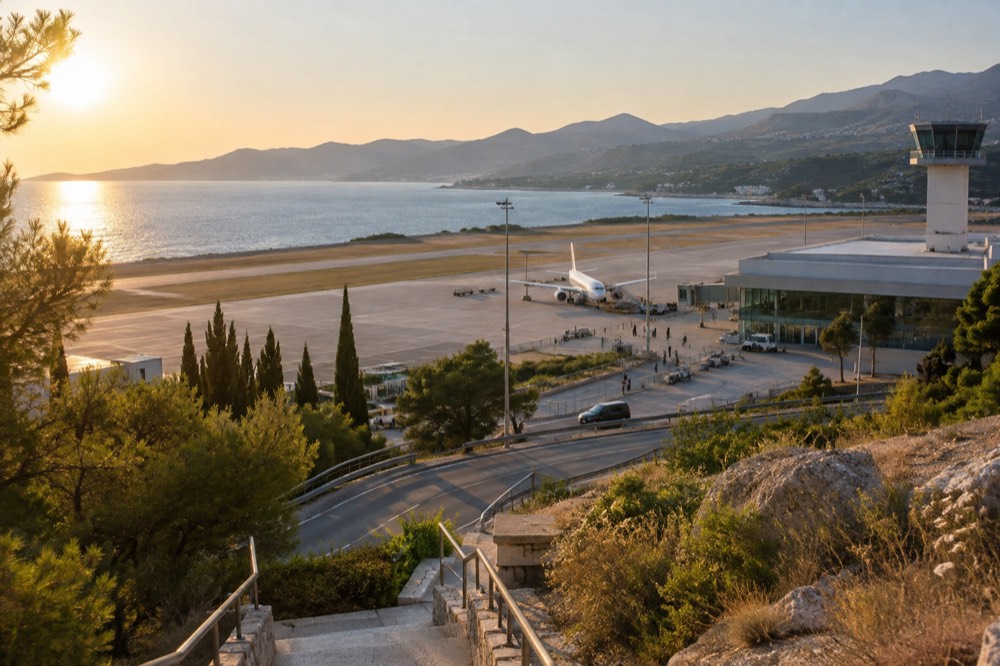
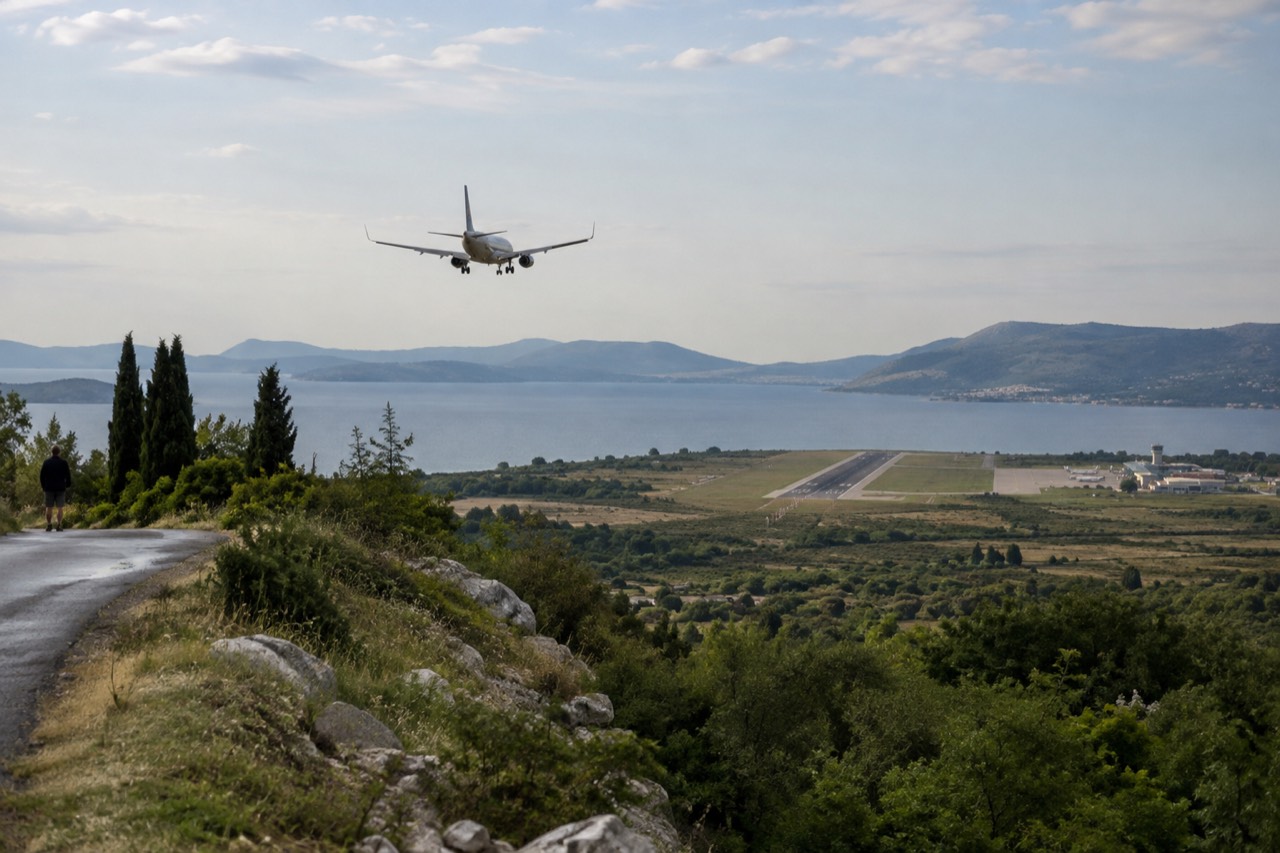
Let me start with the geography, because it explains everything else. The airport is not a city airport in the sense visitors sometimes assume. It sits in its own valley, and the road north runs along the coast through Cavtat-side villages before climbing to the plateau above Dubrovnik and dropping toward Pile and the Old Town. There is no train, no tram and no metro, and there never has been. Every single visitor who arrives by air finishes that journey on a road vehicle or a boat.
The shared transfer is the option I point most first-timers toward. A shared departure transfer from Dubrovnik and Cavtat to the airport runs from $20 per person and is rated 4.5 across 57 reviews. It is a bookable product with a fixed price, which matters in a city where taxi fares can move with demand. The trade-off is simple: you share the van with other travellers, so the drop-off order depends on where everyone is staying, and the total journey can run longer than a private ride.
The public bus is the budget workhorse. It runs between the airport and the city on a schedule tied to flight arrivals, and it terminates at the main bus station in Gruž. I cover the last leg from the bus station in its own section below, because it is a real decision with its own options. For the full picture of schedules and ticket buying, read the Dubrovnik airport bus guide, which goes deep on timetables.
Taxis wait at the rank outside the terminal. They are legitimate, licensed and metered, but the fare is not a figure I can print, because it is not published as a fixed price in any source I trust. Ride apps work in Dubrovnik too, and the same honesty applies: the fare for the airport run is whatever the app quotes you at that moment, so check it in the app rather than trusting a number you read online.
| Option | Bookable price | Best for | Main trade-off |
|---|---|---|---|
| Shared transfer | From $20 per person | Guaranteed seat, fixed price | Multiple drop-offs extend the ride |
| Public airport bus | On the operator's listing | Lowest cost, solo travellers | Terminates at Gruž |
| Taxi from the rank | Metered, quote on arrival | Groups, late arrivals | Fare varies with demand and time |
| Ride app | Quoted in the app | Price comparison before you commit | Availability can be thin at peak times |
One timing note that no first page of search results will give you: your arrival hour collides with cruise traffic in ways that are predictable. The Port Authority limits cruise passengers to 8,000 a day in most cases, and 461 cruise calls are scheduled for 2026, so on many days a morning flight lands while several thousand people are already streaming through Pile Gate. The road into town carries tour buses on those mornings. A shared transfer or a bus sidesteps the worst of it because they use set routes and stops, while a taxi in cruise-hour traffic can crawl.
How Much Is Uber From Dubrovnik Airport to Old Town?
I cannot give you a fixed figure, and you should distrust anyone who does: no official source publishes a set fare for the airport run, and ride-app prices move with demand, hour and vehicle availability. What I can tell you is how to get the real number: open the app at the airport and read the live quote before committing, and compare it against the taxi rank and a pre-booked shared transfer at from $20 per person.

This is the question I get asked most about the airport run, and the honest answer annoys people, so let me explain why it is the only defensible one. Ride-app pricing is dynamic. A quote I saw quoted on a forum last spring, or a fare a friend paid two seasons ago, is not a price, it is a memory. The figure that matters is the one on your phone screen when you are standing at arrivals, and that figure changes with how many drivers are working, how many flights just landed and whether a cruise-day taxi shortage has pushed demand up.
What I can usefully say is how the options stack up structurally. A ride app and a taxi rank are, in practice, the same product at similar prices: a private car, door to door, no other passengers. The differences are that the app shows you the price before you commit while the rank meter does not, and that app availability at the airport can be thin in the late evening when drivers have gone home. If your flight lands after 22:00, the rank is usually the safer bet simply because the cars are physically there.
The shared transfer is the anchor you should measure everything against. At from $20 per person it is the cheapest bookable, fixed-price option, and for a solo traveller it is almost always better value than any private car. For a group of three or four, the arithmetic flips: a single private fare split four ways can compete with four transfer seats, which is exactly the comparison to run on your phone before you book anything.
There is also a timing dimension to the fare question that nobody prices in. The road from the airport passes the cruise port approach and the Gruž area before reaching the Old Town. On a morning when ships are in, that stretch slows down, and a metered or time-based fare quietly climbs while a pre-booked transfer price does not. The Port Authority's own cruise-destination page explains the berthing arrangement and daily limits in detail at portdubrovnik.hr, and it is worth a look if you are landing on a day with several calls.
For the reverse direction, the shared departure transfer covers Dubrovnik and Cavtat to the airport, which means your hotel or apartment pickup is part of the product rather than a separate scramble. If your departure flight is early, that matters more than any price difference, because the alternative is negotiating a taxi at 05:00.
How Do I Get to Dubrovnik Old Town From a Bus Station?
The main bus station is in Gruž, about 3 kilometres from Pile Gate, and you close that gap with a local city bus, a taxi, or a 40-minute walk along the waterfront. Local buses run frequently through the day and a single ride is cheap, but the exact fare is on the operator's listing. Most travellers with luggage take the bus or a short taxi hop; the walk is pleasant but exposed in summer heat.
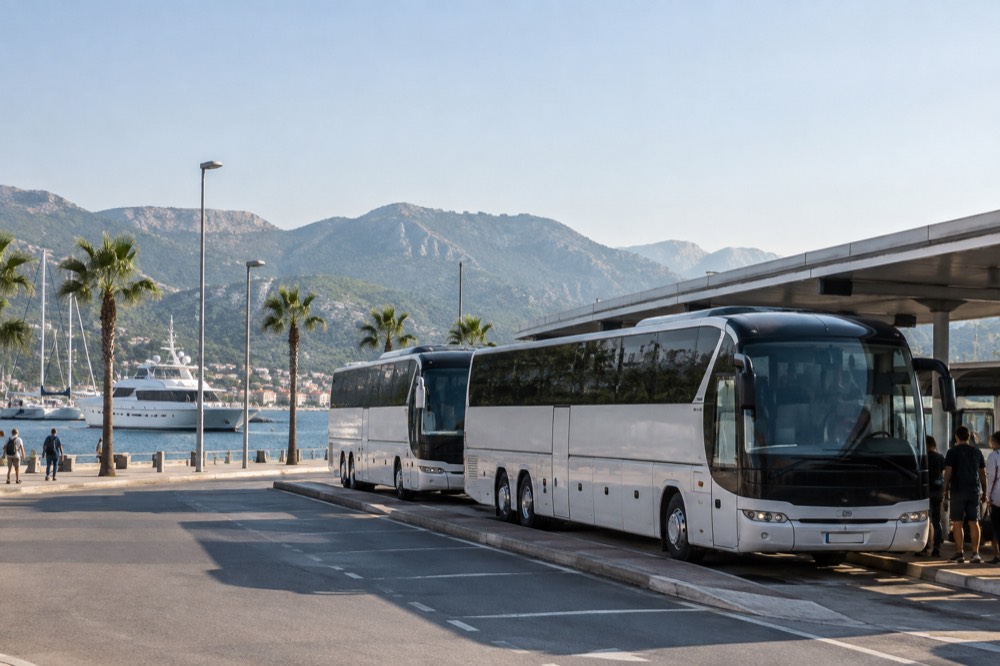
The airport bus terminates at the main bus station in Gruž, the modern district around the cruise and ferry port, and from there the walled city is a separate leg. This is not a hardship, but it is a decision, and it is better made before you are standing on the pavement with two suitcases. The wider set of guides lives on Things to Do in Dubrovnik.
The local bus is the standard answer. City buses connect Gruž with Pile, the gate at the western edge of the Old Town, on a frequent schedule through the day, and the ride is short. Buy your ticket before boarding if you can, either at the station kiosk or through a ticket machine, because tickets bought from the driver cost more. If you are staying in Lapad rather than the Old Town, note that Gruž and Lapad are neighbours, and the Lapad area guide covers that side of the city in detail.
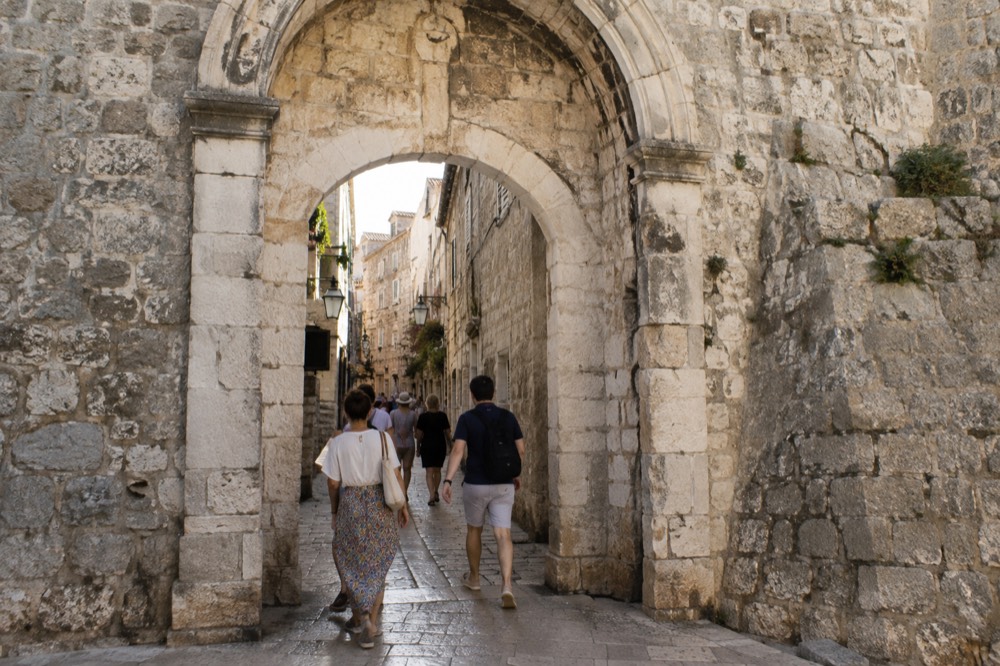
Walking from Gruž to Pile is genuinely possible and, outside July and August afternoons, genuinely nice. The route follows the waterfront, past the marina and along the bay, with the walls appearing ahead of you as you approach. I have done this walk many times with visitors who wanted to stretch their legs after a flight. With a rolling suitcase on the Old Town's stone flags it loses its charm quickly, so treat it as a fair-weather, light-luggage option.
A taxi from the bus station to Pile is a short, cheap hop, and it is the right call for families or anyone arriving in the heat of the afternoon. There is also a luggage consideration specific to Dubrovnik: the Old Town is a pedestrian zone of stone steps and polished flags, with no vehicles inside the walls at all. Wherever you stay, your final hundred metres will be on foot, so pack with that in mind. The Old Town area guide explains the layout, the gates and the step-heavy streets street by street.
If your bus station question is really a ferry question, the answer improves: Gruž is also the ferry port, so the same buses and taxis serve arrivals from Split and the islands. Either way, the pattern holds: arrive in Gruž, take a bus or a taxi to Pile or Ploče depending on which end of the Old Town your accommodation sits in, and walk in.
Is Dubrovnik Old Town Worth Visiting?
Yes, and the reasons are measurable rather than sentimental: the walled core is a UNESCO World Heritage Site of 24.7 hectares, inscribed in 1979, with walls 1,940 metres long and up to 25 metres high, and it drew enough visitors to record about 4.2 million overnight stays across the destination in 2025. It is crowded and it is not cheap, but nothing else on this coast offers the same concentration of intact medieval cityscape.
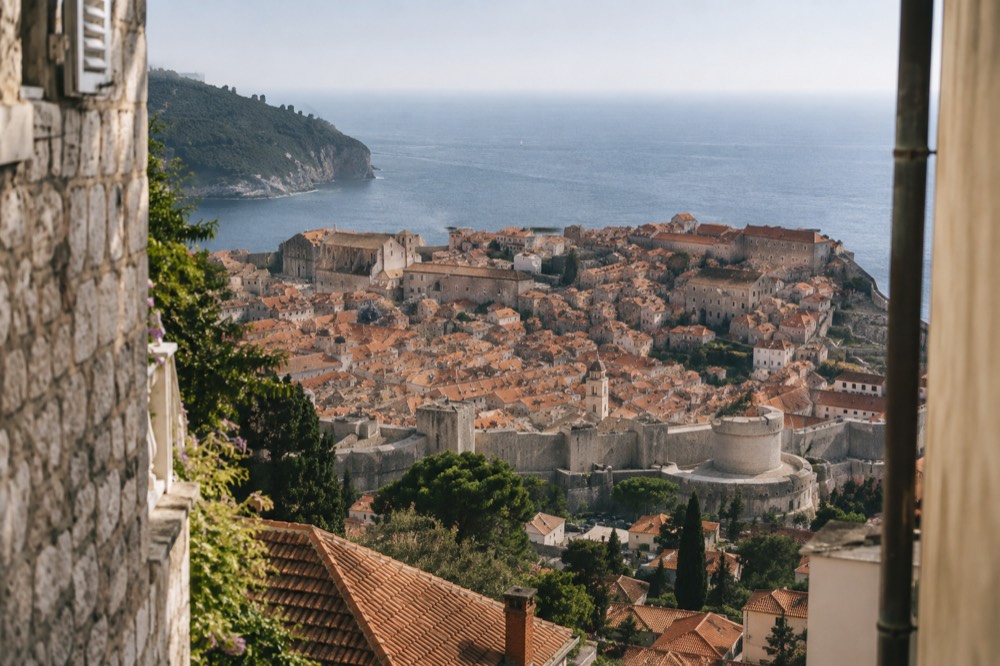
I will be direct about the counter-argument first, because you will read it everywhere: Dubrovnik is busy, and in peak season parts of the Stradun can feel like a moving crowd with buildings on either side. The counting system I mentioned earlier exists precisely because of this. On a real September morning the headcount read 1,200 people at 04:00, 3,139 at 07:00, 5,419 at 08:00, 7,297 at 09:00, peaked at 7,739 at 10:00, then eased to 7,205 at 11:00. Those are the numbers behind every piece of advice about early starts, and they are why I tell arrivals to drop bags first and enter the walls before 09:00 or after 16:00.
Now the case for. The Old City was inscribed by UNESCO in 1979 under criteria (i), (iii) and (iv), and it spent 1991 to 1998 on the List of World Heritage in Danger during the war years, a history the siege guide covers if you want the full story. What you actually walk into is a single intact ensemble: the Stradun running 298 metres from the fountain to the clock tower, the Rector's Palace, the Sponza Palace, Fort Lovrijenac standing on its 37-metre sea rock across the water, and the wall circuit wrapping all of it. The walls reached their shape in the 13th century and were finished in 1660 with the Bastion of St Stephen, and the operator's own description at citywallsdubrovnik.hr counts 16 towers, 3 fortresses and 6 bastions along the 1,940-metre circuit.
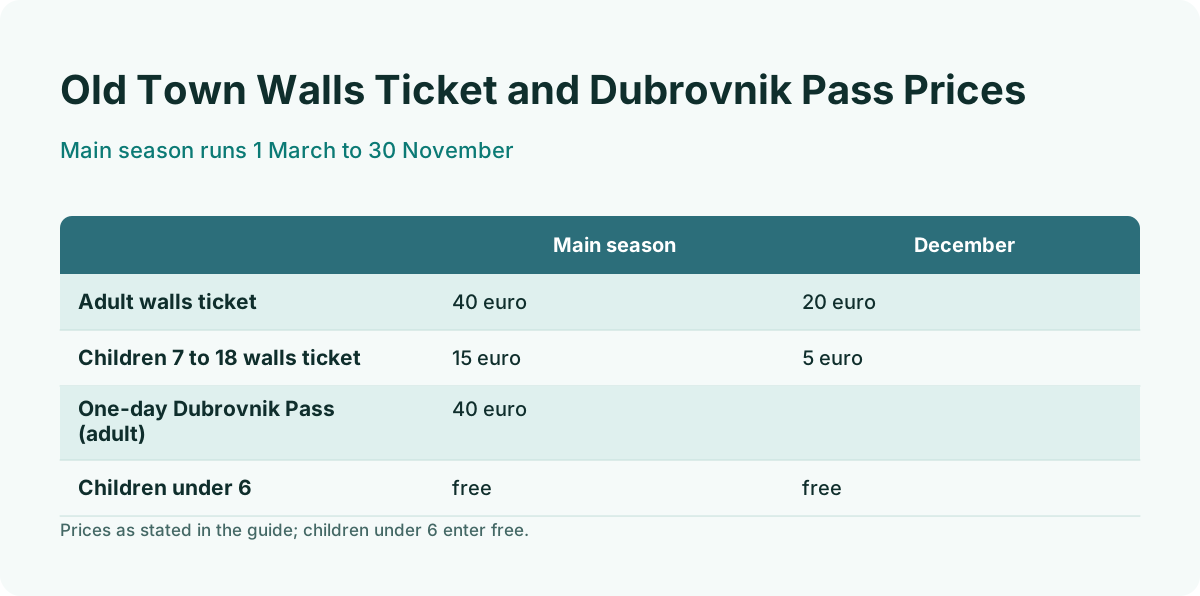
The walls ticket is 40 euro in main season, 1 March to 30 November, and 20 euro in December, with children 7 to 18 at 15 euro then 5 euro and under 6 free. That 40-euro ticket is actually a combination: it covers the walls plus Fort Lovrijenac, the Western Outer Wall and the Collection of Coins of the Republic of Ragusa. The one-day Dubrovnik Pass costs the same 40 euro in main season and adds ten more sights plus a 24-hour bus ticket, which is the comparison the Dubrovnik Pass guide works through in full. In December that arithmetic changes: the walls ticket drops to 20 euro and no winter pass tier is on sale at all.
| Ticket | Main season (1 Mar to 30 Nov) | December |
|---|---|---|
| Walls adult | 40 euro | 20 euro |
| Walls child 7 to 18 | 15 euro | 5 euro |
| Child 6 and under | Free | Free |
| Dubrovnik Pass, 1 day | 40 euro | Not on sale |
| Dubrovnik Pass, 3 days | 50 euro | Not on sale |
| Dubrovnik Pass, 7 days | 60 euro | Not on sale |
So is it worth it? My honest framing for arriving visitors: the Old Town rewards two things, timing and depth. Timed badly, one hour at midday in July, it is a corridor. Timed well, an early morning on the walls, a slow afternoon in the Franciscan monastery cloister, an evening on a terrace above the port, it is the reason you flew here. The city recorded about 4.2 million overnight stays in 2025, sharing first place among Croatian destinations with Rovinj, and the crowds are the price of a place that works this well.
What Is the Smartest Way to Spend Your First Day After Landing?
Do not try to do everything on arrival day. The pattern that works is: transfer in, drop bags, then one low-effort orientation activity, ideally the cable car to Mount Srđ or a short panorama ride, saving the walls and the museums for a fresh morning. The cable car costs 30 euro round trip for an adult and runs every day from April, with the operator's timetable shifting later through summer to a midnight close in July and August.
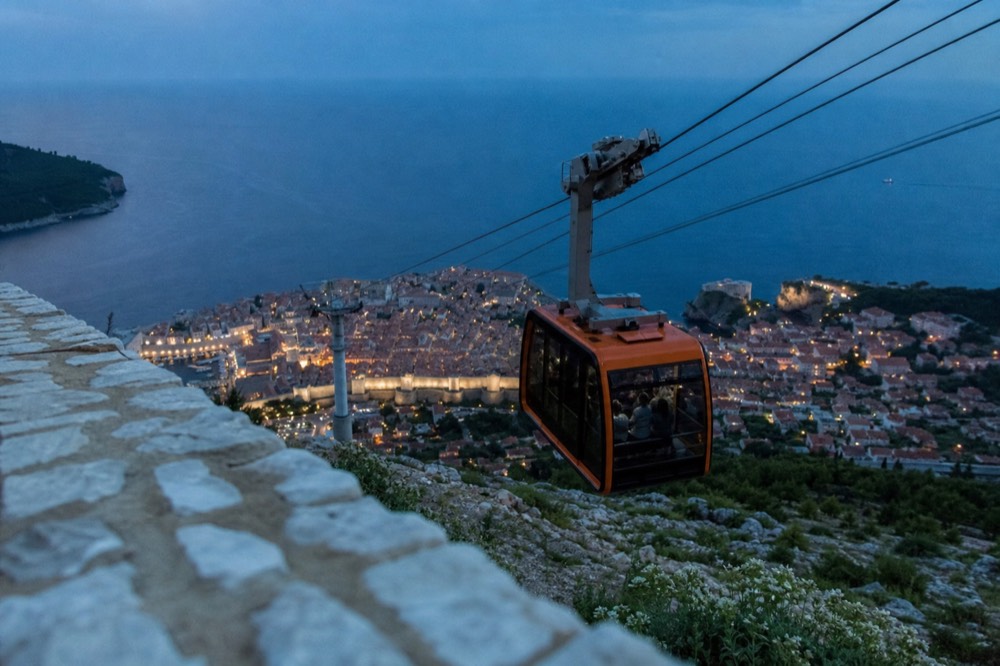
The logic is about energy, not just sightseeing. You will be tired, possibly sunburnt from a transfer, and the walls are a genuine physical effort: stairs, sun and almost no shade for a couple of hours. The cable car is the opposite. It lifts you 367 metres from the lower terminal to the 405-metre summit station in 3 minutes 30 seconds, and the operator states a clear-day view range of up to 60 km, about 37 miles, which on a good afternoon takes in the Elaphiti islands and the Montenegrin coastline. The full technical details and prices are published at dubrovnikcablecar.com.
| Cable car ticket | Round trip | One way |
|---|---|---|
| Adult | 30 euro | 17 euro |
| Child 4 to 12 | 8 euro | 5 euro |
| Under 4 | Free | Free |
If the cable car queue is long, and on cruise afternoons it can be, two bookable alternatives do similar work. An e-tuk-tuk panorama tour runs about 1 hour 45 minutes from $59.24 per person and is rated 5 across 1,799 reviews, taking open-sided electric vehicles around the viewpoints above the city without any climbing on your part. And a cable car and museums multipass from $24 per person bundles the ride with museum entry, which suits anyone who wants the sunset from the summit and culture the next morning.
For the evening itself, consider a short sunset cruise rather than another walk. A panoramic sunset cruise on the Karaka ship, adults only, runs 1.5 hours from $59 per person and is rated 4.8 across 833 reviews, and it shows you the walls from the water at the hour when the stone glows. There is also a Cavtat sunset cruise with a cold platter and drinks from $23.66 per person, rated 4.9 across 203 reviews, which doubles as a low-key introduction to the coastline you flew over on the way in.
One last planning note, and it is the one I give every visitor who asks me in person: book the walls and any day tours for your second morning, not your first. The half-hourly counts show the Old Town is emptiest before 08:00, and the cruise calendar means some days are simply heavier than others. September and October are the two busiest cruise months of the year, ahead of July and August, so an autumn arrival deserves even more careful day-one pacing than a summer one. Whatever you choose, the transfer is the easy part: sort it before you land, and everything after that is just Dubrovnik.
For the outbound leg, the same shared departure transfer covers pickup across Dubrovnik and Cavtat, which spares you a 05:00 negotiation with whatever taxi happens to be running. Whether you pair it with the cable car multipass for the views or the e-tuk-tuk for a gentler circuit, booking the ride before you fly is the single step that removes the most stress from arrival day.
Common Questions About Getting From Dubrovnik Airport to the Old Town
How Do I Get From the Dubrovnik Airport to Old Town?
Take a pre-booked shared transfer from $20 per person, the public airport bus to the main station in Gruž, a taxi from the terminal rank, or a ride app quoted live at arrival. The drive is the same road for everyone, so the choice comes down to price, waiting time and whether you want a guaranteed seat.
how much is uber from dubrovnik airport to old town?
There is no fixed published fare. Ride-app prices for the airport run move with demand, hour and driver availability, so the only real number is the live quote on your phone at arrivals. Compare it against the taxi rank and a shared transfer at from $20 per person before you commit.
How Do I Get to Dubrovnik Old Town From a Bus Station?
The main bus station is in Gruž, about 3 kilometres from Pile Gate. Take a local city bus, a short taxi hop, or, with light luggage and mild weather, walk the waterfront route in about 40 minutes. Buses run frequently through the day, and tickets bought before boarding cost less than those bought from the driver.
Is Dubrovnik Old Town Worth Visiting?
Yes. It is a UNESCO World Heritage Site of 24.7 hectares, inscribed in 1979, with 1,940 metres of walls up to 25 metres high and an intact street plan fixed by the 1272 Statute. It is crowded at midday and not cheap, but timed well, early morning or late afternoon, it is the reason most visitors come to this coast at all.
When Is the Best Time to Arrive to Avoid Crowds?
Arrive late afternoon or evening if you can. The Old Town headcount on a September morning rose from 3,139 at 07:00 to a 7,739 peak at 10:00, and cruise passengers peak in September and October rather than July and August. Entering the walls before 09:00 or after 16:00 makes the biggest single difference.