What Are Some Hidden Gem Restaurants in Dubrovnik?
Where to eat in Dubrovnik beyond the Stradun tourist menus: konoba culture, quiet side streets, booking habits, and the food and wine tours that find the good tables for you.
What Are Some Hidden Gem Restaurants in Dubrovnik?
The honest answer is that Dubrovnik's hidden gem restaurants are found by geography and by type, not by name-dropping a single address. The places worth seeking out are konobas, the Croatian family taverns serving grilled fish, peka and local wine, and they cluster a few streets off the Stradun, around Gruž, and in the surrounding villages of Konavle and the Pelješac coast rather than on the main limestone street itself. I have walked these streets with travellers since 2015, and the pattern holds every season: the closer a table sits to the Stradun, the more the menu drifts toward pizza, pasta and cover charges, and the further you walk, the better the food gets.
The Stradun itself is 298 metres long, and the Dubrovnik Tourist Board notes that the Statute from 1272 fixed the final plan of both the city and its main street. Everything about the Old Town's layout pushes visitors onto that one street: it is wide, flat, luminous and obvious, and every restaurant on it pays a premium for the footfall, which shows up on the menu. The city recorded about 4.2 million overnight stays in 2025, sharing first place among Croatian destinations with Rovinj, according to the Croatian Bureau of Statistics. That volume means the Stradun's tables can fill on location alone, and the kitchens that have to earn their reputation on food rather than view are the ones a street or two away.
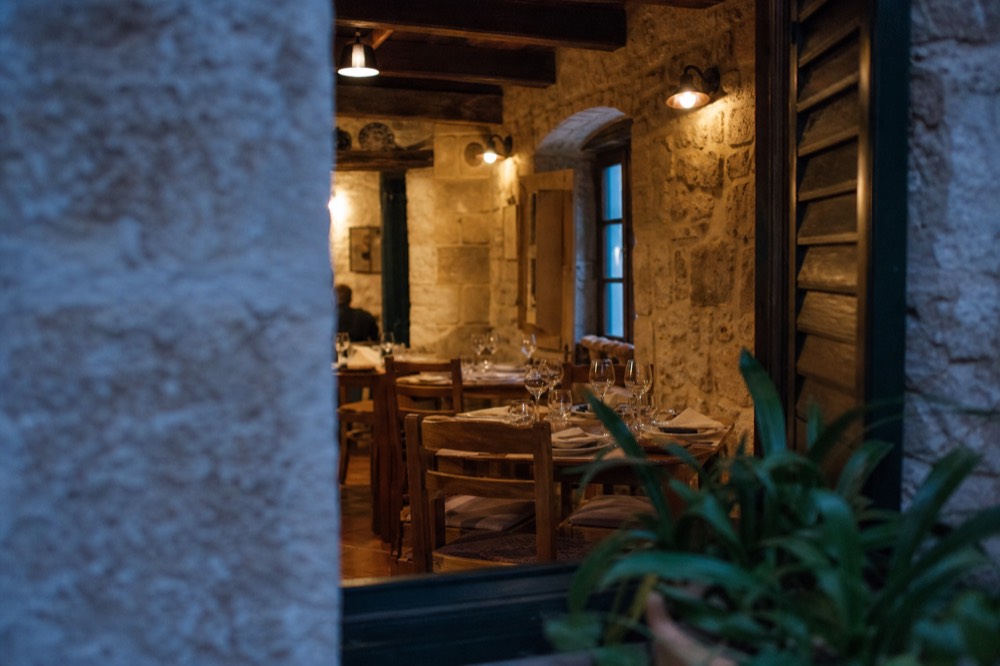
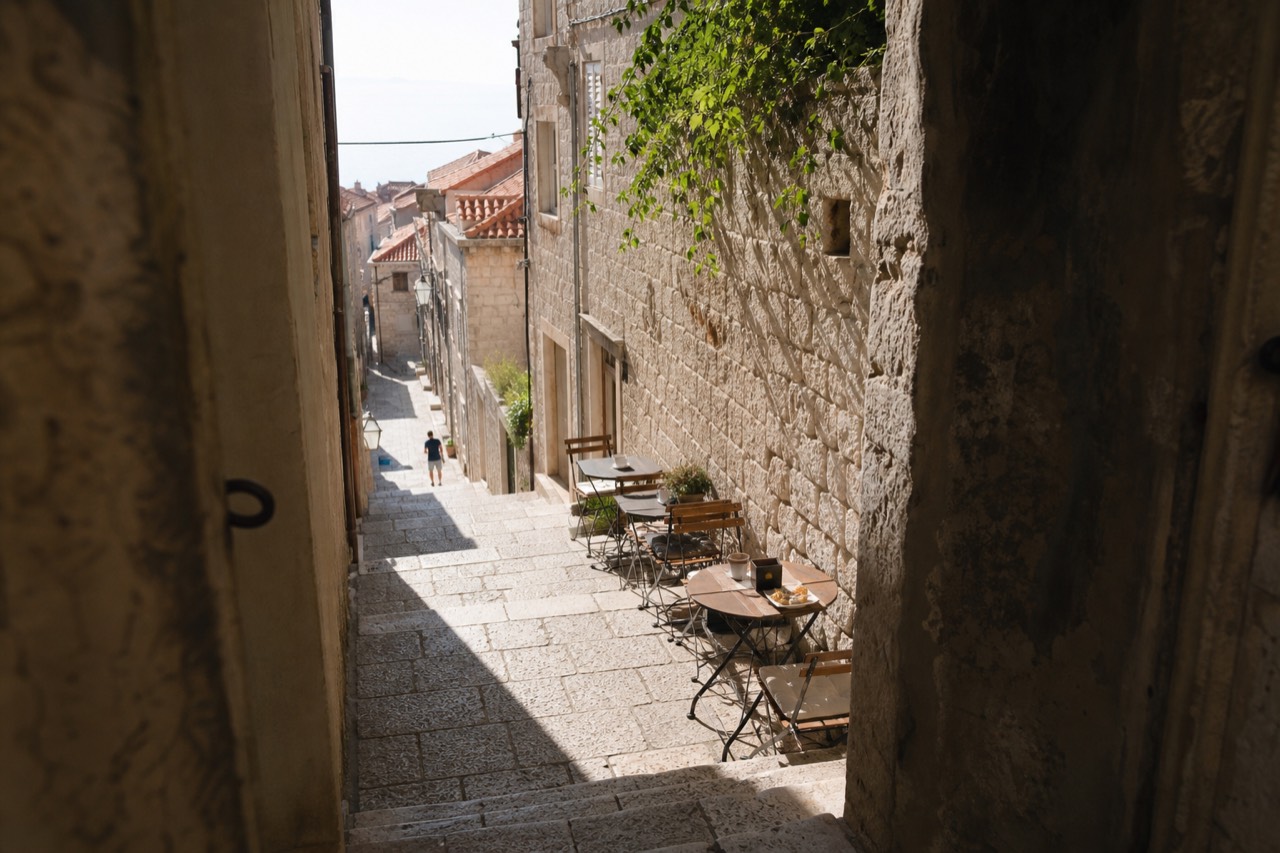
The practical rule I give anyone who asks: walk five minutes from the Stradun in almost any direction and the dining changes character. North into the quieter lanes around the Franciscan Monastery, south toward the cathedral's back streets, up the staircases that climb toward the walls, or out through Ploče Gate toward the small coves. The Old Town is a UNESCO World Heritage Site, inscribed in 1979, covering just 24.7 hectares with a 1,188.6-hectare buffer zone, so "five minutes" genuinely takes you from the busiest corridor in Dalmatia into a lane where the konoba seats twenty people and the owner is also the waiter. For a fuller treatment of the tavern tradition itself, read our guide to what a konoba actually is, and for the broader dining landscape, the Dubrovnik restaurants overview maps the neighbourhoods worth eating in.
If you would rather have a local hand you the shortlist on a plate, the food tour route is the most reliable shortcut, and it is the one product category in this city where the guide's neighbourhood knowledge is the entire point.
The two options above cover the spectrum. The food and drink walk works the Old Town's lanes directly, and the Ston oyster and mussel tour pairs the Pelješac peninsula's shellfish with lunch. Between them they solve the hidden-gem problem in two different ways, and I will come back to each in the sections below, because the right choice depends on whether your trip is one day or five.
What Are Some Hidden Gems to See in Dubrovnik?
Beyond the walls and the Stradun, the quieter sights worth hunting are the Western Outer Wall walk, the Collection of Coins of the Republic of Ragusa at Gundulić Square, the back lanes above the cathedral, the Buža-style cliff terraces on the sea side, and the village of Bosanka on the slopes of Mount Srđ. The first two are genuinely overlooked because they are bundled into tickets people buy for other reasons, and the last is overlooked because almost nobody walks up the hill when a cable car exists. The walls ticket, at 40 euro in main season, is actually a combination: it covers the walls, Fort Lovrijenac, the Western Outer Wall and the coin collection, and most visitors never claim those last two.
I mention this in a restaurant article deliberately, because hidden gems of the sightseeing kind and hidden gems of the eating kind live in the same places. The Western Outer Wall, closed December through February, wraps the northwest corner of the city where the tour groups thin out and the lane restaurants begin. Gundulić Square, where the coin collection sits at number 6, is also the site of the morning green market, and the small eateries around it feed the market traders rather than the cruise flow. Eating near a working market is one of the oldest tricks in the book and it works here.
The crowd mathematics explain why the hidden corners stay hidden. The official carrying capacity of the Old Town, from the UNESCO carrying-capacity assessment, is 11,275 people, monitored by six counters at every entrance updating a headcount every 15 minutes. On a real September morning the count read 5,419 at 08:00, 7,297 at 09:00, peaked at 7,739 at 10:00, then eased to 7,205 by 11:00. That morning wave moves along a predictable path: Pile Gate, Stradun, cathedral, walls. Every street off that spine is quiet by 11:00 even on a busy day, and that is where both the hidden sights and the hidden tables are.
The Port Authority's own crowd-management page is worth reading before you plan a food-focused day, because it explains the daily rhythm: the Port Authority limits cruise passengers to 8,000 a day in most cases, with a "2+1" berthing arrangement, and refused about forty cruise call requests in a single season. The counterintuitive part, which surprises everyone: cruise passengers peaked in September 2025 at 101,246 and October at 100,132, above July's 96,072 and August's 87,385. September and October, not July and August, are the heaviest months in the Old Town, so the "shoulder season is quiet" assumption fails here. Plan your hidden-gem hunting around the mid-afternoon cruise wave regardless of month.
One more sight-to-table connection worth making: Fort Lovrijenac stands on a 37-metre-high sea rock on the western side, and the small quarter at its foot, outside the walls proper, holds a handful of long-established dining rooms that survive on repeat business rather than passing trade. The Dubrovnik Tourist Board's Lovrijenac page covers the fortress itself; the lanes below it are the reward for walking ten minutes past where most visitors stop.
Where Are the Best Restaurants in Dubrovnik?
The best eating in Dubrovnik splits into four zones: the back lanes of the Old Town for konoba dining, Gruž for where locals actually eat, Lapad Bay for seafront tables at saner prices, and the countryside of Konavle and Pelješac for the region's deepest food traditions. None of those zones is the Stradun. The Old Town's best kitchens are one to three streets off it, Gruž around the market and marina is the most local scene in the city, and the villages beyond hold the wineries and oyster farms that supply the good tables in town anyway. For a dedicated answer from the local perspective, see where locals eat in Dubrovnik.
The konoba is the unit of measurement here. A proper konoba is a family tavern, usually small, usually stone-walled, serving whatever the coast and the family garden produced that day: grilled fish by the kilo, black risotto, peka cooked under a bell of embers, local olive oil and a house wine that never appears on any published list. The dishes to know are covered in detail in our guide to what to eat in Dubrovnik, but the structural point matters more than any single dish: konobas do not compete for the passing trade on the main street, so they compete on food, and the ones that survive a decade in this city have earned it.
This is where the food tour earns its price. The Dubrovnik Food and Drink Walking Tour with a Local Guide runs about 3 hours, is rated 5 across 704 reviews, and starts from $165.64 per person, operated by Fabula Ragusea. It is not a cheap ticket, but it converts an evening of guesswork into a guided run through the Old Town's food culture with a local who knows which doorway leads to the good kitchen. One guest review captures the double payoff, the food and the orientation: "Amazing food tour! Marija was a great guide, full of stories and facts that really brought Dubrovnik to life. The food was delicious, and generous. Wines at every stop. Would highly recommend this tour to anyone visiting Dubrovnik, especially to help get your bearings of the city and know where to go for dinner!" Other pages covering the same trip are gathered on Things to Do in Dubrovnik.
A useful way to frame the choice between the three food-and-wine products is what each one trades:
| Experience | Where it eats | Length | From (per person) | Rating |
|---|---|---|---|---|
| Food and Drink Walking Tour | Old Town lanes, multiple stops | 3 hours approx | $165.64 | 5 across 704 reviews |
| Oyster, Mussels and Wine in Ston | Pelješac shellfish farms, lunch | Day trip | $157 | 4.9 across 111 reviews |
The pattern in that table is real: the walking tour buys you density and orientation inside the walls, the Konavle tasting buys you the countryside, and the Ston tour buys you the raw ingredient at its source. Ston's oyster beds and salt pans sit on the Pelješac peninsula, and the town is also famous for its own defensive walls, second in length only to Dubrovnik's, a detail covered in our Ston and Pelješac guide. Eating an oyster twenty metres from the bed it came out of is a different experience from eating one carried into the Old Town, and it is the reason the Ston tour keeps its rating despite the drive.
For self-guided evenings, the same logic applies without a guide. In the Old Town, walk one street off the Stradun and look for short menus, chalkboards, and fish priced by the kilo rather than by the plate. In Gruž, the market quarter by the cruise and ferry port, the restaurants exist for people who live here, and the city's total population of 41,562 at the 2021 census cannot support a tourist-trap economy the way the Old Town can. In Lapad, the bay sits a bus ride from the walls and the seafront tables price accordingly. The one thing I would not do is treat a view of the Stradun as a recommendation: the view is the product there, and you are paying for it twice.
Do You Need to Book Restaurants in Dubrovnik?
Yes, in peak season and September especially, you need to book the good small restaurants in advance, often a day or two ahead, because the hidden gems are hidden precisely because they are small, and small fills fast. A konoba with fifteen tables cannot absorb the wave of diners that a city taking 4.2 million overnight stays produces, and the restaurants that turn away walk-ins at 20:00 in season are usually exactly the ones worth eating at. Off season, from November through March, booking matters far less outside the festive period, when the Old Town empties and tables are yours for the asking.
The dinner hour matters as much as the booking. Croatians eat late by northern European standards, and the dining rooms fill from around 19:30 onward, with the peak rush closer to 21:00 in summer. Arriving at 18:30 or 19:00, the early-bird slot, often gets you a table at a konoba that will be turning people away by 20:30. This is also the hour when the kitchen is fresh and the owner has time to talk through the day's fish, which at a good konoba is a real conversation, not a performance.
Two booking habits are worth adopting here. First, book for your whole stay on day one if you can: walk the lanes in the morning, note two or three places, and reserve for the following evenings before the afternoon cruise passengers come ashore. Second, ask where you are staying, whether a hotel desk or an apartment host, because the local recommendation still outranks anything you will find by searching, for the simple reason that a bad recommendation reflects on the recommender to their neighbours. The question of how much a meal costs, which I have deliberately not answered with invented numbers here, is covered honestly in our guide to meal prices in Dubrovnik and the wider trip cost breakdown.
One caution that belongs in any honest answer: the phrase "hidden gem" has itself become marketing. A restaurant advertising itself as a hidden gem on a sandwich board on the Stradun is not one. The genuine article tends to have no sandwich board at all, a menu that changes, and a proprietor who seems mildly surprised you found the place. That is the texture you are looking for, and no list, including any list I could print, substitutes for walking the lane and reading the room.
What Are Some Good Towns to Visit Near Dubrovnik?
The best towns near Dubrovnik for food-motivated travellers are Cavtat on the coast, along with Ston and Orebić on the Pelješac peninsula. The villages of the Konavle valley also reward a visit, and if you have time for a full day trip, the border-crossing destinations of Mostar and Kotor each offer memorable eating experiences alongside their famous sights. Cavtat is the easy half-day, a quiet old harbour town on a wooded peninsula reached by boat or bus. Ston is the shellfish capital, and the Konavle valley is the farm and wine country that feeds Dubrovnik, so each of these nearby towns extends the same cuisine one step upstream toward its source. Mostar and Kotor are bigger commitments, border crossings and all, but they are the two most popular day trips from the city for good reason.
Cavtat deserves the food traveller's attention specifically. It is the Riviera's calmer twin: a promenade, a hillside cemetery with the best view on this coast, and long-established restaurants serving the same catch as the Old Town at tables that face the sea rather than a stone wall. The Dubrovnik Pass adds a nudge in this direction too: the three-day and seven-day tiers include House Bukovac in Cavtat and suburban bus coupons for the trip, on top of the City Walls and Lovrijenac entry that every tier carries. Our Cavtat guide covers the town in full, including the boat connection.
The Konavle valley, southeast of the city toward the airport, is where the region's agricultural tradition survives, and its wineries pour the same plavac mali and local whites you pay Old Town prices for in town. For a deeper dive into the grape itself, our plavac mali guide explains why this variety defines the southern Dalmatian coast.
Ston is the shellfish answer. The oyster and mussel farms in the channel between Ston and the islet of Mali Ston supply half the coast, and the Oyster, Mussels and Wine Tasting Tour in Ston, from $157 per person with lunch included and rated 4.9 across 111 reviews, puts you at the source with a boat-side tasting and a proper meal after. Our Ston oysters guide covers the farms and the town's remarkable walls.
For the border-crossing day trips, Mostar in Bosnia and Herzegovina and Kotor in Montenegro are the two classics, and both are covered in depth elsewhere on this site in our Mostar day trip guide and Kotor day trip guide. The food angle differs: Mostar's kitchen is Bosnian, heavy on ćevapi, burek and river trout, and distinctly different from Dalmatian coastal cooking, which is exactly the point of going. The Montenegro trip adds the fjord-like bay of Kotor and the oyster farms of its own inlet. Both involve border formalities, and the timing of those crossings varies with season, so a guided trip spares you the queue management.
| Town or area | Travel type | Food reason to go |
|---|---|---|
| Cavtat | Half day, boat or bus | Seafront seafood tables, quieter than the Old Town |
| Konavle valley | Half day, car or tour | Wineries, farm kitchens, the region's agricultural heart |
| Ston and Mali Ston | Full day, tour or car | Oyster and mussel farms at the source, salt pans |
| Mostar | Full day, border crossing | Bosnian kitchen: ćevapi, burek, river trout |
| Kotor | Full day, border crossing | Bay-side dining, Montenegrin oysters |
The thread connecting every town in that table is that they are where Dubrovnik's own kitchens source their pride. The fish on a Stradun table was landed at a port like these, the wine came from a valley like Konavle, and the oysters came from a channel like Mali Ston's. Eating in the source towns is not a different cuisine so much as the same cuisine one step upstream, with the markup removed and the view thrown in.
Whichever of these three food-and-wine experiences fits your trip best, the trio below covers the range: the Old Town walk, the countryside tasting and the shellfish day trip.
Common Questions About Hidden Gem Restaurants in Dubrovnik
What are some hidden gem restaurants in Dubrovnik?
Look for konobas one to three streets off the Stradun, in the lanes around Gundulić Square and the Franciscan Monastery, in Gruž near the market and marina, and in the seafront settlements of Lapad Bay. The genuine hidden gems are small family taverns with short menus and fish priced by the kilo, and they are found by walking five minutes off the main street rather than by any published list. A guided food walk is the most reliable shortcut.
Where Are the Best Restaurants in Dubrovnik?
The best eating splits into four zones: the back lanes of the Old Town for konoba dining, Gruž for the most local scene, Lapad Bay for seafront tables at saner prices, and the countryside of Konavle and Pelješac for the region's deepest food traditions. The Stradun itself trades on location, and its menus reflect that.
Do You Need to Book Restaurants in Dubrovnik?
Yes in peak season and September especially, often a day or two ahead, because the good small restaurants are small and fill fast. Arriving at 18:30 or 19:00 also helps, before the 20:30 rush. From November through March, outside the festive period, booking matters far less.
What Are Some Good Towns to Visit Near Dubrovnik?
Cavtat for an easy coastal half day, the Konavle valley for wineries and farm kitchens, Ston and Mali Ston for oysters and mussels at the source, and Mostar and Kotor for full-day border-crossing trips with completely different kitchens. Each is covered in a dedicated guide on this site.
Is September a Quiet Month for Finding Tables?
No, and this surprises people. Port Authority data shows cruise passengers peaked in September 2025 at 101,246, above July and August. The Old Town is at its busiest in September and October, so book the small restaurants with extra care in those months.