Dubrovnik Airport: Getting From the Terminal to the Old Town
Dubrovnik Airport sits on a coastal shelf south of the city, and the ride from the terminal to Pile Gate is the first real decision of your trip. This guide compares the transfer options, answers the food-cost and airline questions travellers actually search, and helps you plan the first day after you land.
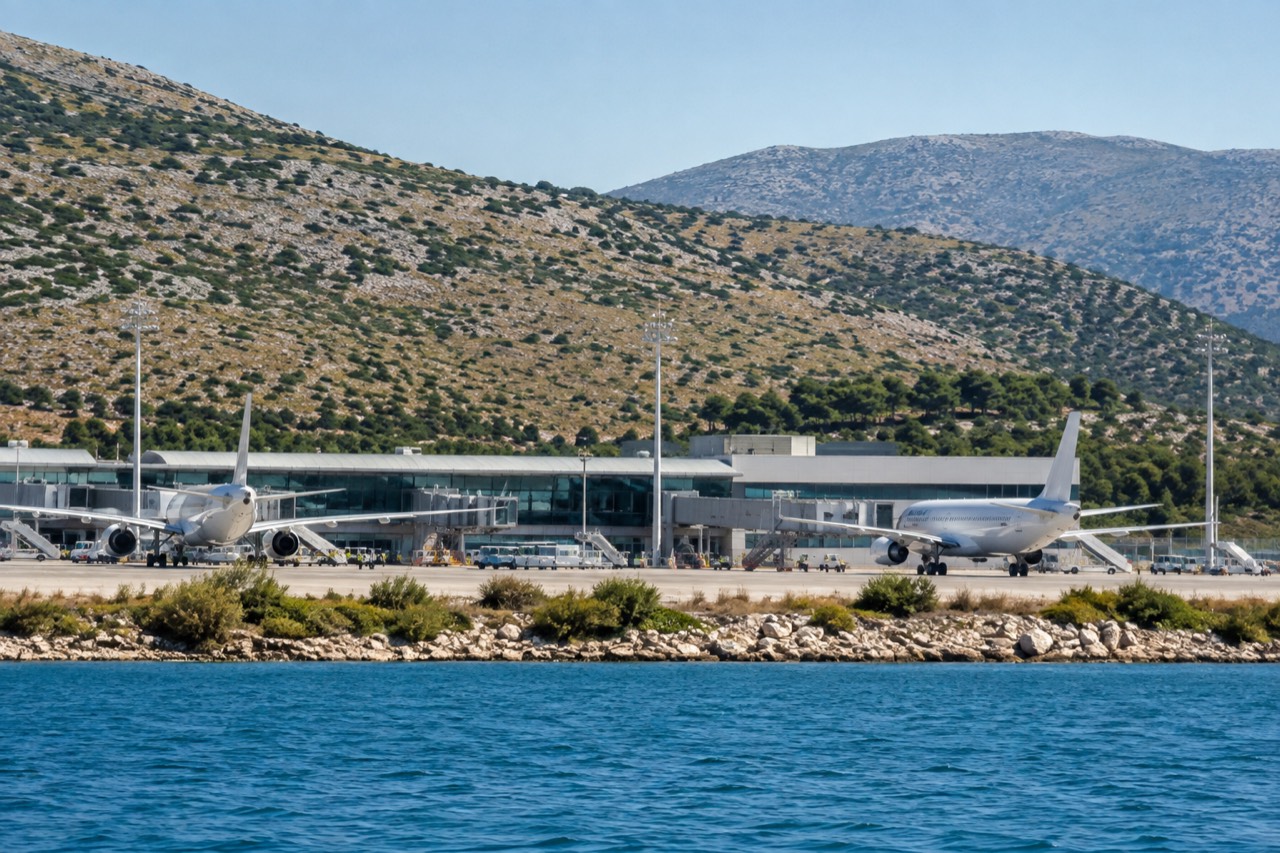
Short answer
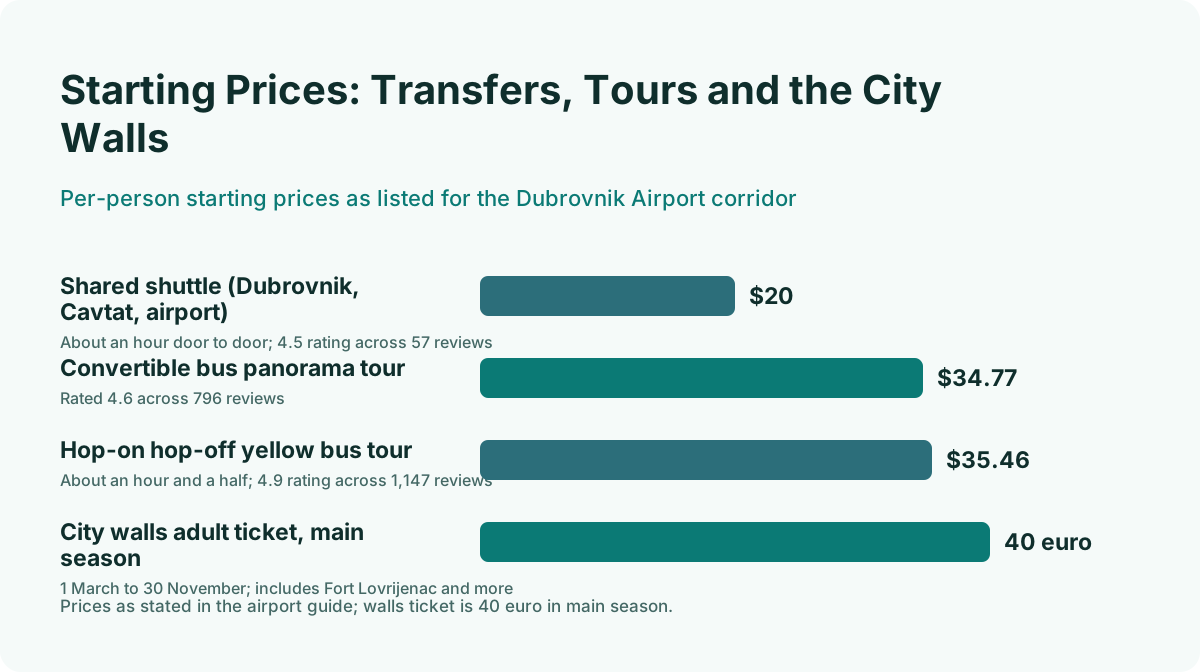
A shared departure transfer between Dubrovnik, Cavtat and the airport starts at $20 per person and is rated 4.5 across 57 reviews. Beyond that you choose between a private transfer booked ahead, a taxi at the rank, or local transport, and the right pick depends on your luggage, your landing time and whether you are heading to the Old Town or a cruise ship.
How Do I Get From Dubrovnik Airport to Old Town?
You have four realistic options: a pre-booked shared shuttle from $20 per person, a private transfer arranged before you fly, a taxi from the rank outside arrivals, or public transport with a change of pace once you reach the city edge. The shared shuttle is the value pick, a private transfer is the comfort pick, and the taxi is the no-planning pick, each with trade-offs worth knowing before you land.
I have met enough travellers at Pile Gate, dishevelled and overcharged, to say this plainly: the transfer decision is worth five minutes of planning while you are still at home. The airport sits well south of the city, and the road in hugs the coastline, so every option covers the same dramatic ground, but the price and the stress differ a lot.
The shared option on this site's roster is the shared departure transfer between Dubrovnik, Cavtat and Dubrovnik Airport. It runs about an hour door to door, starts at $20 per person, and carries a 4.5 rating across 57 reviews. It is a departure transfer by name, which matters: read the listing carefully to confirm the direction and pick-up point that matches your plans, because shared products in this corridor are sold in both directions and the operator's listing states exactly what is covered.
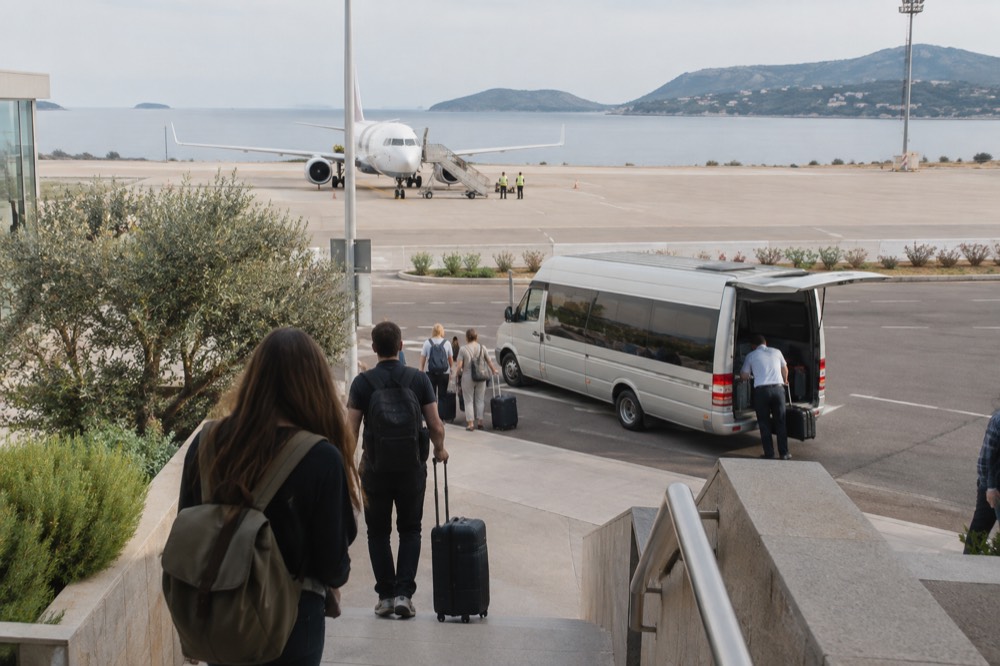
Private transfers and taxis both get you to the Old Town without stops. The difference is that a private transfer is priced and confirmed before you board a plane, while a taxi is priced when the door shuts. Neither figure belongs in this article, because neither is published in a form I can verify, so treat any number you read elsewhere with caution and ask for the fare before the car moves.
| Option | Best for | Price basis | Booking |
|---|---|---|---|
| Shared shuttle | Solo travellers and couples on a budget | From $20 per person, rated 4.5 across 57 reviews | Online before you fly |
| Private transfer | Families, groups, late arrivals | Quoted per vehicle on the operator's listing | Online before you fly |
| Taxi from the rank | Arriving with no plan | Metered or agreed with the driver | At the terminal |
| Local transport | Light luggage and patience | Local fares, pay as you board | At the terminal |
If you want a deeper walk through the full comparison, including the local bus option and what each costs at the margin, the dedicated airport to Old Town cost answer breaks it down question by question.
Should You Book a Shared Shuttle, a Private Transfer or a Taxi?
Book the shared shuttle if you are one or two people with normal luggage, book a private transfer if you are a group of four or more or landing late at night, and take the taxi rank only if you decide on the spot. The shared shuttle from $20 per person is the anchor price in this corridor, and once a group splits a private vehicle the per-person maths often beats it.
The arithmetic is the whole argument. A shared seat at $20 is hard to beat for a couple. But a private vehicle carrying four people can work out cheaper per head than four shared seats, and it goes straight to your accommodation rather than stopping along the way. The break-even point depends on the private quote, which is on the listing, not in this article.
Late flights change the calculus again. Shared services run to schedules, and a landing close to midnight can mean a long wait or no wait at all, depending on the day. A private transfer booked ahead is tied to your flight number, and the better operators track delays. That is the single biggest reason families and late arrivals pay for privacy.
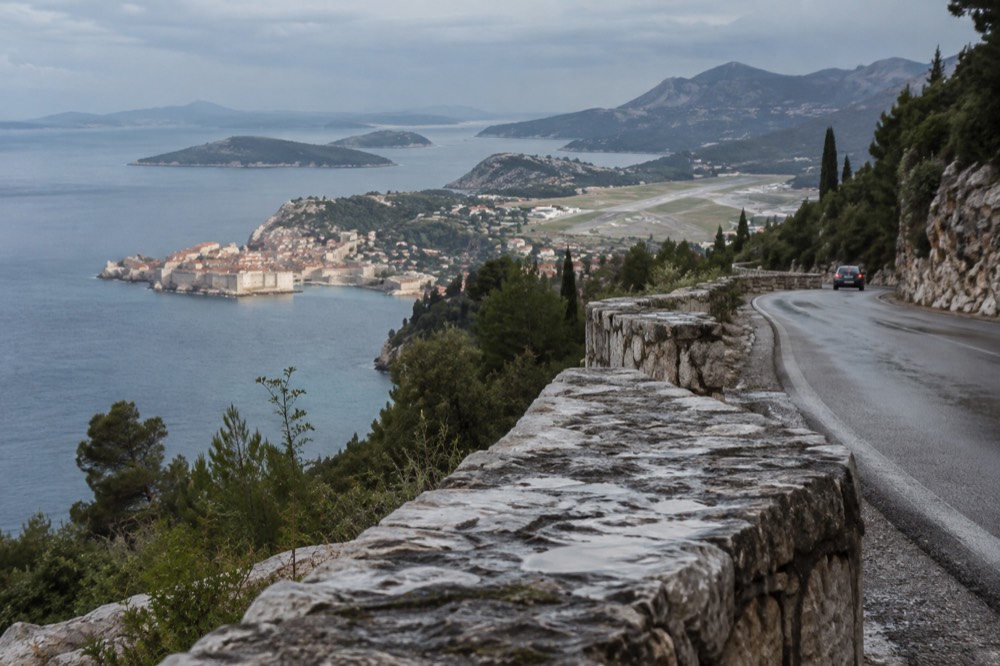
One more thing worth saying from experience of this coastline: the drive itself is part of the arrival. The road in from the airport runs above the water, and on a clear evening the first full view of the walled city from the approach is the moment most people remember. Sit on the right-hand side of whatever vehicle you choose.
The two panorama products in that selection are not transfers, they are the natural next step once you have dropped your bags. The hop-on hop-off yellow bus tour with audio guide runs about an hour and a half, starts at $35.46 per person and is rated 4.9 across 1,147 reviews, while the convertible bus panorama tour starts at $34.77 and carries a 4.6 across 796 reviews. Both orient you to the city on day one, which is exactly when you want that.
Is It Expensive to Eat Out in Dubrovnik?
Yes, by Croatian standards, Dubrovnik is an expensive place to eat, and inside the walled Old Town it is the most expensive stretch of coast in the country. Prices fall noticeably one ridge outside the walls, fall further in Gruž where locals shop, and a konoba outside the tourist core will typically serve better food for less money than a Stradun-adjacent terrace.
The geography of the price gradient is what catches people. A terrace with a view of the Stradun charges for the view, and the Stradun is only 298 metres long, so nearly every table in the heart of the Old Town is a prime-location table. Walk ten minutes out, through Pile or down to Gruž, and you cross into a different price world without losing much quality.
I always send first-time visitors toward the konoba tradition, the family-run tavernas that anchor Croatian coastal eating. The guide to konobas in and around Dubrovnik explains what to order and where the honest ones sit, and the cheap eats guide does the same for the budget end. Between them they will save you more than the transfer cost.
| Where you eat | What you pay for | What to expect |
|---|---|---|
| Stradun and main-square terraces | The location and the view | Convenience, tourist menus, the highest prices in the city |
| Side-street Old Town konobas | Kitchen skill and atmosphere | Better food a few streets off the main drag |
| Gruž and Lapad establishments | Food, mostly | Where much of the city actually eats |
| Coastal villages nearby | The drive or bus ride | Best value of all, worth a half-day loop |
For the question of what to actually order, the meal-cost answer page and the what to eat guide cover the plates and the price logic in detail. The short version: eat one splurge meal inside the walls because you should, and eat the rest like a local.
Which Airports Fly Direct to Dubrovnik?
Dubrovnik Airport receives direct flights from a wide scatter of European hubs and seasonal routes, with the network densest between late spring and early October and thinnest in winter, when the schedule contracts sharply. The only honest answer for a specific route is the airport's own live arrivals and departures board, because seasonal routes are added and dropped each year and any printed list ages badly.
This is a question where I refuse to print a list, because a list of routes is a set of dated claims and I have no verified route table in front of me. What I can tell you, from living with this airport's rhythms, is the shape of the network. In summer the city connects to most major Western European markets plus a heavy UK and Irish contingent. In winter it contracts to a small core of year-round services and a lot of silence.
That seasonality matters for planning. If your only constraint is a direct flight, the months either side of summer, May, June, September and early October, give you the full route network without the peak-season fares and crowds. The dedicated direct-airports answer page goes deeper on the route question, and the best time to visit guide handles the when-to-fly trade-offs.
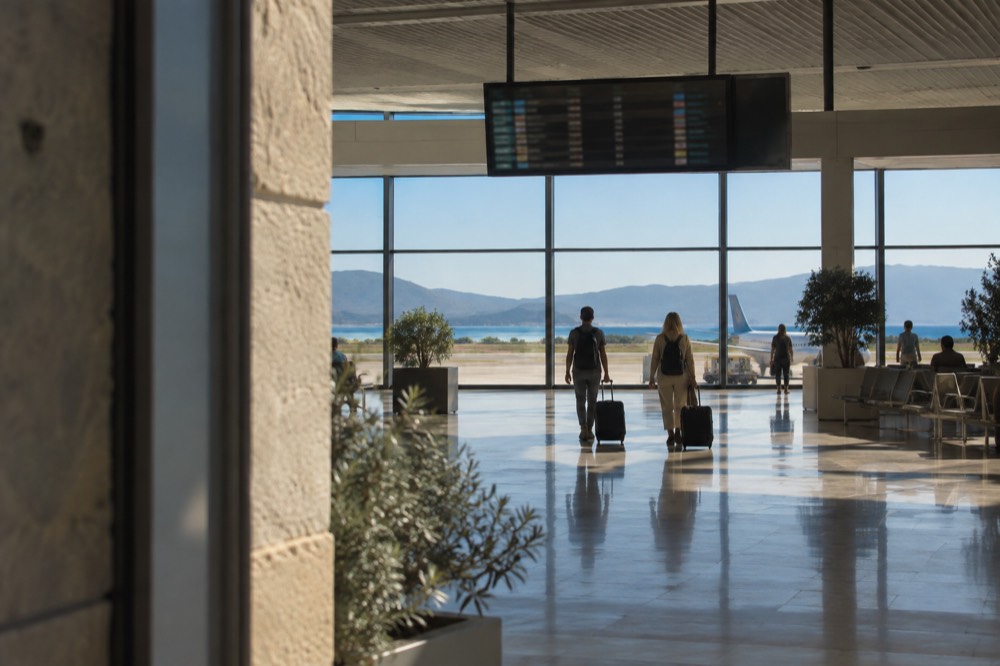
A practical tip that saves real money: price the trip into Split as well. Split's airport serves a larger year-round network, and the two cities are connected by bus and ferry. The Dubrovnik to Split transport guide lays out the options, and the cheaper-airport comparison answers exactly this question. Sometimes the cheaper fare plus a scenic ride down the coast beats the direct flight.
Does Lufthansa Fly Out of Dubrovnik?
Lufthansa has served Dubrovnik seasonally, connecting the city through its German hubs during the warmer months, but whether a specific Lufthansa flight operates on your travel date is a schedule question, not a geography question, and it must be checked against the airline's own booking engine or the airport's live departures board before you plan around it.
The honest framing is this: seasonal routes in and out of Dubrovnik are announced, flown, paused and reinstated year by year, and the German market is one of the city's strongest, so the major German carriers are reliably present in some form each summer. What I will not do is promise you a particular flight on a particular day, because I would be guessing, and a guessed schedule can strand an itinerary. The rest of the planning pages sit on Things to Do in Dubrovnik.
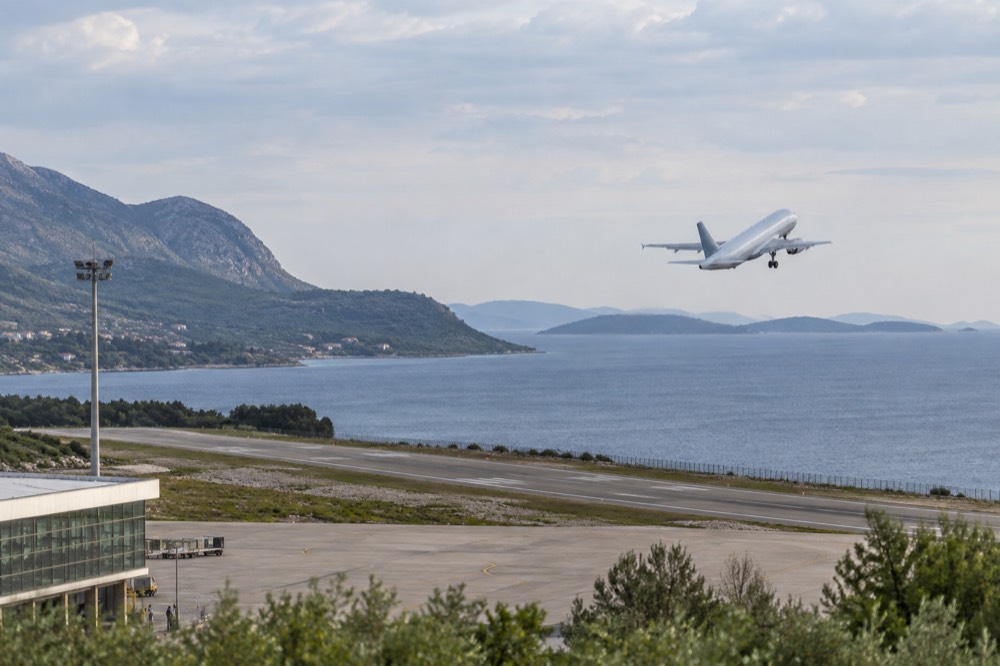
If Lufthansa, or any named carrier, is central to your plans because of miles or a connection, book through the airline directly and confirm the operating carrier. Regional feeder services on this corridor are sometimes flown by partner carriers under a mainline code, which is normal practice and worth knowing so the livery at the gate does not surprise you.
| Season | Route network shape | Planning advice |
|---|---|---|
| Peak summer | Widest direct network, most frequencies | Book early, expect peak fares |
| Shoulder months | Most seasonal routes still flying | Best balance of access and price |
| Winter | Small year-round core only | Consider routing via Split or Zagreb |
The same caution applies to every carrier question at this airport. The live listing, in this case the airline's own schedule, is the only source that reflects what is actually on sale for your dates.
What Should You Know Before You Land?
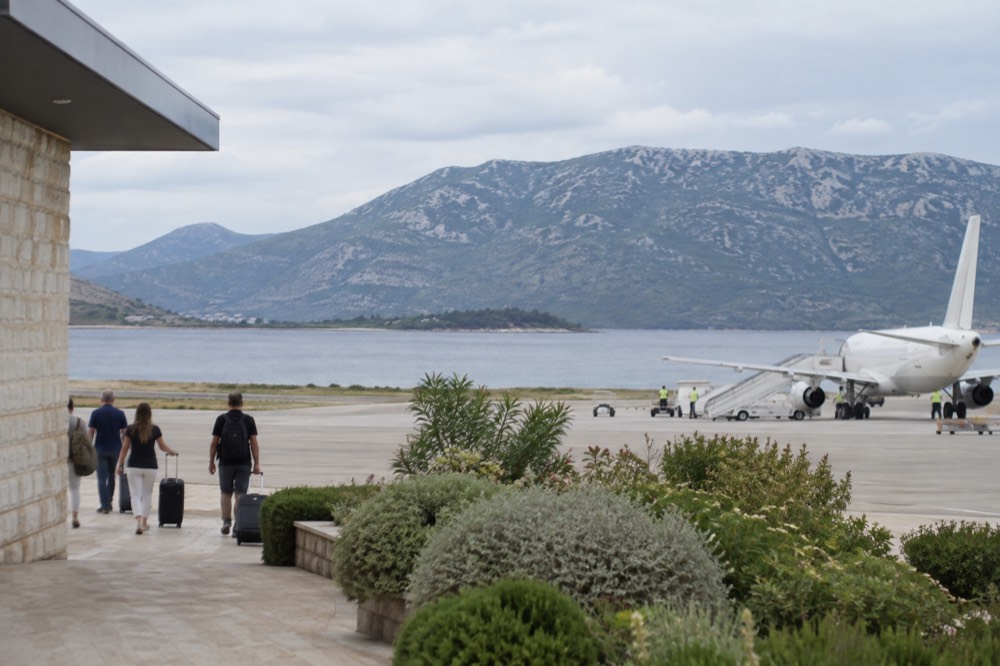
Three things shape your arrival more than anything else: where you are staying, because the Old Town is pedestrianised and vehicles stop at its edges; when you land, because midday arrivals meet the day-trip and cruise crowds head on; and how much luggage you carry, because the Old Town is a hill town of stone stairs and a wheeled suitcase is a real liability on cobbled lanes.
The pedestrianisation point surprises people. Cars cannot enter the walled city, so every transfer, private or shared, ends at a gate or a nearby drop-off, and you walk the rest. If your accommodation is deep inside the walls, pack so you can carry everything for a few hundred metres of stone. The luggage-storage guide covers the travellers who get this wrong, and there are many of them every single day.
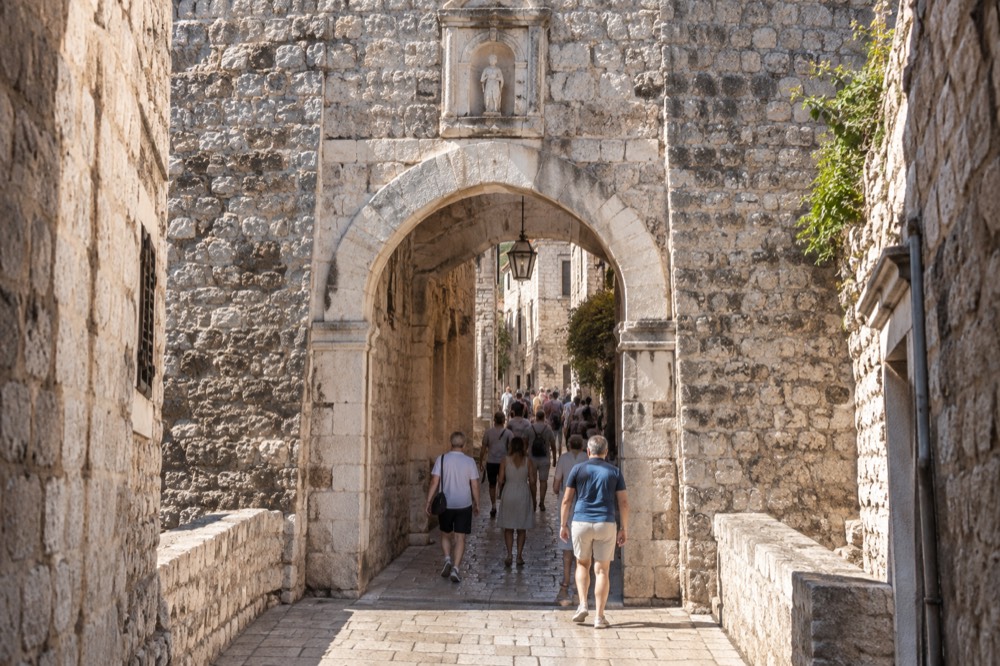
Timing is the second lever. The Old Town runs a daily rhythm that is measured, not guessed: six counters at every entrance update a headcount every 15 minutes, and on a September morning the count climbed from 5,419 people at 08:00 to a 7,739 peak at 10:00 before easing to 7,205 by 11:00. Land early, drop bags, and do the walls before that curve peaks. The official carrying capacity for the historic core, from the UNESCO carrying-capacity assessment, is 11,275 people.
If your accommodation is in Lapad or along the bay rather than inside the walls, the hop-on hop-off yellow bus is a genuinely useful first-day tool: about an hour and a half of looping, audio guide included, from $35.46 per person, rated 4.9 across 1,147 reviews. It gets you oriented before you commit your legs to the stairs.
| Arrival detail | Why it matters | What to do about it |
|---|---|---|
| Old Town is car-free | Every transfer ends at a gate | Pack carryable luggage |
| Morning crowd curve | Counts peak around 10:00 | Walk the walls early or late |
| Accommodation district | Lapad and Gruž change the transfer maths | Check the drop-off point before booking |
Is a Transfer or the Local Bus Better on a Cruise Day?
If you are flying in to join a cruise, book a private transfer or confirm a shared one against your embarkation window, because ship time is unforgiving and the Port Authority schedules 461 cruise calls for 2026, meaning port days are busy, coordinated and not forgiving of a missed connection. If you are a cruise passenger flying out after disembarking, the shared airport transfer exists for exactly that run.
The cruise calendar is the hidden variable in this airport's traffic. Dubrovnik's Port Authority recorded 625,257 cruise passengers across 2025, up from 582,499 in 2024, and the busiest months were not July and August but September, at 101,246 passengers, and October, at 100,132, ahead of July's 96,072 and August's 87,385. Fly in on a September cruise-embarkation day and you are sharing the arrival hall with a slice of that volume.
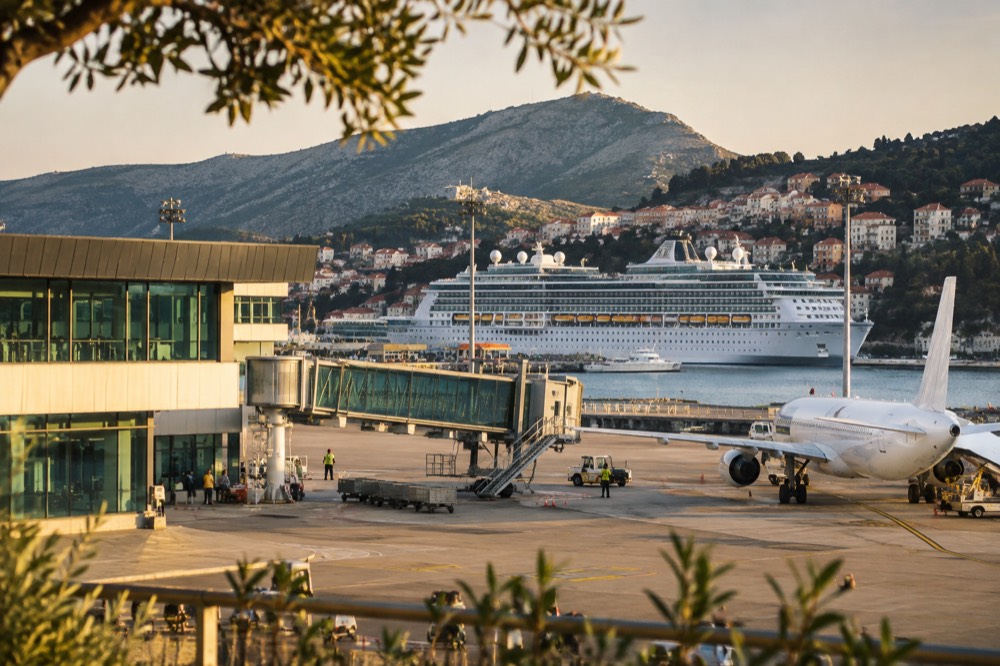
The port itself sits in Gruž, not at the Old Town edge, which changes the transfer geography. The cruise port guide and the distance answer cover the port-to-Old-Town leg, and the port to Old Town connections guide handles the options in detail. The shared transfer on this page's roster covers the airport side of that journey, from Dubrovnik and Cavtat to the airport, rated 4.5 across 57 reviews.
For the figures behind that chart, the Port Authority publishes its statistics directly at its traffic statistics page, which is where every number above comes from.
Planning Your First Day After You Land
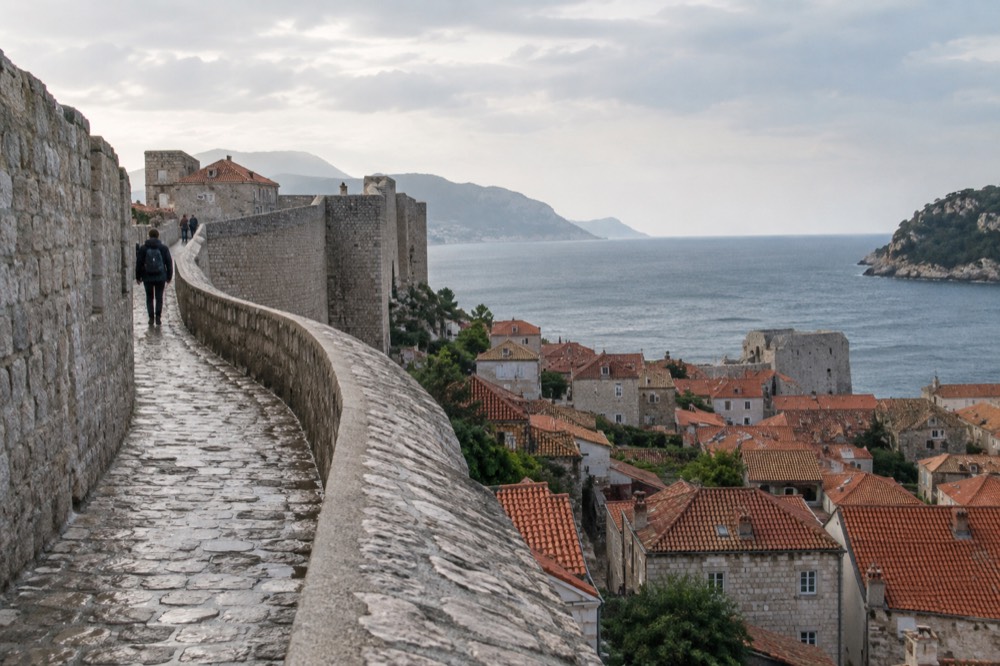
Land, transfer, drop bags, then walk before you tour: that is the sequence I recommend, because the Old Town rewards an unticketed first wander and punishes a rigid schedule on day one. If you have energy left, the city walls are the one sight worth prioritising immediately, the adult ticket is 40 euro in main season, 1 March to 30 November, and the operator's stated hours run 08:00 to 19:30.
The walls are the anchor for a reason. The circuit is 1,940 metres long, up to 25 metres high in places, and the 40 euro main-season adult ticket is actually a combination covering the walls, Fort Lovrijenac, the Western Outer Wall and the Collection of Coins of the Republic of Ragusa. The operator, the Society of Friends of Dubrovnik Antiquities, publishes the details at its own city walls page.
| Ticket or pass | Main season, 1 March to 30 November | What it covers |
|---|---|---|
| City Walls adult | 40 euro | Walls, Fort Lovrijenac, Western Outer Wall, coin collection |
| City Walls child 7 to 18 | 15 euro | Same coverage, child rate |
| Dubrovnik Pass, one day | 40 euro | Walls plus ten more sights and a 24-hour bus ticket |
| Dubrovnik Pass, three days | 50 euro | Same sights plus suburban bus coupons |
| Dubrovnik Pass, seven days | 60 euro | Same sights plus House Bukovac in Cavtat |
Notice the one-day pass. In main season it costs the same 40 euro as the standalone walls ticket and adds ten more sights plus a 24-hour bus ticket, which makes it the default recommendation for anyone landing with a full day ahead of them. In December the standalone walls ticket drops to 20 euro and no pass tier is on sale at all, so that equivalence is a main-season claim only. The Dubrovnik Pass guide works through the whole comparison.
If your legs are done after a travel day, the convertible bus panorama tour is the low-effort alternative: from $34.77 per person, rated 4.6 across 796 reviews, with an audio guide doing the explaining while you do the looking. For a fuller first-day sequence, the one-day itinerary is built around exactly this landing-day problem.
Whichever of those three you lean toward, the shared airport transfer remains the piece worth locking in first, because it is the only one tied to your flight rather than to your energy levels on the day. At $20 per person and 4.5 across 57 reviews it is the cheapest line item in the whole arrival plan, and it removes the one decision that cannot be improvised if you land tired.
Common Questions About Dubrovnik Airport
How Do I Get From Dubrovnik Airport to Old Town?
A shared transfer starts at $20 per person and is rated 4.5 across 57 reviews, a private transfer is quoted per vehicle on the listing, and taxis work from the rank at arrivals. Every option ends at a gate or drop-off point, because the walled Old Town is pedestrianised and vehicles stop at its edges.
Is It Expensive to Eat Out in Dubrovnik?
Yes, especially inside the walled Old Town, where you pay for the location. Prices fall noticeably in Gruž and Lapad, and a konoba outside the tourist core generally serves better food for less money than a terrace near the Stradun.
which airport flies direct to dubrovnik?
Many European airports fly direct in summer, and the network contracts sharply in winter. Because seasonal routes are added and dropped each year, check the airport's own live arrivals and departures board, or the airline's booking engine, for the routes actually on sale for your dates.
Does Lufthansa Fly Out of Dubrovnik?
Lufthansa has served Dubrovnik seasonally through its German hubs, but whether a specific flight runs on your date is a schedule question. Confirm it against the airline's own booking engine before planning a connection around it, and check the operating carrier on regional feeder routes.
Should I Book My Airport Transfer Before I Fly?
Yes if you land late, travel in a group, or arrive on a busy September or October cruise day. The shared transfer can be booked in advance from $20 per person, and a private transfer tied to your flight number removes the schedule risk entirely.
Can I Reach the Cruise Port From the Airport Easily?
Yes. The cruise port sits in Gruž, and the shared transfer route covers Dubrovnik, Cavtat and the airport. With 461 cruise calls scheduled for 2026, allow generous margin on embarkation days, since the arrival hall shares the load with cruise passengers on the busiest dates.