How Far Is Dubrovnik From the Cruise Port?
How far Dubrovnik's cruise port sits from the Old Town, whether the walk is realistic, and the best ways to cover the distance on a port day.
How Far Is Dubrovnik From the Cruise Port?
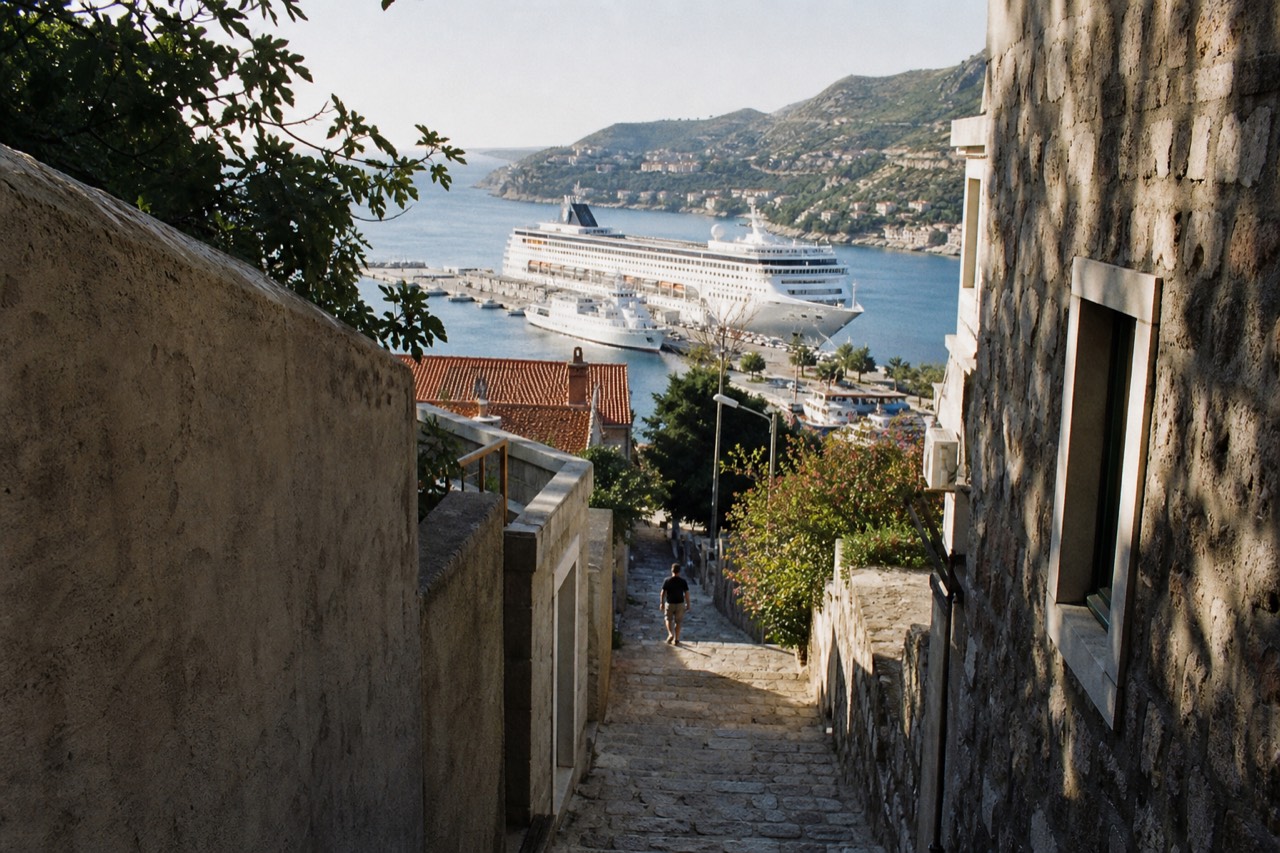
The honest answer is that it depends entirely on where your ship berths. Most cruise vessels tie up at the port in Gruž, north-west of the walled Old Town, and the distance from there to the Pile Gate is a genuine walk rather than a stroll. Under the Port Authority's berthing arrangement, one large cruise ship can also sit in front of the Old City itself, which changes the picture completely.
I get this question constantly from passengers standing at the gangway with a map, and the confusion is understandable, because "Dubrovnik cruise port" can mean two very different positions on the water. The main cruise terminal sits in Gruž Bay, where the ferry port, the bus station and the market all cluster together. From there, the Old Town is not around the corner. You are looking at a solid stretch of coastal road, most of it flat and along the water, before you reach the medieval walls at Pile.
The second possibility is rarer but real. The Dubrovnik Port Authority's own cruise-destination page describes the berthing arrangement as "2+1": two ships alongside in the port and one large cruise ship anchored in front of the Old City. If your ship is that third vessel, you are tendered or brought in right by the old harbour, and the Stradun is minutes away on foot. Check your daily programme or ask at the shore-excursion desk which berth you have before you plan anything, because the answer shapes your whole day.
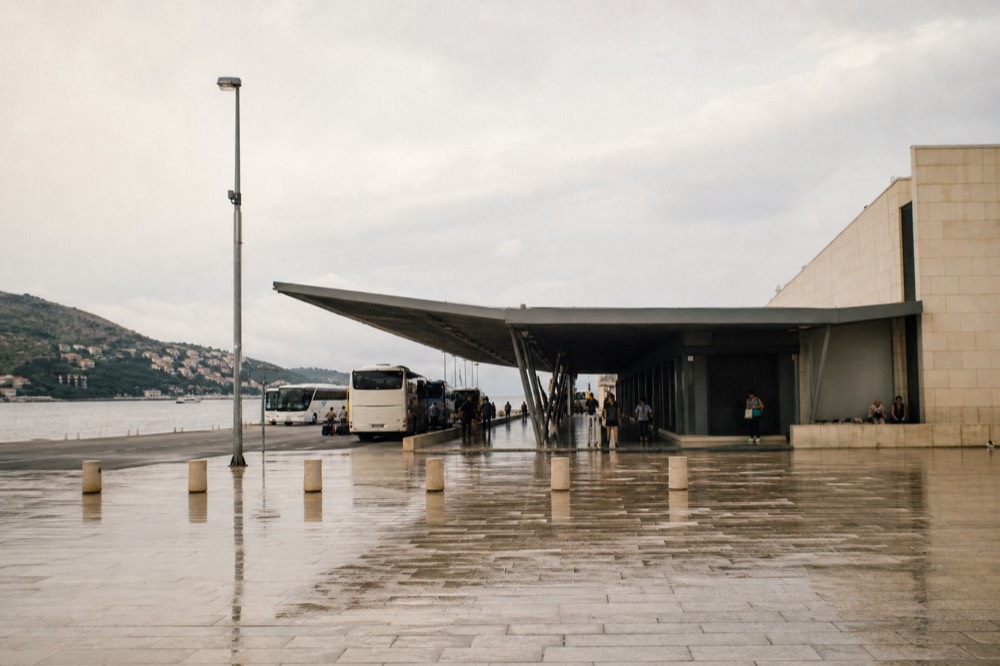
There is a third wrinkle worth naming. Gruž is also where the local buses terminate, where the ferry to the Elaphiti Islands leaves from, and where much of the city's daily life happens, so the port area is not a sterile container yard. The walk into town runs past marinas, apartment blocks and café terraces. It is a working waterfront, and I would argue it is one of the more honest introductions to Dubrovnik you can get, precisely because almost no visitor sees it.
For the numbers people plan around: the walled Old Town covers 24.7 hectares, a UNESCO World Heritage property since 1979, and the city around it counted 41,562 residents at the 2021 census. The Old Town itself is small. The distance from the ship to the Old Town is the part that surprises people, not the size of the town once they arrive.
If your time ashore is short and you would rather not spend any of it on logistics, a guided option that starts from the port area solves the problem in one booking. The most reviewed paid walks and rides in the city all depart from or near the Old Town, and several operators run port-friendly start times.
Is Dubrovnik Walkable From a Cruise Port?
Yes, if you dock at Gruž and you have the legs and the hours for it. The route is almost entirely flat, it follows the shore for most of the way, and there is pavement the whole distance. It is a real walk, not a five-minute hop, so it suits passengers with a full day ashore far better than a four-hour stop. Heat, luggage-free comfort and timing matter more than the terrain.
I walk this stretch of coast regularly, and I can tell you the honest version of the experience. You leave the Gruž terminal area, pick up the waterfront road, and follow the bay as it curves south-east toward the peninsula the Old Town sits on. For most of the route the sea is on one side of you and a steady ribbon of apartment buildings, small hotels and konoba terraces on the other. There are crossings, there are buses passing, and in July and August there is heat radiating off the pavement by mid-morning.
The terrain itself is forgiving. The Gruž side is flat, and once you round into the Boninovo area you climb gently, one modest uphill section, before descending to the Pile Gate and the walls. Nobody in reasonable health will find it a scramble. What catches cruise passengers out is not the gradient, it is the combination of distance, sun and a fixed all-aboard time hanging over the day. If your ship sails at five and you want three hours inside the walls, walking both ways eats a chunk of that budget.
One useful anchor for judging the distance: Hotel Komodor in Lapad, a budget three-star rated 7.8 out of 10 across 822 Expedia reviews, sits about a 29-minute walk from the Gruž cruise and ferry port, and guests there are told to take the number 6 bus rather than walk to Pile Gate. That tells you two things. First, Gruž to Lapad is already a half-hour on foot. Second, even people staying in the city routinely take the bus for the Gruž-to-Old-Town leg, which is exactly the leg you would be walking.
A rough way to think about your port day, in the order most passengers regret not considering it:
| Factor | What to weigh | Verdict for walkers |
|---|---|---|
| Hours ashore | Full day versus a short call | Full day: walking is pleasant; short call: take transport |
| Season and heat | June to September midday sun on open pavement | Walk early, bus or taxi back |
| Where you berth | Gruž terminal versus a ship anchored off the Old City | Gruž means the full walk; off the Old City means no walk at all |
| What you want inside | City walls circuit, museums, or just the Stradun | The walls alone take serious time and stairwork |
The city walls deserve a special mention in that table, because they are the single most popular thing passengers want from a port day, and they are not flat. The circuit runs 1,940 metres, up to 25 metres high in places, with staircases on the land side where the wall is 4 to 6 metres thick. People who walked in from Gruž and then climbed the full circuit often describe their evening on the ship in one word.
Can You Walk to Dubrovnik From the Cruise Port?
Yes, and thousands of passengers do it every season, but the smarter version is to walk one direction and ride back. The route from Gruž to the Old Town follows the coast road through Boninovo to the Pile Gate, and the return can be done by city bus or taxi in a fraction of the time. The mistake to avoid is committing to the round trip before you know how your legs feel after the walls.
Here is the route as I would describe it to a friend. From the terminal, head for the water and follow the shore road south-east. You pass the marina, the ferry piers and the market area of Gruž, then the road hugs the coast through a residential stretch with the sea on your right the whole way. The Boninovo climb is the one section that asks anything of you, a steady but short rise, and then the road tips down toward the towers of the Jesuit church and you arrive above the Pile Gate with the walls in front of you. The whole thing is on pavement, signposted in places, and impossible to get genuinely lost on, because the sea stays on one side and the Old Town eventually appears in front of you.
Timing matters more than route-finding. The Old Town's own counting system, six counters at every entrance updating a headcount every 15 minutes, recorded a curve on one September morning that every cruiser should know: 1,200 people at 04:00, 5,419 at 08:00, a peak of 7,739 at 10:00, and still 7,205 at 11:00, against an official carrying capacity of 11,275. If you walk in and arrive at the Pile Gate at eleven, you are arriving at the busiest hour of the day. Leave the ship early, walk while the air is cool, and you trade a quiet gangway for a quiet Stradun.
For the return, the city bus network terminates right by the port at Gruž, and taxis and ride services meet ships at the terminal. If you would rather not think about any of it, a tour with a port-area start folds the transfer into the experience itself. The e-tuk-tuk panorama ride is a favourite for exactly this reason: it is a 1 hour 45 minute loop rated 5 across 1,799 reviews, from $59.24 per person, and it covers the viewpoints of the whole city in an open electric vehicle, which spares your legs for the walls.
One warning I give every cruise passenger: do not plan the walk back for the last possible minute. Ships do not wait, the bus can be full when three ships are in port, and the walk that felt easy at nine in the morning feels very different at four in the afternoon in September heat. Build in an hour of slack. The port area has cafés and shade; the all-aboard horn has neither.
Can You Walk From Dubrovnik Cruise Port to Town?
Yes, the walk from the Gruž cruise port into town is a legitimate, safe and rather scenic option on a flat coastal road, and it is the choice of a surprising number of passengers with full days ashore. What it is not is quick, and it is not the only sensible option. Buses, taxis and port-departing tours all cover the same ground faster, which matters when your call is short.
The question people are really asking with this one is whether they are somehow cheating by taking a bus, and the answer is no. Local buses run between Gruž and the Pile area constantly through the day, the bus station sits beside the port, and this is how the city's own residents move around. Taking the bus is not a tourist shortcut; it is the local way. Taxis and ride-hailing services operate in the city as well, and for a group of four splitting a fare, the door-to-door version often costs less per person than the emotional price of a hot walk.
The deciding factors, in my experience of watching passengers make this call at the gangway:
| Option | Best for | Trade-off |
|---|---|---|
| Walking both ways | Full day ashore, cool months, active travellers | Costs time and energy; avoid midday in summer |
| Walk in, bus or taxi back | Most cruise passengers | The best of both; plan the return stop in advance |
| Bus or taxi both ways | Short calls, hot days, walls circuit planned | Skips the waterfront entirely |
| Guided tour from the port area | First-time visitors with limited hours | Fixed schedule, but zero logistics |
If you take only one piece of advice from this page, make it this: decide your return method before you leave the ship, not after five hours on your feet. Every season I watch the same scene, passengers at the Pile bus stop at half past four, hot, tired, and doing arithmetic with the all-aboard time. The walk from Gruž is a pleasure at nine in the morning and a penance at five in the afternoon, and the difference is entirely in the planning.
It is the kind of tour that pays for itself in orientation alone on a first visit. If you want a fuller read on the choices, our cruise day planning guide and the answer on what to do from a cruise ship go deeper than this page can.
Is Dubrovnik, Croatia Walkable From Cruise Port?
Once you reach the Old Town, the answer is an unqualified yes: the entire walled city is pedestrian, the Stradun runs just 298 metres end to end, and everything worth seeing inside the walls is reached on foot. The real walking question is the port-to-town leg, and beyond that, whether your legs can also handle the 1,940-metre walls circuit with stairs and summer heat.
Inside the walls there is no traffic to fight, and the geography is on your side. The Stradun, the limestone main street, is 298 metres long, its final plan fixed by the city's Statute of 1272, and every lane in the Old Town branches off it or runs parallel to it. You can cross the whole walled city in fifteen unhurried minutes. What slows people down is not distance, it is the stopping: the Rector's Palace, the Franciscan Monastery, the viewpoints over the harbour, the staircases that make the northern half of town a vertical experience.
The walls are the big decision. The adult ticket is 40 euro in main season, 1 March to 30 November, and 20 euro in December, with children 7 to 18 at 15 euro then 5 euro, and under 6 free; there is no family ticket. That ticket is actually the walls plus Fort Lovrijenac combination, and it also covers the Western Outer Wall and the Collection of Coins of the Republic of Ragusa. The operator's stated hours at the time of check were 08:00 to 19:30. If you are weighing that against a pass, the one-day Dubrovnik Pass costs the same 40 euro in main season and adds ten more sights plus a 24-hour bus ticket, a comparison that only holds from 1 March to 30 November, because in December the walls ticket drops to 20 euro and no winter pass tier is on sale at all. Our Dubrovnik Pass guide breaks down every inclusion.
For the view without the stairwork, the cable car is the efficient answer. The ride covers 778.2 metres of track and 367.0 metres of elevation in 3 minutes 30 seconds, from a lower terminal at 38.0 metres above sea level to the Mount Srđ station at 405.0 metres, with an adult round trip at 30 euro in 2026, one way at 17 euro, children 4 to 12 at 8 euro round trip, and under 4 free. The operator claims a view range of up to 60 km on a clear day, and on a clear day I believe it.
The Cable Car Ride and Old Town Walking Tour, rated 4.6 across 716 reviews and running about 4 hours 30 minutes from $163.50 per person, captures the arithmetic every cruiser faces: heat, walls, views and hours, all traded against each other. A lighter-weight version of the same idea is the multipass that bundles the cable car with the museums for a shorter visit.
Whatever you choose, the geography is fixed and forgiving: a flat coastal leg from Gruž, a small pedestrian city at the end of it, and a mountain over the top if your legs still want more. For everything the wider region offers beyond the walls, start with Things to Do in Dubrovnik and work outward from there.
Common Questions About the Dubrovnik Cruise Port
How far is Dubrovnik from the cruise port?
It depends on your berth. Most ships dock at the Gruž terminal, north-west of the Old Town, and the walk from there to the Pile Gate is a solid coastal trek on a flat road. Under the Port Authority's "2+1" berthing arrangement, one large cruise ship can also be positioned in front of the Old City, in which case the Old Town is minutes away.
can you walk to dubrovnik from the cruise port?
Yes. The route from Gruž follows the shore road through the Boninovo area to the Pile Gate, almost entirely flat and on pavement the whole way. It suits passengers with a full day ashore; on a short call, walking one direction and taking the bus or a taxi back is the smarter plan.
Is the walk safe?
Yes. The route is a normal city street with pavements and crossings, used by locals every day. The real risks are heat and time: in summer the midday sun on open pavement is exhausting, and a fixed all-aboard time punishes anyone who underestimates the return leg.
How long does the walk take?
Long enough that you should plan it rather than assume it. For a sense of scale, Hotel Komodor in Lapad sits about a 29-minute walk from the Gruž cruise and ferry port, and even its guests are advised to take the number 6 bus to the Pile Gate rather than walk. Budget generously and decide your return transport before you leave the ship.
What is the best way into town if I do not want to walk?
The city bus, a taxi or a ride service, or a tour that starts from the port area. Buses run between Gruž and the Pile area through the day, the bus station is beside the port, and guided options like the e-tuk-tuk panorama ride fold the transfer into the sightseeing itself.
Is the Old Town itself walkable once I arrive?
Completely. The walled city is fully pedestrian, the Stradun runs 298 metres end to end, and the whole property covers 24.7 hectares. The one physical challenge inside is the city walls circuit, 1,940 metres with staircases and heights up to 25 metres, which is worth doing only with water, shade breaks and realistic timing.