Cheap Eats in Dubrovnik: How to Eat Well Without the Tourist Prices
Dubrovnik has a reputation for steep restaurant bills, and parts of it are earned. But the city is not uniformly expensive, and the gap between a smart meal and an overpriced one is often a matter of two streets and one decision.
Short answer
Dubrovnik is expensive by Croatian standards but manageable with planning. The adult City Walls ticket is 40 euro in main season, a one-day Dubrovnik Pass is also 40 euro, and the cheapest paid Old Town walk starts at $20 per person. Eating cheaply means bakeries, konobas away from the Stradun, and the Gruž market instead of terrace restaurants.
Dubrovnik earned its expensive reputation honestly, but the reputation is lazier than the reality. I have walked these streets with travellers every season since 2015, and the visitors who overspend almost always overspend in the same three places: the first terrace on the Stradun, the first café inside Pile Gate, and the first restaurant with a sea view that finds them. The city recorded about 4.2 million overnight stays in 2025, sharing first place among Croatian destinations with Rovinj, and a town carrying that many visitors develops a parallel economy of high-price, low-effort restaurants alongside a quieter one where locals actually eat.
This guide is about the second economy. It is also honest about the fixed costs you cannot eat around, because the biggest budget items in Dubrovnik are not meals at all. The walls ticket, the pass, the cable car and the boat trips set the floor of your spending, and knowing their real numbers before you arrive is worth more than any single restaurant tip.
Is Dubrovnik Cheap or Expensive?
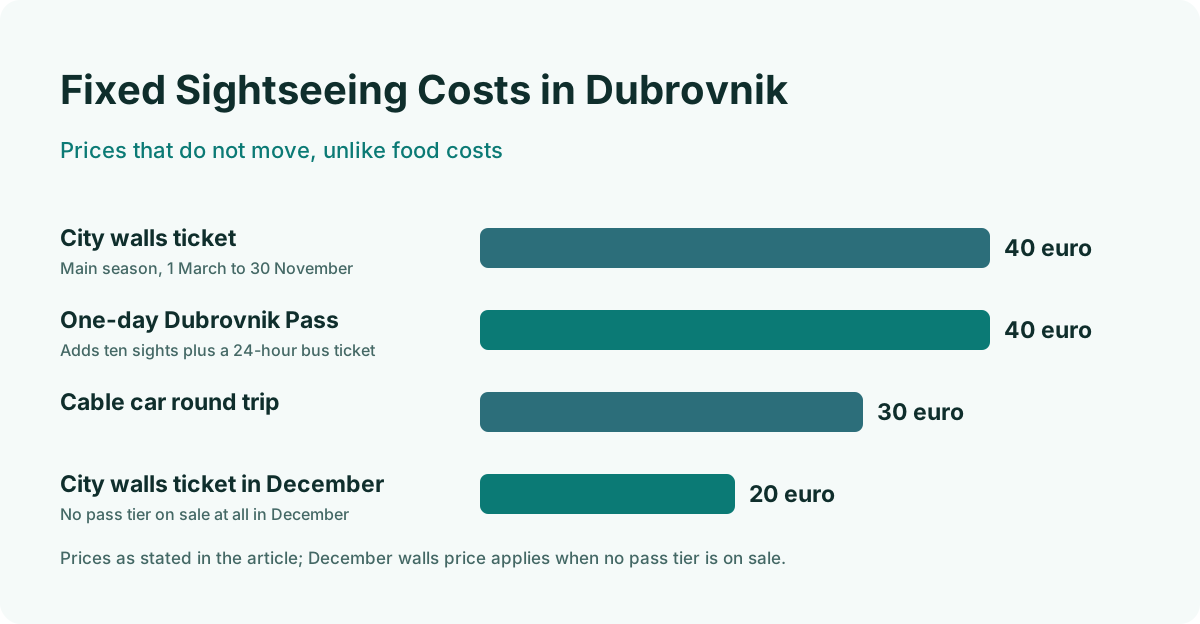
Dubrovnik is expensive for Croatia and mid-range for Western Europe. The Croatian Bureau of Statistics counted about 4.2 million overnight stays here in 2025, tied with Rovinj for first place nationally, and that demand pushes prices up. The fixed sightseeing costs are firm: 40 euro for the walls, 40 euro for a one-day pass, 30 euro for a cable car round trip. Food is where the variance lives.
The honest way to frame it: Croatia overall took 20.7 million arrivals and 94.8 million nights in commercial accommodation in 2025, and Dubrovnik sits at the very top of the country's price distribution. A guide to Dubrovnik on a budget has to start by separating the costs you control from the ones you do not. You control where you eat, how you drink and whether you pay for a table with a view. You do not control the entrance fees, and those are published, fixed and non-negotiable.
| Fixed cost | Main season price | What it covers |
|---|---|---|
| City Walls ticket | 40 euro | Walls, Fort Lovrijenac, Western Outer Wall, coin collection |
| Child 7 to 18 walls ticket | 15 euro | Same inclusions, child rate |
| Dubrovnik Pass, one day | 40 euro | Walls plus ten more sights, 24-hour bus ticket |
| Cable car, adult round trip | 30 euro | Return ride to Mount Srđ, 405 metres up |
| Lokrum Island ticket | 30 euro | Reserve entry and return boat transfer |
That table is the spine of any budget conversation. Note the pass: in main season, 1 March to 30 November, the one-day pass costs the same 40 euro as the standalone walls ticket and adds ten more sights plus a 24-hour bus ticket. In December the standalone walls ticket drops to 20 euro and no pass tier is on sale at all, so the equivalence is a main-season fact only. The full Dubrovnik Pass breakdown covers which sights each tier adds.
Is Dubrovnik Still Cheap?
No, and it has not been for years, but "not cheap" is not the same as "unaffordable." Cruise passengers peaked in September at 101,246 and October at 100,132 in 2025, above July and August, so demand no longer rests in summer alone. Prices stay high through autumn. What remains genuinely cheap: bakery bread, market produce, self-catering staples and the free walking tours on GuruWalk.
The Port Authority's own numbers explain why shoulder-season bargains are rarer here than people expect. Full-year 2025 brought 625,257 cruise passengers, up from 582,499 in 2024, and 461 cruise calls are scheduled for 2026. September and October, the months everyone recommends for "cheaper, quieter Dubrovnik," are actually the two busiest cruise months of the year. The port limits cruise passengers to 8,000 a day in most cases, and only 18 of 243 cruise days exceed that, but those are still thousands of potential diners walking past the same restaurant terraces you are.
So the honest answer to "is it still cheap" is: the city is still cheaper than Venice or Santorini for the same quality of setting, it is no longer cheap the way inland Croatia is cheap, and the money you save comes from behaviour, not timing. Eating where the day-trippers cannot linger, because they have a ship to catch, is the single most reliable saving in the city. A lunch spot ten minutes uphill from the Stradun serves the same food for less, precisely because fewer people are willing to climb for it.
The free walking tours are the other remaining bargain. Three walks run free, pay-what-you-want on GuruWalk, including a 1 hour 45 minute Old City walk rated 4.87 across 2,242 reviews. They cost nothing up front and they orient you to the streets where the cheaper konobas hide, which pays for itself by dinner.
Is It Cheap to Eat and Drink in Dubrovnik?
Eating and drinking in Dubrovnik is as cheap or as expensive as your choice of table. A bakery lunch costs a few euro, a konoba outside the tourist core costs roughly half of what a Stradun terrace charges, and a sit-down dinner with a view is priced like a capital city. The cheapest paid Old Town walk starts at $20 per person; a three-hour guided food and drink walk starts at $165.64.
The spread is enormous, and it is the reason this guide exists. The question of what to eat in Dubrovnik has a cheap answer and an expensive answer, and they are often the same dishes. Grilled fish, black risotto and peka appear on menus across the whole price range. What changes the bill is the address, the terrace and whether the kitchen is cooking for repeat local customers or for people it will never see again.
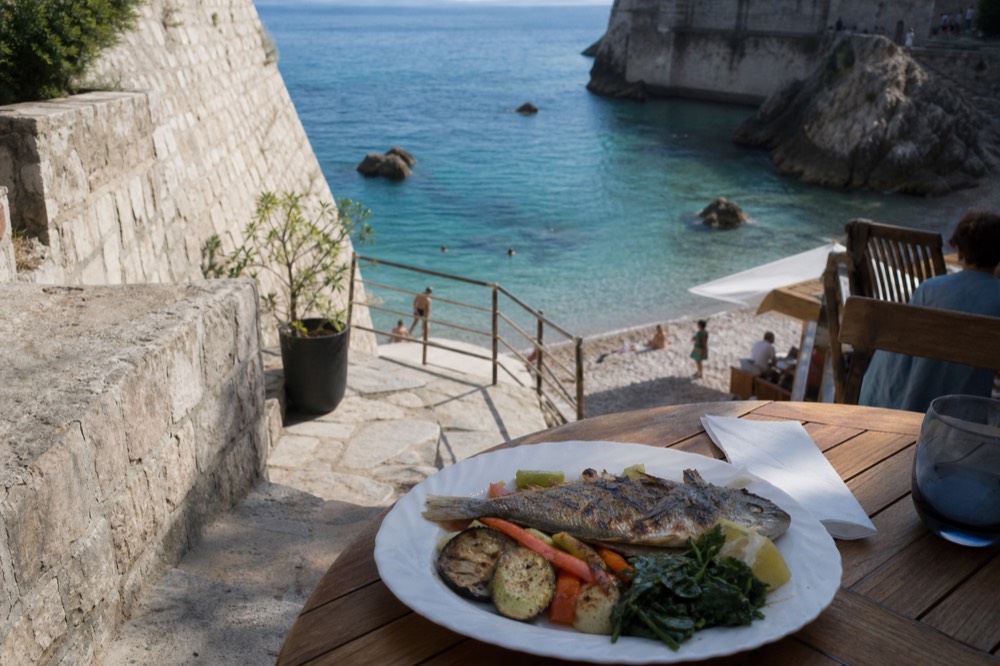
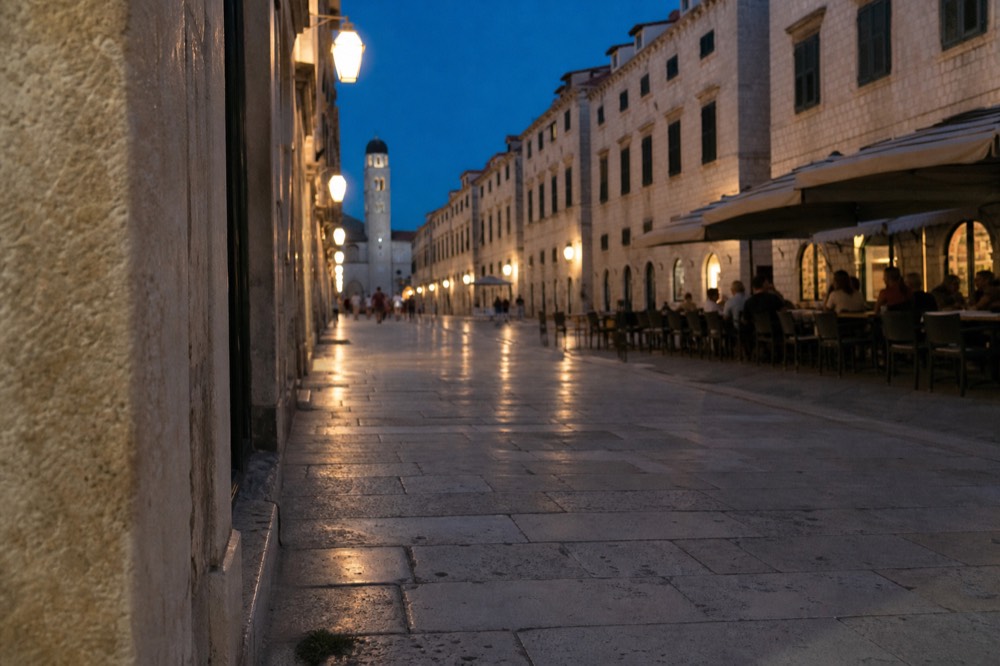
Three structural rules govern the whole city. First, the Stradun, the 298-metre main street whose final plan was fixed by the 1272 Statute, is the most expensive strip of real estate per square metre of table in Croatia. Second, price falls with every flight of stairs you climb away from it. Third, the Gruž market and the bakeries run on a different economy entirely, one built for residents, and a city of 41,562 people at the 2021 census still needs somewhere affordable to buy bread.
If you want the food scene decoded in one evening rather than discovered by trial and error over three, the guided option is the three-hour food and drink walk with a local guide, rated 5 across 704 reviews, from $165.64 per person. It is not a cheap-eats tactic in itself, but it is the fastest way to learn which streets hold the cheap kitchens, and the tastings are generous.
Before you commit to anything, weigh what the walk replaces rather than what it costs. Three hours of guided tastings with a local who knows the back streets will cover ground that would otherwise take you two or three evenings of trial, error and the occasional overpriced disappointment to find on your own. For a visitor staying several days and eating out every night, that trade can genuinely work out. For someone in town for a single day, the bakery-and-konoba tactics later in this guide will stretch further.
A guest review from Bryan_M captures what the walk actually delivers: "Amazing food tour! Marija was a great guide, full of stories and facts that really brought Dubrovnik to life. The food was delicious, and generous. Wines at every stop. Would highly recommend this tour to anyone visiting Dubrovnik, especially to help get your bearings of the city and know where to go for dinner!"
Where to Find Cheap Eats in the Old Town?
The cheap food inside the walls hides in three places: bakeries, the market-adjacent counters and the konobas up the side staircases north and south of the Stradun. Everything on the Stradun itself and everything within sight of Pile Gate carries a view premium. Climb one flight of stairs in any direction and prices step down immediately.
Start at the bakeries, because they are the cheapest complete meals in the city. Bread, savoury pastries and pizza slices from a pekara cost a fraction of any restaurant and they are what a large share of the local workforce eats standing up. Buy in the morning when the stock is fresh, and buy twice rather than guessing at lunch quantities.
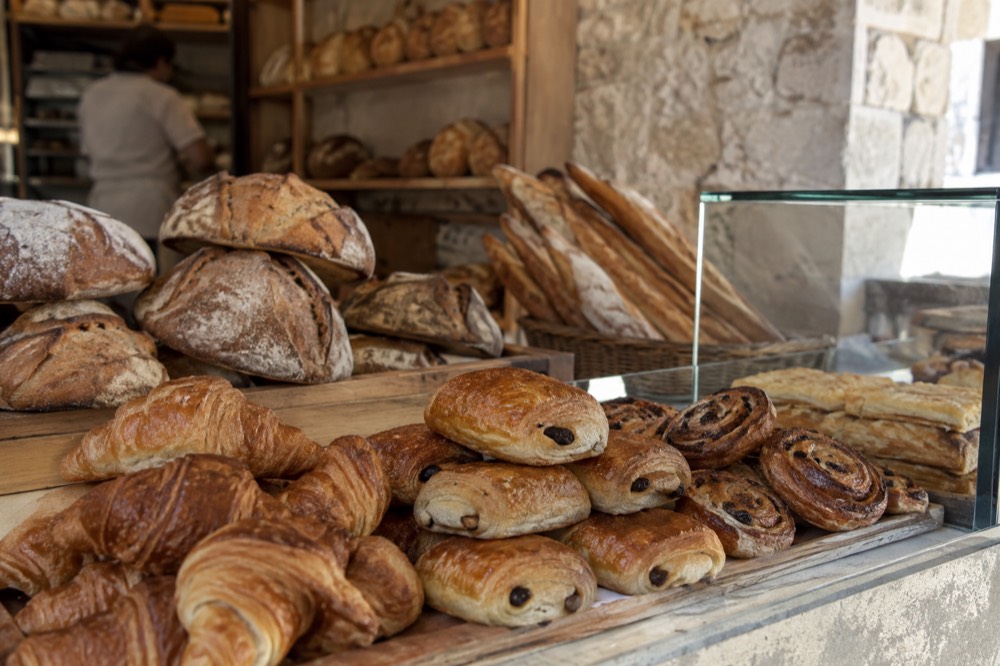
Then work the staircases. The lanes running up from the Stradun toward the walls on the northern side, and the streets climbing behind the cathedral on the southern side, hold small family kitchens with a handful of tables. They cannot rely on passing foot traffic the way a Stradun terrace can, so they have to earn repeat business, and repeat business comes from honest prices. Look for the places with hand-written daily menus and no host standing outside recruiting.
The final Old Town tactic is timing. Cruise passengers, up to 8,000 a day in most cases under the Port Authority's limit, eat early and leave. A restaurant that is packed at 13:00 can be half empty at 14:30, and some kitchens run quieter mid-afternoon pricing or at least quieter service. Dinner in Dubrovnik runs late by northern European habits; eating at the local hour, after 20:00, often means a calmer room and a kitchen cooking properly rather than at surge capacity.
| Where you eat | Price level | Why it costs that |
|---|---|---|
| Stradun terrace | Highest | Location and view premium, one-time customers |
| Old Town side-street konoba | Middle | Needs repeat business, fewer passing tourists |
| Bakery or pekara | Lowest | Built for local workers, standing consumption |
| Gruž market and surroundings | Low | Resident economy, away from the walled core |
| Lapad café strip | Middle | Hotel zone competition, longer-stay visitors |
Where to Eat Cheaply Outside the Old Town?
Gruž and Lapad are the two districts where eating cheaply is normal rather than a trick. Gruž is the working port quarter with the city's main market, Lapad is the hotel zone with a café strip competing for longer-stay visitors. Both are a short bus ride from Pile Gate, and both price food for people who live and stay here rather than for day-trippers.
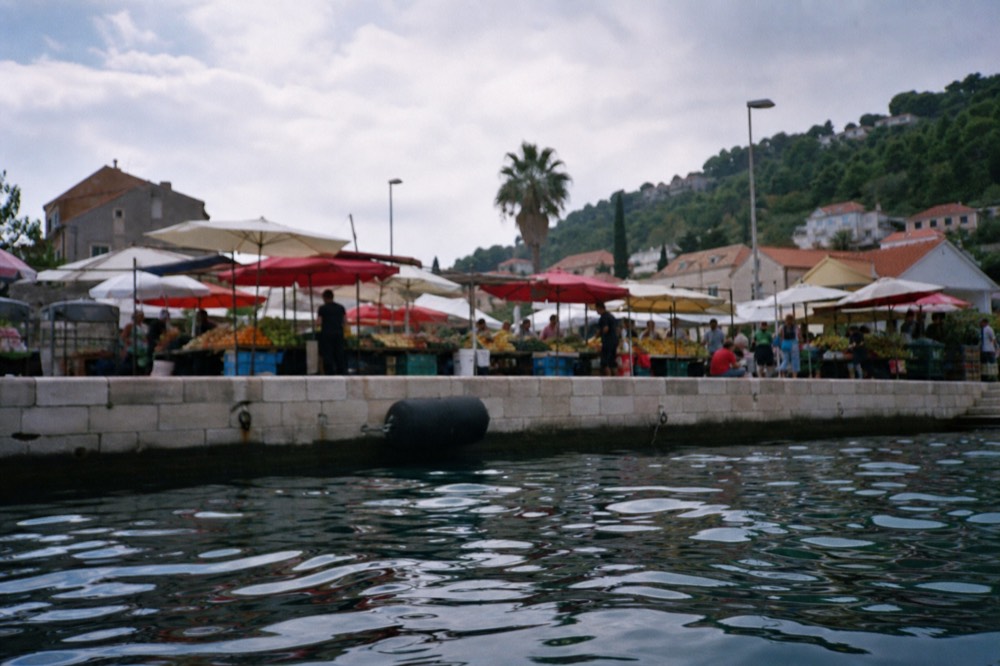
Gruž is where the city provisions itself. The market stalls, the surrounding bakeries and the small konobas near the bus station and cruise port feed a resident economy, and the prices follow. If you are staying anywhere near Lapad or Gruž, doing your breakfast and picnic shopping here is the single biggest daily saving available. The neighbourhood guide to Gruž covers the market in detail.
Lapad works differently. It is the hotel district, a bay away from the walls, and its café and restaurant strip competes for guests staying three, five, seven nights rather than three hours. Competition over a longer-stay customer keeps prices meaningfully below Old Town levels, and the Lapad neighbourhood guide maps the strip. The trade-off is simple: you give up the stone-setback atmosphere and gain a bill you can read without flinching.
The bus makes both easy. A 24-hour bus ticket comes bundled with the one-day Dubrovnik Pass, and the three-day and seven-day passes add suburban bus coupons, so if you have bought a pass for the sights, the transport to the cheap food is already paid for. That is a genuinely useful overlap most visitors never connect.
Can You Drink Cheaply in Dubrovnik?
Yes, if you separate drinking from view-watching. House wine by the litre carafe at a konoba is the cheapest legitimate drink in the city, and local Plavac Mali and Pošip bottles in shops cost a fraction of restaurant markups. What destroys budgets is the terrace cocktail and the first drink inside the walls, where the view premium on a glass can exceed the cost of the drink itself.
Croatian wine is the budget drinker's secret weapon. The Plavac Mali grape guide explains the local red; house pours of it, or of a Pošip white, at a family konoba are priced like table wine because that is exactly what they are. The restaurant markup on a bottle versus a shop price is the largest single multiplier in Dubrovnik hospitality.
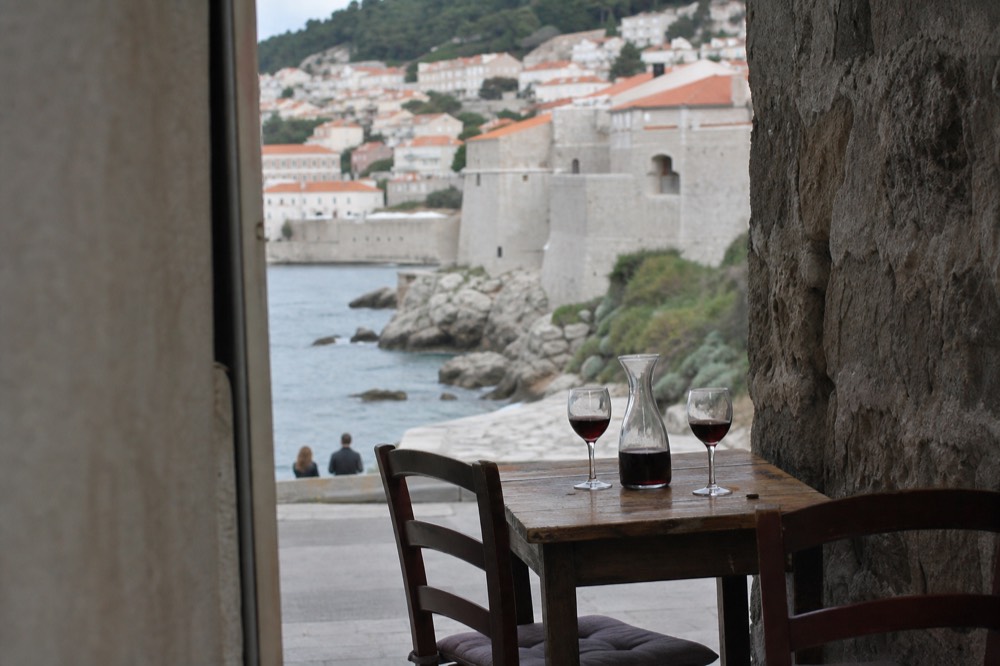
The view-drink economy is worth understanding rather than just avoiding. The famous cliffside bar outside the walls is an experience, and the Buža Bar guide treats it honestly: you are paying for one of the best drinking positions on the Adriatic, and it is worth doing once. The mistake is making view-drinking the default rather than the exception. One sunset drink at a viewpoint, then the rest of the evening at a back-street konoba, is a pattern that survives almost any budget.
| Drink strategy | Budget impact | Best for |
|---|---|---|
| House wine by the carafe at a konoba | Lowest per glass | Everyday dinners |
| Shop-bought local bottle | Low | Picnics, terrace evenings |
| Café coffee standing at the bar | Low | Mornings, people-watching |
| One view drink, then relocate | Controlled splurge | Sunset, once per trip |
| Stradun terrace cocktails | Highest | Avoid as a habit |
What Not to Do in Dubrovnik?
The five budget-killers are: eating every meal on the Stradun, buying the walls ticket twice through confusion, drinking only at view terraces, arriving in peak cruise hours without checking, and treating every free thing as low quality. The GuruWalk free tours, rated up to 4.9, and the December walls price of 20 euro are both excellent value. The traps are behavioural, not the city itself.
The first trap is the Stradun default. The street is 298 metres long, it is the first thing every visitor sees, and every table on it knows that. A single decision, walking two minutes in any direction before choosing, routinely halves a food bill. The second trap is ticket confusion: the 40-euro walls ticket already includes Fort Lovrijenac, the Western Outer Wall and the coin collection, so nobody needs to buy Lovrijenac separately at 15 euro after walking the walls. Bought alone, Lovrijenac is 15 euro; bundled, it is free.
The third trap is timing blindness. The Old Town counting system runs six counters at every entrance, updating a headcount every 15 minutes, and on 8 September 2026 the curve read 5,419 people at 08:00, a 7,739 peak at 10:00, then 7,205 at 11:00. The official carrying capacity from the UNESCO assessment is 11,275 people. What that means for food: the 10:00 to 13:00 window is when restaurants are most crowded and most rushed, and shifting lunch later both avoids the surge and often finds calmer kitchens. The crowding and overtourism guide goes deeper on this.
The fourth trap is assuming December is a rip-off month. It is the opposite for fixed costs: the walls ticket drops to 20 euro, children 7 to 18 pay 5 euro, and the cable car, closed January to March, runs reduced autumn hours from October. The fifth trap is the reverse, dismissing free things. The three GuruWalk pay-what-you-want walks, including a night history and legends walk rated 4.9 across 288 reviews, are genuinely good, and the free things to do guide lists more.
| Trap | What it costs you | The fix |
|---|---|---|
| Every meal on the Stradun | Double the fair price | Walk two side streets first |
| Buying Lovrijenac after the walls | 15 euro wasted | The 40-euro ticket already includes it |
| Peak-hour lunch, 10:00 to 13:00 | Rushed food, surge crowds | Eat after 14:00 |
| View-terrace drinking as default | The biggest drink markups | One view drink, then a konoba |
| Assuming December is expensive | Missed 20-euro walls ticket | Off-season prices are real |
A Cheap Day of Eating, Start to Finish?
A realistic cheap day runs like this: bakery breakfast, market fruit mid-morning, a konoba lunch up the side stairs, an afternoon picnic or late slice, and a carafe dinner outside the tourist core. Pair it with a free GuruWalk walk in the morning and the walls at opening or late afternoon, and a full Dubrovnik day costs you the 40-euro ticket plus modest food money, with no hungry compromises.
The shape of the day matters as much as the venues. Walk the walls early, when the operator's stated hours begin at 08:00, or late, because mid-morning is when the cruise surge and the wall crowds coincide. The walls circuit is 1,940 metres long, up to 25 metres high, and there is almost no shade, so it costs more energy than people expect and a real lunch afterwards is not a luxury, it is recovery. A city walls walking guide covers the route and the timing in detail.
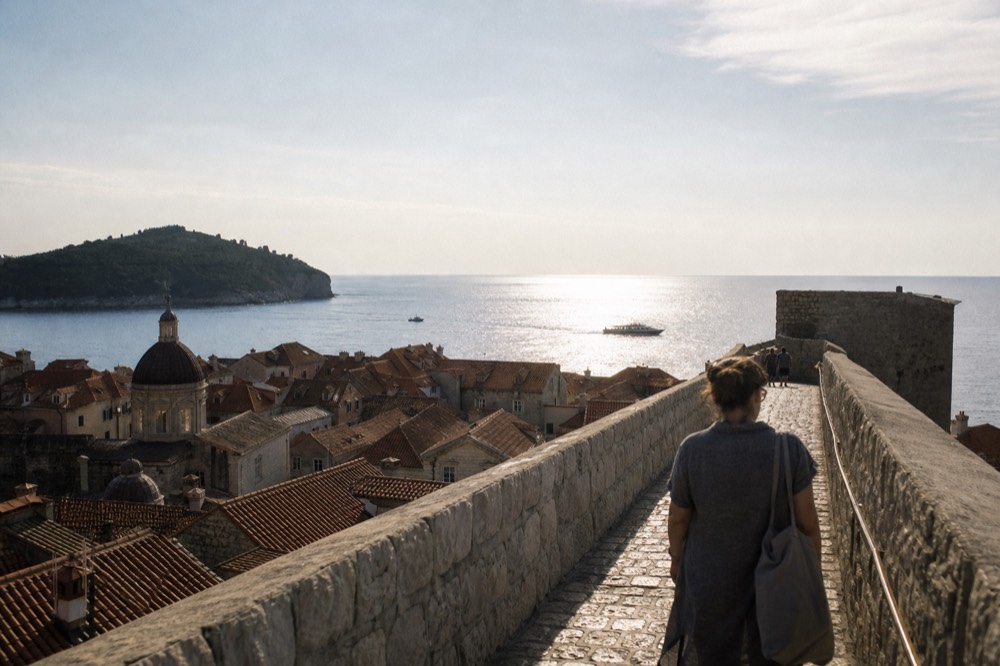
If you would rather have the walls explained than merely walked, the two-hour Ancient City Walls and Wars walk runs from $29.58 per person, rated 4.8 across 1,387 reviews, and the three-and-a-half-hour Old Town and walls combo covers both in one guided block from $50.94 per person, rated 4.8 across 1,183 reviews.
For the evening, the pattern that works is a carafe of house wine and a shared grill plate at a family konoba in the back streets, or the whole meal shifted to Gruž or Lapad if your legs will allow the bus. The point of this site, Things to Do in Dubrovnik, is that the city rewards people who plan two moves ahead, and nowhere is that truer than at dinner. The restaurants that survive on local loyalty cannot afford to be mediocre or expensive, and finding them is a two-staircase problem, not a research project.
One last planning note for the water-inclined: if your cheap day includes a swim, the sea temperature averages about 23.6 degrees in September as a long-run open-water average, and sheltered bays run warmer than that, so a picnic dinner on a beach in autumn is a real option rather than an optimistic one. The swimming season guide has the month-by-month numbers.
Common Questions About Cheap Eats in Dubrovnik
Is Dubrovnik Cheap or Expensive?
Expensive for Croatia, mid-range for Western Europe. The fixed costs are firm: 40 euro for the walls in main season, 40 euro for a one-day pass, 30 euro for a cable car round trip. Food is the flexible part, and behaviour matters more than timing.
Is Dubrovnik Still Cheap?
Not the way it once was, and shoulder season no longer guarantees bargains: cruise passengers peaked in September at 101,246 and October at 100,132 in 2025, above July and August. What remains cheap is bakery food, market produce and the free pay-what-you-want walks on GuruWalk.
Is It Cheap to Eat and Drink in Dubrovnik?
It can be. A bakery lunch costs a few euro, a konoba outside the tourist core costs roughly half of a Stradun terrace, and house wine by the carafe is the cheapest legitimate drink in the city. The same dishes appear across the whole price range; the address sets the bill.
Where Can I Find Cheap Food in the Old Town?
Bakeries, market counters and the konobas up the side staircases north and south of the Stradun. Everything on the Stradun itself or within sight of Pile Gate carries a view premium. One flight of stairs in any direction steps prices down immediately.
What Not to Do in Dubrovnik?
Eating every meal on the Stradun, buying Fort Lovrijenac separately at 15 euro when the 40-euro walls ticket already includes it, drinking only at view terraces, and lunching in the 10:00 to 13:00 cruise surge window. The traps are behavioural, and all of them are avoidable.
what not to do in dubrovnik?
Do not eat on the Stradun by default, do not double-buy Lovrijenac, do not assume December is expensive when the walls ticket drops to 20 euro, and do not dismiss the free GuruWalk walks, which are rated up to 4.9 across thousands of reviews.