How Much Is a Private Transfer from Split to Dubrovnik?
What a private transfer from Split to Dubrovnik really costs, how it compares with the bus and the ferry, and how the two cities stack up on price and looks.
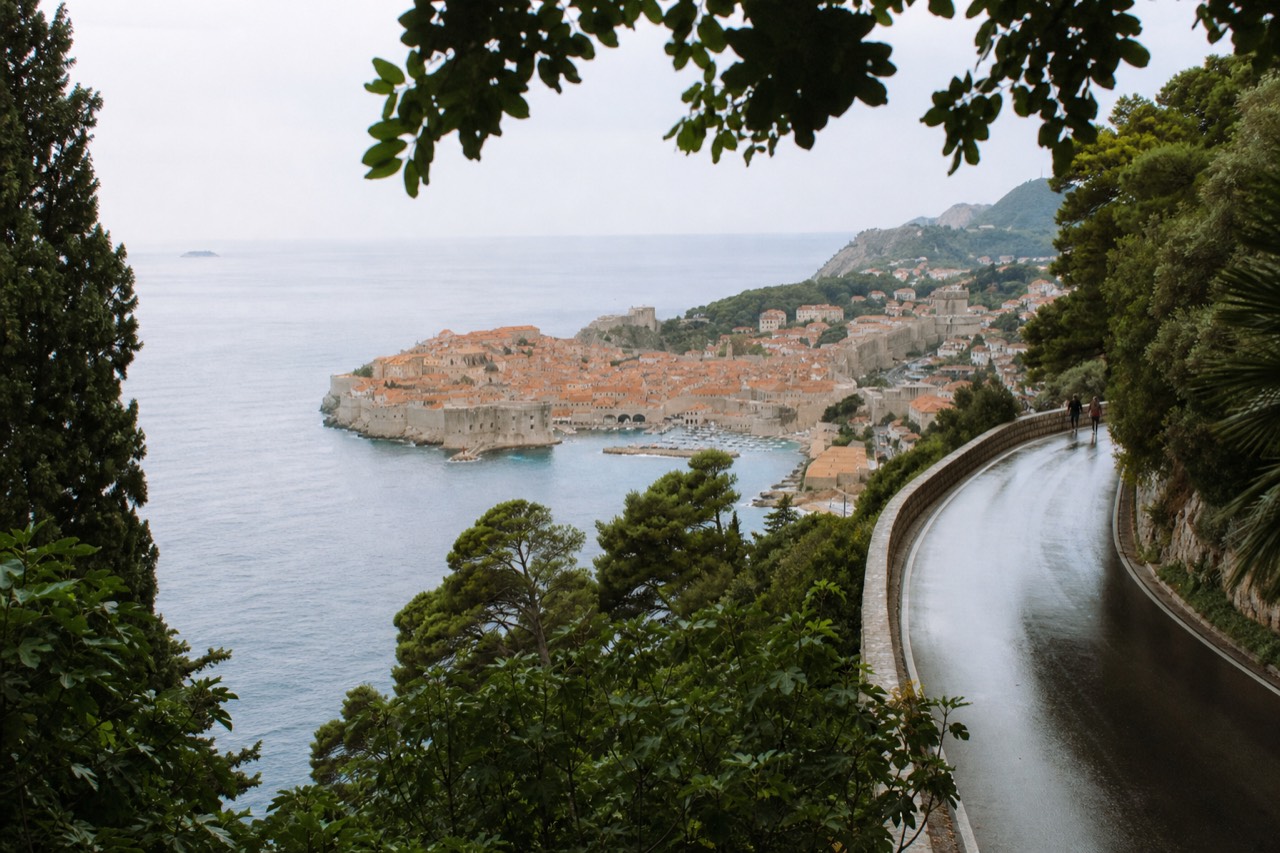
How Much Is a Private Transfer from Split to Dubrovnik?
A private transfer from Split to Dubrovnik is quoted per vehicle, not per person, and no operator publishes a fixed public rate for the route, so the honest answer is that the price is whatever the transfer company quotes when you book. What is fixed and verifiable is everything on either end of the drive: the walls ticket at 40 euro in main season, the cable car round trip at 30 euro, and the fact that the drive hugs the coast the whole way. Anyone who prints a single confident figure for the transfer itself is guessing, and this page will not guess.
I get this question constantly, usually from travellers landing in Split with a Dubrovnik hotel booked and a fixed number of days. The transfer decision is really three decisions bundled together: how much you pay, how long the door-to-door journey takes out of your day, and whether the alternative bus or ferry route would serve you better. Once you separate those, the choice usually makes itself.
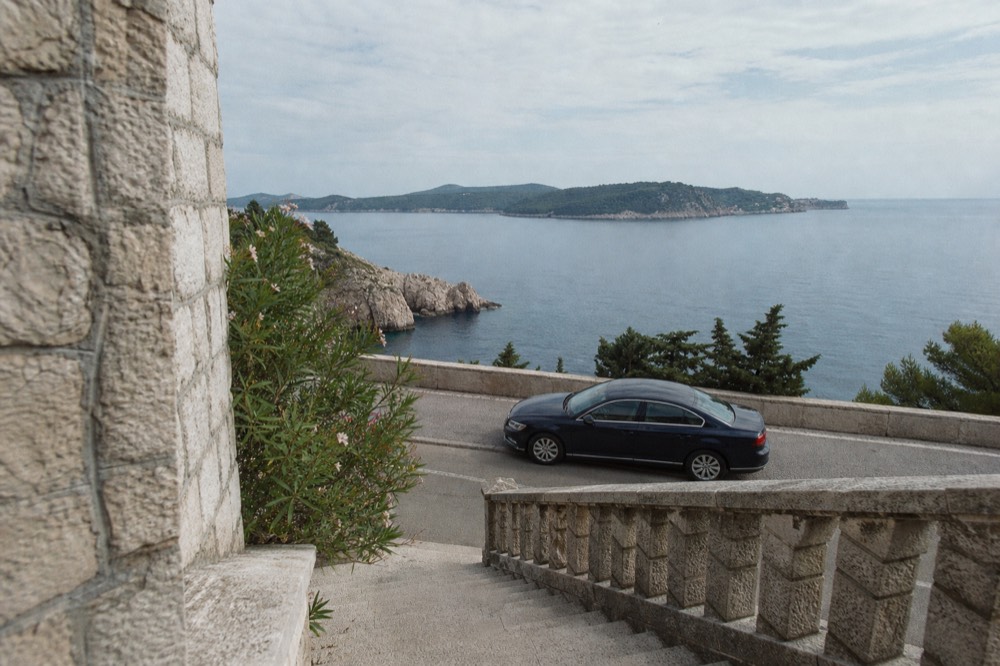
How Much Is a Private Transfer from Split to Dubrovnik?
There is no published, verifiable per-vehicle price for a private transfer on this route, and any specific number in an article like this one would be invented, so the reliable move is to request quotes from two or three transfer operators and compare them directly. Pricing moves with vehicle size, season and pickup point, and operators quote individually. The only firm transfer figure in this site's verified research is a different product entirely: a shared departure transfer from Dubrovnik and Cavtat to Dubrovnik Airport, from $20 per person, rated 4.5 across 57 reviews, which tells you the floor for shared vehicle pricing but nothing about the Split route.
Why does nobody publish the number? Because the route is quoted like a charter, not like a ticket. A sedan for two is one price, a van for six is another, and a same-day booking in August is a third. Operators also factor in where in Split you start, since a hotel pickup in the centre and a pickup at the airport are different jobs. When you request a quote, ask for the total including any waiting time and tolls, not a base rate, because the headline figure is where extras hide.
What you can plan around with confidence is the shape of the journey. The road runs down the Adriatic coast and passes through a short stretch of Bosnia and Herzegovina around Neum, which means you cross two borders in one drive. Carry passports, not just identity cards, and check the document rules for everyone in the vehicle before you book. The border stops are usually brief, but they are stops, and they are the reason a private transfer beats a rigid train connection that does not exist: there is no train from Split to Dubrovnik at all.
The practical comparison most travellers actually weigh is private transfer versus bus versus ferry, and I have laid out the full decision in the best way from Dubrovnik to Split, which covers the same corridor in both directions. The short version: the bus is the budget workhorse, the ferry is the scenic option when the schedule fits, and the private transfer is what you buy when your time is worth more than the fare difference.
| Split to Dubrovnik option | How pricing works | Best for |
|---|---|---|
| Private transfer | Quoted per vehicle on request, varies with season and vehicle size | Families, groups, fixed schedules, luggage |
| Intercity bus | Fixed per-person ticket, buy per seat | Solo travellers and pairs on a budget |
| Coastal ferry | Fixed per-person ticket, seasonal schedule | Travellers who want the islands from the water |
| Rental car, self-drive | Daily rate plus fuel and any border paperwork | Anyone stopping along the coast en route |
One planning note that surprises people: the transfer drops you at your Dubrovnik accommodation, but most Old Town addresses are inside a pedestrian zone with stairs, so the realistic promise is a drop-off at the nearest vehicle-accessible point, often near Pile Gate or Ploče Gate. Pack so you can walk the last stretch. If that is news to you, the guide to getting around Dubrovnik without a car explains which entrances work with luggage.
If you are arriving with a full day ahead of you and want to convert transfer day into sightseeing day, the most efficient pairing in the city is the cable car plus walls combination, which I will come back to below.
What Are the Alternatives to a Private Transfer?
The realistic alternatives are the intercity bus, the seasonal coastal ferry, and a self-drive rental, and each one wins a different category: the bus wins on price per person, the ferry wins on the view from the water, the rental car wins on the freedom to stop, and the private transfer wins on door-to-door simplicity with children or luggage. No single option wins overall, which is exactly why the question keeps getting asked.
The bus and ferry trade-offs deserve their own treatment, and I have written the full head-to-head in bus or ferry from Split to Dubrovnik, including where each one drops you in relation to the Old Town. The detail that matters here is arrival geography: Dubrovnik's main bus station sits in Gruž, a bus ride or a solid walk from the Old Town, while the ferry terminal is also in Gruž, so both public options finish with the same last-mile problem a private transfer solves by dropping you nearer your door.
Timing is the hidden variable. A private transfer leaves when you leave, which matters if your flight lands mid-afternoon and the last direct bus of the day is already a risk. The ferry only runs on its own seasonal schedule, and a missed sailing can cost you a night you had not budgeted. If your arrival into Split is tight against your Dubrovnik check-in, the premium you pay for a private transfer is really buying schedule certainty, and that is a legitimate purchase, not a luxury.
There is also the hybrid nobody mentions: transfer partway and stop. The coast between the two cities runs past Ston, whose walls and oysters justify a detour, and a private transfer is the only option where a stop is a negotiation with your driver rather than an impossibility. Some operators sell the stop as a product in itself, pairing the drive with an oyster tasting in Ston, and the verified Ston oyster and wine tasting tour from Dubrovnik, from $157 per person and rated 4.9 across 111 reviews, shows the same logic applied from the Dubrovnik end.
Once you are installed in Dubrovnik, the question changes from transport to spending, and the fixed, published prices are the ones worth memorising. The adult City Walls ticket is 40 euro in main season, 1 March to 30 November, and 20 euro in December, per the walls operator's own webshop. The cable car round trip is 30 euro for an adult, per the operator's price page. A Lokrum ticket is 30 euro per person including the return boat. Those three numbers anchor almost every Dubrovnik day budget, and they are the figures a transfer quote should be weighed against: if the transfer premium over the bus equals a walls ticket, you are trading a landmark for a seat.
What Is Prettier, Split or Dubrovnik?
Dubrovnik is prettier if you want one unbroken, postcard-perfect ensemble: a complete walled city of limestone and terracotta, 24.7 hectares of UNESCO-listed Old Town, with the Stradun running 298 metres between its gates and the circuit readable in a morning. Split is prettier in a layered, lived-in way, a working city grown around a Roman palace where ancient walls hold apartments and cafés, beauty you can lean against.
I say this as someone who walks the Dubrovnik streets for a living, and the distinction is honest rather than diplomatic. Dubrovnik's beauty is total and slightly theatrical: the walls are up to 25 metres high in places, the main wall is 4 to 6 metres thick on the land side, and the whole circuit of 1,940 metres reads as one act of civic will, finished in 1660 with the Bastion of St Stephen. The Old City was inscribed by UNESCO in 1979 under criteria (i), (iii) and (iv), and it spent 1991 to 1998 on the List of World Heritage in Danger, a reminder that what you are photographing was nearly lost within living memory.
Split's beauty is fragmented and everyday. The palace at its heart is a ruin the city moved into, and the effect is a place where a Roman peristyle shares a block with a fish market. Visitors who give Split only a transfer-night stop often leave disappointed, because its beauty does not present itself at the bus station the way Dubrovnik's presents itself at Pile Gate. Give it a morning and it grows on you; give it an afternoon and you start wondering why anyone argues.
The crowd reality also shapes which city photographs better for you personally. Dubrovnik recorded about 4.2 million overnight stays in 2025, sharing first place among Croatian destinations with Rovinj, and the Old Town's official carrying capacity is 11,275 people, monitored by six counters at the entrances updating every 15 minutes. Split absorbs its visitors across a bigger, less enclosed urban fabric. If your idea of pretty includes having the frame to yourself, time your Dubrovnik walk early and read the best time to walk the Dubrovnik walls before you go.
| Question | Split | Dubrovnik |
|---|---|---|
| Beauty type | Layered, lived-in, Roman core inside a working city | Concentrated, complete walled ensemble |
| Signature view | The palace peristyle at golden hour | The walls circuit over terracotta roofs |
| Crowd feel | Spread across a larger city | Concentrated in 24.7 hectares, capacity 11,275 |
| Best first hour | Wander the palace before the shops open | Walk the walls at opening time |
Which Is Cheaper, Dubrovnik or Split?
Split is cheaper than Dubrovnik on almost everything a visitor buys: accommodation, meals and drinks run noticeably lower in Split, while Dubrovnik carries a premium that peaks inside the walls and softens only in Lapad and Gruž. The fixed sightseeing costs are the exception worth knowing: Dubrovnik's headline tickets are published prices, 40 euro for the walls in main season, 30 euro for the cable car round trip, 30 euro for Lokrum, so at least you can budget them exactly.
The premium is structural, not spiteful. Dubrovnik's Old Town is a small, protected, pedestrian zone where every delivery is pushed by hand cart and every restaurant seat faces a monument, and the city's 4.2 million overnight stays in 2025 press on a limited stock of rooms. Split has more space, more supply and a resident population that keeps ordinary prices ordinary outside the palace core. The same espresso logic applies in both: two streets back from the main drag, prices drop. The rest of the planning pages sit on Things to Do in Dubrovnik.
Where the money goes in Dubrovnik is worth planning rather than resenting. The Dubrovnik Pass costs 40 euro for one day, 50 euro for three days, 60 euro for seven days, and in main season the one-day pass costs exactly the same as the standalone walls ticket while adding ten more sights plus a 24-hour bus ticket. That equivalence is a main-season fact only: in December the standalone walls ticket drops to 20 euro and no pass tier is on sale at all. If your transfer lands you in Dubrovnik for two sightseeing days, the three-day pass arithmetic is the first sum to do.
The transfer itself sits inside this comparison in an odd way: it is the one Split-to-Dubrovnik cost that is identical whichever city you end up preferring, because you pay it before you arrive. What changes is what you do with the money saved or spent afterward. A traveller who buses down and spends the difference on the walls, the cable car and a good dinner has, in my view, spent it better than one who transfers in style and then economises on the very things that made the trip worth taking.
Which Is Prettier, Dubrovnik or Split?
Asked the other way round, the answer flips by use case: Dubrovnik is the prettier destination, Split is the prettier base, because Dubrovnik's beauty is a destination you walk inside of on a timed circuit, while Split's is a city you live alongside for days at a time. Travellers who base in Split and visit Dubrovnik on a day trip get both; travellers who base in Dubrovnik and day trip outward get the islands, Montenegro and Mostar instead.
Neither choice is wrong, but they are different holidays, and it helps to be honest about which one you are booking. The case for Dubrovnik as the prettier destination is not really arguable, it is measurable: 1,940 metres of walls, 16 towers, 3 fortresses, 6 bastions, and Fort Lovrijenac standing on its 37-metre sea rock across the water, all inside a UNESCO property of 24.7 hectares. The view from Mount Srd, reached by a cable car that climbs 367 metres over a 778.2-metre track in 3 minutes 30 seconds, shows the whole ensemble at once, and the operator claims a view range of up to 60 km on a clear day. That is the postcard, and the postcard is real.
The case for Split as the prettier base is quieter. Rooms cost less, the evening promenade is local rather than purely touristic, and the transport links fan out in every direction, which is exactly why so many itineraries start there. But Dubrovnik's outward links are strong too, and if your heart is set on the walls at dawn or the cable car at sunset, basing in Split means commuting past your own highlight.
For the many travellers whose transfer day doubles as their first Dubrovnik day, the efficient move is a product that bundles the view and the walk. The Cable Car, Walking Tour and City Walls Combo, about 4 hours 30 minutes, from $90.66 per person and rated 4.6 across 360 reviews, does the Mount Srd ride, a guided Old Town walk and the walls in one sequence, which is a sensible way to spend an arrival afternoon that a bus would otherwise have consumed.
A lighter variant exists if the walls stairs feel like too much after a long transfer: Explore Dubrovnik by Cable Car, ticket included, about 3 hours, from $92.04 per person and rated 4.4 across 118 reviews, which pairs the ride with the Old Town tour and leaves the walls for a fresher morning.
Is Split or Dubrovnik Cheaper?
Split is cheaper, but the gap narrows to almost nothing once you price the specific things you came for, because Dubrovnik's major sightseeing costs are fixed and known while its accommodation premium is the line that hurts most, and a fixed ticket is at least a plannable ticket. A Split base with a Dubrovnik splurge day is usually the cheapest way to see both; a Dubrovnik base is more expensive and, most regulars agree, more worth it.
The transfer question you started with is the hinge between the two strategies, so break it down honestly. Accommodation: Split wins clearly. Food: Split wins outside the palace core, and Dubrovnik wins nowhere on price, though it wins plenty on setting, and the guide to where locals eat in Dubrovnik is how you eat well without the Old Town markup. Sightseeing: roughly a draw, because Split's palace core is largely free to wander while Dubrovnik's walls cost 40 euro in main season, but that 40-euro ticket also includes Fort Lovrijenac, the Western Outer Wall and the coin collection, so it buys more than the headline suggests.
The timing of your trip moves every number. Cruise passengers in 2025 peaked in September at 101,246 and October at 100,132, above July's 96,072 and August's 87,385, which means the autumn shoulder season, the traditional bargain window, is now Dubrovnik's busiest cruise period. The Port Authority limits cruise passengers to 8,000 a day in most cases, with only 18 days a year exceeding that out of 243 cruise days, but those 18 days cluster exactly when deal-hunters arrive. Cheap and quiet are no longer the same month here.
So the transfer budget decision, finally stated: if you are a pair travelling light with a full day to spare, take the bus and spend the difference on the walls and a long dinner. If you are a family with luggage and a check-in deadline, or your arrival lands awkwardly against the public schedule, the private transfer is worth requesting quotes for, and the per-vehicle price, whatever it turns out to be, is buying the only thing Dubrovnik never discounts: your first evening intact.
Whatever you choose, the drive itself is part of the holiday. The coast road between the two cities is one of the better few hours you can spend in a vehicle in Europe, and unlike the ferry it runs all year. Book the transfer for the morning, ask the driver about a Ston stop, and arrive in Dubrovnik with daylight left for the cable car, because the view from 405 metres is the best possible first impression of the city you just crossed a border to reach.
Common Questions About Private Transfers From Split to Dubrovnik
How much is a private transfer from Split to Dubrovnik?
There is no published fixed rate: operators quote per vehicle, and the price varies with vehicle size, season and pickup point, so request quotes from two or three companies and compare totals including tolls and waiting time. The only firm transfer figure in this site's verified research is a different route, a shared transfer from Dubrovnik and Cavtat to the airport from $20 per person.
Which Is Cheaper, Dubrovnik or Split?
Split is cheaper for accommodation and meals, clearly and consistently. Dubrovnik's sightseeing costs are fixed and published, 40 euro for the walls in main season, 30 euro for the cable car round trip, 30 euro for Lokrum, so the premium concentrates in where you sleep and eat rather than what you visit.
Is Split or Dubrovnik Cheaper for a Short Trip?
For a short trip, Split is cheaper as a base, but a one-day Dubrovnik pass at 40 euro, the same as the standalone walls ticket in main season from 1 March to 30 November, adds ten sights plus a 24-hour bus ticket, which softens the difference if your Dubrovnik day is sightseeing-heavy.
What Is Prettier, Split or Dubrovnik?
Dubrovnik is prettier as a concentrated ensemble: 1,940 metres of walls around 24.7 hectares of UNESCO-listed Old Town, with the Stradun running 298 metres between the gates. Split is prettier as a lived-in city grown around a Roman palace, and it rewards a slower look.
Do You Need a Passport on the Split to Dubrovnik Drive?
Yes, carry passports for everyone in the vehicle. The coastal road passes through a short stretch of Bosnia and Herzegovina around Neum, so you cross two borders in one drive, and border checks require proper travel documents.
Is the Bus or the Ferry Better Than a Private Transfer?
The bus is cheaper per person and runs frequently, the ferry is the scenic option on its own seasonal schedule, and both arrive in Gruž, a bus ride from the Old Town. The private transfer wins when you have luggage, children or a tight connection, because it leaves when you leave and drops you nearer your door.