Dominican Monastery Dubrovnik: What to See, Costs and Timing
The Dominican Monastery sits at the quiet north-eastern corner of Dubrovnik's Old Town, close to Ploče Gate and a short walk from the Stradun. This guide covers what is inside, what the neighbouring monastery and walls tickets actually cost, and the times of day and year when the whole quarter is calmest.
Short answer
The Dominican Monastery is a Gothic complex in Dubrovnik's Old Town with a cloister, a museum and a treasury, reached from Ploče Gate in a few minutes on foot. The walls ticket is 40 euro in main season, 1 March to 30 November, and 20 euro in December. The busiest cruise months are September at 101,246 and October at 100,132 passengers.
What Is the Dominican Monastery in Dubrovnik?
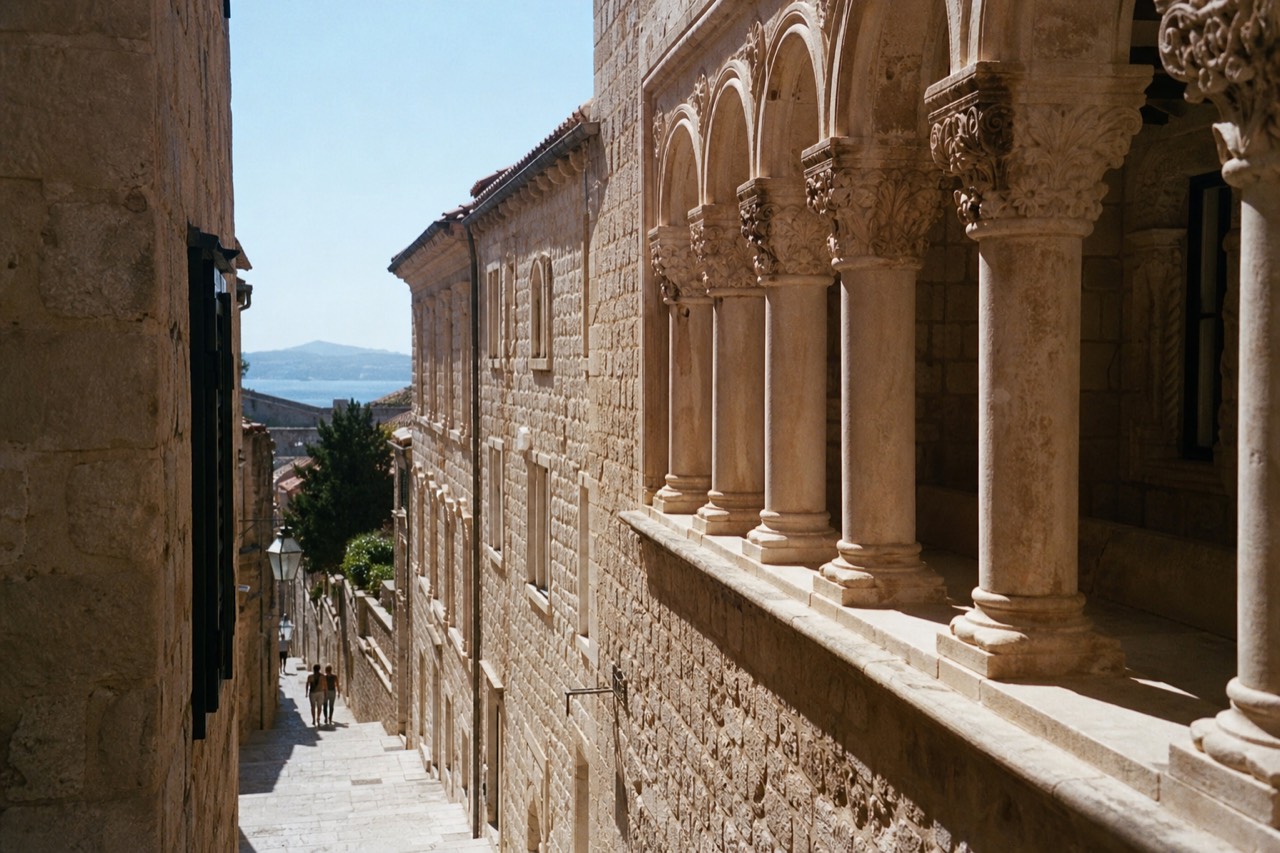
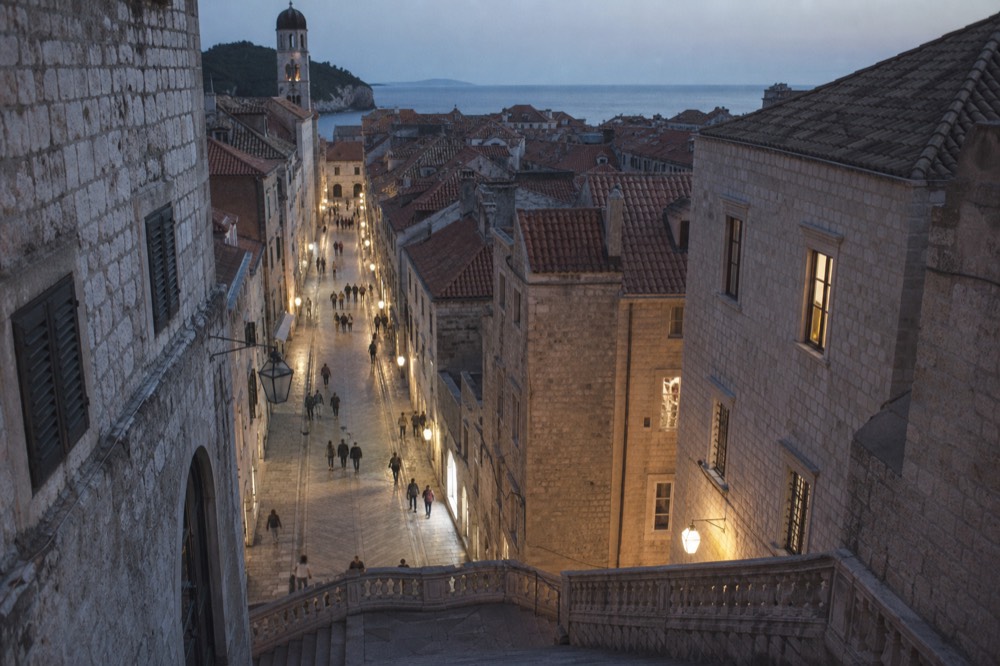
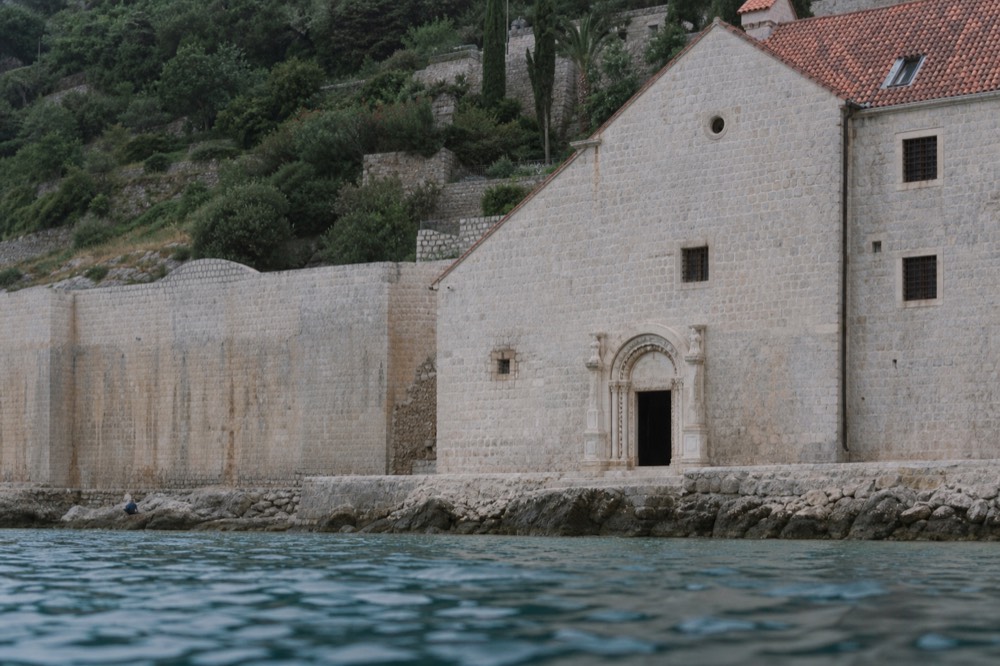
The Dominican Monastery is one of the largest religious complexes inside Dubrovnik's walled Old Town, and it sits hard against the city walls near Ploče Gate on the north-eastern side of the historic center, making it easy to spot as you explore this part of the old city. Visitors come for the cloister, the church interior, the small museum and the treasury, and for the fact that this corner of the city stays noticeably calmer than the Stradun at almost any hour of the day, a quality that is hard to overstate in a town this visited. The whole complex sits inside the UNESCO property, a 24.7-hectare zone inscribed in 1979 under criteria (i), (iii) and (iv), a few minutes on foot from the Stradun, the 298-metre main street whose final plan was fixed by the 1272 Statute.
I walk past this monastery most weeks, and the pattern never changes. Cruise groups funnel in at Pile Gate on the western side, walk the length of the Stradun, and turn around near Luža. The north-eastern corner, where the Dominican complex stands, catches only a fraction of that flow. If you want a quiet twenty minutes inside a genuinely old building, this is the most reliable spot inside the walls.
The complex works as a pair with the Franciscan Monastery on the opposite, western end of the Old Town. The two were built to anchor the city's two main gates, and visiting both gives you a natural loop: one monastery, the Stradun, the other monastery, and back. That loop is exactly the shape a good guided walk takes, and it is the reason the guided Old Town tours all pass this door.
For the wider picture of the quarter, see the Old Town area guide, and for the street that connects the two monasteries, the Stradun walkthrough covers every landmark along it.
How Much Does It Cost to Go to the Franciscan Monastery in Dubrovnik?
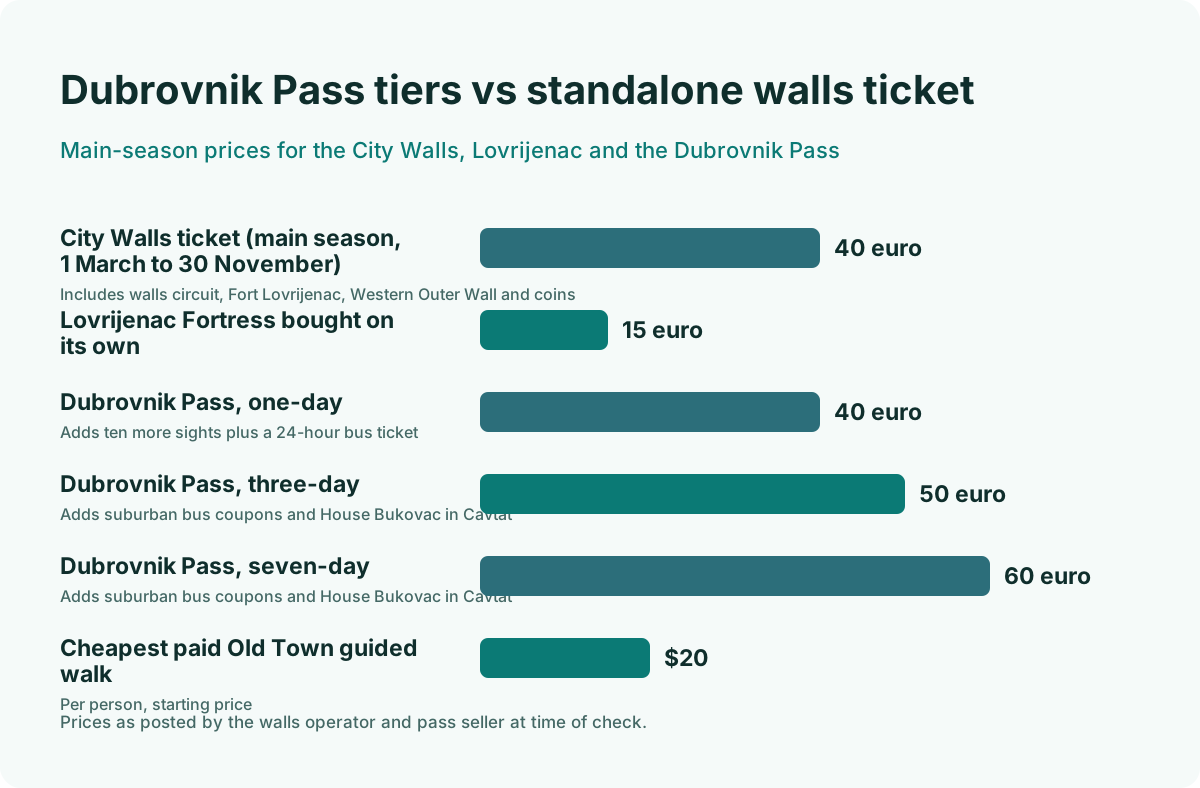
The Franciscan Monastery charges a separate entrance fee for its cloister and museum, and the current figure is posted at the entrance rather than published in a verified source I can quote, so check at the door before you budget. What I can state exactly are the neighbouring prices, because they come from the operators' own webshops: the adult City Walls ticket is 40 euro in main season, 1 March to 30 November, and 20 euro in December, with children 7 to 18 at 15 euro then 5 euro, and under 6 free. There is no family ticket of any kind, only adult and child 7 to 18 articles are sold.
That 40-euro walls ticket is actually a combination: it covers the walls circuit plus Fort Lovrijenac, which stands on a 37-metre-high sea rock across the bay, and it also includes the Western Outer Wall, closed December through February, and the Collection of Coins of the Republic of Ragusa. Lovrijenac bought on its own is 15 euro. The walls operator's stated working hours at time of check were 08:00 to 19:30.
The Dubrovnik Pass changes the arithmetic. In main season the one-day pass costs 40 euro, exactly the same as the standalone walls ticket, and adds ten more sights plus a 24-hour bus ticket; the three-day pass is 50 euro and the seven-day pass is 60 euro, both adding suburban bus coupons and House Bukovac in Cavtat. Every tier lists City Walls plus Lovrijenac Fortress as its first inclusion, and every tier allows a one-time visit to each institution. In December the walls ticket drops to 20 euro while no winter pass tier is on sale at all, so the "pass costs the same as the walls" comparison holds in main season only. Full details are in the Dubrovnik Pass guide, and the official pass site is dubrovnikpass.com.
| Ticket | Main season, 1 Mar to 30 Nov | December |
|---|---|---|
| City Walls adult, includes Lovrijenac | 40 euro | 20 euro |
| City Walls child 7 to 18 | 15 euro | 5 euro |
| Child 6 and under | free | free |
| Lovrijenac Fortress alone | 15 euro | 15 euro |
| Dubrovnik Pass, 1 day | 40 euro | not on sale |
| Dubrovnik Pass, 3 days | 50 euro | not on sale |
| Dubrovnik Pass, 7 days | 60 euro | not on sale |
Neither monastery's interior fee is bundled into the walls ticket or the pass, so budget for it separately. The honest planning position: carry some euro cash for monastery entrances, expect a modest per-person fee, and treat anything you read online that names a figure without a source with suspicion. Prices in Dubrovnik do shift between seasons, and the door is the only authority.
If you would rather have someone else sequence all of this, the monastery quarter, the walls decision and the Stradun, a guided walk does it for less than the walls ticket itself. The cheapest paid Old Town walk starts at $20 per person, and the most popular options are below.
What Not to Do in Dubrovnik?
The mistakes that cost visitors the most are walking the walls at midday in high summer, buying a pass in December when no winter tier exists, assuming the Stradun is the whole Old Town, and showing up with no plan for cruise-day crowds. Each of these is avoidable with a little timing knowledge, and none of them requires spending more money, only a small shift in when and where you do things. The single worst habit I see is treating the city as a corridor between Pile Gate and Luža: the Dominican quarter, the back lanes of Ploče and the stair streets above the cathedral are where the city actually breathes.
Do not plan the walls circuit for the middle of the day between June and August. The wall is open, the sun is directly overhead, and large stretches offer no shade at all. Early morning or the last two hours before closing are dramatically more comfortable, and the light for photographs is better. That is the right instinct, and it is better to have it before you buy a 40-euro ticket.
Do not eat on the first terrace you see near Pile Gate or Luža. Walk two streets in any direction and prices fall and quality rises. The same logic applies to souvenirs: the lace and linen stalls nearest the gates carry the heaviest markups. And do not rely on a card for everything; smaller churches, monastery entrances and market stalls in the Gruž market still work better with cash.
| Common mistake | Why it hurts | Better move |
|---|---|---|
| Walls at midday in summer | No shade on the circuit, heat exhaustion risk | First opening or late afternoon |
| Buying a pass in December | No winter tier is on sale at any price | Standalone 20-euro walls ticket |
| Staying only on the Stradun | You miss the quietest, oldest corners | Loop through the Dominican quarter |
| Eating beside the main gates | Highest prices, lowest local ratio | Two streets inland in any direction |
One more: do not treat a cruise schedule as a rumour. The Port Authority publishes real numbers, and the days to watch are knowable in advance. More on that in the timing section below, because September and October, not July and August, are the two busiest cruise months of the year.
Is Dubrovnik Good for Beaches?
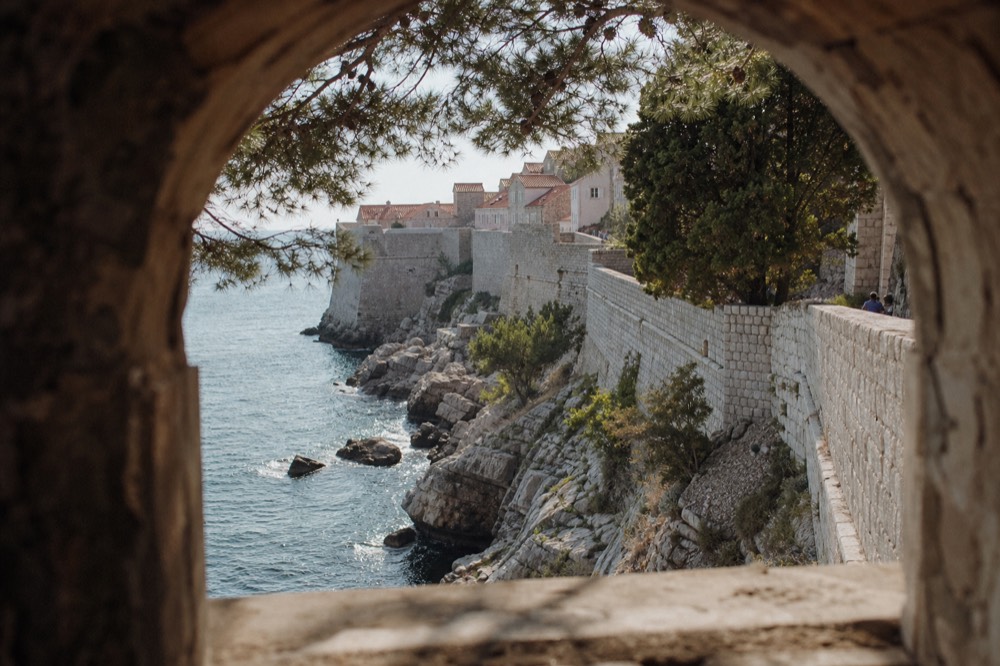
Yes, Dubrovnik is good for beaches, though with a caveat: the strands closest to the Old Town are small, pebbly and busy in summer. The best swimming sits a short bus or boat ride away in Lapad, on the wooded island of Lokrum, or around the Elaphite islands, where the water is clearer and the crowds thinner. The sea itself is genuinely warm through the summer: the long-run August average for this coast is about 25.8 degrees and September about 23.6 degrees, from the NOAA OISST 1991 to 2020 climatology, an open-water average rather than a beach thermometer. Sheltered bays run warmer still; the Croatian met service's Dubrovnik buoy read 27.0 to 27.4 degrees on 8 September 2026 against that 23.6 September mean.
The nearest real beach to the Dominican quarter is Banje, below Ploče Gate, a five-minute walk downhill. It is photogenic, it looks straight back at the walls, and in July and August it is packed by mid-morning. Copacabana and the Lapad bay beaches on the western side of the city are roomier and easier with children, reached by city bus in a short ride. Lokrum, the forested island visible from the harbour, has rocky swimming spots and a botanic garden, and the 30-euro Lokrum ticket covers both reserve entry and the return boat transfer, with departures from the City Harbour at 09:00, then every 15 minutes from 10:00 to 18:00.
The honest framing for a monastery-and-beach day: the Dominican complex and the walls are morning activities, beaches are afternoon activities, and the sea is at its calmest and warmest late in the day. Swimmers should also know the water cools fast once October arrives; the October long-run average is about 21.0 degrees, comfortable for some and brisk for others. The full picture, including which beaches suit families, is in the beaches guide.
If your trip is built around the water rather than the stones, the island options are where Dubrovnik earns its reputation. The most-reviewed full-day cruise in the roster runs 8 hours from $59.16 per person, rated 4.9 across 10,312 reviews, with a fish picnic lunch included, and there are shorter options if a full day afloat is too much.
What Will You Actually See Inside the Monastery?
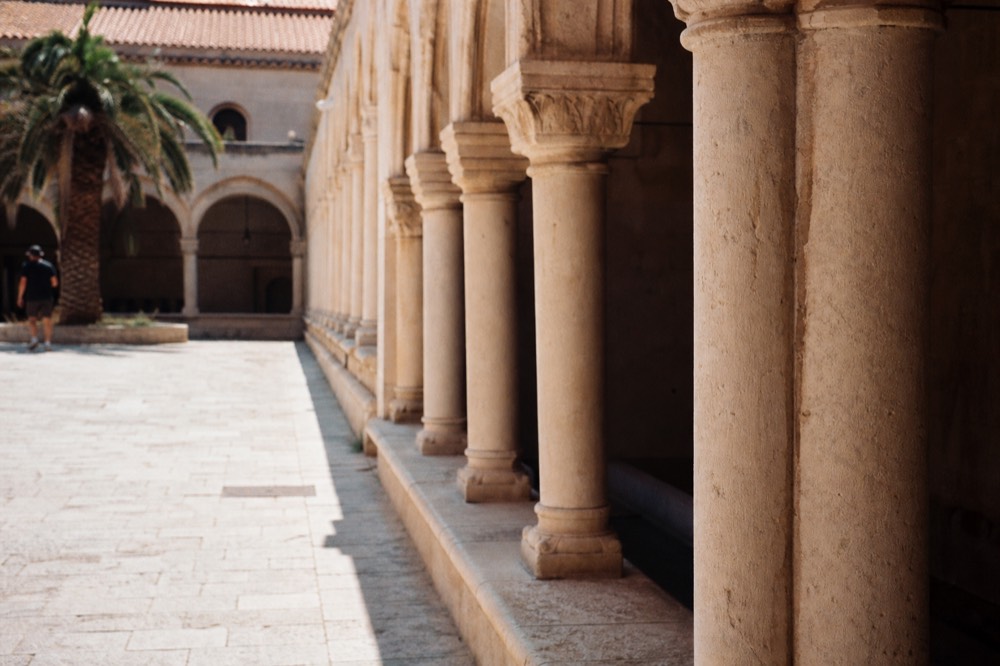
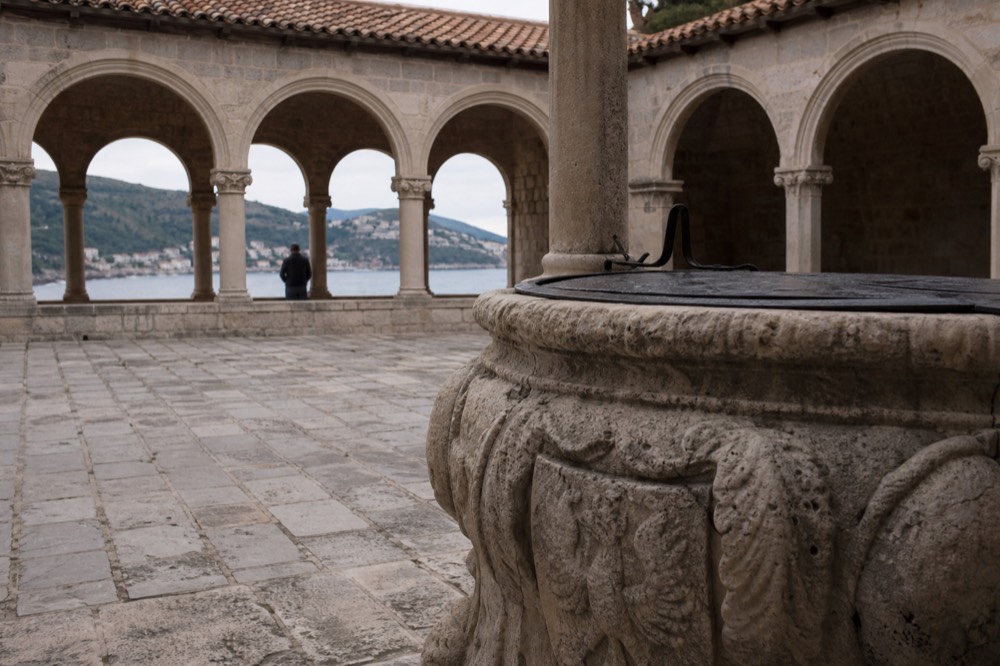
Inside the Dominican Monastery you find a stone-vaulted church, a cloister arcade wrapped around a garden court, a small museum of sacred art and a treasury, all compact enough to see comfortably in thirty to forty-five unhurried minutes. The cloister is the reason most people come: a square arcade of carved stone columns, quiet at almost any hour, and one of the most photogenic corners inside the walls. Photography is generally welcome in the cloister but restricted in the treasury, and the standard courtesy rules of an active religious house apply: shoulders covered, voices low, no flash on fragile objects.
The museum displays paintings, liturgical objects, manuscripts and reliquaries accumulated over the monastery's long life. I will not attach centuries or artist names to individual pieces here, because those claims circulate widely online without a primary source behind them, and repeating them is how confident wrong numbers get into print. What I can say from walking the rooms is that the collection rewards slow looking, and that the building itself, its scale and its masonry, is as much the exhibit as anything in the cases.
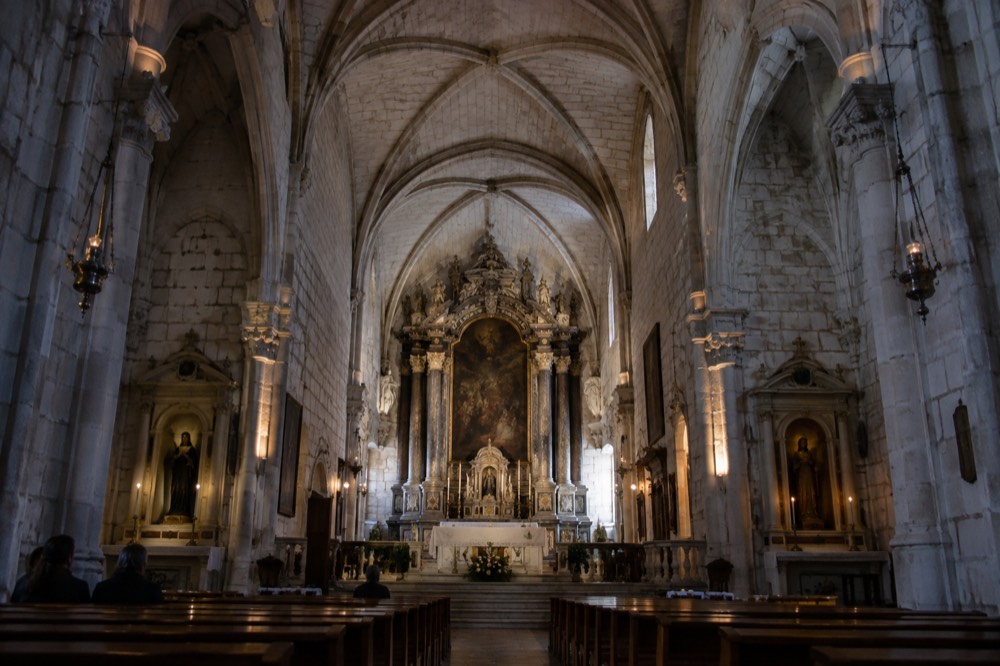
The location is the quiet advantage. The monastery presses directly against the city wall on the north-east side, so from points near the complex you can stand with the wall's mass rising above you, 4 to 6 metres thick on the land side and up to 25 metres high in places along the 1,940-metre circuit. The wall's full inventory, 16 towers, 3 fortresses, 6 bastions and the rest, is documented by the walls operator at citywallsdubrovnik.hr, and the walls' final construction phase closed in 1660 with the Bastion of St Stephen.
Pair the visit with the Franciscan Monastery on the western end and you have the two anchors of the Old Town in one loop. The Franciscan house is known for its cloister and for housing one of the oldest pharmacies in Europe, a claim you can make safely without pinning a founding year to it, since no primary source for a date has been verified. Details for that visit are in the Franciscan Monastery guide.
When to Avoid Dubrovnik?
Avoid Dubrovnik in the middle of the day on peak cruise days, and know that September and October, not July and August, are the two busiest cruise months: September carried 101,246 and October 100,132 cruise passengers in 2025, against July's 96,072 and August's 87,385. That single fact reorganises every piece of timing advice, because the conventional wisdom that August is the month to dodge is simply wrong. The full year 2025 brought 625,257 cruise passengers, up from 582,499 in 2024, and 461 cruise calls are scheduled for 2026.
The Port Authority limits cruise passengers to 8,000 a day in most cases, and of 243 cruise days a year only 18 exceed 8,000, with only 4 slightly above 10,000. Even so, the Old Town's official carrying capacity, from the UNESCO carrying-capacity assessment, is 11,275 people, monitored by six counters at every Old Town entrance updating a headcount every 15 minutes. Those counters feed a public dashboard, and the pattern they show is consistent: a real half-hourly curve read on 8 September 2026 ran 1,200 people at 04:00, 5,419 at 08:00, a 7,739 peak at 10:00, then 7,205 at 11:00. Before 08:00 and after about 18:00 the same streets feel like a different city.
For the rest of 2026, the remaining season schedule holds 149 ship calls across 80 cruise days, 217,458 passengers by capacity. The busiest days in that window are 6 October with 2 ships and 5,798 passengers, 29 September with 5,675, 30 September with 5,536 and 15 September with 5,273. Those are ship-capacity figures, not a count of people who actually walk ashore, but on a day with three or four ships in port you should expect the Stradun at midday to be a procession. The monastery quarter, again, absorbs that better than anywhere else inside the walls.
| Month 2025 | Cruise passengers | What it means for you |
|---|---|---|
| July | 96,072 | Hot and busy, but not the peak |
| August | 87,385 | Hottest water, fewer cruise calls than September |
| September | 101,246 | Busiest cruise month of the year |
| October | 100,132 | Second busiest, milder air |
| November | 28,480 | Quiet, some closures begin |
| December | 2,458 | Walls ticket 20 euro, no pass tier on sale |
The shoulder logic still works, you just have to apply it inside the day rather than inside the month. A September morning that starts at 07:30 at the monastery, hits the walls at opening and is off the circuit by 10:30 beats an October midday in every measurable way: crowd, light and temperature. The Port Authority's own statistics are published at portdubrovnik.hr if you want to check the schedule for your own dates, and the monthly detail is in the Dubrovnik in September guide.
Timing your whole visit? The month-by-month breakdown, including sea temperatures and event calendars, is in the best time to visit guide.
How Does the Monastery Fit a Walking Route?
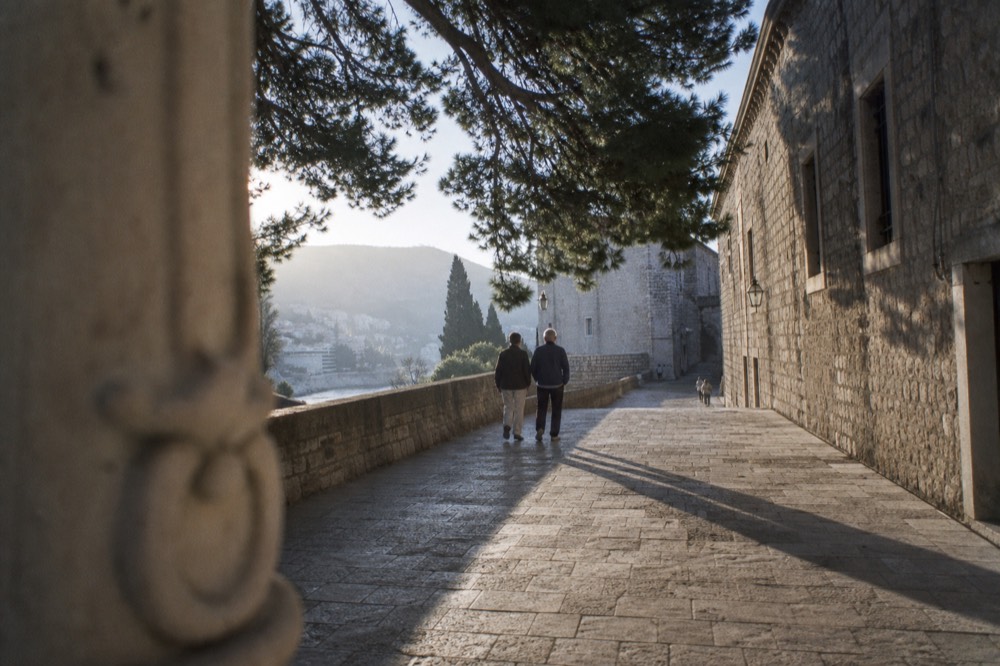
The Dominican Monastery anchors the eastern end of a natural loop through the Old Town: Ploče Gate, the monastery and its cloister, the cathedral, Luža and the Sponza Palace, the Stradun west to the Franciscan Monastery, and out at Pile Gate. Walked without stops it takes under half an hour; with the monastery, the cathedral and a coffee stop it fills a relaxed morning. Starting at Ploče rather than Pile inverts the crowd flow, because almost everyone else starts at Pile and walks toward you.
I recommend this direction to visitors who ask, and for one concrete reason: the morning cruise crowds build from the Pile end westward, so an east-to-west walk puts the busiest stretch behind you by the time it fills up. It also front-loads the quiet. The monastery at 09:00 is often near empty while the Stradun two hundred metres away is already filling.
A guided walk handles this sequencing for you, and the local-guide version is the one I would point people at: it runs from $20 per person and is rated 4.8 across 5,826 reviews.
Alex was a fantastic guide, she explained the complex history of Dubrovnik to give a lasting impression of the history of the area. Really appreciated that she aimed for shaded areas on a boiling September day. The food recommendations for after were much appreciated too! Great tour for a first experience of the old town!
Sophie
If you want the monastery plus the walls in one guided block, the combo version strings the Old Town and the walls circuit together over about 3 hours 30 minutes from $50.94 per person, rated 4.8 across 1,183 reviews. It costs less than the tour plus a standalone walls ticket bought separately, which is the kind of arithmetic worth doing before you commit.
Practical Notes for Visiting the Monastery Quarter
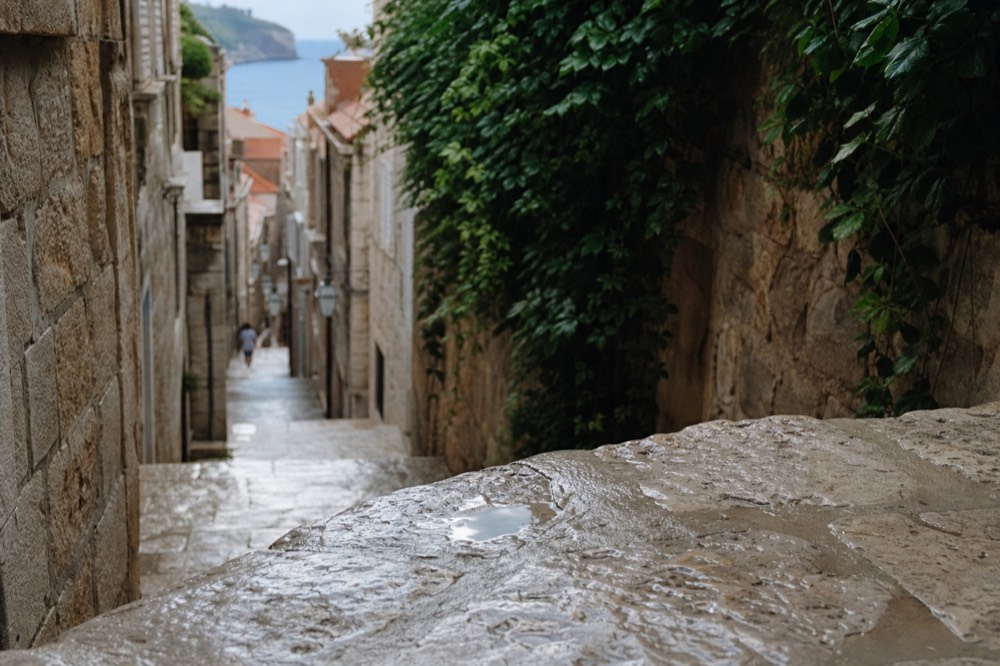
Bring euro cash for the monastery entrance, cover your shoulders and knees, allow thirty to forty-five minutes inside, and plan the visit for morning or late afternoon when the neighbouring streets are quietest and the light is at its best. The complex is an active religious house first and a sight second, so mass times and services take precedence over tourism, and the museum may close for them without much notice. The immediate streets are stepped and cobbled, so whatever footwear you wear for the walls, wear it here too.
Getting there is simple. From Ploče Gate the entrance is a couple of minutes on foot; from the Stradun, walk east past Luža and the cathedral and you arrive within five. If you are coming from a ship, the walk from the cruise port area to the Old Town is covered in detail in the cruise port to Old Town guide, and the hop-on-hop-off bus with audio guide, from $35.46 per person and rated 4.9 across 1,147 reviews, is the lazy option that drops you within reach of a gate.
| Practical point | What to expect |
|---|---|
| Time needed inside | 30 to 45 minutes at museum pace |
| Best hours | Early morning, or after 17:00 in summer |
| Dress | Shoulders and knees covered |
| Payment | Euro cash for the entrance fee |
| Access | Stepped, cobbled streets; not step-free |
| Nearest gate | Ploče Gate, a couple of minutes on foot |
Combine it with a viewpoint finish. The cable car terminal sits just outside Ploče-side streets, and the ride covers 778.2 metres of track in 3 minutes 30 seconds, lifting you from 38.0 metres to 405.0 metres above sea level, with the operator claiming a view range of up to 60 km on a clear day. A 2026 adult round trip is 30 euro, one way 17 euro, children 4 to 12 at 8 euro round trip, under 4 free. The monastery in the morning, the walls before the heat, the cable car for sunset: that is a full and well-paced Dubrovnik day, and it is the shape I would hand to any first-time visitor planning through Things to Do in Dubrovnik.
The wider set of options, from walks to boat days, is compared in the best tours guide, and the full attraction list sits alongside this page in the attractions guide.
Common Questions About the Dominican Monastery in Dubrovnik
What Is the Dominican Monastery in Dubrovnik?
It is one of the largest religious complexes inside the walled Old Town, standing against the city walls near Ploče Gate. Visitors come for the cloister arcade, the church, the museum of sacred art and the treasury, and for the fact that this corner stays calmer than the Stradun at almost any hour of the day.
How much does it cost to go to the franciscan monastery in dubrovnik?
The Franciscan Monastery charges a separate entrance fee for its cloister and museum, and the current figure is posted at the door rather than in any verified source, so check on arrival. It is not included in the City Walls ticket or the Dubrovnik Pass, so budget for it separately from the 40-euro main-season walls ticket.
When to Avoid Dubrovnik?
Avoid midday on peak cruise days, and note that September and October, not July and August, are the busiest cruise months: 101,246 and 100,132 passengers respectively in 2025. Early mornings before 08:00 and evenings after 18:00 are dramatically quieter, even on busy days.
Is Dubrovnik Good for Beaches?
Yes, though the nearest beaches to the Old Town are small and pebbly. Banje sits below Ploče Gate, the Lapad bay beaches are roomier and a short bus ride away, and Lokrum offers rocky swimming with a 30-euro ticket that includes the return boat. The August long-run sea average is about 25.8 degrees, September about 23.6.
How Long Should I Spend at the Monastery?
Thirty to forty-five minutes covers the cloister, church, museum and treasury at a comfortable pace. Add another half hour if you want to photograph the cloister arcade properly or sit in the court, and pair the visit with the cathedral and Luža, which are all within a five-minute walk.
Is the Dominican Monastery Included in the Dubrovnik Pass?
No. The pass covers the City Walls plus Lovrijenac Fortress and a list of museums, but the monasteries charge their own entrance fees separately. The one-day pass costs 40 euro in main season, 1 March to 30 November, the same as the standalone walls ticket, and adds ten more sights plus a 24-hour bus ticket.