Is Croatia Cheap or Expensive?
An honest cost breakdown of Croatia for travellers, from Dubrovnik's verified ticket prices to what Americans and coffee drinkers should actually budget.
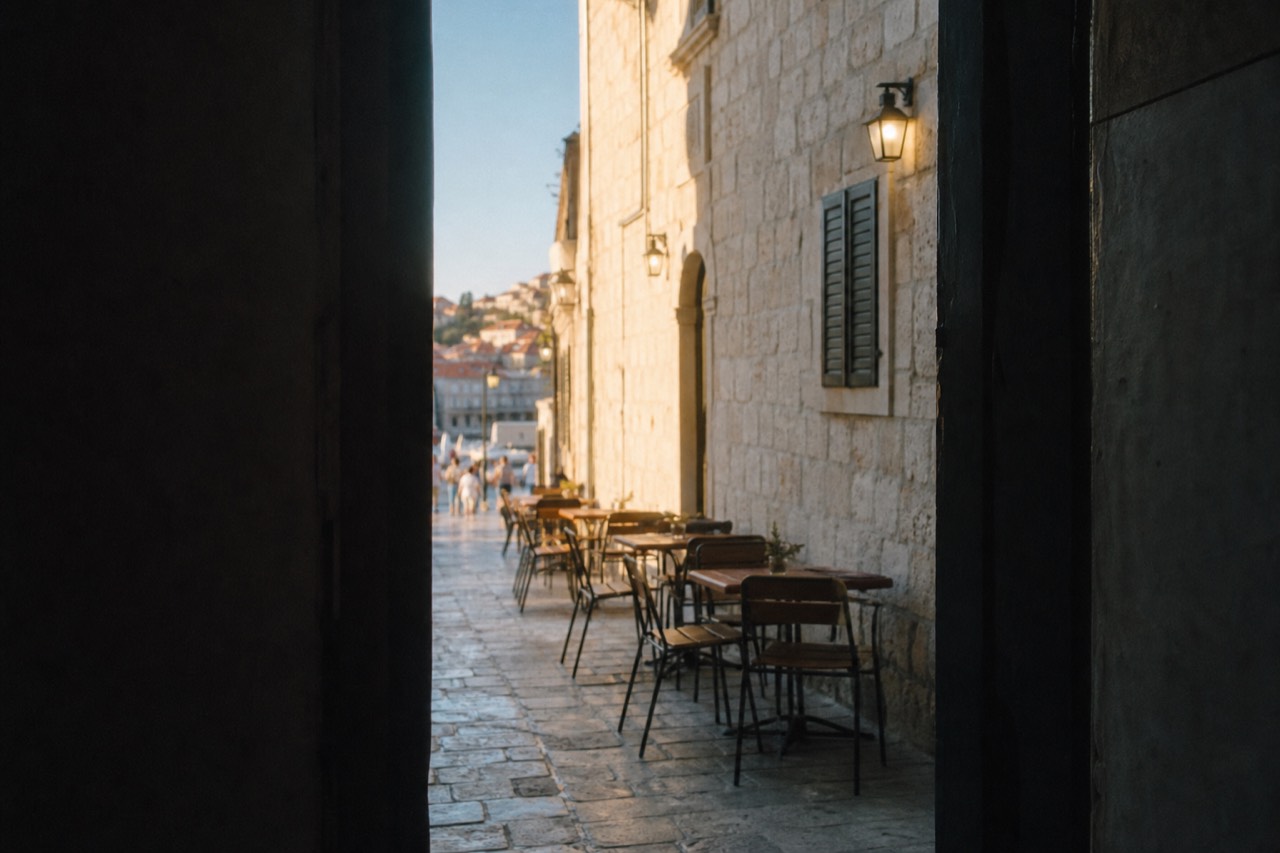
Is Croatia Cheap or Expensive?
Croatia is neither the bargain it was a decade or two ago nor a second Italy. The country recorded 20.7 million arrivals and 94.8 million overnight stays in commercial accommodation in 2025, and prices have followed the crowds. Coastal hotspots such as Dubrovnik carry Western European ticket and dinner prices, while ordinary inland towns still cost meaningfully less. The honest answer: mid-range overall, expensive at the famous addresses.
I get this question from guests every week, and the frustration behind it is always the same. Someone visited fifteen years ago and remembers coffee and rooms costing a fraction of what they see online today. Someone else read a listicle claiming Croatia is still Eastern Europe cheap, booked a terrace table on the Stradun, and got a bill that felt like Zurich. Both impressions are real, because Croatia is now two price zones wearing one flag.
The numbers that are actually verifiable tell a clear story. Croatia overall took 20.7 million arrivals and 94.8 million nights in commercial accommodation in 2025, according to the Croatian Bureau of Statistics, and Dubrovnik shared first place among Croatian destinations with Rovinj at about 4.2 million nights each. Volume like that pulls prices up, and it pulls them up most where the volume concentrates: the walled Old Town, the seafront, the islands in July and August.
What follows is the cost picture I can actually defend with primary sources, focused on the things a visitor pays for directly: tickets, tours, transport and the small daily purchases that quietly decide a budget. Where I have a verified figure I give it; where the honest answer is "it depends on which street you are standing on," I say that instead of inventing a number.
Here are the anchor prices I use when a visitor asks me to sanity-check a Dubrovnik budget. Every figure below comes from the operator's own site or shop, not from a blog round-up.
| Paid item | Verified price | What it includes |
|---|---|---|
| City Walls adult ticket | 40 euro | Walls, Fort Lovrijenac, Western Outer Wall (closed December to February), coin collection |
| City Walls child 7 to 18 | 15 euro | Same inclusions, main season 1 March to 30 November |
| Dubrovnik Pass, one day | 40 euro | Walls and Lovrijenac plus ten more sights and a 24-hour bus ticket |
| Cable car adult round trip | 30 euro | Return ride to Mount Srd, 405 metres above sea level |
| Lokrum Island ticket | 30 euro | Reserve entry and return boat transfer |
| Cheapest paid Old Town walk | From $20 per person | Guided walking tour of the Old Town |
Read that table one way and Dubrovnik looks expensive: a family pays four times the 40-euro adult walls ticket in August, with children 7 to 18 at 15 euro each. Read it another way and the value levers are obvious. The one-day pass costs exactly the same 40 euro as the walls ticket in main season and stacks on ten more sights plus buses, and in December the walls ticket drops to 20 euro while the cruise and coach crowds vanish. Timing and ticket choice move the budget more than any amount of restaurant research.
If you want the short version of what to book rather than what to skip, these three products cover the classic first-day trio: the walls, a guided walk, and a cable car combination.
Is Coffee Expensive in Croatia?
Coffee in Croatia is cheap by habit and expensive by address, and the spread between those two is the whole answer. A standing espresso at a neighbourhood bar in a normal street costs a fraction of what the same cup costs on a famous terrace. I cannot quote you a verified single price because none exists in the primary sources, but the pattern is consistent everywhere: the view is on the bill.
I want to be straight about what I can and cannot tell you here. My verified facts file covers walls tickets, cable car prices, sea temperatures and cruise statistics, all read from primary sources. It does not contain a verified coffee price for Croatia, and the rules I write under mean I do not invent one. Plenty of round-ups will hand you a number to two decimal places. Those numbers are usually somebody's memory of one bar, one year.
What I can tell you, from living and guiding here, is how the pricing actually behaves. Croatians drink coffee standing or sitting for a long time, and the neighbourhood konoba-and-bar layer still prices for locals because it has to. The first jump in price comes with a sea view. The second, much bigger jump comes with a UNESCO-listed view, which in practice means the Stradun and the terraces around it in Dubrovnik. The same drink can cost several times more thirty metres apart, and both prices are "correct" for where you are sitting.
The practical advice follows from the pattern, not from a number. Drink your first coffee of the day two or three streets back from the main drag, where the bakery-and-bar economy lives, and treat a terrace on the Stradun as what it is: paid seating with a backdrop. This is also where the free layer of Dubrovnik earns its keep. The Old Town walk itself costs nothing, three pay-what-you-want walks run on GuruWalk, and the view from the walls or Mount Srd is a one-time ticket rather than an hourly rate. Our free things to do guide covers that layer in detail.
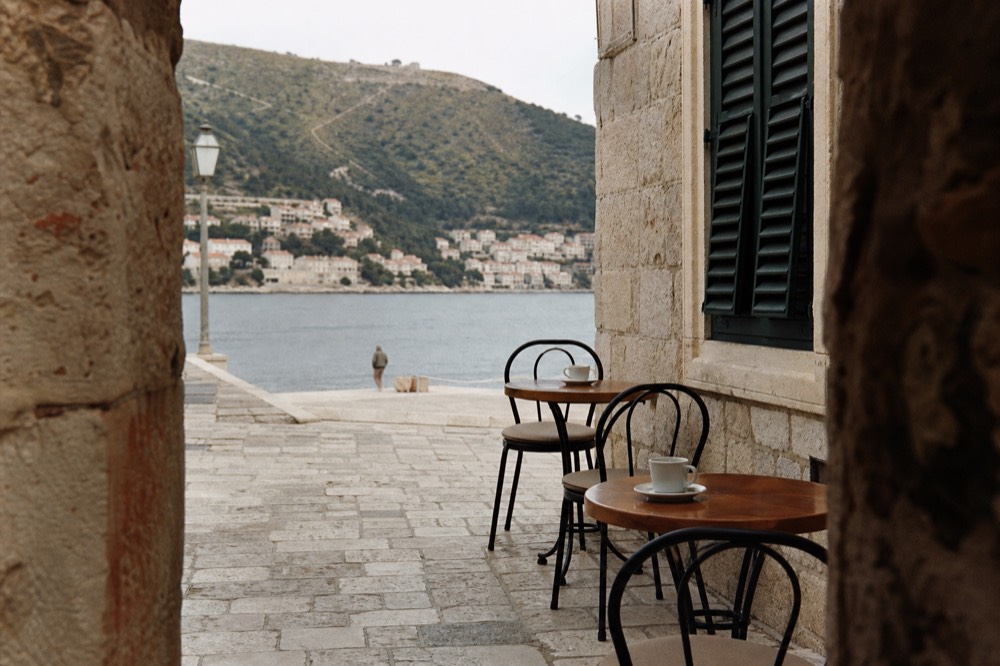
One cost trap worth naming in a coffee section: the cash question. Croatia uses the euro, cards are widely accepted, and the old "carry a wad of kuna" advice is obsolete. The expensive mistake is not payment method, it is ordering without looking, especially on a terrace where a "coffee" can arrive as a full dessert with a price to match. Ask what the house coffee is, and the price behaves.
Is Croatia Expensive for Americans?
For American visitors Croatia reads as mid-priced and occasionally startling. The euro-denominated ticket prices sit below comparable Western European sights, so the big line items feel manageable, but the dollar-to-euro exchange rate and the summer peak can push a Dubrovnik week toward a major US city budget. Shoulder season is where Americans get real value.
Start with the anchor prices an American actually pays in Dubrovnik. The walls at 40 euro, the cable car round trip at 30 euro, Lokrum at 30 euro: none of these are extreme next to what a marquee sight charges in Paris or Venice. The paid tour layer starts low too, with the cheapest verified Old Town walk from $20 per person and the most-reviewed island cruise, the full-day Elaphite trip, from $59.16 per person carrying 10,312 reviews at 4.9. Against US sightseeing prices, that layer is genuinely reasonable.
The expensive part is lodging and the summer peak, and that is not a feeling, it is volume. Dubrovnik recorded about 4.2 million overnight stays in 2025, sharing first place in Croatia with Rovinj, per the Croatian Bureau of Statistics. Rooms price against that demand. If you are weighing whether the whole city is worth the outlay, our is Dubrovnik worth visiting piece works through the value question directly.
The timing insight most Americans miss is the cruise curve. Cruise passengers at the Port of Dubrovnik peaked in September 2025 at 101,246 and October at 100,132, both above July's 96,072 and August's 87,385, and 461 calls are scheduled for 2026. September is not the quiet shoulder month here. The genuinely softer windows are late April to mid June, when the sea is warming through its 18.6 degree May average toward 22.5 in June, and late October into the autumn, when the September average of about 23.6 degrees has eased to 21.0. Those open-water averages are long-run figures, not a beach forecast, but they frame when the water and the crowds are both still pleasant.
For the sightseeing budget specifically, the pass arithmetic matters. Here is what each Dubrovnik Pass tier costs and what it adds, all read from the official pass site.
| Pass tier | Price | Transport included |
|---|---|---|
| One day | 40 euro | 24-hour bus ticket |
| Three days | 50 euro | 72-hour bus ticket plus suburban coupons |
| Seven days | 60 euro | 168-hour bus ticket plus suburban coupons and House Bukovac in Cavtat |
Remember the season boundary on that comparison: the 40-euro one-day pass matches the standalone walls ticket only in main season, 1 March to 30 November. In December the walls ticket falls to 20 euro and no pass tier is on sale at all. An American visiting at Christmas should buy the walls ticket outright and skip pass math entirely.
The cheapest guided introduction to the city, for what it is worth, is the Old Town walk with a local guide, from $20 per person and rated 4.8 across 5,826 reviews. One recent guest review captures what that money buys: a guide who "explained the complex history of Dubrovnik to give a lasting impression" and who "aimed for shaded areas on a boiling September day."
Alex was a fantastic guide, she explained the complex history of Dubrovnik to give a lasting impression of the history of the area. Really appreciated that she aimed for shaded areas on a boiling September day. The food recommendations for after were much appreciated too! Great tour for a first experience of the old town!
Sophie
Is Split, Croatia Expensive?
Split is cheaper than Dubrovnik on almost every line a visitor pays for, and the gap is structural, not seasonal. Split serves as a working city with a tourist core inside Diocletian's Palace, so prices outside that core answer to locals as well as travellers. Dubrovnik's walled core is almost entirely visitor-facing, so nearly every price inside the walls answers to visitor demand alone.
I guide in Dubrovnik, so I hear the comparison constantly, usually from travellers doing both cities on one route. The pattern they report is consistent. In Split, walk ten minutes out of the palace and you are in ordinary Dalmatian commerce: neighbourhood bars, bakeries, konobas with local pricing. In Dubrovnik, walk ten minutes out of the Old Town and you are mostly in residential lanes and staircases, which are lovely and free, but they are not where the cheap dinner lives. The budget layer in Dubrovnik clusters around Gruž and parts of Lapad, a bus ride rather than a stroll from the walls.
What I can verify is the sightseeing layer, and here the difference is stark in kind rather than in price. Dubrovnik's headline sight, the 1,940-metre wall circuit, is a 40-euro adult ticket in main season. Split's palace core is a living quarter you walk through for free, with paid museums inside it. That single structural fact is why a Split day can cost a third of a Dubrovnik day without either city being "cheap" in absolute terms.
For travellers splitting a week between the two, the honest budgeting move is to plan for asymmetry. Give Dubrovnik the one or two paid headline experiences you actually care about, the walls above all, and let Split absorb the cheap-day energy: long lunches, market browsing, swimming off the riva. Our Dubrovnik versus Split comparison and the cheapest month to fly guide cover the routing and airfare side of that plan.
One more verified anchor for the intercity picture: the walls ticket itself is the same operator product whichever city you slept in, 40 euro adult in main season and 20 euro in December, with child 7 to 18 at 15 euro then 5 euro, and under 6 free. There is no family ticket, only adult and child articles, so families should budget per person rather than hunting a bundle that does not exist.
Is Dubrovnik Cheap or Expensive?
Dubrovnik is the most expensive corner of Croatia and still cheaper than the European marquee cities it is compared to. The walls cost 40 euro, the cable car 30 euro round trip, Lokrum 30 euro, and a one-day pass at 40 euro covers the walls plus ten more sights in main season. Daily costs inside the walls run high; the city around them can still be done on a moderate budget.
Let me be specific about the expensive part, because vagueness is what makes people angry later. Inside the walled Old Town, nearly every euro you spend lands on visitor-priced footing: 24.7 hectares of UNESCO-listed property, inscribed in 1979, carrying about 4.2 million overnight stays a year at the destination level. The carrying capacity assessment for the Old Town sets an acceptable upper limit of 11,275 people, and six counters at every entrance update the headcount every 15 minutes. On a September morning the curve read 5,419 people at 08:00, a 7,739 peak at 10:00 and 7,205 by 11:00. That is the demand every Stradun terrace and souvenir stall prices against.
The cheap part is equally real, and it is not hidden, it is just vertical and horizontal. Climb any of the staircases off the main drags and you are in residential Dubrovnik within two minutes. Walk or bus to Gruž for the market layer. Swim for free at the rocky bays along the coast path. Time the walls for December, when the adult ticket is 20 euro and the cruise calendar has thinned to 2,458 passengers for the entire month of December 2025, against September's 101,246. The Port Authority's own cruise destination page records the limits: 8,000 cruise passengers a day in most cases, with only 18 days a year exceeding that number.
For the paid layer, here is what the verified tour prices actually look like across the classic Dubrovnik experiences, all from the live listings.
| Experience | From (per person) | Rating |
|---|---|---|
| Old Town walking tour with local guide | $20 | 4.8 across 5,826 reviews |
| City Walls and wars walking tour, 2 hours | $29.58 | 4.8 across 1,387 reviews |
| Sea kayaking and snorkelling, day or sunset | $36.50 | 4.9 across 4,286 reviews |
| Full-day Elaphite Islands cruise with lunch | $59.16 | 4.9 across 10,312 reviews |
| Cable car, walking tour and walls combo | $90.66 | 4.6 across 360 reviews |
| Food and drink walking tour, 3 hours | $165.64 | 5 across 704 reviews |
Notice the shape of that table. The entry point is twenty dollars, and the ceiling for a full-day, all-inclusive experience is under two hundred. That is a narrower and lower band than most comparable Mediterranean destinations, which is the strongest honest argument that Dubrovnik is expensive at the edges but not systematically a rip-off. The two-hour walls and wars walk earns its 29.58 dollars repeatedly in the reviews; one guest called it a tour that "helped put Dubrovnik's past (and present) into perspective."
The walls-only admission ticket is the purest test of the city's pricing, and it divides opinion hard: from $36.37 per person, rated 3.6 across 249 reviews, with the low score driven almost entirely by sticker shock at the gate rather than the walk itself. Buy it ahead, know it includes Fort Lovrijenac on its 37-metre sea rock, and the math feels different than discovering the price in a queue at Pile Gate in August. Our city walls tickets guide works through every option, and the December and winter guide covers the 20-euro off-season window.
How Do You Keep a Dubrovnik Budget Under Control?
Pick your season, pick your pass, and pick your one splurge. December cuts the walls ticket to 20 euro, main season makes the 40-euro one-day pass the obvious buy, and choosing a single paid experience per day, a walk, a kayak, a cruise, keeps the spend predictable. The visitors who overspend are the ones who buy tickets reactively, at the gate, in the crowd.
The plan I give friends is simple. Book one anchor experience before you arrive, the walls or a guided walk, because those are the two things where timing and advance purchase actually change the day. Add the free layer deliberately: the Old Town streets, the coastal paths, the viewpoints, the pay-what-you-want walks on GuruWalk that cost nothing up front. Then let one paid day, an island cruise with lunch from $59.16 or a sunset kayak from $36.50, carry the middle of the trip. That is a Dubrovnik budget you can hold in your head, which is the only kind that survives contact with a terrace bill.
For everything the city offers beyond the paid classics, the full Things to Do in Dubrovnik catalogue is the place to browse, and our budget Dubrovnik guide goes deeper on the low-cost layer than this page can.
If you want the three-bookings version of a first visit, these are the ones I would make: the walls admission, the cheap guided walk, and the cable car and walls combo for the view day.
Common Questions About Whether Croatia Is Cheap or Expensive
Is Croatia cheap or expensive?
Croatia is mid-priced overall and expensive at its famous coastal addresses. The country took 20.7 million arrivals in 2025, and prices have followed the volume. Dubrovnik is the priciest corner: the walls cost 40 euro in main season, the cable car 30 euro round trip. Inland and off-season, costs drop sharply, and the December walls ticket is 20 euro.
Is Coffee Expensive in Croatia?
Coffee is cheap by habit and expensive by address. A standing espresso at a neighbourhood bar costs a fraction of the same cup on a famous terrace, and in Dubrovnik the jump between a back street and the Stradun is the biggest in the country. No single verified price exists, so treat any exact figure you read online with caution.
Is Croatia Expensive for Americans?
For Americans, Croatia reads as mid-priced. Sightseeing anchors like the 40-euro walls ticket and the 30-euro cable car sit below comparable Western European sights, and paid tours start from $20 per person. Lodging in summer is the expensive line, so late spring and autumn deliver the best dollar value.
Is Split, Croatia Expensive?
Split is cheaper than Dubrovnik on nearly every line. Its palace core is a free, living quarter with paid museums inside it, while Dubrovnik's headline sight is a 40-euro wall circuit. Ten minutes outside Split's core you are in locally priced commerce; budget for asymmetry if you are visiting both.
Is Dubrovnik Cheap or Expensive?
Dubrovnik is the most expensive corner of Croatia but still below the marquee cities it is compared with. Inside the walls, everything prices to visitor demand, with a 24.7-hectare UNESCO core that can hold up to 11,275 people. Outside the walls and off-season, the city is genuinely affordable, and December cuts the walls ticket to 20 euro.
When Is Croatia Most Expensive?
July and August carry the highest lodging and terrace prices, but the crowd curve is not purely a summer story: cruise passengers at Dubrovnik peaked in September 2025 at 101,246 and October at 100,132, both above July. For lower costs with warm water, target late June or October, when the open-water sea average is about 21.0 degrees.