Korcula Wine: Tasting Croatia's Island Whites on a Day Trip from Dubrovnik
Korcula is the white-wine island of southern Dalmatia, a short boat ride from Dubrovnik, and its indigenous grapes give the region a character the mainland cannot copy. Here is what to taste, how to get there, and what a wine day actually costs.
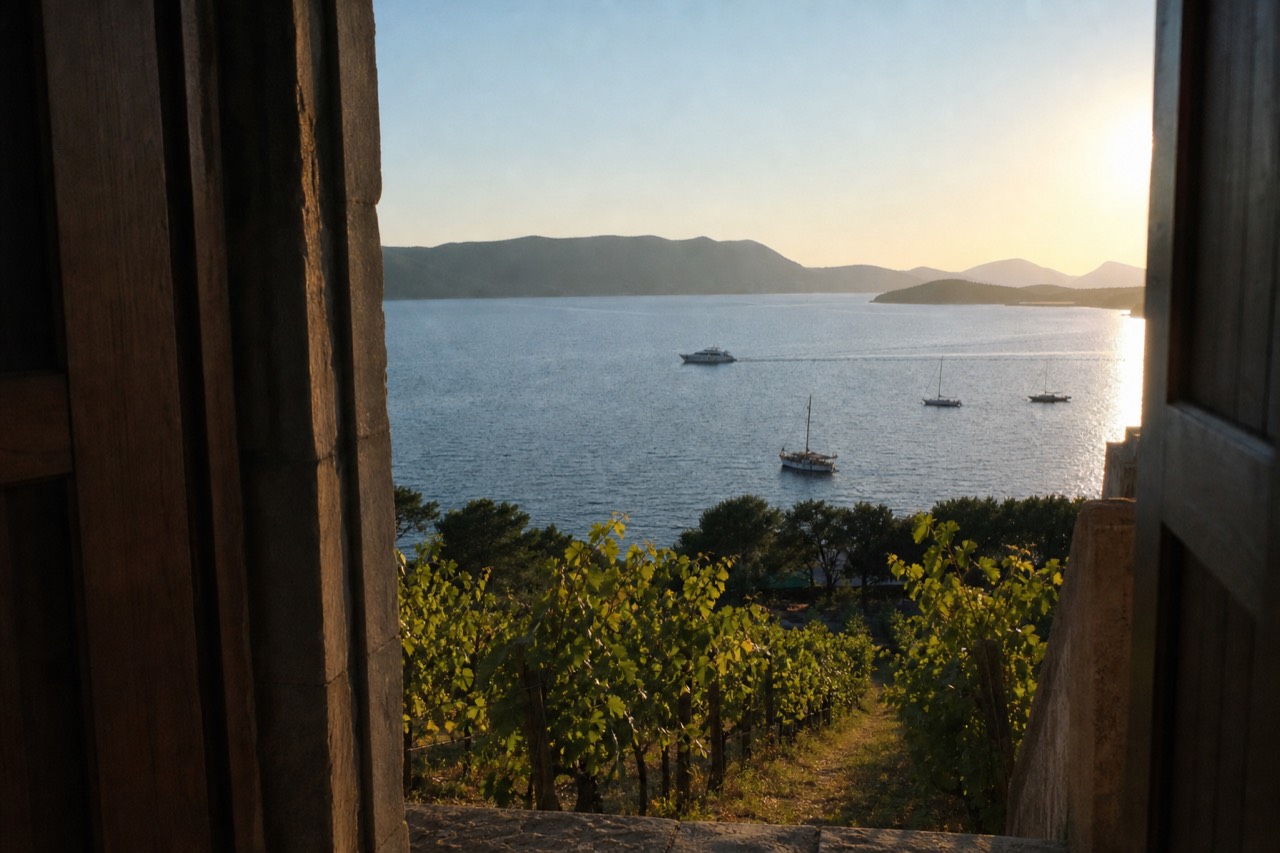
Short answer
Korcula's signature whites are made from indigenous island grapes, above all Posip, and the easiest way to taste them from Dubrovnik is the Ston and Korcula day trip with wine tasting, from $81.69 per person.
Korcula Wine: Tasting Croatia's Island Whites on a Day Trip from Dubrovnik
Most travellers meet Dalmatian wine through Plavac Mali, the red that dominates the mainland slopes around Dubrovnik. Korcula answers with something different. The island leans white, its vineyards are planted on thin limestone soil close to the sea, and its two flagship grapes, Posip and Rukatac, rarely leave the region in any volume. If you are based in Dubrovnik and want to understand what southern Croatian wine actually is, a Korcula tasting is the most distinctive day you can build.
I have walked, driven and sailed this coast professionally since 2015, and the one thing I tell visitors is that Korcula rewards planning. It is not a hop-on-a-bus destination. The crossing, the island roads and the tasting rooms all sit together in a single day, and the difference between a rushed visit and a good one is usually whether someone else handled the logistics.
This guide covers the wines themselves, whether the island justifies a day of your trip, the tours that reach it, and the practical questions: cost, timing, season and what to book ahead. Everything priced below comes from the operators' own live listings, and where a figure sits on the listing rather than in a fixed schedule, I say so plainly.
What Is the Best Wine from Croatia?
The honest answer is that Croatia has no single best wine, because its regions are too different: the inland north leans crisp whites, the Slavonian heartland is historic oak-aged white territory, Istria grows aromatic, almost alpine-style whites, and Dalmatia, including Korcula, is defined by indigenous coastal grapes led by Plavac Mali reds and Posip whites. For a visitor tasting from Dubrovnik, the Dalmatian set is the one you can actually reach in a day.
That regional spread is the whole point. Croatian wine is not one tradition but several, shaped by geography more than by any national style. What makes Dalmatia distinct is that its best grapes grow nowhere else in commercial volume. Plavac Mali, the red you will see on nearly every Dubrovnik wine list, is a coastal specialty, and the island whites of Korcula are even more local: Posip and Rukatac are planted overwhelmingly on the island and its immediate neighbours, which is why a glass in Dubrovnik often tastes of somewhere you have not been yet.
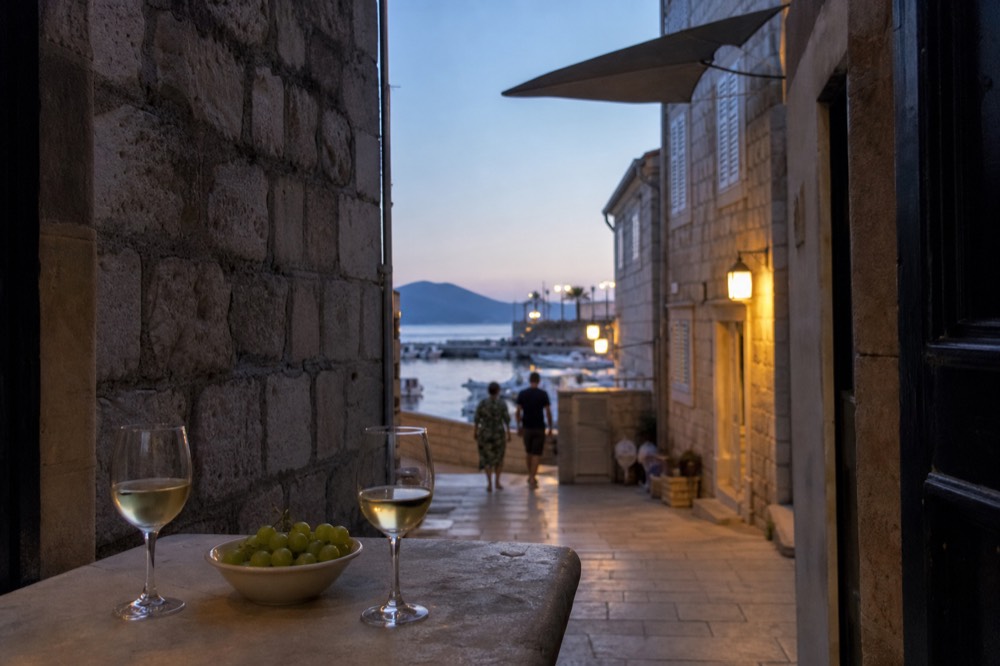
For a deeper look at the red side of the region, our Plavac Mali grape guide breaks down what to expect in the glass, and the Dubrovnik wine tasting guide maps the tasting rooms you can reach without leaving the city. Between them they cover the mainland half of the story.
Korcula is the other half. Where mainland Dalmatia is red country, Korcula's cellar doors pour mostly white, dry, mineral and fresh, the kind of wine that makes sense the moment you are standing in the shade with the sea in front of you. The island's growers also make a small amount of red and some rosé, but the reputation, and the reason wine travellers cross the water, is the white.
| Region | Signature style | Grapes to look for |
|---|---|---|
| Korcula and the islands | Dry, mineral island whites | Posip, Rukatac |
| Peljesac and the Dubrovnik mainland | Powerful coastal reds | Plavac Mali |
| Istria and the north | Aromatic, crisp whites | Regional white specialties |
Treat that table as a map of styles rather than a ranking. The best Croatian wine is genuinely the one that matches where you are standing, and on Korcula that means the whites.
Is Korcula, Croatia Worth Visiting?
Yes, if you have at least two full days in Dubrovnik and want more than one experience from the region: Korcula pairs a walled medieval old town with vineyards, quiet coves and a food culture that feels distinctly separate from the mainland. It is a long day trip, roughly 11 hours on the organised tour, so it earns its place on itineraries of three nights or more rather than a rushed weekend.
The island's appeal is that it delivers two things at once. There is the town itself, a compact walled settlement on a narrow peninsula, all pale stone and tight lanes, which scratches much of the same itch as Dubrovnik without the same density of visitors. And there is the interior and the southern coast, where the vineyards actually sit, terraced and low, running toward the water.
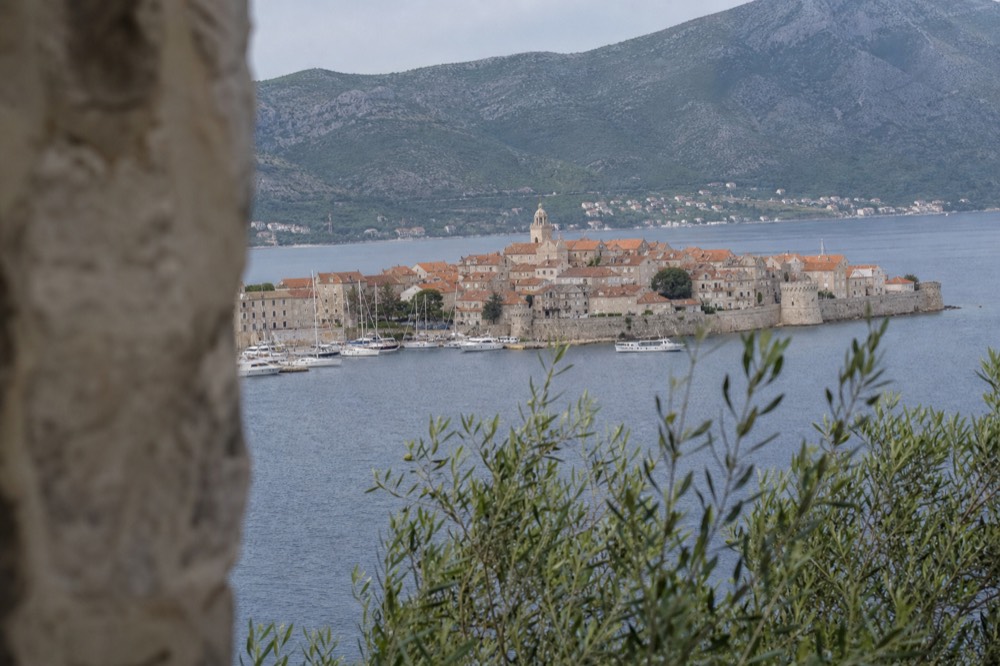
The practical question is time. The organised day trip from Dubrovnik runs about 11 hours, because it combines the drive up the coast, a stop at Ston on the Peljesac peninsula, the crossing to the island, and the tasting itself. That is a serious commitment, and I would not recommend it to someone with only one or two nights in the city: walk the walls, take a short boat trip, save Korcula for next time. With three nights or more, it becomes the best full-day excursion you can book, precisely because it is so different from the walled city you have already explored.
For the full picture of the island as a destination, including what to see beyond the cellar doors, read our Korcula day trip guide. And if you are weighing Korcula against other island options, the Elaphiti Islands guide covers the closer, shorter alternative.
If a wine-focused day is what you are after, these are the three tours that fit best:
All three can be booked with free cancellation through the operators' live listings, which matters for a weather-dependent island day: if the wind shuts down the crossing, you want a refund, not an argument.
One timing note that surprises almost everyone: the Dubrovnik Port Authority's own figures show cruise passengers peaked in September 2025 at 101,246 and October at 100,132, above July's 96,072 and August's 87,385. The old town is therefore often busier in early autumn than in high summer, and a day away on Korcula is one of the best ways to sidestep that peak.
What Is the Best Wine in Croatia?
By reputation and by glass count on local tables, the best-known Croatian wines are the Dalmatian ones: Plavac Mali for red, and Posip from Korcula for white. Posip in particular is the wine that made the island's name, a dry, full-bodied white with ripe stone-fruit character and a saline edge, and tasting it in a Korcula cellar is the single most direct answer to this question.
Posip is the island's flagship for a reason. It ripens fully in Korcula's long warm autumn, keeps its acidity, and produces a white that has enough weight to stand up to grilled fish and enough freshness to drink on its own in the heat. Rukatac, the other indigenous white, is generally lighter and more aromatic, and a good cellar will pour the two side by side so you can taste the difference in the soil and the aspect.
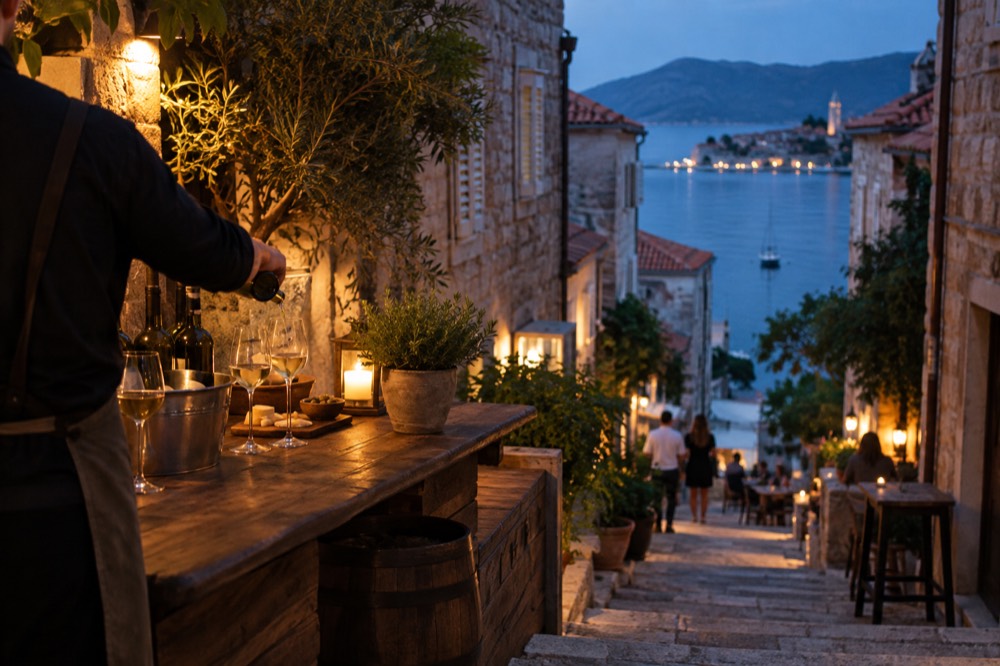
The honest caveat is that "best" depends on what you like. If your reference point is Sancerre or Chablis, the island whites will feel broader and riper. If you come from New World Sauvignon, they will feel restrained and mineral. Neither reaction is wrong. What is not arguable is that these grapes are native to this strip of coast, and you will not taste them at their best anywhere else.
For context on how Dubrovnik itself fits into the national wine picture, Croatia recorded about 4.2 million overnight stays in the Dubrovnik destination in 2025, sharing first place among Croatian destinations with Rovinj, according to the Croatian Bureau of Statistics. A destination carrying that many visitors has a wine scene built for first-timers, and the tasting rooms know how to explain their pours to someone meeting Posip for the first time.
| Korcula grape | Style | What to expect in the glass |
|---|---|---|
| Posip | Dry white, full-bodied | Ripe stone fruit, saline finish, enough weight for food |
| Rukatac | Dry white, lighter | Aromatic, fresher, easy drinking on its own |
| Island Plavac Mali | Dry red | Smaller plantings, softer than the mainland versions |
A good tasting on Korcula will walk you through all three. Ask for the whites first, and if the cellar pours anything older or from a single vineyard, take it: island producers are small, and the special bottles rarely travel.
How Do You Taste Korcula Wine on a Day Trip from Dubrovnik?
The simplest route is the Ston and Korcula Island day trip with wine tasting, which runs about 11 hours from Dubrovnik, costs from $81.69 per person, and bundles the Peljesac drive, the famous walls of Ston, the island crossing and a wine tasting into one guided day. It is rated 3.8 across 131 reviews on the live listing, so read recent feedback before you book.
That tour is the only product in the current roster that actually lands you on Korcula with a tasting included, which makes it the anchor of any wine-focused plan. The day is built around geography: you drive north along the coast to Ston, a small town whose defensive walls climb the hillside above a bay famous for oysters, cross to the island, and taste your way through its cellar doors before returning.
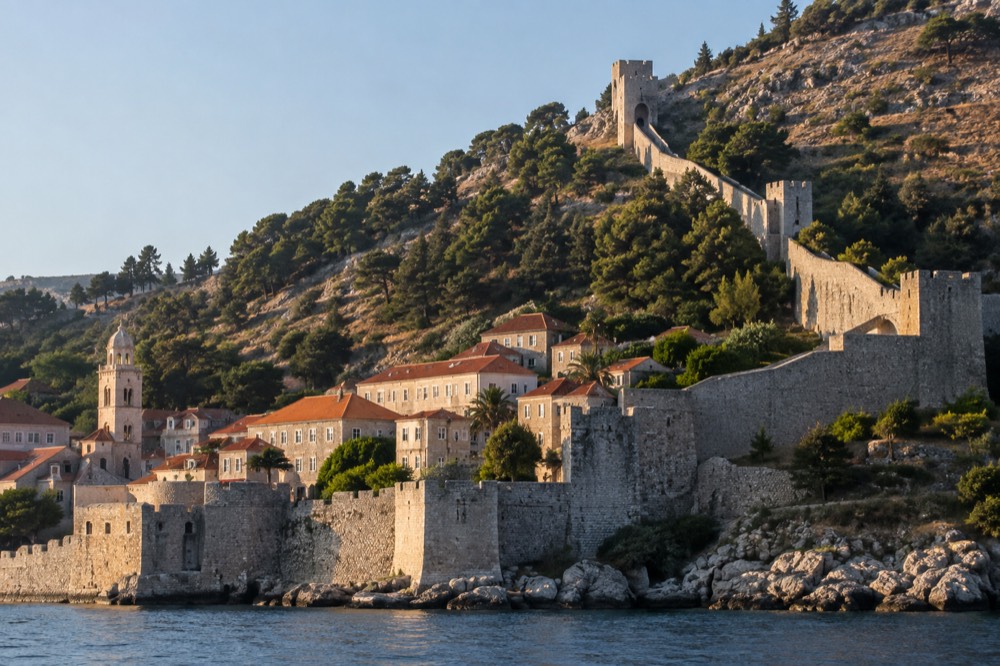
The Ston stop is not filler. Peljesac, the peninsula you cross on the way, is Plavac Mali heartland, and its oyster beds in Mali Ston are among the most celebrated in the Adriatic. Our Ston oysters guide covers that side of the stop in detail, including how the shellfish and the local wine end up on the same table.
I have not taken this tour myself; everything here is reporting, not a review. What the listing states is a duration of about 11 hours and a price from $81.69 per person, rated 3.8 across 131 reviews. That rating is noticeably lower than the site's other wine products, which is worth a moment of your attention: read the recent reviews on the live listing and see whether the criticisms, whatever they are, matter to you. A long day with a border-free route and multiple stops suits some travellers and exhausts others.
Booking it yourself is the alternative, and some visitors prefer it: you can reach the island independently by ferry and arrange tastings directly with cellars. The trade-off is that you inherit the schedule risk. The organised tour absorbs the crossing, the driving and the timing; the independent route gives you freedom but costs you a morning of planning and a fat stack of contingency thinking.
Which Other Wine Trips Leave from Dubrovnik?
A food and drink walking tour from $165.64, rated 5 across 704 reviews, covers the in-city alternative.**
If the 11-hour Korcula commitment feels heavy, the Konavle Valley is the classic fallback. It runs about four and a half hours, keeps you on the mainland in the fertile valley behind Dubrovnik, and pairs the tasting with a look at the region's village landscape.
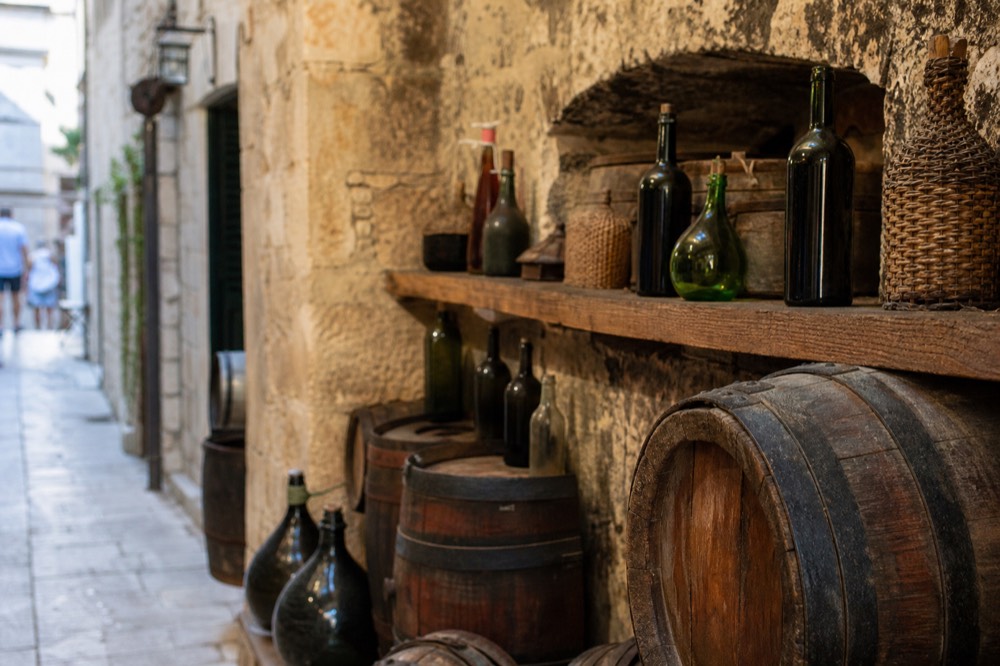
The Konavle option also earns its keep on days when the sea looks doubtful. Because the valley sits behind the city rather than across the water, it runs when the island crossings are being watched, and the light refreshments included alongside the pours make it a genuine half-day rather than a compressed sprint. For visitors pairing a morning of sightseeing with an afternoon of wine, it is the geometry that works.
The Ston oyster and mussel tour is the indulgent option, and it suits a different kind of appetite altogether. At from $157 per person, rated 4.9 across 111 reviews, it builds the day around shellfish harvested that morning, paired with local wine, in the bay you would otherwise drive past on the way to Korcula. It is a lunch with a view, and it converts the Peljesac peninsula from a transit corridor into the destination itself.
For visitors who would rather not leave the city at all, the Dubrovnik food and drink walking tour with a local guide runs about three hours, costs from $165.64 per person, and carries a perfect 5 rating across 704 reviews. It is not a wine tasting in the cellar-door sense, but it pours wine at every stop and doubles as an orientation to the old town's food scene.
| Tour | Duration | From (per person) | Rating |
|---|---|---|---|
| Ston and Korcula Island day trip with wine tasting | 11 hours approx | $81.69 | 3.8 across 131 reviews |
| Oyster, mussel and wine tasting tour in Ston with lunch | On the listing | $157 | 4.9 across 111 reviews |
| Dubrovnik food and drink walking tour | 3 hours approx | $165.64 | 5 across 704 reviews |
| Croatian traditional peka cooking lesson | 4 hours approx | $159.83 | 10 reviews, too few to quote |
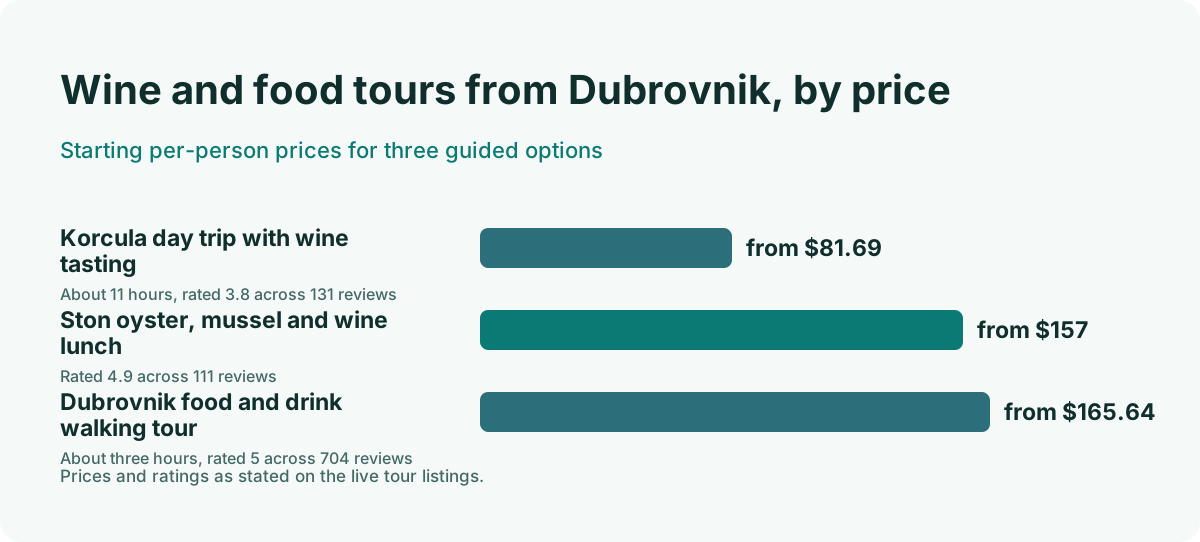
Notice the pattern in those numbers: the cheapest product is the longest and the lowest rated, while the shorter, more focused tastings score highest. That is typical of day-trip tourism. Distance adds friction, and reviews reflect it. Decide whether the island itself is the point for you, or whether the wine is, and choose accordingly.
When Is the Best Time to Visit Korcula for Wine?
Late September and October are the sweet spot: the harvest is in, the sea is still warm enough for a swim, with the September long-run average at about 23.6 degrees Celsius on this coast, and the Dubrovnik cruise peak, which hits 101,246 passengers in September and 100,132 in October, drops off sharply by November. May and June work equally well before the summer heat.
The counter-intuitive part of that answer is the cruise data. Most people assume July and August are the busiest months in Dubrovnik, and on the beaches they are, but the Port Authority's own statistics show the cruise peak arriving later: 101,246 cruise passengers in September 2025 and 100,132 in October, against 96,072 in July and 87,385 in August. Those passengers are ship capacity, not a headcount of people ashore, but the pattern is real, and it means early autumn days in the old town are busier than most visitors expect.
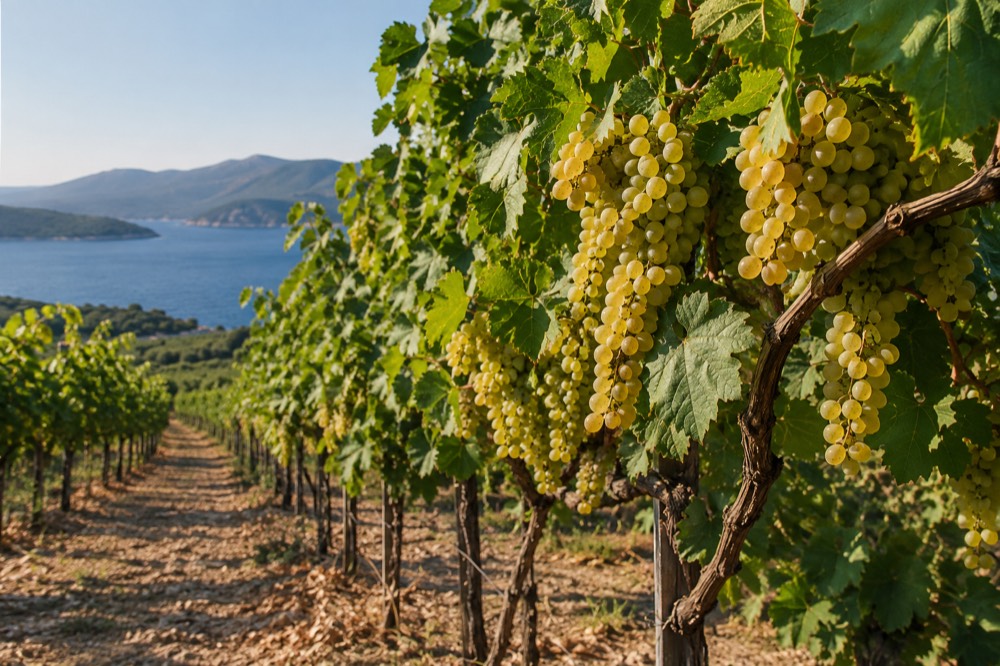
For a Korcula wine day, that cuts both ways. Leaving Dubrovnik on a peak September day is a relief; the island absorbs visitors far more gently than the walled city does. And the vineyards are at their most interesting around the harvest, when cellars are working rather than just pouring. The sea temperature point matters too: the September average for this coast is about 23.6 degrees Celsius, a long-run open-water figure rather than a beach reading, and sheltered bays run warmer than that, so a post-tasting swim is a realistic plan well into autumn. The Port Authority's statistics page publishes the monthly cruise numbers if you want to check the pattern against your own dates.
One more planning fact worth holding onto: the Port Authority limits cruise passengers to 8,000 a day in most cases, and refused about forty call requests in a single season, so the crush is managed rather than unlimited. Still, on the busiest scheduled days, such as 6 October with 2 ships and up to 5,798 passengers by capacity, a day on Korcula is a genuinely pleasant counterweight to a crowded old town.
What Should You Know Before Booking a Korcula Wine Tour?
Check four things before you pay: the cancellation window on the live listing, whether the tasting fee is inside the ticket price, what the weather fallback is if the crossing is rough, and how much walking and stair-climbing the day involves. The Korcula tour is an 11-hour day with stops in Ston and on the island, so comfortable shoes matter as much as the wine.
The cancellation question is the big one. Any island day depends on the sea state, and a tour that cannot refund or reschedule when the boats stop running is a tour you should not book. The operators on this site's roster sell through live listings that carry free cancellation in the standard case, but read the specific terms for the date you want, because the window and the cutoff time vary.
What the ticket includes is the second question. On the Korcula day trip, the wine tasting is part of the package; on some shorter products, tastings are structured as a set of pours with light refreshments rather than a full meal, and the listing spells out which. If you are booking the Ston oyster tour instead, lunch is the centrepiece, so check whether the listing describes a set menu or choices.
Third, pace yourself. Eleven hours with a guide, two destinations and a boat is a demanding shape for a day, particularly in summer heat. Bring water, a hat and more sun protection than feels necessary, and eat properly at the Ston stop even if the tasting comes later. The travellers who enjoy these long days are almost always the ones who treated them as expeditions rather than outings.
Finally, think about what you want to bring home. Island producers sell bottles at the cellar door, often small-production wines that never reach a shop shelf, and the practical limit is what you can carry for the rest of your trip. A single bottle of Posip, packed well, is a better souvenir than almost anything in the old town's shops.
How Much Does a Korcula Wine Day Trip Cost?
Budget on top of that for bottles at the cellar door, lunch or snacks not included in the ticket, and anything you spend in Ston or on the island.**
The ticket price is only part of the arithmetic. The Korcula day trip includes the transport, the guide and the tasting, but an 11-hour day generates small costs: coffee stops, a bottle of water or three, and, if you fall for a wine you cannot get at home, the cellar-door purchase. None of it is expensive by Dubrovnik standards, but it adds up, and knowing the shape of the day helps you plan for it.
| Wine day option | Ticket from | Time cost | Best for |
|---|---|---|---|
| Ston and Korcula day trip with wine tasting | $81.69 | 11 hours approx | The island itself, first-time visitors with 3+ nights |
| Ston oyster, mussel and wine lunch | $157 | On the listing | Food-first travellers, shellfish lovers |
Compare that with the do-it-yourself route and the numbers still favour the tour for most people. Independent travel to Korcula means ferry tickets, local transport on the island, tasting fees arranged cellar by cellar, and the risk of a missed connection eating your afternoon. The tour compresses all of that into a single price and a single decision, which is exactly what a day trip should do.
If wine is one thread of a bigger Dubrovnik plan rather than its whole point, spread the rest of your time across the classics: the walls, the cable car, a sunset on the water. The full menu of options is on the Things to Do in Dubrovnik homepage, and our best things to do guide is the natural next read for building the rest of the itinerary.
Here again are the three wine days that pair best with a Korcula plan:
Common Questions About Korcula Wine
What Is the Best Wine from Croatia?
There is no single best, because Croatia's regions differ sharply: Dalmatia is defined by Plavac Mali reds and Korcula's Posip whites, while the north and Istria lean crisp and aromatic. From Dubrovnik, the Dalmatian set is what you can actually taste in a day, and Posip from Korcula is its most distinctive white.
is korcula, croatia worth visiting?
Yes, if you have three nights or more in Dubrovnik. The island pairs a walled old town with vineyards and quiet coves, and the organised day trip runs about 11 hours, so it earns its place on longer itineraries rather than a rushed weekend.
What Is the Best Wine in Croatia?
By reputation, Plavac Mali leads for red and Korcula's Posip for white. Posip is a dry, full-bodied island white with ripe stone fruit and a saline finish, and tasting it in a Korcula cellar is the most direct answer to the question.
How Much Does a Korcula Wine Day Trip Cost?
The Ston and Korcula Island day trip with wine tasting starts at $81.69 per person and runs about 11 hours.
When Is the Best Time to Visit Korcula for Wine?
Late September and October: the harvest is in, the sea's September long-run average on this coast is about 23.6 degrees Celsius, and the cruise crowds, which peak in September and October in Dubrovnik, are easier to escape from an island. May and June work equally well before the heat.
Can You Swim on a Korcula Wine Day Trip?
Often, yes, in the warmer months. The September open-water average for this coast is about 23.6 degrees Celsius as a long-run figure, and sheltered bays run warmer than that, so pack a suit if you travel between late May and early October.