Dubrovnik Wine Tasting: Vineyard Trips, Cellar Bars and What to Drink
Dubrovnik sits inside one of Croatia's most distinctive wine regions, and the tasting options run from a free evening in an Old Town cellar bar to a full day in the Konavle valley with a winemaker. Here is how the scene works, what to drink, and which tours earn their price.
Short answer
Yes, Dubrovnik has genuinely good wine on its doorstep. In town, wine bars along the Stradun and in side alleys pour local labels by the glass.
Does Dubrovnik Have Good Wine?
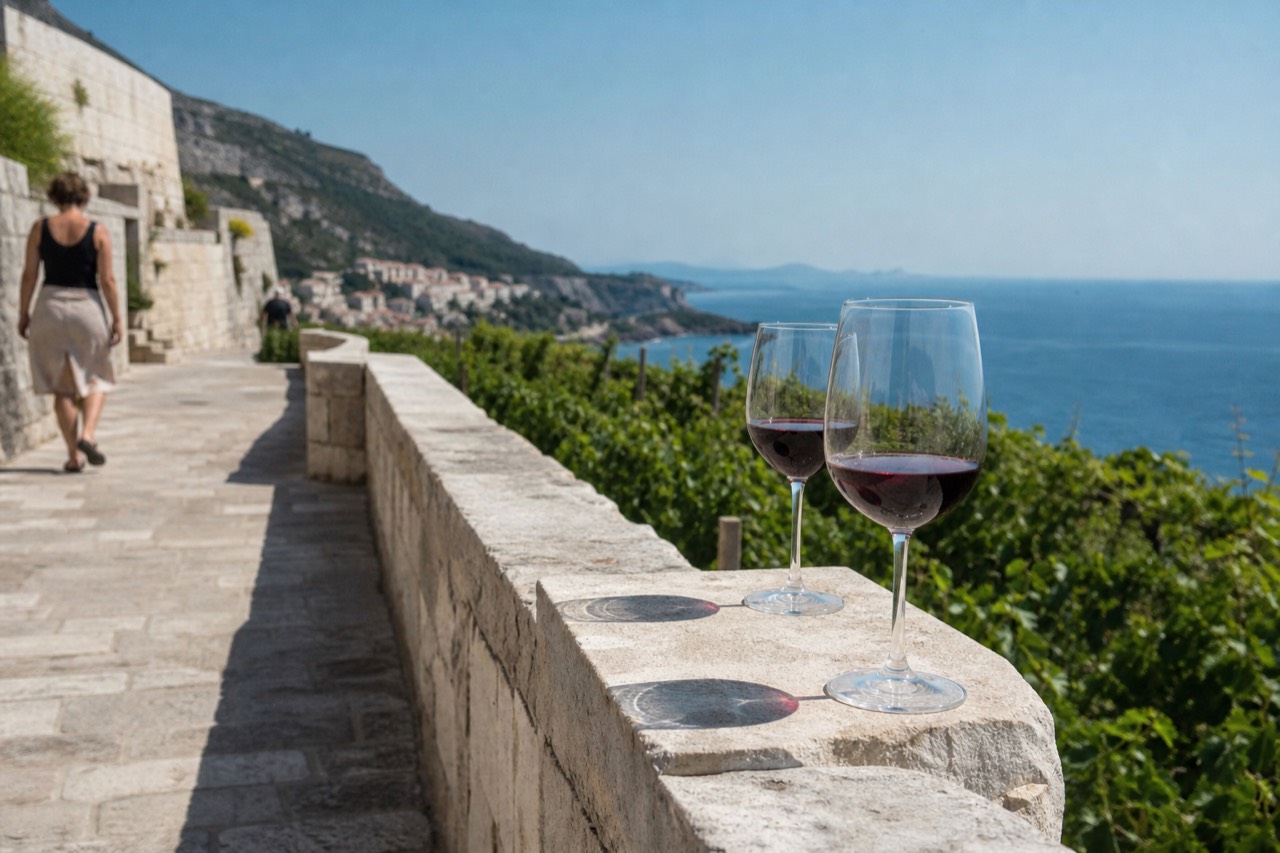
Yes, and better than most visitors expect. Dubrovnik is the gateway to the southern Dalmatian wine country, where Plavac Mali reds from the Pelješac peninsula and Pošip whites from Korčula carry protected designations. The Konavle valley, twenty minutes south of the city, is a working wine region with family cellars you can visit on a half-day tour, and the Old Town itself has a dense little wine bar scene.
I have walked these streets with travellers since 2015, and the question I hear most from first-time visitors is whether the wine is a tourist sideshow or the real thing. It is the real thing. The Dubrovnik hinterland has grown grapes since the Ragusan era, and the modern labels you will meet in a glass here, Plavac Mali, Dingač, Postup, Pošip, are the same bottles that carry Croatia's strongest protected designations. What has changed is access: a decade ago you needed a rental car and a word-of-mouth map to reach a cellar, while today several operators run structured tastings with pickup in the city.
The honest caveat is that Dubrovnik itself, the walled city, has almost no vineyards inside it. The grapes grow around it: Konavle to the south east, Pelješac and its Ston oyster beds to the north west, Korčula across the water. So "Dubrovnik wine tasting" really means three different experiences, a cellar evening in the Old Town, a half-day drive into Konavle, or a full-day loop to Pelješac or Korčula with oysters and lunch folded in. Choosing between them is mostly a question of how much of your trip you want to give to wine.
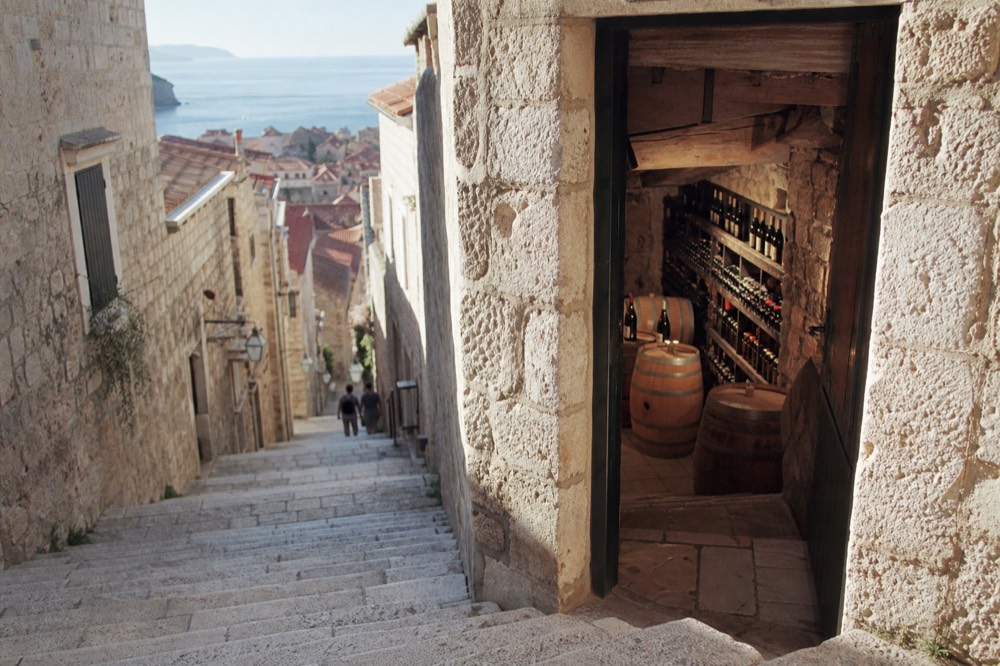
Volume backs the scene up. Dubrovnik recorded about 4.2 million overnight stays in 2025, sharing first place among Croatian destinations with Rovinj, per the Croatian Bureau of Statistics. A city that busy sustains a professional tasting infrastructure, and the operators below have review counts in the hundreds and thousands, not a handful of friends of the owner.
What Wine Is Dubrovnik Known For?
Dubrovnik's signature wine is Plavac Mali, a powerful red grown on the steep, sun-baked slopes of Pelješac, with the Dingač and Postup vineyards carrying their own protected designations. The leading white is Pošip, at its best on Korčula. Around Dubrovnik's own Konavle valley you will also find lighter local reds and whites poured straight from family cellars, plus Malvazija and Dubrovnik's historic sweet wine tradition.
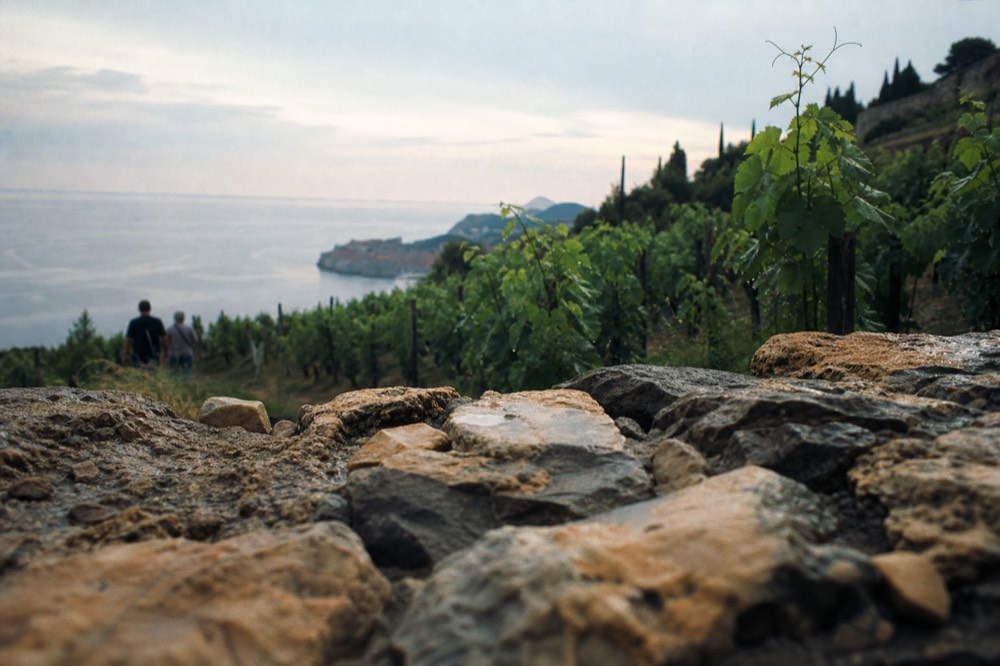
Start with Plavac Mali if you drink red. It is a descendant of the Zinfandel family, thick-skinned, late-harvested, and it makes the dark, tannic, sometimes almost port-like reds that define southern Dalmatia. The best plots are the cruellest ones: the Dingač slope on Pelješac is so steep that a funicular was historically used to haul grapes up to the road. If you want the deep dive before you taste, our Plavac Mali grape guide covers the grape's story, and the Dingač appellation explainer covers its most famous slope.
For whites, Pošip is the name to remember. It ripens early, keeps its acidity in the heat, and gives full-bodied whites that hold up against grilled fish, which is exactly what you will be eating. Malvazija, lighter and more aromatic, appears on many Konavle tasting lists too.
Here is the practical map of what is in your glass and where it comes from:
| Wine | Type | Home region | Style in the glass |
|---|---|---|---|
| Plavac Mali | Red | Pelješac peninsula | Dark, tannic, dried-fruit power |
| Dingač | Red | Protected slope, Pelješac | Plavac Mali at its most concentrated |
| Postup | Red | Protected area, Pelješac | Structured, age-worthy red |
| Pošip | White | Korčula island | Full-bodied, mineral, food-friendly |
| Malvazija | White | Konavle and the hinterland | Light, aromatic, easy-drinking |
| Prošek | Sweet | Southern Dalmatia | Traditional dried-grape dessert wine |
One pairing note worth more than any tasting note: Pelješac wine and Ston oysters come from the same peninsula, and the salty, mineral whites grown near the oyster beds are what locals pour with them. The Ston oysters guide covers that pairing in detail, and there is a tour later in this article that builds a whole lunch around it.
What Are the Best Tours in Dubrovnik?
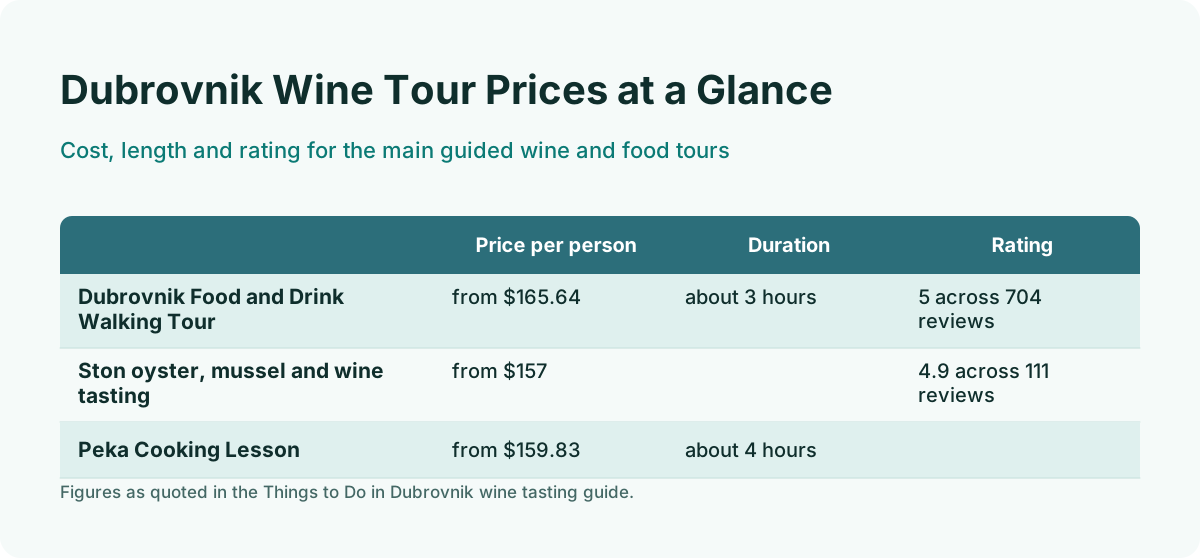
The Dubrovnik Food and Drink Walking Tour runs about 3 hours from $165.64, rated 5 across 704 reviews. The Ston oyster, mussel and wine tasting tour, from $157 per person at 4.9 across 111 reviews, is the oyster-and-wine play.**
These are the three I would put in front of anyone whose trip has wine in it. They do different jobs, so the choice depends on your day, not on which is "best" in the abstract.
The Konavle trip is the purest wine day. You leave the city, drive into the green valley behind Cavtat, and taste with a local producer, with light bites alongside the pours. Four and a half hours means you are back in the Old Town with an evening left over. It is the tour I point people toward when they want to actually stand in a vineyard rather than drink its wine under a stone arch on the Stradun.
The food and drink walk is a different animal: it stays inside the walls, moving between stops, with wines at every one and a guide telling the city's story between bites. At about 3 hours and $165.64 it is priced like a dinner, and honestly it replaces one. A recent guest, Bryan_M, put it this way:
Amazing food tour! Marija was a great guide, full of stories and facts that really brought Dubrovnik to life. The food was delicious, and generous. Wines at every stop. Would highly recommend this tour to anyone visiting Dubrovnik, especially to help get your bearings of the city and know where to go for dinner!
Bryan_M
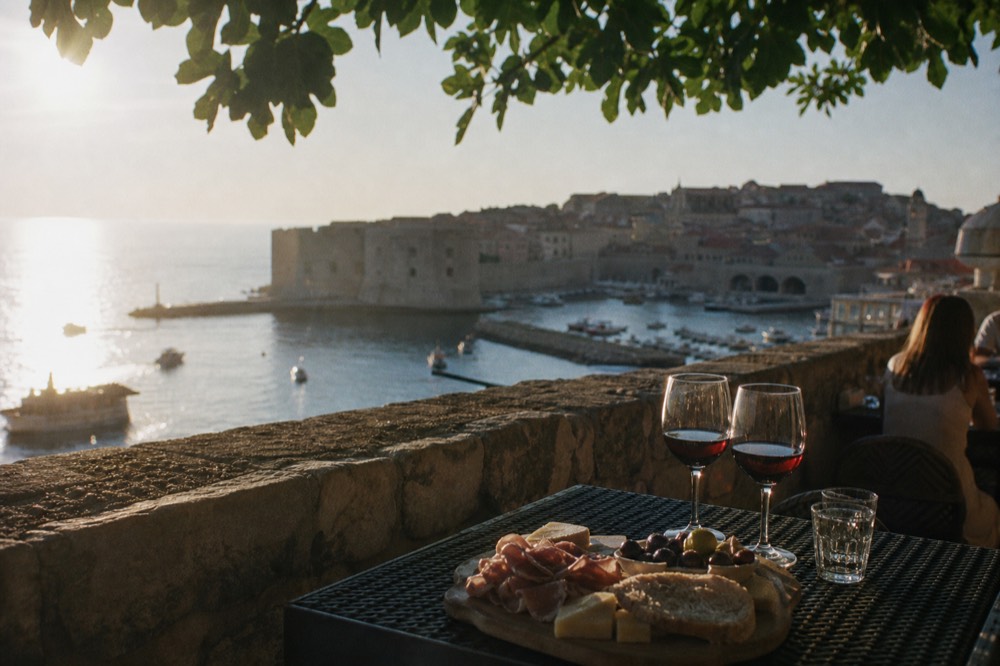
The Ston tour is the one for oyster lovers. It pairs the shellfish beds of Ston, on Pelješac, with mussels and local wine, with lunch included, at from $157 per person. Because Pelješac is Plavac Mali country, you are tasting the wine a few kilometres from where it grew. If you want the background on the region before committing, read the Pelješac wine region guide.
| Tour | Length | From (per person) | Rating | Best for |
|---|---|---|---|---|
| Dubrovnik Food and Drink Walking Tour | 3 hrs approx | $165.64 | 5 across 704 reviews | Wine plus dinner-level food in town |
| Ston Oyster, Mussels and Wine Tasting | Day trip | $157 | 4.9 across 111 reviews | Oysters with Pelješac wine |
| Peka Cooking Lesson | 4 hrs approx | $159.83 | Rating not shown, 10 reviews | Cooking with wine, not tasting |
The Peka Cooking Lesson deserves a mention even though it is a cooking class rather than a tasting: peka, meat or octopus slow-roasted under a bell with wine in the braise, is the region's ceremonial dish, and the class runs about 4 hours from $159.83 per person. Its review base is small, ten reviews, too few for a fair star claim, so judge it on the format rather than the score.
Where Are the Best Bars in Dubrovnik?
The best wine bars in Dubrovnik cluster in and just off the Stradun, in the side alleys between the Pile Gate end and the Gundulić Square market, and along the quieter lanes behind the cathedral. Expect local Plavac Mali and Pošip by the glass, Dalmatian prosciutto and cheese plates, and prices that climb the closer you sit to the main street, so step one street off the Stradun for the same bottles at gentler rates.
I walk the Old Town most weeks, and the pattern never changes: the bars one street off the Stradun pour the same regional list as the ones on it, with more room and less noise. The wine bar scene here is small but serious, built around flights of southern Dalmatian reds and whites and generous boards of pršut, cheese and olives. None of the good ones rush you, which matters, because a flight of three or four local pours is meant to be an hour, not a stop.
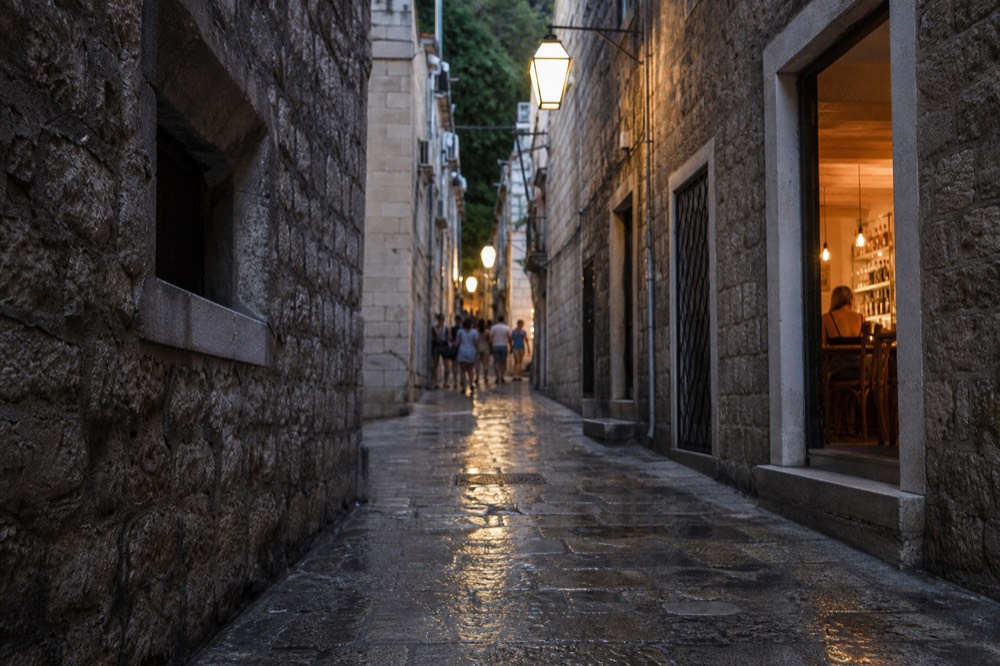
Where you sit changes what you pay for, so here is the honest map:
| Area | Atmosphere | What to order | Trade-off |
|---|---|---|---|
| Stradun itself | People-watching, busiest | A glass of Pošip | Highest prices, most noise |
| Alleys off the Stradun | Intimate, candlelit | A local tasting flight | Fewer seats, book or arrive early |
| Gundulić Square area | Market-side, casual | Prošek with dessert | Quieter, less scene |
| Behind the cathedral | Local, unhurried | Plavac Mali by the glass | A short walk from the main drag |
| Ploče and outside the walls | View-adjacent | Sunset pours | You pay for the terrace |
Two timing notes from experience. First, the Old Town fills dramatically by mid-morning: the official counting system's six entrance counters update every 15 minutes, and on a September day the headcount climbed from 5,419 at 08:00 to a 7,739 peak at 10:00. Wine bars are calm in that window and packed from late afternoon. Second, if you are pairing a bar evening with a view, our best bars roundup separates the wine cellars from the cocktail rooftops, and the sunset spots guide covers where the evening light lands best.
Which Wine Regions Sit Closest to Dubrovnik?
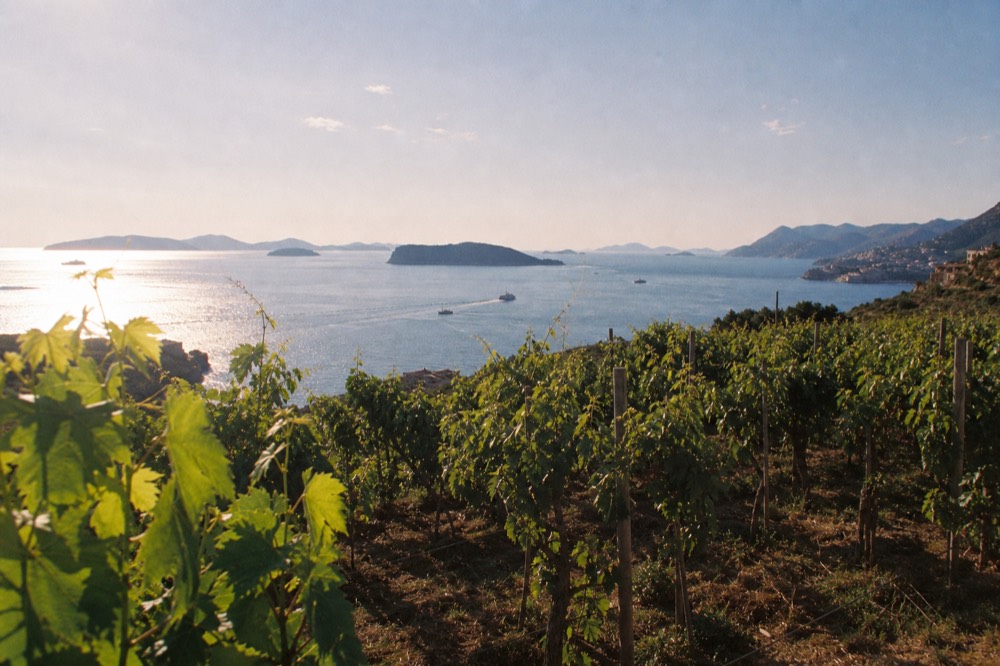
Four regions matter: Konavle, the green valley immediately south east of the city, about a half-day visit; Pelješac, the peninsula north west along the coast, home to Plavac Mali, Dingač and Postup; Korčula, the island reached by ferry, home of Pošip; and the Ston area at Pelješac's base, where oyster beds and wine share the same shoreline. Each fits a different day-trip shape.
Konavle is the easy one. It is close, it is compact, and its family wineries pour Malvazija and lighter reds alongside home-cured prosciutto. That is why the Konavle tour is the half-day default and why it appears again below. Pelješac is the connoisseur's run: it takes a full day, but it puts you on the actual Dingač and Postup slopes. Korčula adds a ferry crossing to the mix, and pairs Pošip tastings with one of the prettiest towns on the Adriatic. The Korčula wine guide and the Korčula day trip guide cover that crossing in detail.
| Region | Signature wine | Distance from Dubrovnik | Realistic visit |
|---|---|---|---|
| Konavle | Malvazija, local reds | Immediate hinterland | Half-day tour |
| Pelješac and Ston | Plavac Mali, Dingač, Postup | North west along the coast | Full-day loop |
| Korčula | Pošip | Ferry crossing to the island | Full day with sailing |
| Old Town cellars | All of the above by the glass | On foot | An evening |
How Do You Plan a Wine Day in Konavle?
Go in the morning or late afternoon in summer, since midday tastings in the valley heat flatten both the wine and you, and combine it with Cavtat or the airport run if your timing allows.**
The self-drive version is genuinely viable: Konavle's wineries are signed, the roads are quiet, and a car gives you the freedom to linger. But the tour version solves the real problem with wine driving, which is that you cannot taste properly and then take the wheel. Pickup in Dubrovnik, a set route through two or three producers, and light food along the way mean you taste everything honestly.
If Konavle is your wine half-day, consider pairing it with a different full day for contrast. The Ston oyster and mussel tour above is the natural sibling: same wine culture, different expression, with the sea providing the food instead of the valley. And if your group splits between wine lovers and history lovers, the Mostar and Kravica day trip keeps everyone happy, a border crossing into Bosnia and Herzegovina, the old bridge at Mostar, and a waterfall swim, from $35 per person and rated 4.6 across 10,019 reviews. It is not a wine tour at all, which is exactly why it balances a wine-heavy week.
What Should You Expect to Pay for Wine Experiences?
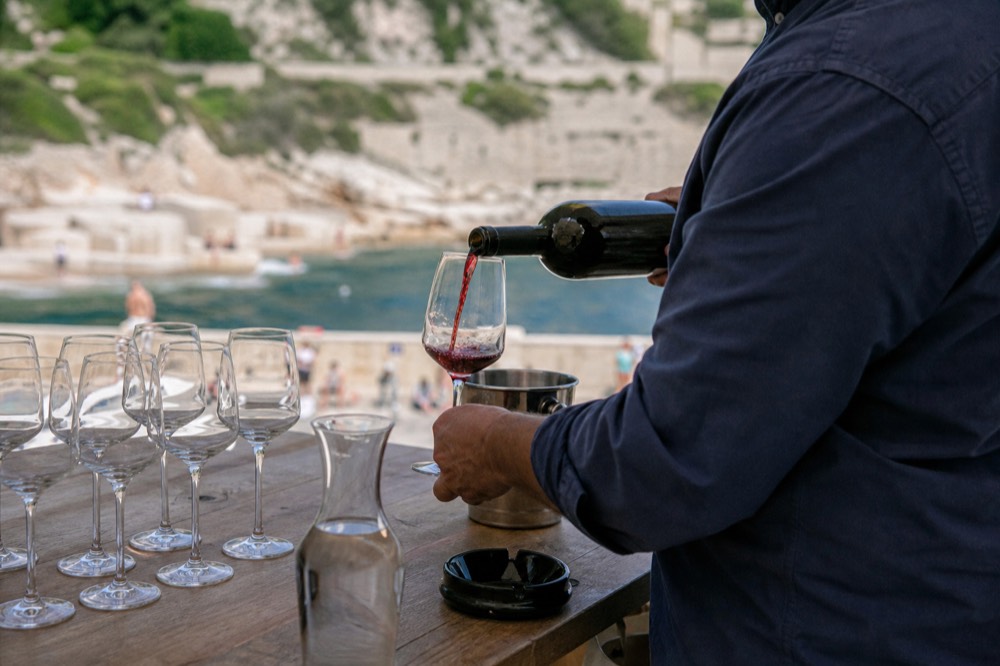
Old Town wine bars price by the glass and by the flight, with rates varying by street, so treat any bar budget as a planning range and check the room rather than trusting a fixed figure.**
The tour tier is transparent because the listings publish it. The bar tier is not, and I will not invent numbers for it: glass prices in the Old Town move with location and season, and the honest advice is the one-street-off-the-Stradun rule from the bars section above. What I can give you is the firm tour arithmetic.
| Experience | From (per person) | Length | Food included |
|---|---|---|---|
| Ston Oyster, Mussels and Wine | $157 | Day trip | Lunch |
| Peka Cooking Lesson | $159.83 | 4 hrs approx | The meal you cook |
| Food and Drink Walking Tour | $165.64 | 3 hrs approx | Multiple stops, wines at each |
A note on value rather than price. Neither is overpriced for what it delivers, but they are different purchases. Decide whether your trip needs a vineyard or a table, and the right one picks itself.
When Is the Best Time for Wine Tasting in Dubrovnik?
September and October are the sweet spot: harvest is underway in Konavle and Pelješac, the sea is still swimmable with a September average of about 23.6 degrees, and the crowds thin after the summer peak. May and June bring green vineyards and lighter traffic before the heat. Avoid planning a tasting-heavy trip around midday in July and August, when heat and peak crowds work against both the wine and the walk.
The crowd data surprises people, so let me give it straight. Cruise passengers at the Port of Dubrovnik peaked in September 2025 at 101,246 and October at 100,132, both above July's 96,072 and August's 87,385, per the Port Authority's own statistics. So "September is quiet" is a myth. What is true is that September and October combine harvest energy, warm sea and long evenings, and that the Old Town's daily crowd curve peaks at mid-morning, which is exactly when a Konavle tour has you out in the vineyards instead.
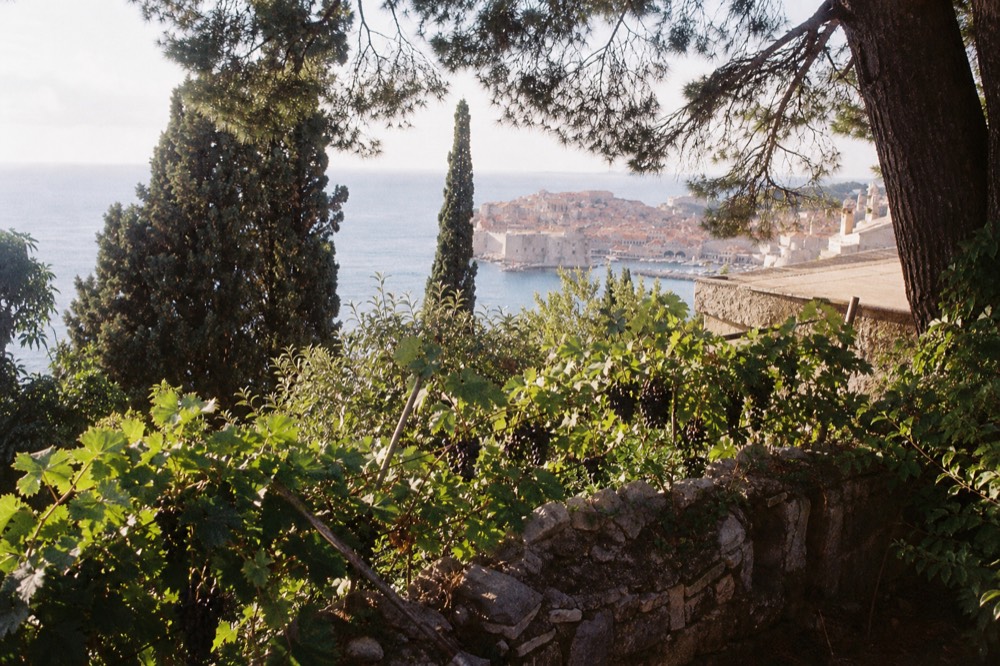
For planning around the year, this is the shape of it:
| Period | Vineyard state | Town conditions | Verdict for wine |
|---|---|---|---|
| May to June | Green, pre-harvest | Warm, pre-peak | Excellent, book freely |
| July to August | Grapes ripening | Hottest, most crowded | Taste early or late in the day |
| September to October | Harvest | Warm, busy but softer light | Best all-round window |
| November | New wines resting | Quieter, cooler | Bar season, fewer tours |
| December to February | Vines dormant | Mild, quiet | Old Town cellars only |
One sea-temperature honesty note, since September swimming and September tasting often share a day: the 23.6-degree September figure is a long-run open-water average for 1991 to 2020 from NOAA's satellite climatology, not a beach thermometer reading. Sheltered bays run warmer, and the Croatian met service's own Dubrovnik buoy has read 27.0 to 27.4 degrees on an early September day against that 23.6 mean. Plan for warm water, not guaranteed water.
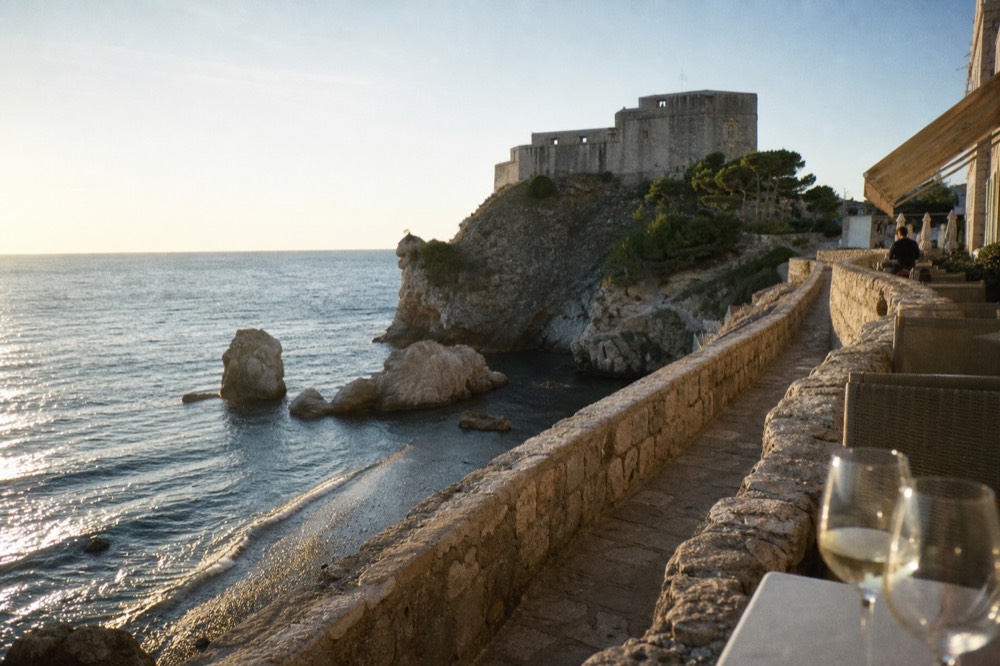
However you build the week, the pattern that works is one vineyard half-day, one long food-and-wine evening in the walls, and the rest left open. This site, Things to Do in Dubrovnik, exists to help you make exactly those calls, and the food tour guide goes deeper on the eating side if wine turns out to be the thread of your whole trip.
Common Questions About Dubrovnik Wine Tasting
Does Dubrovnik have good wine?
Yes. Dubrovnik is the gateway to southern Dalmatia's wine country: Plavac Mali reds from Pelješac, Pošip whites from Korčula, and Konavle valley cellar pours on the city's own doorstep. The tasting infrastructure is mature, with tours carrying hundreds of verified reviews.
What wine is Dubrovnik known for?
Plavac Mali, the dark, tannic red of the Pelješac peninsula, with the Dingač and Postup slopes carrying their own protected designations. For whites, Pošip from Korčula and Malvazija from the Konavle hinterland are the names to know.
What are the best tours in dubrovnik?
For wine with dinner, the Dubrovnik Food and Drink Walking Tour, about 3 hours from $165.64, rated 5 across 704 reviews. For oysters with Pelješac wine, the Ston tour at from $157, rated 4.9 across 111 reviews.
Where are the best bars in dubrovnik?
In and just off the Stradun, in the alleys between the Pile end and Gundulić Square, and behind the cathedral. One street off the Stradun you generally find the same regional lists with more room and gentler prices.
Can you visit a vineyard from Dubrovnik without a car?
Yes. Korčula and Pelješac are also reachable by ferry and tour respectively.
When is grape harvest around Dubrovnik?
September and October. That window combines harvest activity in the vineyards with warm sea and softer light in town, which is why it is the best all-round season for a wine-focused trip.