The Dubrovnik Synagogue: A Visitor's Guide to Žudioska Ulica
Tucked into a short lane off the Stradun, the Dubrovnik Synagogue is one of the most quietly remarkable buildings in the Old Town, and most visitors walk straight past its street without ever noticing it.
Short answer
The Dubrovnik Synagogue sits on Žudioska Street, steps from the Stradun, inside the UNESCO-listed Old Town. A visit takes about 30 minutes. Pair it with the City Walls, whose adult ticket is 40 euro in main season, and the Rector's Palace, both covered by the 40 euro one-day Dubrovnik Pass.
The Dubrovnik Synagogue: A Visitor's Guide to Žudioska Ulica
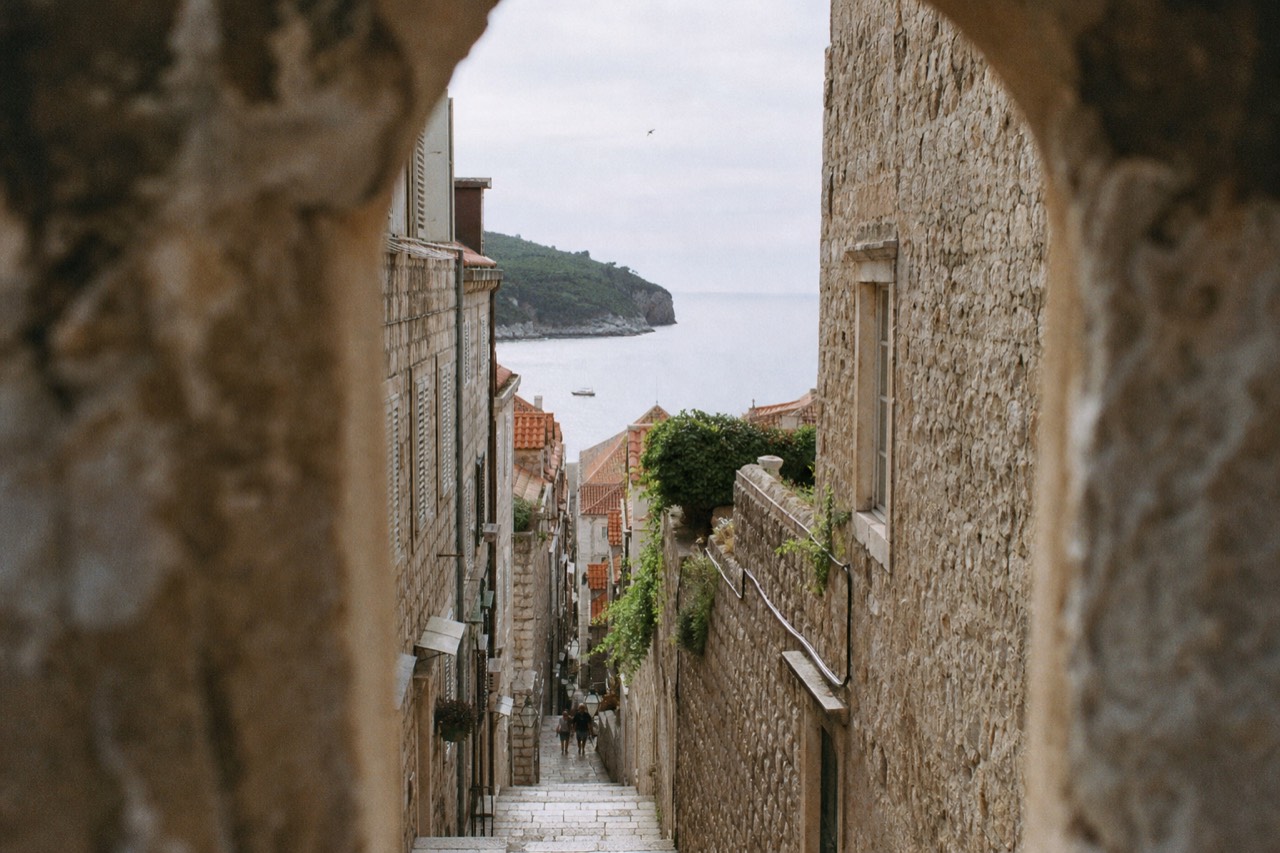
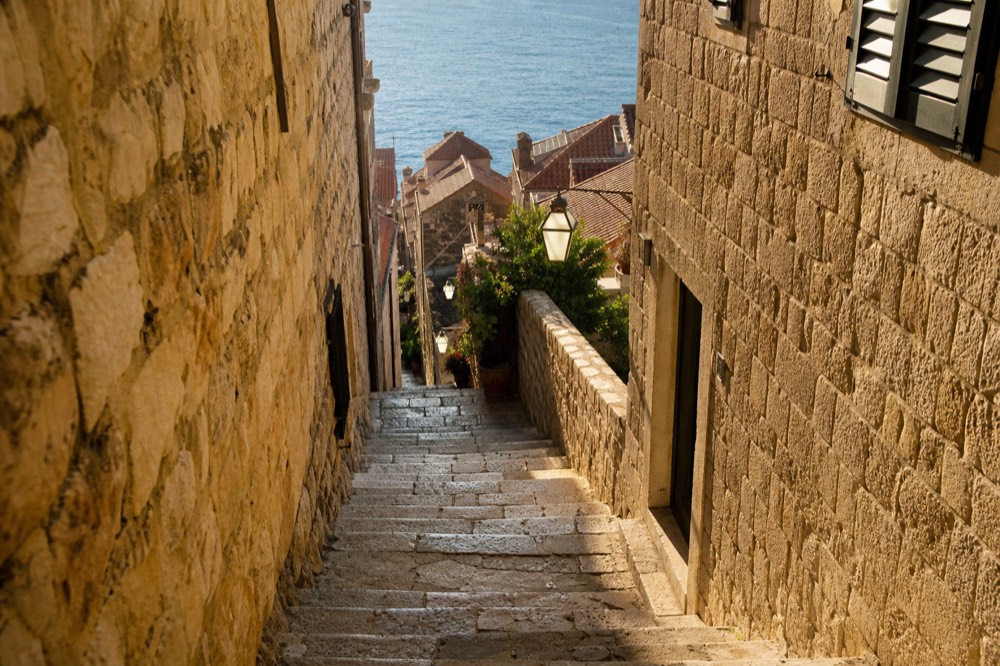
Žudioska Street is one of the shortest lanes in Dubrovnik's Old Town, a handful of worn stone steps running off the Stradun near the Sponza Palace, and it carries the name of the Jewish community that has called this quarter home for centuries. The synagogue at its heart is a working place of worship, a museum and a survivor, all inside a building small enough that you could pass through it in minutes if you did not stop to look. I have walked this street hundreds of times over the years, and it still strikes me how many people pause at the bottom step, glance up, and move on without realising what is above them.
This guide covers the synagogue itself, then answers the four questions visitors most often ask around it: how to fit the Old Town's headline sights into a single day, where you can fly direct from Dubrovnik's airport, what not to do while you are here, and what the one-day Dubrovnik Pass actually costs. Those four questions shape almost every itinerary that passes Žudioska Street, so they belong in the same conversation.
What Is the Dubrovnik Synagogue and Why Is It Worth Finding?
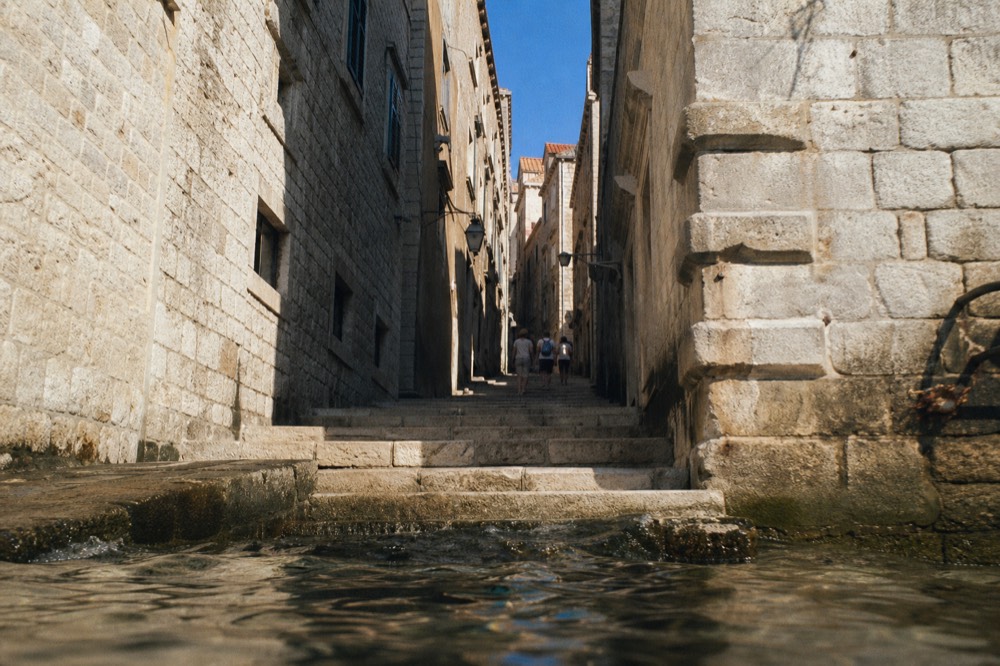
The Dubrovnik Synagogue is a small historic house of worship and museum on Žudioska Street, a few steps off the Stradun, and it is one of the most historically significant Jewish sites in this part of Europe. The building combines a synagogue interior upstairs with a museum collection downstairs, and a visit typically takes around 30 minutes. It is a quiet, contemplative stop that balances the crowds outside.
The lane itself is part of the experience. Žudioska translates simply as Jewish Street, and the name has stuck through every era of the city's history, including the long stretch when Dubrovnik was the independent Republic of Ragusa. The Jewish community here was made up largely of Sephardic families who arrived after expulsion from Spain and Portugal, and they brought with them the Ladino language and traditions that shaped this small congregation. The community's story is told inside the museum, and it is a story of both refuge and restriction: Ragusa offered safety when much of Europe offered none, though with conditions attached.
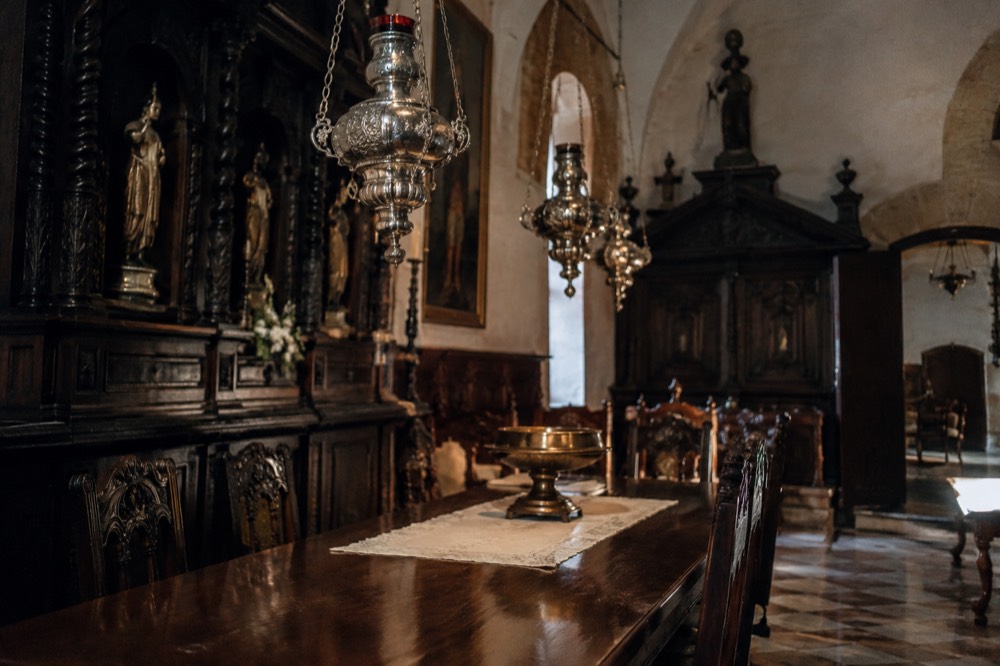
What you actually see on a visit is modest in scale and rich in detail. The synagogue interior is compact, with dark wood, hanging lamps and the ornamental character typical of Sephardic worship spaces. The museum displays ritual objects, documents and textiles connected to the community, including pieces that survived the Second World War, when the community itself was devastated. The scale is part of the point: this is not a grand national institution but a neighbourhood one, preserved in the place where it was used.
Practical notes matter here because the sight is small. Opening arrangements change through the year and the entrance fee is not published on a single stable official page, so check at the door or through the Tourist Board information point before you build your day around it. Photography rules are typically restrictive inside the synagogue room itself, and the staircase is steep and narrow, which matters if you are travelling with a stroller or limited mobility. Our guide to Old Town accessibility and step-free routes covers the wider area if stairs are a concern.
What Can I See in Dubrovnik in One Day?
One well-planned day covers the City Walls circuit, the Stradun and its side streets including Žudioska, the Rector's Palace, and either the cable car at sunset or a swim at a nearby beach. Walk the walls early, spend the middle of the day in the shaded lanes and museums, and finish above the rooftops. The Old Town itself is only 24.7 hectares, so nothing on this list is more than a few minutes' walk apart.
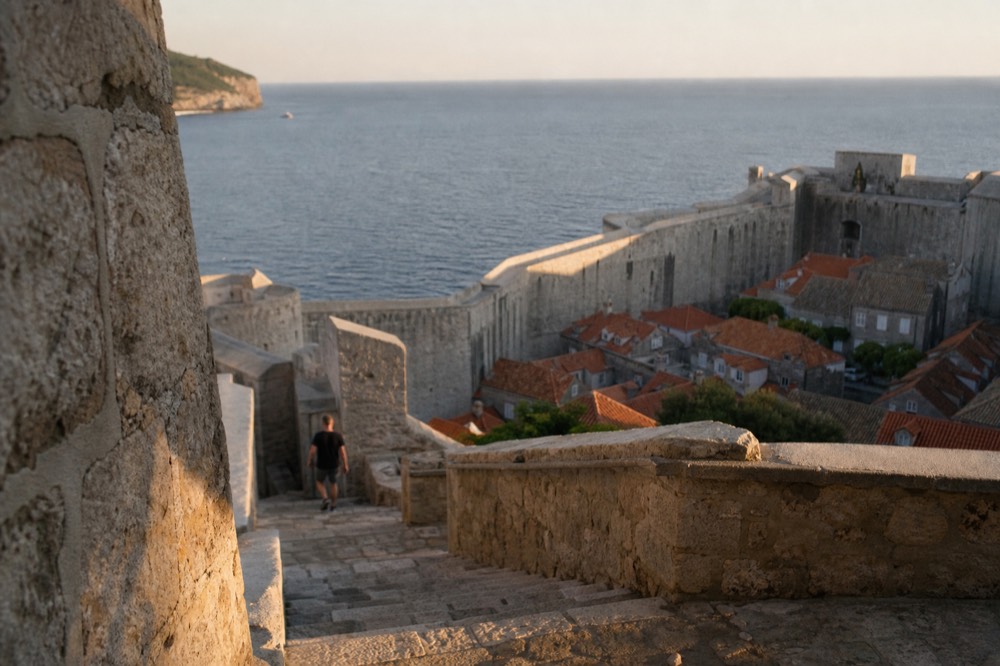
The single most important decision is the walls. The circuit is 1,940 metres long, up to 25 metres high in places, and there is almost no shade, so in summer the difference between walking it at 08:00 and walking it at 13:00 is the difference between a highlight and an ordeal. The operator's stated hours at the time of check are 08:00 to 19:30, and the adult ticket is 40 euro in main season, 1 March to 30 November, dropping to 20 euro in December. That 40 euro ticket is actually a combination: it covers the walls themselves plus Fort Lovrijenac across the bay, the Western Outer Wall and the Collection of Coins of the Republic of Ragusa, as the operator's own site sets out on its city walls page.
After the walls, the day falls into a natural rhythm. The Stradun, 298 metres long and laid out under the plan fixed by the 1272 Statute, is the spine of everything: the Franciscan Monastery at one end, the Sponza Palace and the Rector's Palace along the sides, and the cathedral and synagogue lanes at the far end. Žudioska Street sits in the last third of that walk, which makes the synagogue a natural late-morning stop once you are off the walls and looking for shade. The Old City of Dubrovnik was inscribed by UNESCO in 1979 under criteria (i), (iii) and (iv), on the World Heritage List entry for the Old City, and the density of that inscription is exactly what a one-day visitor feels.
Here is a realistic one-day framework, with the synagogue slotted where it fits best:
| Time | Stop | Why This Order |
|---|---|---|
| 08:00 | City Walls circuit from Pile Gate | Cool air, thin crowds, best light on Lokrum |
| 10:30 | Coffee on a side street off the Stradun | Shade and a pause before the museums |
| 11:00 | Rector's Palace and Sponza Palace | Indoor, cool, central to everything |
| 12:30 | Lunch, then the Dubrovnik Synagogue on Žudioska | Small sight, best when the day's energy is low |
| 14:00 | Franciscan Monastery and the cathedral area | Works with a slow afternoon pace |
| 17:00 | Cable car to Mount Srđ | Round trip is 30 euro adult, and evening light is the reward |
If you prefer a guide to handle the orientation, the cheapest paid Old Town walk starts at $20 per person, and there are also free, pay-what-you-want walks on GuruWalk, including a 1 hour 45 minute old city walk rated 4.87 across 2,242 reviews. A guided walk in the morning and the walls in the afternoon is a solid combination for a single day. For a deeper dive into pairing the stops, our one-day Dubrovnik itinerary breaks the same day down hour by hour.
How Much Does a One-Day Dubrovnik Pass Cost?
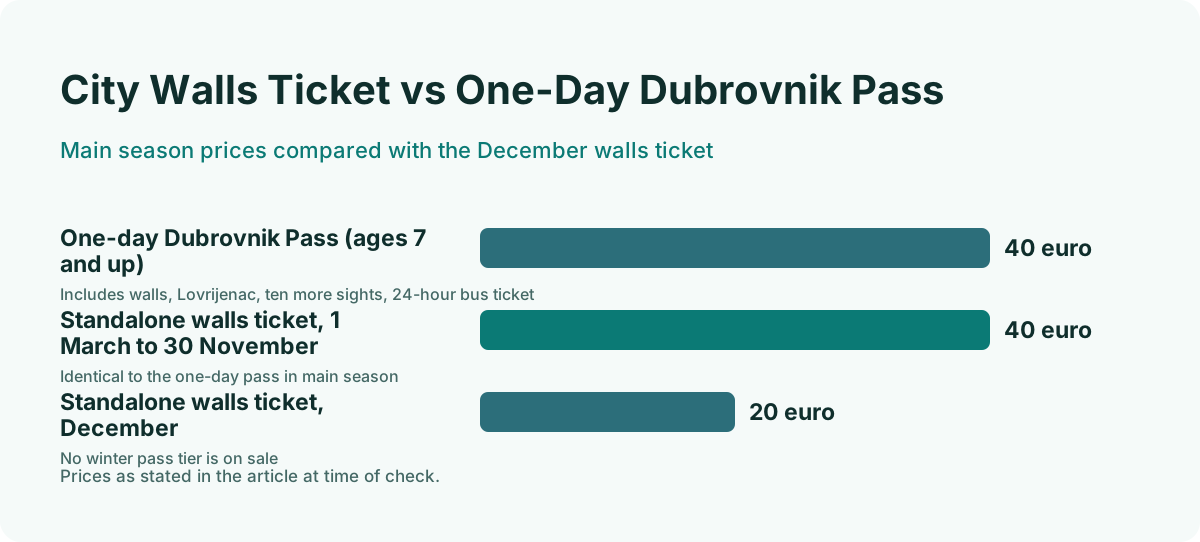
The one-day Dubrovnik Pass costs 40 euro per person, sold as an adult pass for ages 7 and up, and it includes the City Walls plus Lovrijenac Fortress, ten more cultural sights and a 24-hour bus ticket. In main season, 1 March to 30 November, that is exactly the same price as the standalone walls ticket, so the extra sights and buses cost nothing additional.
That equivalence is the whole calculation, and it only holds in main season. The standalone adult walls ticket is 40 euro from 1 March to 30 November, identical to the one-day pass. In December the walls ticket drops to 20 euro while no winter pass tier is on sale at all, so the "pass costs the same as the walls" line is a main-season claim and should be treated as one. The pass is sold for the season labelled on the operator's checkout as running 1 March to 30 November, in one ticket type only, the adult pass for 7 and up, as the official Dubrovnik Pass site lists on its inclusion tiles.
What the 40 euro buys beyond the walls is substantial. Every pass tier lists City Walls plus Lovrijenac Fortress as its first inclusion, and every tier allows a one-time visit to each institution, the walls included. Beyond that, the one-day pass adds the Rector's Palace, the Maritime Museum, the Ethnographic Museum, Marin Držić House, the Natural History Museum, the Franciscan Monastery Museum, the Museum of Modern Art, the Dulčić-Masle-Pulitika Gallery, Pulitika Studio and the archaeological exhibitions, plus the 24-hour bus ticket. Longer tiers add suburban bus coupons and House Bukovac in Cavtat.
| Option | Price | Covers | Best For |
|---|---|---|---|
| Standalone walls ticket, main season | 40 euro adult | Walls, Lovrijenac, Western Outer Wall, coin collection | Walls-only visitors |
| One-day Dubrovnik Pass | 40 euro | All of the above plus ten sights and 24h buses | Anyone visiting two or more museums |
| Three-day pass | 50 euro | Same sights, 72h buses, suburban coupons | Slower trips with a Cavtat day |
| Seven-day pass | 60 euro | Same sights, 168h buses, suburban coupons | Week-long stays |
| Walls ticket, December | 20 euro adult | Walls and Lovrijenac only | Winter visitors, no pass on sale |
Note that the Dubrovnik Synagogue is not on the pass list: it is a separate, community-run sight with its own small entrance arrangement. If the synagogue is a priority, treat it as an add-on to whichever ticket option you choose. Our fuller breakdown of what the Dubrovnik Pass includes works through every inclusion and who each tier suits.
Where in Europe Can You Fly Direct From Dubrovnik?
Dubrovnik Airport is strongly seasonal: through summer it connects directly to a wide spread of European cities across the UK, Ireland, Germany, France, the Low Countries, Scandinavia, Central Europe and Croatia's own Zagreb hub, while the winter schedule contracts to a small number of routes. Exact destinations change each season, so the airport's own departures board is the only reliable source.
The pattern matters more than any specific route list, because the list shifts every year. Dubrovnik's air market is built around the Adriatic summer: the destination recorded about 4.2 million overnight stays in 2025, sharing first place among Croatian destinations with Rovinj, and the flight network scales to that demand. From late spring to early autumn you can reach Dubrovnik without connecting from most major European markets, and the airport also serves as a seasonal entry point for Montenegro and Bosnia-Herzegovina trips. From November to March the network thins dramatically, and many travellers connect through Zagreb instead.
For a synagogue-and-Old-Town trip specifically, the timing implications are worth stating plainly. The sight is indoors and works in any weather, but the walls walk and the cable car, which closes January to March, are summer-weight experiences. If you are choosing flights for a first visit, aim for the shoulder edges of the main season: the sea is swimmable, the September average for this coast is about 23.6 degrees as a long-run figure, and the peak cruise crowds have eased. That last point is more counter-intuitive than most visitors expect: cruise passengers at the Port of Dubrovnik peaked in September 2025 at 101,246 and October at 100,132, both above July's 96,072 and August's 87,385, so early autumn is busy at the docks even as the airports quieten.
A few practical points for planning around flights. The airport sits well south of the city, and transfers to the Old Town are covered in detail in our Dubrovnik Airport guide, including the shared departure transfer option that starts at $20 per person. If your itinerary pairs Dubrovnik with Split, our transport comparison of bus versus options north is the honest rundown of that leg.
What Not to Do in Dubrovnik?
Do not walk the walls at midday in summer, do not plan to drive or park inside the Old Town, do not expect the synagogue or small museums to keep fixed hours without checking, and do not treat the cruise-day calendar as unpredictable. The Old Town is pedestrian-only, small and steep, so the classic mistakes are all about timing, footwear and overpacking a single day.
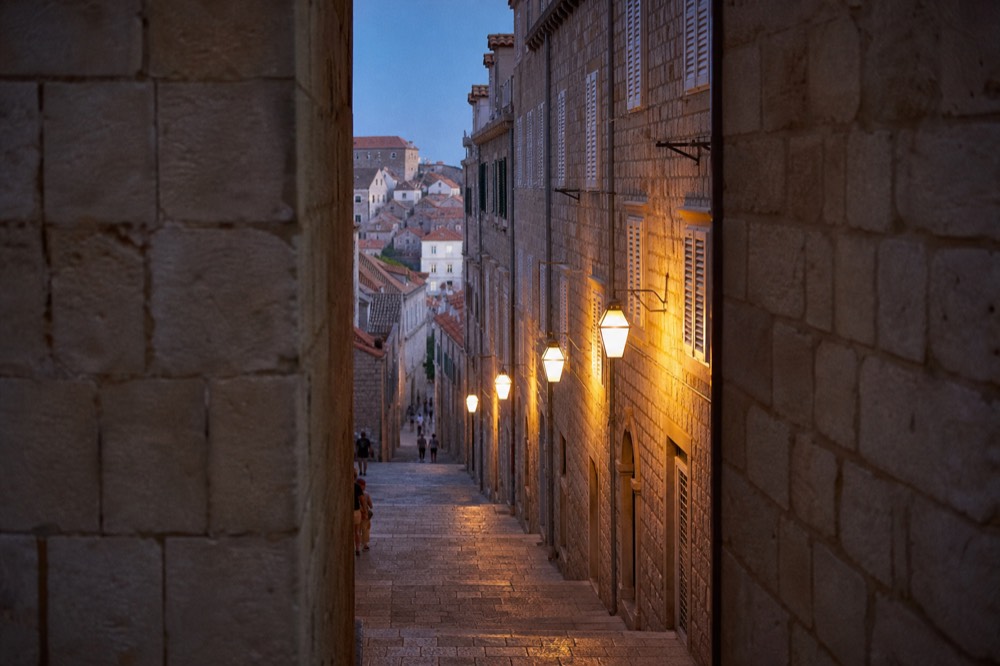
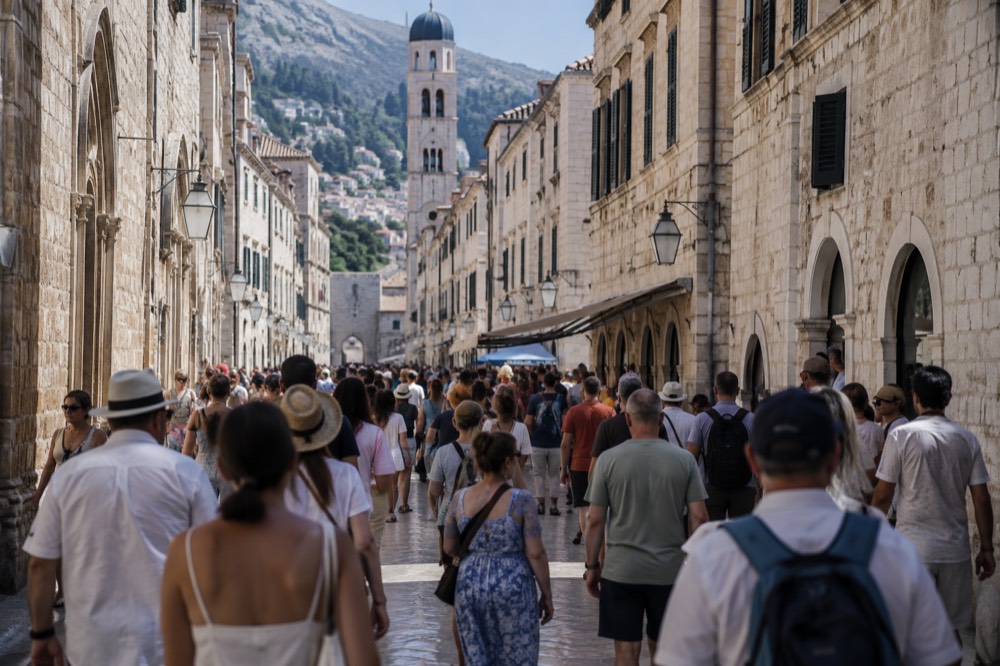
The midday walls walk deserves its own warning because it is the mistake I see most often from my own walking routes. The circuit has almost no shade, the stone radiates heat, and there is no exit halfway round except back the way you came. Go at opening or in the last two hours before the 19:30 close. The same logic applies to the Stradun itself at midday in July and August: it is a limestone corridor that funnels both crowds and heat. The lanes either side, including Žudioska, are consistently cooler and quieter. More of these guides are collected on Things to Do in Dubrovnik.
The etiquette list is short but specific, and much of it is simply respect for a living city. The City of Dubrovnik counted 41,562 residents at the 2021 census, and a large share of daily life happens around the tourists. Dress codes apply at religious sites including the synagogue, the cathedral and the monasteries: covered shoulders and knees. Swimwear belongs at the beach, not on the Stradun, and the cliffs around Buža are not a diving platform despite what social media suggests.
| Mistake | Why It Fails | Do This Instead |
|---|---|---|
| Walls at midday in July or August | No shade, no mid-circuit exit, hot stone | Start at 08:00 or go after 17:00 |
| Driving to the Old Town | It is pedestrian-only inside the walls | Use parking outside and walk in, see our parking guide |
| Assuming small sights keep fixed hours | Synagogue and museum hours shift seasonally | Check at the Tourist Board office that day |
| Booking nothing in peak weeks | Walls queues and tours sell out on cruise days | Pre-book the walls ticket and one guided walk |
| Beachwear on the Stradun | It is a living city street, and bars may turn you away | Cover up between beach and town |
One more thing worth avoiding: writing off a cruise day entirely. The Port Authority's own data shows that of 243 cruise days a year only 18 exceed the 8,000-passenger daily limit, and the busiest remaining 2026 dates, such as 6 October with two ships and up to 5,798 passengers by capacity, are published in advance. Those figures are ship capacity, not people who actually walk ashore, but they let you pick your days deliberately rather than by luck. Our cruise schedule guide keeps the detail.
How Do You Visit the Synagogue and What Should You Expect Inside?
Expect a small, quiet, self-guided visit of around 30 minutes: a museum level with community artefacts and a synagogue interior above it, reached by a steep narrow staircase. Check opening arrangements locally before you go, since hours shift through the year, and treat it as a contemplative stop rather than a headline attraction. Photography is typically restricted inside the synagogue room.
The visit rewards a little preparation. Read something of the community's story before you climb the stairs, or go with a local guide who can place the building in the arc of Ragusan history, because the labels inside are brief and the significance is easy to miss. The Sephardic character of the community is the thread to hold onto: these were families with roots in Iberia, and the ritual objects on display carry that lineage in their craftsmanship and inscriptions.
Pairing the synagogue with its neighbours is the natural way to see it. Žudioska Street opens onto the area around the Sponza Palace and the Rector's Palace, both a minute away, and the cathedral is a short walk further. If you have taken the walls ticket, Fort Lovrijenac is included and stands across the bay on a 37-metre-high sea rock, worth the crossing for the view back over the Old Town you have just walked through. The Fort Lovrijenac guide covers the practicalities of that crossing.
For travellers who want the walls explained rather than just walked, the two-hour Ancient City Walls and Wars walking tour starts at $29.58 per person and is rated 4.8 across 1,387 reviews, and the combo version that adds the Old Town runs about three and a half hours from $50.94.
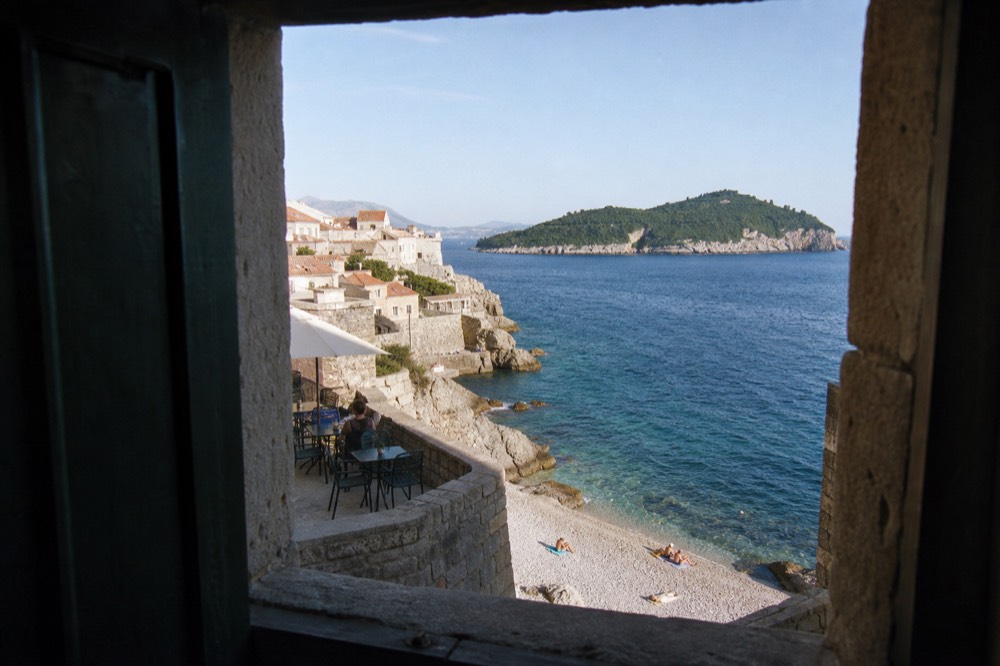
What Should You Pair With the Synagogue If You Have Extra Time?
With extra time, add the cable car to Mount Srđ for the panorama, a kayak circuit around the walls and Lokrum, or a half-day on the Elaphiti Islands. The cable car round trip costs 30 euro adult, kayaking tours start around $35, and the most-reviewed island cruise runs eight hours from $59.16 with lunch included, rated 4.9 across 10,312 reviews.
The cable car is the easiest add-on because it sits at the edge of the Old Town. The ride covers 778.2 metres of track and a 367-metre rise in 3 minutes 30 seconds, from a lower terminal at 38 metres above sea level to the Srđ station at 405 metres, with the operator stating a clear-day view range of up to 60 km. Prices for 2026 are 30 euro adult round trip, 17 euro one way, 8 euro round trip for children 4 to 12, and under 4s ride free. It closes January to March and runs late into the evening in summer, which makes a sunset ride after a synagogue-and-museums day an easy fit.
If you would rather be on the water, the options split by energy level. Sea kayaking tours around the walls and Betina Cave start at $35.49 for a two-hour paddle, rated 4.9 across 1,518 reviews, and they give you the only angle on the Old Town the walls cannot: from the sea looking up. The full-day Elaphite Islands cruise is the classic boat day, eight hours with lunch from $59.16 per person, and the reviews are unusually strong for a high-volume product. For a shorter commitment, the e-tuk-tuk panorama ride covers the viewpoints above the town in about an hour and three quarters from $59.24, rated a perfect 5 across 1,799 reviews, and it suits anyone whose legs have had enough of stairs.
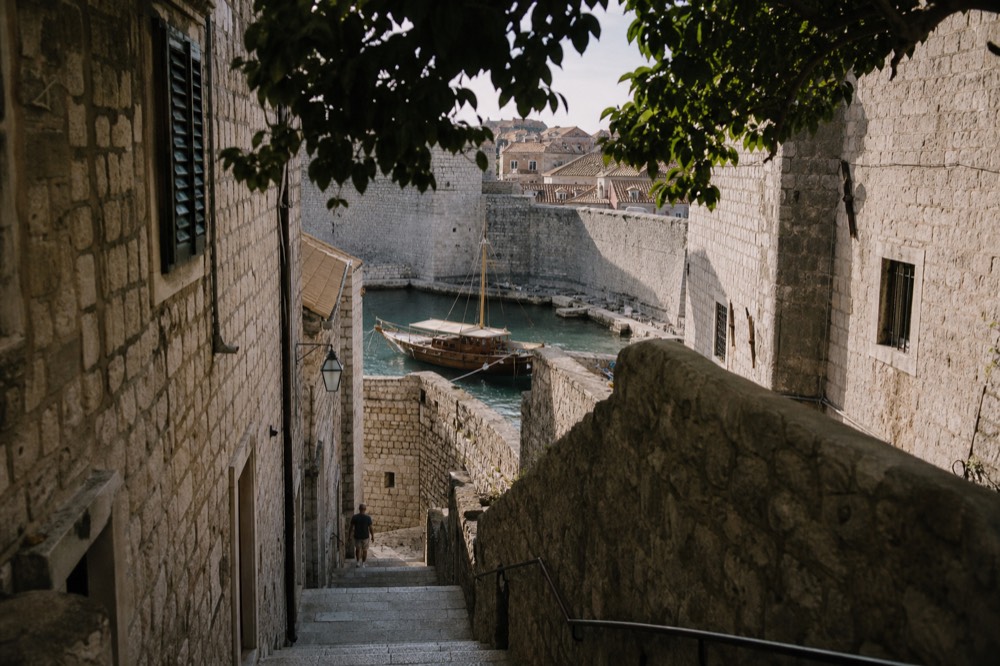
How Do You Build the Whole Day Around Žudioska Street?
Anchor the day at the walls at 08:00, work the Stradun's museums through the middle of the day, and slot the synagogue in as a late-morning or early-afternoon stop when you want shade and quiet. Buy the one-day pass at 40 euro if you will visit two or more included sights, and pre-book the walls ticket in peak weeks. Finish above the rooftops or on the water.
The reason this works is geography. Everything in the plan sits inside or beside a 24.7-hectare UNESCO property, and the longest walk between any two stops is minutes. That is also the reason not to over-plan: the Old Town rewards unhurried lane-wandering, and Žudioska is exactly the kind of street you find by slowing down. The walls are the one element that needs a fixed slot, both for the heat and for the queue, and the pass-versus-ticket decision is the one piece of arithmetic worth doing before you arrive.
For a longer trip, the same logic scales. The walls admission ticket on its own starts at $36.37 per person and is the cheapest way onto the circuit if you plan no museums; the pass wins the moment you add the Rector's Palace or the Maritime Museum. Beyond the city, Mostar day trips start at $35 per person, Montenegro trips at $58, and both are covered in our day trips overview. Whatever you choose, the synagogue street will still be there, five quiet minutes off the Stradun, whenever the crowds get loud.
Whichever way you lock in the ticket, the rest of the day flows from it. Walls first, museums and Žudioska through the warm middle hours, then the cable car or the water as the light softens. That is the shape of a good Dubrovnik day, and the selections below cover the three pieces most visitors book.
Common Questions About the Dubrovnik Synagogue
What Is the Dubrovnik Synagogue?
It is a small historic synagogue and museum on Žudioska Street in the Old Town, a few steps off the Stradun, serving a community with deep Sephardic roots in the city. The building combines a museum collection with the synagogue interior, and a visit takes around 30 minutes.
What Can I See in Dubrovnik in One Day?
Walk the City Walls early, then the Stradun's palaces and museums, the synagogue lane, the Franciscan Monastery, and finish with the cable car or a swim. The Old Town is only 24.7 hectares, so all of it fits in a single day at a walking pace.
How Much Does a One-Day Dubrovnik Pass Cost?
The one-day Dubrovnik Pass costs 40 euro per person in main season, 1 March to 30 November, and includes the City Walls plus Lovrijenac, ten more sights and a 24-hour bus ticket. That is the same price as the standalone walls ticket in main season.
where in europe can you fly direct from dubrovnik?
Dubrovnik Airport connects directly in summer to a wide spread of European cities across the UK, Ireland, Germany, France, the Low Countries, Scandinavia, Central Europe and Zagreb, while winter service contracts sharply. Routes change each season, so check the airport's own departures information for the current list.
What Not to Do in Dubrovnik?
Do not walk the walls at midday in summer, do not try to drive into the pedestrian-only Old Town, do not assume small sights like the synagogue keep fixed hours without checking, and do not skip pre-booking in peak weeks when cruise capacity is high.
Is the Dubrovnik Synagogue Included in the Dubrovnik Pass?
No. The synagogue is a separate, community-run sight with its own entrance arrangement and is not on the pass inclusion list. Treat it as a small add-on to whichever ticket option you choose.