Dubrovnik Vacation Packages: What to Book and What to Skip
Vacation packages can look like a convenient shortcut, but in Dubrovnik the real value is often in mixing the city's own pass with a few well-chosen individual tours. This guide compares the bundles, explains what the Dubrovnik Pass actually covers, and answers the practical questions every first-timer asks.
Short answer
Dubrovnik vacation packages bundle flights, hotels, and sometimes tours, but the city's own Dubrovnik Pass provides admission to the walls and museums for €40 to €60 and often beats the package price when paired with individually booked tours. Croatian is the official language; English is spoken everywhere. Breakfast is a quick coffee and burek or pastry. Avoid overpriced restaurant terraces, midday wall walks, and thinking you need a package to see the best of the city.
Dubrovnik vacation packages promise a tidy stack of flights, a hotel, and a clutch of tours wrapped in one price. The reality is that the best bits of the city run on a different system, a local pass that costs €40 to €60 and a handful of tours you can book in minutes. This guide walks through what the Dubrovnik Pass actually covers, what you should know about language and breakfast, and the things you should never do while you are here, so you can compare any package against what you would piece together on Things to Do in Dubrovnik.
What Does the Dubrovnik Pass Include?
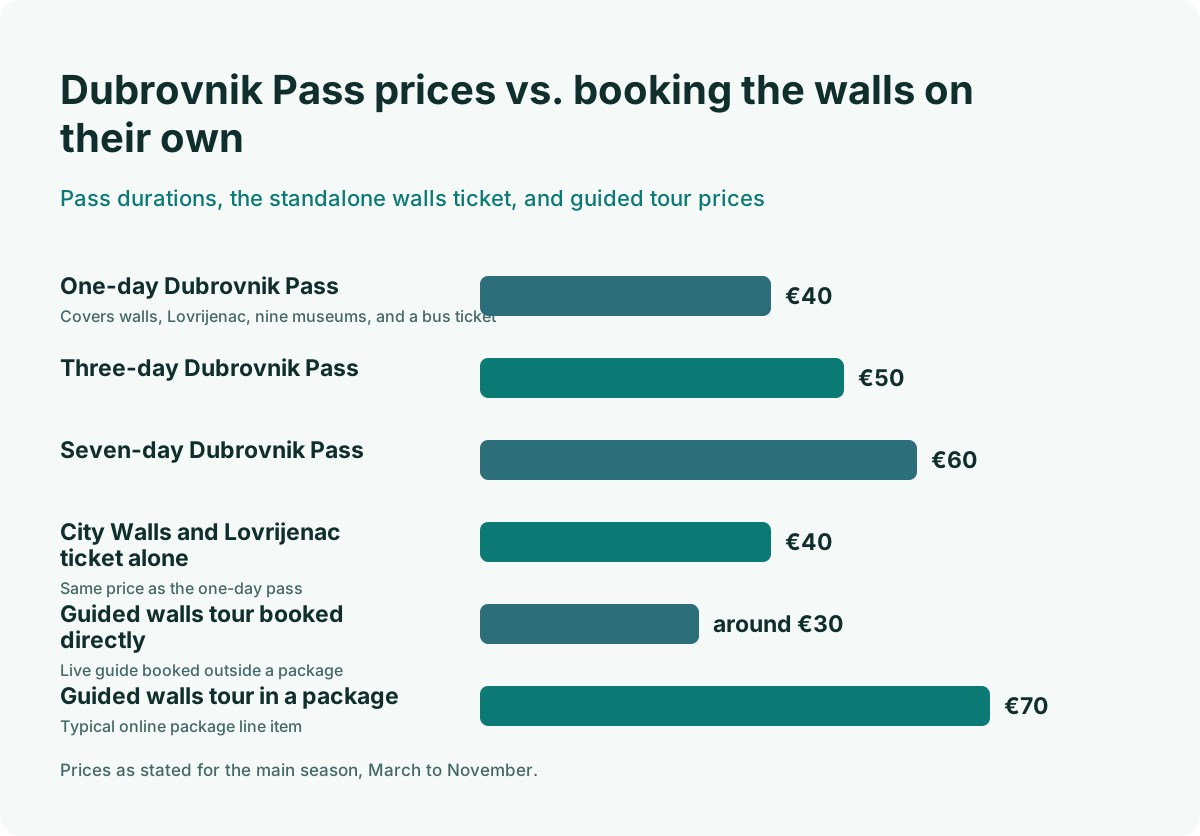
The Dubrovnik Pass bundles admission to the City Walls, Fort Lovrijenac, nine museums, and a public bus ticket into a single sightseeing card, available in one-day (€40), three-day (€50), and seven-day (€60) durations during the main season from March to November.
The pass is the single most useful shortcut for a visitor who wants to cover the Old Town's major sights without buying a dozen separate tickets. The one-day version includes the City Walls and Lovrijenac Fortress, the Rector's Palace, the Maritime Museum, the Ethnographic Museum, Marin Drzic House, the Natural History Museum, the Franciscan Monastery Museum, the Museum of Modern Art, the Dulcic-Masle-Pulitika Gallery, and a 24-hour bus ticket. The three-day and seven-day passes add a visit to House Bukovac in Cavtat plus coupons for suburban bus rides. You can read our full breakdown of every attraction the Dubrovnik Pass covers for a deeper look at the inclusion list.
The key number is that the standalone City Walls and Lovrijenac ticket also costs €40 during the same main-season window. So the one-day pass effectively gives you the walls plus nine other attractions and a bus ticket for the same price as the walls alone. That is the comparison that makes vacation packages look lazy: any bundle that lists "city walls entry" as a line item is already charging you for something you could upgrade to a full pass for zero extra euros.
That said, the pass only covers admission. It does not put a guide in front of you, and the walls are 1,940 metres of stone without a single sign explaining what you are looking at. A guided tour that layers the history on top of the admission you have already paid for is the natural next step. The City Walls circuit is one of the finest defensive walks in Europe, but it rewards the visitor who arrives with a guide far more than the one who walks it alone.
| Pass tier | Price | Transport included | Sights covered |
|---|---|---|---|
| One-day | €40 | 24-hour bus ticket | City Walls, Lovrijenac, nine museums and galleries |
| Three-day | €50 | 72-hour bus ticket, suburban coupons | All of the above plus House Bukovac in Cavtat |
| Seven-day | €60 | 168-hour bus ticket, suburban coupons | Same as three-day, wider transport reach |
The pass is sold on the official website and at tourist information centres at Pile Gate and in the Old Town. It activates on first use, and you can choose the start date when you buy it. The one visit per attraction rule is the only catch: you walk the walls once, you visit each museum once, and that is your pass. For most visitors on a two-day or three-day stay, that is plenty.
What Language Do They Speak in Dubrovnik?
Croatian is the official language, and you will hear it in every shop, cafe, and government office. English is spoken fluently by almost everyone who works in tourism, including all tour guides, restaurant staff, and hotel receptionists. You can get through an entire trip without a word of Croatian, but a couple of basic phrases earn a warmer reception.
The linguistic reality is that Dubrovnik has been an international port for centuries, and the modern tourist economy runs on English. Menus are bilingual, street signs are in Croatian and English, and even the bus drivers can give you directions in clear English. The only place where you might hit a language barrier is a small, family-run konoba well outside the Old Town, and even there someone will usually find a way to communicate.
That ease of communication makes guided tours a far better experience than self-guided audio, because the guide can answer questions in real time and tailor the walk to the group. A good walking tour narrated in English by a local who grew up in the Old Town is the difference between seeing a wall and understanding why it was built. The best walking tours in Dubrovnik are all led in English by licensed guides who know the city block by block.
What you should not do is assume a package tour includes a live guide. Many bundled vacation deals list "Old Town walking tour" as an inclusion, but the fine print often reveals it is an audio guide or a large-group shuffle with a flag and a microphone. A small-group tour booked directly, with a real guide who can answer questions and adjust the pace, is a different product entirely.
The three tours above cover the city from different angles: a deep dive into the walls and the wars that shaped them, a two-in-one combo that pairs the Old Town with the full circuit, and a convertible bus ride that takes you above the rooftops with an audio guide. All three are led or narrated in English, and you can book them in the time it takes to drink a coffee.
If you want to see the city from a completely different seat, the E-Tuk Tuk panorama ride is a 1-hour-45-minute electric tour that climbs the hills above the Old Town and gives you views you would never get on foot. The guide narrates in English, and the small vehicle slips into streets a bus could never reach.
What Do They Eat for Breakfast in Dubrovnik?
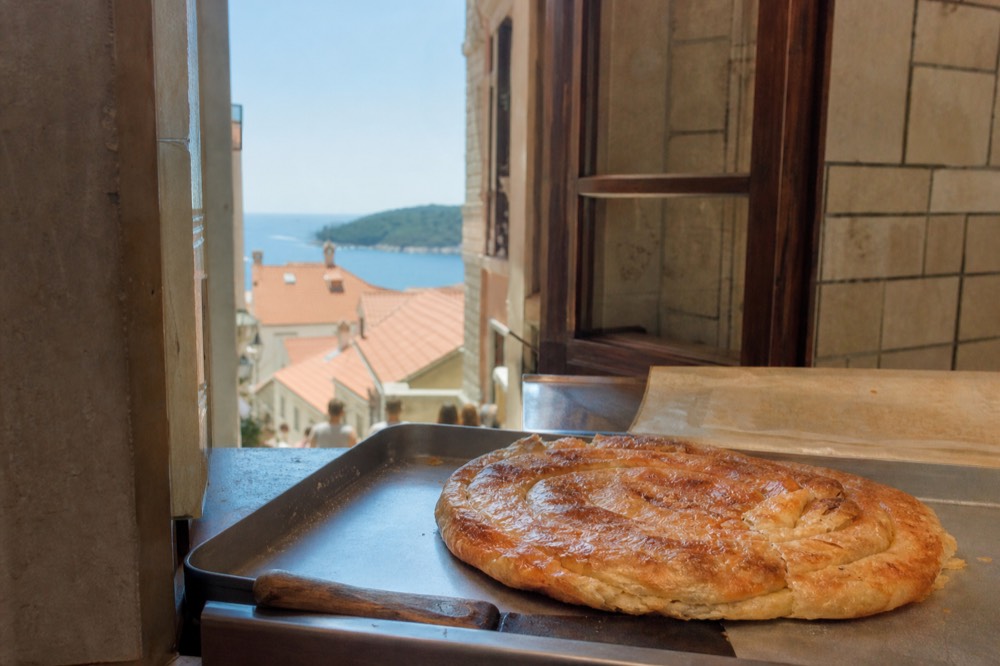
Breakfast in Dubrovnik is a quick, savoury affair, rarely a sit-down meal. A burek, a spiral of flaky pastry filled with cheese, meat, or spinach, eaten with a cup of strong coffee, is the most common morning ritual. Cafes and bakeries open early, and you will see locals grabbing a burek and an espresso at a standing counter before work.
The burek is the undisputed star of the morning. A cheese burek costs about €2.50 to €3.50, a meat one a little more, and the spinach version is a lighter option. Bakeries like Pekara Rusica or the small stands just outside Pile Gate sell them fresh from the oven from around 07:00. Pair it with a macchiato or a plain espresso, and you have spent under €5. The whole transaction takes three minutes, and you eat it walking or on a bench with a view of the harbour.
If you are staying in a hotel, breakfast buffets are the norm, and they lean heavily into continental spreads: bread, cold cuts, cheese, eggs, pastries, and fruit. The buffet at Hotel Komodor in Lapad is a budget-friendly starting point, rated 7.8 out of 10 across 822 reviews, while the spread at Hotel Excelsior in Ploce is a full table-service affair with a view of the Old Town. Neither is a package deal that you need to prepay months in advance; you can book the room and pay for breakfast on the spot.
Many vacation packages include breakfast as a standard line item, which is fine, but it is not a reason to choose one package over another. The hotel breakfast in Dubrovnik is rarely the highlight of the trip, and you are just as well off eating a burek from a bakery and spending the saved breakfast budget on a seafood lunch later in the day.
For a deeper dive into the city's food culture, the 3-hour Food and Drink Walking Tour runs through the Old Town with stops for local specialities and wines at every turn. It is rated 5 across 704 reviews, and the guide Marija, a local who grew up in the city, weaves stories of Dubrovnik's culinary history between bites of cheese, prosciutto, and fresh seafood.
Amazing food tour! Marija was a great guide, full of stories and facts that really brought Dubrovnik to life. The food was delicious, and generous. Wines at every stop. Would highly recommend this tour to anyone visiting Dubrovnik, especially to help get your bearings of the city and know where to go for dinner!
Bryan_M
| Breakfast item | Typical price | Where to find it |
|---|---|---|
| Cheese burek | €2.50 to €3.50 | Pekara Rusica, bakeries near Pile Gate |
| Meat burek | €3.00 to €4.00 | Same bakeries, also at Gruz market |
| Espresso or macchiato | €1.50 to €2.50 | Any cafe, standing at the counter |
| Hotel breakfast buffet | €10 to €20 | Hotels in Lapad, Babin Kuk, and Ploce |
| Pastry and coffee combo | €4 to €6 | Bakeries and takeaway counters |
What Not to Do in Dubrovnik
The biggest mistake is buying a prepackaged vacation bundle that locks in tours you could book for less, at times you cannot change, without first checking what the Dubrovnik Pass and a few individually booked tours would cost. The second is walking the City Walls at midday in July and August, when the stone radiates heat and the headcount inside the Old Town pushes past 7,700. The third is eating on the main squares.
The vacation-package trap is the one that costs real money. A typical online package might list a guided city walls tour as a €70 line item, but the entrance fee is already covered by the pass you bought for €40, and the same live guide can be booked directly for around €30. The markup is the price of convenience, and in Dubrovnik the convenience is not worth the premium. The city is small, the tours are easy to book on the operator's live listing, and the cancellation policies are almost always free up to 24 hours before.
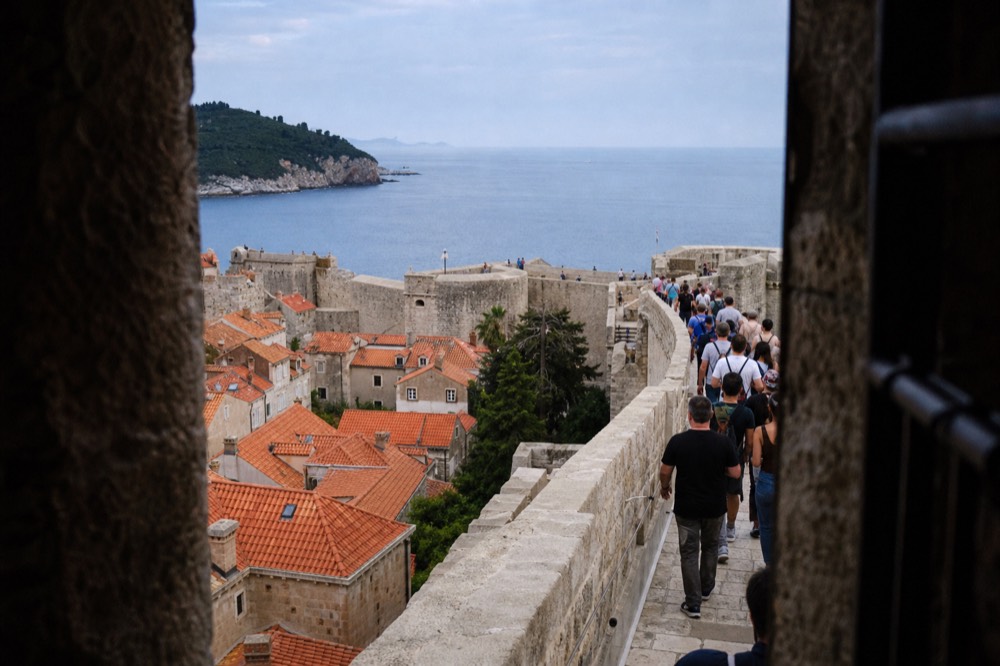
The walls themselves are a 1,940-metre circuit that takes about an hour and a half to walk. The recommended time is 08:00, when the gates open and the counters show 5,419 people inside the Old Town. By 10:00 the number usually hits 7,739, the typical daily peak, and the walls can feel like a conveyor belt. By 11:00 it settles to about 7,205, still busy but beginning to ease. The official carrying capacity of the Old Town, set by the UNESCO assessment, is 11,275 people, and the Port Authority limits cruise passengers to 8,000 a day in most cases. Of the 243 cruise days a year, only 18 exceed 8,000 passengers.
The Ancient City Walls and Wars tour is the one I recommend to anyone who wants the history without a dry audio guide. The 2-hour walk covers the full circuit with a guide who explains the defensive logic, the sieges, and the scars that are still visible in the stone. Antun, one of the regular guides on this tour, weaves the city's military history into the walk in a way that makes the fortifications make sense.
This well organized tour helped put Dubrovnik's past (and present) into perspective. It's incredible that the city walls have withstood the test of time. Antun was a wonderful guide.
linda_a
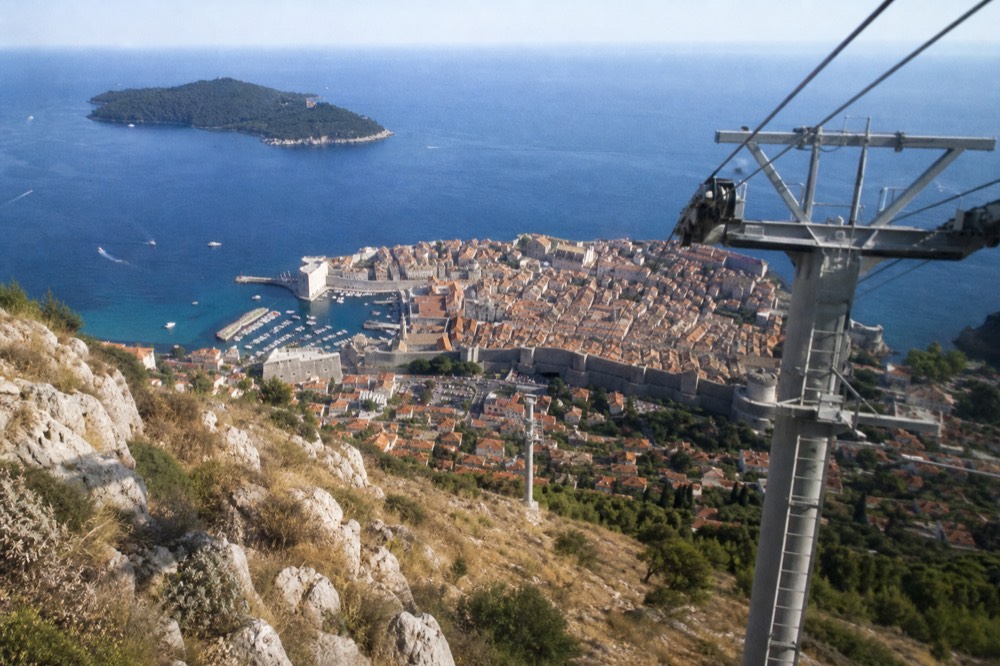
The other thing to avoid is the restaurant terraces on the Stradun and around the Rector's Palace. A plate of pasta that costs €8 two streets back can run to €22 on the main square. The same rule applies to the cable car restaurant: the view is worth the ticket, but the food is not. Eat in the backstreets of the Old Town, in Lapad, or in Gruz, where the konobas serve the same seafood at half the price. If you want guidance on where to stay in Dubrovnik, the neighbourhood you pick shapes your restaurant options as much as your hotel budget.
One more thing to avoid: booking a package that includes a transfer from the airport to the Old Town at a premium. A shared airport transfer starts at $20 per person, and the airport bus is even cheaper. Any package that charges more than €25 for this service is padding the total.
| Do | Do not |
|---|---|
| Buy the Dubrovnik Pass if you plan to walk the walls and visit two or more museums | Buy a vacation package before checking the pass price |
| Walk the walls at 08:00 or after 17:00 | Walk the walls between 10:00 and 15:00 in summer |
| Eat one street back from the Stradun | Eat on the Stradun unless you are paying for the view |
| Book tours individually with free cancellation | Prepay non-refundable tours months in advance |
| Use the public bus included in the pass | Take a taxi from the Old Town to Lapad, the bus is faster |
| Check the operator's live listing for the real price | Accept a package price without comparing it to self-booking |
How to Build Your Own Dubrovnik Package
Building your own vacation package takes about an hour on a laptop and nearly always costs less than the prepackaged version. The formula is simple: book your flight and hotel separately, buy the Dubrovnik Pass online, and add two or three individual tours from the operator's live listing. The savings come from the fact that you are not paying a middleman to bundle things you can book directly.
Start with the pass. If you are staying two or three days, the one-day pass at €40 covers the walls and the museums you are most likely to visit. If you are staying four or more days, the three-day or seven-day pass spreads the cost thinner and adds the suburban bus rides that make a trip to Cavtat or Trsteno easy. The pass is the backbone of the self-built package, and everything else hangs off it.
Next, pick your tours. The city works best with one walking tour on your first morning, one boat or island trip on a second day, and maybe a food tour or a day trip to Mostar or Montenegro if you have the time. The best day trips from Dubrovnik are all bookable individually, and the price on the live listing is almost always lower than the same tour inside a package.
The hotel is where packages can sometimes win, particularly if you are booking a higher-end property like Hotel Excelsior, where a package rate might include a room upgrade or a meal credit. For budget and mid-range hotels, the package premium is harder to justify. Hotel Komodor in Lapad, for example, is a solid three-star with a 7.8 out of 10 rating across 822 reviews, and the nightly rate booked directly is almost always lower than the same room inside a package.
The flight is the same story. Dubrovnik Airport is served by direct flights from most major European hubs in summer, and the fare on a flight search engine is the same fare the package operator is using, minus their markup. Book the flight yourself, and you keep the flexibility to change it without unwinding a whole package.
| Component | Package price (typical) | Self-booked price |
|---|---|---|
| Dubrovnik Pass (1-day) | Often not included, sold as an add-on | €40 |
| City Walls guided tour | €60 to €80 bundled | From €30 on the live listing |
| Airport transfer | €40 to €50 bundled | From $20 per person shared |
| Hotel, 3 nights, mid-range | Often marked up 15 to 25 percent | Direct rate on the hotel site |
| Island cruise with lunch | €80 to €100 bundled | From €59 on the live listing |
Common Questions About Dubrovnik Vacation Packages
What does the Dubrovnik Pass include?
The one-day pass covers the City Walls, Fort Lovrijenac, nine museums and galleries, and a 24-hour bus ticket for €40. The three-day pass adds House Bukovac in Cavtat and suburban bus coupons for €50, and the seven-day pass includes the same for €60. All passes are sold during the main season from 1 March to 30 November.
What language do they speak in Dubrovnik?
Croatian is the official language. English is widely spoken by everyone in tourism, including guides, hotel staff, and restaurant workers. You can manage without Croatian, but a few words like "hvala" (thank you) and "dobar dan" (good day) are appreciated.
What do they eat for breakfast in Dubrovnik?
Locals typically eat a burek, a flaky pastry filled with cheese, meat, or spinach, alongside a strong coffee. Bakeries sell them for about €2.50 to €3.50. Hotels offer buffet breakfasts with continental spreads, and a food tour can be a great way to explore the city's morning food culture.
What not to do in Dubrovnik?
Do not buy a vacation package without comparing its cost to the Dubrovnik Pass plus individually booked tours. Avoid walking the walls at midday in summer, eating on the main squares, and prepaying non-refundable tours months in advance. The city rewards the traveller who plans lightly and stays flexible.
Is the Dubrovnik Pass worth it if I am only staying two days?
The one-day pass is worth it if you plan to walk the walls, because the standalone walls ticket costs €40 in main season and the pass costs the same €40 while adding nine more sights and a bus ticket. If you are not walking the walls, a pass might not be necessary.
Can I book the Dubrovnik Pass online?
Yes, the pass is sold on the official website dubrovnikpass.com. You can also buy it at the tourist information centres at Pile Gate and in the Old Town. The pass is activated on first use, and you can choose the start date when you purchase it.