The Dubrovnik Chess Set: A Souvenir With a Story Behind It
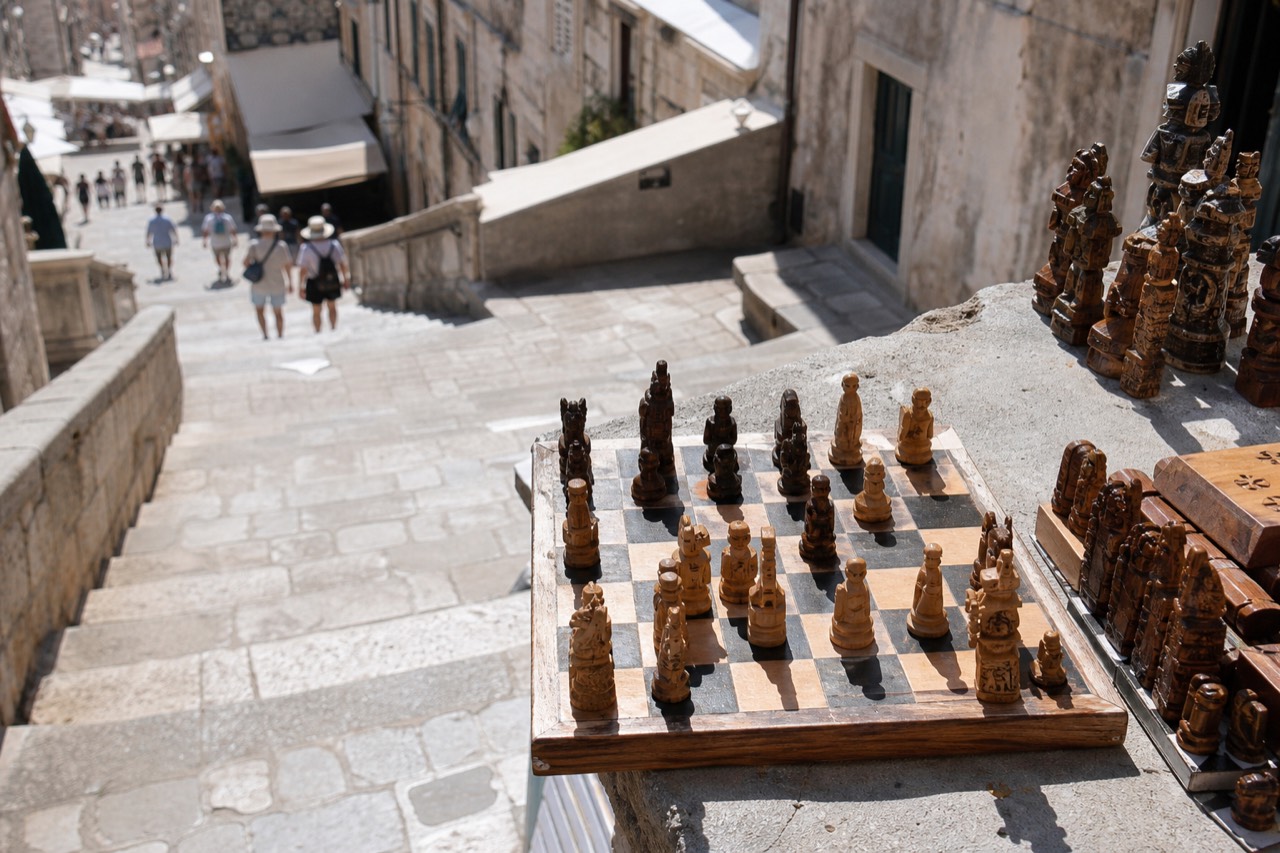
Most visitors leave Dubrovnik with a fridge magnet. A quieter tradition, and a far better one, is the chess set: a carved wooden board that carries the outline of the walled city, sold in a handful of Old Town workshops and prized by collectors well beyond Croatia.
Short answer
The Dubrovnik chess set is a carved wooden souvenir sold in Old Town workshops, often modelled on the walled city itself. This guide covers what to look for when buying one, then answers the questions that shape the rest of your day: the 40 euro city walls ticket, the 1,940 metre circuit, and how Dubrovnik compares with Kotor and Split.
Most visitors leave Dubrovnik with a fridge magnet or a fridge magnet's worth of regret. A quieter tradition, and a far better one, is the chess set: a carved wooden board, often built around the outline of the walled city, sold in a handful of Old Town workshops and sought after by collectors well beyond Croatia. I have walked these streets with travellers since 2015, and the people who buy a chess set here are almost always the people who spent the most time actually looking at the city.
This guide does two things. First it covers the chess set itself: what it is, why it is tied to Dubrovnik specifically, and what to weigh before you buy one. Then it answers the four questions that almost always follow, because a chess set purchase rarely happens in isolation. It happens on a day that includes the city walls, and on a trip that asked whether Kotor or Split should have got the booking instead.
What Is the Dubrovnik Chess Set?
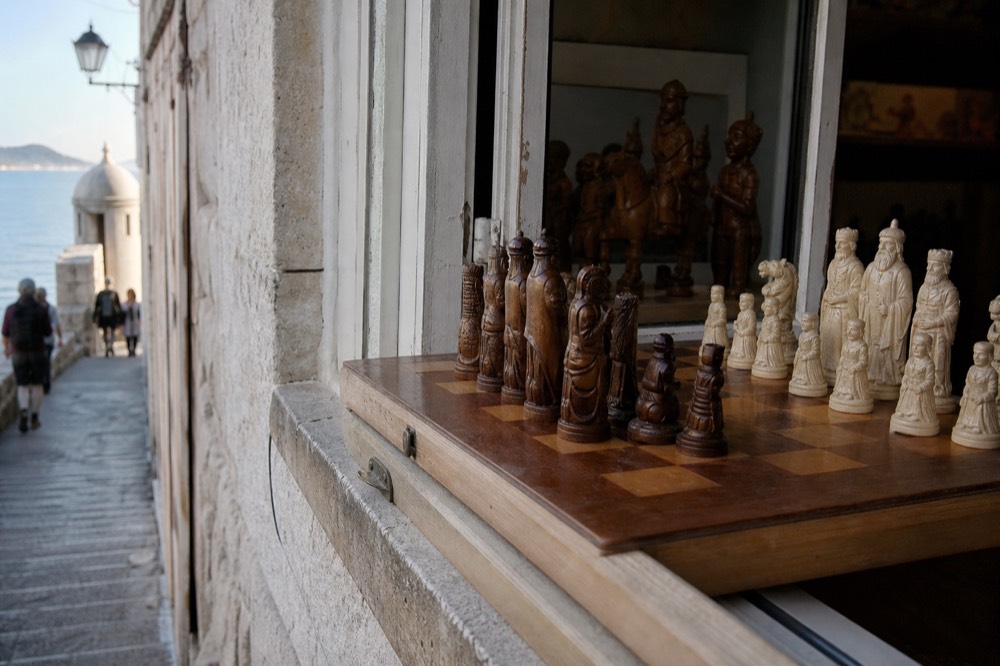
The Dubrovnik chess set is a carved wooden chess set whose design is strongly associated with the city, sold in Old Town workshops and prized by players and collectors far more than the usual tourist souvenirs. Unlike a magnet or a T-shirt, it is an object with a genuine link to the place it comes from, and buying one well takes a little knowledge.
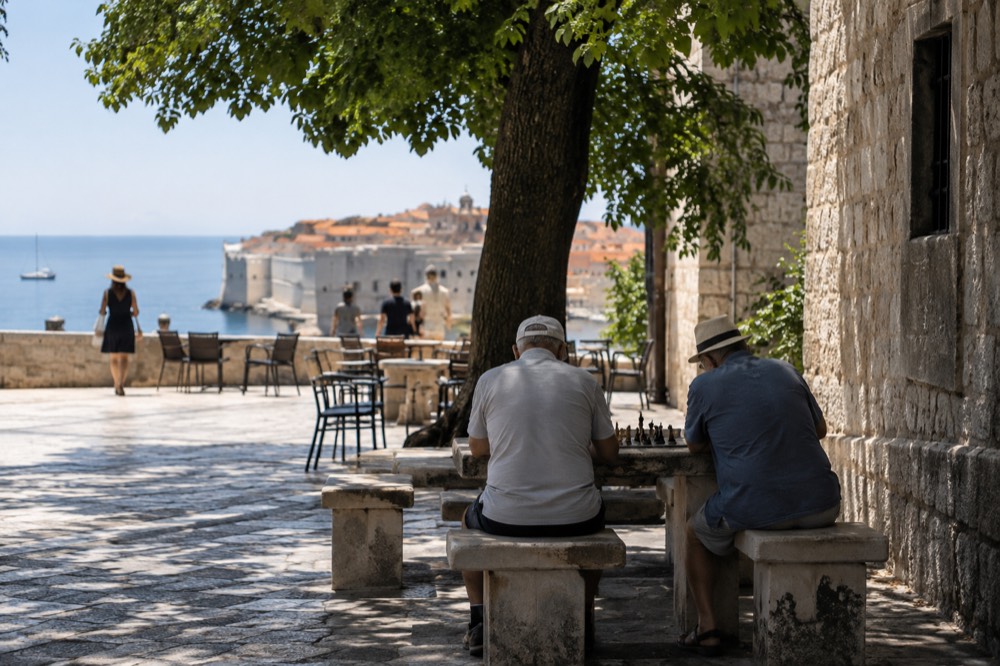
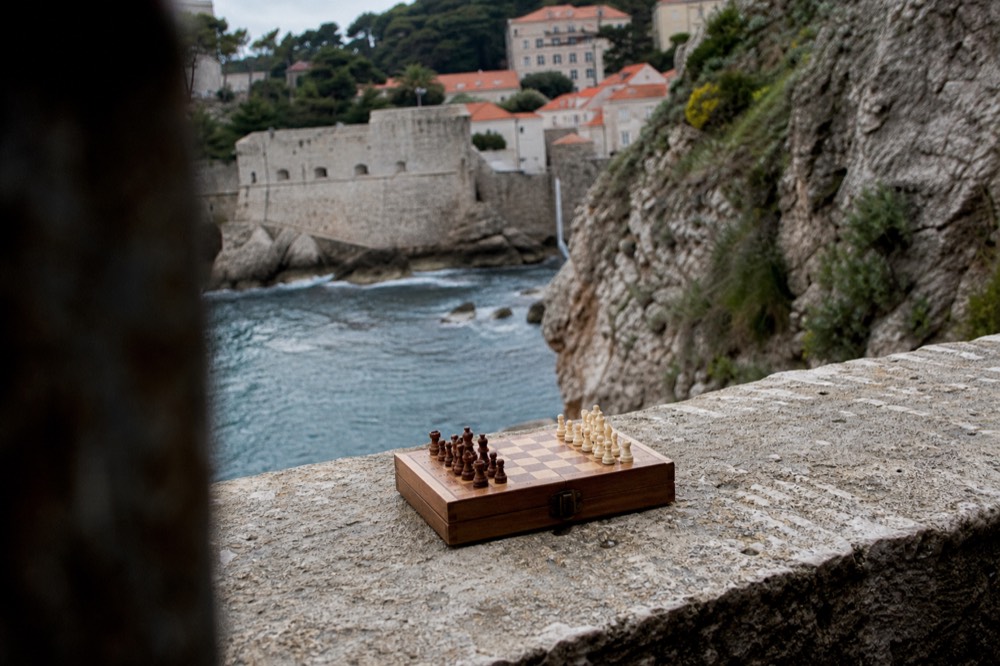
Chess occupies a real place in local life here. On warm evenings you will find games running on stone tables in shaded corners of the Old Town, locals and visitors taking turns, the walled city rising around the board. That street-level tradition is the honest heart of the chess set's appeal. It is not a factory product invented for cruise passengers; it belongs to a city where people actually play.
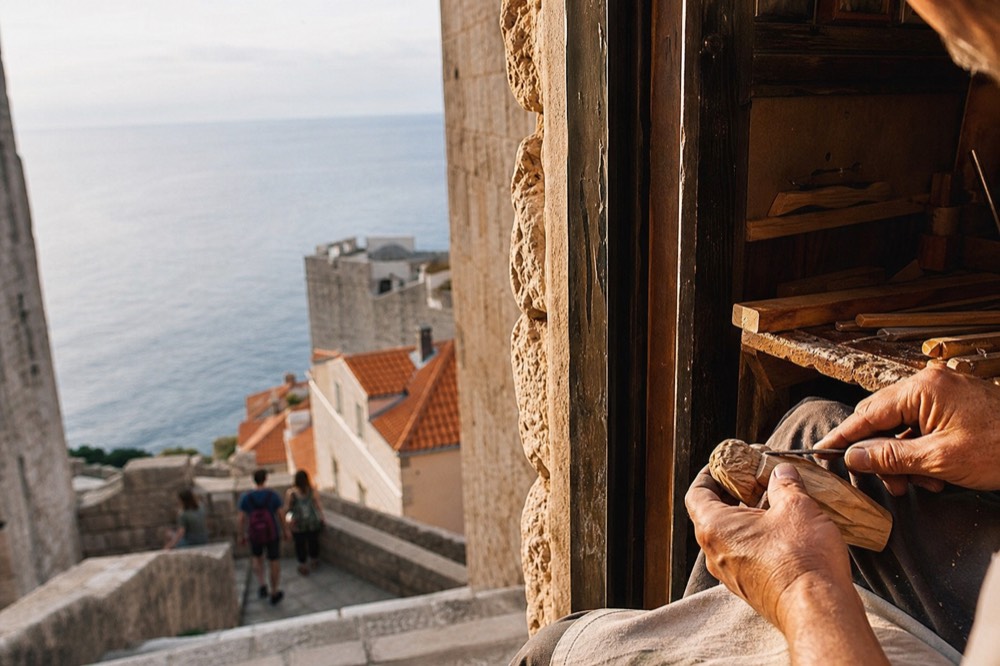
What you are buying, in the best versions, is craft. Boards and pieces are typically carved from local and regional hardwoods, and the finest sets do something clever: they treat the walled city itself as the board's theme, with towers, fortresses and gates worked into the pieces or the frame. The design language comes straight from the skyline you have been walking under all day, which is why the set travels so well as a souvenir. It keeps working after the photographs stop.
Be realistic about what a souvenir chess set is and is not. Workshop sets vary enormously in wood quality, weight, finish and how well the pieces are balanced in the hand. Prices are not published anywhere this site can verify, so treat any figure a shop quotes as a starting point for a conversation rather than a fact to plan around. Ask about the wood, ask whether the pieces are turned or hand-carved, and pick the pieces up. A set that feels hollow or loose in the hand will disappoint you at home no matter how good the board looks in the shop.
Is It Worth Doing the City Walls in Dubrovnik?
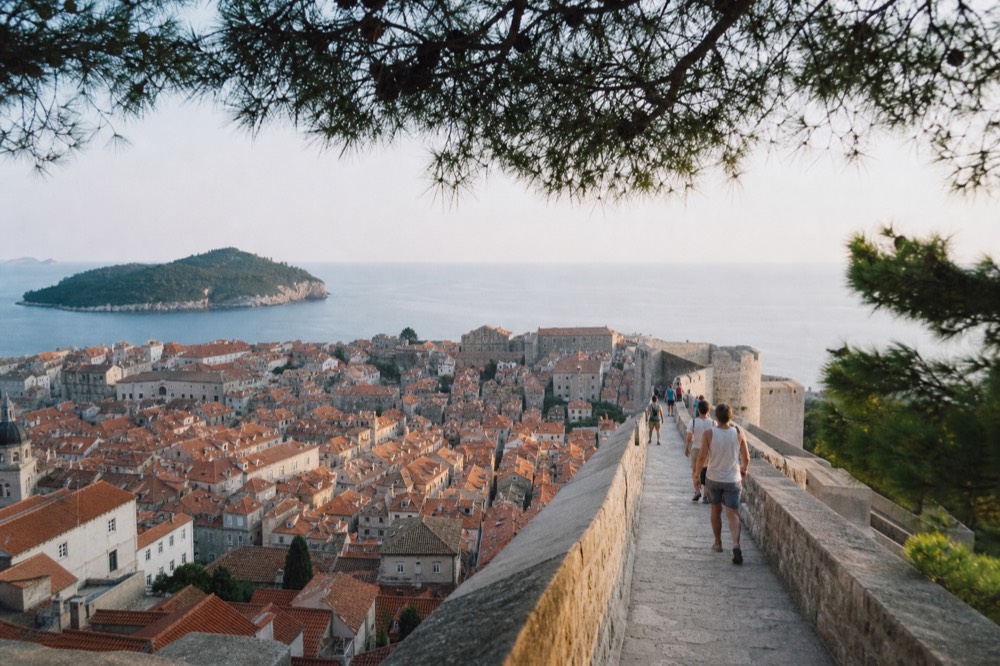
Yes, for almost every visitor. The walls are 1,940 metres long, up to 25 metres high, and the 40 euro main-season adult ticket also covers Fort Lovrijenac, the Western Outer Wall and the coin collection, so the price buys more than a walk. The views over the Old Town's 24.7-hectare core are the single best in the city.
I have walked the circuit more times than I can count, and it never flattens into routine. The full loop takes most people a couple of unhurried hours, longer in summer heat, because you will stop constantly. The land side looks inward over red roofs and church towers; the sea side hangs above the water with nothing between you and Lokrum. The operator's stated hours at time of check run 08:00 to 19:30, and the early morning light is the kindest to both walkers and photographers.
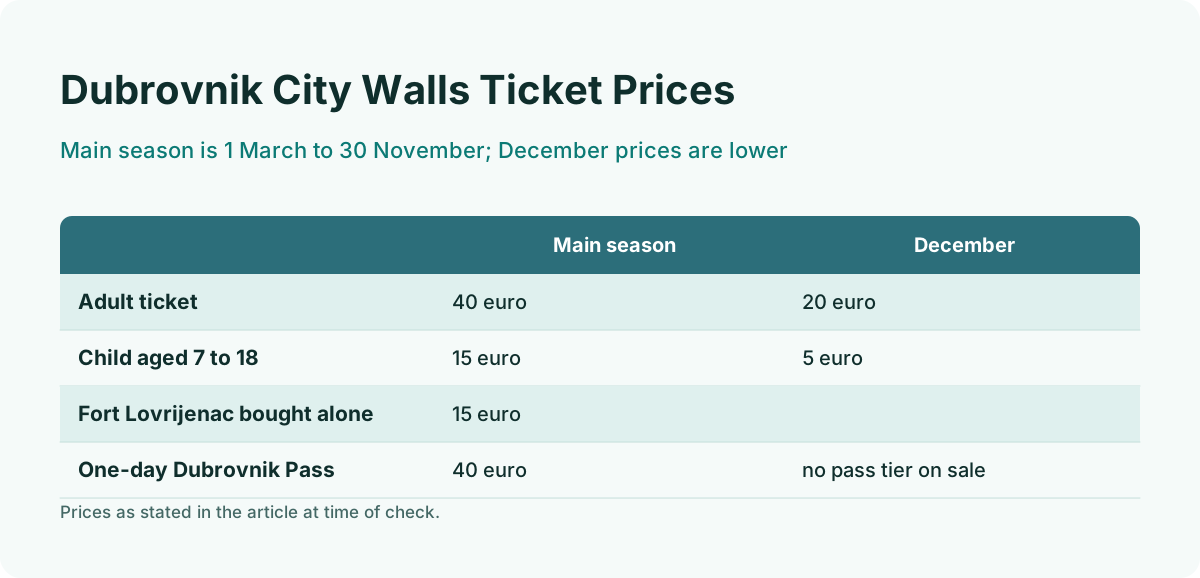
The ticket structure rewards a little attention. The adult ticket is 40 euro in main season, 1 March to 30 November, and 20 euro in December; a child aged 7 to 18 pays 15 euro, then 5 euro, and under 6 goes free. There is no family ticket, only those two paid types. Bought alone, Fort Lovrijenac, standing on its 37-metre sea rock, is 15 euro, which is worth knowing if someone in your party would rather skip the full circuit. The operator's own site carries the full detail at the City Walls official page.
| Ticket | Main season (1 Mar to 30 Nov) | December |
|---|---|---|
| Adult | 40 euro | 20 euro |
| Child 7 to 18 | 15 euro | 5 euro |
| Child under 6 | free | free |
| Fort Lovrijenac alone | 15 euro | 15 euro |
The main-season 40 euro ticket is also where the Dubrovnik Pass conversation starts: the one-day pass costs the same 40 euro and adds ten more sights plus a 24-hour bus ticket. That equivalence is main season only, though. In December the walls ticket drops to 20 euro and no pass tier is on sale at all.
If you want the walls explained rather than merely walked, a guided option makes a real difference. The two-hour Ancient City Walls and Wars walking tour runs from $29.58 per person and is rated 4.8 across 1,387 reviews, while the three-and-a-half-hour Old Town and walls combo, from $50.94 per person at 4.8 across 1,183 reviews, covers both in one morning.
Can I Walk the Dubrovnik City Walls?
Yes, anyone with reasonable mobility can walk the walls, and the circuit is one-way in practice, entered near the Pile side, with stairs, exposed sun and no shade on much of the route. Allow two to three hours, carry water, and start early: counters recorded 5,419 people inside the Old Town at 08:00 on one September day, rising to a 7,739 peak at 10:00.
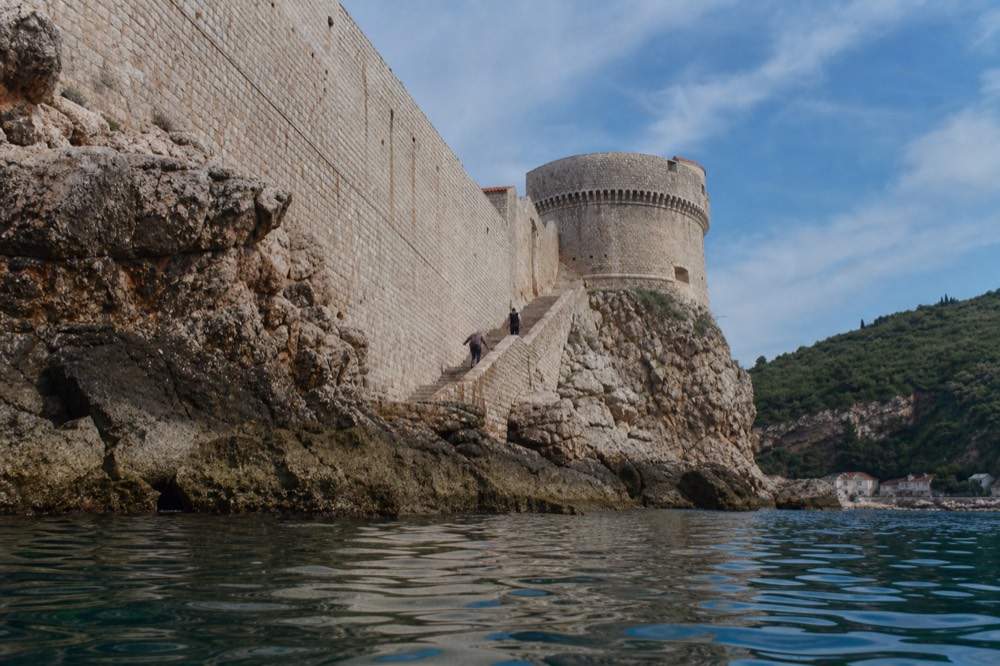
The physical facts matter more than people expect. The wall is 4 to 6 metres thick on the land side and 1.5 to 3 metres on the sea side, and the path is stone the whole way: worn, sometimes slippery, and relentlessly stepped in sections. There are 16 towers, 3 fortresses and 6 bastions along the circuit, and the structure you are walking took its basic shape in the 13th century, with the final bastion finished in 1660. None of that is trivia; it is the reason the path feels the way it does underfoot.
Timing is the difference between a pleasure and an ordeal. The Old Town runs a live people-counting system, six counters at every entrance updating every 15 minutes, with an official carrying capacity of 11,275. On 8 September 2026 the half-hourly curve read 1,200 at 04:00, 3,139 at 07:00, 5,419 at 08:00, a 7,739 peak at 10:00, then 7,205 at 11:00. Walk the walls at opening and you share the parapet with a fraction of the mid-morning crowd, in cooler air, with better light over the Adriatic.
| Walls fact | Figure |
|---|---|
| Total circuit length | 1,940 metres |
| Maximum height | up to 25 metres |
| Thickness, land side | 4 to 6 metres |
| Thickness, sea side | 1.5 to 3 metres |
| Structures on the circuit | 16 towers, 3 fortresses, 6 bastions |
A guided walls walk adds the stories the stones will not tell you themselves. The Ancient City Walls and Wars tour from Dubrovnik Walks is the natural fit, and one recent guest review captures exactly what it delivers:
This well organized tour helped put Dubrovnik's past (and present) into perspective. It's incredible that the city walls have withstood the test of time. Antun was a wonderful guide.
linda_a
For a full planning pass on routes, gates and timing, the detailed city walls walking guide covers the circuit entrance by entrance.
Which City Is Better to Visit, Kotor or Dubrovnik?
Dubrovnik is the stronger choice for walls, museums, beaches and eating; Kotor wins on dramatic fjord-like scenery, lower prices and a quieter, less polished atmosphere. The honest answer is that Dubrovnik is the better single-city visit, while Kotor is the better day trip from Dubrovnik, and many travellers do exactly that.
The two cities get compared constantly because they rhyme: a walled medieval core, a mountain backdrop, a bay, cruise ships. But they are different experiences. Dubrovnik's Old Town is a UNESCO World Heritage Site, inscribed in 1979 under criteria (i)(iii)(iv), with a 24.7-hectare property area inside the walls and a 1,188.6-hectare buffer zone; the Stradun alone runs 298 metres, its final plan fixed by the 1272 Statute. Kotor's walls climb the hillside behind the town in long grey ribbons, and the climb, not the museums, is the point.
Scale is the other difference. The City of Dubrovnik counted 41,562 inhabitants at the 2021 census, and the destination recorded about 4.2 million overnight stays in 2025, sharing first place among Croatian destinations with Rovinj. Kotor is smaller, quieter and cheaper on almost every line of a budget. What Dubrovnik gives you for that money is density: more sights per square metre, more restaurants worth the walk, more sea access, and the cable car ride to Mount Srd, 3 minutes 30 seconds up a 778.2-metre track to a station 405 metres above the sea.
| Factor | Dubrovnik | Kotor |
|---|---|---|
| Walled core | 1,940 m circuit, up to 25 m high | Hillside walls above the town |
| Setting | Open Adriatic, Lokrum offshore | Closed mountain bay |
| Crowds | Heavy, with a counting system in place | Peaks around cruise calls |
| Prices | Higher across the board | Noticeably lower |
| Best used as | A base for several days | A day trip or overnight |
If the comparison is live for your trip, the fuller head-to-head in Dubrovnik versus Kotor works through cost, crowds and travel time in detail. Montenegro day trips from Dubrovnik run from $58 per person for the standard option, rated 4.4 across 5,611 reviews, which makes Kotor an easy add-on rather than an either-or choice.
Which City Is Better, Split or Dubrovnik?
Split is better for a longer, livelier, cheaper stay with a real working city around its old core; Dubrovnik is better for a concentrated, beautiful, walk-everywhere visit. Split's Diocletian's Palace quarter is a living neighbourhood, while Dubrovnik's Old Town is closer to a complete monument, and that difference decides which suits you.
Split gives you a Roman palace you live inside rather than look at, a bigger restaurant and nightlife scene, and easier access to islands like Hvar. Dubrovnik gives you the most complete walled city on the Adriatic, the walls circuit, Lokrum a boat ride away, and a compactness that rewards travellers who like doing everything on foot. Cost favours Split on accommodation and eating out; spectacle favours Dubrovnik, and by a wide margin.
The practical tiebreakers are transport and season. Split has stronger rail and ferry links and a bigger year-round rhythm; Dubrovnik's airport sits about 20 km from the city, with a shared departure transfer available from $20 per person. In late season Dubrovnik stays remarkably busy: cruise passengers in 2025 peaked in September at 101,246 and October at 100,132, above July's 96,072 and August's 87,385, so the idea that the city empties after summer is simply wrong. Those figures are ship capacity, scheduled passengers, not people guaranteed ashore, but the direction is clear.
| Question | Split | Dubrovnik |
|---|---|---|
| Old core character | Roman palace, lived-in streets | Complete walled monument |
| Cheaper overall | Yes, noticeably | No |
| Best beach access | Good, spread out | Good, close and scenic |
| Island hopping | Stronger ferry hub | Elaphiti and Lokrum focus |
| Two to three days enough | Yes | Yes |
Many travellers answer the question with "both", travelling between the cities by bus or ferry; the full breakdown is in which is nicer, Split or Dubrovnik. If your trip starts in Split and ends here, the chess set makes a fitting final purchase: the last object in the suitcase, from the city that looks like a chessboard from above.
Where Does the Chess Set Fit in the Old Town?
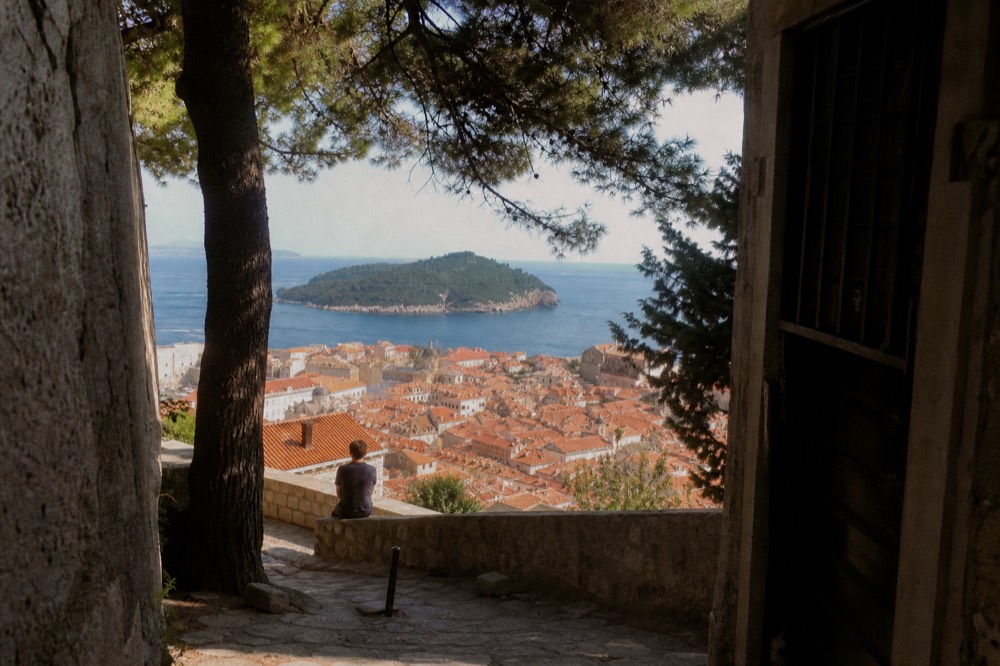
The chess set belongs to the quieter corners of the Old Town rather than the Stradun's souvenir frontage: the lanes around the workshops, the shaded squares where evening games run, and the viewpoints that show the city as the board it resembles. Buy it on a day you have walked slowly, not on a sprint between sights.
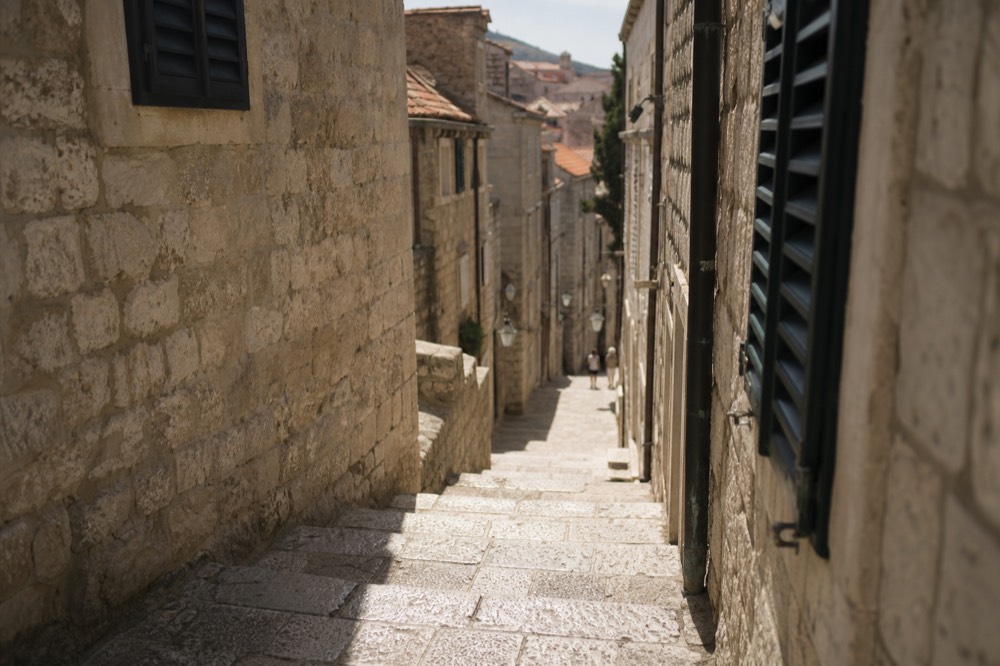
Start from Pile Gate and the Stradun, 298 metres of polished limestone running to the clock tower, then deliberately leave it. The lanes north and south of the main street hold the workshops, the small squares and the stone tables where the games happen.
One guest on that tour put the value of a guided first walk well:
Time your shopping around the day's rhythm. The Old Town's six entrance counters update every 15 minutes, and the official carrying capacity is 11,275 people; on a busy September morning the count passed 7,000 by 10:00. Shops are calmest early and again in the early evening, when the day-trippers thin out and the stone tables fill instead. The evening games are the best free theatre in the city, and watching one is the closest thing to a test drive a chess set purchase can have.
What Should You Check Before Buying?
Check four things before paying: the wood and its weight, whether the pieces are hand-carved or machine-turned, how the board is finished and hinged, and whether the set packs flat for travel. Ask directly about each, compare at least two shops, and treat any first quoted price as the opening of a conversation rather than the end of one.
Weight is the fastest honesty test. Solid hardwood pieces feel substantial in the hand and sit steadily on a stone table or a wooden one at home; light, hollow-feeling pieces usually mean thinner material and a shorter life. Balance matters too, because a tall piece that tips when a tram rattles past your living room stops being a pleasure quickly. Turn a knight over and look at the base: hand-carved work shows tool marks and slight variation, which is character, not a defect.
The board deserves equal scrutiny. Look at the joints, the hinge if it folds, and whether the squares are inlaid or printed. A set that travels home in a suitcase should either pack into its own box or fold with the pieces secured inside; ask the shop how they recommend packing it, because a seller who cares about that answer cares about the set. None of these checks needs an expert, just ten unhurried minutes and the willingness to pick everything up.
Finally, think about what the set is for. If it is a playing set, prioritise piece feel over decoration. If it is a display piece that recalls the walled city, the skyline-themed carving matters more, and you should buy the version that best matches the Dubrovnik you actually walked: towers, gates, the sea wall. Either way, buy the set you would still be glad to own if it had no connection to Dubrovnik at all. The connection is the bonus, not the product.
How Do You Build a Day Around It?
Build the day in this order: walls at opening, a mid-morning walk or museum, lunch away from the Stradun, chess set shopping in the early evening when shops calm down, and a sunset finish from Mount Srd or a short cruise. That sequence follows both the crowd curve and the heat, and it gives the purchase a day of context.
The crowd data makes the sequence for you. The counting system's half-hourly curve on 8 September 2026 read 3,139 people at 07:00, 5,419 at 08:00, 7,297 at 09:00 and a 7,739 peak at 10:00, so anything you want to yourself happens before 09:00 or after 17:00. The walls at 08:00 are a different experience from the walls at noon: emptier, cooler, better light. Museums and shops fill the middle of the day, and the cable car, running every few minutes up its 778.2-metre track, is at its best as the day ends, with the operator claiming a view range of up to 60 km on a clear day.
| Time | Old Town count (8 Sep 2026) | Best use of the hour |
|---|---|---|
| 07:00 | 3,139 | Coffee, then walls at opening |
| 08:00 | 5,419 | City walls circuit |
| 10:00 | 7,739 peak | Museums, shaded lanes |
| 11:00 | 7,205 | Lunch off the Stradun |
| Evening | falling | Chess set shopping, sunset |
Two cautions keep the day honest. First, cruise capacity is not a crowd count: the Port Authority's 8,000-passenger daily limit applies in most cases, and of 243 cruise days a year only 18 exceed 8,000, but scheduled capacity is not the same as people ashore. Second, September and October are genuinely busier than July and August for cruise passengers, so a "quiet autumn" plan should still start at 08:00. The Port Authority's own statistics page carries the full picture at the Port of Dubrovnik traffic data.
For the evening, a sunset finish turns a shopping day into a trip highlight. The Karaka ship's adults-only panoramic sunset cruise runs 1.5 hours from $59 per person, rated 4.8 across 833 reviews, and the shorter Cavtat sunset cruise with cold platter and drinks starts at $23.66 per person. Either pairs naturally with a late dinner, and by then the chess set is safely back at the hotel, the day's walking done and the board's skyline freshly familiar.
If this guide has done its job, you now know the walls are worth their 40 euro main-season ticket, that anyone steady on their feet can walk the 1,940-metre circuit, and that Kotor and Split are complements to Dubrovnik rather than rivals. The chess set is the small, deliberate souvenir at the end of all that: a board that remembers the city you walked. For everything else worth doing here, start with Things to Do in Dubrovnik and work outward.
Common Questions About the Dubrovnik Chess Set
What Is the Dubrovnik Chess Set?
A carved wooden chess set whose design is strongly associated with the city, sold in Old Town workshops and often themed on the walled skyline itself. It is one of the few Dubrovnik souvenirs with a genuine link to local life, tied to the street games played on the Old Town's stone tables.
Is It Worth Doing the City Walls in Dubrovnik?
Yes. The 1,940-metre circuit offers the best views in the city, and the 40 euro main-season adult ticket also covers Fort Lovrijenac, the Western Outer Wall and the coin collection. Walk early: the Old Town count on one September day peaked at 7,739 at 10:00.
Can I Walk the Dubrovnik City Walls?
Yes, with reasonable mobility. The path is stone the whole way, with stairs, sun and little shade, so allow two to three hours, carry water, and start at opening. The operator's stated hours at time of check are 08:00 to 19:30.
Which City Is Better to Visit, Kotor or Dubrovnik?
Dubrovnik is the stronger single-city visit for walls, museums, beaches and eating; Kotor wins on scenery, price and quiet. Since Montenegro day trips run from $58 per person, most travellers treat Kotor as an add-on rather than an alternative.
which city is better, split or dubrovnik?
Split suits a longer, cheaper, livelier stay with a working city around its Roman core; Dubrovnik suits a concentrated, walk-everywhere visit inside a complete walled monument. Many travellers do both, and the two cities are linked by direct bus and ferry.
How Much Should a Chess Set Cost?
There is no verified published price range for chess sets in Dubrovnik shops, so treat any quoted figure as a starting point. Compare at least two workshops, check the wood, weight and carving by hand, and buy the set you would still want without the Dubrovnik connection.