Which Is Nicer, Split or Dubrovnik?
A straight comparison of Split and Dubrovnik from a Dubrovnik-based specialist: beaches, crowds, cost, day trips and which city fits which traveller.
Which Is Nicer, Split or Dubrovnik?
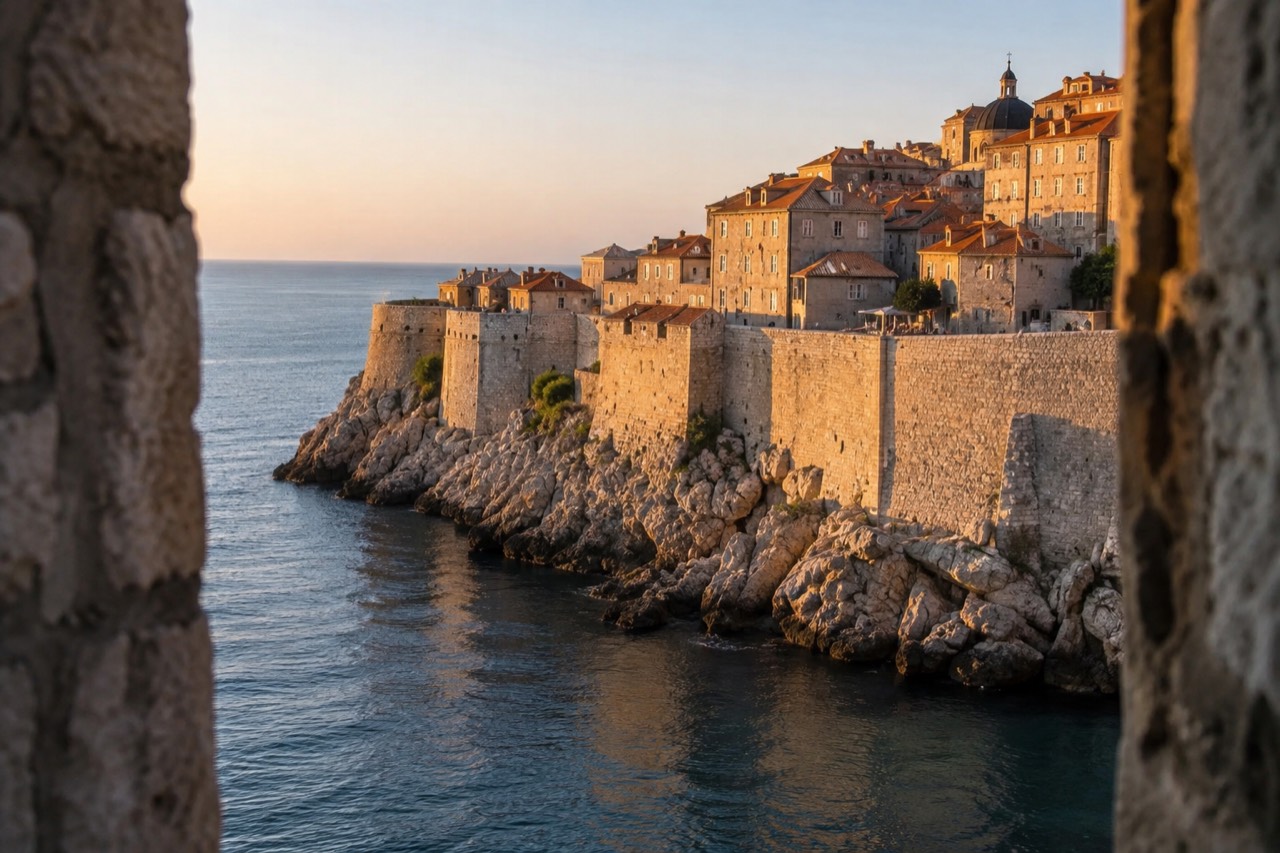
Neither city is simply "nicer": Split wins on liveliness, price and transport connections, while Dubrovnik wins on beauty, walkability and its sheer concentration of sights. Split is a working city wrapped around a Roman palace, while Dubrovnik is a small walled town of 41,562 residents at the 2021 census that happens to be one of the most photographed places in Europe. Travellers chasing atmosphere and island hopping lean Split; travellers chasing postcard streets and sea views lean Dubrovnik.
I get this question constantly, and I always answer it the same way: it depends on whether your trip is about the city or about the region. I have walked both cities in every month of the year, and the difference that matters most is not architecture or beaches, it is pace. Split absorbs you into its everyday life. Dubrovnik lifts you out of yours.
The two cities sit at opposite ends of the Dalmatian coast and they anchor opposite styles of holiday. Split is a transport hub: ferries to the central Dalmatian islands, buses and trains inland, an airport with strong domestic connections. Dubrovnik is an endpoint, the southernmost big destination in Croatia, closer to Montenegro and Bosnia and Herzegovina than to Split. That geography alone decides a lot of itineraries, and it is the reason many travellers do both in one trip rather than choosing.
There is also a personality difference that no price table captures. Split feels like a place where people live first and host second; the market, the waterfront promenade and the evening passeggiata belong to locals as much as to visitors. Dubrovnik, for all its charm, is organised around the visitor experience, and outside the peak weeks the Old Town can feel like a stage set waiting for the curtain to rise. Some travellers find that magical. Others find it hollow after three days. Knowing which of those travellers you are is honestly the whole answer to this question.
If you are planning a longer Croatian itinerary, our Things to Do in Dubrovnik homepage covers the full range of what this city offers, from the walls to the Elaphiti islands. For the comparison itself, keep reading: every category below, from beaches to day trips, is broken out separately.
Is Split Nicer Than Dubrovnik?
Split is nicer than Dubrovnik if you value everyday energy, lower prices and easy access to islands, and it is the stronger base for a trip built around hopping between places. Its old core, the Roman palace, is free to wander with no ticket gate, its restaurant and bar scene runs later and cheaper, and its ferry port puts Brač, Hvar, Šolta and Vis within an easy day sail. Dubrovnik beats it on looks, but Split beats it on life.
The case for Split starts with the fact that you do not have to buy your way into it. The palace quarter is the city itself: cafés, markets and apartments inside ancient walls, with residents going about their week around you. Dubrovnik's Old Town, by contrast, is a managed monument. It is inscribed on the UNESCO World Heritage List, 24.7 hectares of it, and the entry to its greatest sight, the city walls, costs 40 euro in main season. That is not a complaint, the walls are worth it, but it is a real structural difference between the two cities.
Split also wins on cost, and not by a little. Accommodation, meals and drinks in Split generally run below Dubrovnik prices, and Dubrovnik's figures are pushed up by a simple supply problem: Dubrovnik recorded about 4.2 million overnight stays in 2025, sharing first place among Croatian destinations with Rovinj, and much of that demand funnels into a very small stock of rooms inside and around the walls. The Croatian Bureau of Statistics release that ranks the destinations by nights is worth a look if you enjoy primary data: the DZS tourism release carries the full national picture.
The third argument for Split is transport. From Split's ferry port you can reach a string of islands in under a couple of hours, and the city also has the country's rail link inland. Dubrovnik has no train station at all; if that matters to your route, the comparison is effectively over. Our guide to Dubrovnik to Split transport options works through the bus, ferry and private-transfer choices in detail.
Split's nightlife deserves its own paragraph, because it is one of the clearest wins in this whole comparison. The bars around the palace quarter and along the waterfront run late and loud, and the student population keeps prices honest. Dubrovnik has good evenings too, and our guide to Dubrovnik nightlife maps the best of them, but the scene is smaller, earlier and more expensive. If your holiday is built around long dinners that turn into longer nights, Split will suit you better.
Where Split struggles is intimacy. It is a big, spread-out city, and the palace quarter, however atmospheric, is a small part of it. You can spend a week in Split and still feel you have only scratched one neighbourhood, while Dubrovnik's entire historic core fits inside a two-kilometre circuit you can learn in a day. Split also asks more of your planning: the palace is wonderful, but the city's headline experiences are mostly elsewhere, on the islands or down the coast, which means more ferry timetables and more decisions every morning.
Is Dubrovnik Nicer Than Split?
Dubrovnik is nicer than Split if your priority is beauty, concentration and the feeling of being somewhere extraordinary, because its walled Old Town packs a complete medieval city, 1,940 metres of walls, fortresses, museums and beaches into a space you cross on foot in twenty minutes. Split is a great city that contains a monument; Dubrovnik is the monument. For a short stay of two or three days focused on one place, Dubrovnik is the stronger choice.
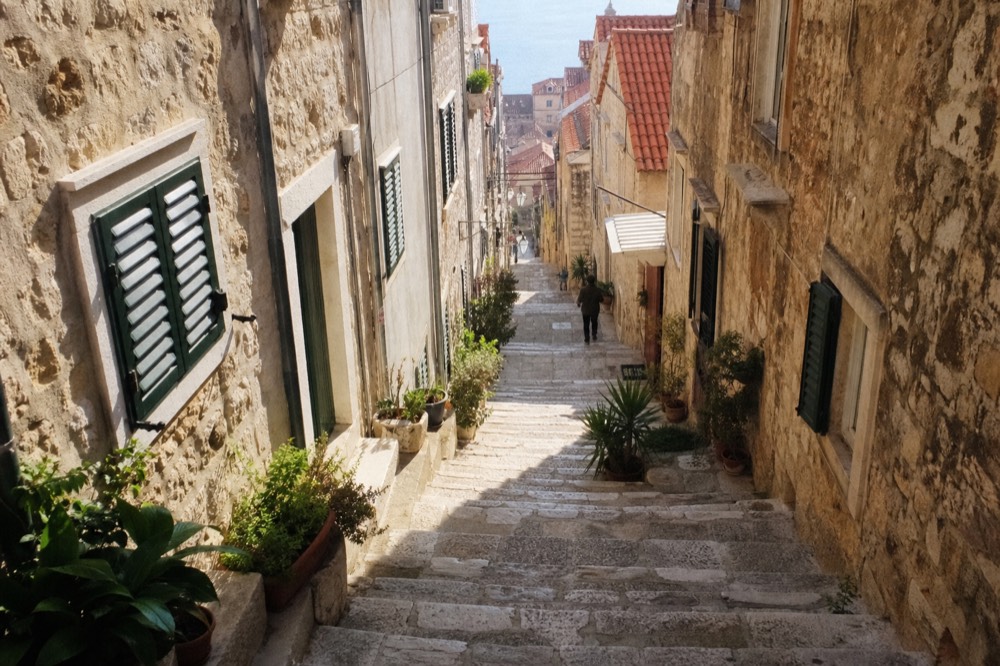
The honest case for Dubrovnik is aesthetic and it is overwhelming. The Stradun, the main street, runs 298 metres from gate to gate, polished limestone underfoot, and every lane off it climbs stone staircases toward the walls. Fort Lovrijenac stands on a 37-metre sea rock just across the water. The walls themselves reach up to 25 metres high and 4 to 6 metres thick on the land side, with sixteen towers and three fortresses along the circuit. Nothing in Split matches that ensemble, and the ensemble is the point.
Dubrovnik is also far more compact. You wake up inside the thing you came to see. The beaches of Lapad, the cable car up Mount Srđ, the island of Lokrum with its 30-euro combined ticket and boat, all sit within a short bus or boat ride of the Old Town gates. For first-time visitors we lay out the full sequence in the guide to Dubrovnik for first-timers, which pairs well with this comparison if Dubrovnik is winning you over.
The counterweight is crowds, and I will not soften it. Dubrovnik's Old Town has an official carrying capacity of 11,275 people, monitored by six counters at the entrances updating every 15 minutes, and on peak cruise days the morning hours push hard toward that ceiling. One real morning curve read in September showed 5,419 people inside by 08:00 and a 7,739 peak at 10:00. The Port Authority's own data explains why September feels busier than July: cruise passengers in 2025 peaked in September at 101,246 and October at 100,132, above July's 96,072 and August's 87,385. You can read the measures yourself on the Port Authority's cruise destination page. Split has cruise traffic too, but it spreads across a far larger city.
Timing solves most of Dubrovnik's crowd problem. Walk the walls at opening, do the Stradun early or late, and spend the middle of the day on a boat or a beach, exactly the pattern we recommend in our guide to a one-day Dubrovnik port visit. The crowds are real, but they are also predictable. The counting system publishes its curve, the cruise schedule is public, and a traveller who checks both can find September mornings that feel almost private. Split offers no equivalent lever simply because it never compresses to the same degree in the first place.
Dubrovnik's second weakness is price. The walls ticket, the pass, the cable car at 30 euro round trip, Lokrum at 30 euro: the headline sights add up quickly, and food inside the walls carries a premium. Split gives you a comparable old-core experience for noticeably less outlay. If budget is the deciding factor, Split is the more forgiving city. A family of four doing Dubrovnik's headline sights in main season should budget for two adult walls tickets at 40 euro each and two child tickets at 15 euro each before they have eaten anything, and that is a single morning.
The third consideration is what lies beyond the city. From Dubrovnik, the day trips are border-crossing adventures: Mostar in Bosnia and Herzegovina, Kotor in Montenegro, the oyster farms of Ston and the vineyards of the Pelješac peninsula. The Ston and Korcula Island day trip is a good example of the genre, pairing the long walls of Ston with island wine tasting over about 11 hours, from $81.69 per person, rated 3.8 across 131 reviews. It is a long day, but it shows what Dubrovnik's position buys you.
That review belongs to the Mostar and Kravice tour rather than the Ston trip, but it captures the shared truth of every border-crossing day trip from Dubrovnik: early start, long day, worth it. If you are weighing Dubrovnik partly for these excursions, know that they are a genuine part of the city's value, and something Split cannot replicate, since Split's day trips stay almost entirely inside Croatia.
One more Dubrovnik argument deserves airtime: the light. Because the city faces west across a channel, the late-afternoon sun turns the limestone walls gold and the sea silver, and the cable car's upper station sits 405 metres above sea level with a stated view range of up to 60 km on a clear day. Photographers and honeymooners notice this immediately. Split has its own golden hours along the Riva, but the backdrop is promenade rather than fortress, and the difference shows in every album.
Are Beaches Nicer in Split or Dubrovnik?
Split has the better city beaches and the better island beaches nearby, while Dubrovnik has the more dramatic swimming spots, cliffside bars and caves inside its small radius. In town, Split's Bacvice and its sandy neighbours beat Dubrovnik's rocky in-town options, but Dubrovnik counters with Banje beach under the walls, the caves and coves around Lokrum, and the sandy shallows of Sunj on Lopud. For pure beach quantity, Split wins; for beach drama, Dubrovnik does.
Split's immediate coastline is genuinely swimmable. Sandy and pebble beaches sit within a short walk of the palace, and the offshore islands add sand and pine shade on a cheap ferry ticket. Dubrovnik's in-town swimming is rockier and more theatrical: the beaches are stone platforms and pebble patches, and the most famous of them, Banje, looks straight back at the walls. We compare the main options in our guide to Dubrovnik's beaches.
The water itself is similar along the whole coast, and it is worth knowing what the numbers actually mean. The September average for this coast is about 23.6 degrees, a long-run open-water average, not a beach thermometer reading, and the August average is about 25.8. Sheltered bays run warmer: the Croatian met service's Dubrovnik buoy read 27.0 to 27.4 degrees on a single September day against that 23.6 monthly mean. In practice both cities swim from May into October, and neither has a decisive water advantage.
Where Dubrovnik pulls ahead is the swimming you reach by boat. Betina Cave, a sea cave you can kayak into from the Old Town, the coves around Lokrum, and Sunj beach on Lopud with its shallow sandy shelf are all within a short ride. The Elaphiti islands cruise is the classic way to sample them, and the pirate-ship version of it, from $65 per person and rated 4.8 across 757 reviews, turns the transport itself into part of the day. Split's answer is its own island fleet, and it is a good answer, but the beaches are farther from the city centre than Dubrovnik's boat-accessed coves are from its gates.
Families should weigh the sand question honestly. Small children do better on Split's sandy city beaches and on the sandy stretches of its nearby islands, where the shallows are gentle and the entry is soft underfoot. Dubrovnik's swimming is mostly stone and pebble, and the famous spots involve ladders, rocks or a boat ride. Older kids and confident swimmers love Dubrovnik's cliff jumping and caves, but a toddler in arm bands is happier in Split. That single fact has decided the comparison for more families than any cathedral ever will.
| Category | Split | Dubrovnik |
|---|---|---|
| Old core | Roman palace quarter, free to wander | Walled medieval town, 24.7-hectare UNESCO site |
| Main sight ticket | Palace cellars carry a separate entry fee | City walls 40 euro main season, 20 euro December |
| City size | Large working city | 41,562 residents, compact core |
| Transport | Trains, buses, major ferry hub | No train station, endpoint of the coast |
| Day trips | Croatian islands and inland towns | Mostar, Montenegro, Ston, Korcula, Elaphiti |
| City beaches | Sandy, walkable from the palace | Rocky and pebble, dramatic settings |
| Best for | Longer, cheaper, livelier stays | Short, beautiful, concentrated stays |
What's Nicer, Dubrovnik or Split?
For most first-time visitors with two to four days, Dubrovnik is the nicer choice, because its concentration of walls, sea, islands and day trips delivers more per day than Split can. For travellers with a week or more, a tighter budget, or an island-hopping plan, Split is the nicer base. The strongest itinerary of all uses both: Split first for the islands, then down the coast to finish inside Dubrovnik's walls.
If I had to give one answer to one traveller, I would ask how many nights they have. Two or three nights: Dubrovnik, without hesitation, because the city rewards short stays better than almost anywhere in Europe. You can walk the walls in a morning, kayak to a cave in the afternoon, ride the cable car at sunset and still have time for a slow dinner, a rhythm we sketch in our two-day Dubrovnik itinerary. A week: Split, because a week in Dubrovnik runs out of city before it runs out of days, while a week in Split fills itself with islands.
The seasons tilt it too. Dubrovnik's peak-season crowds are concentrated in a tiny space, and September, despite being the busiest cruise month of the year, is also one of the best months to be here, with the sea still near its warmest. Split absorbs its visitors across a wider area, so the difference between July and October is less dramatic on the ground. If you are locked into school-holiday dates, Split will feel less compressed.
Cost is the last honest tiebreaker. Everything in Dubrovnik, from the walls ticket to a glass of wine on the Stradun, carries a premium, and the nightly demand behind it, those 4.2 million overnight stays, is not going away. Split gives you a bigger, cheaper, looser version of the Dalmatian experience. Neither city will disappoint you; they will just disappoint different expectations.
Food is worth a sentence of its own, because both cities eat well but differently. Split's everyday konobas and market-fresh cooking are cheaper and more casual, while Dubrovnik's restaurant scene climbs higher at the top end, with a handful of genuinely special rooms inside and above the walls. If eating is the point of your trip, read our guides to Dubrovnik restaurants and to what to eat in Dubrovnik before deciding, and note that the same budget buys roughly one extra course per day in Split.
Whatever you choose, do not treat it as a permanent verdict. The two cities are a few hours apart by bus or ferry, and the travellers who enjoy Croatia most are usually the ones who refuse the either/or entirely. Base yourself in one, visit the other, and let the coast make the argument for you.
Common Questions About Split or Dubrovnik
Which is nicer, Split or Dubrovnik?
Neither is objectively nicer. Split is bigger, cheaper and livelier with better transport links; Dubrovnik is smaller, more beautiful and more concentrated. Short trips favour Dubrovnik, longer and cheaper trips favour Split.
Is Split Nicer Than Dubrovnik?
Split is nicer if you want everyday energy, lower prices, a free-to-wander old core and easy island hopping from a major ferry port. It is the better base for exploring central Dalmatia.
Is Dubrovnik Nicer Than Split?
Dubrovnik is nicer if beauty and concentration matter most. Its walled Old Town, the 1,940-metre wall circuit, Lokrum and the cable car sit within minutes of each other, and its border-crossing day trips to Mostar and Montenegro are unmatched from Split.
Are Beaches Nicer in Split or Dubrovnik?
Split has the better city beaches and sandy island beaches nearby. Dubrovnik has more dramatic swimming: cliffside coves, sea caves like Betina, and sandy Sunj on Lopud reached by boat. Both swim comfortably from May into October.
Can You Visit Both Split and Dubrovnik on One Trip?
Yes, easily. Buses and ferries connect the two cities in a few hours along the coast, and most travellers do Split first for the islands, then finish in Dubrovnik. A week split between them is a classic first Croatian itinerary.