Dubrovnik Cathedral: What to See and How to Plan Your Visit
The cathedral stands at the quiet eastern end of the Old Town, a few minutes from the Stradun, and it costs nothing to step inside. Here is how to see it well, when the streets around it are calmest, and how it fits with the walls and the other sights.
Short answer
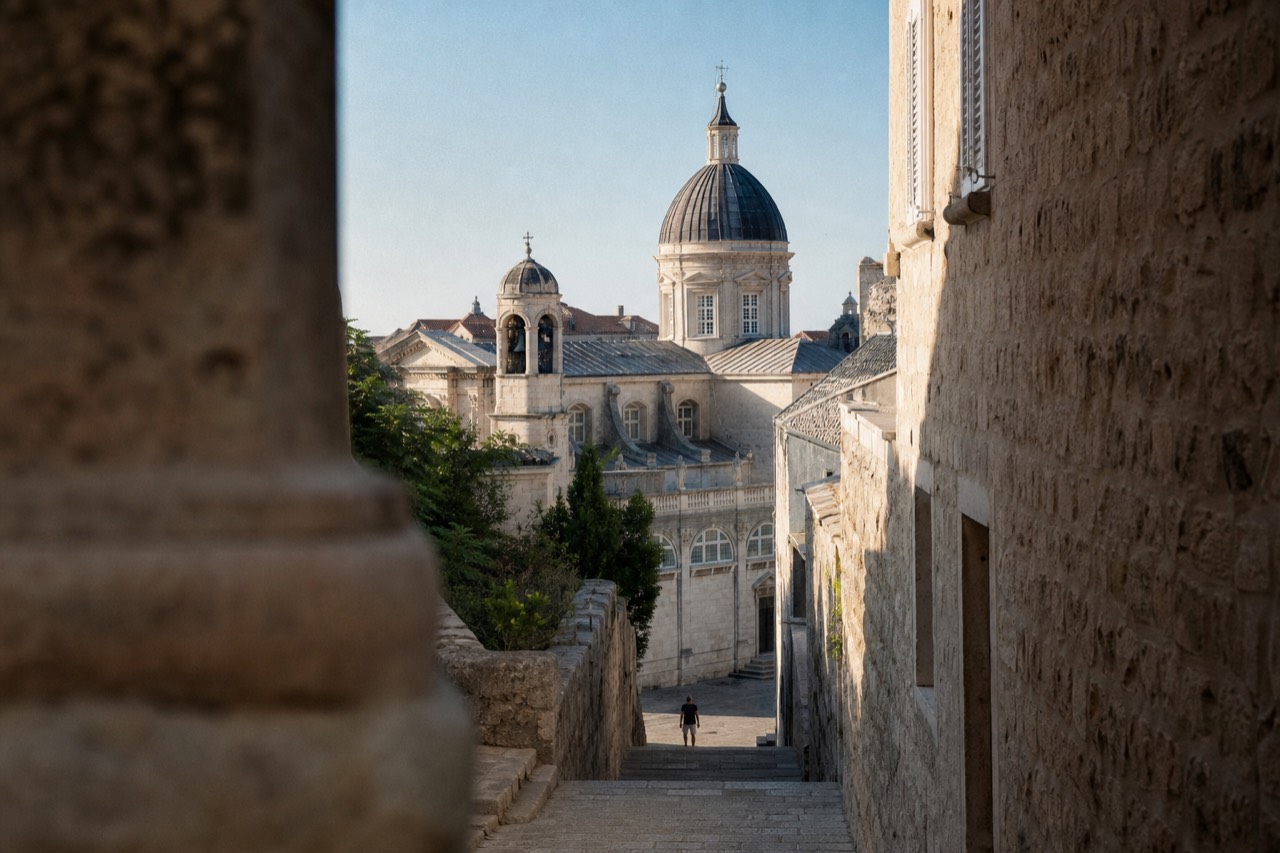
Dubrovnik Cathedral sits just off the Stradun, the 298-metre main street, inside the UNESCO-listed Old Town. Entry is free, the interior is cool and quiet even in high summer, and most visitors spend 20 to 30 minutes. Visit before 09:00 or after 17:00, when the Old Town headcount is far below its 10:00 peak.
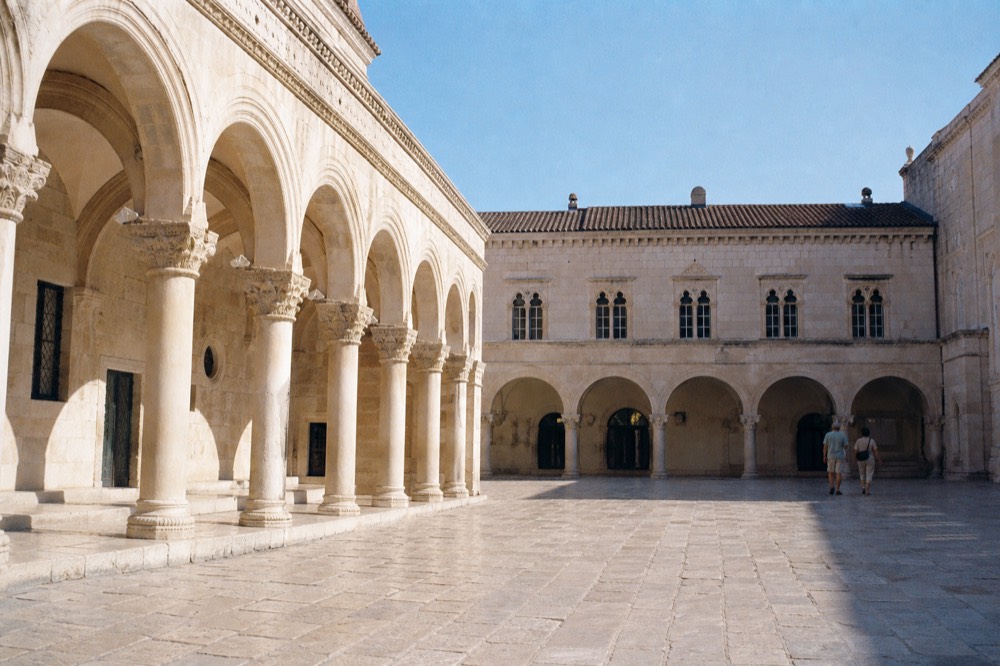
The Cathedral of the Assumption of the Virgin Mary, which everyone here just calls the cathedral, anchors the eastern half of the Old Town. You reach it by turning off the Stradun near the Rector's Palace and following the wide lane that opens onto a paved square, with the church's broad Baroque front facing you and its bell tower rising to the right. It is one of the few major sights inside the walls that asks no ticket, which makes it the natural pause point on any walking day: a cool, dim interior after an hour of white limestone and sun.
I have walked past this square more times than I can count, at every hour the gates are open, and the pattern never changes. Early morning belongs to a handful of photographers and delivery carts, midday belongs to tour groups moving between the Rector's Palace and the Stradun, and early evening belongs almost to nobody. The square is also one of the most useful orientation landmarks in the city: if you can find the cathedral, you can find everything else, because it sits at the centre of the eastern grid of lanes.
What Is the Dubrovnik Cathedral?
The cathedral is the main church of Dubrovnik, a Baroque building standing on the site of earlier churches at the heart of the walled Old Town, a short walk from the Rector's Palace and the Stradun. Entry is free, the interior holds notable paintings and a treasury, and most visitors spend 20 to 30 minutes inside. It is a stop on nearly every Old Town walking route, not a destination that needs a half day.
The building you see today replaced earlier churches on the same spot, and its broad three-aisle interior, the dome over the crossing, and the twin-bay facade are the classic Dubrovnik Baroque that repeats across the city after the great earthquake reshaped it. I will not give you a construction date here, because the year you usually read is not something I can verify from a primary source, and this site does not print a year it cannot stand behind. What matters to a visitor is simpler: the interior is genuinely grand, the proportions reward a slow lap of the side aisles, and the treasury, which has its own small admission, holds reliquaries that are the reason some travellers come at all.
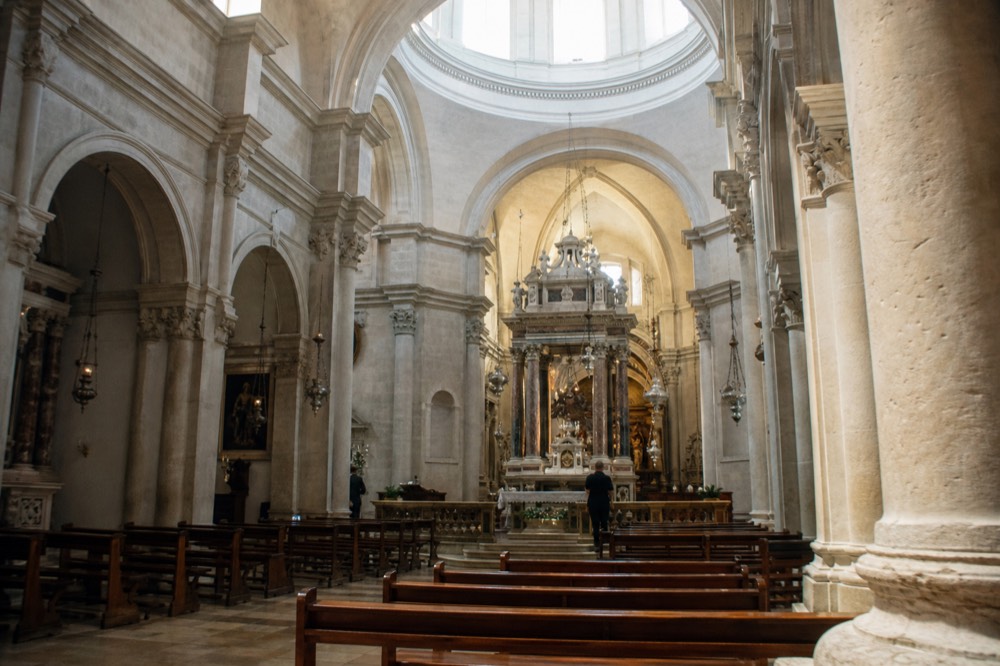
The cathedral's position is its best feature. Step out the front and you are a minute from the Rector's Palace, two minutes from the Stradun, and three from the cathedral treasury's neighbour, the Dominican Monastery at the other end of the grid. The Old Town walking guide covers the full street-by-street loop if you want the whole picture; this page stays on the church and its square.
Practically, treat the cathedral as a weather valve and a crowd valve. It is shaded, it is seated, and it is silent in a way almost nothing else inside the walls is. On a boiling afternoon, twenty minutes on a pew here does more for you than another hour on hot stone.
What Not to Do in Dubrovnik?
Do not walk the city walls at midday in summer, do not buy a walls ticket without checking what it includes, do not try to see the Old Town and a day trip on the same day, and do not plan dinner for 18:00 when kitchens barely open. The classic mistakes are all timing mistakes. The walls, the cathedral and the Stradun are all pleasant with a plan and punishing without one.
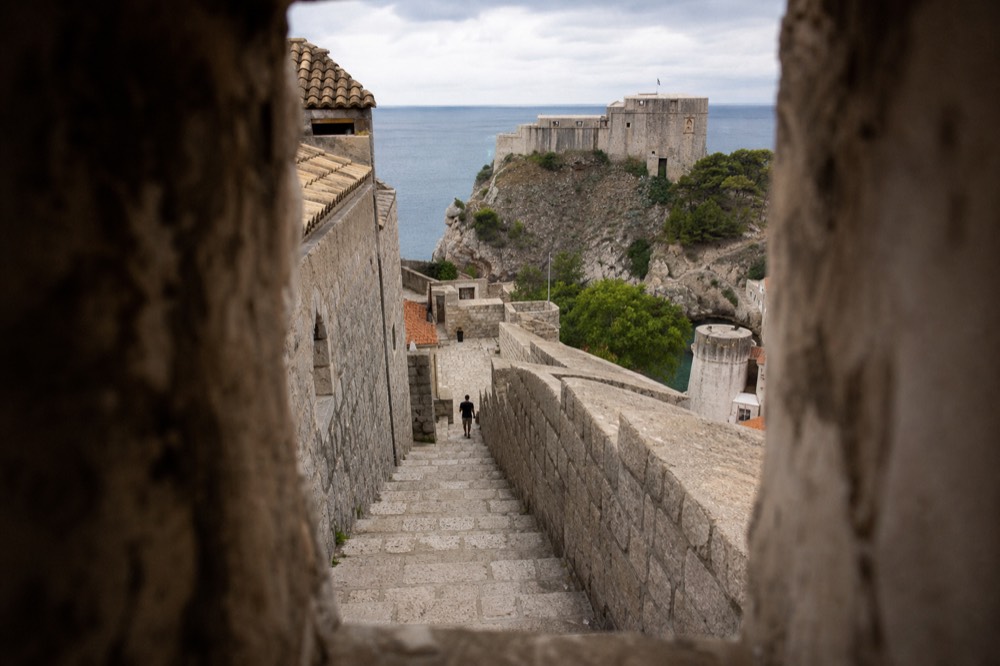
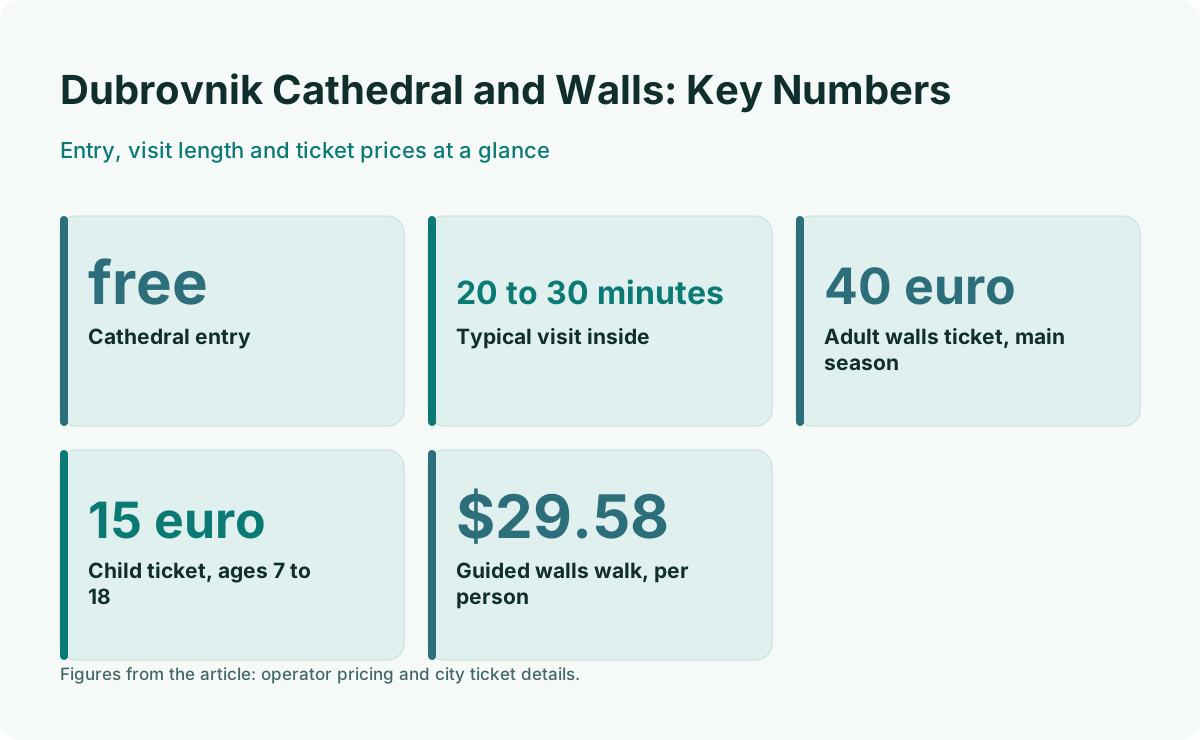
The walls first, because it is the mistake with a price attached. The adult ticket is 40 euro in main season, 1 March to 30 November, and that ticket is the walls plus Fort Lovrijenac combination, not a walls-only product; there is no family ticket, only adult and child 7 to 18 at 15 euro, with under 6 free. People who buy it at 13:00 in August get the full 1,940-metre circuit, up to 25 metres high at points, in the worst heat of the day, and then remember the circuit only fondly. Walk it at opening, when the operator's stated hours run from 08:00, or in the late afternoon.
The second mistake is treating the Old Town as a checkbox. The walled core is only 24.7 hectares, small enough that you can cross it in fifteen minutes, but it holds the Stradun, the Rector's Palace, the Franciscan Monastery, the cathedral, the Sponza Palace and a dozen smaller sights. Rushing produces a blur. Picking three things and walking between them slowly, with the cathedral as the shaded middle stop, produces a day.
The third is money: paying by card assumptions. Croatia uses the euro, cards are widely accepted in the Old Town, but small konoba kitchens and market stalls still prefer cash, and the nearest ATMs inside the walls charge poor rates. Withdraw in Gruž or at your hotel.
If you want the walls and the stories together rather than a self-guided slog, these three options cover the range:
A guided walls walk also solves the midday problem by default, because the operators schedule around the heat. The two-hour Ancient City Walls and Wars walk from Dubrovnik Walks runs from $29.58 per person and is rated 4.8 across 1,387 reviews, and the ticket is bought on the operator's site before the walk.
This well organized tour helped put Dubrovnik's past (and present) into perspective. It's incredible that the city walls have withstood the test of time. Antun was a wonderful guide.
linda_a
Is Dubrovnik Worth Visiting?
Yes, for almost every traveller, and the reason is density: a fully walled medieval city core of 24.7 hectares, a UNESCO World Heritage Site since 1979, an island-studded coast, and a food scene that punches above the city's size of 41,562 residents. It is expensive and crowded at peak, but the complaints are timing complaints, not substance complaints. Visit in shoulder season and it is unambiguous.
The honest case against Dubrovnik is crowding and cost, and both are measurable. The city recorded about 4.2 million overnight stays in 2025, sharing first place among Croatian destinations with Rovinj, and the Old Town's official carrying capacity, from the UNESCO carrying-capacity assessment, is 11,275 people, monitored by six counters at every entrance updating every 15 minutes. On a September day with two cruise ships alongside, the counts run high from mid-morning. None of that makes the city not worth visiting; it makes the city worth visiting deliberately.
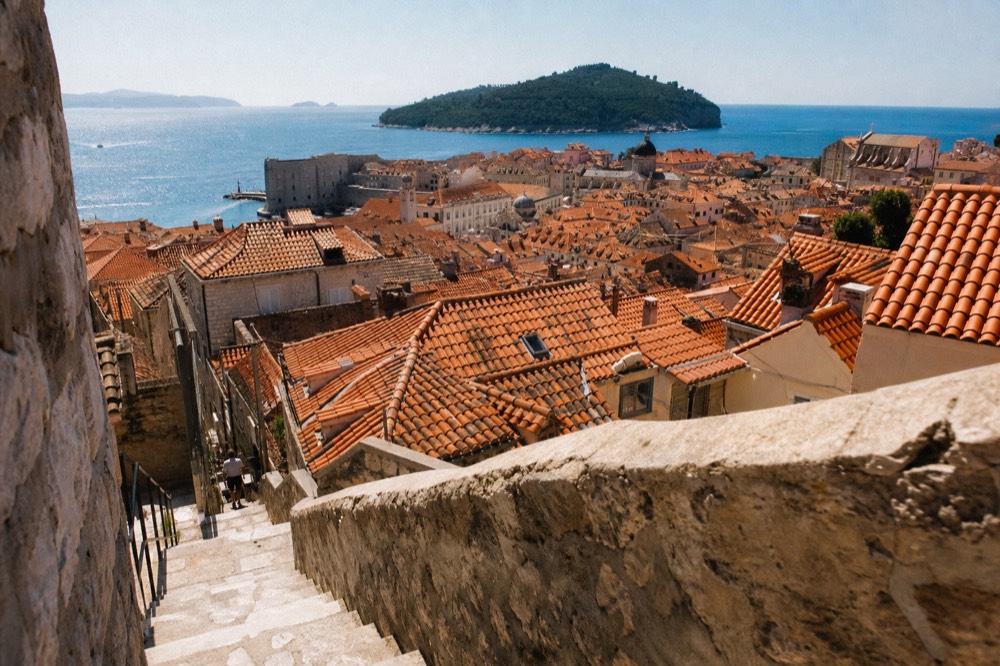
The case for it is harder to argue with. The walls themselves, 1,940 metres long, 16 towers, 3 fortresses and 6 bastions, are the most complete circuit of their kind you can walk anywhere on this coast, and the view from them over the red roofs to the open Adriatic is the image that draws people here in the first place. The Old Town's inscription on the World Heritage List under criteria (i), (iii) and (iv), reference C 95bis, reflects a city that was a maritime republic with its own diplomacy, currency and fleet, and that history is legible in the streets, not just in museums.
If you are weighing Dubrovnik against Split or against adding days elsewhere, the is Dubrovnik worth visiting answer page goes deeper on the trade-offs. My short version: first-time visitors to this coast should see Dubrovnik, and should give it at least two nights, because a single day trips over into checkbox territory fast.
When to Avoid Dubrovnik?
Avoid the middle of the day in July and August, and avoid any date when several cruise ships are scheduled, because cruise passengers in 2025 peaked in September at 101,246 and October at 100,132, above July's 96,072 and August's 87,385. The busiest single hours run from 09:00 to 11:00. Early morning and evening are calm in every month of the season.
The cruise calendar is the piece most visitors get wrong, because the intuition says August and the data says otherwise. Port Authority figures show September and October as the two busiest cruise months of 2025, with the full year at 625,257 passengers against 582,499 in 2024, and 461 cruise calls scheduled for 2026. Those are ship-capacity numbers, not people who actually walk ashore, but even a fraction of 5,000-plus scheduled passengers lands hard on a morning.
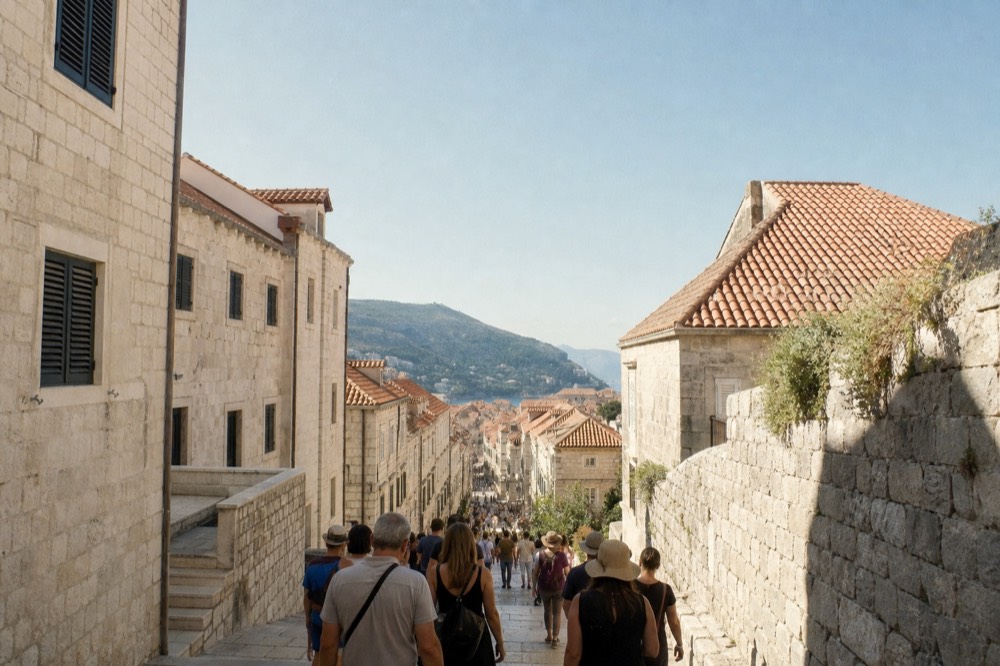
The counting system makes this plannable in a way no other city of this size manages. Six counters at the Old Town entrances update a headcount every 15 minutes, and the published figures from a September day read 5,419 people at 08:00, 7,297 at 09:00, a 7,739 peak at 10:00, then 7,205 at 11:00. So the practical rule is arithmetic, not folklore: inside the walls, do the open-air sights before 09:00, do the shaded interiors like the cathedral and the Rector's Palace between 10:00 and 12:00, and come back out after 16:00.
| Time of day | Old Town feel | Best use |
|---|---|---|
| Before 08:00 | Near empty, delivery carts | Photos, walls at opening |
| 09:00 to 11:00 | Peak cruise hours | Cathedral, museums, interiors |
| 12:00 to 16:00 | Busy and hot in summer | Lunch, beach, Lokrum, siesta |
| 16:00 to 19:00 | Thinning fast | Second walking lap, walls late entry |
| After 19:00 | Locals and diners | Dinner, sunset spots |
The Port Authority limits cruise passengers to 8,000 a day in most cases, and only 18 of 243 cruise days a year exceed that, so the city is not lawless; it is just a city with a schedule. Check the schedule before you lock in your dates, and if you are already committed to September, plan mornings hard and afternoons on the water.
Is Dubrovnik Good for Beaches?
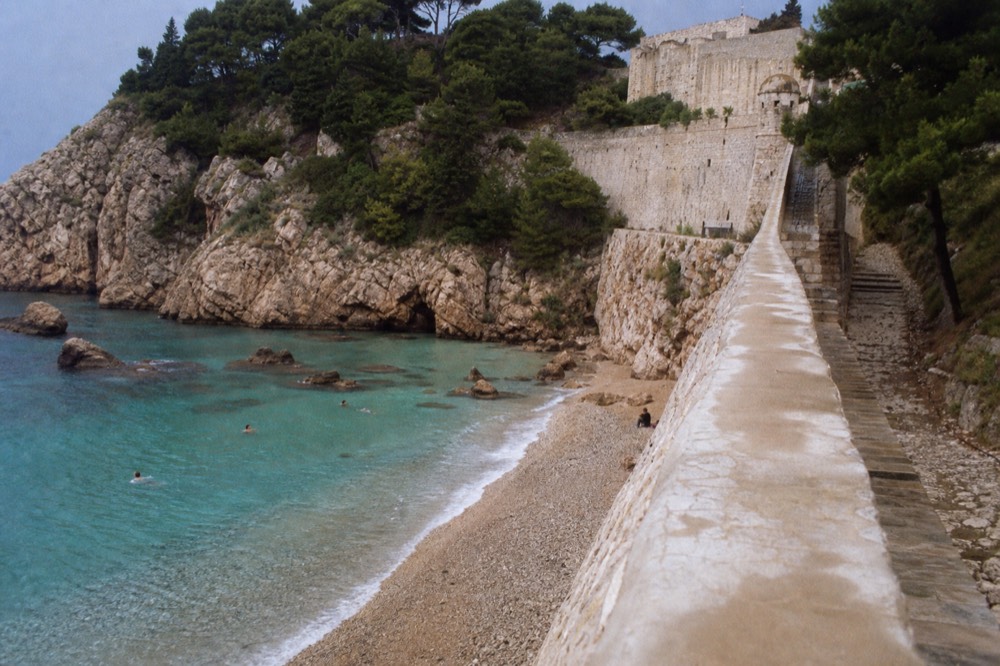
Yes, though the beaches are not the sandy kind most people picture. Dubrovnik's beaches are small stone shelves, pebble coves and concrete swimming platforms, with the sea itself as the main attraction: the long-run September average is about 23.6 degrees and August about 25.8. Banje is closest to the Old Town, Lapad Bay has the most family space, and the islands hold the quietest water.
Start with honest expectations. This coast is limestone, so the beaches are pebble and rock, water shoes earn their price on day one, and the sea is the show. The headline temperature figures are long-run open-water averages, not beach readings: the September average for this coast is about 23.6 degrees from the 1991 to 2020 normal, and sheltered bays run warmer than that, with the Croatian met service's Dubrovnik buoy reading 27.0 to 27.4 degrees on an early September day against the 23.6 monthly mean. More of these guides are collected on Things to Do in Dubrovnik.
| Beach | Type | Best for |
|---|---|---|
| Banje | Pebble and platform | Closest to Old Town, wall views |
| Lapad Bay | Pebble, shaded promenade | Families, easy half-days |
| Sveti Jakov | Pebble cove | The classic photo, a steep walk down |
| Copacabana, Babin Kuk | Pebble and concrete | Water sports, sunset swimming |
| Lokrum coves | Rock ledges | Combining a swim with the island |
The cathedral connection is real, not forced: the beach is the antidote to the sightseeing day. A morning on the walls, a shaded hour in the cathedral and the Rector's Palace, then a bus or a short walk to water in the afternoon is the shape of a good Dubrovnik day in July. The beaches guide covers each cove in detail, and the swimming season answer settles the month question.
How Does the Cathedral Fit Into a Walking Day?
Put the cathedral in the middle of the day, between the walls in the early morning and the water in the afternoon. The walls need 2 to 3 hours and are best from 08:00, the cathedral needs 20 to 30 minutes and is best when the streets are at peak, and the Stradun and the Rector's Palace fill the gaps. A guided walk stitches all three together in one ticket.
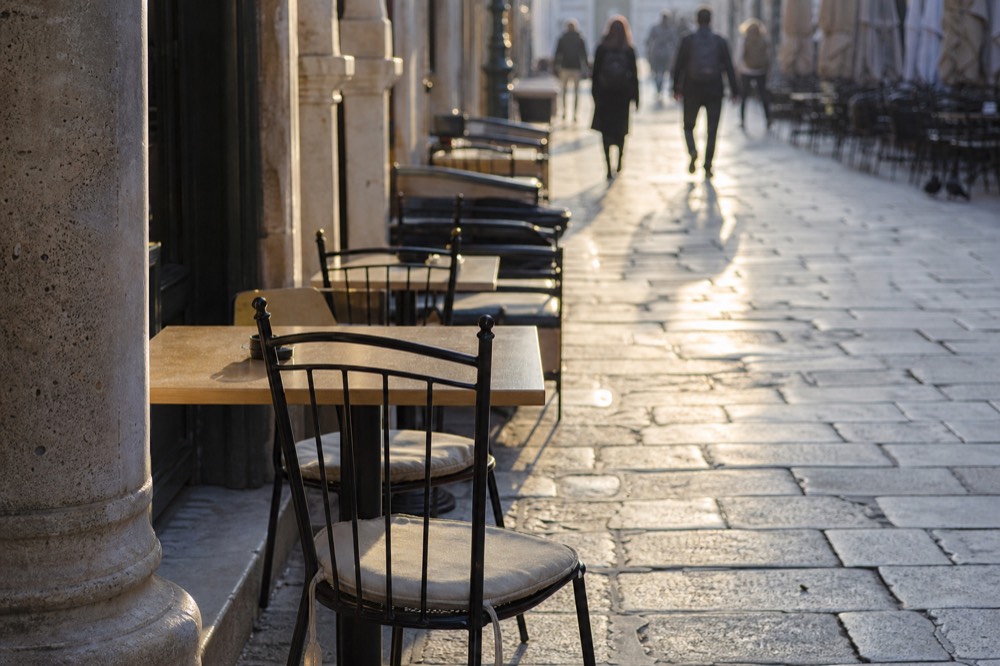
The full-day shape looks like this: walls at opening, when the stone is still cool and the coach groups have not arrived; a late-morning descent into the Old Town grid; the cathedral and the Rector's Palace through the hottest hours; lunch off the Stradun; then either the cable car for sunset or a beach. The Stradun itself, 298 metres long, with its final plan fixed by the 1272 Statute, is the spine you return to between every stop, and everything in this plan sits within five minutes of it.
If you would rather have the stories than the self-direction, the paid walks split cleanly by depth. The basic Old Town walk with a local guide runs from $20 per person, rated 4.8 across 5,826 reviews, and covers the street grid, the cathedral square and the main facades in a couple of hours. The combo tour, Old Town and the walls together at 3 hours 30 minutes from $50.94 per person, rated 4.8 across 1,183 reviews, is the one I would point a first-timer at, because it buys the walls ticket logic and the city history in one morning.
Alex was a fantastic guide, she explained the complex history of Dubrovnik to give a lasting impression of the history of the area. Really appreciated that she aimed for shaded areas on a boiling September day. The food recommendations for after were much appreciated too! Great tour for a first experience of the old town!
Sophie
For the walls half specifically, the two-hour Ancient City Walls and Wars walk is the focused option, and the city walls tickets guide covers the buying mechanics, including the Dubrovnik Pass comparison, in full.
What Else Sits Within a Short Walk of the Cathedral?
Within five minutes of the cathedral square you have the Rector's Palace, the Stradun, the Sponza Palace, the Dominican Monastery at the far end of the grid, and the Franciscan Monastery with its cloister near the Pile end. The Old Town is only 24.7 hectares, so the whole set is a 20-minute walk end to end. The Dubrovnik Pass bundles most of the interiors with the walls.
The pass is worth understanding here because the cathedral sits at the centre of the cluster the pass covers. The one-day Dubrovnik Pass costs 40 euro, exactly the same as the standalone walls plus Lovrijenac ticket in main season, 1 March to 30 November, and adds the Rector's Palace, the Maritime Museum, the Franciscan Monastery museum and more, plus a 24-hour bus ticket. Every tier allows a one-time visit to each institution. In December the standalone walls ticket drops to 20 euro and no pass tier is on sale, so the "same price as the walls" line is a main-season fact only.
| Sight | Walk from cathedral | Ticket situation |
|---|---|---|
| Rector's Palace | 1 minute | Included in Dubrovnik Pass |
| Stradun | 2 minutes | Free, always open |
| Sponza Palace | 3 minutes | Free to view the atrium |
| Dominican Monastery | 5 minutes | Separate ticket |
| Franciscan Monastery | 7 minutes | Included in Dubrovnik Pass |
| City Walls entrance, Pile | 8 minutes | 40 euro adult main season |
The walls themselves are documented in detail by their operator, the Society of Friends of Dubrovnik Antiquities, on the official city walls page, and the UNESCO inscription background is on the World Heritage Centre listing. For the practical pass decision, the is the pass worth it answer works through the arithmetic for different trip lengths.
Should You See the Cathedral With a Guide or on Your Own?
On your own is completely fine for the cathedral itself: entry is free, the interior explains itself visually, and 20 unhurried minutes cover it. A guide earns their fee on everything around it, the walls, the republic's history and the street grid, where context turns stone into story. If you take one guided product in Dubrovnik, make it a walls or Old Town walk, not a cathedral-specific one.
The economics back this up. The cheapest paid Old Town walk starts at $20 per person and covers the cathedral square among its stops; there is no meaningful market for a cathedral-only guided product because the church is free and quick. What carries a fee is the interpretation: why the republic built the way it built, what the walls were defending, why the city's grid reads the way it does. That is what the walking tours sell, and it is what the reviews consistently praise.
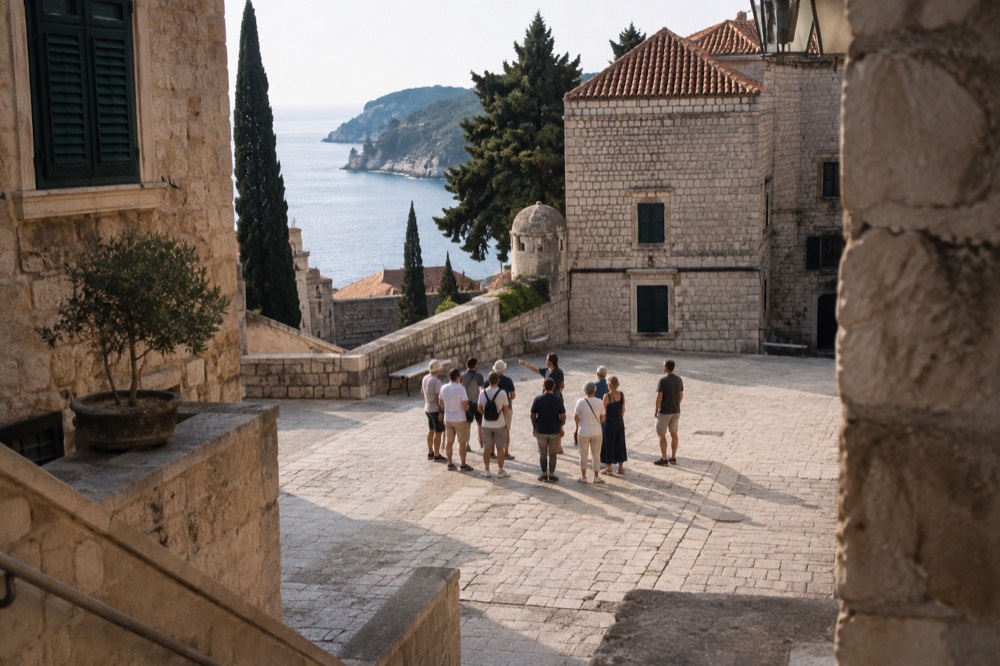
For visitors who want the panorama without the stairs, the cable car combinations are the alternative: the cable car with an Old Town tour, from $92.04 per person, rated 4.4 across 118 reviews, pairs the Mount Srd view with the walking half. The upper terminal sits at 405 metres above sea level, reached in 3 minutes 30 seconds, with a stated view range of up to 60 km on a clear day, and adult round trips are 30 euro if you buy the ticket alone.
My own recommendation, for what it is worth as someone who walks these streets for a living: do the walls early with or without a guide, put the cathedral in the middle of the day as your shade, and spend the evening on the water or at height. The city rewards that shape in every month it is open. Whatever you choose, the trio below covers the three most useful ways to spend a guided morning here:
Common Questions About Dubrovnik Cathedral
Is Dubrovnik Cathedral free to enter?
Yes, entry to the cathedral itself is free, which is why it works as the shaded midday stop on any Old Town route. The treasury inside has its own small separate admission, and the surrounding sights like the Rector's Palace are ticketed, with most interiors bundled into the 40-euro one-day Dubrovnik Pass in main season.
How much time do you need at Dubrovnik Cathedral?
About 20 to 30 minutes for the main interior, longer if the treasury is open and you want it. The square outside rewards another ten minutes with a coffee, and the whole eastern grid around it, the Rector's Palace, the Sponza Palace and the lanes down to the port, fills a relaxed half-day.
Where Is the Dubrovnik Cathedral located?
It stands in the eastern half of the walled Old Town, about two minutes off the Stradun and one minute from the Rector's Palace, on the square that every Old Town walking route passes through. From the Pile Gate entrance it is a flat eight-minute walk along the Stradun.
When to avoid Dubrovnik?
Avoid mid-morning to early afternoon in July through October, when cruise traffic is heaviest; cruise passengers actually peaked in September 2025 at 101,246, above August. Inside the walls, the headcount peaks around 10:00, so do open-air sights before 09:00 and interiors like the cathedral through the middle of the day.
Is Dubrovnik good for beaches?
Yes, but they are pebble and rock beaches rather than sand, with clear water as the main draw. Banje is closest to the Old Town, Lapad Bay suits families, and the long-run September sea average is about 23.6 degrees, with sheltered bays running warmer.
Is Dubrovnik worth visiting?
Yes. The walled Old Town is a UNESCO World Heritage Site of 24.7 hectares with the most walkable complete circuit of city walls on this coast, and the city recorded about 4.2 million overnight stays in 2025. It is crowded and pricey at peak, but shoulder-season visits avoid most of both problems.