Why Is Flying to Dubrovnik So Expensive?
Why flights to Dubrovnik cost more than most Croatian routes, and how the same forces push up hotels, the city walls and restaurant bills once you land.
Why Is Flying to Dubrovnik So Expensive?
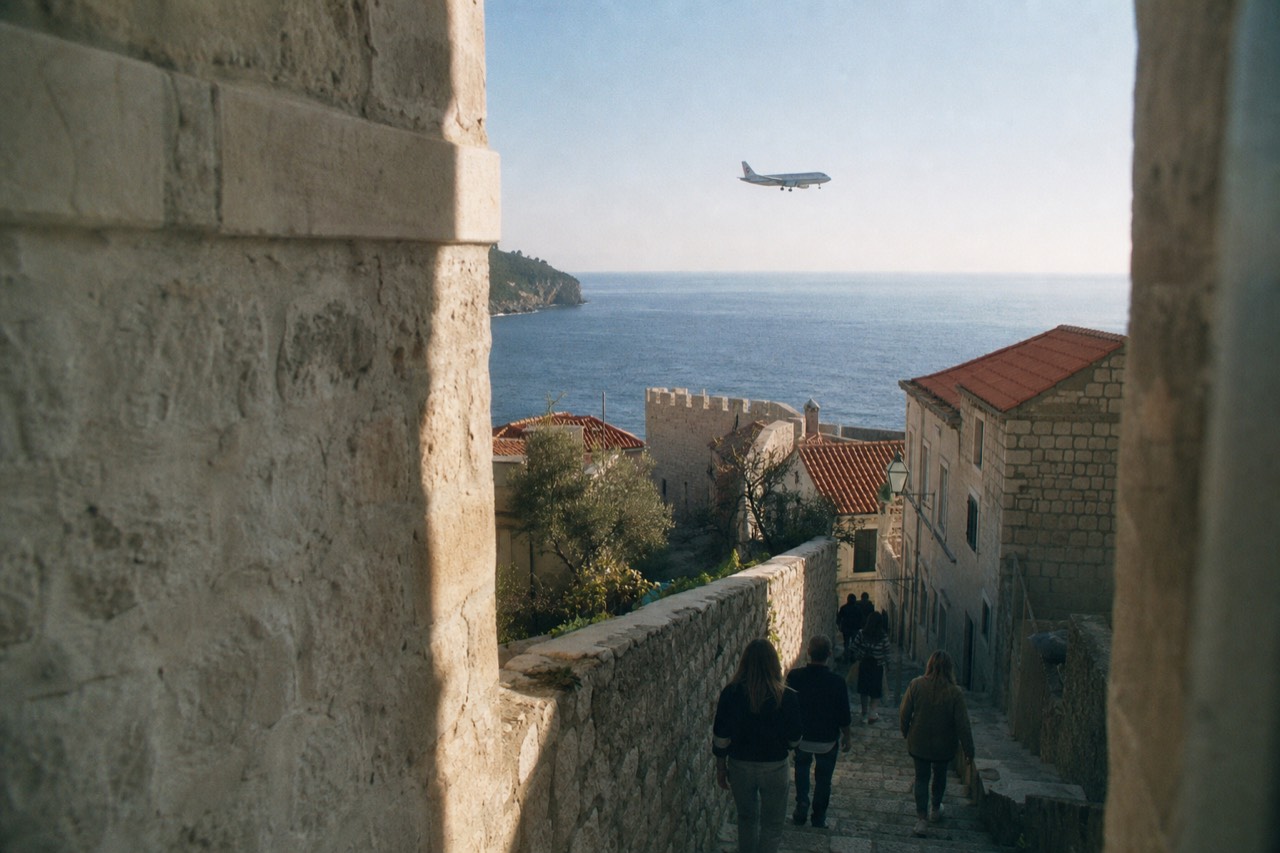
Flights to Dubrovnik are expensive because the airport is small, the season is short and demand is enormous relative to both. Dubrovnik recorded about 4.2 million overnight stays in 2025, sharing first place among Croatian destinations with Rovinj, and almost all of it compresses into roughly five months. Airlines price scarce summer seats into a tiny coastal airport accordingly.
I get asked this question more than any other, usually in spring when people start planning and see the fares jump. The honest answer has three parts, and none of them is a mystery.
The first part is geography. Dubrovnik Airport sits at the far southern end of Croatia, hemmed between the sea and the hills, with a single runway and a terminal that has been expanded repeatedly to keep pace. There is no train line to the city and no meaningful domestic alternative, so if you are coming from northern Europe or North America, the plane is close to the only practical option. When an airline knows a route has no substitute, the fare reflects it.
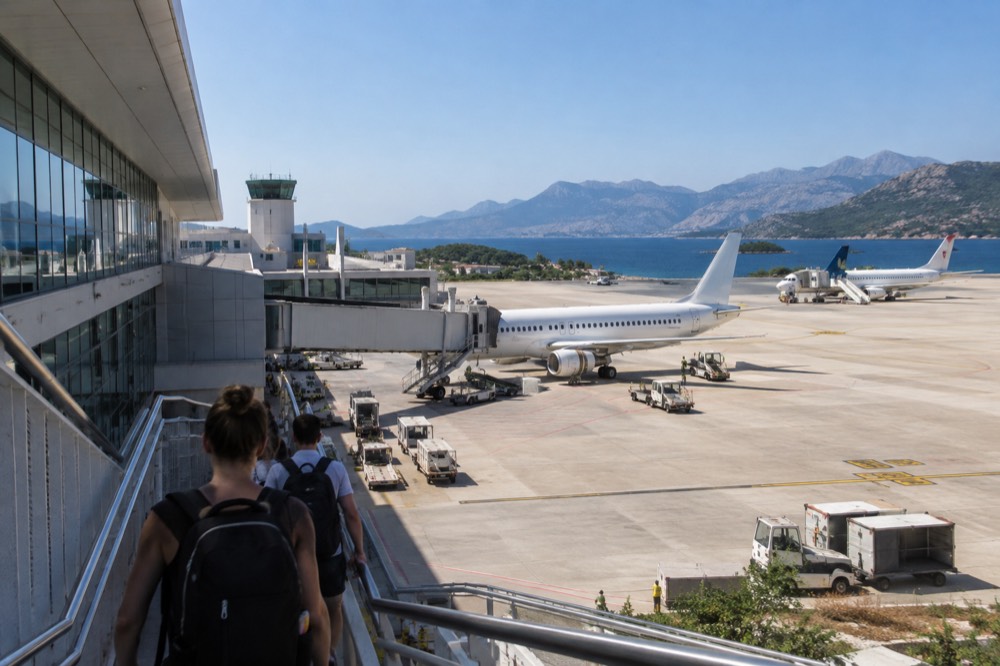
The second part is seasonality. The flying schedule here swells from late spring to early October and then thins dramatically. The same aircraft that serve Dubrovnik in July are redeployed to winter sun destinations in November. An airline has to earn its annual return on a route in a short summer window, so peak fares carry the whole year. Shoulder-season dates, late April, May, mid-September and October, are routinely far below the July price for exactly this reason.
The third part is demand, and this is the one people underestimate. The city of Dubrovnik counted 41,562 residents at the 2021 census, yet the destination absorbed about 4.2 million overnight stays in 2025, a figure the Croatian Bureau of Statistics puts level with Rovinj for the most in the country. Add 625,257 cruise passengers passing through the port in 2025 and you have a small place supporting enormous visitor volume. Airlines read that demand curve as well as any hotelier does.
There is also a straightforward timing effect worth knowing. Cruise traffic, and therefore total pressure on the city, is now highest in September and October rather than July and August, per Port Authority data. If you can fly in the second half of September you will often find the town busy but the airfare already softening, because the family summer travel wave has ended even while cruise numbers stay near their annual peak.
One more thing worth saying plainly, because it shapes every price in this article: Dubrovnik is not expensive because anyone is being cheated. It is expensive because a globally famous city of 41,562 residents hosts visitors in the millions, inside a fixed stone footprint that cannot grow, over a season that cannot lengthen. Every price you meet here, the seat, the bed, the ticket, the plate, is the market clearing that imbalance. Once you accept that, the strategy writes itself: shift your dates, shift your location inside the city, and buy the few big tickets deliberately rather than by accident.
If your budget for the trip is already stretched by the flight, the good news is that the two most famous things to do once you land are cheap by comparison. Here are the three I would compare first.
Why Are Hotels So Expensive in Dubrovnik?
Hotels in Dubrovnik are expensive because beds inside and near the walled Old Town are genuinely scarce, the season is short, and the city's global fame after its screen appearances lets owners price with confidence. About 4.2 million overnight stays in 2025 landed on a city of 41,562 residents, and most visitors want to sleep within walking distance of the same few streets.
The supply problem is physical before it is commercial. The UNESCO-inscribed Old Town covers just 24.7 hectares, and much of it is monument, church, staircase and restaurant rather than accommodation. What remains is a limited stock of small hotels, guesthouses and apartments inside stone buildings that cannot grow. Outside the walls, the terrain rises fast, so Lapad and Ploče carry the bulk of the hotel stock and still fill months ahead for July and August.
Then there is the demand side, which behaves differently here than in most Croatian coastal towns. Because so much of the year's revenue has to be earned between April and October, a hotelier who discounts August nights is effectively giving away the only inventory that will sell at full price all year. The economics push rates up exactly when you most want to travel, which is frustrating but not mysterious.
It links back to the airfare question directly. The same airlines and the same hotels are reading the same curve: a world-famous, capacity-limited destination with a compressed season. If you found the flight expensive, the room rate is the same phenomenon with a bed in it. We unpack the hotel side in more detail in why hotels cost so much here.
The practical workarounds are boring and effective. Stay in Lapad or along the Gruž side, where you trade postcard views for real square metres and lower rates, and travel in May, June, late September or October. The sea is still warm in September, with a long-run average of about 23.6 degrees, and October's 21.0 is still swimmable on a good day. Those are open-water averages rather than beach readings, but they tell you the season is longer than the flight prices imply.
A note on what "expensive" buys you, because it is not nothing. A room near the walls puts the entire Old Town at your door at 07:00, before the day-trippers arrive, and again at 22:00 after they leave, and those two hours are the best the city offers. A room in Lapad buys a real beach, a leafy bay and a fifteen-minute bus ride instead. Neither choice is wrong; they are simply different purchases, and knowing that is half the battle when you compare rates.
Why Are Dubrovnik Walls So Expensive?
The adult City Walls ticket is 40 euro in main season, 1 March to 30 November, and 20 euro in December, with children 7 to 18 at 15 euro then 5 euro and under 6 free. It looks steep until you realise it is actually a combined ticket covering the full circuit plus Fort Lovrijenac, the Western Outer Wall and a coin collection.
The operator, the Society of Friends of Dubrovnik Antiquities, sells exactly two paid article types, adult and child 7 to 18, and there is no family ticket and no cheaper walls-only option. The internal article name on the ticket is literally "adult walls + Lovrijenac". Fort Lovrijenac, standing on its 37-metre sea rock across the bay, costs 15 euro bought alone, so the combination carries real value inside it even before you climb a single stair.
What the fee actually pays for is the maintenance of an enormous piece of living infrastructure. The circuit runs 1,940 metres, reaches up to 25 metres high, and is 4 to 6 metres thick on the land side and 1.5 to 3 metres on the sea side. It packs in 16 towers, 3 fortresses, 6 bastions, 2 corner fortifications, 3 bulwarks with rows of turrets, 3 moats, 2 flank fortresses, 1 breakwater and 2 drawbridges. Stone of that age, walked by millions of shoes a year, does not repair itself.
| Ticket | Main Season (1 Mar to 30 Nov) | December |
|---|---|---|
| Adult, walls + Lovrijenac | 40 euro | 20 euro |
| Child 7 to 18 | 15 euro | 5 euro |
| Child 6 and under | free | free |
| Lovrijenac bought alone | 15 euro | 15 euro |
The smart comparison is with the Dubrovnik Pass. In main season the one-day pass costs the same 40 euro as the standalone walls ticket and adds ten more sights plus a 24-hour bus ticket; the three-day pass is 50 euro and the seven-day 60 euro, both adding suburban bus coupons and House Bukovac in Cavtat. Every tier includes the walls and Lovrijenac as its first listed inclusion, one visit each. In December the standalone walls ticket drops to 20 euro and no pass tier is on sale at all, so the "pass costs the same as the walls" line is a main-season claim only. The full breakdown is in what the Dubrovnik Pass includes.
Timing changes the experience as much as the price. The operator's stated hours at the time of check were 08:00 to 19:30, and the difference between the walls at 08:00 and the walls at midday is the difference between two cities. The counting system's own half-hourly curve on one September day read 5,419 people in the Old Town at 08:00, a 7,739 peak at 10:00, then 7,205 at 11:00, so an early start buys you the circuit with room to breathe. Carry water, wear real shoes, and expect the stone to radiate heat by early afternoon.
If you would rather walk the walls with someone who can name every tower, the guided two-hour version runs from $29.58 per person and is rated 4.8 across 1,387 reviews. But for most people the plain admission is the right buy, and grabbing it ahead of time saves standing in the gate queue in the mid-morning crush.
One thing the admission ticket does not include is a guide, and that is a fair trade for most visitors. The circuit is waymarked, the views explain themselves, and the money you save can go toward dinner. If you want the stories, the walking-tour option below covers them at a modest price; if you just want the walk and the photographs, the ticket alone is all you need.
Is Dubrovnik Expensive to Visit?
Yes, by Croatian standards Dubrovnik is the country's most expensive destination, but the pain is concentrated rather than uniform. The walls, the cable car at 30 euro round trip and Lokrum at 30 euro are the big fixed costs, while walking the Old Town, the viewpoints and the beaches cost nothing. A careful day can be cheaper than people fear.
The fixed costs stack up fast if you buy everything at full tilt. The walls at 40 euro, the cable car at 30 euro round trip, Lokrum at 30 euro per person including the return boat, and a single nice dinner will push a couple well past the cost of the tickets alone before souvenirs. That is the ceiling, though, not the floor. The Stradun is 298 metres of free spectacle, the Old Town's lanes and staircases cost only shoe leather, and the swimming is free. More of these guides are collected on Things to Do in Dubrovnik.
Two structural things make Dubrovnik pricier than Split or Zadar. First, everything is imported uphill: the Old Town has no road traffic, so goods move the last stretch by hand and trolley, and that cost sits in every menu. Second, the season is short enough that businesses must earn their annual keep in months, so nobody prices generously in August. The same logic that sets your airfare sets your konoba bill.
Crowd pressure matters too, and it does not follow the calendar you expect. The Port Authority's own data shows cruise passengers peaked in September 2025 at 101,246 and October at 100,132, above July's 96,072 and August's 87,385, with a full-year total of 625,257. The daily limit is 8,000 cruise passengers in most cases, and only 18 of 243 cruise days exceed it. So the town is busy in autumn, not just midsummer, and prices for rooms stay firm later than you might assume.
| Item | Main-Season Cost | Free Alternative |
|---|---|---|
| City Walls adult ticket | 40 euro | Walk the outer streets and Ploče viewpoint |
| Cable car round trip, adult | 30 euro | Srd hiking trail from the upper station road |
| Lokrum ticket with boat | 30 euro | Swim at a mainland beach instead |
| Guided Old Town walk | from $20 per person | Free pay-what-you-want walks on GuruWalk |
The Old Town walking tour with a local guide, from $20 per person and rated 4.8 across 5,826 reviews, is the cheapest paid tour on the roster and a good way to spend a little while learning a lot. A recent guest review sums up what it delivers:
Alex was a fantastic guide, she explained the complex history of Dubrovnik to give a lasting impression of the history of the area. Really appreciated that she aimed for shaded areas on a boiling September day. The food recommendations for after were much appreciated too! Great tour for a first experience of the old town!
Sophie
For the wider budget picture, including what a realistic day of food and tickets costs, see what a Dubrovnik trip costs. The short version: fly in shoulder season, buy the pass if you are doing three or more included sights, and let the free things carry half your days.
How Expensive Is a Meal in Dubrovnik?
A sit-down dinner in the Old Town typically runs well above Croatian averages, with main courses at the upper end of the local range and covers sometimes added, while a casual lunch of pizza or a bakery snack costs a fraction of that. Eating inside the walls is a premium product, and eating a ten-minute walk outside them is not.
The price gradient is steep and geographic. A restaurant table on the Stradun or a terrace above the walls is renting you the view, and the menu prices it. Walk out through Pile or up into the residential lanes around the same streets and the same grilled fish and pasta drop meaningfully in price, because the rent and the hand-cart delivery costs drop too. Gruž, where the market and the port sit, is cheaper again.
What you get for the money is genuinely good, and the local staples are worth seeking out rather than avoiding. Fresh Adriatic fish, shellfish from nearby Ston, local plavac mali wine and simple konoba cooking are the reason many people come. The savings strategy is not to eat less well, it is to eat the same things one street further from the view. Locals' own favourites are mapped in where locals eat in Dubrovnik.
A few habits keep the food bill sane. Have your big restaurant meal at lunch, when many kitchens run cheaper set plates and the terraces are pleasant rather than scorching. Buy breakfast at a bakery, not a hotel. Drink the house wine, which in this region means plavac mali and is often the best value on the list. And if you want one splurge meal, make it a single booked dinner rather than three expensive accidental ones.
The same seasonal logic applies here as everywhere else in this article. A kitchen that closes or slows from November to March has to earn its year in the warm months, and the terrace tables that everyone photographs are the ones carrying that load. It is also why the shoulder months are quietly the best eating months: the kitchens are fully staffed, the produce is local and plentiful, and the waiter has time to tell you what the fish actually is.
How to Pay Less Without Skipping the City
Fly in May, late September or October, stay outside the walls, buy the Dubrovnik Pass only if you will use three or more included sights, and eat your main meal away from the view. Those four decisions cut more from the total cost of a Dubrovnik trip than any discount code, because each attacks one of the real causes: seasonal airfare, scarce beds, fixed ticket prices and terrace rent.
Start with the flight, since that is what brought you here. Being flexible on date beats being flexible on airline: the same route can differ enormously between early July and mid-September, and the second half of September keeps warm sea, a long-run average of about 23.6 degrees, alongside falling fares. October's 21.0-degree average is still pleasant for walking the walls even if swimming becomes a matter of nerve.
Then attack the fixed costs. The one-day Dubrovnik Pass at 40 euro in main season equals the standalone walls ticket and adds ten sights plus a 24-hour bus ticket, so if the walls plus two museums are already on your list, the pass is effectively free money. In December the walls ticket alone falls to 20 euro and no pass is sold, so winter visitors should simply buy the ticket. The cable car, 30 euro round trip for an adult, is worth it at sunset and skippable in flat grey weather.
Finally, remember what costs nothing. The Old Town itself, a UNESCO World Heritage Site inscribed in 1979 across 24.7 hectares, is an open-air museum with no gate. The staircases, the hidden lanes, the Buža-style sea openings and the beaches are the free half of Dubrovnik, and honestly the half I would guard most carefully. The paid attractions are superb, but the city that made it famous is simply there, walkable, every day of your trip.
If you are weighing the three most popular ways to spend your first day, this is the shortlist I would compare.
Common Questions About Flying to Dubrovnik
Why is flying to Dubrovnik so expensive?
One small airport, a compressed summer season and demand from a destination that recorded about 4.2 million overnight stays in 2025 all push fares up. Airlines must earn their annual return on the route in a short summer window, so peak-season seats carry the whole year.
Why Are Hotels So Expensive in Dubrovnik?
Beds near the walled Old Town are physically scarce, the UNESCO property covers only 24.7 hectares, and the season is short. Owners price the few peak months to carry the year, which is the same logic behind the airfare.
Why Are Dubrovnik Walls So Expensive?
The 40-euro adult ticket is really a combination covering the 1,940-metre circuit, Fort Lovrijenac, the Western Outer Wall and a coin collection. Maintaining 16 towers, 3 fortresses and 6 bastions walked by millions each year is the other half of the answer.
Is Dubrovnik Expensive to Visit?
It is Croatia's most expensive destination, but the cost is concentrated. The walls, cable car and Lokrum are the big fixed items, while the Old Town's lanes, viewpoints and beaches cost nothing. Shoulder season and a pass can cut the total sharply.
How Expensive Is a Meal in Dubrovnik?
Old Town terrace dining carries a real premium, while pizza, bakery food and konoba cooking a ten-minute walk outside the walls cost far less. Eat the big meal at lunch, drink the house plavac mali, and save the splurge for one booked dinner.
When Is the Cheapest Time to Fly to Dubrovnik?
May, June, late September and October. Cruise numbers actually peak in September and October, but the family summer travel wave ends, and airfares soften while the sea stays warm, with a September long-run average of about 23.6 degrees.