Which Is Nicer, Croatia or Montenegro?
A Dubrovnik-based comparison of Croatia and Montenegro: coastlines, prices, crowds, food and how to see both from one base.
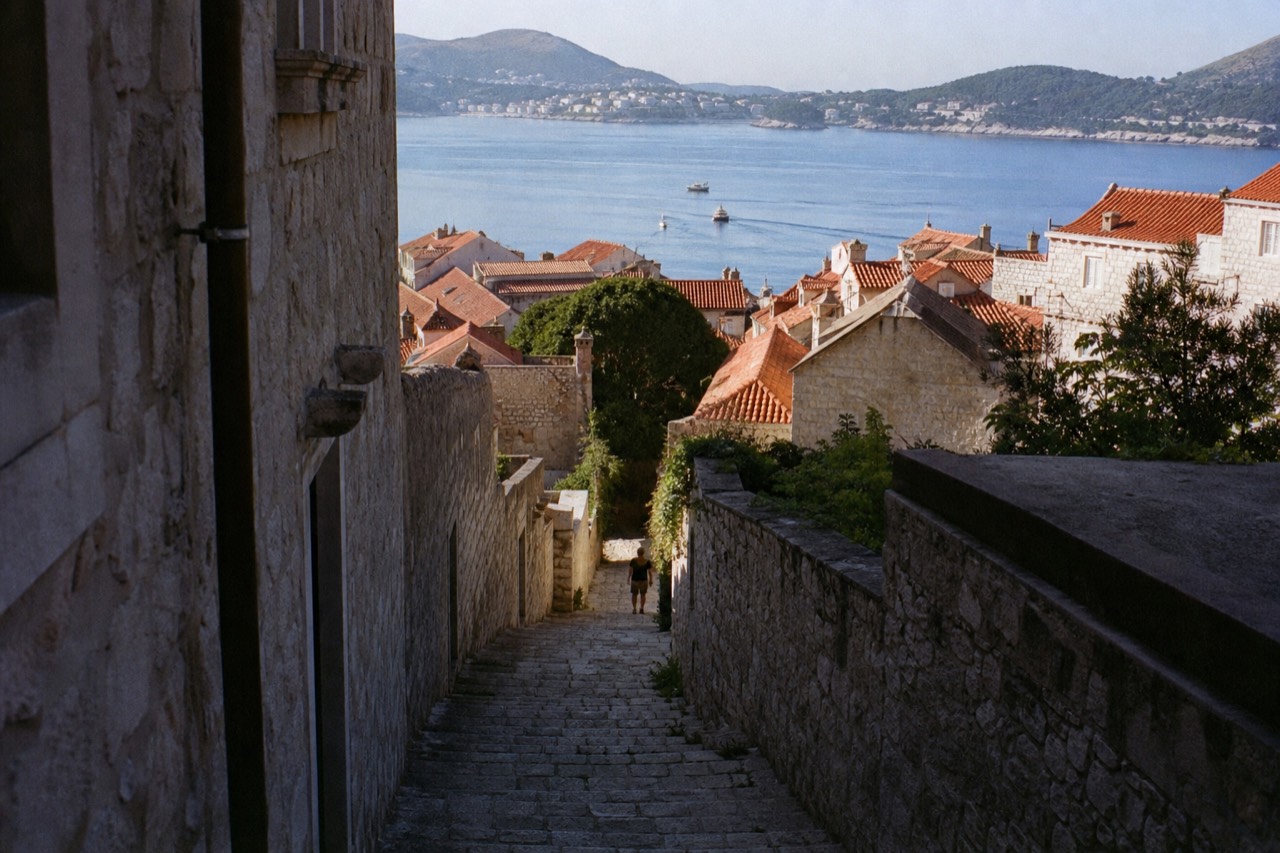
Which Is Nicer, Croatia or Montenegro?
Neither country wins outright, and anyone who tells you otherwise is selling something. Croatia offers a longer, more varied coastline, UNESCO-listed cities and far more developed tourism; Montenegro answers with the Bay of Kotor, a fjord-like inlet that most visitors find more dramatic than anything on the Croatian coast. If you want choice, infrastructure and islands, choose Croatia. If you want scenery packed into a small area at lower prices, choose Montenegro.
I get this question from travellers several times a week, usually from people staying in Dubrovnik and wondering whether they should move on to Montenegro or stay put. My honest answer is almost always the same: the two countries are not really competitors. They are two halves of the same Adriatic story, separated by a border crossing that takes anywhere from fifteen minutes on a quiet Tuesday to over an hour on a summer Saturday.
The comparison people actually care about breaks into a few concrete questions. Which coastline is more beautiful? Is Montenegro cheaper? Which one has worse crowds? And can you see both without packing twice? I will work through each of those, using verified figures where figures exist and plain opinion where they do not.
Start with the numbers that frame the whole debate. Croatia recorded about 4.2 million overnight stays in Dubrovnik alone in 2025, sharing first place among Croatian destinations with Rovinj, while the country as a whole took 20.7 million arrivals and 94.8 million nights in commercial accommodation, according to the Croatian Bureau of Statistics. Montenegro's tourism economy is a fraction of that scale. That difference shows up everywhere: in crowd density, in price, in how far in advance you need to book, and in how much of each coast still feels like a discovery.
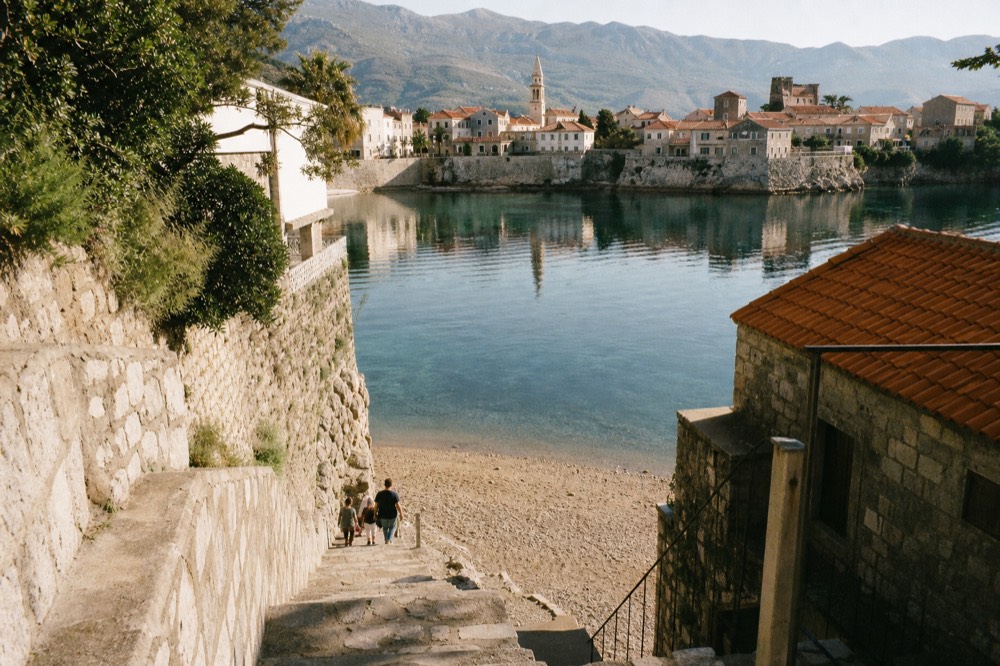
For readers based in or near Dubrovnik, the practical version of this question is simple: Montenegro is close enough to sample as a day trip before you commit to it as a destination. The three options below are the ones I would put in front of anyone weighing the two countries from a Dubrovnik base.
Which Is More Beautiful, Croatia or Montenegro?
On pure scenic drama, Montenegro's Bay of Kotor wins: steep mountains drop straight into deep blue water in a way the Croatian mainland coast rarely matches. On variety, Croatia wins comfortably, with over a thousand islands, walled towns, pine-clad peninsulas and national parks spread along a much longer coastline. Beauty is subjective, but the categories are not.
The Bay of Kotor is the single strongest card Montenegro holds. It is a drowned river canyon, not a true fjord, but the visual effect is similar: grey limestone walls rising more than a thousand metres above water that mirrors whatever light the day offers. The drive or boat ride around it, past Perast and the two islets of Our Lady of the Rocks and Saint George, is the highlight of most Montenegro itineraries and it deserves the reputation.
Croatia's counter-argument is breadth. From Dubrovnik alone you can reach the Elaphiti islands, the Mljet National Park with its saltwater lakes, the walls of Ston on the Pelješac peninsula, and the old town itself, inscribed on the UNESCO World Heritage List in 1979 under criteria (i), (iii) and (iv), covering 24.7 hectares inside a 1,188.6-hectare buffer zone, as the UNESCO listing records. Montenegro's Kotor is also UNESCO-listed, and it is genuinely beautiful, but one bay against an entire island-studded coast is not a fair fight on variety.
The honest summary I give visitors: if your holiday is four days or fewer and scenery is the whole point, Montenegro concentrates more of it per kilometre. If you have a week or more, Croatia rewards the extra time better, because the coastline keeps changing character from Istria in the north to Dubrovnik in the south.
If you want to judge the Montenegrin side of the argument personally, the day trip is the cheapest way to do it, and it is the tour I point people towards most often for exactly this question.
Is Montenegro Prettier Than Croatia?
Many visitors do find Montenegro prettier, specifically because of the Bay of Kotor's vertical scenery, and it is a defensible position. But prettiness depends on what you photograph: Croatia's old towns, beaches and islands outclass Montenegro's, while Montenegro's mountains and bay outclass almost anything Croatia can put beside them. The countries are pretty in different ways.
Split the question by category and it becomes answerable. For old towns, Croatia wins: Dubrovnik, Split, Trogir and Šibenik are all substantial stone cities with layers of history, and Dubrovnik's walls, 1,940 metres long and up to 25 metres high according to the walls operator's own official site, are the single most impressive urban monument on either coast. Kotor's old town is lovely and compact but it is a quarter of the experience.
For beaches, Croatia wins again, and it is not close. Montenegro's coast has a handful of good beaches, but Croatia has hundreds, from the pebble coves of the Elaphiti islands to the sandy shallows of Lopud's Šunj bay. For mountains meeting sea, Montenegro wins: the Lovćen massif above Kotor and the route down to the coast give Montenegro a backdrop Croatia's southern coast, for all its beauty, cannot match.
| Category | Stronger country | Why |
|---|---|---|
| Old towns and city walls | Croatia | Dubrovnik, Split, Trogir and Šibenik versus Kotor's compact core |
| Beaches and swimming | Croatia | Hundreds of island and mainland beaches versus a handful in Montenegro |
| Mountains above the sea | Montenegro | The Bay of Kotor's walls rise more than a thousand metres from the water |
| Islands | Croatia | Over a thousand islands, including Mljet and the Elaphiti group |
| Value for money | Montenegro | Meals, accommodation and drinks generally cost less than the Croatian equivalent |
| Infrastructure and connections | Croatia | More flights, ferries, buses and organised tours across the board |
The pattern in that table is consistent: Croatia wins wherever development and variety matter, Montenegro wins wherever raw landscape and price matter. That is why the question "which is nicer" has no single answer, only an answer per traveller.
Which Is Nicer, Greece or Croatia?
Greece and Croatia trade blows rather than one dominating: Greece wins on islands, ancient sites, food and summer length, while Croatia wins on compactness, coastal towns, water clarity in places, and ease of combining a city break with a beach holiday. Travellers who want a classic island-hopping holiday usually prefer Greece; those who want walled towns and a single base usually prefer Croatia.
Since this question arrives in the same breath as the Montenegro one, it is worth answering here. The Greek island world, from the Cyclades to the Dodecanese, is simply larger than anything Croatia offers: more islands, more ferry routes, more beach bars, more ruins. If your mental image of a holiday is a whitewashed village above a harbour, Greece is the honest answer.
Croatia's advantage is density and ease. You can base yourself in one place, Dubrovnik for example, and within an hour reach islands, beaches, mountain viewpoints and three countries' worth of day trips. The sea along the southern Croatian coast is also reliably warm in summer: the long-run August average for this coast is about 25.8 degrees and September about 23.6, from the NOAA OISST 1991 to 2020 climatology, an open-water average rather than a beach thermometer, with sheltered bays running warmer still. Greece's Aegean in high summer is warmer overall, but the difference is smaller than most people expect.
Food is where Greek cuisine usually takes the crown in traveller polls, and I say that as someone who will defend a good Dubrovnik konoba to the end. Croatian food is excellent, but it is regional and understated; Greek food travels better as a holiday memory. For a deeper look at the domestic side of that fight, our piece on what local food to try in Dubrovnik covers the dishes worth crossing town for.
Which Is Nicer, Slovenia or Croatia?
Slovenia and Croatia are barely comparable: Slovenia offers Alpine scenery, a tiny sliver of coast and one outstanding capital in Ljubljana, while Croatia offers the long Adriatic coastline, the islands and the walled cities. For a beach or island holiday, Croatia wins without discussion. For mountains, lakes and a compact two-country road trip, the pair work beautifully together.
Slovenia's coast is about 47 kilometres long, roughly the distance between two Croatian county towns, so if the sea is the point of your trip, the comparison ends there. What Slovenia does have is Lake Bled, the Julian Alps, the Škocjan Caves and one of the most pleasant small capitals in Europe, all within a two-hour drive of each other. As a one-week destination it is superb, and noticeably calmer than the Croatian coast in July and August.
Croatia, by contrast, is a two-week destination that still leaves things unseen. The coastal cities alone, from Pula to Dubrovnik, would fill a full itinerary, and the islands behind them double the options. In crowd terms, Croatia's popularity is real and measured: the Port Authority limits cruise passengers in Dubrovnik to 8,000 a day in most cases, and even so the Old Town's official carrying capacity, 11,275 people from the UNESCO carrying-capacity assessment, is tested on peak days. Slovenia never has that problem, and in late summer neither does Croatia's shoulder season, which is when I would visit.
The genuinely smart move, if your dates allow, is combining them: fly into Ljubljana or Zagreb, take in the lakes, then drive south to the Croatian coast. The two countries share a border, an easy road connection and, increasingly, a similar price level once you leave the Croatian coast in peak season.
How Do the Prices Compare?
Montenegro is cheaper than Croatia across the board: meals, accommodation and drinks typically cost less, sometimes by a third, once you leave Croatia's peak-season coast. Croatia's premium buys you more choice, better infrastructure and easier logistics, and its shoulder seasons close much of the price gap. Dubrovnik is the most expensive corner of either country.
I have to be careful with numbers here, because verified price data for Montenegro is thin and I refuse to print figures I cannot stand behind. What I can say with confidence is the pattern, repeated by every traveller I have planned for: a comparable restaurant meal in Kotor or Budva costs less than in Dubrovnik or Hvar Town, often noticeably so, and accommodation in Montenegro runs cheaper at every quality level outside the handful of luxury bay-front properties.
Croatia's own prices are not uniform. Dubrovnik sits at the top, and the cost of its headline sights is fixed and public: the City Walls ticket is 40 euro in main season, 1 March to 30 November, and 20 euro in December, while the one-day Dubrovnik Pass costs the same 40 euro in main season and adds ten more sights plus a 24-hour bus ticket, as the official Dubrovnik Pass site sets out. Move away from the coast, or into the shoulder months, and Croatia's prices fall fast.
| Cost area | Croatia (Dubrovnik area) | Montenegro (Kotor area) |
|---|---|---|
| Restaurant meal for two, mid-range | Higher, especially inside the old town | Noticeably lower for comparable food |
| Peak-season accommodation | High; Dubrovnik is the priciest corner of either coast | Lower at each quality tier |
| Headline sight ticket | City Walls 40 euro adult, main season | Old town entry free; bay sights modestly priced |
| Day trip from Dubrovnik | Montenegro day trip from $58 per person | N/A, you are already there |
One practical note: the euro is the currency in both countries, Croatia having adopted it, so there is no exchange-rate friction in comparing or combining them. Our Dubrovnik trip cost guide breaks the Croatian side of the budget down line by line.
Which Is Better for Crowds and Timing?
Croatia carries far more visitors than Montenegro and shows it in July and August, but its shoulder seasons are quiet and arguably the best time to come. Montenegro is busy around Kotor in summer too, yet its crowds thin out a short drive from the bay. The counter-intuitive fact worth knowing: Dubrovnik's cruise traffic peaks in September and October, not in high summer.
That last point surprises nearly everyone, and it is solid Port Authority data rather than folklore. In 2025, cruise passengers through Dubrovnik peaked in September at 101,246 and October at 100,132, both above July's 96,072 and August's 87,385, with a full-year total of 625,257. The Port Authority's statistics publish the monthly series openly. Day-tripper pressure on the Old Town therefore does not vanish the moment schools go back.
For Montenegro, the crowd story is simpler: Kotor's old town and the Perast waterfront get busy with day visitors, including the daily coaches from Croatia, but the country as a whole never approaches Croatian volumes. If you time a Kotor visit for early morning or evening, outside the day-trip window, you will have large parts of the bay almost to yourself, something that is genuinely difficult in Dubrovnik between 10:00 and 16:00 in season.
My timing advice for both countries is the same: late May to mid June, or mid September to early October. The sea is swimmable, the September long-run average for this coast is about 23.6 degrees, prices drop from their July peak, and the light on the Bay of Kotor in October is the best of the year.
Can You See Both Countries From One Base?
Yes, easily, and it is the way I would do it. Dubrovnik sits about an hour from the Montenegrin border, which makes Kotor and the bay a realistic day trip, while Bosnia's Mostar and Croatia's own islands fill the other days. One hotel, one unpacking, three countries.
This is where the whole comparison becomes practical. You do not have to choose a winner if you base yourself in Dubrovnik and take day trips in each direction. The Montenegro day trip from Dubrovnik, from $58 per person and rated 4.4 across 5,611 reviews, covers Kotor and the bay with an optional boat ride, running 11 to 12 hours on the longer variant. A recent guest review of that trip captures the experience well, border crossing included:
We booked the semi-private tour. 6 people total. Robert was fantastic! He was so knowledgeable and enthusiastic about everything. The tour was well organized and we had just the right time at the spots. Extremely satisfied with this tour and would certainly recommend to anyone. Also the border in September only took us 15 minutes.
Nithya
The border is the one variable to plan around. Croatia is in the Schengen area and Montenegro is not, so you clear a hard border twice on any Montenegro day trip. Outside peak weekends it is usually quick, as that review suggests, but on summer Saturdays the queues can stretch past an hour, which is exactly why an organised trip with a driver who knows the rhythm of the crossing beats a rental car for this particular route.
If you would rather stay inside Croatia on a given day, the alternatives are just as strong. The Mostar and Kravica waterfall day trip, from $35 per person and rated 4.6 across 10,019 reviews, crosses into Bosnia for a completely different landscape, while the Mljet National Park and Elaphiti islands trip, from $139.47 per person and rated 4.8 across 333 reviews, keeps you on Croatian water and among the pines. For more on the domestic option, our Mljet day trip guide covers the national park in detail.
So Which Should You Choose?
Choose Croatia if you want islands, walled cities, developed infrastructure and a trip that scales from a weekend to three weeks. Choose Montenegro if scenery per kilometre, lower prices and a slower rhythm matter more than variety. And if you are still torn, base yourself in Dubrovnik and take a Montenegro day trip: it settles the argument with your own eyes in a single day.
That is the same advice I give face to face, and it holds for almost every traveller type. Families usually do better in Croatia, where beaches, ferries and short transfer distances make daily life easier, and our page on Dubrovnik with kids shows how much there is to keep children busy. Photographers and couples often fall for Montenegro, where the Bay of Kotor delivers the single most dramatic frame on the eastern Adriatic. Solo travellers and first-timers to the region generally find Croatia the smoother introduction, simply because more of it is set up for them.
For a longer read on the Croatian side of the ledger, start with Things to Do in Dubrovnik and work outward: the city is the region's hinge, and nearly every comparison between these two countries is easiest to test from here. Whichever way you decide, book the border-crossing day trips early in your stay rather than at the end, so a cancelled sailing or a storm day does not cost you the one excursion you most wanted.
Here, finally, are the three trips that best answer this article's question, all from a single Dubrovnik base.
Common Questions About Croatia vs Montenegro
Which is nicer, Croatia or Montenegro?
Neither wins outright. Croatia offers more variety, islands, walled cities and better infrastructure; Montenegro offers the dramatic Bay of Kotor and lower prices. Most travellers who want a classic beach-and-city holiday prefer Croatia, while those chasing scenery per kilometre prefer Montenegro.
Which Is More Beautiful, Croatia or Montenegro?
Montenegro's Bay of Kotor is the most dramatic single sight on either coast, with mountains rising straight from the water. Croatia wins on variety, with over a thousand islands, multiple UNESCO-listed old towns and hundreds of beaches. Beauty depends on whether you prize drama or diversity.
Is Montenegro Cheaper Than Croatia?
Generally yes. Meals, drinks and accommodation in Montenegro typically cost less than comparable Croatian coastal offerings, especially against Dubrovnik, which is the most expensive corner of either country. Croatia's shoulder seasons close much of the gap.
Can You Visit Montenegro From Dubrovnik?
Yes, easily. Kotor is a realistic day trip from Dubrovnik, with organised tours from $58 per person. You cross a hard border twice since Montenegro is outside the Schengen area, so allow extra time on summer weekends.
Which Is Nicer, Greece or Croatia?
Greece wins on islands, ancient sites and food reputation; Croatia wins on compactness, walled coastal towns and combining a city break with beaches. Island-hoppers usually prefer Greece, single-base travellers usually prefer Croatia.
Which Is Nicer, Slovenia or Croatia?
For a beach or island holiday, Croatia wins comfortably, since Slovenia's coast is only about 47 kilometres long. For mountains, lakes and a calm, compact trip, Slovenia excels, and the two combine well on one road trip.