What Problems Is Dubrovnik Facing?
Overtourism, cruise crowds, high prices and housing pressure: the real problems Dubrovnik faces, what they mean for your visit, and how to dodge the worst of them.
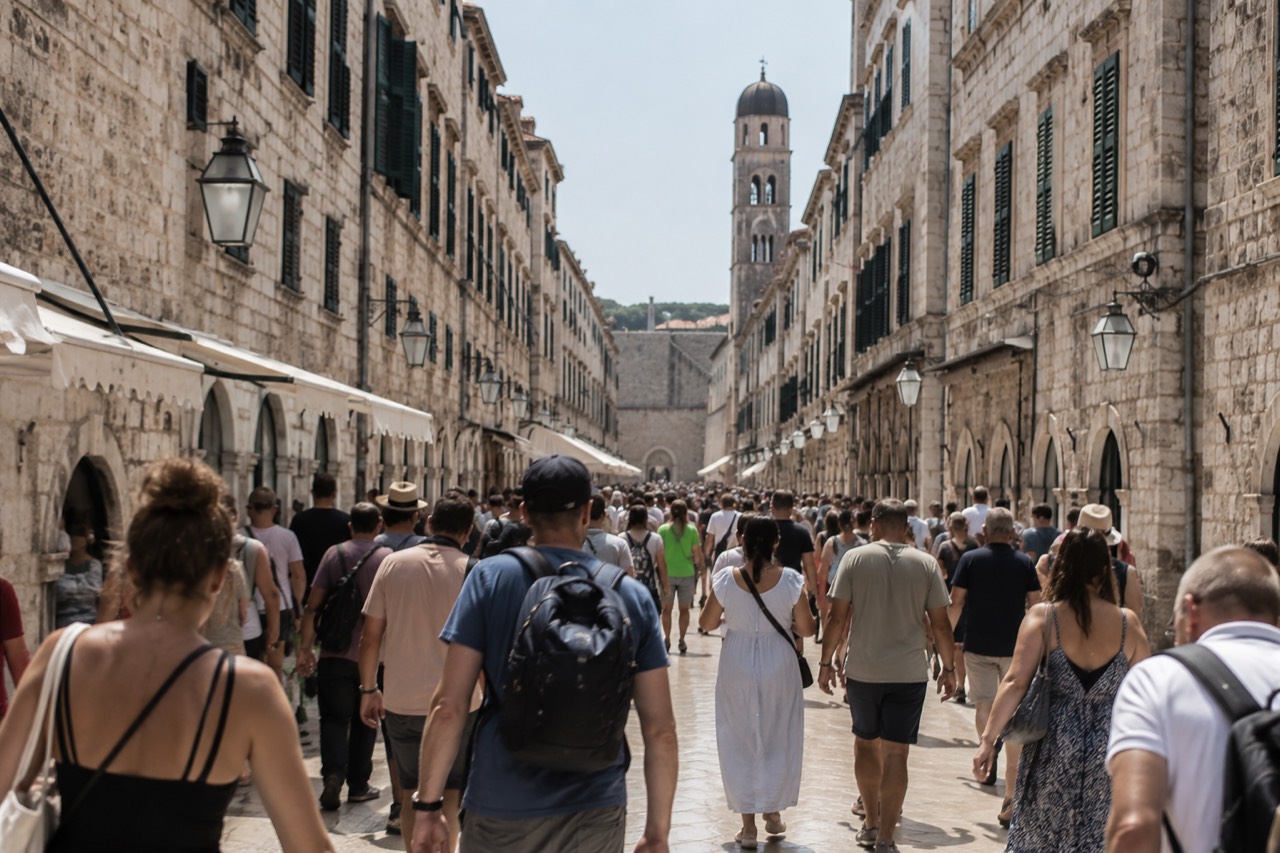
What Problems Is Dubrovnik Facing?
Dubrovnik's headline problems are overtourism and cruise-crowd pressure, a housing market hollowed out by short-term rentals, prices that rank among the highest in Croatia, and a tourism economy that swings between overwhelming summer and quiet winter. The Port Authority counted 625,257 cruise passengers in 2025, and the city's own counting system puts the Old Town's official carrying capacity at 11,275 people. Those two numbers frame almost everything else.
I walk these streets year round, and the change between a February morning and a July afternoon is not subtle. The city recorded about 4.2 million overnight stays in 2025, sharing first place among Croatian destinations with Rovinj, according to the Croatian Bureau of Statistics. For a city of 41,562 residents at the 2021 census, that ratio of visitors to locals is the root of most of what follows. Croatia as a whole took 20.7 million arrivals and 94.8 million nights in commercial accommodation in the same year, and Dubrovnik carries a disproportionate slice of that weight inside a walled core you can cross on foot in twenty unhurried minutes.
The problems break into four broad groups, and each one has a practical consequence for a visitor. Crowding concentrates in a small area: the UNESCO-listed property covers just 24.7 hectares, with a 1,188.6-hectare buffer zone around it, and the six counters at every Old Town entrance feed a headcount that updates every 15 minutes. Prices follow the crowds. Housing for residents gives way to apartments for tourists. And the whole machine runs on a season that is far shorter than it looks from outside, which is why the same restaurant can feel like two different businesses in June and in January.
The counter-intuitive part, and the single most useful fact on this page, is that cruise traffic peaks in September and October, not July and August. Anyone planning a "quiet shoulder season" visit to escape the crowds is walking straight into the busiest cruise window of the year. The Port Authority's own crowd-management page spells out the daily limit and the berthing arrangement, and its statistics are the source for every passenger figure in this article.
It is worth being precise about what the cruise numbers mean. Cruise passenger figures are ship capacity, not people who actually walk ashore, so a day listed with 5,798 passengers does not put 5,798 people on the Stradun. Some never disembark at all. But even a fraction of that capacity, arriving in the same late-morning window, is enough to move the Old Town counters from comfortable to congested, and the counting system exists precisely because the city cannot manage what it does not measure.
The housing problem is the one visitors see least and locals feel most. When a city of 41,562 residents absorbs millions of overnight stays, apartments convert to short-term lets, year-round tenants are pushed out, and the Old Town risks becoming a stage set with no cast. The city's crowd-management measures, from the cruise caps to the refused call requests, are partly a response to exactly this: a recognition that the resident city has to survive its own success. A visitor cannot fix that, but choosing to eat, drink and sleep a street or two off the main drag keeps money in the parts of town that still have locals in them.
If you want to see the city's headline sights with the least friction, a guided structure helps on crowded days. These three options cover the panorama, the walls and the Old Town from different angles.
The Convertible Bus Panorama Tour with Audio Guide, from $34.77 per person and rated 4.6 across 796 reviews, takes in the viewpoints above town in about an hour and a half. The Cable Car Ride and Old Town Walking Tour pairs the Mount Srd ride with a guided walk, and the City Walls Admission Ticket is the plain entry for people who want the circuit at their own pace. Between them they cover the three experiences most visitors name as their reason for coming, and each one can be slotted around the crowd curve rather than into the middle of it.
What Not to Do in Dubrovnik?
Do not walk the walls at midday in high summer, do not drive into the Old Town or expect to park near it, do not eat on the Stradun's first row of tables if you care about price, and do not plan a "quiet" September visit assuming the cruise crowds have gone. Each of these mistakes is common, and each one is avoidable with a small change of timing or location.
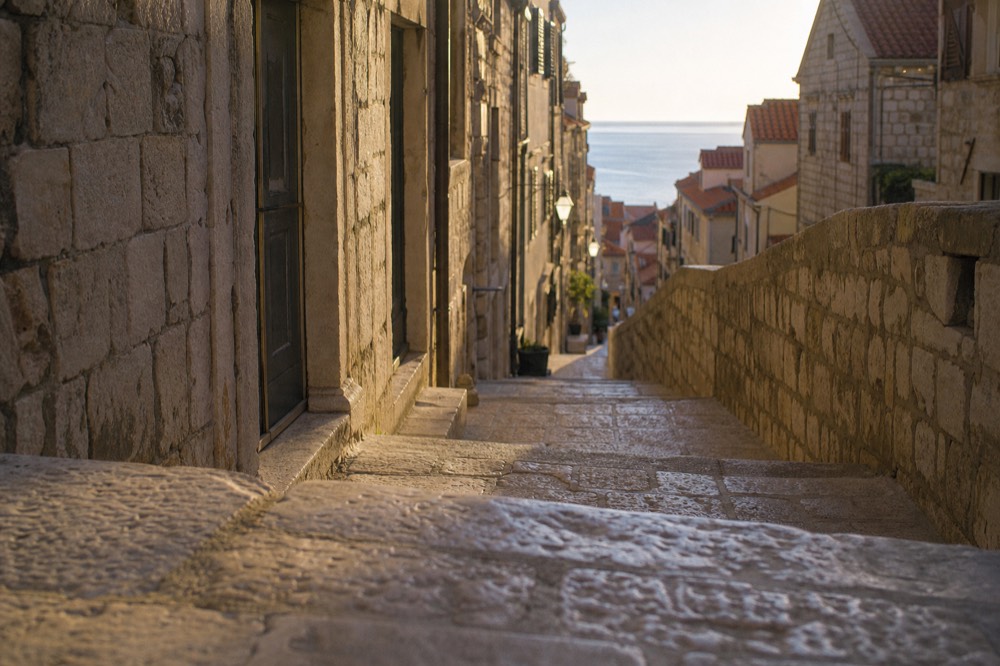
Start with the walls. The circuit is 1,940 metres long, up to 25 metres high in places, and almost entirely unshaded limestone. The adult ticket is 40 euro in main season, 1 March to 30 November, and 20 euro in December. The operator's stated hours at the time of check were 08:00 to 19:30. Walking it at 08:00 rather than 13:00 is the difference between a pleasant circuit and an ordeal, and the crowd data backs the early start: 5,419 people were counted in the Old Town at 08:00 on a September day, rising to a 7,739 peak at 10:00. The walls themselves are narrow on the sea side, where the main wall runs 1.5 to 3 metres thick against 4 to 6 metres on the land side, and a congested stretch is slow, hot and occasionally nerve-racking with small children.
Do not bring a car into the equation if you can avoid it. The Old Town is fully pedestrianised, parking around it is scarce and priced accordingly, and the one-day Dubrovnik Pass, which costs the same 40 euro as the standalone walls ticket in main season and adds ten more sights plus a 24-hour bus ticket, exists partly to move visitors onto public transport. That equivalence is a main-season fact only: in December the walls ticket drops to 20 euro and no pass tier is on sale at all. Our parking and car-rental advice covers the realistic options, and the short version is: stay outside the walls and bus in.
Do not treat the Stradun as your dining room. The 298-metre main street, whose final plan was fixed by the Statute of 1272, is beautiful and expensive, in roughly equal measure. Two streets back in either direction, prices drop and quality often rises. And do not assume the sea is bath-warm just because the sun is strong: the September average for this coast is about 23.6 degrees, a long-run open-water average rather than a beach reading, and sheltered bays run warmer than that.
| Common mistake | Why it fails | What to do instead |
|---|---|---|
| Walls at midday in July or August | Unshaded limestone, peak street counts, slow going | Enter at 08:00, finish before the 10:00 peak |
| Driving to the Old Town | Pedestrianised core, scarce parking | Bus in, or stay in Lapad or Gruž |
| Every meal on the Stradun | Prime-rent prices for average food | Walk two streets back for konobas |
| September booked as "quiet season" | Busiest cruise month of 2025 at 101,246 passengers | Try April, May or late October weekdays |
One more mistake belongs on the list: do not try to see everything in one day without a plan for the crowd curve. The Old Town fills from mid-morning and empties in the late afternoon, so the productive sequence is walls or a viewpoint early, a museum or a long lunch in the middle of the day, and the streets again after 17:00 when the day-trip tide recedes. Visitors who fight the curve spend their day queuing; visitors who ride it see more with less effort.
On the busiest days, seeing the city from above rather than inside it is the smarter sequence. The convertible bus tour is the low-effort version of that idea.
The tour runs from $34.77 per person with an audio guide, and because it sits above the Old Town rather than inside it, it works even when the counters are near their peak. Checking availability before you arrive is worth it on cruise days, when every viewpoint product in the city fills earlier than you would expect.
Is Dubrovnik Worth Visiting?
Yes, and the problems themselves explain why: the crowding is concentrated in a few hours and a few streets, the UNESCO-listed Old Town is genuinely one of the finest in Europe, and the city has built real infrastructure to manage its own success, from the counting system to the 8,000-passenger daily cruise limit. A visitor who times the day well sees the same city a visitor who times it badly complains about.
The Old City was inscribed by UNESCO in 1979 under criteria (i), (iii) and (iv), and it spent 1991 to 1998 on the List of World Heritage in Danger following war damage. That it is intact, restored and overwhelming today is not an accident of geography. It is the result of decades of deliberate protection, which is also why the property area is a tightly bounded 24.7 hectares with a 1,188.6-hectare buffer zone. Cities that protect their cores this fiercely end up both extraordinary and crowded, and Dubrovnik is the clearest example on the Adriatic. The wider set of guides lives on Things to Do in Dubrovnik.
Worth is also a question of what you compare it with. The walls circuit, 1,940 metres with 16 towers, three fortresses and six bastions, has no real equivalent on the Adriatic. Fort Lovrijenac stands on a 37-metre sea rock across the bay and is included with the walls ticket, as are the Western Outer Wall, closed December through February, and the Collection of Coins of the Republic of Ragusa. The cable car climbs 367 metres to the Mount Srd station in three and a half minutes at 6.5 metres per second, with the operator claiming a view range of up to 60 km on a clear day. None of that is diminished by the fact that 625,257 cruise passengers passed through the port in 2025.
There is a fairer way to think about the price objection too. The 40-euro walls ticket buys the walls, Lovrijenac, the outer wall and the coin collection, and the one-day Dubrovnik Pass at the same 40 euro adds ten more sights plus a 24-hour bus ticket. Whether that reads as expensive depends entirely on what you would otherwise do with the day. A visitor who walks the circuit at 08:00, visits two museums in the middle of the day and rides the bus to a beach in the afternoon has extracted a full day from a single ticket. A visitor who queues for the walls at 13:00 and goes home has not.
The honest framing is this: Dubrovnik's problems are the problems of a place people love too much, managed by a city that measures the problem in 15-minute increments. Our is Dubrovnik worth visiting guide works through the value question in detail, including what the walls ticket at 40 euro actually buys.
The cable car and Old Town combination is the classic answer to "worth it", pairing the panorama with a guided walk of the streets below.
That tour runs about four and a half hours from $163.50 per person and is rated 4.6 across 716 reviews. One recent review calls it "Great tour with a great guide" and praises both the cable car views and the guide's lunch recommendations, which is a fair summary of what a well-run combination product delivers on a crowded day: someone else handles the timing, and you spend your attention on the city instead of the queue.
When to Avoid Dubrovnik?
Avoid the middle of the day in July and August, and avoid late September and early October if your goal is thin crowds, because those are the two busiest cruise windows of the year. September 2025 brought 101,246 cruise passengers and October 100,132, both above July's 96,072 and August's 87,385. For the quietest workable visit, target April, May, late October weekdays or the winter months, accepting reduced hours in return.
The month-by-month picture matters more here than most people expect. The instinct that "September is shoulder season, it will be calm" is the single most common planning error for this city, because cruise traffic peaks after the school holidays end. The busiest individual days in the remaining 2026 season schedule include 6 October with two ships and up to 5,798 passengers by capacity, 29 September with two ships and up to 5,675, and 30 September with three ships and up to 5,536. Those are scheduled capacities, not a promise of how many people walk ashore, but the pattern is unambiguous: the autumn window is the cruise high season.
| 2025 month | Cruise passengers | What it means for visitors |
|---|---|---|
| July | 96,072 | Peak heat, peak land tourism, heavy cruise traffic |
| August | 87,385 | Hottest month, crowded but slightly fewer cruise calls than July |
| September | 101,246 | Busiest cruise month of the year, warm sea, busy streets |
| October | 100,132 | Second busiest cruise month, milder air, still busy |
| November | 28,480 | Cruise season winding down, much quieter streets |
Within any given day, the pattern is just as predictable. The counters on 8 September 2026 read 1,200 people at 04:00, 1,725 at 06:00, 3,139 at 07:00, 5,419 at 08:00, 7,297 at 09:00, a 7,739 peak at 10:00, and 7,205 by 11:00. The Old Town empties in the late afternoon when day-trippers and cruise passengers return to their ships, which makes the early evening the second-best window of the day and one that most visitors never exploit. Our best time to visit guide works through the whole calendar, including the winter trade-offs.
The city's own limits shape this picture more than most visitors realise. Of 243 cruise days a year only 18 exceed the estimated 8,000-passenger level, and only 4 days a year run slightly higher than 10,000. The Port Authority refused about forty cruise call requests in a single season to hold that line. In other words, the extreme days are rare by design, and the ordinary busy day, while dense, is bounded. That is what a managed overtourism problem looks like from the inside: not solved, but measured and capped.
Winter deserves a specific mention because it is the honest answer to overtourism, with caveats. The walls ticket drops to 20 euro in December, the cable car is closed January to March, and the sea temperature long-run average falls to 16.0 degrees in December against 25.8 in August. You trade warmth and full opening hours for near-empty streets and half-price entry. Some visitors consider that the best deal in Croatia.
Is Dubrovnik Good for Beaches?
Dubrovnik's beaches are decent rather than world-class: mostly pebble and rock, small, and close to town, with Banje the most famous and Copacabana and Lapad Bay the most practical for families. The sea is clean and warm in season, with a long-run August average of 25.8 degrees, but sand-beach expectations should be left at home. The city is a culture-and-viewpoints destination that also has swimming, not a beach resort.
The geology sets the terms. This stretch of coast is limestone, so the beaches are pebble, shingle or concrete platforms, and the water is correspondingly clear. The swimming season is real: the long-run monthly averages run from 18.6 degrees in May through 22.5 in June, 24.9 in July, 25.8 in August and 23.6 in September, falling to 21.0 in October. Those are open-water averages, not beach thermometer readings, and sheltered bays run warmer; the Croatian met service's Dubrovnik buoy read 27.0 to 27.4 degrees on 8 September 2026 against that 23.6 September mean. An independent EU dataset corroborates the series within about a degree, with August at 24.90 and September at 23.15.
| Beach | Character | Best for |
|---|---|---|
| Banje | Pebble, postcard views of the walls, paid zones | The classic photo, a swim with the Old Town behind you |
| Copacabana | Pebble and concrete, on the Lapad side | Families, water sports, easy parking |
| Lapad Bay | Shallow, sheltered, backed by cafes | Children and relaxed half-days |
| Sveti Jakov | Pebble cove below a viewpoint, stairs to reach it | Quiet swimming with effort rewarded |
The beach question connects back to the city's problems more directly than it first appears. Beach space is finite, and in peak season the pebble strips near town absorb overflow from the Old Town, so a beach that feels spacious at 09:00 is dense by noon. Water shoes are worth packing for every one of these, because the pebble entries are genuinely uncomfortable barefoot, and the same limestone that makes the water so clear makes the shoreline sharp. The beaches guide maps the full set, and the honest summary is that swimming here is excellent while sunbathing space is average.
For a visitor using the beaches as an escape valve from crowded streets, the walls admission ticket is the complementary half of the day: walls early, beach after.
The admission-only product runs from $36.37 per person and is rated 3.6 across 249 reviews, with the rating reflecting the ticket product rather than the walls themselves. Going early, finishing the circuit before the 10:00 crowd peak, and then trading limestone walls for a pebble beach is about the best single-day sequence this city offers.
Before the practical questions, here again are the three products that structure a crowded day well: the panorama bus above town, the cable car and walking combination, and the plain walls entry.
Common Questions About the Problems Dubrovnik Is Facing
What problems is Dubrovnik facing?
Dubrovnik faces overtourism concentrated in a small walled core, heavy cruise pressure peaking in September and October, high prices driven by seasonal demand, and a housing market under strain from short-term rentals. The city counted 625,257 cruise passengers in 2025 and about 4.2 million overnight stays, against a resident population of 41,562, and it manages the pressure with a daily cruise limit of 8,000 passengers in most cases and a counting system that tracks Old Town numbers every 15 minutes.
What Not to Do in Dubrovnik?
Do not walk the walls at midday in high summer, do not drive to the Old Town expecting nearby parking, do not eat on the Stradun's front row if price matters, and do not assume September is quiet, because it is the busiest cruise month of the year. Time the walls for 08:00, eat a couple of streets back, and use the late afternoon, when day-trippers leave, as your second sightseeing window.
Is Dubrovnik Worth Visiting?
Yes. The UNESCO-listed Old Town, the 1,940-metre walls circuit, Fort Lovrijenac and the Mount Srd cable car are genuinely exceptional, and the crowding is manageable with timing. The city's own management systems, from the counting network to the cruise caps, mean the worst experiences belong to visitors who arrive unprepared at the busiest hours.
When to Avoid Dubrovnik?
Avoid midday in July and August for heat and crowds, and avoid late September and early October if thin crowds are the goal, since those months brought 101,246 and 100,132 cruise passengers respectively in 2025, more than July or August. April, May, late October weekdays and winter offer the calmest streets, with trade-offs in hours and warmth.
Is Dubrovnik Good for Beaches?
It is good for swimming and average for beaches. The coast is pebble and rock rather than sand, the water is clear and warm in season with a long-run August average of 25.8 degrees, and the best options are Banje for the view, Copacabana and Lapad Bay for families, and Sveti Jakov for a quieter cove reached by stairs.