What Is the Signature Dish of Dubrovnik?
The signature dish of Dubrovnik is peka, meat or octopus slow-cooked under a bell of embers. Here is what it is, where to try it, and how it fits a first visit.
What Is the Signature Dish of Dubrovnik?
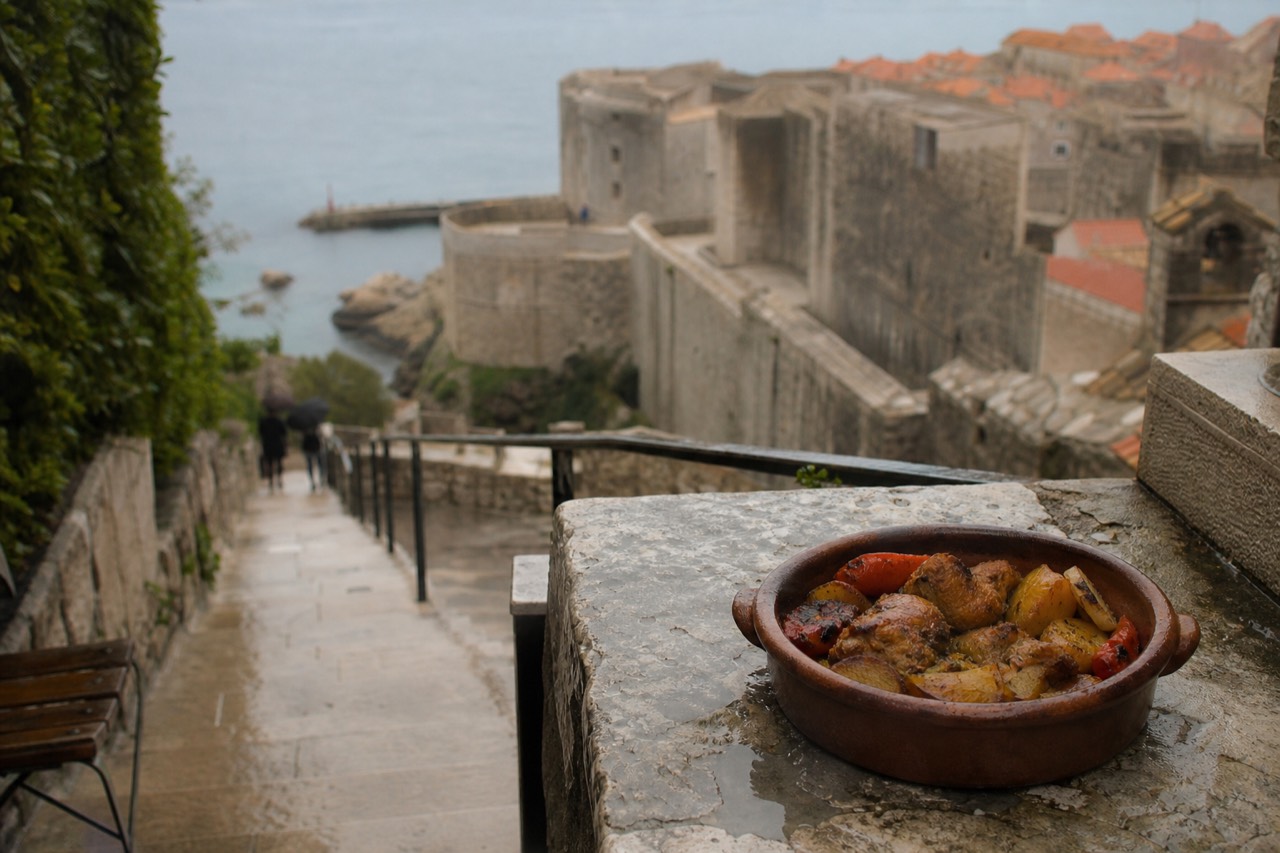
The signature dish of Dubrovnik is peka: a cast-iron or clay bell, called a sač, set over a tray of meat or octopus with potatoes and vegetables, then buried in embers for hours until everything collapses into its own juices. It is not restaurant theatre. It is how families along this coast have cooked for Sunday lunches, weddings and name days, and it is the single plate that most defines the region's table.
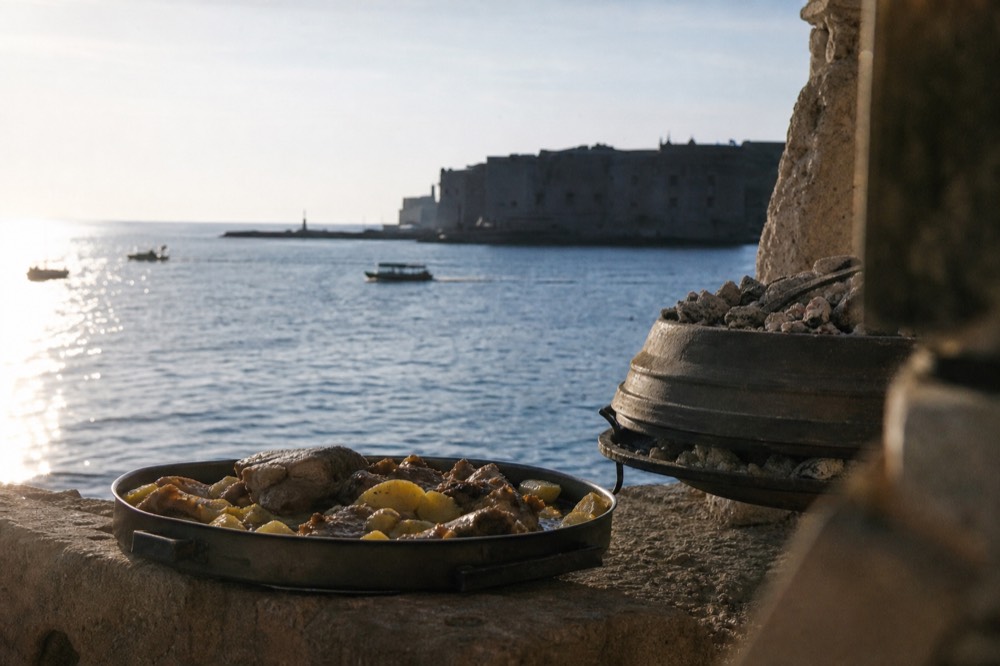
The word covers both the method and the hardware. You build a fire, let it burn down to serious coals, set the food underneath the dome, rake embers over the top, and then, hardest part, leave it alone. The lid traps steam and smoke together. Octopus peka is the version most visitors meet first, and it is the one I point people toward when they ask what to eat on their first night, because the texture is unlike anything a conventional oven produces. Lamb peka, cooked with potatoes, rosemary and a heavy hand of olive oil, is the inland cousin and just as rooted here.
Dubrovnik's restaurant scene is broader than one dish, of course. The old streets are full of konobas, the family-run taverns that anchor local eating, and a full guide to what to eat in Dubrovnik runs through the wider spread: fresh fish priced by the kilo, black risotto, green pasta with a spinach dough, and the region's sweet rozata custard for pudding. But those are supporting players. When a Dubrovnik cook wants to show you the region on one plate, the peka comes out.
The honest complication is timing. Because peka needs hours under coals, good konobas ask for notice, often a day ahead, and many only run it on certain days. Walk in off the Stradun at 20:00 expecting octopus peka and you will likely be offered the grill instead. That is not the kitchen being difficult, it is physics. The dish cannot be rushed, which is exactly why it carries the region's identity: it is food that assumes you planned to be here a while.
There is a reason the method survived. Southern Dalmatia is thin soil, hard limestone and a long dry summer, and the cooking tradition that grew out of it favours patience over complexity: a few ingredients, local olive oil, wine, herbs from the hillside, and time. Peka is that philosophy in its purest form. Nothing gets seared, nothing gets sauced separately, nothing is added late for effect. The octopus releases its own liquid, the potatoes absorb it, the rosemary steams in the closed dome, and by the time the lid comes off the tray holds a complete meal that tastes of exactly one place.
The other way to meet the dish is to cook it. A hands-on class turns the waiting time into the point of the exercise, and the Dubrovnik food and drink walking tour is the natural companion, since it covers the tasting side of the same tradition while peka covers the slow side.
How Do You Actually Get Peka in Dubrovnik?
You book ahead, or you cook it yourself. Because peka bakes under embers for hours, most konobas need a day's notice, and a cooking class is the reliable alternative for same-day plans. The Croatian Traditional Cuisine: Peka Cooking Lesson runs about 4 hours and is bookable from $159.83 per person, which covers the full process from lighting the fire to lifting the lid.
The class route deserves a serious look even if you normally skip cooking experiences. You learn why the coals are raked rather than heaped, why nobody lifts the dome to check, and how the potatoes at the bottom drink the drippings from the meat above. It is the difference between eating the dish and understanding it, and it solves the timing problem in one move, because the fire is lit for you.
If you would rather eat than cook, the practical pattern is this: pick your konoba on day one, order peka for day two, and use the interval well. The old town is compact, the Stradun is only 298 metres long, so nothing is far from anything, and an evening stroll while your dinner slow-cooks is hardly a hardship.
A few konoba customs help too. Bread arrives first, olive oil beside it, and both are meant to be eaten, not admired. Fish is priced by the kilo, so ask the weight before you commit. House wine, served from the bottle or the tap, is usually the right call with peka, and the local red grape is plavac mali, a dense, sun-ripe variety grown on the Pelješac slopes just up the coast; the plavac mali guide covers it properly. If the waiter asks whether you want your peka with octopus or lamb, either answer is correct, but octopus is the more coastal choice and the one most kitchens here take the most pride in.
One more practical note: portions are large. A peka for two is genuinely for two hungry people, with potatoes counted as the full side dish rather than a garnish. Order a green salad and stop there. The dish is the meal.
What Not to Do in Dubrovnik?
Do not arrive without a plan for the two things that sell out: the city walls and restaurant tables. Do not order peka on the spot and expect it in an hour. Do not drive into the old town, there is no useful parking inside it, and do not treat the midday Stradun as the whole city, since the lanes one street back hold the better prices and the better food.
The biggest mistake is scheduling. The walls are the single most crowded sight, and the difference between 08:00 and 11:00 is not subtle. A real half-hourly count read on 8 September 2026 shows the pattern plainly: 5,419 people inside the core at 08:00, a peak of 7,739 at 10:00, then 7,205 at 11:00. Those are the official counter figures from the six gates, updated every 15 minutes. Walk early, eat late, and the day rearranges itself.
The second mistake is eating where you walked. Restaurants with terrace tables directly on the main street carry the premium you would expect, and the kitchens a lane or two inland do the same food with more care. The where locals eat question gets a full answer elsewhere on this site, but the short version is: follow the side streets, and if a konoba asks you to pre-order peka, that is a good sign, not a bad one.
The third mistake is underestimating the stairs. The old town looks flat along the Stradun and then climbs steeply on both sides, and shoes that work on marble slabs polished by centuries of feet are not the shoes that work on the staircases behind the cathedral. Pack accordingly, and if you are visiting in high summer, carry water; the shaded lanes are cooler but the exposed stretches are not.
The fourth is treating the city as a day trip when it rewards a night. Evening is when the excursion buses leave, the counters fall, and the konobas fill with people who are staying. That is the Dubrovnik most visitors remember, and it is also when the peka orders come out of the kitchen.
Is Dubrovnik Worth Visiting?
Yes, and the numbers back it up. Dubrovnik recorded about 4.2 million overnight stays in 2025, sharing first place among Croatian destinations with Rovinj, and the walled old town is a UNESCO World Heritage Site inscribed in 1979. Crowds are real but predictable, and the counter-intuitive part is that the peak months for cruise passengers are September and October, not July and August.
Worth is a fair question, because the city has a reputation for being expensive and packed, and both are partly true. The Croatian Bureau of Statistics release that ranks Dubrovnik at the top of the national table is published by the DZS, and it is a nights count, not a hype count: people are not just day-tripping through, they are staying. That matters, because the city rewards staying. The walls at opening, the lanes after the excursion groups leave, a slow lunch, the evening light on Fort Lovrijenac from the water, these need a night or two, not a sprint.
The UNESCO inscription itself tells you what you are looking at. The old town was inscribed in 1979 under criteria (i), (iii) and (iv), covering a property of 24.7 hectares with a 1,188.6-hectare buffer zone, and it sat on the List of World Heritage in Danger from 1991 to 1998 during the war years. The city you walk through now is a rebuilt one. The UNESCO listing page carries the full record.
The food alone justifies the trip for many visitors, and a guided tasting is the efficient way in. The Dubrovnik Food and Drink Walking Tour with a Local Guide runs about 3 hours, is rated 5 across 704 reviews, and starts from $165.64 per person. It covers the ground a first-timer would otherwise spend two days stumbling into.
Amazing food tour! Marija was a great guide, full of stories and facts that really brought Dubrovnik to life. The food was delicious, and generous. Wines at every stop. Would highly recommend this tour to anyone visiting Dubrovnik, especially to help get your bearings of the city and know where to go for dinner!
Bryan_M
For the fuller argument, including the case for and against in high summer, the dedicated is Dubrovnik worth visiting page runs the numbers in detail. The short version from where I stand: almost nobody who walks the walls at 08:00 and eats a slow konoba dinner afterwards regrets the trip.
When to Avoid Dubrovnik?
Avoid the busiest cruise days rather than a whole month. September and October carry more cruise passengers than July and August, with 101,246 and 100,132 in 2025, and the remaining 2026 season schedule concentrates 149 ship calls across 80 cruise days. If you want the city quiet, the December-to-February window is the real low season, with the walls ticket at 20 euro instead of 40.
The month-by-month cruise picture from the Port Authority overturns the usual assumption:
| Month, 2025 | Cruise passengers | What it means for you |
|---|---|---|
| July | 96,072 | Hot and busy, but not the cruise peak |
| August | 87,385 | Peak land tourism, fewer cruise passengers than July |
| September | 101,246 | Busiest cruise month of the year |
| October | 100,132 | Second busiest, though the sea is still swimmable |
| November | 28,480 | Sharp drop, quiet streets begin |
| December | 2,458 | Effectively no cruise traffic |
The Port Authority's cruise measures page is the primary source for those figures and for the daily cap, and it is worth reading before you commit to dates, because the cap of 8,000 cruise passengers a day in most cases means the worst days are bounded, not endless. Of 243 cruise days a year only 18 exceed 8,000, and only 4 exceed roughly 10,000.
A practical note on timing your dinner around all this: cruise passengers mostly eat on board or in a tight radius of the Stradun, so a konoba two lanes inland feels a different city at lunchtime even on a heavy day. Book peka for the evening regardless. The best time to visit guide breaks the whole year down, including the shoulder-season argument, and the Dubrovnik in October page covers the surprising reality of the busiest cruise month.
One caution on the quiet-season plan: the cable car closes January to March, and the walls' Western Outer Wall closes December through February, so a winter visit trades crowds for a shorter menu of sights. The walls themselves stay open, at the 20 euro December price, and the operator's stated hours at time of check were 08:00 to 19:30. Konobas run reduced schedules too, but the ones that stay open through winter are often the ones most worth eating in, and peka tastes better when the evening is cold.
Is Dubrovnik Good for Beaches?
Yes, though the beaches here are stone, rock and slab rather than sand, and the water is the reason people come back. The September average sea temperature on this coast is about 23.6 degrees, a NOAA long-run average for 1991 to 2020, and sheltered bays run warmer still. The old town's own swimming spots are a short walk from the centre, with Banje the most famous.
The monthly water picture, from the NOAA OISST v2.1 climatology for the open water off this coast:
| Month | Sea temperature, long-run average | Swimming verdict |
|---|---|---|
| May | 18.6 | Bracing, for the determined |
| June | 22.5 | Comfortable |
| July | 24.9 | Warm |
| August | 25.8 | The warmest month |
| September | 23.6 | Still very pleasant, and the crowds thin |
| October | 21.0 | Fine for a quick swim, cool on exit |
Two honesty notes travel with those numbers. They are open-water grid-cell averages, not beach thermometer readings, and sheltered bays run warmer in high summer: the Croatian met service's own Dubrovnik buoy read 27.0 to 27.4 degrees on 8 September 2026 against that 23.6 September mean. Treat the table as a planning baseline, not a promise.
Beach-wise the city splits into two experiences. Banje, just outside the walls on the Ploče side, is the postcard beach with the old town behind you as you swim, and it fills accordingly. The Lapad peninsula holds the longer, shallower, more family-friendly stretches, and the beaches guide compares them all, including the quieter corners. If your trip is built around swimming rather than around peka and the walls, base yourself near the water rather than hauling towels up and down the old town's staircases all week.
The stone-and-slab character is worth embracing rather than fighting. What sand beaches here lack, they trade for water clarity, because there is no sediment to cloud it, and the swimming off the rocks is some of the cleanest on the Adriatic. Water shoes earn their place in the bag. And the slab beaches come with their own culture: café chairs, a long lunch, a swim between courses, which is, when you think about it, the same unhurried philosophy that produced peka in the first place.
Put the whole visit together and the pieces fit: a slow-cooked dish that rewards planning, a walkable old town of 24.7 hectares, water warm enough to swim from June into October, and crowd numbers that are high but knowable in advance. Things to Do in Dubrovnik is the site's full index if you want to keep building the itinerary from here, from the walls at opening time to a sunset kayak past the caves.
Common Questions About the Signature Dish of Dubrovnik
What is the signature dish of Dubrovnik?
Peka: meat, lamb or octopus slow-cooked with potatoes and vegetables under a domed iron lid covered in embers. It is the region's defining dish, and because it takes hours, good konobas usually ask for a day's notice.
Can I Order Peka Without Booking Ahead?
Rarely. The dish needs hours under coals, so most kitchens prepare it to order for the following day. Book a day ahead, or take a cooking class such as the Croatian Traditional Cuisine: Peka Cooking Lesson, about 4 hours, from $159.83 per person.
Is Octopus or Lamb the Better Peka?
Octopus is the coastal version most visitors try first, tender and braised in its own juices. Lamb with potatoes and rosemary is the heartier inland take. Both are authentic; choose by appetite, not by correctness.
What Should I Drink With Peka?
Local red wine, usually plavac mali, the dense variety grown on the Pelješac slopes up the coast. House wine in a konoba is a safe and affordable choice, and it is what most tables around you will be drinking.
Is Dubrovnik Worth Visiting If I Only Care About Food?
Yes. Between peka, konoba cooking, fresh fish, and a food and drink walking tour rated 5 across 704 reviews, the food alone justifies the trip, and the city's scale means everything worth eating is within a short walk.
When Should I Avoid Dubrovnik?
Avoid the heaviest cruise days rather than a whole season. September and October actually carried more cruise passengers than July and August in 2025, at 101,246 and 100,132. December to February is the genuine quiet window, with the walls ticket at 20 euro.
Are Dubrovnik Beaches Sandy?
Mostly not. The beaches are stone, rock and slab, with spectacularly clear water. Banje is the famous old town beach; Lapad holds the gentler, family-friendly stretches. The sea averages about 23.6 degrees in September.