What Is the Nightclub in the Castle in Dubrovnik?
The nightclub in the castle in Dubrovnik is Culture Club Revelin, inside the Revelin Fortress above the Old Town harbour. Here is what to expect, plus GoT filming castles, mistakes to avoid, crowd timing and beaches.
What Is the Nightclub in the Castle in Dubrovnik?
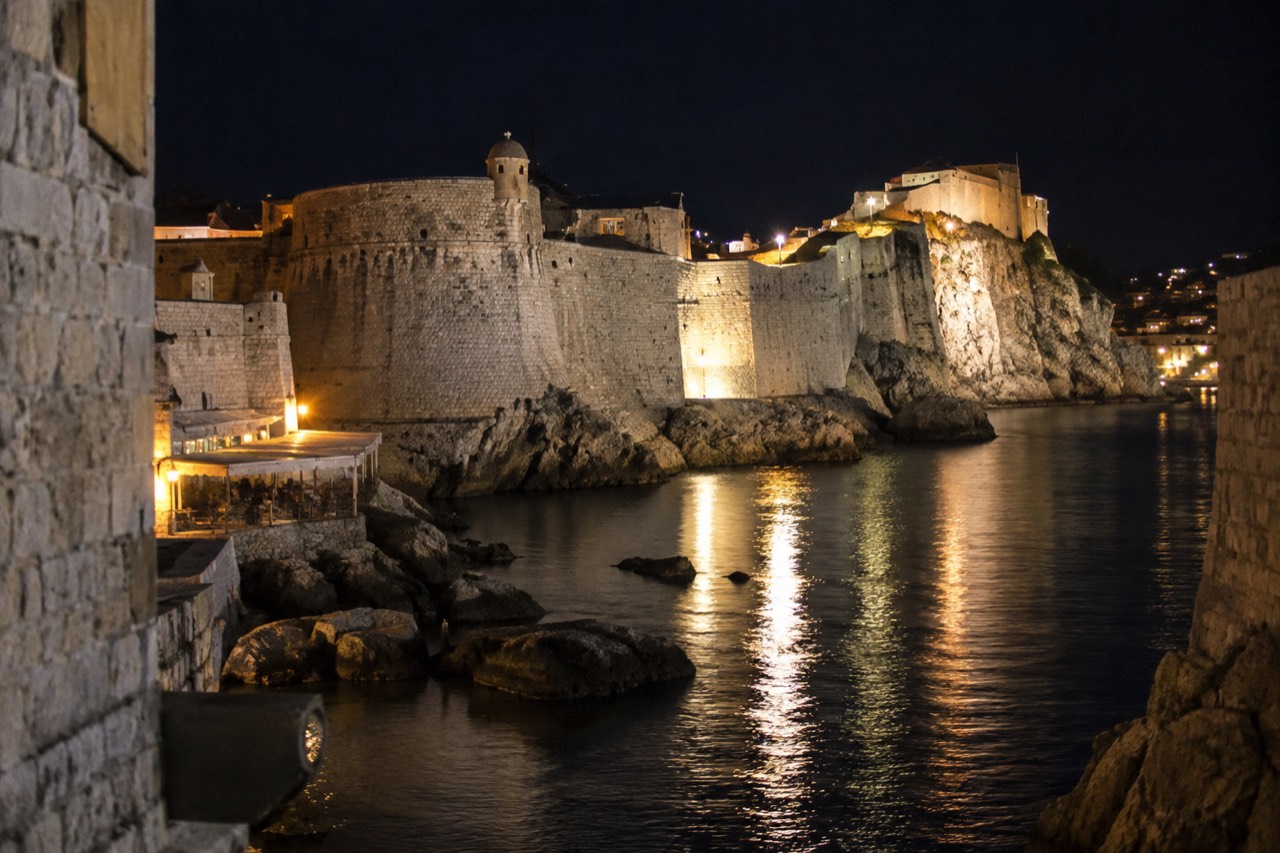
The nightclub in the castle in Dubrovnik is Culture Club Revelin, set inside the Revelin Fortress, a heavy stone fortification guarding the eastern edge of the Old Town, directly above the harbour entrance. The venue spreads across the fortress interior and its terrace, with thick vaulted ceilings, stone walls metres thick and a view over the water that no purpose-built club can copy. It is the only nightclub in the city that genuinely operates inside a historic fortification, which is exactly why travellers keep asking about "the nightclub in the castle" long after they have forgotten its name.
The confusion in the question is understandable, because Dubrovnik has two famous fortresses and most visitors mix them up. Revelin sits at the eastern, Ploče side of the walls, next to the point where cruise passengers and day trippers stream in through the Ploče Gate. Lovrijenac, the other one, stands alone on a 37-metre-high sea rock just outside the western walls, across a small channel, and it never hosts a nightclub. When people say "the castle in Dubrovnik", they sometimes mean Lovrijenac because of its Game of Thrones fame, but the club is firmly on the Revelin side of town. I have walked past both forts on hundreds of evenings, and the bass line drifting out of Revelin is the easiest way to tell them apart.
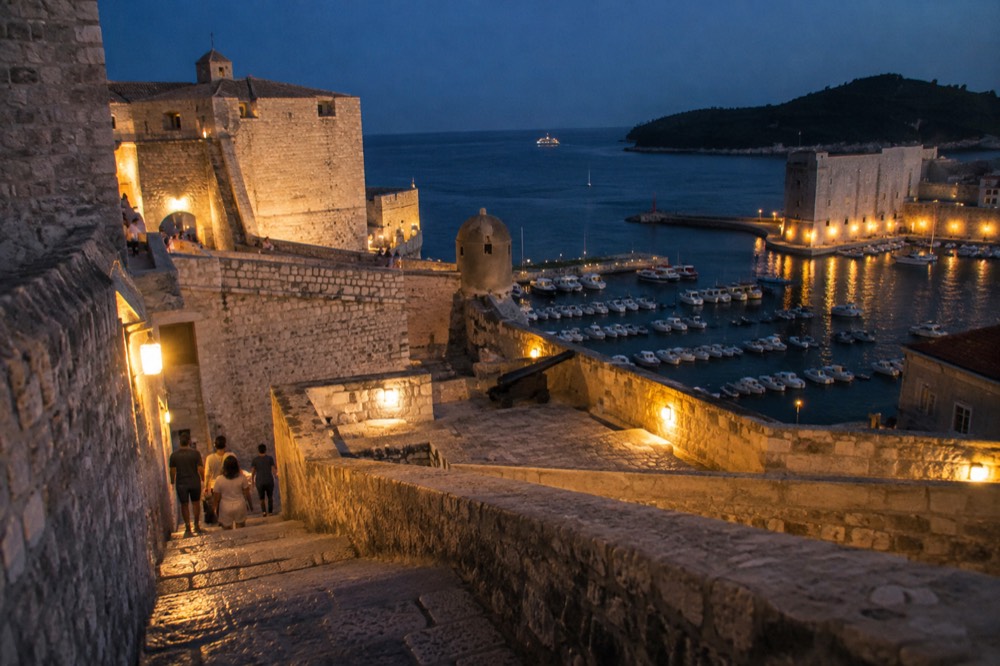
What makes the venue unusual is the building itself rather than the music policy. A fortress built to survive cannon fire has walls so thick that the interior stays cool in August and the sound stays largely inside. The dance floor sits under the vaults, the terrace looks down at the harbour and out to Lokrum, and the whole thing is a short walk downhill from the Stradun, the 298-metre limestone street that forms the spine of the Old Town. Entry pricing and the nightly programme vary through the season, so check the club's own channels or the door on the night rather than relying on figures quoted second-hand.
A little history helps the building make sense. The Old Town was inscribed by UNESCO in 1979 under criteria (i), (iii) and (iv), a 24.7-hectare property with a 1,188.6-hectare buffer zone, and it stood on the World Heritage in Danger list from 1991 to 1998 during the war years. A nightclub inside a monument of that rank sounds reckless until you see how the venue works: the fabric of the fortress is untouched, the fittings are reversible, and the terrace does the heavy lifting. It is the same compromise many European heritage cities make, trading a few loud nights a week for a building that pays its own upkeep.
If the plan is a night out built around the fortress, it helps to start earlier in the evening with something slower. The three options below are the ones I would shortlist: a free history and legends walk that ends in the same streets, an adults-only sunset cruise on a replica tall ship, and a short sunset sail to Cavtat with drinks included.
Which Game of Thrones Castle Is in Dubrovnik?
The castle that plays the Red Keep in Game of Thrones is Fort Lovrijenac, the standalone fortress on a 37-metre-high sea rock outside the western walls, while the Revelin Fortress and other wall towers stood in for various King's Landing and Qarth locations. Lovrijenac is the one fans come for, perched above the sea with its three-tiered terraces, and it appears in the show as the seat of power in King's Landing. The city walls, the Pile Gate area and the harbour steps all doubled for parts of the capital too, which is why a filming-location walk covers so much ground in such a small city.
Here is the distinction that solves most of the mix-ups. Lovrijenac, the Red Keep, is outside the walls on its rock, reached by a short walk and a flight of steps from the Pile side, and it is included in the 40-euro main-season walls ticket, or 15 euro bought on its own. Revelin, the nightclub fortress, is inside the town at the eastern end. Fans standing at the Pile Gate looking for the club are looking in the wrong direction entirely. The answer to the question of which castle is which sits in our longer piece on which Game of Thrones castle is in Dubrovnik, which works through the locations one by one.
The tourist board's own fortress page confirms the setting, describing the monumental standalone fortress rising on its 37-metre sea rock (Lovrijenac Fortress). For the filming side, a guided walk is the efficient route: the Original Game of Thrones Tour with Lokrum and the Iron Throne runs from $25.57 per person and is rated 4.8 across 6,132 reviews, while the pure Game of Thrones walking tour from Dubrovnik Walks & Sea Kayaking starts at $29 and carries a 4.9 rating across 1,052 reviews.
One review detail worth repeating: visitors consistently say the filming tours double as an orientation walk, which matters in a town where the streets deliberately twist. If a GoT walk is on the list, do it on day one and save the fortress nightclub for later in the trip, when the layout already makes sense after dark.
Since the fortress sits at the heart of the evening question, the natural pairing is a guided night walk that covers the legends first. Magical Dubrovnik Nights: History and Legends is a free, pay-what-you-want walk on GuruWalk, rated 4.9 across 288 reviews and running about 1 hour and 45 minutes, which leaves the rest of the evening free. The walk is run by a local guide named Marco, it covers the darker corners of the city's past rather than the daytime monuments, and because it costs nothing up front it fits any budget, including one already stretched by a night out.
The other reason the free format suits this particular evening is timing. A walk that runs under two hours finishes early enough to leave room for dinner, a drink on a terrace and still a late arrival at the fortress, which is the order most locals would recommend. Pay-what-you-want also means the guide earns their tip only if the stories land, and on a legends-and-history route that is exactly the incentive you want.
What Not to Do in Dubrovnik?
The mistakes that cost the most are walking the city walls at midday in July, driving into the Old Town, buying a one-day Dubrovnik Pass in December when no pass tier is on sale, swimming under the cliffs at Buža in rough seas, and expecting a quiet dinner on the Stradun in peak season. None of these are dangerous in themselves, but each one turns a good day into a frustrating one, and all are avoidable with a little timing sense.
Start with the walls. The circuit is 1,940 metres long, up to 25 metres high in places, and almost entirely unshaded stone; the operator's stated hours at the time of check run 08:00 to 19:30, and the first two hours are cooler, emptier and better lit for photographs. The adult ticket is 40 euro in main season, 1 March to 30 November, and 20 euro in December, with children 7 to 18 at 15 euro then 5 euro, and under 6 free. There is no family ticket, whatever a reseller claims. The 40-euro ticket is actually a combination covering the walls plus Fort Lovrijenac, the Western Outer Wall (closed December through February) and the coin collection at Gundulić Square, so treat it as a bundle rather than a single sight. The rest of the planning pages sit on Things to Do in Dubrovnik.
Driving is the second trap. The Old Town is a pedestrian zone, parking outside it is scarce and expensive in season, and the whole point of the place is that everything inside the walls is a walk of minutes. The practical alternatives are covered in detail in our guide to getting around Dubrovnik, including the local buses and the airport options.
Then there is the pass question, which trips up careful planners more than careless ones. The Dubrovnik Pass costs 40 euro for one day, 50 for three days and 60 for seven, sold for the summer window only, and every tier includes the City Walls plus Lovrijenac Fortress as its first listed inclusion, with a one-time visit to each institution. In main season the one-day pass costs exactly the same 40 euro as the standalone walls ticket and adds ten more sights plus a 24-hour bus ticket, so it is genuinely hard to lose. In December the standalone walls ticket drops to 20 euro while no winter pass is on sale at all, so the comparison flips completely. Anyone weighing the bundle should read the full breakdown in what does the Dubrovnik Pass include.
| Common mistake | Why it hurts | Do this instead |
|---|---|---|
| Walking the walls at midday in high summer | 1,940 m of unshaded stone, up to 25 m high | Start at 08:00 when the operator opens |
| Buying a one-day pass in December | No winter pass tier is on sale; walls ticket is 20 euro | Buy the standalone walls ticket off season |
| Driving to the Old Town | Pedestrian zone, scarce seasonal parking | Use city buses or stay within walking distance |
| Dinner on the Stradun in peak season | Highest prices, fastest tables, least local food | Walk five minutes into the side streets |
A final one that matters at night: overdoing the first evening. The fortress club runs late, the Old Town's stone staircases are unforgiving in the dark after a few drinks, and the walls walk the next morning punishes anyone who stayed until closing. Locals pace it, and visitors who copy them enjoy both halves of the night.
When to Avoid Dubrovnik?
Avoid Dubrovnik on the heaviest cruise days, which cluster in September and October rather than July and August, and avoid the middle of the day in July and August, when heat and crowds peak together and the unshaded stone amplifies both. The counter-intuitive part is the cruise calendar. Port Authority data shows 2025 cruise passengers peaked in September at 101,246 and October at 100,132, above July's 96,072 and August's 87,385. Anyone planning around "summer is busiest" is planning around the wrong months.
The city manages this deliberately. The Port Authority limits cruise passengers to 8,000 a day in most cases, with a "2+1" berthing arrangement, and of 243 cruise days a year only 18 exceed 8,000 and only 4 exceed roughly 10,000; about forty call requests were refused in a single season (Dubrovnik Port Authority). Inside the walls, six counters at every Old Town entrance update a headcount every 15 minutes, against an official carrying capacity of 11,275 people from the UNESCO carrying-capacity assessment. A real half-hourly curve read on 8 September 2026 shows how the day builds: 1,200 people at 04:00, 5,419 at 08:00, a 7,739 peak at 10:00, then 7,205 at 11:00. The morning is when the town fills, and the evening is when it empties.
| Month 2025 | Cruise passengers | What it means for a visit |
|---|---|---|
| July | 96,072 | Hot and busy, but cruise load is below autumn |
| August | 87,385 | Hottest month, sea at its warmest |
| September | 101,246 | Busiest cruise month of the year |
| October | 100,132 | Second busiest, softer prices, cooler days |
For 2026, 461 cruise calls are scheduled, and the remaining season schedule holds 149 ship calls across 80 cruise days, 217,458 passengers by capacity. Cruise passenger figures are ship capacity, not people who actually walk ashore, so treat them as an upper bound rather than a headcount. The practical takeaway for a nightlife-focused trip is simple: the evenings are the calmest hours in the Old Town regardless of season, because cruise crowds thin well before the fortress club fills up. Day-trippers leave, the streets quieten, and the town the evening walks show is a different place from the one at 10:00. The full timing picture, including the shoulder-season trade-offs, is in when to avoid Dubrovnik.
Is Dubrovnik Good for Beaches?
Yes, though the beaches are not the classic sandy kind: Dubrovnik's coast is mostly stone slabs, pebbles and rocky platforms, the sea is exceptionally clear, and the water is comfortably warm for swimming from June into October, with the warmest averages in late summer. The September average for this coast is about 23.6 degrees, from a NOAA long-run 1991 to 2020 open-water average, and August averages 25.8; sheltered bays run warmer still, and the Croatian met service's own Dubrovnik buoy read 27.0 to 27.4 degrees on 8 September 2026 against that 23.6 monthly mean. Those are averages, not a beach forecast, but they frame the season honestly.
The beach map is compact. Banje, the famous stretch below the eastern walls with the Old Town behind you in the water, is the postcard option and the busiest. On the Lapad peninsula, the long bay offers shallower entry and easier swimming with cafés along the back of the pebbles. For something quieter, Sveti Jakov below the cliff path rewards the walk with a view back across the whole Old Town, and the small beaches on Lokrum island make a half-day of it. The 30-euro Lokrum ticket covers reserve entry and the return boat, with departures from the City Harbour at 09:00, then every 15 minutes from 10:00 to 18:00. The full range is laid out in is Dubrovnik good for beaches.
| Month | Average sea temperature | Swimming verdict |
|---|---|---|
| June | 22.5 degrees | Warm and fresh, thinner crowds |
| July | 24.9 degrees | Peak swimming, peak everything |
| August | 25.8 degrees | Warmest water of the year |
| September | 23.6 degrees | Still excellent, sea warmer than June |
| October | 21.0 degrees | Fine for most swimmers, quiet beaches |
The catch is comfort rather than beauty. Stone and pebble mean water shoes earn their place in the bag, sun loungers are concentrated at the hotel beaches, and the rocks get hot enough by late morning to hurry anyone crossing them. The trade is water clarity that sandy beaches rarely match, and the odd situation that the swimming season overlaps neatly with the best nightlife: by September the sea is still at 23.6 degrees on average while the evening streets have shed their thickest crowds. A day that pairs a morning swim, an afternoon rest and a night that ends at the fortress club is, in my experience of routing visitors through this town, the version of Dubrovnik that people remember.
For the evening half of that plan, the choice usually comes down to a sunset sail first or a walk first. The Karaka ship's adults-only panoramic sunset cruise runs 1.5 hours from $59 per person and is rated 4.8 across 833 reviews, and the shorter Cavtat sunset cruise with a cold platter and drinks starts at $23.66 per person with a 4.9 rating across 203 reviews.
Whichever way the evening starts, it tends to end in the same few streets. The fortress above the harbour keeps its hours, the stone holds the night's cool, and the walk home is downhill to almost anywhere inside the walls.
Common Questions About the Nightclub in the Castle in Dubrovnik
What is the nightclub in the castle in Dubrovnik?
It is Culture Club Revelin, inside the Revelin Fortress at the eastern edge of the Old Town, directly above the harbour entrance. The club uses the fortress's vaulted interior and terrace, and it is the only nightclub in the city operating inside a historic fortification.
Is the Club in the Same Fortress as the Game of Thrones Red Keep?
No. The Red Keep is Fort Lovrijenac, the standalone fortress on a 37-metre-high sea rock outside the western walls, included in the 40-euro main-season walls ticket or 15 euro on its own. The nightclub is in the Revelin Fortress, at the opposite, eastern end of the Old Town.
Which Game of Thrones Castle Is in Dubrovnik?
Fort Lovrijenac plays the Red Keep, while the city walls, the Pile Gate area and the harbour steps stood in for other King's Landing and Qarth locations. A filming-location walk covers most of them in a couple of hours.
When to Avoid Dubrovnik?
Avoid the heaviest cruise days, which cluster in September and October rather than July and August: 2025 cruise passengers peaked at 101,246 in September and 100,132 in October. Also avoid midday on the walls in high summer, since the 1,940-metre circuit is almost entirely unshaded.
Is Dubrovnik Good for Beaches?
Yes, if you accept stone and pebble rather than sand. The water is clear and warm from June into October, averaging 25.8 degrees in August and 23.6 in September as long-run open-water averages, with sheltered bays running warmer.
What Not to Do in Dubrovnik?
Do not walk the walls at midday in high summer, do not drive into the pedestrian Old Town, do not buy a one-day Dubrovnik Pass in December when no winter tier is on sale, and do not expect the quietest dinner on the Stradun in peak season.