What Is Dubrovnik’s Famous Food?
Dubrovnik’s food scene is a mix of Mediterranean seafood, Dalmatian charcuterie, and rich Ottoman influences. Discover the city’s famous dishes, from black risotto to rozata, and where to taste them.
What Is Dubrovnik’s Famous Food?
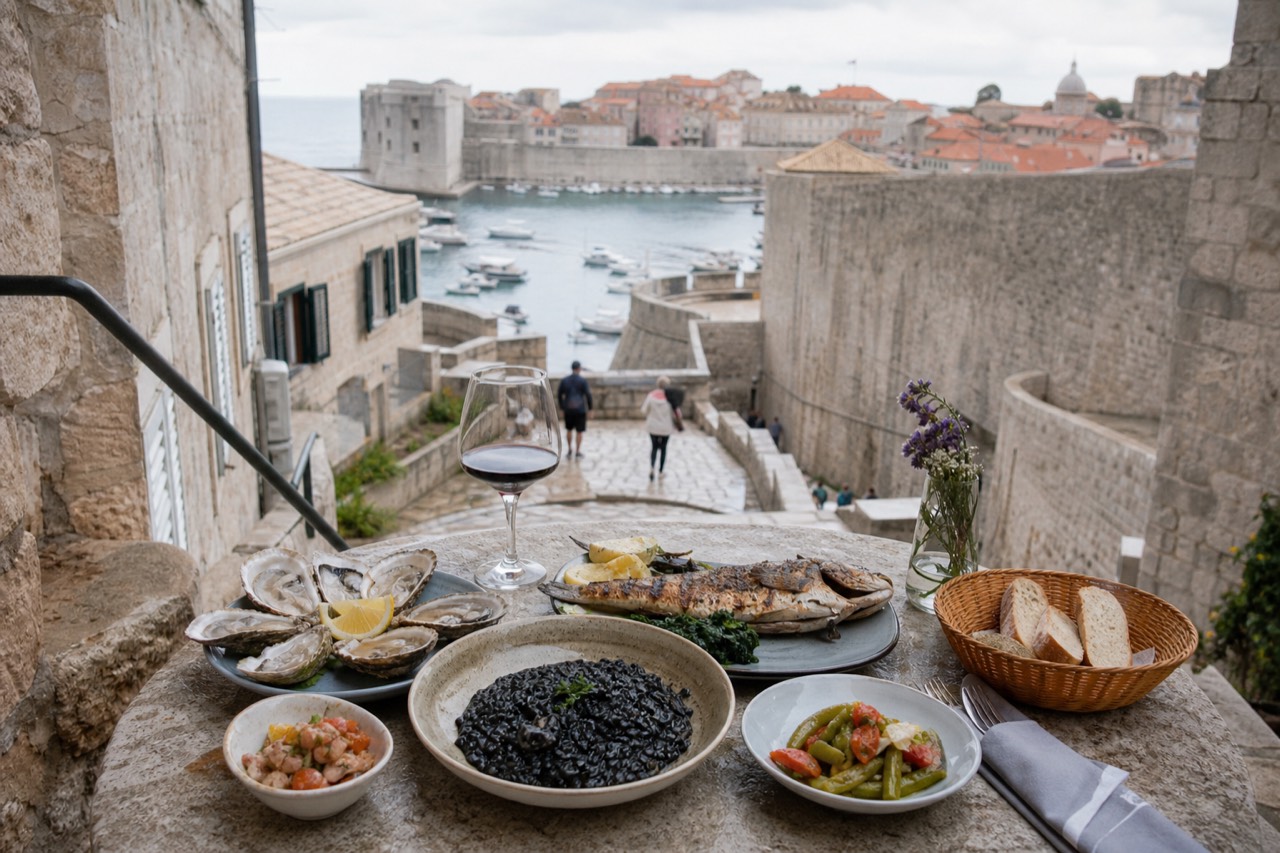
Dubrovnik’s famous food is a blend of Mediterranean seafood, Dalmatian charcuterie, and centuries-old Ottoman and Venetian influences. The city’s signature dishes include black risotto (crni rižot) made with cuttlefish ink, Dubrovnik-style rozata caramel custard, fresh oysters from Ston, and the slow-cooked meat and vegetable dish pašticada. Local wines, especially Plavac Mali, complete the table.
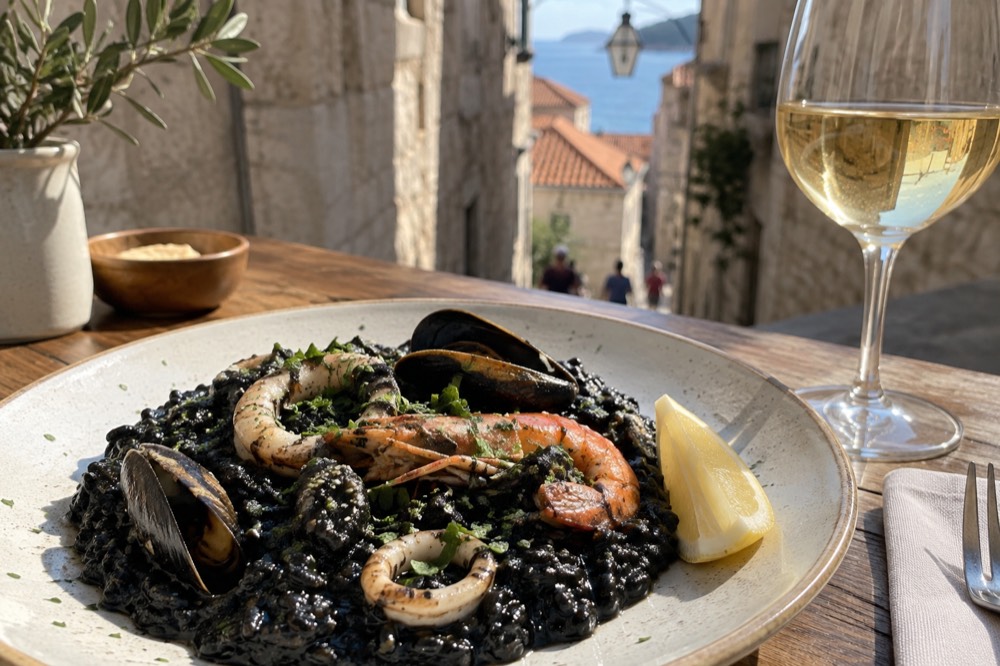
Walk into any konoba, the family-run taverns that are the heart of Dubrovnik eating, and the menu will read like a map of the Adriatic. Grilled squid, octopus salad, and whole fish drizzled with olive oil are the everyday staples. Black risotto, stained with cuttlefish ink, arrives as a deep, savoury plate of rice that’s as much a visual statement as a flavour one. It’s the dish most visitors ask for first, and the one that locals order when they want to show off their city’s kitchen.
The sweet side belongs to rozata. This caramel custard, similar to flan but firmer and perfumed with rose liqueur, is a dessert that travelled the trade routes of the old Republic of Ragusa. The version served in Dubrovnik uses a heavier hand of sugar and a lighter touch of citrus than the ones you’ll find in Split or Korčula, and every restaurant has its own recipe. Most finish a rozata under a kitchen torch, so the top cracks under a spoon.
The city’s famous food doesn’t live in fine-dining rooms alone. The Stradun’s side streets are lined with bakeries selling burek, a flaky filled pastry, and shops where you can buy a cone of fried small fish to eat while you walk. The old market at Gundulićeva poljana fills every morning with vendors selling cheese, pršut, and candied oranges. This is where the ingredients that define Dubrovnik’s tables are bought, and the smells alone are worth the early start. The market opens at 7:00 and runs until about 13:00, but the best produce is gone by 10:00. Chatting with the vendors, many of whom drive in from the Konavle valley before dawn, is half the experience. They’ll offer you a slice of cheese, a dried fig, or a splash of olive oil from a bottle with no label, and that one taste often tells you more about Dalmatian food than a restaurant menu ever could.
The olive oil deserves a paragraph of its own. Dubrovnik’s hinterland is covered in olive groves, and the oil pressed from the local oblica and lastovka varieties is green, peppery, and poured onto everything. It’s the first thing set on the table at any restaurant, usually in a plain glass bottle, and the quality varies from good to extraordinary. A few restaurants offer an olive oil tasting as part of a larger meal, and the difference between a fresh pressing and a bottle that’s been sitting on a shelf is immediately obvious. The best oil has a grassy, almost spicy finish that catches the back of your throat.
An organised food tour is the fastest way to taste across the full range. The Dubrovnik Food and Drink Walking Tour with a Local Guide is the city’s top-rated eating experience, with stops that include wine, charcuterie, and a dessert that changes by season. It’s the kind of tour that turns a meal into a story, and it’s why so many visitors book it for their first afternoon in town.
The guide drops you into a konoba that’s been run by the same family for three generations, pours a glass of Plavac Mali, and explains why the pršut on your plate tastes different from the one you ate in Zagreb. It’s a crash course in Dalmatian eating that leaves you with a list of restaurants to revisit on your own. The konoba itself is a concept worth understanding. These are not restaurants in the formal sense: they are small, often family-run, and they serve the food that the owners themselves eat. The menu is short, the wine list is local, and the atmosphere is unpretentious. A konoba is where you go for a long lunch that stretches into the afternoon, not a quick bite before the next sight.
Amazing food tour! Marija was a great guide, full of stories and facts that really brought Dubrovnik to life. The food was delicious, and generous. Wines at every stop. Would highly recommend this tour to anyone visiting Dubrovnik, especially to help get your bearings of the city and know where to go for dinner!
Bryan_M
For a broader look at what Things to Do in Dubrovnik covers, the dedicated food tour guide compares the city’s top culinary experiences side by side. The wine-tasting guide does the same for the nearby Pelješac and Konavle vineyards.
| Dish | Description | Key Ingredient |
|---|---|---|
| Black Risotto | Creamy squid-ink rice with cuttlefish | Cuttlefish ink |
| Rozata | Caramel custard with rose liqueur | Rose liqueur |
| Pašticada | Slow-braised beef in sweet-sour sauce | Prunes, red wine |
| Ston Oysters | Raw, lemon-squeezed Adriatic oysters | Mali Ston Bay oysters |
| Buzara Mussels | Mussels in white wine, garlic, parsley | Fresh mussels |
What Food Is Dubrovnik Famous For?
The foods Dubrovnik is most famous for are black risotto, rozata, and seafood platters featuring octopus, squid, and Adriatic fish grilled simply. The region’s charcuterie, pršut (dry-cured ham) and sir (cheese) from the Dalmatian hinterland, appears on almost every appetizer plate. Oysters and mussels from Ston, just an hour up the coast, are a must-order.
The oysters from Ston and Mali Ston are the single ingredient that defines Dubrovnik’s seafood reputation. The bay is a protected marine area, and the oysters grow in nutrient-rich water that gives them a clean, briny taste with a hint of sweetness. At the restaurants in Mali Ston, a dozen raw oysters cost about 15 to 20 euro, and they arrive on a bed of ice with nothing but a lemon wedge. A half-day trip to eat them straight from the sea is one of the most popular excursions from the city, and several boat tours combine an oyster tasting with a visit to the historic Ston walls. The oyster farms themselves are visible from the shore, marked by rows of floating barrels and submerged lines. Several restaurants in Mali Ston own their own beds, so the oysters travel from the water to the plate in under an hour. That freshness is what makes the trip worth it, and it’s why a Ston oyster tastes different from the ones served in the city.
The mussels from the same bay are nearly as famous. They’re larger than the Mediterranean average and cook in under five minutes, which makes them a favourite for the buzara preparation. A bowl of Ston mussels, steamed open in wine and garlic, is the dish that locals order as a starter before a grilled fish main. The combination of the two, a dozen oysters followed by a pot of mussels with bread for dipping, is a meal that defines the entire Dubrovnik coast.
Back in Dubrovnik, the konoba menu is built around the catch of the day. Grilled squid, served whole with a drizzle of olive oil and a side of blitva (Swiss chard with potatoes and garlic), is the dish that appears on the most tables at lunch. Octopus salad, cold and dressed with lemon, is a staple starter. The seafood platter for two, piled with prawns, clams, and a whole fish, is the standard order at any restaurant with a view of the harbour. The fish itself is usually brancin (sea bass) or orada (sea bream), both farmed locally, and the presentation is simple: grilled, salted, and served with a lemon half. The skill is in the timing, not the seasoning, and a perfectly cooked fish with a crisp skin and moist flesh is a thing of beauty.
The charcuterie board is a category of its own. Pršut, the Dalmatian dry-cured ham, is sliced paper-thin and served with paški sir, a hard sheep’s cheese from the island of Pag. The combination is salty, nutty, and pairs perfectly with a glass of Pošip, a white wine from Korčula. You’ll find the board on every appetizer menu, and the quality varies wildly. The best versions use pršut that’s been aged for at least 18 months and cheese that’s been cut from a wheel that morning. A good board also includes marinated anchovies, olives, and a drizzle of the local olive oil, and it’s enough for two people to share as a starter. Order it with a glass of something cold and a view of the Old Town, and you’ve just had the best-value meal in Dubrovnik.
The Croatian National Tourist Board’s food guide maps the country’s culinary regions, and the Dalmatian coast is its own distinct chapter. The influence of the sea, the olive groves, and the Venetian trade routes created a cuisine that’s lighter and more ingredient-driven than the meat-heavy dishes of inland Croatia. Every region has its own olive oil, its own wine, and its own way with fish, and the Dubrovnik version is defined by simplicity and quality of the raw ingredients.
The vineyards sit in a green valley just south of the city, and the wines are poured by the people who made them.
The wine culture in Dubrovnik is inseparable from the food. Plavac Mali, the bold red grape that thrives on the steep slopes of the Pelješac peninsula, is the wine poured at every celebration. The Dingač and Postup sub-regions produce the most prized bottles, and a tasting flight at a wine bar in the Old Town is a full education in the grape’s character. The Dubrovnik Tourist Board’s gastronomy section lists the wineries that welcome visitors and the festivals that fill the calendar each autumn.
| Wine | Type | Region | Pairs With |
|---|---|---|---|
| Plavac Mali | Bold red | Pelješac Peninsula | Pašticada, grilled meats |
| Pošip | Crisp white | Korčula Island | Seafood, oysters, light pasta |
| Malvasija Dubrovačka | Aromatic white | Konavle Valley | Grilled squid, salads |
| Dingač | Premium red | Pelješac (Dingač sub-region) | Red meat, aged cheese |
| Prošek | Sweet dessert wine | Dalmatia | Rozata, dried figs |
What Food Is Famous in Dubrovnik?
The dishes famous in Dubrovnik itself are the ones you’ll find on every konoba menu: black risotto, buzara-style mussels and shrimp, grilled squid, and the slow-cooked beef stew pašticada. Sweet treats are dominated by rozata, a flan-like dessert with rose liqueur, and kroštule, crispy fried dough dusted with sugar.
Pašticada is the dish that takes the most hours and the most family lore. It’s a beef stew that starts with a marinade of red wine, vinegar, garlic, and herbs, then cooks for hours with prunes, carrots, and a touch of nutmeg. The result is a dark, sweet-sour sauce that clings to the meat, served with homemade gnocchi or fuži pasta. Every konoba has a version, and the argument over whose grandmother’s is best is a favourite topic among locals. The key to a great pašticada is the long marinade, ideally overnight, and the patience to let the sauce reduce slowly. Rushing it produces a thin, sharp gravy rather than the deep, mellow sauce that defines the dish. Restaurants that serve pašticada usually list it as a daily special rather than a permanent menu item, because it takes two days to prepare properly. If you see it on the board, order it.
Buzara is the cooking method that defines shellfish in Dubrovnik. Mussels, clams, or prawns are sautéed in olive oil, garlic, white wine, and parsley, then left to steam in their own juices. The sauce is sopped up with bread, and the dish is served in the pot it was cooked in. It’s the simplest dish on the menu and the one that tastes most like the sea. The white-wine version is the classic, but some konobas make a tomato-based buzara that adds a richer, sweeter note. Both are worth trying, and the choice usually comes down to whether you want a lighter or a heartier start to the meal.
The Adriatic squid, known locally as lignje, deserves a special mention. It’s served two ways: grilled whole, with the tentacles crisped and the body scored in a crosshatch pattern, or sliced into rings, battered, and fried. The grilled version is the one that appears on the best tables, and it’s almost always served with blitva, the Swiss chard and potato side dish that is the unsung hero of Dalmatian cooking. The chard is boiled, drained, and then sautéed with garlic and olive oil before the potatoes are folded in. It’s a humble dish, but it’s the perfect foil for the rich, charred squid.
The sweet side of Dubrovnik’s food is less documented but just as important. Rozata is the star, but kroštule, thin ribbons of fried dough sprinkled with powdered sugar, are the snack that appears at every festival and market. Candied almonds, suho voće (dried figs and oranges), and arancini (candied orange peel) are the sweets that fill the shop windows along the Stradun. They’re the flavours of the old Republic, preserved in sugar. A small bag of arancini from a shop on the Stradun costs a few euro and makes a better souvenir than any magnet. The dried figs, often stuffed with almonds and bay leaves, are a snack that sustained sailors on long voyages. Eating one while walking the city walls connects you to the maritime history that shaped the city’s cuisine.
What Is Croatia’s Famous Food?
Croatia’s famous food varies by region, but the Dalmatian coast, where Dubrovnik sits, is known for its seafood, olive oil, and wine. The country’s national dish is pašticada, a marinated beef stew, while black risotto and peka (meat or octopus slow-cooked under a bell) are also iconic. Croatia’s most famous wine is Plavac Mali, a bold red from the Pelješac peninsula.
Peka is the cooking method that defines the Dalmatian hinterland. Meat, usually lamb or veal, or octopus is placed in a large metal or clay bell with potatoes, vegetables, and herbs, then buried in hot coals and left to cook for hours. The result is a dish that’s tender and smoky, with the vegetables absorbing the juices. Several restaurants around Dubrovnik offer peka, but it must be ordered a day in advance because of the cooking time. It’s the dish to book for a special meal, and it’s the one that connects the city’s food to the mountain villages that feed it. The peka tradition stretches back centuries, to a time when every household had a hearth and the bell-shaped lid was the most efficient way to cook. The technique is still used in village homes throughout the Konavle region, and a few agritourism farms around Dubrovnik offer peka lunches that include a tour of the property and a tasting of the family’s wine and olive oil.
The Pelješac peninsula, a short drive from Dubrovnik, is the epicentre of Croatian wine. Plavac Mali is the grape, and the Dingač and Postup vineyards produce bottles that cellars keep for a decade. A wine tasting here is a half-day commitment that includes a drive through the peninsula’s steep vineyards, a tour of the cellars, and a flight of wines that range from a young rosé to a vintage red. The wine-tasting guide covers the best tours from Dubrovnik. The peninsula’s vineyards are among the steepest in Europe, and the grapes are still harvested by hand. The winemakers are fiercely proud of their product, and a tasting at a family cellar is as much a conversation about history and soil as it is about wine.
It’s a chance to taste the wines in the place they were made, and the valley’s green landscape is a contrast to the stone of the Old Town.
Croatia’s food culture is deeper than Dubrovnik alone. The Istrian peninsula serves truffles and fuži pasta, the capital Zagreb is known for its štrukli (baked cheese pastry), and the Slavonian plains are the land of kulen, a spicy sausage. But the Dalmatian coast, with its seafood, olive oil, and wine, is the image that most visitors carry home. A meal in Dubrovnik, whether it’s a plate of oysters on a seaside terrace or a bowl of black risotto in a stone alley, is a tasting of the entire Adriatic. The country’s position at the crossroads of Central Europe, the Balkans, and the Mediterranean created a food culture that borrows from all three while remaining distinctly its own. In Dubrovnik, that means Ottoman spices in a Venetian dessert, Viennese pastry techniques applied to Dalmatian ingredients, and a seafood tradition that predates every empire that ever claimed the coast.
The dining rhythm in Dubrovnik is worth knowing. Lunch is the main meal for most locals, and restaurants fill between 12:30 and 14:00. Dinner is later, rarely before 20:00, and the Old Town’s restaurants stay open past midnight in summer. Reservations are a good idea for the popular konobas, especially in July and August. Tipping is appreciated but not obligatory, and 10 percent is the standard for good service. Most restaurants accept cards, but smaller konobas in the villages around Dubrovnik may be cash only, so carry some euro.
Common Questions About Dubrovnik’s Famous Food
What is Dubrovnik’s famous food?
Dubrovnik’s famous food is a mix of Mediterranean seafood and Dalmatian specialities. The signature dishes are black risotto, rozata caramel custard, and fresh oysters from Ston. You’ll find them on every konoba menu, alongside grilled squid, pašticada, and Plavac Mali wine.
What Is the Must-Try Dish in Dubrovnik?
The must-try dish is black risotto, a squid-ink rice that’s a staple of every seafood restaurant. It’s rich, savoury, and served with a piece of grilled cuttlefish. Rozata is the dessert you shouldn’t miss, and Ston oysters are the ultimate starter.
Is Dubrovnik Food Expensive?
A meal in a mid-range konoba costs about 20 to 35 euro per person for a starter, main, and a glass of wine. The Old Town’s main squares are pricier, but the side streets and the Lapad neighbourhood offer better value. A dozen oysters in Mali Ston run about 15 to 20 euro.
What Drink Is Dubrovnik Known For?
Dubrovnik is known for Plavac Mali, a bold red wine from the Pelješac peninsula. White wine drinkers choose Pošip from Korčula or a local Malvasija. The city’s bars also serve rakija, a fruit brandy, and the traditional dessert wine prošek.
What Is the Best Food Tour in Dubrovnik?
The Dubrovnik Food and Drink Walking Tour with a Local Guide is the top-rated experience, with a 5-out-of-5 rating across 704 reviews. It visits multiple stops, includes wine at every one, and covers the history behind the dishes. It’s the best way to taste the city in one afternoon.
Where Do Locals Eat in Dubrovnik?
Locals eat in the konobas tucked into the side streets of the Old Town, in the Lapad neighbourhood, and in the Gruž port area. The restaurants with a view of the harbour are popular, but the best food is often found in the family-run places with a short menu and a daily catch special.