Is the Ferry from Split to Dubrovnik Worth It?
An honest look at the Split to Dubrovnik ferry: what it gives you, what it costs you in time, and when the bus or a rental car beats the boat.
Is the Ferry from Split to Dubrovnik Worth It?
Yes, if the schedule fits your day and you want the coast itself as part of the trip: the ferry turns transfer into a sightseeing run past islands you cannot see from the road. No, if you are on a tight clock, since sailing time plus check-in usually exceeds the bus, and services thin out sharply outside the summer months. Worth is about what you value.
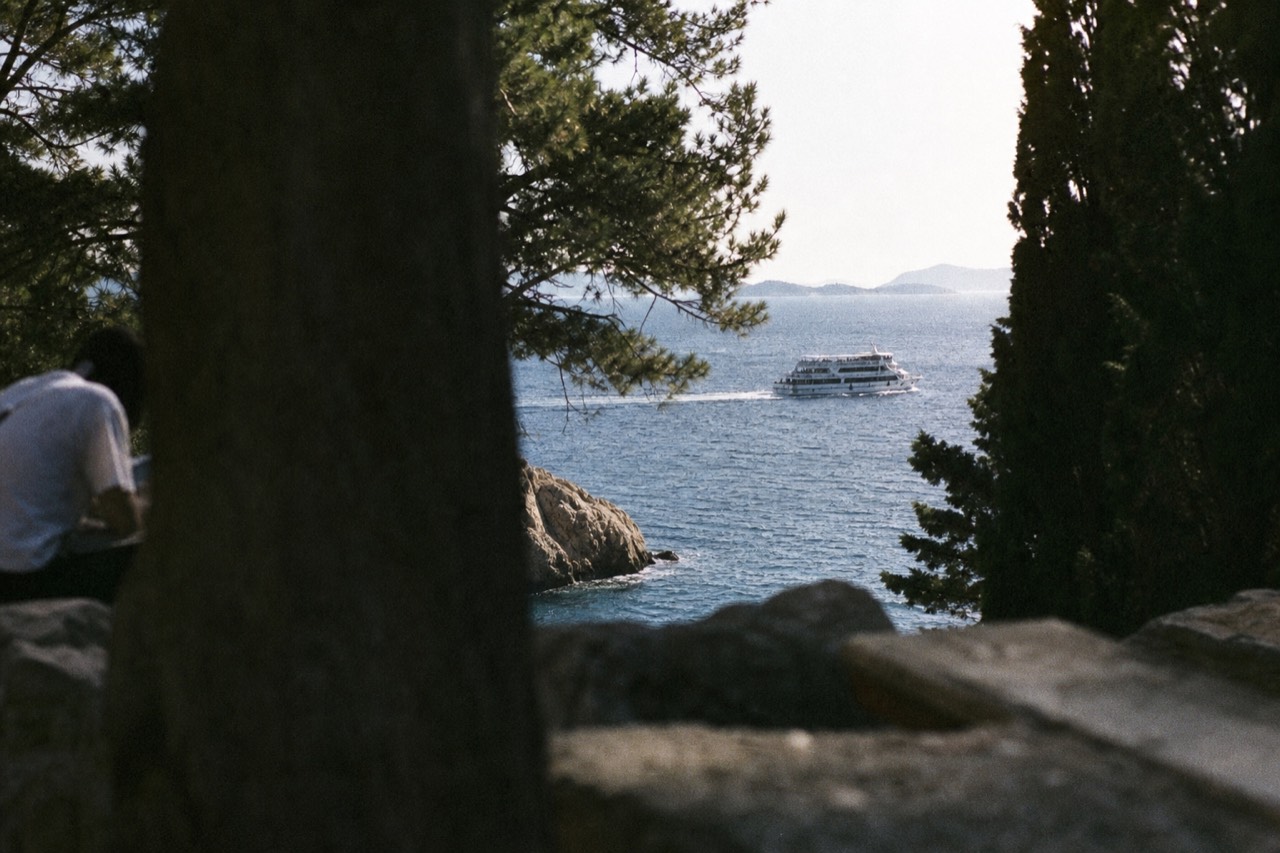
I have made the Split to Dubrovnik journey in both directions more times than I can count, by road and by sea, and the honest answer is that the two experiences are not really competing. The bus and the car get you there. The ferry gets you there and gives you three or four hours of islands, open water and the first sight of Dubrovnik's walls from below, which is a view no road delivers. The trade is time and schedule dependence.
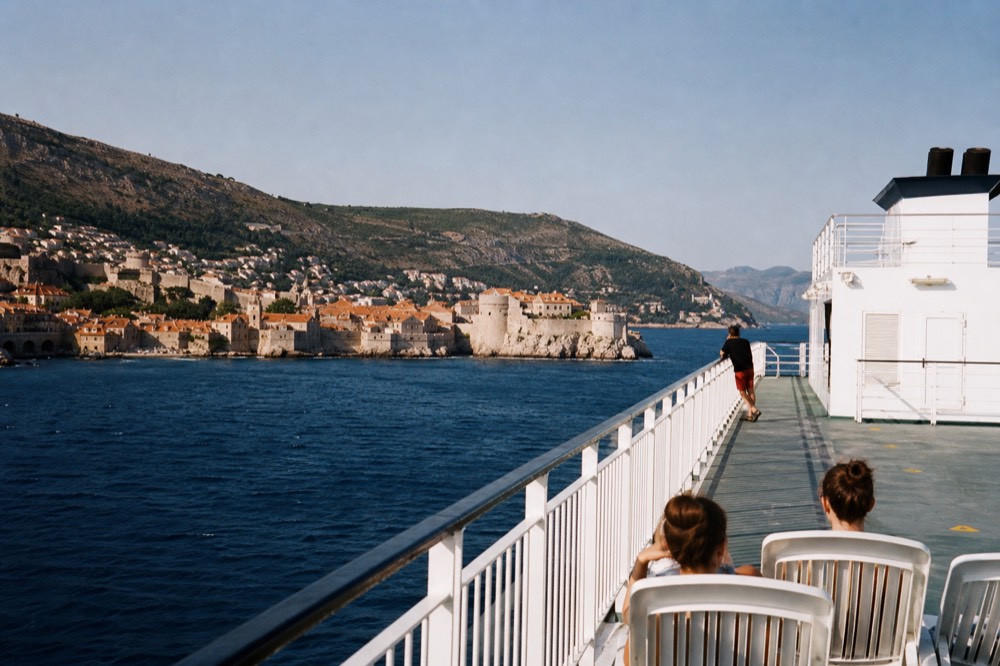
The route matters more than most travellers expect. Sailing south from Split, the boat threads the channel between the mainland and the islands, and on a clear afternoon the light on the water is the kind of thing people remember longer than the cathedral they photographed the next morning. When the ferry finally turns in toward Gruž, you get the city as sailors have always had it: rooftops first, walls second, the cable car line crawling up Mount Srđ behind. Arriving by road, you see a roundabout and a parking garage.
The catch is practical. Ferry services on this stretch are seasonal, timetables shift, and in the shoulder months the choice of departures can shrink to one a day or none. The bus runs all year, roughly hourly in high season, and does not care about the weather. If your itinerary has slack, a morning in Split and an afternoon arrival by sea is one of the best travel days Croatia offers. If you are counting hours, the boat is a luxury.
For the full transport picture, including the bus and private transfer options side by side, our Split to Dubrovnik transport guide breaks down every option; and if you are weighing the two main contenders specifically, the bus versus ferry comparison goes deeper on that single question.
How Long Is the Ferry from Split to Dubrovnik?
The crossing time is not a single fixed figure: it depends on the operator, the vessel and whether the boat calls at islands such as Hvar or Korčula on the way, and schedules change with the season. Treat the operator's live timetable as the only source of truth for your date, and never plan a tight connection off a number you read in a forum thread.
I want to be straight with you here, because this is where a lot of travel content quietly makes things up. There is no single "the ferry takes X hours" fact I can responsibly print for this route. Different operators run different vessels, some sail direct and some stop, and the same company can run a fast boat in July and a slower service in October. The duration you experienced last time is a data point about that boat on that day, not a property of the route.
What I can tell you with confidence is the shape of the decision. Direct sailings are the fastest option on water; any service that calls at Hvar, Korčula or the Pelješac peninsula adds time at each stop, and those stopping services are often the ones people actually enjoy most, because the stops are the point. If you treat the ferry as a mini coastal cruise with a destination attached, a slower boat with an island call is a feature. If you just need to be in Dubrovnik by dinner, it is a penalty.
Check-in is the part first-timers underestimate. Maritime operators typically want passengers at the port well before departure, and in peak summer the Split waterfront is a crowded, hot, confusing place to be hunting for a ticket office with luggage. Build that buffer into your plan rather than sprinting for the gangway.
The other honest note: the sea state decides some days. The channel is usually calm in summer, but a strong jugo wind can make the crossing rough, and in genuinely bad weather sailings can be delayed or cancelled while the buses keep rolling. If you have a flight out of Dubrovnik the same evening, that asymmetry should weigh on your choice.
| Factor | Ferry | Bus | Rental car |
|---|---|---|---|
| Scenery | Islands and open water from the deck | Coast road sections, mostly inland | Coast road, stop where you like |
| Year-round reliability | Seasonal, weather dependent | Runs daily all year | Runs whenever you do |
| Freedom en route | Fixed route, no stops you control | Fixed route, rest stop only | Total, including detours |
| Luggage ease | Hand luggage with you, hold for larger bags | Hold compartment, one rest stop | Everything in the boot |
| Arrival point | Gruž port, bus or taxi to Old Town | Bus station, walk or short ride to Old Town | You must park, which is its own project |
Is It Better to Bus or Ferry from Split to Dubrovnik?
Ferry if you have the time and the season is right: the sea route is the more memorable half-day and drops you at Gruž with a straightforward hop to the Old Town. Bus if you need certainty: it runs year-round, roughly hourly in summer, ignores the weather, and gets you to the station beside the Old Town without a second ticket.
This is the version of the question people actually ask me, and the answer is almost always about their calendar. The bus is the workhorse. It departs frequently, the motorway and coast road combination is faster than people expect, and the Dubrovnik bus station sits close enough to Pile Gate that you can walk into the Old Town with a backpack and grumble about the heat, which is the authentic arrival experience. For a day-tripper or anyone with an onward flight, the bus is the rational pick.
The ferry is the romantic pick, and I will defend it for one specific reason: arrival. Gruž is a working port, and stepping off a boat there, past the fishing boats and the market, feels like arriving somewhere rather than merely reaching it. From Gruž the local buses run toward Pile and the Old Town regularly, and the ride gives you your first proper look at the Babin Kuk and Lapad shoreline. It is a genuinely nice twenty minutes of orientation that the bus station arrival does not match.
There is a third consideration that nobody puts in the brochures: crowd calendar. Dubrovnik's cruise passengers peaked in September at 101,246 and October at 100,132 in 2025, above July's 96,072 and August's 87,385, according to the Port Authority's own cruise figures. If you are timing an arrival to dodge the worst of the crush, the month matters more than the mode of transport, and late spring beats early autumn for quiet streets.
Once you are ashore, orientation is the next problem, and this is where a panorama bus earns its ticket price. The Hop-On Hop-Off Yellow Bus Tour with Audio Guide runs about 1 hour 30 minutes, is rated 4.9 across 1,147 reviews, and starts from $35.46 per person: it loops the viewpoints above the Old Town while a recorded guide explains what you are looking at, which is a gentle way to place the walls, the port and Lapad on your mental map before you start walking.
If a recorded commentary is not your style, the Convertible Bus Panorama Tour with Audio Guide covers similar sightseeing ground in an open-top format, from $34.77 per person and rated 4.6 across 796 reviews. Both are land-based sightseeing rather than transport, so think of them as your first afternoon in the city rather than part of getting there.
Is It Better to Drive or Ferry from Split to Dubrovnik?
Drive if you want the Pelješac peninsula, Ston's walls and the oyster farms as part of the journey: the road route is a destination in itself and the bridge has removed the old border crossing. Ferry if you would rather skip parking entirely, because parking in Dubrovnik is scarce, paid and often full in high season.
Driving this stretch used to involve a weird little detour through Bosnian territory at Neum, passport in hand, but the Pelješac Bridge changed that, and the drive is now a continuous Croatian run with a strong argument for stopping. Ston, at the base of the peninsula, carries the longest complete stone walls in this part of Europe and sits in the middle of an oyster-growing bay; our Ston and Pelješac guide covers what to do there. Add a wine stop for Plavac Mali and the drive becomes the best day of your trip, transport included.
The car's weakness is the last kilometre, not the first two hundred. Dubrovnik's parking supply is finite and the Old Town is car-free, so you will be leaving the vehicle in a garage or lot outside and walking or bussing in anyway. In August, that hunt for a space in the sun, with a family and luggage, is the moment people regret the car. The ferry hands you the same walk-in arrival without ever having parked.
There is also the cost of attention. The coast road south of the peninsula is beautiful and demanding, with stone walls hugging the asphalt and buses on tight schedules. If your plan is Split airport to Dubrovnik hotel in one push, the driver of the group sees guardrails while everyone else sees the sea. The ferry lets the whole party watch the water.
One practical note for either mode: your arrival point matters for the first hour. Gruž, the ferry port, is a functioning neighbourhood with a market and regular buses toward Pile, and our Gruž neighbourhood guide explains what is worth doing if you land there with hours to spare. Drivers arrive from the north and should decide their parking before they enter the last tunnel, not after.
How Long Is the Ferry Ride from Dubrovnik to Split?
The return crossing faces the same honest answer: duration depends on the operator, the vessel and any island stops, and the timetable is seasonal, so the operator's live schedule for your date is the only reliable source. What reverses is the experience: you watch Dubrovnik's walls shrink into the glare rather than grow out of it, and the evening light going north is famously good.
Direction changes the poetry more than the physics. Northbound, the boat clears Gruž and gives you a long look back at the full walled profile of the city, then the cable car line on Srđ, then nothing but water and islands. Photographers should be on the starboard side early if the boat hugs the coast; the first twenty minutes out of port are the ones worth standing for.
The scheduling caveat runs in reverse too. Services that exist in July do not all exist in October, and the last boat of the season can be earlier than you assume. If your flight leaves Split and you are planning to sail north on the same day, build in a night of buffer or take the bus; a missed sailing is a hotel bill, not an inconvenience.
What I tell friends making the return leg: if the ferry fits, take it, and sit outside. The sea temperature data explains part of why the coast feels so good in early autumn: the September average for this coast is about 23.6 degrees, a long-run average from the NOAA satellite record rather than a beach thermometer, and sheltered bays along the route often read warmer still. The air and water are at their most forgiving exactly when the crowds thin, which is the quiet argument for a September ferry over an August one.
What to Do Once You Arrive in Dubrovnik
Give your first afternoon to orientation rather than checklists: walk the Stradun, the 298-metre limestone main street, ride or walk up for the panorama, and save the city walls for an early morning start. The walls circuit is 1,940 metres long and up to 25 metres high, and the operator's stated hours run 08:00 to 19:30, so the 08:00 gate is the one that beats the crowds.
The Old Town is small enough that wandering is a strategy, not a failure of planning. The UNESCO property covers 24.7 hectares, inscribed in 1979 under criteria (i), (iii) and (iv), and you can read the formal listing at the UNESCO World Heritage Centre. In practice that means a walled core you can cross on foot in minutes, with staircases running up both flanks toward the walls and the ridges above.
Budget for the walls deliberately. The adult ticket is 40 euro in main season, 1 March to 30 November, and 20 euro in December; child 7 to 18 is 15 euro, then 5 euro, and under 6 goes free. That 40 euro is the walls plus Fort Lovrijenac combination, and Lovrijenac alone is 15 euro if you want the fortress and its 37-metre sea rock without the full circuit. The one-day Dubrovnik Pass costs the same 40 euro in main season and adds ten more sights plus a 24-hour bus ticket, which is the better buy if museums are on your list; in December no pass tier is on sale at all, so the comparison only holds in the main season.
| Ticket | Main season (1 Mar to 30 Nov) | December |
|---|---|---|
| City Walls adult (includes Lovrijenac) | 40 euro | 20 euro |
| City Walls child 7 to 18 | 15 euro | 5 euro |
| Child 6 and under | free | free |
| Fort Lovrijenac alone | 15 euro | 15 euro |
| Dubrovnik Pass, one day | 40 euro | not on sale |
If the water is what drew you here by boat, it will keep pulling once you land. Lokrum, the wooded island directly opposite the Old Town port, sells a 30 euro ticket that covers reserve entry and the return boat, with departures from the City Harbour at 09:00 and then every 15 minutes from 10:00 to 18:00, per the official Lokrum Reserve site. The ticket office at Luža works 08:00 to 18:00, and a ticket stays usable for three days, which makes Lokrum a flexible plan rather than a scheduled one.
For a bigger half-day, the panorama from above the rooftops is the other essential. The cable car climbs 367 metres from the lower terminal to the Srđ station in 3 minutes 30 seconds, and the adult round trip is 30 euro, with the child 4 to 12 round trip at 8 euro and under 4 free. On a clear day the operator claims a view range of up to 60 km, and from up there you can trace the exact sea lane your ferry took in.
And if a day on the water is what convinced you the ferry was worth it, consider going further once you are based here. A Mostar and Kravica waterfalls day trip from Dubrovnik, from $53.19 per person and rated 4.8 across 1,254 reviews, trades the Adriatic for a river canyon and a waterfall pool, and our Mostar day trip guide covers the border and money details. One reviewer, John_B, put the day plainly: "A long day and an early start, but well worth it. The tour guide Tina was excellent, keeping us well informed throughout the process. Bring euros! Mostar and the waterfalls are a must to see."
However you arrive, and I say this as someone who has watched people step off boats here since 2015, the mode of transport fades within an hour and the city does not. Choose the ferry when the schedule gives you the luxury of the sea, choose the bus when it does not, and spend the saved energy on an early walls start instead. That is the whole calculus, and it is on Things to Do in Dubrovnik whenever you want the next decision broken down the same way.
Common Questions About the Ferry from Split to Dubrovnik
Is the ferry from Split to Dubrovnik worth it?
Yes, if the timetable fits and you value the coastal scenery, since the sea route turns the transfer into a sightseeing trip past the islands. No, if you are short on time or travelling outside the summer season, when sailings thin out and the year-round bus is the safer bet.
How Long Is the Ferry from Split to Dubrovnik?
There is no single fixed duration: it depends on the operator, the vessel and whether the boat calls at islands such as Hvar or Korčula on the way. Check the operator's live timetable for your specific date, and add a check-in buffer before departure.
Is It Better to Bus or Ferry from Split to Dubrovnik?
The bus wins on certainty: it runs all year, roughly hourly in high season, and arrives at the station near the Old Town. The ferry wins on experience, dropping you at Gruž after a scenic run through the islands. Most travellers should let their schedule decide.
Is It Better to Drive or Ferry from Split to Dubrovnik?
Drive if you want to stop at Ston, the Pelješac peninsula and the wineries along the way, and accept that parking in Dubrovnik is scarce and paid. Take the ferry if you would rather never hunt for a space and prefer to arrive on foot from the port.
How Long Is the Ferry Ride from Dubrovnik to Split?
The same variable answer applies in reverse: duration depends on the operator and any island stops, and the schedule is seasonal. Northbound you get the best views of the walled city in the first minutes out of Gruž, so grab an outside seat early.
Where Does the Ferry Arrive in Dubrovnik?
At the port of Gruž, which sits west of the Old Town. Local buses run regularly from Gruž toward Pile Gate, and the ride passes the Lapad shoreline, so the transfer doubles as an orientation tour.