Is the Dubrovnik Zipline Worth It?
An honest look at the Dubrovnik panorama zipline: price, reviews, what the ride actually involves, and who should skip it.
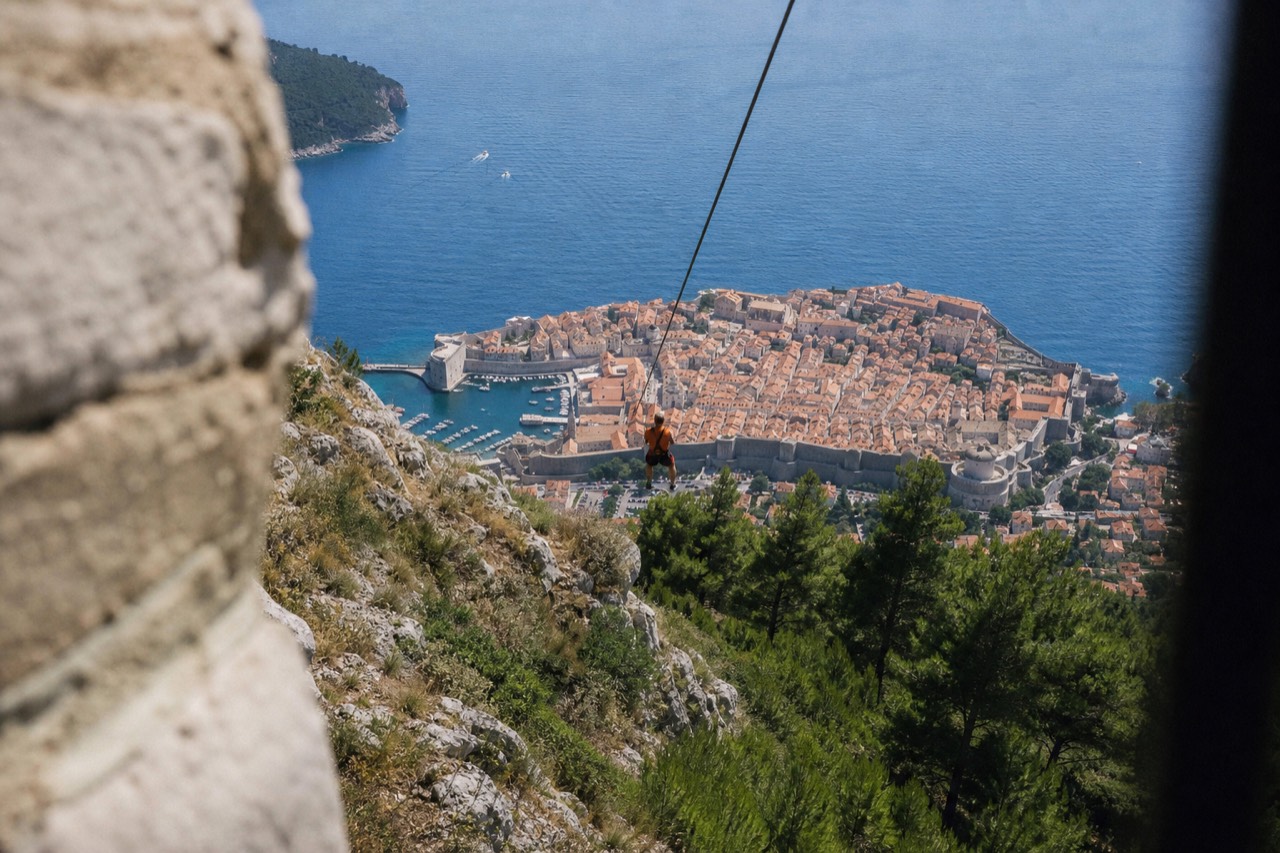
Is the Dubrovnik Zipline Worth It?
Yes, for most travellers who want a short adrenaline hit with the best aerial view of the Old Town outside the cable car, the panorama zipline is worth the money. It runs from $64 per person, is rated 4.9 across 2,109 reviews, and takes a couple of hours door to door. It is not worth it if your budget is tight or you would rather spend that money on the walls or a boat.
I get asked this question on the street more often than you would think, usually by someone standing halfway up the hill behind the Old Town, squinting up at the cables. The honest answer has three parts: what the ride actually is, what it costs against the alternatives, and what kind of traveller you are. Work through those three in order and the decision usually makes itself before you reach the end of the page.
The zipline sits on the slopes of Mount Srđ, the same mountain the cable car climbs. The cable car is the comfortable option: a sealed cabin, a 3 minute 30 second ride, and an adult round trip at 30 euro per the operator's own price page. The zipline is the version where you hang in a harness and let gravity do the work. Both put you above the red roofs and the sea; the zipline just makes your pulse pay for the privilege.
The physical experience is worth describing, because the listing alone does not. You get a safety briefing and a harness fitting at the base, then a series of rides along cables strung across the hillside, with the walled city and the Adriatic spread below you. There are pauses between rides, photos, and a guide with you the whole time. It is not a single three-second drop; it is a structured hour or so of controlled flying, which is why the price sits where it does rather than at theme-park levels.
What the reviews suggest is that the operator has the balance right. A 4.9 rating across 2,109 reviews is unusually strong for an adventure product, where complaints about queues, safety briefings and group sizes are routine. One recent review captures the tone of most of them:
The panorama zipline in Dubrovnik is really worth an excursion. You have an excellent view over Dubrovnik. You feel very well taken care of by Bobby, Matteo, and Dennis. Excellent organization! I would do it again anytime.
Sophia
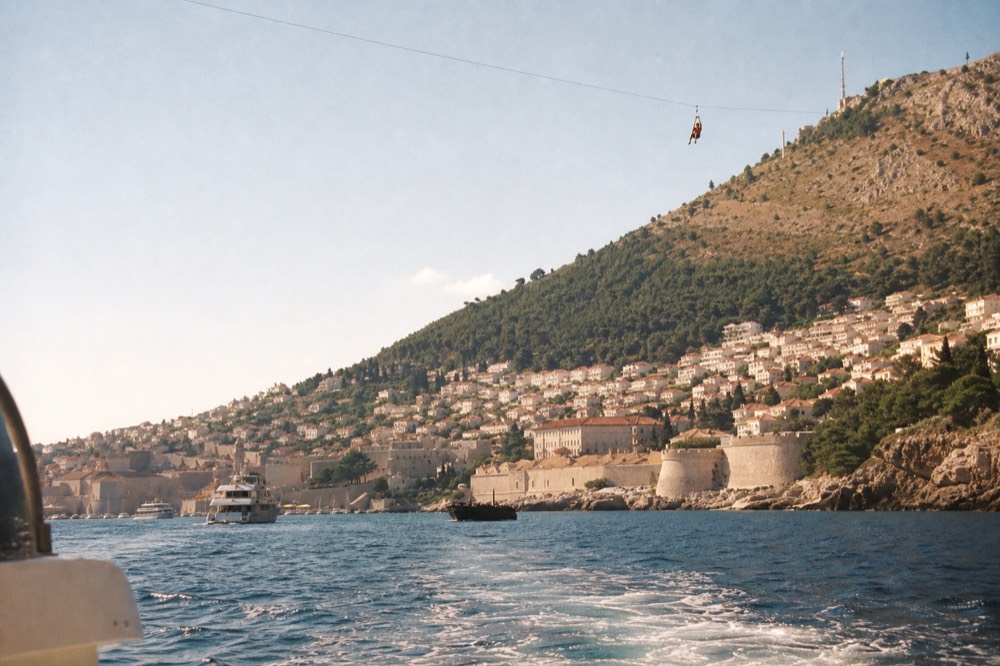
The price comparison is where the decision really gets made. From $64 per person, the zipline costs roughly double a cable car round trip and a little more than the 2-hour Ancient City Walls & Wars Walking Tour at from $29.58. It costs less than a half-day food tour or any of the full-day island cruises. So it sits in the middle of the Dubrovnik activity market: more than a walk, less than a boat day.
There is also the question of what else you could do with the same hour. If you have never walked the city walls, do that first. The walls circuit is 1,940 metres long, up to 25 metres high, and the 40 euro adult ticket in main season includes Fort Lovrijenac. The zipline is a thrill on top of a visit, not a substitute for the things that made Dubrovnik famous. Our guide to the city walls covers that decision in full.
Families should weigh one more factor: age and height limits. The listing states its own requirements, and younger children often cannot ride, while the cable car takes children 4 to 12 for 8 euro round trip and under 4s free. If your group spans ages, the cable car is the inclusive option and the zipline is the adults-and-teens option. Check the requirements on the live listing before promising anyone a ride.
If you have done the walls, done the cable car, and still want more altitude, the zipline is the best remaining answer, and you can Check availability on the live listing.
What Not to Do in Dubrovnik?
The mistakes that cost the most are walking the walls at midday in summer, trying to drive into the Old Town, buying a one-day Dubrovnik Pass in December when no pass tier is on sale, and queuing for the cable car at sunset without a ticket. Each one is avoidable with a small amount of planning, and each one ruins a half-day.
Let me start with timing, because it is the mistake I watch happen every single day. The walls offer almost no shade, the stone radiates heat back at you, and the operator's stated hours run 08:00 to 19:30. Walk early. The same logic applies to the Stradun and to the Pile Gate approach: the difference between 08:00 and 11:00 in terms of crowd density is dramatic, and the official counters at the Old Town entrances update a headcount every 15 minutes for a reason.
The second mistake is the December pass. The one-day Dubrovnik Pass costs 40 euro, exactly the same as the standalone walls ticket in main season, 1 March to 30 November, and adds ten more sights plus a 24-hour bus ticket. But in December the walls ticket drops to 20 euro and no winter pass tier is on sale at all, so the "pass costs the same as the walls" line is a main-season claim only. Buying on autopilot in the wrong month wastes real money.
Third: do not try to drive into the Old Town. It is a pedestrian zone inside a UNESCO property of 24.7 hectares, and the surrounding streets are a maze of residents' permits and timed zones. Park outside and walk, or use the buses. Our parking and getting around guide exists because this single mistake eats more holiday hours than any other.
A quieter mistake deserves a mention too: eating every meal on the Stradun. The main street is beautiful and expensive, and the streets ten minutes away in any direction hold better food for less money. The same applies to drinking; a bar with a terrace over the walls charges for the terrace, and there is nothing wrong with that if you want it, but know that is what you are paying for.
| Mistake | What it costs you | The fix |
|---|---|---|
| Walls at midday, July or August | Heat, crowds, a rushed circuit | Start at opening, 08:00 |
| Buying a one-day pass in December | 40 euro spent when the walls alone are 20 euro and no winter pass is on sale | Buy the standalone walls ticket off season |
| Driving to the Old Town | Fines, circling, lost hours | Park outside and walk in |
| Cable car at sunset, unticketed | A long queue that outlasts the light | Ride in the morning or book ahead |
| Every meal on the Stradun | Double the price for half the quality | Walk ten minutes to a konoba |
| One day only, walls plus three museums | A blur of stone and fatigue | Two days minimum for the classics |
The last mistake is ambition. Dubrovnik rewards slow visits. The people who enjoy it most spread the walls, Lokrum, a cable car ride and a swim over two or three days rather than compressing everything into a single exhausting lap. If you are short on time, our one-day itinerary ranks what to cut.
Is Dubrovnik Worth Visiting?
Yes, emphatically, and the numbers back it up: about 4.2 million overnight stays in 2025, a UNESCO-listed Old Town inscribed in 1979, and a walled core of 24.7 hectares that you can cross on foot in under half an hour. The real question is not whether it is worth visiting but whether it is worth visiting in the month you have chosen.
The city's fame is not hype. A medieval republic's capital wrapped in 1,940 metres of wall, a main street laid out by the 1272 Statute, and a fortress standing on a 37-metre sea rock would be a major attraction anywhere in Europe. Dubrovnik's twist is that all of it sits on the Adriatic, with swimming water that reaches a long-run August average of 25.8 degrees, and an island archipelago a short boat ride away. Few destinations pack this much into a space you can walk end to end between lunch and dinner. The full index of guides sits on Things to Do in Dubrovnik.
The honest caveat is crowding, and it is worth being precise about it. The Port Authority's own figures show cruise passengers peaked in September and October in 2025, above July and August, so the old advice to avoid August and come in autumn no longer avoids the ships. The counterweight is that the Port Authority limits cruise passengers to 8,000 a day in most cases and refused about forty call requests in one season, which you can read on the Port Authority's cruise destination page. The city is managed, not abandoned.
Cost is the second caveat. Dubrovnik is the most expensive city in Croatia for many visitors, and the walls ticket alone is 40 euro in main season. But the cost ceiling is real, not open-ended: a free GuruWalk walk, a swim at a public beach, and an evening wandering the lanes cost almost nothing, and the paid highlights are priced and predictable. Budget travellers can do this city; they just have to choose their paid moments carefully.
For a first-time visitor the answer is simply yes. For a repeat visitor the answer is still yes, but differently: the second visit is when you skip the walls, take the ferry to Lokrum, eat in a konoba away from the Stradun, and do the things the day-trippers never reach. That is also when an activity like the zipline starts making sense, because you have already done the essentials and are now choosing experiences rather than checking boxes.
If you are still weighing the whole destination, our is Dubrovnik worth visiting guide works through the costs and the crowds month by month. The short version: worth it, go in May, June, late September or October if you can, and stay at least two nights.
What Are the Best Tours in Dubrovnik?
The strongest all-round picks are the Old Town walking tour with a local guide from $20 per person, the 2-hour Ancient City Walls & Wars walking tour from $29.58, and the full-day Elaphite islands cruise with lunch from $59.16, rated 4.9 across 10,312 reviews. The best tour for you depends on whether your priority is history, altitude or water.
I have not taken any of these tours myself; what follows is reporting on what the listings state and what the review aggregates show. The pattern across the roster is consistent: walking tours cluster around 4.8 to 4.9, boat products carry the largest review counts, and the free, pay-what-you-want walks on GuruWalk hold their own against paid products, with the Ancient Old City walk rated 4.87 across 2,242 reviews.
| Tour | From (per person) | Rating | Reviews |
|---|---|---|---|
| Old Town Walking Tour with Local Guide | $20 | 4.8 | 5,826 |
| Ancient City Walls & Wars Walking Tour | $29.58 | 4.8 | 1,387 |
| Old Town & Ancient City Walls Combo | $50.94 | 4.8 | 1,183 |
| Full-Day Elaphite Islands Cruise with Lunch | $59.16 | 4.9 | 10,312 |
| Sea Kayaking & Snorkelling, Day or Sunset | $36.50 | 4.9 | 4,286 |
| Panorama Zipline Tour | $64 | 4.9 | 2,109 |
| Food and Drink Walking Tour with a Local Guide | $165.64 | 5 | 704 |
Read the table as a menu, not a ranking. The Old Town walk at $20 is the best first hour in the city, full stop. The walls walk adds the explanation the stone cannot give you. The Elaphite cruise is the best full day on water, with lunch included and a review count, 10,312, that dwarfs everything else on the list. The zipline and the kayak tour are the two adrenaline options, one vertical and one horizontal, both rated 4.9. The food tour is the splurge, and its perfect 5 across 704 reviews says the splurge lands.
The walls walk deserves a special mention because it solves a real problem. The walls are expensive, 40 euro for an adult in main season, and walking them with a guide turns a photo opportunity into an explained one. The 2-hour Ancient City Walls & Wars Walking Tour from $29.58 does exactly that, and one guest review sums up the difference:
This well organized tour helped put Dubrovnik's past (and present) into perspective. It's incredible that the city walls have withstood the test of time. Antun was a wonderful guide.
linda_a
For the free end of the market, the three GuruWalk walks cost nothing up front and you pay what you think the walk was worth. The Ancient Old City walk runs 1 hour and 45 minutes and is rated 4.87 across 2,242 reviews; the Free Game of Thrones & History walk runs 1 hour and 30 minutes. If your budget is stretched, a free walk plus a walls ticket is a genuinely good day. If you want a fuller comparison, our best tours in Dubrovnik answer breaks the whole roster down by budget.
Is Dubrovnik Good for Cycling?
Not for casual cycling inside the city itself: the Old Town is pedestrianised, stepped and crowded, and the coastal road is narrow and busy. But the wider region is excellent for road and e-bike riding, with quiet Konavle valley lanes, coastal routes to Cavtat, and hill climbs on Mount Srđ for strong riders.
Let me be blunt about the Old Town, because people arrive with the wrong picture. The core is a pedestrian zone of stone lanes and staircases, 24.7 hectares of UNESCO property where bicycles are impractical even where they are permitted. You will walk everywhere inside the walls, and that is the correct way to experience the place. Our walkability guide covers the walking city in detail.
Outside the walls the picture improves fast. The Konavle valley south of the city is the local cycling heartland: flat-to-rolling farmland lanes, vineyards, and river valleys, with wine and food stops that reward a slow pace. The ride out to Cavtat along the coast is the popular half-day route, and Cavtat itself is a swim-and-lunch destination worth the pedals. E-bikes have made these routes accessible to riders who would never describe themselves as cyclists.
What the region lacks is dedicated separated cycle infrastructure. You share roads with cars, some of them tour buses in summer, so the standard advice applies: ride early, wear something visible, and keep to the valley roads rather than the main coastal highway. The heat matters too; July and August afternoons are for swimming, not climbing hills, and the sea's long-run averages, 24.9 degrees in July and 25.8 in August per the NOAA 1991 to 2020 climatology, tell you exactly where you should be at that hour. Those figures are open-water averages, not beach readings, and sheltered bays along the coast run warmer still.
For the vertically minded, there is a pleasing symmetry here. Mount Srđ is both the cycling climb for strong riders and the home of the zipline, and the cable car's technical page puts the upper terminal at 405.0 metres above sea level with a stated clear-day view range of up to 60 km. Whether you earn the view with your legs, buy it in a cabin, or fly over it on a cable, Srđ is where Dubrovnik's best panorama lives. The mountain also carries the region's history on its skin, from the fortress at the top to the old paths zigzagging down toward the city, so even the climb itself is not empty effort.
So: cycling in Dubrovnik city, no. Cycling around Dubrovnik, yes, with realistic expectations. Rent an e-bike if you are unsure, ride the valley in the morning, and be in the water by early afternoon. And if your idea of an outdoor thrill does not involve pedals, the zipline remains the fastest route from the ordinary to the extraordinary on this coast.
Common Questions About the Dubrovnik Zipline
Is the Dubrovnik zipline worth it?
For most visitors, yes. It costs from $64 per person, is rated 4.9 across 2,109 reviews, and delivers the best moving aerial view of the Old Town. Skip it only if the budget is tight or the walls and a boat trip are still unchecked.
How Much Does the Dubrovnik Zipline Cost?
The Panorama Zipline Tour runs from $64 per person. That is roughly double a cable car round trip at 30 euro and a little more than the 2-hour city walls walking tour at from $29.58.
Is the Zipline Scary?
It is a genuine adrenaline activity, not a theme-park ride. You are harnessed, briefed and accompanied, and the review record shows first-timers overwhelmingly rate it 5 stars, but anyone with a real fear of heights should choose the cable car instead.
Where Is the Zipline Located?
On the slopes of Mount Srđ, the mountain above the Old Town that the cable car also climbs. The upper cable car station sits at 405.0 metres above sea level, and the zipline operates on the same hillside.
Zipline or Cable Car in Dubrovnik?
The cable car, at 30 euro for an adult round trip, is the calm, family-friendly choice with a 3 minute 30 second ride. The zipline, from $64, is the thrill choice. Many visitors with time do both, riding up and ziplining down the mountain.