Is Dubrovnik Worth Visiting with Kids?
A family-travel verdict on Dubrovnik: what works with kids, what to skip, when not to come, and how it compares with Split.
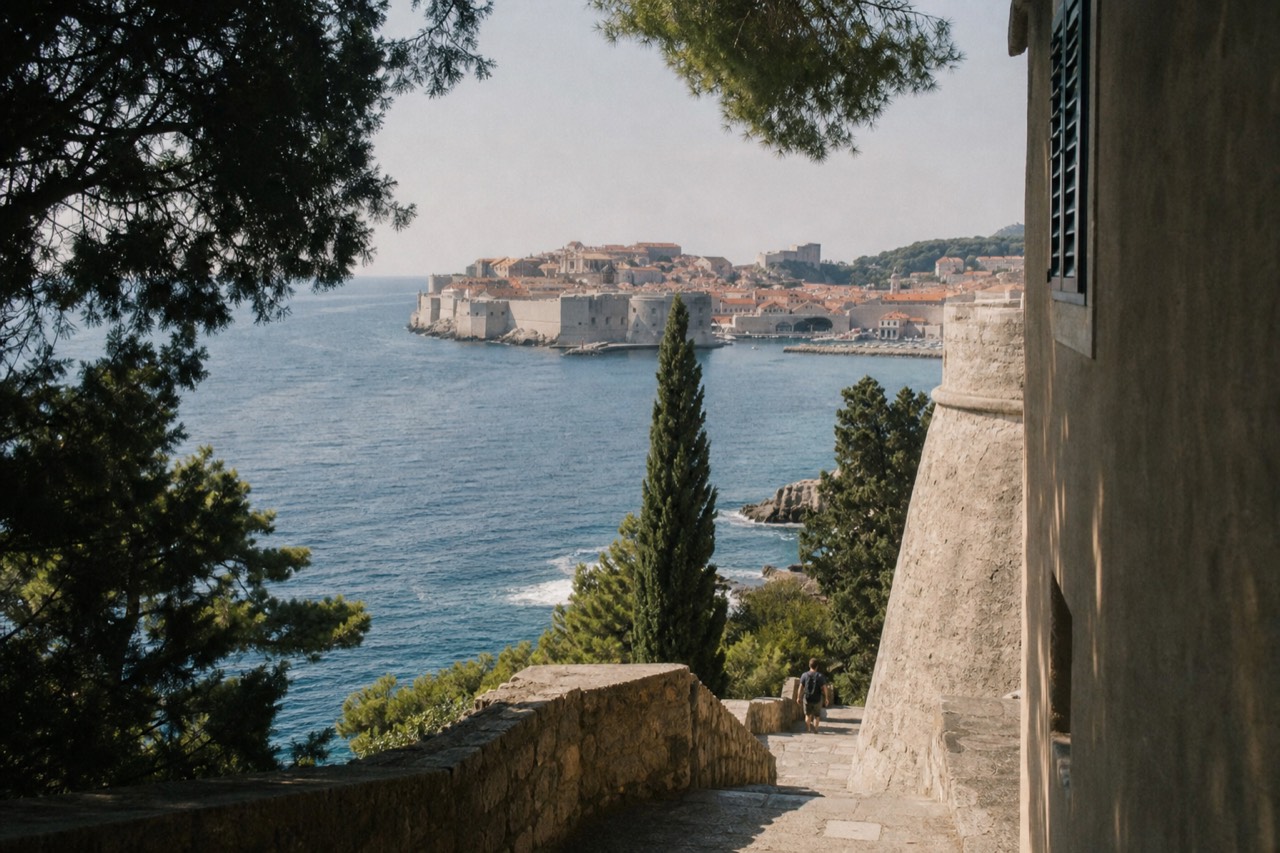
Is Dubrovnik Worth Visiting with Kids?
Yes, for most families, and the reason is the mix rather than any single sight. The Old Town is compact and traffic-free, the sea is swimmable from late spring, and the island boats, cable car and kayaks give children something physical to do between the history. The catches are real: summer heat, crowds that peak in September and October, and prices that add up fast. Paced as a boat-and-beach city rather than a sightseeing sprint, it works from roughly age five upward, and works well.
I walk these streets for a living, and the families I see enjoying Dubrovnik most are the ones who never try to do the whole Old Town in one morning. The walled core is only 24.7 hectares, a UNESCO property since 1979, and the Stradun, its main street, is 298 metres long. That is the entire stage. A child can walk the length of the city in ten minutes, which is exactly why the place is manageable with kids and also why it can feel packed when a cruise day lands.
The rhythm that works is simple: one anchor activity a day, swimming most afternoons, and the sea temperature is on your side. The long-run September average for this coast is about 23.6 degrees, and July and August average 24.9 and 25.8, so the water is genuinely warm through the core family holiday window. Those are open-water climatological averages, not beach readings, and sheltered bays run warmer still, but the direction is right: swimming is a reliable plan, not a hopeful one.
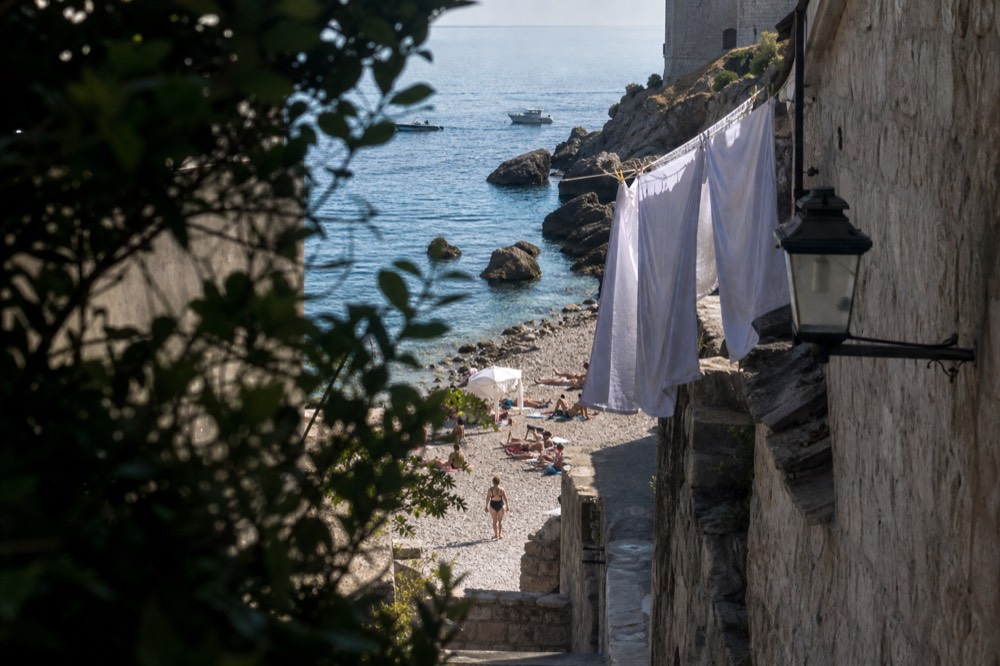
The single best family day out here is a boat. The Elaphiti islands sit just off the coast, the full-day cruises run about eight hours with lunch included, and children treat the boat itself as the attraction. The most-reviewed option carries 10,312 reviews at 4.9, and the version below, on the Regina Maris, runs from $74.58 per person. If you book one thing before you arrive, make it this.
For the fuller picture of what the city offers at every price point, including the free stuff, the cluster guide on Things to Do in Dubrovnik is the parent page to this one, and the dedicated family itinerary at things to do with kids breaks the days down hour by hour.
Is Dubrovnik Worth Visiting?
On its own merits, yes, and the numbers back it up. Dubrovnik recorded about 4.2 million overnight stays in 2025, sharing first place among Croatian destinations with Rovinj, and 625,257 cruise passengers passed through the port in the same year. People are not coming by accident. The walled city, the sea and the islands within an hour of the harbour make a destination that punches far above its population of 41,562.
The city's fame rests on the walls. The circuit is 1,940 metres long, up to 25 metres high in places, and carries 16 towers, 3 fortresses and 6 bastions along its length. It reached its basic shape in the 13th century and was finished in 1660 with the Bastion of St Stephen. An adult ticket is 40 euro in main season, 1 March to 30 November, and 20 euro in December, with children 7 to 18 at 15 euro and under 6 free. There is no family ticket, only adult and child, so budget accordingly.
For families, the walls question is a stamina question, and the honest answer is that the full loop with young children is a stretch. There is almost no shade, the stone steps are relentless in places, and the operator's stated hours run 08:00 to 19:30, which means the cool early window is the only sensible one in summer. Many parents walk a section, exit, and swim the afternoon away. That is a legitimate way to do it, not a failure.
The Dubrovnik Pass changes the maths if museums are on your list. A one-day pass costs 40 euro, the same as the standalone walls ticket in main season, and adds ten more sights plus a 24-hour bus ticket; three-day and seven-day tiers cost 50 and 60 euro. Every tier includes the walls and Fort Lovrijenac, one visit each. The comparison holds in main season only: in December the walls ticket drops to 20 euro and no winter pass tier is on sale at all. The Dubrovnik Pass guide works through the arithmetic family by family.
| Family activity | Typical cost | Best age | Shade |
|---|---|---|---|
| City Walls circuit | 40 euro adult, 15 euro child 7-18 | 8+ | Almost none |
| Cable car round trip | 30 euro adult, 8 euro child 4-12 | All ages | Cabins |
| Lokrum island ticket | 30 euro per person, boat included | 5+ | Good, it is wooded |
| Elaphiti full-day cruise | From $74.58 per person | 4+ | Deck cover |
| Banje and Lapad beaches | Free entry, paid loungers | All ages | Loungers and pines |
Beyond the walls, the city is friendlier to children than its museum-town reputation suggests. The cable car lifts you from 38 metres above sea level to 405 metres on Mount Srd in three and a half minutes, with views the operator ranges at up to 60 km on a clear day, and Lokrum, the wooded island ten minutes off the harbour by the official boat, has peacocks, a botanical corner and swimming rocks. The Lokrum ticket is 30 euro per person and includes the return boat; departures leave the City Harbour at 09:00, then every 15 minutes from 10:00 to 18:00, so there is no schedule pressure.
What Not to Do in Dubrovnik?
The three mistakes that sink family trips here are attempting the full wall circuit at midday, booking nothing in July to September and improvising instead, and treating the Old Town as a full-day venue in cruise-peak hours. September and October are actually the busiest cruise months of the year, at 101,246 and 100,132 passengers, ahead of July and August. Plan around the ship calendar, not the school holidays alone.
The crowd system is public and worth knowing. Six counters at every Old Town entrance update a headcount every 15 minutes, and the official carrying capacity from the UNESCO assessment is 11,275 people. On a real September day the curve ran 3,139 people at 07:00, 5,419 at 08:00, a 7,739 peak at 10:00, then 7,205 at 11:00. Read that as a rule: the Old Town is emptiest before 09:00 and heaviest between 10:00 and early afternoon, so do your stone-street time early and be on a boat or a beach when the peak lands. The Port Authority's own cruise destination page explains the limits: 8,000 cruise passengers a day in most cases, and about forty call requests refused in a season to hold that line.
Do not skip the water, either. Families who spend every day inside the walls come home exhausted; families who alternate a wall morning with a kayak or beach afternoon come home converted. Sea kayaking around Lokrum and Betina Cave runs about two hours from $35.49 per person and is rated 4.9 across 1,518 reviews, and the swimming break inside the cave is the part children remember. One family review of that exact tour calls the water crystal clear and the guide excellent, which matches what the aggregate says.
What else belongs on the skip list? Long restaurant dinners at 18:00, when kitchens are half-asleep, because locals eat late; dragging a stroller up the stair-streets north of the Stradun, where steps replace lanes entirely; and buying walls tickets at the gate in peak season rather than online. The stroller question is real enough that we treat it in full in Dubrovnik with a stroller, where the honest verdict is a light folding pushchair and a baby carrier, or just the carrier.
A final do-not: do not write off the paid walking tours as adults-only. The Old Town walk with a local guide starts at $20 per person and is rated 4.8 across 5,826 reviews, and good guides pitch the history at whoever is standing in front of them. One recent review of that tour praises a guide who aimed for shaded areas on a boiling September day and handed out food recommendations, which is exactly the energy you want when travelling with children.
When Not to Visit Dubrovnik?
Do not come in the peak cruise window of late July to early October if crowd-aversion is your family's defining trait, and think hard about August for heat. September and October outrank July and August for cruise passengers, 101,246 and 100,132 against 87,385 in August, and the sea, while at its warmest, shares the coast with the year's heaviest footfall. The genuinely quiet windows are November to March, with trade-offs on weather and openings.
August is the heat question. The sea average of 25.8 degrees tells you the air has been hot for months, and the walls offer no shade on the land-side stretches. If August is your only window, flip the day: walls or Old Town by 08:00, water by 11:00, indoors or a siesta through the afternoon, and the cable car or a sunset boat in the evening. The cable car runs until midnight in June, July and August, and a 30-euro adult round trip after dinner is a cooler, quieter experience than the same ride at noon.
The shoulder months are the sweet spot for families tied to school terms less rigidly. May averages 18.6 degrees in the sea and June 22.5, both swimmable, and the June cruise count of 82,642 sits below the autumn peak. The best time to visit guide carries the full month-by-month breakdown, and the September in Dubrovnik page confronts the crowd paradox directly: the best sea of the year arrives with the most ships of the year.
| Window | Sea average | Cruise pressure | Family verdict |
|---|---|---|---|
| May to June | 18.6 to 22.5 degrees | Moderate, 84,107 in May | Best balance of warm water and space |
| July to August | 24.9 to 25.8 degrees | High, 96,072 and 87,385 | Warmest sea, hardest heat, plan around midday |
| September to October | 23.6 to 21.0 degrees | Highest, 101,246 and 100,132 | Great water, biggest crowds, book everything |
| November to March | 18.5 down to 14.0 degrees | Minimal, 2,458 in December | Quiet and mild, but swimming is off and the cable car closes January to March |
Winter deserves a fairer hearing than it gets. December drops the walls ticket to 20 euro, the Christmas lights go up, and the crowds vanish, with only 2,458 cruise passengers in the whole month. You trade the sea, which averages 16.0 degrees in December, for a city that feels like it belongs to its residents again. Families with children who do not need daily swimming can have a genuinely lovely short break here in the off season.
One scheduling note that matters for boat days: the remaining 2026 season schedule holds 149 ship calls across 80 cruise days, and the busiest single days are 6 October with 2 ships carrying up to 5,798 passengers by capacity and 29 September with 5,675. Those are ship-capacity figures, not people guaranteed ashore, but if your Elaphiti cruise departs on one of them, book the boat early and expect a busy harbour.
Is Split or Dubrovnik Better for Kids?
For a pure family beach-and-swim holiday, Split wins on space, price and beach access; for a shorter, more spectacular city-and-islands trip, Dubrovnik wins on drama and walkability. Split is bigger, cheaper and looser. Dubrovnik is a tighter, prettier stage where everything costs more but nothing is more than fifteen minutes from anything else. Families with children under about seven often find Split easier; families with confident walkers often find Dubrovnik more magical.
The practical differences are stark. Split is a working city of real size, with a proper urban rhythm, a long seafront riva and the forested Marjan peninsula for the days when the children need to run. Its old core, the Diocletian palace area, is a marvel but it is woven into a modern city, so the sense of being inside a single enclosed stage, the thing that makes Dubrovnik overwhelming for toddlers, simply is not there. Prices run lower across accommodation and eating, which matters when a family of four is paying 40 euro a head for the walls.
Dubrovnik's counter-argument is concentration. The Old Town is car-free, the beach at Banje is a short walk from the Ploče gate, the cable car terminal sits just outside the walls, and the island boats leave from the Old City Harbour itself. You can run an entire week without a bus, a car or a taxi, and the getting around guide confirms how little transport a family actually needs inside that radius. For children, that containment is safety; for parents, it is logistics reduced to almost nothing.
The island comparison favours Dubrovnik for ease and Split for variety. From Dubrovnik the Elaphiti chain is a short sail, with full-day cruises from $59.16 per person and the Blue Cave and Sunj Beach tour at $63.48 with drinks included, rated 4.87 across 3,105 reviews. Sunj beach on Lopud, shallow and sandy, is arguably the single most child-friendly beach in the whole region, and the boat that delivers you there is the entertainment. From Split you reach Hvar, Brač and the famous Zlatni Rat, a wider menu but with longer crossings and more scheduling.
| Factor | Dubrovnik | Split |
|---|---|---|
| Old core feel | Enclosed, traffic-free, theatrical | Woven into a living city |
| Beach access with kids | Banje and Lapad, mostly stone and pebble | Riva frontage plus Marjan coves |
| Cost level | High, Croatia's premium city | Moderate |
| Island day trips | Elaphiti and Mljet, short crossings | Hvar, Brač, longer crossings |
| Best for | Short spectacular trips, confident walkers | Longer stays, looser budgets, younger kids |
The honest verdict on the original question, then: Dubrovnik is worth visiting with kids if you build the trip around water and boats and use the Old Town in short, early bursts. It is not worth it if your family needs sandy beaches at the door, all-day shade, or budget pricing, and Split or somewhere on the Pelješac peninsula will serve you better. For everyone in between, a walled city that doubles as a swimming base, with a sandy island beach a boat ride away, is a hard combination to beat.
Common Questions About Visiting Dubrovnik With Kids
Is Dubrovnik worth visiting with kids?
Yes, for most families. The Old Town is compact, traffic-free and dramatic, the sea is warm enough for swimming from late spring, and the island boats, cable car and kayaks give children physical things to do between sights. The caveats are summer heat, crowds that peak in September and October, and premium prices, so pace the trip around water and book the big activities ahead.
What Not to Do in Dubrovnik?
Do not walk the full wall circuit at midday in summer, do not leave boat and tour bookings to the last minute in July to October, and do not plan Old Town time between 10:00 and early afternoon on cruise days, when the headcount peaks. Avoid dragging strollers up the stair-streets north of the Stradun, and skip early dinners, since kitchens only wake up later.
When Not to Visit Dubrovnik?
Avoid late July to early October if crowds are your family's dealbreaker: September and October are the two busiest cruise months, at 101,246 and 100,132 passengers, ahead of July and August. August is the heat question, with a sea average of 25.8 degrees and no shade on the walls. The quietest window is November to March, trading swimming and some openings for space.
Is Split or Dubrovnik Better for Kids?
Split is easier for younger children and looser budgets: bigger, cheaper, with the Marjan park and gentler beach access. Dubrovnik is better for a short, spectacular trip with confident walkers, because everything, walls, beach, cable car and island boats, sits within fifteen minutes of each other. Many families do both, Split first for the space, Dubrovnik last for the finale.
How Old Should Kids Be for the City Walls?
Roughly eight and up for the full 1,940-metre circuit, and younger children will manage a section happily if you go at 08:00 when the operator opens and the stone is still cool. There is no shade on much of the land-side stretch, so carry water and plan an exit at one of the intermediate gates rather than committing to the loop.
Are the Island Cruises Suitable for Children?
Yes, and they are the single most reliable family day out. The Elaphiti full-day cruises run about eight hours with lunch included, from $59.16 per person, and the Sunj Beach and Blue Cave tour includes drinks at $63.48. The boats themselves are the entertainment for children, and Sunj beach on Lopud is shallow and sandy, the most child-friendly swimming spot in the region.