Is Dubrovnik Too Hot in July?
Is Dubrovnik too hot in July? An honest answer from a local specialist, with verified sea temperatures, cruise-crowd data and the best ways to spend a hot July day.
Is Dubrovnik Too Hot in July?
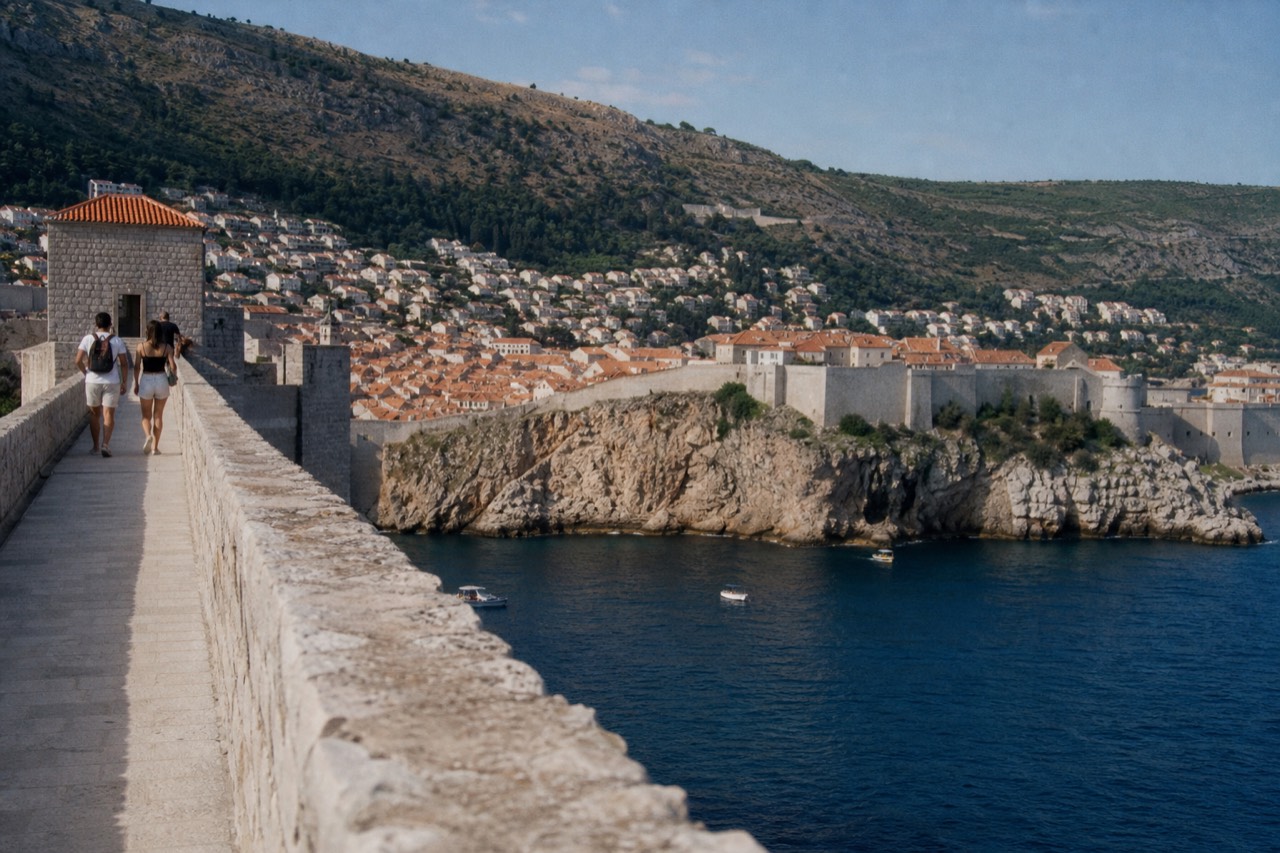
Yes, for some travellers it genuinely is, and it is better to know that before you book than to discover it on the Stradun at two in the afternoon. July is the hottest stretch of the Dubrovnik summer, the sun is strong from mid-morning to late afternoon, and the limestone streets hold that heat well past sunset. But hot does not mean unmanageable: with early starts, swim stops and a boat day or two, July works beautifully.
I have walked these streets in every month of the year, and July is the month where planning matters most. The difference between a miserable July day and a brilliant one is rarely the temperature itself, it is the schedule. Locals do not fight the midday heat, they work around it, and this page shows you exactly how.
The honest starting point is what the data says rather than what a weather app suggests. Two verified sources matter here. The first is the sea: the July average for this coast is about 24.9 degrees, a long-run average from the NOAA OISST v2.1 dataset covering 1991 to 2020, not a beach thermometer reading. The second is the crowds: 96,072 cruise passengers passed through the port in July 2025, which sounds enormous until you hear that September's 101,246 actually beat it. July is hot, but it is not even the busiest month, a point most first-time visitors get wrong.
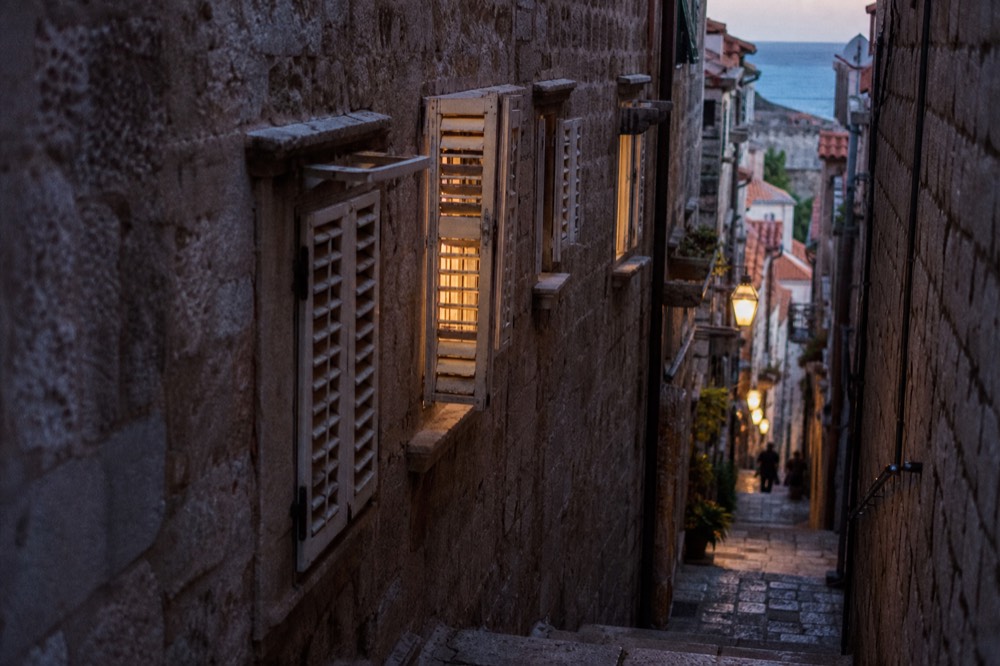
What July actually feels like is a specific thing. The Old Town is a bowl of pale limestone that reflects heat, and the main street, the Stradun, is 298 metres of open stone with almost no shade between the two ends. By early afternoon the walls radiate warmth back at you like an oven wall. The side lanes off the Stradun, the ones running north and south, are a different world: narrow, shaded for much of the day, and noticeably cooler. Part of the skill of a July visit is simply choosing which streets you walk and when.
The sea is the great equaliser. The July average of about 24.9 degrees comes from NOAA's satellite-based analysis of the open-water grid cell that contains Dubrovnik, and an independent EU dataset, EMODnet's, puts July at 23.11 for the same waters, so the two authorities agree closely. Sheltered bays run warmer than the open water, which is why swimming in July feels genuinely warm rather than refreshing. If your idea of a good summer day involves long swims, July delivers.
One structural point about the summer that most visitors miss: the cruise calendar does not peak in July. The Port Authority's own data shows 2025 cruise passengers peaked in September at 101,246 and October at 100,132, both above July's 96,072 and August's 87,385. The port limits cruise passengers to 8,000 a day in most cases, per the Port Authority's cruise destination page, and the official carrying capacity of the Old Town core is 11,275 people. July feels crowded because of the heat, not because it is the statistical peak.
If you are weighing a summer trip, the single best heat answer is a day on the water. These are the three tours I would shortlist for exactly that:
The Mljet National Park and 3 Island Boat Tour is the standout for a hot July day because Mljet is forested and lake-swimming is the coolest water experience within reach of the city. The Elaphiti trip covers three islands in one long day, and the combo walk puts the walls in the cooler morning hours before the stone heats up. You can compare all three on the live listings, and free cancellation is standard on this roster, so booking ahead costs you nothing if the forecast shifts.
How Hot Is Dubrovnik in July?
July is the second-hottest month of the Dubrovnik year, behind August, with strong sun from late morning, warm nights and sea temperatures around 24.9 degrees on the long-run average. The air feels hotter inside the walled city than the raw numbers suggest, because the limestone stores heat and radiates it back through the evening. Expect midday heat that pushes sightseeing into the morning and late afternoon.
I want to be careful with numbers here, because air-temperature claims for Dubrovnik circulate widely and I will only state figures that are verified. What I can state with confidence is the sea series, because it is resolved against primary sources: July's open-water average is about 24.9 degrees, from the NOAA OISST v2.1 long-run monthly climatology for 1991 to 2020. EMODnet, an independent EU marine data service, corroborates it at 23.11 for the same grid cell. Two authorities, different methods, close agreement.
| Month | Open-water average (NOAA, 1991 to 2020) | What it means for swimming |
|---|---|---|
| June | 22.5 degrees | Warm enough for long swims, fresher than July |
| July | 24.9 degrees | Genuinely warm, no wetsuit needed by any standard |
| August | 25.8 degrees | The warmest water of the year |
| September | 23.6 degrees | Still warm, with smaller crowds than July |
Two caveats belong with that table, and I will not bury them. First, these are open-water grid-cell averages, not beach readings: sheltered, shallow bays run warmer in high summer. On 8 September 2026 the Croatian met service's own Dubrovnik buoy read 27.0 to 27.4 degrees against a 23.6 September mean, which shows you the size of that sheltered-bay gap. Second, this is a long-run average, not this year's forecast and not this year's water.
The air heat is real and it has a rhythm. The sun is strong from around 11:00 to 17:00, and the walls and streets hold that energy into the night. July nights are warm, which matters if your accommodation lacks air conditioning, and it is worth checking that before you book anything for July. The stone underfoot on the Stradun gets hot enough by early afternoon that thin-soled shoes become a genuine problem, not a comfort preference.
The way locals handle July is worth copying. Do the hard sightseeing before noon, swim or boat through the middle of the day, and come back to the streets after 17:00 when the light turns golden and the stones start releasing their heat. The city walls, whose operator states working hours of 08:00 to 19:30, are at their best at opening time in July: cooler air, low sun angles across the rooftops, and a fraction of the foot traffic you will meet at midday.
If you want the fuller month-by-month picture before committing to dates, our guide to the best time to visit breaks the whole year down, and the question of whether you can swim in Dubrovnik in September is the natural follow-up if you are flexible on timing.
Is Dubrovnik Hot in September?
September is warm rather than hot, with the sea at about 23.6 degrees on the long-run average, air temperatures easing off the July and August peak, and a light that photographers chase. It is also, counter to almost everyone's expectation, the busiest cruise month of the year: 101,246 cruise passengers in September 2025, more than July or August.
September is the month I recommend most often to people who ask about heat, and the reason is the combination: the sea is still at about 23.6 degrees on the NOAA long-run average, corroborated by EMODnet at 23.15, while the air loses the punishing edge of July and August. The water in early September often feels warmer than the air at breakfast, which is the best possible arrangement for a swimming holiday.
The crowd picture in September surprises people, so let me give it to you straight from the Port Authority's own statistics. In 2025 the monthly cruise passenger counts ran: July 96,072, August 87,385, September 101,246, October 100,132. September and October were the two busiest cruise months of the year, above the summer peak. These are ship-capacity figures, not a count of people who actually walked ashore, so read them as "up to this many scheduled", but the shape of the curve is real and it inverts the common assumption that summer equals maximum crowds.
| Month (2025) | Cruise passengers | Heat level |
|---|---|---|
| July | 96,072 | Hottest stretch alongside August |
| August | 87,385 | Peak heat, warmest sea |
| September | 101,246 | Warm, easing off the peak |
| October | 100,132 | Mild, sea still swimmable early in the month |
The Old Town has a counting system that makes this concrete: six counters at every entrance update a headcount every 15 minutes, and a real curve read on 8 September 2026 shows the pattern of a busy day: 5,419 people at 08:00, a 7,739 peak at 10:00, then 7,205 at 11:00. The official carrying capacity of the Old Town core is 11,275. What that curve tells you, whichever month you visit, is that the morning fills fast and the late afternoon empties. Time your walls walk and your museum visits against that curve, not against your hotel breakfast.
For a hot-weather escape that works in any of these months, the Mljet National Park and 3 Island Boat Tour is the one I point people at first. It runs about 10 hours, is rated 4.9 across 397 reviews, and starts from $153.99 per person. Mljet's lakes and forest are the coolest environment you can reach from the city in a day, and the operator's listing carries the current schedule and cancellation terms.
How Hot Is Dubrovnik in June?
June is warm and getting warmer, with the sea at about 22.5 degrees on the long-run average and air heat that is noticeable but usually short of July's intensity. It is the last month where midday sightseeing stays comfortable for most people, and the sea has just crossed into genuinely swimmable territory. Crowds build through the month but sit below the late-summer peak.
June is the connoisseur's summer month here. The sea at about 22.5 degrees is warm enough for long swims without being bath-water, the air has heat in it by early afternoon but the evenings still cool down, and the cruise calendar is lighter than what follows: 82,642 cruise passengers in June 2025 against July's 96,072. If your trip can land in the first half of June, you get most of the summer benefits with meaningfully less of the summer strain.
The transition through the month is worth planning around. Early June can still serve a mild day where you walk the walls at noon and enjoy it. By late June the pattern is July's pattern: sun that pushes you into the shade from late morning, stone that holds heat into the evening. When people ask me whether to book the first or last week of June, my answer is almost always the first, unless a warmer sea matters more to them than cooler streets.
June is also when the boat season is in full swing without the peak-season pressure on seats. The Elaphiti islands cruises, the kayaking tours around Lokrum and Betina Cave, and the Mljet trips all run daily, and the water is warm enough that the swimming stops are a pleasure rather than a dare. A June day split between a morning walls walk and an afternoon on the water is close to a perfect Dubrovnik day.
One June-specific note on the cable car: the operator's own timetable runs June hours at 09:00 to 24:00, with the last rides late in the evening, per the official timetable and prices page. That makes a sunset or after-dinner ride a genuinely good June plan, because you get the panorama without standing in the midday queue on the mountaintop platform.
Is Dubrovnik Too Hot in August?
August is the hottest month of the Dubrovnik year, with the warmest sea of the season at about 25.8 degrees on the long-run average and air heat at its peak. For travellers sensitive to heat it is the month to be most careful with, but the sea is at its best and the crowd curve is actually gentler than September's. August rewards the same discipline as July, applied more strictly.
August is where the honest answer to "too hot" gets its hardest test. The sea's long-run average is about 25.8 degrees, the warmest month in the NOAA series, with EMODnet corroborating at 24.90, so the water is at its absolute best. The air, meanwhile, is at its peak, and the walled city gives you no escape from it except the shade of the side streets, the sea itself, and altitude.
That last one is underused. The cable car lifts you from the lower terminal at 38.0 metres above sea level to the upper station at 405.0 metres on Mount Srd, a 367.0 metre rise over a 778.2 metre track in 3 minutes 30 seconds, and the temperature difference at the top is immediately noticeable on a hot afternoon. The operator states a view range of up to 60 km on a clear day. An August late afternoon on Srd, with the Old Town glowing below and a breeze off the sea, is one of the great free pleasures of a Dubrovnik summer once you have the ticket.
The crowd arithmetic in August is more favourable than people assume. August 2025 saw 87,385 cruise passengers, fewer than July's 96,072 and well below September's 101,246. August feels busy because it is the peak of the land-based holiday season, families and tour groups rather than cruise berths, but the port data says the cruise curve has already bent downward by August. Either way, the same rule holds: the Old Town fills to its morning peak around 10:00 and thins after lunch, and your experience tracks your timing far more than your month.
For the middle of an August day, the water is the only sane place to be. A kayak tour around Lokrum and Betina Cave keeps you on the sea with swimming stops, and reviewers consistently describe exactly the experience you want from it:
Loved this kayaking experience. Had an amazing time as a family and enjoyed the swimming break at Betina Cave very much. The views were amazing, water was crystal clear, the guide was excellent and we learnt a lot about Dubrovnik.
Imara_D
That tour runs about 2 hours, is rated 4.9 across 1,518 reviews, and starts from $35.49 per person, with the live listing carrying current departure times. Between a morning walls walk, a midday kayak or boat trip and an evening cable car ride, an August day assembles itself into something genuinely good despite the heat.
How Do You Plan a Day Around the July Heat?
Structure the day in three blocks: hard sightseeing before 11:00, water or shade from 11:00 to 17:00, and streets, dinner and viewpoints after 17:00. The Old Town's own counting data shows the morning peak around 10:00 and a thinning after lunch, so early starts buy you both cooler air and thinner crowds. Every element of a good July day is bookable, and most of it cancels free.
The three-block day is not a travel cliché here, it is how the city itself behaves. The verified headcount curve from 8 September 2026 shows 5,419 people at 08:00, a 7,739 peak at 10:00 and 7,205 at 11:00: the Old Town is at its fullest and its hottest within the same window. Walk the walls at 08:00, when the operator's stated hours open and the stone is still cool, and you have done the single most demanding thing on your list before either the heat or the crowds peak.
The middle block has three good options, in ascending order of commitment. Shade and museums inside the thick-walled palaces of the Old Town, which stay markedly cooler than the streets. A beach or swim stop at one of the nearby beaches. Or a boat, which is the full answer: the Elaphiti islands cruises run about 8 hours with lunch, the Mljet trips add forest and lakes, and a sunset cruise brings you back into the evening light. For the fullest planning picture, our Mljet day trip guide covers the coolest option in detail, and the month-by-month July guide goes deeper on this exact question.
| Time block | What the data says | Best use |
|---|---|---|
| 08:00 to 11:00 | Headcount climbs from 5,419 to a 7,739 peak at 10:00 | City walls, fortresses, photography |
| 11:00 to 17:00 | Peak sun, stone at its hottest, crowds thinning after lunch | Boat trip, beach, museums, or Mount Srd |
| 17:00 to late | Heat releases, light at its best, cable car until midnight in summer | Streets, dinner, viewpoints, sunset cruise |
A few practical notes that earn their place. Bring more water than feels reasonable; the climb to the walls entrances involves stairs and there is little shade on the circuit. Thin-soled shoes fail on hot stone, as I mentioned, and this is the month they fail hardest. Book restaurants for dinner rather than lunch, because lunch in July is best taken somewhere with a breeze, and the evening is when the city belongs to people again.
For the middle block done properly, this is the boat day I would book:
Mljet is the answer to July heat that most visitors never hear about: a national park where the swimming is in sheltered salt lakes inside a forest, the coolest microclimate you can reach from the city in a day. The tour runs about 10 hours, is rated 4.9 across 397 reviews, and starts from $153.99 per person. Check availability on the live listing if a forest-and-lakes day sounds like your kind of escape from the stone.
So Should You Still Go in July?
Go in July if you can handle heat honestly and you want the warmest sea, the fullest season and long summer evenings; choose June or September if you want the same region with less strain. July is not too hot for a well-planned trip, but it is too hot for an unplanned one. The month punishes a rigid midday itinerary and rewards anyone who builds the day around water and timing.
The travellers who have a bad time in Dubrovnik in July are almost always the ones who tried to sightsee from 11:00 to 15:00, the exact window locals spend in the shade or the sea. The travellers who love July are the ones who walked the walls at opening, swam or sailed through the middle of the day, and came back out for the evening. Same city, same temperature, entirely different trips.
If heat is a genuine health consideration for anyone in your party, the honest advice is to shift to May, early June, late September or October. The sea is still swimmable well into autumn, the October 2025 cruise count of 100,132 tells you the town is still lively, and the stones stop being a hazard rather than a feature. For more on Things to Do in Dubrovnik across the whole year, the seasonal guides cover each month in detail.
And if July is when your holidays fall, take it. The sea is at 24.9 degrees on the long-run average, the evenings are long, the cable car runs until midnight in high summer, and the whole coast is set up for exactly this kind of weather. Book the boat day, set the early alarm for the walls, and let the hottest hours happen somewhere on the water.
Common Questions About Whether Dubrovnik Is Too Hot in July
Is Dubrovnik too hot in July?
For most travellers, no, but only with the right daily structure. July is the second-hottest month after August, with strong midday sun and warm nights, while the sea sits at about 24.9 degrees on the long-run average. Sightsee before 11:00, get on the water through the middle of the day, and return to the streets after 17:00.
How Hot Is Dubrovnik in July?
July is hot, with strong sun from late morning and limestone streets that hold heat into the evening. The verified sea figure is about 24.9 degrees on the NOAA 1991 to 2020 long-run average, corroborated by EMODnet at 23.11 for the same waters. Air temperatures vary by day and heatwaves happen, so plan for the hot end of the range.
Is Dubrovnik Hot in September?
September is warm rather than hot, with the sea at about 23.6 degrees on the long-run average and air heat easing off the summer peak. It is also the busiest cruise month: 101,246 cruise passengers in September 2025, above July and August, so expect lively streets alongside the milder weather.
How Hot Is Dubrovnik in June?
June is warm and building toward July, with the sea at about 22.5 degrees on the long-run average and midday heat that is noticeable but usually short of July's intensity. Early June is the more comfortable half of the month; late June behaves like July.
Is Dubrovnik Too Hot in August?
August is the hottest month of the year, with the warmest sea at about 25.8 degrees on the long-run average. It is too hot for an unplanned midday itinerary, but the same three-block day that works in July works even better in August, because the water is at its absolute best.
What Is the Best Time of Day to Walk the City Walls in Summer?
At opening time, around 08:00. The operator's stated hours are 08:00 to 19:30, and the Old Town's own counters show the morning peak around 10:00, so an 08:00 start gives you cooler stone, lower sun and thinner crowds all at once. Late afternoon, after 17:00, is the second-best window.