Dubrovnik in July: Heat, Crowds and a Smarter Daily Plan
July is Dubrovnik at full volume: the busiest flight schedules, the warmest sea of the year and cruise passengers numbering 96,072 for the month in 2025, fewer than September and October. Here is how to plan the month so the heat works for you instead of against you.
Short answer
Dubrovnik in July is hot, busy and entirely workable if you shape your day around it. The sea averages about 24.9 degrees, cruise traffic in July 2025 was 96,072 passengers, below September's 101,246, and the Old Town peaks at 7,739 counted visitors at 10:00. Start at 08:00, hide at midday, sail or swim in the afternoon.
July fills Dubrovnik to the brim. The city recorded about 4.2 million overnight stays in 2025, sharing first place among Croatian destinations with Rovinj, and July is one of the months that produces them. I have walked these streets through enough summers to know the pattern: the light is spectacular, the sea is at its warmest, and the hours between 11:00 and 17:00 belong to whoever planned for shade. This guide lays out what the month actually feels like, what the verified numbers say, and how to build days that survive the heat.
How Hot Is Dubrovnik in July?
July is Dubrovnik's warmest month before August, with coastal sea temperatures averaging about 24.9 degrees, and the air above it feels every bit as hot. Expect daytime heat that lingers well into the evening, since the warm sea keeps nights from cooling down. Plan your days around the heat, and do not count on much relief after sunset.
The sea figures come from the NOAA OISST v2.1 long-run average for 1991 to 2020, an open-water grid-cell figure rather than a beach thermometer, and they are the honest baseline for swimming. In July that baseline sits at about 24.9 degrees, with August marginally warmer at 25.8 and September already easing to 23.6. EMODnet's independent climatology corroborates the series to within about 1 degree in the months that matter. What that means practically: the water is genuinely warm in July, warm enough that long swims are comfortable, and the pebble beaches heat up fast under the afternoon sun.
Air temperature I will not quote as a number, because no primary source in our verified research file settles it. What the verified record does settle is behaviour. The cable car, whose cabin ride is unshaded, runs 09:00 to midnight in July, and its operators price and schedule around the fact that people ride early or at sunset rather than at midday. The city walls operator states working hours of 08:00 to 19:30, which tells you the same thing from the ground: the walking day starts early because the stone amplifies whatever the sun does.
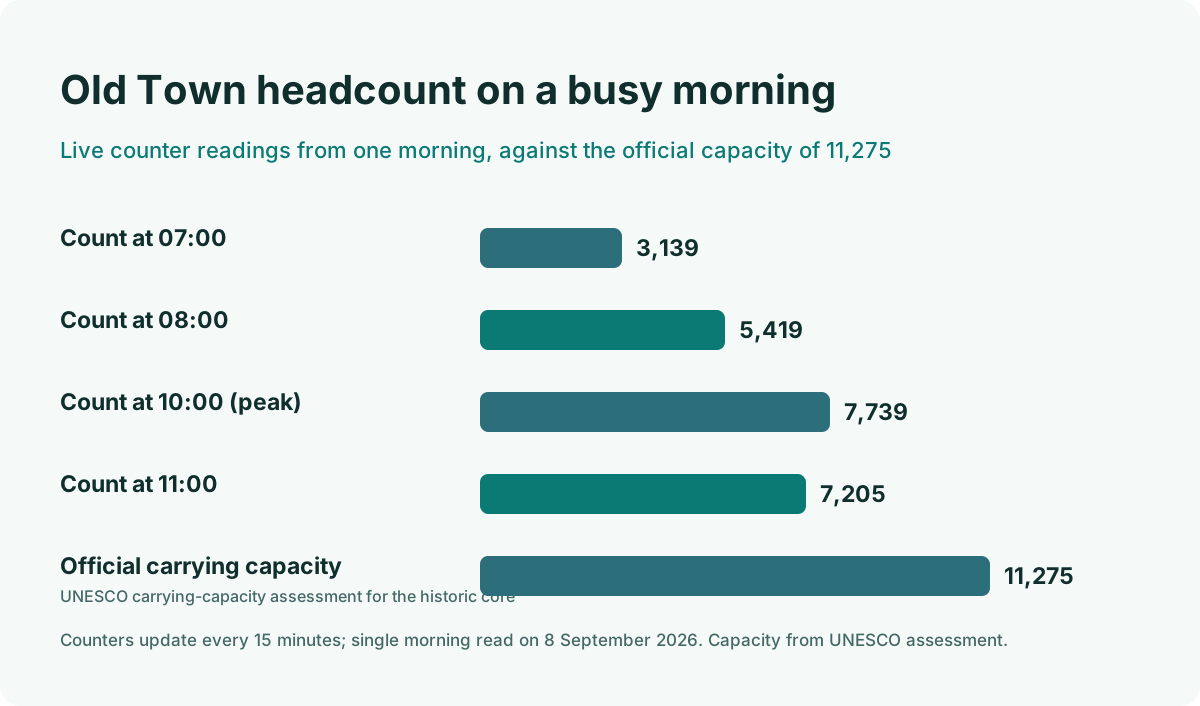
The heat and the crowds arrive together, which is the real July problem. Six counters at every Old Town entrance update a headcount every 15 minutes, and on a representative morning the count climbed from 3,139 at 07:00 to 5,419 at 08:00, peaked at 7,739 at 10:00 and still stood at 7,205 at 11:00. The official carrying capacity for the historic core, from the UNESCO carrying-capacity assessment, is 11,275 people. July mornings do not hit that ceiling, but they fill the streets fast enough that the difference between an 08:00 start and a 10:30 start is the difference between walking freely and queueing.
| Month | Open-water average (deg C) | What it means for swimming |
|---|---|---|
| June | 22.5 | Refreshing, fully swimmable |
| July | 24.9 | Warm, long swims comfortable |
| August | 25.8 | Warmest of the year |
| September | 23.6 | Still warm, thinner crowds |
Those are long-run averages for the open water off this coast, not a forecast and not this year's beach reading, and sheltered bays run warmer than the grid cell. Treat them as a planning baseline, not a promise.
Is Dubrovnik Too Hot in July?
For most travellers, no, provided the day is built around the heat rather than against it. The pattern that works is an 08:00 start for the walls or the Old Town, shade or water from midday, and the evening back outside, because the cable car runs until midnight in July. Travellers who insist on a 10:00 start and a full afternoon of unshaded sightseeing will find the month punishing.
The honest answer depends on what you came to do. The walls circuit is 1,940 metres of stone with almost no shade, up to 25 metres high and 4 to 6 metres thick on the land side, and it stores heat all afternoon. Done at 08:00, when the count inside the Old Town is around 5,419 and the stone is still cool, it is one of the great walks in Europe. Done at 13:00 it is an endurance event. The same logic applies to the Stradun, 298 metres of polished limestone that reflects the midday sun straight back at you.
The strongest July move is to put the hottest hours on the water. A full-day Elaphiti islands cruise does exactly that: eight hours on the Adriatic with lunch included, from $59.16 per person, rated 4.9 across 10,312 reviews, the most reviewed product on our entire roster. The Zrinka boat carries a fish picnic lunch, and the islands themselves, Kolocep, Lopud and Sipan, are cooler by sea breeze than anything inside the walls.
The trio above is the July shortlist: the Zrinka boat cruise as the value pick, the Regina Maris cruise at from $74.58 per person, rated 4.8 across 6,751 reviews, as the same idea on a larger classic ship, and the Old Town and walls combo walk at from $50.94 per person, rated 4.8 across 1,183 reviews, as the early-morning alternative that clears both the streets and the walls in one 3 hour 30 minute guided block before the heat settles in.
A shaded review of the cruise, verbatim from a verified guest:
This was a wonderful day. Nice and shaded on the boat as we cruised on the cool adriatic. Loved seeing the neat Elphiti Islands and a wonderful way to get out the the heat and large crowds for a bit. They kept the drinks flowing and lunch was phenomenal and a generous portion. This is the way to cruise the Adriatic.
Shelby_S
| Time of day | Old Town count | Best use of the hour |
|---|---|---|
| 07:00 | 3,139 | Coffee, walls at opening pace |
| 08:00 | 5,419 | Walls circuit or guided Old Town walk |
| 10:00 | 7,739 (peak) | Shade, museum, or already on a boat |
| 11:00 | 7,205 | Lunch indoors, beach, or island |
| Afternoon | Easing | Swimming, kayaking, siesta |
| 19:00 onward | Thinning | Dinner, sunset, cable car to midnight |
The counts are from a single morning read on 8 September 2026, a cruise month, so treat them as the shape of a busy day rather than a July guarantee. The shape is the point: the Old Town fills by 10:00 and the smart plan is already elsewhere by then.
What Not to Do in Dubrovnik?
The four July mistakes that cost the most: walking the walls at midday, buying a one-day Dubrovnik Pass without checking the season logic, arriving on a cruise day without checking the schedule, and sleeping through the 08:00 window that the whole month organises itself around. Each is avoidable with one decision made the evening before. Avoid them and July stops feeling like an obstacle course.
First, the walls at midday. The adult ticket is 40 euro in main season, 1 March to 30 November, and it is the walls plus Fort Lovrijenac combination, with no family ticket and only adult and child 7 to 18 types sold, under 6 free. That ticket buys the same stone at 08:00 as at 13:00, but the experience is not the same. The operator's stated hours are 08:00 to 19:30, so the early start costs nothing and buys the cool hours. Our city walls tickets guide covers the pricing in full.
Second, the pass arithmetic. The one-day Dubrovnik Pass costs 40 euro, the same as the standalone walls ticket in main season, and adds ten more sights plus a 24-hour bus ticket. That equivalence is a main-season fact only: in December the standalone walls ticket drops to 20 euro and no winter pass tier is on sale at all. In July the pass is usually the better buy, but only if you will actually visit the second and third sights. The full breakdown, including the three-day and seven-day tiers at 50 and 60 euro, is in our Dubrovnik Pass guide.
Third, ignoring the cruise calendar. The Port Authority limits cruise passengers to 8,000 a day in most cases, and of 243 cruise days a year only 18 exceed that number, with only 4 days slightly above 10,000. Those are the days when an island day or a late start is worth planning, and the schedule is published, so there is no excuse for being surprised by it. Our cruise schedule guide shows you how to read it.
Fourth, the 11:00 tour booking. Any walking tour that starts late morning puts its customers on the Stradun at the worst hour of the day. The products that get this right start early: the Old Town walk with a local guide runs from $20 per person, rated 4.8 across 5,826 reviews, and the free, pay-what-you-want walks on GuruWalk, such as the Ancient Old City tour rated 4.87 across 2,242 reviews, give the same early-hours orientation at no fixed price.
| Mistake | Why it hurts in July | The fix |
|---|---|---|
| Walls at midday | 1,940 m of unshaded stone | Enter at 08:00 opening |
| Pass bought blindly | 40 euro spent for one sight | Count sights first, main season only |
| Ignoring cruise days | Up to 8,000 passengers a day | Check the schedule, plan an island day |
| Late-morning tours | Peak heat and peak crowds together | Book the earliest slot |
| No swimming plan | Sea at about 24.9 degrees wasted | Beach or boat every afternoon |
One more that visitors underestimate: the stairs. The Old Town is a stack of staircases, and July heat turns each climb into a negotiation. Pack more water than feels reasonable, and treat every uphill as a morning activity.
When to Avoid Dubrovnik?
If your dates are flexible, the days to avoid are the handful when cruise capacity stacks above the 8,000-passenger daily limit, and the hours to avoid are 10:00 to 14:00 on any busy day. As whole months go, July is busy but not the busiest for cruise traffic: September and October 2025 both carried more cruise passengers than July did, at 101,246 and 100,132 against July's 96,072.
That September-and-October peak is the single most counter-intuitive fact in Dubrovnik's visitor data, and it comes straight from the Port Authority. Most people assume the cruise season peaks with the school holidays. It does not. July 2025 saw 96,072 cruise passengers and August 87,385, while September reached 101,246 and October 100,132. The full year came to 625,257, up from 582,499 in 2024, and 461 cruise calls are scheduled for 2026.
| Month, 2025 | Cruise passengers | Read |
|---|---|---|
| June | 82,642 | Busy |
| July | 96,072 | Very busy |
| August | 87,385 | Very busy |
| September | 101,246 | Busiest month of the year |
| October | 100,132 | Second busiest |
Cruise passenger figures are ship capacity, not people who actually walk ashore, so write "up to X scheduled" in your head and never "X people will be in town". The Port Authority's own crowd-management page explains the limits: 8,000 passengers a day in most cases, with a 2+1 berthing arrangement and about forty call requests refused in a season to hold the line.
So when should you avoid the city? Not July as a blanket rule. Avoid the specific stacked days, and know that the shoulder months trade heat for cruise traffic: September is warmer-watered than June and carries more ships than July. If heat is your enemy, the sea averages about 23.6 degrees in September against July's 24.9, a modest sacrifice for thinner streets. If crowds are your enemy, July is actually the calmer cruise month of the high season, and the answer is when to visit planning rather than month-dodging.
What Does a Smart July Day Look Like?
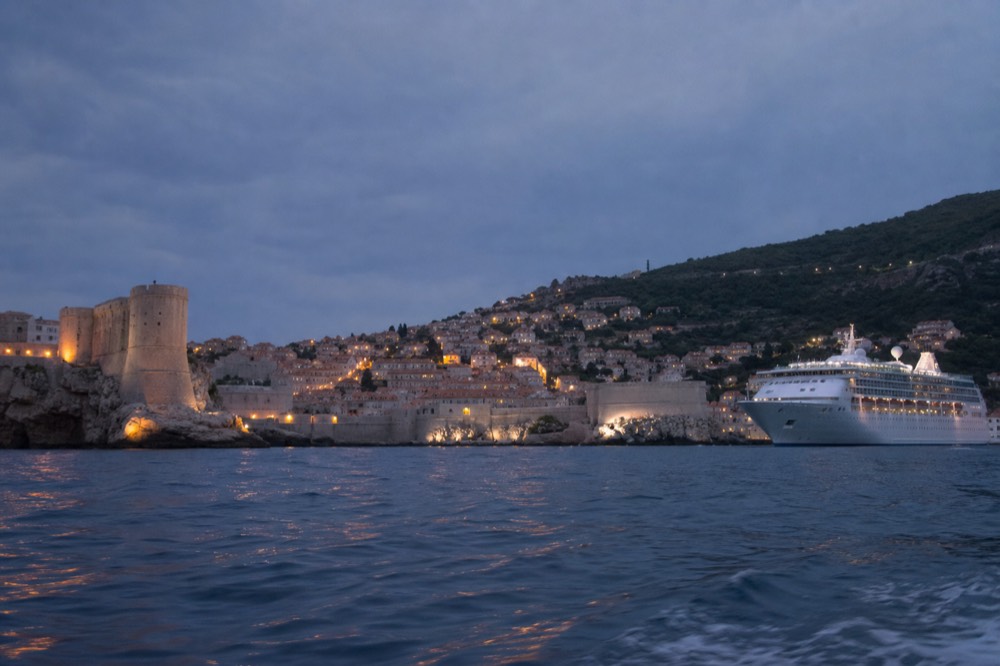
A smart July day runs in three acts: sightseeing on foot from 08:00 to 11:00, water or shade from 11:00 to 17:00, and the city again from 19:00 to midnight, when the cable car still runs and the stones release their heat. The structure matters more than any individual booking, because it moves you out of the sun's worst arc without costing you the sights you came for.
Act one is the guided block. The combo tour of the Old Town and the ancient city walls covers both in about 3 hours 30 minutes, from $50.94 per person, rated 4.8 across 1,183 reviews, and a guide keeps the pace honest on the staircases. If you would rather walk the walls on your own with the history filled in, the Ancient City Walls and Wars walking tour runs about 2 hours from $29.58 per person, rated 4.8 across 1,387 reviews.
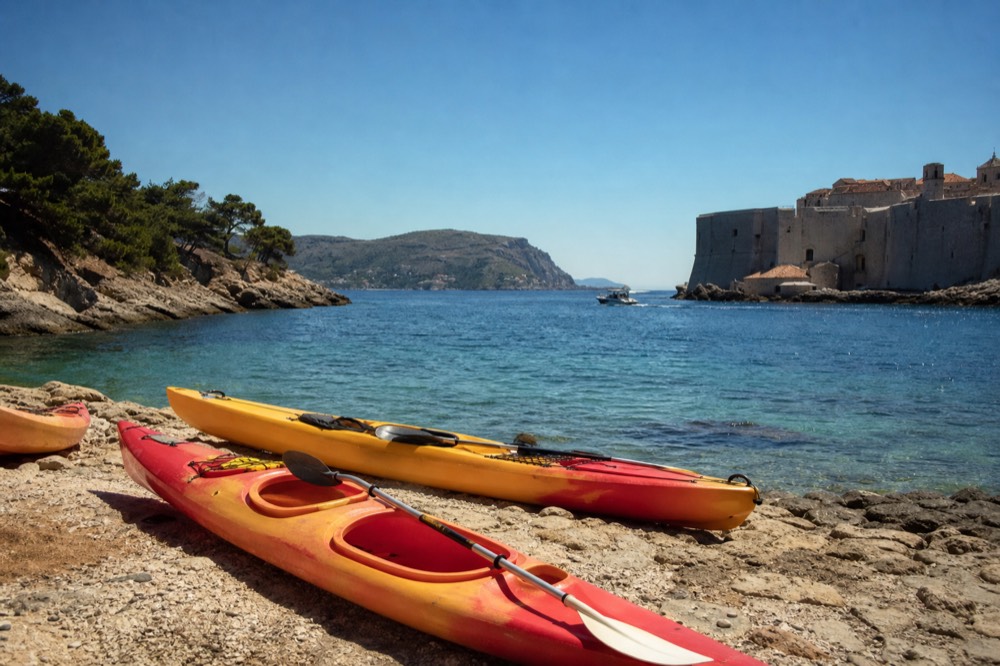
Act two is the water. The sea is at about 24.9 degrees, the second warmest month of the year, and the options scale from a free swim at a beach to a full eight-hour island day. Kayaking tours around Lokrum and Betina Cave run about 2 hours from $35.49 per person, rated 4.9 across 1,518 reviews, and put you on the water with a swimming break built in. The dedicated kayaking guide compares the operators.
Act three is the evening. The cable car's July timetable runs 09:00 to midnight, with an adult round trip at 30 euro, one way 17 euro, child 4 to 12 at 8 and 5 euro, under 4 free, and the operator states a view range of up to 60 km on a clear day. Sunset from Mount Srd, 405 metres above the lower terminal, is the payoff for having started your day at 08:00. The full price and timetable detail is on the operator's own price page.
| Block | Hours | Best options |
|---|---|---|
| Act one | 08:00 to 11:00 | Walls, Old Town walk, combo tour |
| Act two | 11:00 to 17:00 | Elaphiti cruise, kayak, beach, museum |
| Act three | 19:00 to midnight | Dinner, sunset spots, cable car |
Is the Sea Warm Enough to Swim in July?
Yes, comfortably. The long-run July average for this stretch of coast is about 24.9 degrees, an open-water figure from the NOAA OISST v2.1 1991 to 2020 climatology, and only August is warmer at 25.8. Sheltered bays read higher than the open water, so a calm July afternoon in a cove can feel several degrees warmer than the baseline. Swimming is not a maybe in July, it is the plan.
The honesty note that travels with these numbers: they are grid-cell averages, not beach thermometer readings, and they are not a Croatian government figure. EMODnet's independent climatology corroborates them within about 1 degree, and the gap between open water and sheltered bay is real and measurable. The Croatian met service's Dubrovnik buoy read 27.0 to 27.4 degrees on 8 September 2026 against a 23.6 September mean, which is the size of the sheltered-bay premium in late summer.
For swimming logistics, Lokrum is the classic July answer. The ticket is 30 euro per person and covers both the reserve entry and the return boat transfer, boats leave the City Harbour at 09:00 and then every 15 minutes from 10:00 to 18:00, and the ticket office at Luža works 08:00 to 18:00. A ticket stays usable for three days, which gives you flexibility if a cruise-heavy morning makes you want a later crossing. The Lokrum ferry guide has the full detail.
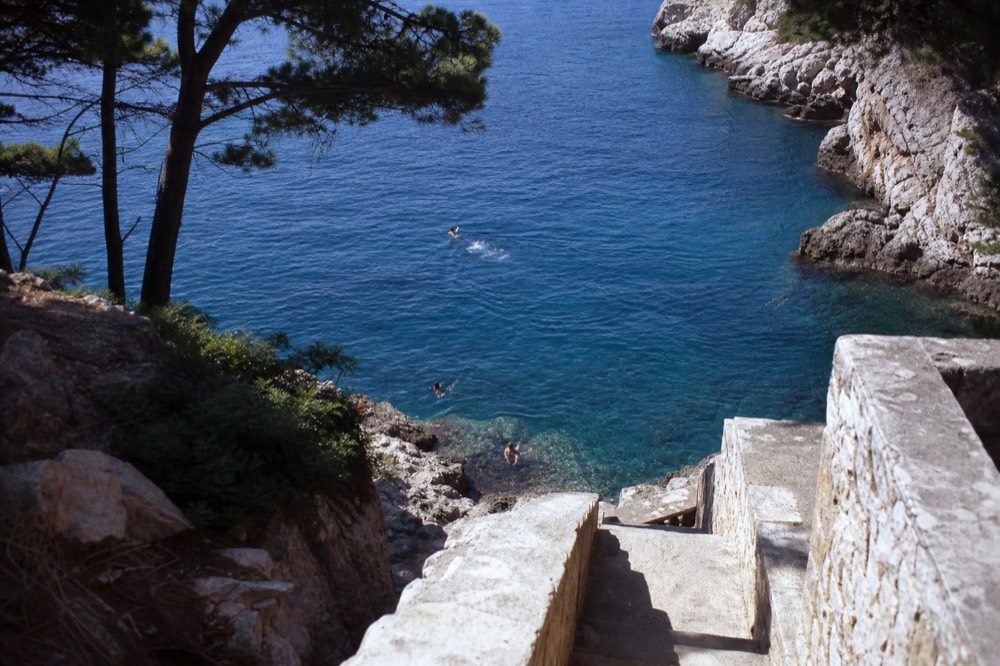
If you want the swimming day to carry the whole afternoon, the Elaphiti cruise is the strongest fit on the roster: eight hours, lunch included, from $59.16 per person, rated 4.9 across 10,312 reviews, with swimming stops built into the itinerary at the islands.
Should You Walk the City Walls in July?
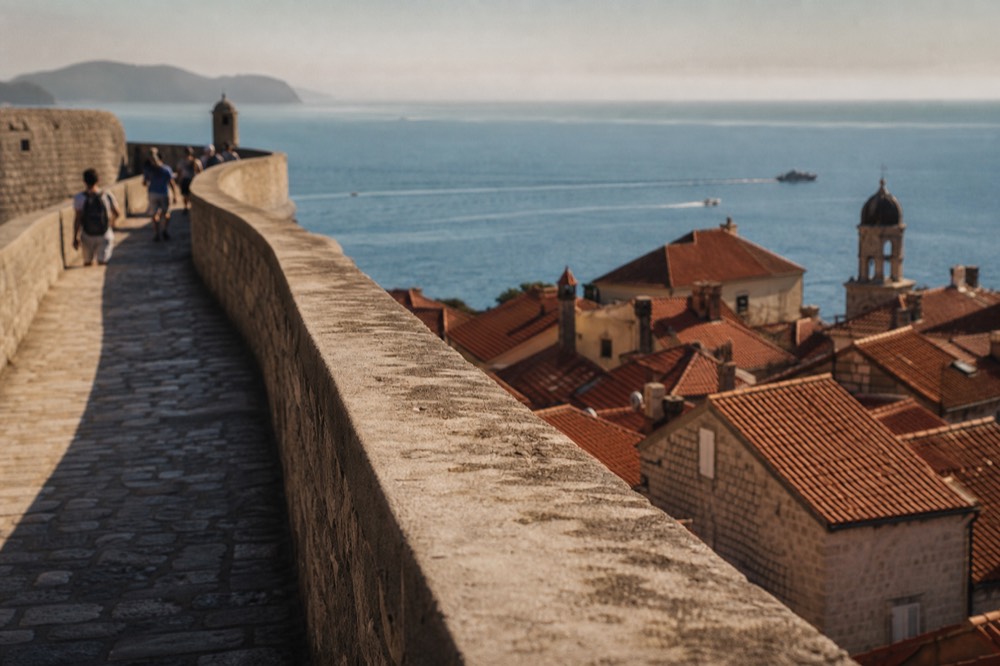
Yes, but only as the first thing you do. The circuit is 1,940 metres with 16 towers, 3 fortresses and 6 bastions, up to 25 metres high, and the operator's stated hours run 08:00 to 19:30, which exists precisely so walkers can use the cool end of the day. The adult ticket is 40 euro in main season and includes Fort Lovrijenac. Start at 08:00 and July is not a problem.
The structure rewards the early start twice over. The walls reached their basic shape in the 13th century and were finished in 1660 with the Bastion of St Stephen, and the full circuit is a walk with almost no shade and no shortcuts: once you are up, you finish or you retrace. The stone holds the afternoon heat long after the sun drops, which is why the evening slot, while legal, is warmer than the morning one at the same clock distance from noon.
A verified guest on the walls-focused walking tour put the experience this way:
This well organized tour helped put Dubrovnik's past (and present) into perspective. It's incredible that the city walls have withstood the test of time. Antun was a wonderful guide.
linda_a
The guided walls walk runs about 2 hours from $29.58 per person, rated 4.8 across 1,387 reviews, and a guide turns the towers from scenery into story. If you would rather have the whole morning packaged, the combo tour covers the Old Town and the walls together in about 3 hours 30 minutes. Ticket pricing, including the child tiers of 15 euro for ages 7 to 18 in main season, is on the walls operator's own site.
How Much Should You Budget for July?
Budget around 40 euro for the walls and Lovrijenac, or the same 40 euro for a one-day Dubrovnik Pass that adds ten more sights and a 24-hour bus ticket in main season, plus roughly 30 euro for the cable car round trip if sunset from Srd is on your list. Tour prices on our roster run from $20 per person for the cheapest paid Old Town walk upward. July is peak season, so book the timed products early.
The pass decision is the one worth an extra minute. Every pass tier lists City Walls + Lovrjenac Fortress as its first inclusion, and every tier allows a one-time visit to each institution, the walls included. The three-day pass at 50 euro and the seven-day pass at 60 euro add suburban bus coupons and House Bukovac in Cavtat, which starts to make sense once you plan days beyond the Old Town. All of it is main season, 1 March to 30 November, with no winter tier on sale.
| Item | Main season price | Notes |
|---|---|---|
| City Walls + Lovrijenac, adult | 40 euro | 1 March to 30 November |
| City Walls, child 7 to 18 | 15 euro | Under 6 free, no family ticket |
| Dubrovnik Pass, one day | 40 euro | 10 sights plus 24h bus |
| Dubrovnik Pass, three days | 50 euro | Adds suburban coupons, Cavtat |
| Cable car, adult round trip | 30 euro | July hours 09:00 to midnight |
| Lokrum ticket | 30 euro | Entry plus return boat |
July's real budget risk is not the ticket prices, it is the wasted ones: a 40-euro walls ticket abandoned at the halfway point in the afternoon heat, or a pass bought for sights you never reach because the midday sun emptied your plan. The structure of the day protects the money as much as the traveller.
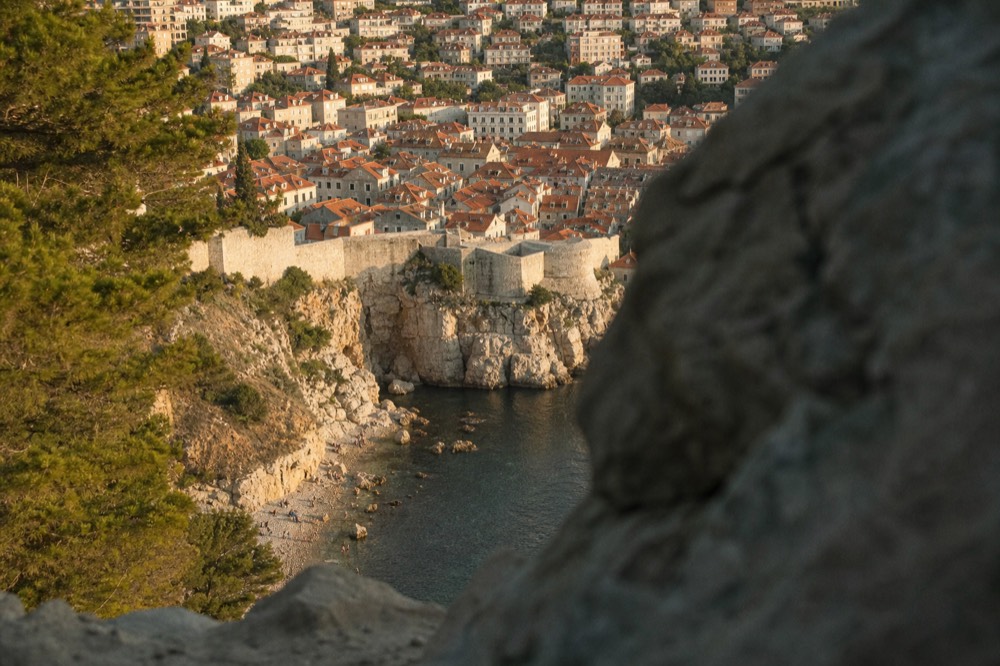
July rewards the travellers who treat it as a schedule rather than a backdrop. Start with the walls at 08:00, spend the furnace hours on a boat or a beach with the sea at about 24.9 degrees, and come back for a city that stays lively past midnight, with the cable car running until then. The month is not too hot if you never ask the hottest hours of anything strenuous. And if you want the whole picture of the year before you commit, the broader planning starts on Things to Do in Dubrovnik, with month-by-month detail in our August guide and September guide.
Common Questions About Dubrovnik in July
Is Dubrovnik too hot in July?
Not if the day is structured around it. The sea averages about 24.9 degrees, the walls open at 08:00, and the cable car runs until midnight, so the cool hours and the evening are both available. Travellers who sightsee on foot between 11:00 and 17:00 will find the month punishing.
How hot is Dubrovnik in July?
The verified sea figure for July is a long-run open-water average of about 24.9 degrees, the second warmest month after August's 25.8. No primary air-temperature figure is in our verified research, so plan on behaviour instead: early starts, midday water, and evenings outdoors.
What not to do in Dubrovnik?
Do not walk the walls at midday, do not buy a pass without counting your sights, do not ignore the cruise schedule, and do not book tours that start late morning. Each mistake puts you in peak heat or peak crowds, and each is fixed by one decision the night before.
When to avoid Dubrovnik?
Avoid the handful of days when cruise capacity stacks above the 8,000-passenger daily limit, and avoid the 10:00 to 14:00 window on any busy day. As months go, July carries fewer cruise passengers than September or October, which posted 101,246 and 100,132 in 2025 against July's 96,072.
Is the sea warm enough to swim in Dubrovnik in July?
Yes. The July open-water average is about 24.9 degrees from the NOAA 1991 to 2020 climatology, and sheltered bays read warmer. Swimming is one of the best uses of the midday hours in July.
Should I buy the Dubrovnik Pass in July?
Usually yes. In main season the one-day pass costs 40 euro, the same as the standalone walls ticket, and adds ten more sights plus a 24-hour bus ticket. The equivalence is a main-season fact only: in December the walls ticket falls to 20 euro and no winter pass is on sale.