Is Dubrovnik Hot in September?
September in Dubrovnik is warm rather than punishing: sea averages 23.6 degrees, cruise crowds peak, and the swimming season holds. Here is what the heat really feels like, month by month.
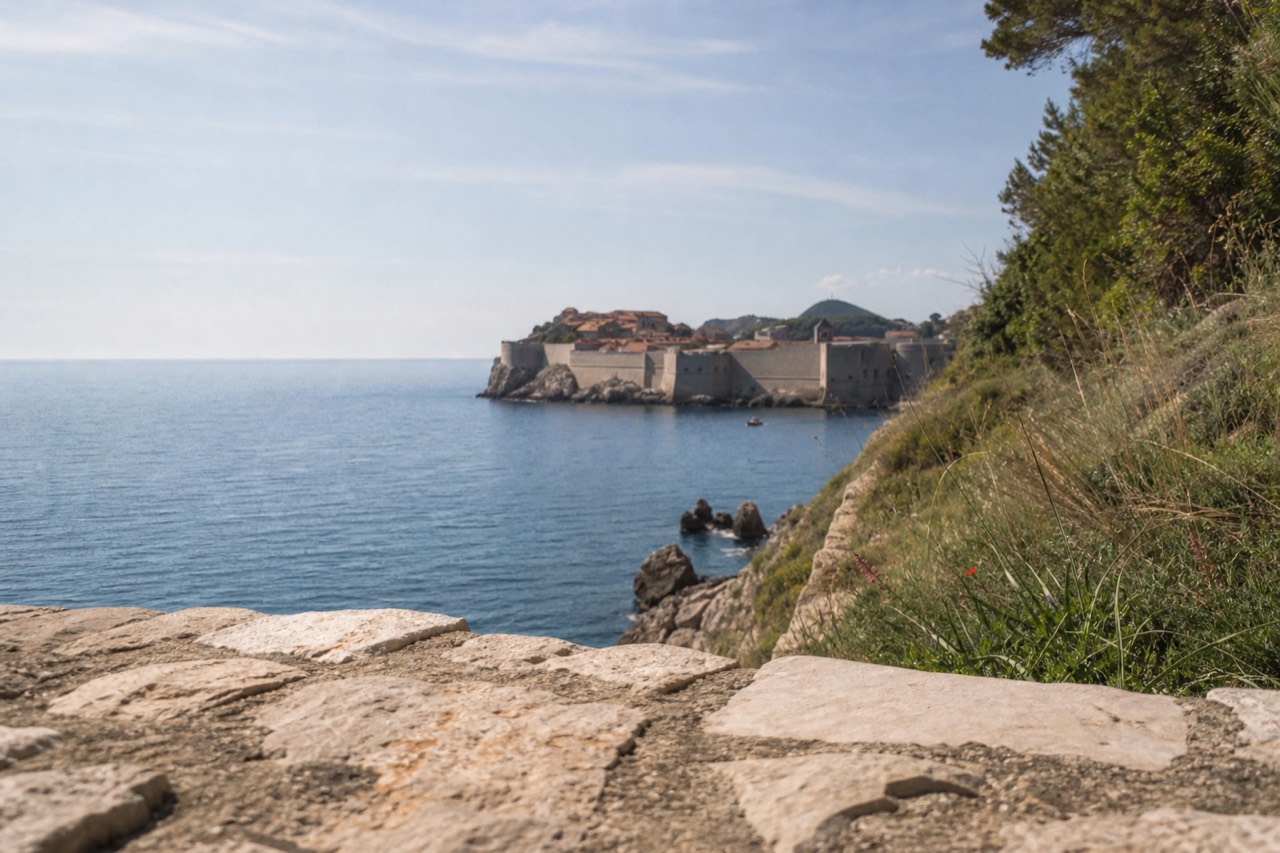
Is Dubrovnik Hot in September?
Yes, September in Dubrovnik is properly warm, but it is no longer the furnace of July and August. The long-run September average for the open water off this coast is about 23.6 degrees, sheltered bays read warmer still, and the sea has spent all summer storing heat. Air temperatures stay summer-like through the month, while the August crush of visitors thins out and the cruise calendar actually peaks.
I walk this coastline for a living, and September is the month I tell people to aim for if they want heat without punishment. The stone of the Stradun still radiates at midday, the swimming is the best of the year because the sea is at its warmest after three months of summer, and the evenings are warm enough that dinner outside needs nothing more than a shirt. What surprises most first-time visitors is not the temperature itself but the crowd pattern: the Port of Dubrovnik's own figures show September 2025 brought 101,246 cruise passengers, more than July's 96,072 and well above August's 87,385. September is not the quiet shoulder month people imagine, it is the busiest cruise month of the entire year.
The heat question matters for planning more than most people expect. Dubrovnik's Old Town is limestone and marble, a heat-holding bowl where the midday glare bounces off every surface, and the city walls walk offers almost no shade for long stretches. On a hot afternoon the difference between the Stradun and a boat on the Adriatic is the difference between two very different holidays. That is why the practical answer to "is it hot" is always followed by "and what do you do about it", and the honest answer to the second half is: get on the water.
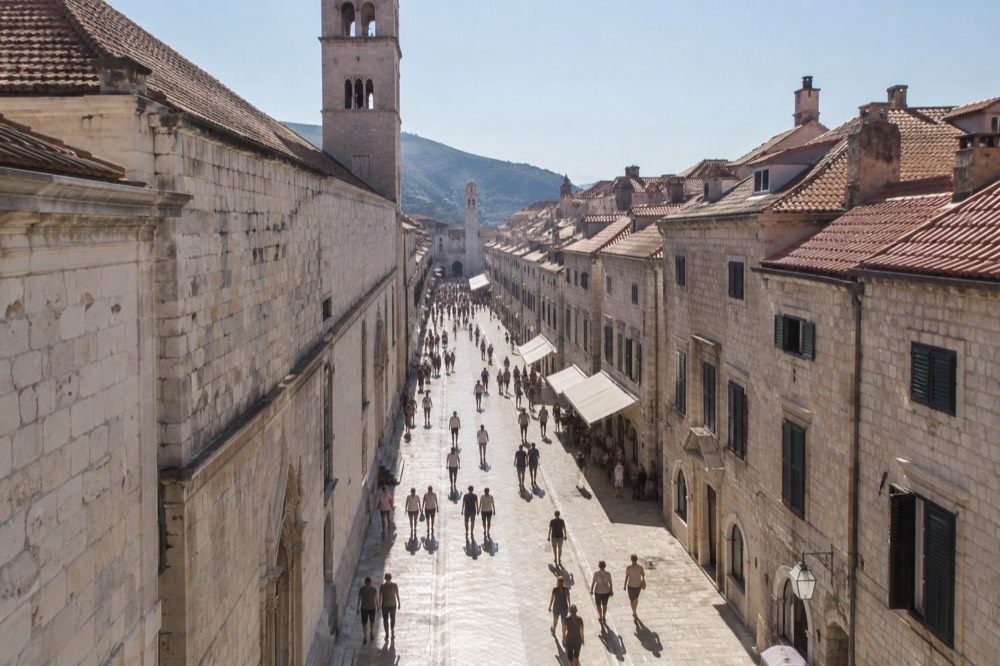
If you are visiting in the warmer half of the year, the three products below solve the heat problem in three different ways: a boat that drops you at a swimmable cave, a full-day island cruise with shade and lunch, and an early-morning walk that finishes before the stone gets hot.
How Hot Is Dubrovnik in September?
Expect daytime temperatures in the high twenties Celsius, with the sea at about 23.6 degrees on the long-run average and often several degrees warmer in sheltered spots. It is hot enough to swim every day, hot enough that midday on the walls is uncomfortable, and warm enough at night that you will not need a jacket. Locals still swim through the whole month.
The number I quote most often is the sea, because it is the number with the strongest evidence behind it. The September average for this coast is about 23.6 degrees, from NOAA's OISST v2.1 dataset, a 1991 to 2020 long-run average for the open-water grid cell that contains Dubrovnik. An independent EU dataset, EMODnet's SeaDataNet climatology, corroborates it at 23.15 for September. Those are open-water averages, not beach readings, and the gap between the two is real: on 8 September 2026 the Croatian met service's own Dubrovnik buoy read 27.0 to 27.4 degrees across the day's readings. Sheltered, shallow bays hold the summer's heat in a way the open sea does not.
| Month | Open-water average (NOAA, 1991 to 2020) | What it means for swimming |
|---|---|---|
| June | 22.5 degrees | Comfortable, fresh on first entry |
| July | 24.9 degrees | Properly warm, no gasp on entry |
| August | 25.8 degrees | The warmest sea of the year |
| September | 23.6 degrees | Still excellent, bays warmer than the average |
What the sea table does not capture is the air, and here I will be honest about the limits of the evidence: no Croatian authority publishes a monthly air-temperature climatology for Dubrovnik that I can verify and quote, so I will not print a number I cannot source. What I can tell you from walking these streets every September since 2015 is the felt experience: the first half of the month behaves like a warm August, the second half brings the first genuinely cool evenings, and the sea stays swimmable long after the air has stopped feeling like high summer. The swimming season explained month by month guide goes deeper on that transition.
The single best heat tactic in September is the one locals use: shift the hard outdoor effort to the morning, swim or boat through the afternoon, and let the evening do the rest. A Betina Cave boat tour is built exactly for that pattern. The cave sits at the base of the cliffs below the walls, you reach it from the water, and the tour's Lokrum option lets you add a green, shaded island to the hottest part of your day. It runs from $39.42 per person and is rated 4.6 across 1,154 reviews on the live listing.
Lokrum itself deserves a line, because the island is the city's natural heat valve. The reserve is wooded, the paths are shaded, and the swimming spots on the south side face open water. The Lokrum ticket is 30 euro per person and covers both the reserve entry and the return boat transfer, with departures from the City Harbour at 09:00, then every 15 minutes from 10:00 to 18:00, per the official schedule. The Public Institution Lokrum Reserve publishes the schedule and ticket terms directly.
Thinking about a boat day while the sun is still high?
How Hot Is Dubrovnik in June?
June is warm and getting warmer, with the sea at about 22.5 degrees on the long-run average and air that feels like early summer rather than peak heat. Midday is hot on exposed stone but the evenings are mild, and the water is fresh rather than bath-like. June is the last month before the cruise calendar and the air temperature both climb steeply.
June is the connoisseur's month, and I say that as someone who watches visitors wilt on the Stradun every July. The sea at 22.5 degrees is refreshing: you feel the water when you get in, and by late June that first shock lasts only a moment. The air has not yet reached the point where the limestone holds the day's heat deep into the night, so evenings on a terrace are pleasant rather than an endurance test. Daylight is at its longest, which matters more than people expect at this latitude: you can walk the walls early, swim in the afternoon, and still have hours of light left for the Old Town.
The crowd picture in June is the mirror of September's. June 2025 brought 82,642 cruise passengers, fewer than July, August, September or October, and the overall visitor flow is still building toward the peak. If your question is really "when is it warm but not overwhelming", June answers it better than any month except perhaps May, with the caveat that the sea in May averages only 18.6 degrees, cold enough that most people dip rather than swim. June is the first month where the water and the air agree with each other.
For a June visit, the heat advice is simple: you need less of it. Morning walks are comfortable, midday is pleasant in shade, and a kayak trip is a joy rather than a survival exercise. The two and a half hour kayak and snorkel tour from Adventure Dubrovnik runs from $35 per person and is rated 4.9 across 3,619 reviews, and a guest who took the Lokrum and Betina Cave kayak version described a family swim stop inside the cave as the highlight of the trip.
Loved this kayaking experience. Had an amazing time as a family and enjoyed the swimming break at Betina Cave very much. The views were amazing, water was crystal clear, the guide was excellent and we learnt a lot about Dubrovnik.
Imara_D
If you are weighing June against September, the honest comparison is this: June gives you fresher water, longer days and thinner crowds; September gives you warmer water, warmer nights and the year's biggest cruise month. Neither is a bad answer, and the choice usually comes down to whether you prefer your heat arriving or departing.
Is Dubrovnik Too Hot in July?
For many visitors, yes: July is genuinely hot, with the sea at about 24.9 degrees and air temperatures that make midday on the unshaded city walls an ordeal for anyone heat-sensitive. It is manageable with morning starts, shade discipline and a swim strategy, but it is the month where the heat shapes your itinerary rather than just coloring it.
July is when the limestone bowl of the Old Town earns its reputation. The walls walk is the clearest example: the circuit is 1,940 metres long, much of it on exposed stone with no shade and no water stops, and on a July afternoon the surface underfoot is hot enough to feel through your shoes. Start at opening, which the operator lists as 08:00 to 19:30 as its stated hours, and you will have the light, the cooler air and far fewer people. The same logic applies to every hard sight: Lovrijenac, Mount Srd, the stair streets of the Old Town.
The crowd data adds a twist most guides miss. July 2025 brought 96,072 cruise passengers, which sounds like the peak but is not: September beat it with 101,246 and October with 100,132. The Port Authority's own statistics page publishes the monthly series, and it is worth reading before you book, because it inverts the usual assumption that midsummer is the busiest time. July's problem is not cruise passengers alone, it is the combination of heat and the full weight of land-based summer tourism, roughly 4.2 million overnight stays were recorded across the destination in 2025, shared with Rovinj for first place in Croatia.
| Month, 2025 | Cruise passengers | Heat character |
|---|---|---|
| June | 82,642 | Warm, fresh sea, long days |
| July | 96,072 | Peak heat, peak land tourism |
| August | 87,385 | Peak heat, domestic holiday season |
| September | 101,246 | Warm, warmest-feeling bays, cruise peak |
| October | 100,132 | Mild, sea still swimmable at 21.0 average |
The July playbook, in order: walls at 08:00, swim or boat from late morning, museum or monastery in the early afternoon, Old Town again after 18:00 when the stone starts releasing its heat. The cable car is a good July evening option, running to midnight in June, July and August per the operator's own timetable, with an adult round trip at 30 euro in 2026. The operator's timetable and price page carries the full monthly schedule. Sunset from Mount Srd, 405 metres above the sea, with a view the operator puts at up to 60 km on a clear day, is the reward for having survived the afternoon sensibly.
Is Dubrovnik Too Hot in August?
August is the hottest month by the sea's measure, with the open-water average at about 25.8 degrees, and the air matches it. It is too hot for a midday walls walk for most people, fine for everything else if you respect the shade, and the sea is at its warmest of the year. August is a heat-management month, not a reason to stay away.
August's heat has a specific character: it is steady rather than spiky. The sea at 25.8 degrees on the long-run average is the year's peak, corroborated by EMODnet at 24.90, and it means the water barely refreshes you. Locals joke that in August the Adriatic is soup, and the buoy readings from early September, 27.0 to 27.4 degrees in sheltered water, show where the trend runs. The air holds its heat through the night, the stone never really cools, and the wisest visitors treat the hours between 12:00 and 17:00 as boat time, beach time or nap time.
The crowd picture is the interesting part. August 2025 brought 87,385 cruise passengers, fewer than July, September or October, because the Mediterranean cruise fleet redistributes in August while land tourism peaks with the European domestic holiday season. The Old Town still feels at its fullest in August, because the land visitors, not the cruise passengers, are the dominant force. The official carrying capacity for the historic core, from the UNESCO carrying-capacity assessment, is 11,275 people, tracked by six counters at the Old Town entrances that update every 15 minutes, and on a real mid-September morning the count read 7,739 at its 10:00 peak. August days run in the same territory.
August is the month the water earns its keep, and the full-day Elaphite islands cruise is the classic answer: eight hours on the water, lunch included, shade on the boat, and swimming stops at islands where the heat finally makes sense. The Zrinka boat version runs from $59.16 per person and carries 10,312 reviews at 4.9, the most reviewed product in the city. A guest who took it put the case better than I can:
For the evenings, August is generous: the cable car runs to midnight, the terraces stay open late, and the sea is at its warmest for a night swim. The question is never whether August is too hot, it is whether you are willing to organize your day around the heat. If you are, August rewards you with the warmest water of the year.
What Should You Actually Book for a Hot Month?
Book water first and walls second. In every hot month from June through September, the products that consistently earn their price are the ones that put the Adriatic between you and the afternoon: a cave boat tour, a full-day island cruise, a sunset sail. Save the walls and the walking tours for the 08:00 window, and let the sea own the middle of the day.
The pattern holds across the whole roster. The cheapest paid Old Town walk starts at $20 per person, and the best-reviewed walks run in the morning slots for good reason. The Betina Cave boat tour at from $39.42 gives you a swimmable cave and an optional Lokrum stop. The Karaka pirate ship cruise at from $65 turns the Elaphiti run into a full day with shade and lunch. And the sunset options, the Karaka adults-only cruise at from $59 or the Cavtat sunset with unlimited drinks at from $23.66, move the whole day's rhythm later, which is exactly what a hot month rewards. Every one of these can be reserved with free cancellation in most cases, so the cost of planning around the heat is low.
| Heat tactic | Best window | Example product |
|---|---|---|
| Walk the walls early | 08:00 opening | 2-Hour City Walls Walk, from $29.58 |
| Boat through the midday heat | 10:00 to 16:00 | Betina Cave boat, from $39.42 |
| Full-day island escape | Whole day | Karaka pirate ship cruise, from $65 |
| Move the evening outdoors | After 18:00 | Karaka sunset cruise, from $59 |
September sits at the sweet spot of all of this, which is the honest summary of the whole question. The sea is at about 23.6 degrees on the open-water average and warmer in the bays, the air is summer without the furnace, the evenings are the best of the year, and the cruise calendar peaks at 101,246 passengers in a month, so the one thing to plan around is not the heat but the crowd rhythm that comes with it. For the broader month-by-month picture, the best time to visit guide on Things to Do in Dubrovnik breaks down the whole year, and if you are deciding between the two favourite months, the June versus September comparison covers the trade-offs in detail.
If you are ready to put the Adriatic to work on your hottest day, these three are the picks I would start with.
Common Questions About Dubrovnik Heat in September
Is Dubrovnik hot in September?
Yes. September is properly warm, with the sea at about 23.6 degrees on the long-run open-water average and often several degrees warmer in sheltered bays. The air stays summer-like, the evenings are warm, and locals swim through the whole month. It is warm rather than punishing, and it is also the busiest cruise month of the year.
Can You Swim in Dubrovnik in September?
Yes, and September is close to the best swimming month of the year. The open-water average is about 23.6 degrees, and sheltered bays run warmer, the Croatian met service's Dubrovnik buoy read 27.0 to 27.4 degrees on 8 September 2026. The sea has stored the whole summer's heat and releases it slowly through the month.
Is September or August Hotter in Dubrovnik?
August is hotter. Its open-water average is about 25.8 degrees against September's 23.6, and the air follows the same pattern. September keeps most of the warmth while losing the furnace quality, which is why many people who have visited in both months choose September next time.
Is Dubrovnik Too Hot to Walk the Walls in Summer?
Not if you start early. The walls circuit is 1,940 metres with long unshaded stretches, and midday in July and August is genuinely hard on the stone. The operator's stated hours are 08:00 to 19:30, and an 08:00 start gives you cooler air, better light and far fewer people. In September the same strategy works with more forgiveness.
What Is the Busiest Month for Crowds in Dubrovnik?
By cruise passengers, September: 101,246 in 2025, ahead of October's 100,132, July's 96,072 and August's 87,385, per Port Authority data. By overall visitor volume the summer months are heaviest, with the destination recording about 4.2 million overnight stays in 2025. The counter-intuitive cruise peak in September is the single most useful planning fact on this site.
When Does the Sea Get Warm Enough to Swim?
The open-water average passes 20 degrees in July at 24.9, after June's 22.5, and peaks in August at 25.8. May, at 18.6, is a dip rather than a swim for most people. These are long-run open-water averages from NOAA's 1991 to 2020 climatology, not beach readings, and sheltered bays run warmer throughout the season.