Is Dubrovnik Good for Children?
Is Dubrovnik good for children? A Dubrovnik-based specialist's honest answer, with the boat trips, cable car, beaches and timing that work for families, and the ones that do not.
Is Dubrovnik Good for Children?
Is Dubrovnik Good for Children?
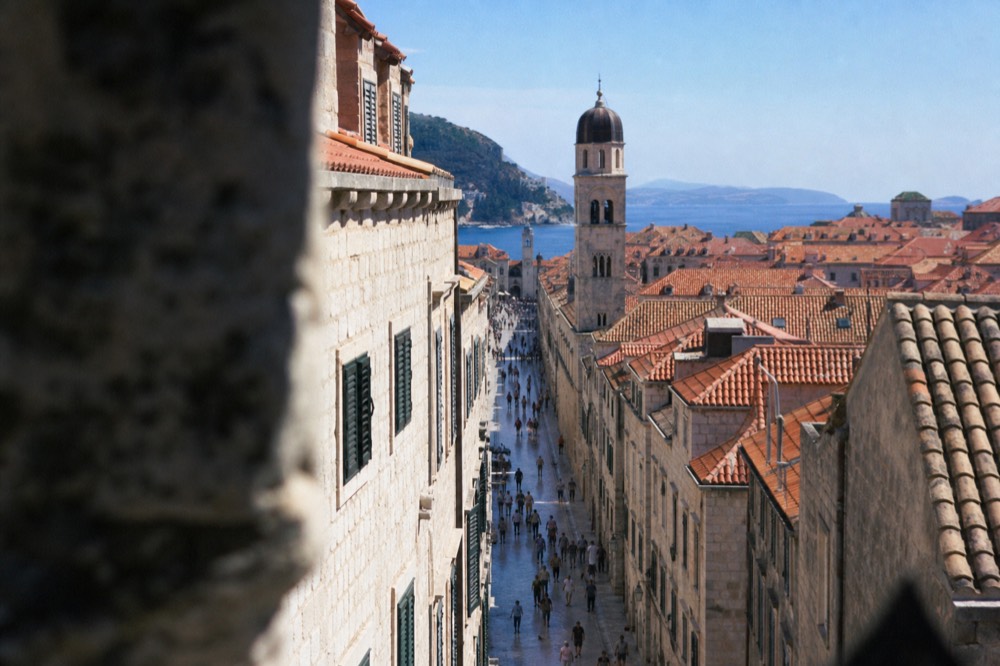
Yes, Dubrovnik is good for children, provided the day is built around water, boats and short walking bursts rather than long sightseeing marathons. The Old Town is car-free and compact, the Stradun runs just 298 metres end to end, the sea is swimmable from June into October, and the cable car and island boats are child-friendly. What it is not good for is midday heat on stone, steep staircases with a stroller, and crowded July afternoons.
I have walked these streets with visiting families since 2015, and the pattern never changes. Children who arrive expecting a museum get restless within an hour. Children who arrive expecting a swim, a boat and a ride up a mountain remember Dubrovnik for years. The city is small enough that you can do both in one day: a morning look at the walls from ground level, an afternoon on the water, and an ice cream on the Stradun in between.
The practical basics help more than you might think. The Old Town is pedestrianised, so a wandering six-year-old is not a safety problem the way they would be on a road. The city counted 41,562 residents at the 2021 census, and the walled core is only 24.7 hectares, a UNESCO World Heritage property since 1979, so nothing inside the walls is more than a few minutes' walk from anything else. Distances that defeat families in bigger cities simply do not exist here.
The honest counterweights matter too. Summer stone gets brutally hot underfoot, the beaches are mostly pebble rather than sand, the famous walls circuit is a long, exposed walk with a ticket price attached, and cruise crowds can fill the lanes in waves. All of those are manageable with timing, which is exactly what the rest of this article is for.
For a full day-by-day framework built around children, the Dubrovnik itinerary with kids lays out the sequencing in detail. And if your question is really whether the whole trip justifies itself, is Dubrovnik worth visiting with kids tackles that from the value angle.
The single best family day in Dubrovnik, in my experience of routing visitors, is a boat day. Three options below cover the range: the Blue Cave and Sunj Beach trip, the Lokrum and Betina Cave boat, and a convertible panorama bus for the day nobody wants to get wet.
What Not to Do in Dubrovnik?
Do not walk the city walls at midday in summer with small children, do not bring a wide stroller into the Old Town's stepped lanes expecting to push it everywhere, skip museum-heavy days, and do not forget swim gear. The walls are 1,940 metres of exposed, almost shadeless stone, the adult ticket is 40 euro in main season, and side lanes are staircases, not streets. Families who respect those four limits rarely have a bad day.
The walls deserve the strongest warning because they are the thing every visitor feels obliged to do. The circuit is up to 25 metres high in places, 4 to 6 metres thick on the land side, and it takes most adults a couple of unhurried hours. There is next to no shade, the stone radiates heat, and there are long stretches with a drop on one side that will keep a nervous parent's hand permanently clenched. The operator's stated hours run 08:00 to 19:30, so if you do take children up, go at opening time. A child 7 to 18 pays 15 euro in main season and under 6 goes free, and there is no family ticket, only those two paid types. The full price structure and what the ticket includes is covered in the city walls tickets guide.
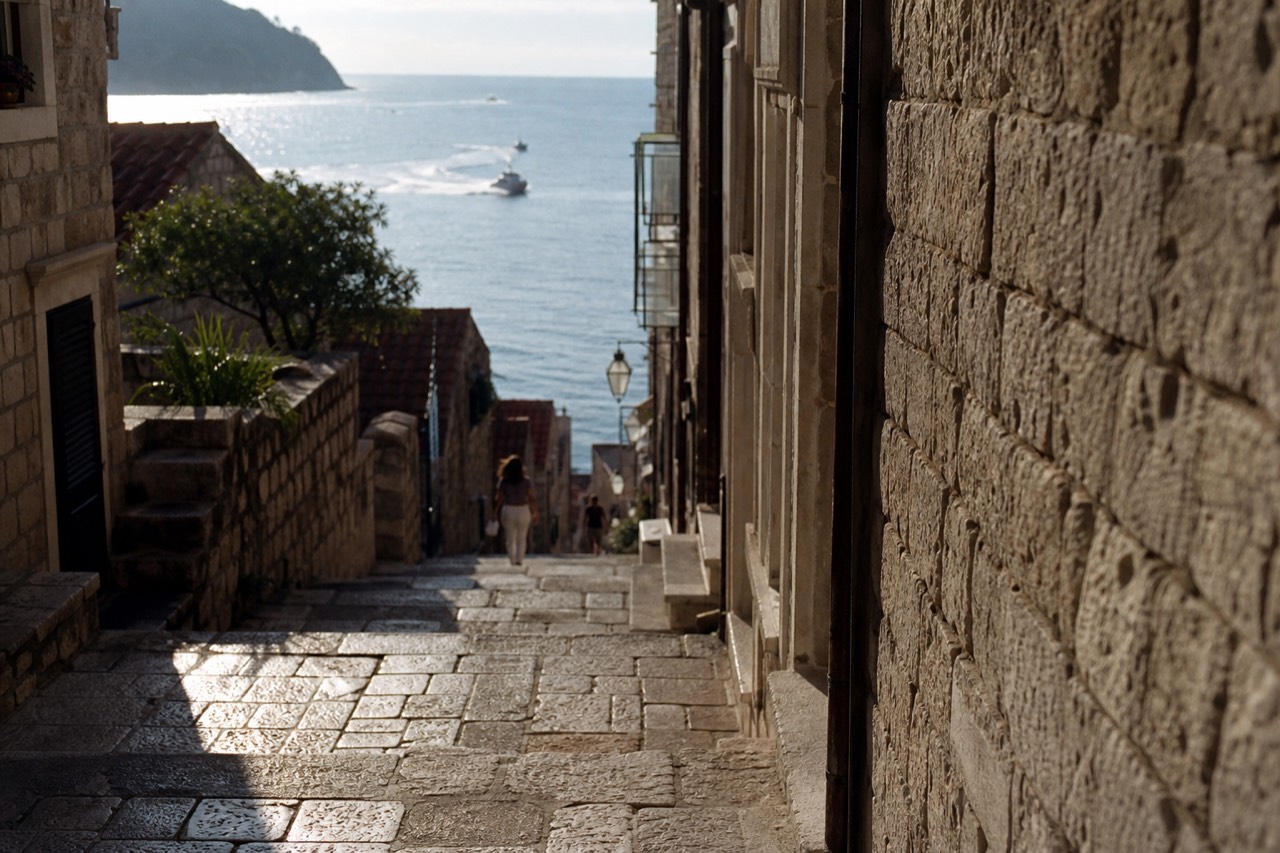
Strollers are the second trap. The Stradun itself is flat and smooth, but almost every street off it climbs or descends in stone steps. A compact folding stroller works; a full-size pram turns every side street into a carrying exercise. Baby carriers are the standard local advice for the Old Town, and the same goes for anyone with limited mobility in your group.
The third mistake is planning the day like a city break. Dubrovnik is a beach-and-boat destination with a museum attached, not the reverse. Children tolerate the Rector's Palace or the Maritime Museum for half an hour, and both are better used as cool-down stops between swims than as destinations. The Dubrovnik pass guide explains when bundling those museums with the walls makes sense, which in main season it does, since the one-day pass costs the same 40 euro as the walls ticket alone and adds the museums plus a 24-hour bus ticket.
| Common family mistake | Why it backfires | What to do instead |
|---|---|---|
| Walls at midday, July or August | 1,940 m of exposed stone, almost no shade | Start at 08:00, or skip with under-7s |
| Full-size stroller in the Old Town | Side lanes are staircases | Carrier or compact fold-up stroller |
| Three museums in one day | Children burn out fast on interiors | One sight, then water |
| Expecting sand beaches in town | Most city beaches are pebble | Boat to Sunj, or bring water shoes |
| Arriving by cruise timing, mid-afternoon | Crowd waves fill the lanes | Do the Old Town before 10:00 |
One more thing not to do: do not treat the sea as an afterthought. The September average for this coast is about 23.6 degrees, part of a long-run 1991 to 2020 average from satellite climate data rather than a beach thermometer, and August sits around 25.8. From June through September the water is a genuine attraction in itself, and a day without a swim stop is a wasted day for most children.
If the heat is the problem, the fix is simple: get on a boat. The Blue Cave and Sunj Beach tour is the one I point families toward most often, because Sunj is a shallow sandy beach, the rare thing this coast lacks, and the boat itself is the entertainment for the transit.
A word on timing the whole trip, because it changes how hard each of these mistakes bites. July and August are the hottest and most crowded months, and they are also when the cruise waves are at their worst. June and September keep the sea warm enough for long swims while thinning the lanes noticeably, and May works for families who want the walls at a civilized temperature and are willing to accept a cooler sea. If your dates are fixed to school holidays and you must travel in August, treat the opening hour of the walls and the before-10:00 Old Town rule as fixed appointments rather than suggestions.
Two practical additions to the "do not" list. Do not arrive in the Old Town without water: there are few shaded places to pause and the climb back up from the lower lanes is real work in summer heat. And do not plan dinner with tired children for 21:00 just because that is when local restaurants fill up; pick an earlier seating or a konoba slightly off the Stradun, where the pace is gentler and nobody minds a child asleep in a chair. The families who enjoy Dubrovnik most are the ones who treat the town as a morning-and-evening place and hand the middle of the day to the water.
Is Dubrovnik Worth Visiting?
Yes, and for families specifically it earns its place through concentration: a walled car-free town, a cable car rising 367 metres to a 405-metre summit, an island reserve a short boat ride away, and swimmable sea, all inside a city of 41,562 people you can cross on foot. Dubrovnik recorded about 4.2 million overnight stays in 2025, sharing first place among Croatian destinations with Rovinj, and the family infrastructure that volume pays for is real.
Worth is a fair question because Dubrovnik is not cheap and it is not secret. But the things that make it famous are precisely the things children respond to. The walls are a castle in the literal sense, with 16 towers, 3 fortresses and 6 bastions; Fort Lovrijenac stands on its own 37-metre sea rock across the bay like something from a storybook. You do not need a child to be interested in history for a fortress to work on them.
The cable car is the clearest yes in the whole city. Built in 1969, it lifts you from a lower terminal at 38 metres to the Mount Srd station at 405 metres, a 367-metre rise over a 778.2-metre track, in 3 minutes 30 seconds. An adult round trip is 30 euro, a child 4 to 12 round trip is 8 euro, and under 4s ride free, per the operator's own price page. The operator claims a view range of up to 60 km on a clear day, and even a hazy afternoon gives you the entire Old Town, Lokrum and the Elaphiti islands laid out below. Children rate it as a ride, parents rate it as a viewpoint, and both are right. The cable car guide covers the timetable detail, including that it closes January to March.
Lokrum is the second easy yes. The island reserve lies just off the Old City Port, and the 30 euro per person ticket covers both reserve entry and the return boat transfer, whether you use the official boat or your own transport. Boats leave the City Harbour at 09:00, then every 15 minutes from 10:00 to 18:00, and the ticket stays usable for three days. Peacocks roam freely, there are botanical gardens, a small lake, and swimming spots off the rocks. Children treat it as an adventure island, which is more or less what it is. The Lokrum Island guide has the full picture.
| Family activity | Cost anchor | Best age | Time needed |
|---|---|---|---|
| Cable car round trip | 30 euro adult, 8 euro child 4 to 12 | All ages | Half a day with the summit |
| Lokrum Island | 30 euro per person, boat included | 4 and up | Half a day |
| City walls | 40 euro adult, 15 euro child 7 to 18 | 8 and up | 2 hours, early start |
| Kayak tour | From $35.49 per person | 6 and up with an adult | 2 hours |
| Old Town wandering | Free | All ages | 1 to 2 hours |
For the day your family wants sightseeing without the walking, the e-tuk-tuk panorama ride is a quiet winner. It runs about 1 hour 45 minutes, is rated a perfect 5 across 1,799 reviews, and costs from $59.24 per person. It is the kind of tour that suits grandparents and tired children equally, covering the viewpoints above the town without a single staircase.
When Not to Visit Dubrovnik?
Do not visit in the height of July and August if you can possibly avoid it, and be aware that September and October, not July, are actually the busiest cruise months: 2025 cruise passengers peaked at 101,246 in September and 100,132 in October, above July's 96,072 and August's 87,385. For families the sweet spots are June and September, when the sea is warm, the heat is sane and the crowds thin.
That cruise fact surprises everyone, and it comes straight from Port Authority data, so it is worth planning around rather than arguing with. The port counted 625,257 cruise passengers across 2025, up from 582,499 in 2024, with 461 calls scheduled for 2026. The Port Authority limits cruise passengers to 8,000 a day in most cases, and of 243 cruise days a year only 18 exceed that number, but on those days the Old Town lanes feel it.
The city even measures this now. Six counters at every Old Town entrance update a headcount every 15 minutes, against an official carrying capacity of 11,275 people from the UNESCO carrying-capacity assessment. On one early-September morning the count climbed from 1,200 at 04:00 to 5,419 at 08:00, peaked at 7,739 at 10:00, and still held 7,205 at 11:00. That curve is the single most useful planning fact a family can have: be inside the walls before 08:00 and you share the lanes with a fraction of the day's visitors.
Heat is the other timing question. The sea tells the story: the long-run average reaches 25.8 degrees in August and 23.6 in September, falling to 21.0 in October. June at 22.5 is already properly swimmable. Air temperature on stone inside the walls runs well above the water, and that combination is why families wilt in August but thrive in June. The best time to visit guide works through the whole year month by month.
| Period | Family verdict | Why |
|---|---|---|
| June | Excellent | Sea at 22.5 degrees, pre-peak crowds, long days |
| July and August | Hard work | Peak heat on stone, cruise waves, highest prices |
| September | Excellent, with a caveat | Sea at 23.6, warm air, but the busiest cruise month |
| October | Good | Sea at 21.0, quieter lanes, second-busiest cruise month |
| November to February | Not a beach trip | Cable car closed January to March, walls ticket drops to 20 euro in December |
On the water itself, timing matters less, which is another argument for boat days. The Blue Cave and Sunj Beach trip costs from $63.48 per person, is rated 4.87 across 3,105 reviews, and pairs a cave run with a long stop at Sunj, a shallow sandy beach where children can stand up a long way out. On a hot afternoon it is the coolest place your family can be, in both senses.
Is It Worth Going to Dubrovnik?
Yes, if you go for the right length of time and build the days around water. Two to three days covers the Old Town, the walls, the cable car, Lokrum and one boat trip without rushing anyone, and that is enough for most families with children. It is not worth going for a single rushed day with small children, and it is not worth going in August without a swim plan, because stone and crowds will set the agenda.
The question behind the question is usually money, and there is no point pretending Dubrovnik is cheap. The walls cost 40 euro per adult in main season, the cable car 30 euro round trip, Lokrum 30 euro, and a family of four can spend real money in three days. The offset is that the free layer is thick: the Stradun, the harbour, the viewpoints from the bridges, the beaches, the peacocks on Lokrum once you are there, and the simple pleasure of a car-free stone city at night. The trip cost guide breaks down a realistic family budget.
What you are really buying is density. Very few places put a fortress city, a mountain cable car, a forested island and warm sea within a 15-minute radius of each other, all walkable, all safe, all with ice cream never more than a couple of minutes away. That is why this site, Things to Do in Dubrovnik, exists at all: the city rewards people who plan even lightly, and punishes people who arrive with nothing booked in August.
So the verdict for families: go, go in June or September if the school calendar allows, stay at least two nights, book one boat day and the cable car in advance, walk the walls at 08:00 or not at all with young children, and leave the stroller at home. Do that and Dubrovnik is not just good for children, it is one of the better small-city family trips on the Mediterranean.
Whichever way you build it, these three cover the family bases: a sandy-beach boat day, a short Lokrum and cave trip, and a panorama bus for the legs that are tired.
Common Questions About Visiting Dubrovnik With Children
Is Dubrovnik good for children?
Yes, when the days are built around swimming, boats and short walks. The Old Town is car-free and compact, the cable car and Lokrum boat are strong child-friendly anchors, and the sea is warm from June into October. It works less well for families who plan long museum days or walk the walls at midday in summer.
What Not to Do in Dubrovnik?
Avoid the city walls at midday in July and August with young children, do not bring a full-size stroller into the stepped side lanes, do not stack several museums into one day, and do not visit without swim gear. The walls are 1,940 metres of exposed stone with almost no shade, and the adult ticket is 40 euro in main season.
Can Children Walk the City Walls?
Children 7 to 18 pay 15 euro in main season and under 6 go free, and there is no family ticket. Most families with children aged roughly 8 and up manage the circuit comfortably with an early start at 08:00. With younger children it is usually better to admire the walls from street level and spend the time on the water instead.
When Not to Visit Dubrovnik?
Avoid the height of July and August if you can, and note that September and October are actually the busiest cruise months, with 2025 cruise passengers peaking at 101,246 in September and 100,132 in October, above July and August. June and September are the family sweet spots: warm sea, sane heat, thinner crowds.
Is Dubrovnik Worth Visiting?
Yes. It concentrates a walled car-free town, a cable car to a 405-metre summit, a forested island reserve and warm swimmable sea into a city of 41,562 people you can cross on foot. It recorded about 4.2 million overnight stays in 2025, sharing first place among Croatian destinations with Rovinj, and the family infrastructure that volume supports is real.
Is It Worth Going to Dubrovnik With Kids?
Yes, for two to three days. That is enough for the Old Town, the walls, the cable car, Lokrum and one boat trip without rushing anyone. Book the boat day and the cable car ahead, walk the walls at opening time or skip them with young children, and go in June or September if your calendar allows.