Luggage Storage in Dubrovnik: Where to Leave Your Bags and What to Do Bag-Free
The single most common arrival problem in Dubrovnik is not tickets or transport, it is the four hours between hotel check-out and your flight, or the half day between your cruise ship docking and sailing, with a suitcase in tow. Here is how the storage situation actually works, and how to spend the hours it frees up.
Short answer
Dubrovnik has no left-luggage office inside the walled Old Town itself, so most travellers use either their hotel's luggage room after check-out, a bookable locker or storage service near the port and the gates, or their cruise ship's own luggage hold. Costs and availability are on each operator's live listing. Ship your bags first, then enjoy the walls, the cable car and the beaches unencumbered.
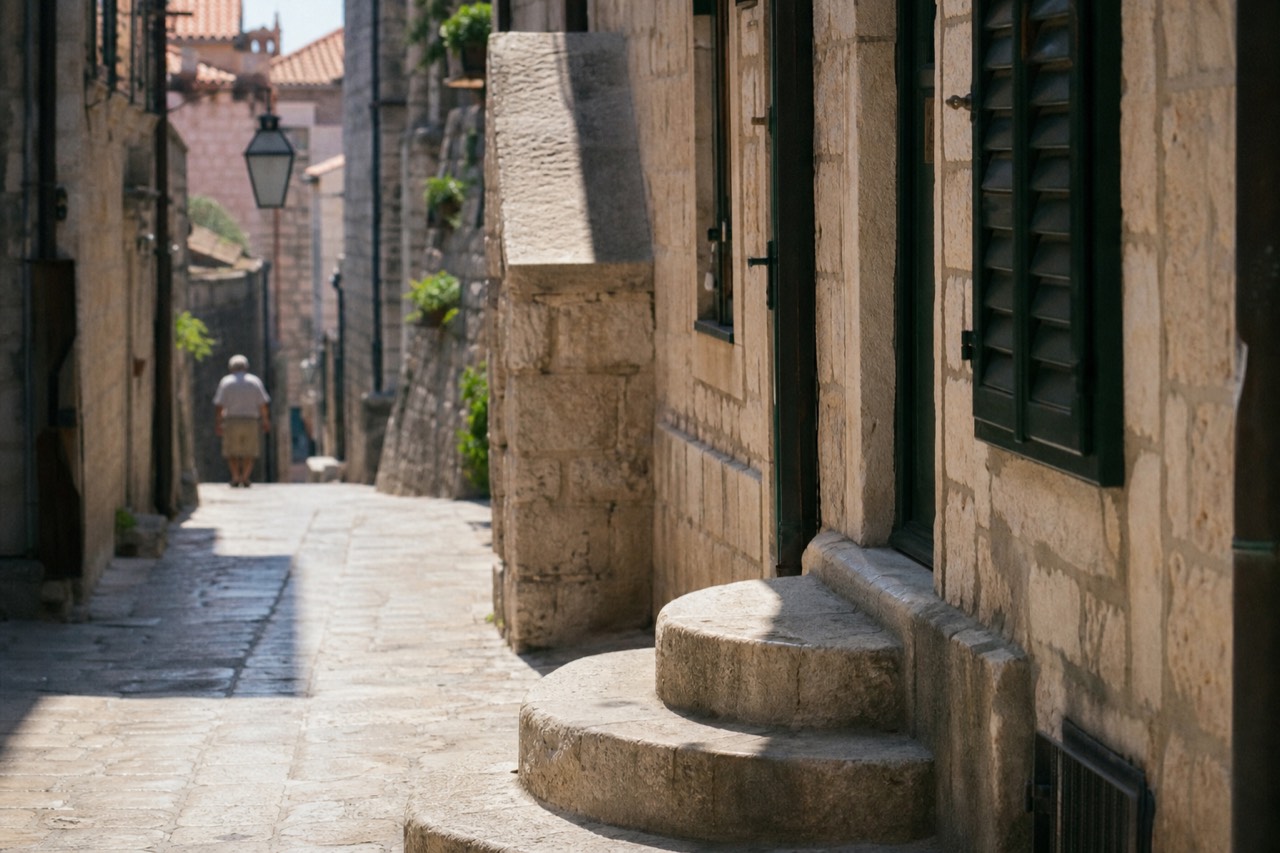
The Stradun is 298 metres long, and not one of those metres is fun with a wheeled suitcase. The main street of the Old Town is polished limestone, the side streets are staircases, and the city walls, the single most popular paid attraction in Dubrovnik, involve over a thousand steps of walking with nowhere to stash a bag at the top. I have watched enough travellers wrestling roller bags down the steps near the Ploče Gate to say this with confidence: solve luggage before you do anything else here.
This guide covers the realistic options for luggage storage in Dubrovnik, what each one suits, and then, because a bag-free half day is a genuine gift in this city, how to spend it well. Along the way it answers the questions that always arrive attached to this one: what not to do in Dubrovnik, whether the city is worth the effort, when to avoid it, and whether the beaches are actually any good.
Where Can You Store Luggage in Dubrovnik?
The four working options are your hotel or guesthouse after check-out, a bookable luggage-storage service with locations near the port and the Old Town gates, your cruise ship's own luggage hold, and, for the airport-bound, the airport's information desk, where storage exists but capacity is limited and current terms are on the desk itself. There is no left-luggage office inside the walled city, and the city walls themselves accept no large bags at all. Each option fits a different traveller, and picking the wrong one is the difference between a relaxed final morning and an hour of circling the same three blocks outside Pile Gate.
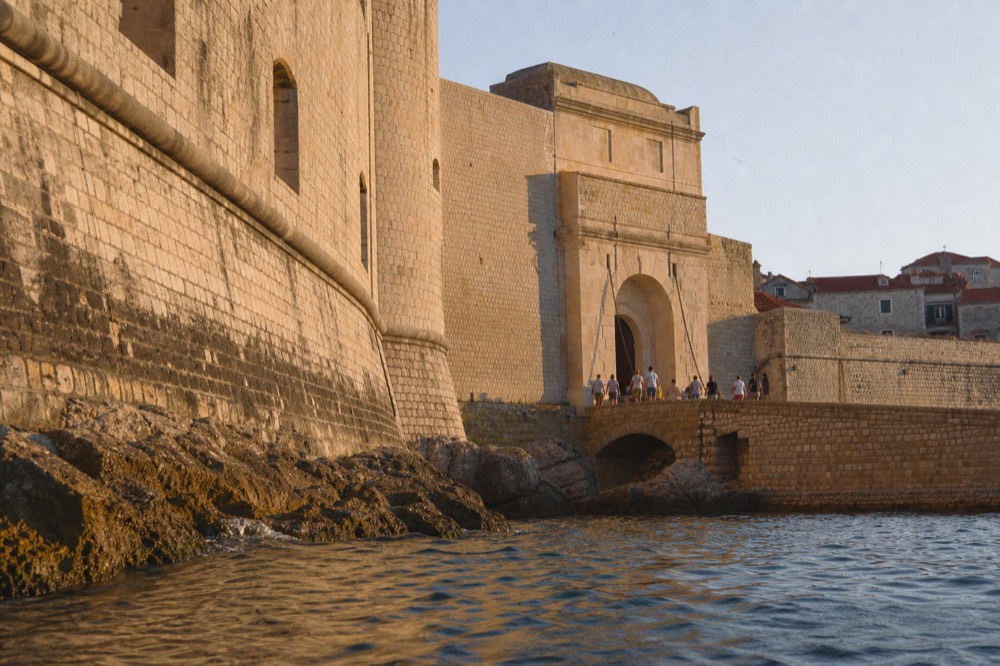
Start with your accommodation. Nearly every hotel in Dubrovnik, and most private guesthouses, will hold bags after check-out on your departure day. This is the free option and usually the best one, with one catch: your bags stay where you slept. If you are staying in Lapad or Babin Kuk, that means a bus or taxi ride back at the end of the day to collect them, which eats into exactly the hours you were trying to use. I usually tell people to plan the geometry before they commit: stay within a fifteen-minute walk of where you will end your day, and the hotel option is unbeatable.
Bookable storage services are the second option, and they are the right answer for cruise passengers and anyone with a late flight. These operate as staffed drop points or locker banks near the port at Gruž and around the approaches to the Old Town, and they are booked in advance for a set number of hours or days. Prices and exact locations are on each operator's live listing, and I would not quote a figure here that I have not verified at the counter. What I can say from the city's layout: choose a drop point on the same side of town as your final departure, because crossing the whole city twice with bags defeats the purpose.
If you arrived by sea, your ship is the best locker of all. Cruise lines hold luggage on board on port days, and the walk from the port to the Old Town is covered in detail in our Dubrovnik cruise port guide, which also covers the transport options if walking is not for you. The mistake to avoid is dragging bags off the ship on a turnaround day when you are leaving from the airport instead; in that case a bookable service near Gruž or the airport bus route is the cleaner plan. The full logistics of that specific move are laid out in cruise port to Old Town transport.
One hard rule that surprises people: the city walls themselves prohibit large bags, and there are no lockers at the gates. The walls circuit is 1,940 metres of walking, much of it on steps, and the operator, the Society of Friends of Dubrovnik Antiquities, does not provide storage. Store first, climb second.
| Storage option | Best for | Watch out for |
|---|---|---|
| Hotel or guesthouse luggage room | Departure day, staying near the Old Town | Bags stay where you slept; plan the return trip |
| Bookable locker or drop point | Cruise days, late flights, early check-ins | Book ahead in peak season; locations sit outside the walls |
| Cruise ship luggage hold | Anyone sailing onward the same evening | Only works if you return to the ship before sailing |
| Airport information desk | Long layovers or a final afternoon elsewhere | Limited capacity; confirm terms on arrival, not by memory |
How Much Does Luggage Storage in Dubrovnik Cost?
Honest answer: per-item pricing for bookable services in Dubrovnik generally lands in the range typical for Croatian coastal cities, but exact figures move with the season, and the only reliable number is the one on the operator's live listing at the moment you book. Hotel storage after check-out is normally free, and cruise ship holds are included in your fare. Treat any specific figure quoted in a forum post as a snapshot, not a price list. What you can plan around is the structure of the cost, and that structure is stable.
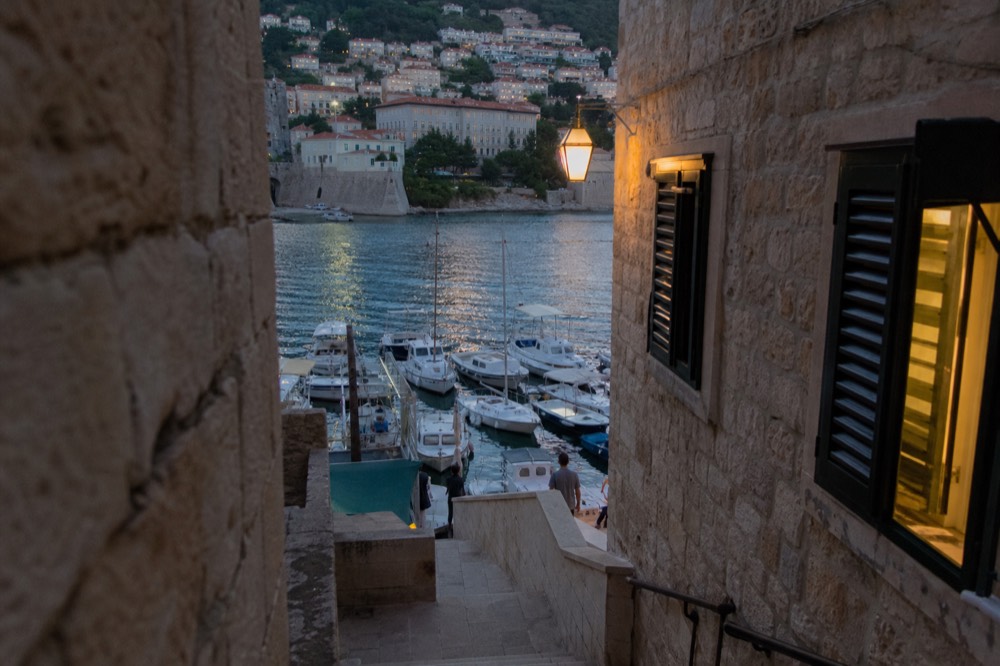
Bookable services in Croatian tourist cities almost universally price per bag, per day or per block of hours, with a surcharge for oversized items like surfboards or bicycles. The booking flow shows you the total before you commit, and cancellation on the better listings is free up to shortly before the start time, which matters in a city where weather and ship schedules shift plans. If a listing does not show the total before payment, close the tab and find one that does.
The hidden cost is time, not money. A drop point near Gruž is cheap and convenient if your plan is the port, the Lapad beaches or a boat tour. It is a poor choice if your plan is the cable car and the Old Town, because you will spend your bag-free hours walking back for the bags. Before booking anything, sketch the afternoon: where do you want to be at 15:00, and where do you need to be at 18:00? The storage booking should sit on the line between those two points.
There is a scenario where the maths changes completely: a long final day with a museum-heavy plan. The Dubrovnik Pass is 40 euro for one day in main season, 1 March to 30 November, the same price as the standalone walls ticket in that window, and it adds ten more sights plus a 24-hour bus ticket, per the official pass site. If your bag-free day was going to include the walls and two museums anyway, the pass can effectively pay for your storage several times over. The official details, including the one-time-visit rule per institution, are at dubrovnikpass.com.
| Dubrovnik Pass tier | Price | Season on sale | Transport included |
|---|---|---|---|
| One day | 40 euro | 1 March to 30 November | 24-hour bus ticket |
| Three days | 50 euro | 1 March to 30 November | 72-hour bus ticket, suburban coupons |
| Seven days | 60 euro | 1 March to 30 November | 168-hour bus ticket, suburban coupons |
If your bag-free hours are more about views than museums, the trio below covers the three ways people most often spend them: a cheap multipass that bundles the cable car with museums, an open-sided tuk-tuk ride around the panoramas, and a full day trip that only makes sense once the bags are gone.
What Not to Do in Dubrovnik?
The five mistakes worth avoiding are dragging a suitcase through the Old Town's staircases, buying a walls ticket at midday in July or August, booking nothing for the cable car on a sunset evening in high season, attempting a Montenegro or Mostar day trip with luggage in tow, and treating every restaurant on the Stradun as equally good, which it is not. Each of these has a fix, and every fix is easier once your bags are stored. None of them will ruin a trip on their own, but together they define the difference between a smooth visit and a frazzled one.
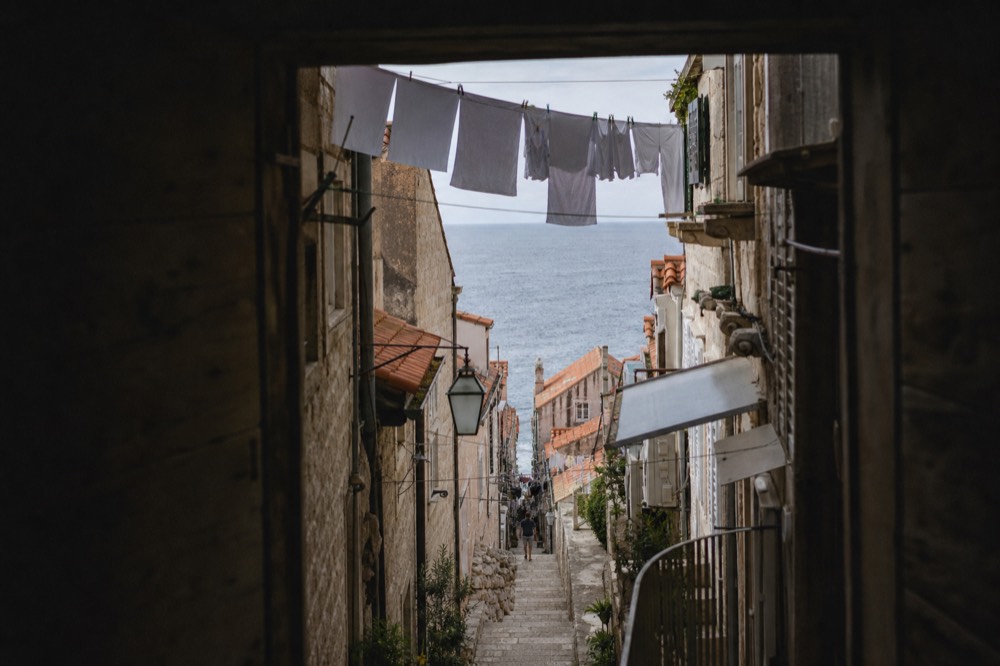
The suitcase problem deserves its own paragraph because it compounds. The Old Town is a car-free grid of stairs, and the fastest route between two points is often a staircase that wheels cannot climb. Porters exist at some hotels for exactly this reason. If you are staying inside the walls, pack a bag you can carry, not one you can roll, and if you are only passing through on a final day, the storage sections above exist for you.
The walls timing problem is about heat and crowds together. The adult walls ticket is 40 euro in main season, 1 March to 30 November, and 20 euro in December, with child tickets at 15 euro and then 5 euro, per the operator's own webshop. That ticket is actually a combination covering the walls, Fort Lovrijenac, the Western Outer Wall and the coin collection, and the operator's stated hours at time of check were 08:00 to 19:30. The fix is simple: go at opening, when the stones are cool and the coach groups have not arrived, or in the late afternoon. What to do instead at midday is covered in our city walls tickets guide.
The day-trip mistake is the one storage can actually solve. Border crossings to Montenegro and Bosnia take time, the boats to the Elaphiti Islands have no luggage space to speak of, and a kayaking tour with a suitcase on the beach is a comedy nobody enjoys. A full-day Montenegro trip runs from $58 per person, rated 4.4 across 5,611 reviews, which is fine value, but only with empty hands. The answer to "what do I do with my bags on the last day" and "can I squeeze in one more country" is the same storage booking.
Splitting the walls from the rest of the day is a strategy, not a defeat.
Is Dubrovnik Worth Visiting?
Yes, and the reasons are measurable rather than sentimental: a UNESCO World Heritage old core inscribed in 1979 under criteria (i)(iii)(iv), a 1,940-metre complete walkable wall circuit around it, a cable car that lifts you 367 metres in three and a half minutes, a swimming season that runs comfortably into October, and about 4.2 million overnight stays in 2025, which shared first place among Croatian destinations with Rovinj. People are not coming by accident, and they are not coming once.
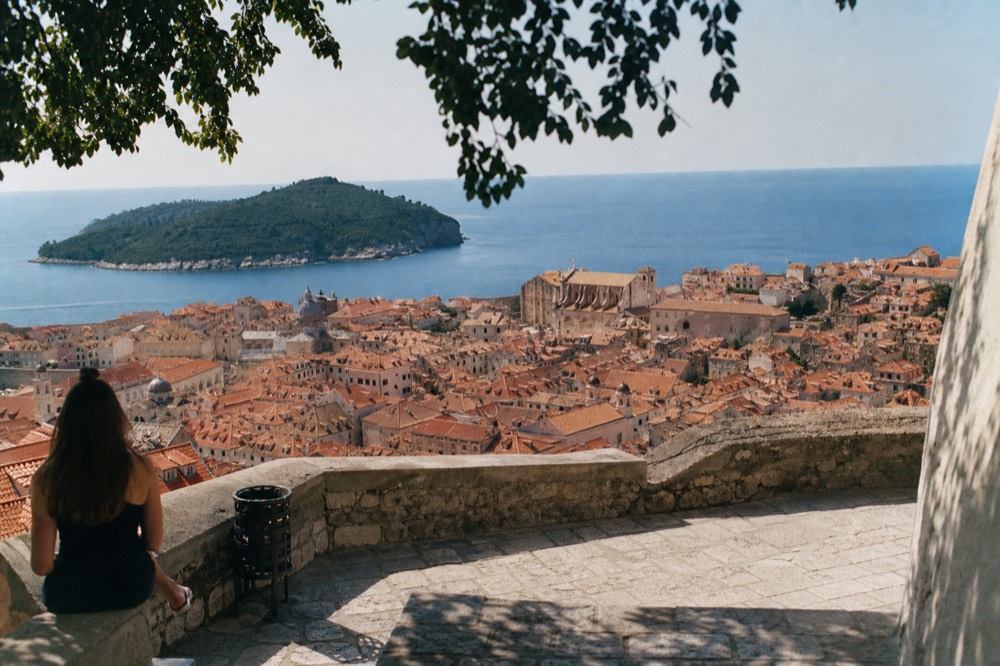
The honest version of the answer includes the cost. Dubrovnik is expensive by Croatian standards, crowded at midday in the high season, and small enough that a careless visit can feel like a queue with scenery. The question of whether it is a tourist trap has a real answer, and it is no, with conditions. Those conditions, and how to meet them, are laid out in is Dubrovnik worth visiting, but the short version is this: the city rewards early mornings, weekday visits and a plan that leaves the Stradun between 11:00 and 15:00.
The UNESCO inscription is not decoration, it is the reason the city survived the last war intact enough to be worth visiting. The Old Town spent 1991 to 1998 on the List of World Heritage in Danger after shell damage, and was rebuilt. Standing on Minceta's terrace, or reading the siege story at the museum on Srd, changes what the rooftops mean. Our Dubrovnik history guide covers that arc properly.
Worth visiting also means worth re-visiting on foot. The cheapest paid Old Town walk starts at $20 per person, and three walks in the city run on a pay-what-you-want basis through GuruWalk, including a highly rated one that covers the old city in an hour and 45 minutes. A guided hour puts two thousand years of Ragusan history into the stones you are looking at, which is the difference between a pretty walk and a comprehensible one.
When to Avoid Dubrovnik?
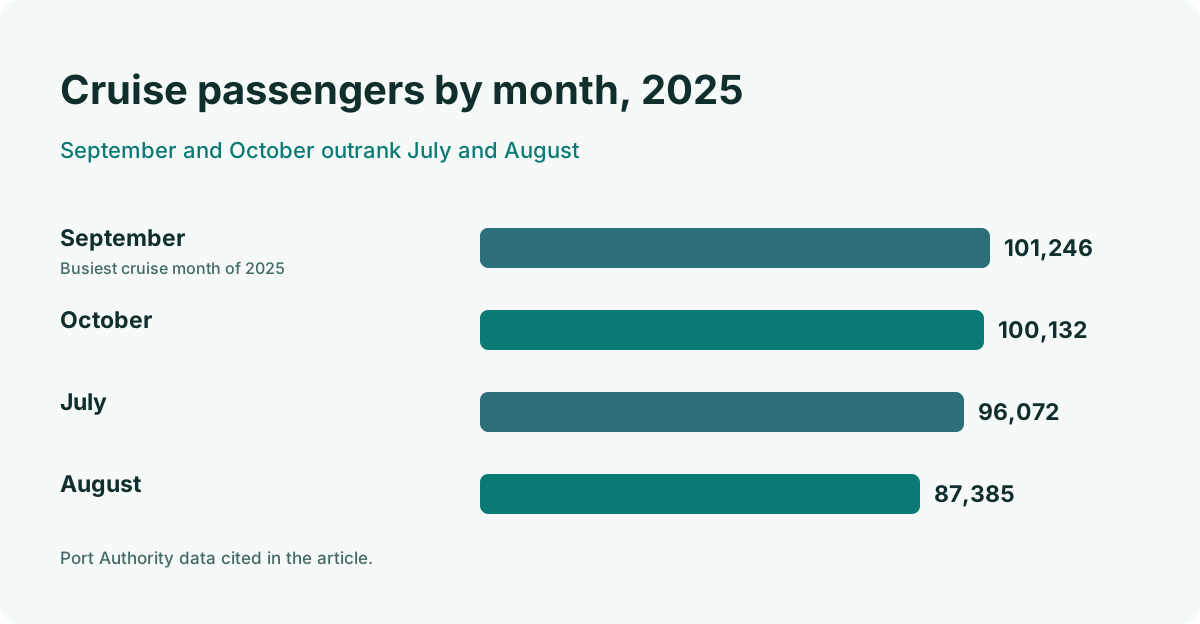
Avoid midday in July and August, when heat and crowds peak together, and plan around September and October, which are actually the two busiest cruise months of the year: Port Authority data shows cruise passengers peaked at 101,246 in September and 100,132 in October 2025, above July's 96,072 and August's 87,385. If you must come in high summer, come early, leave at midday, return in the evening. The month-level view matters more than the season-level one.
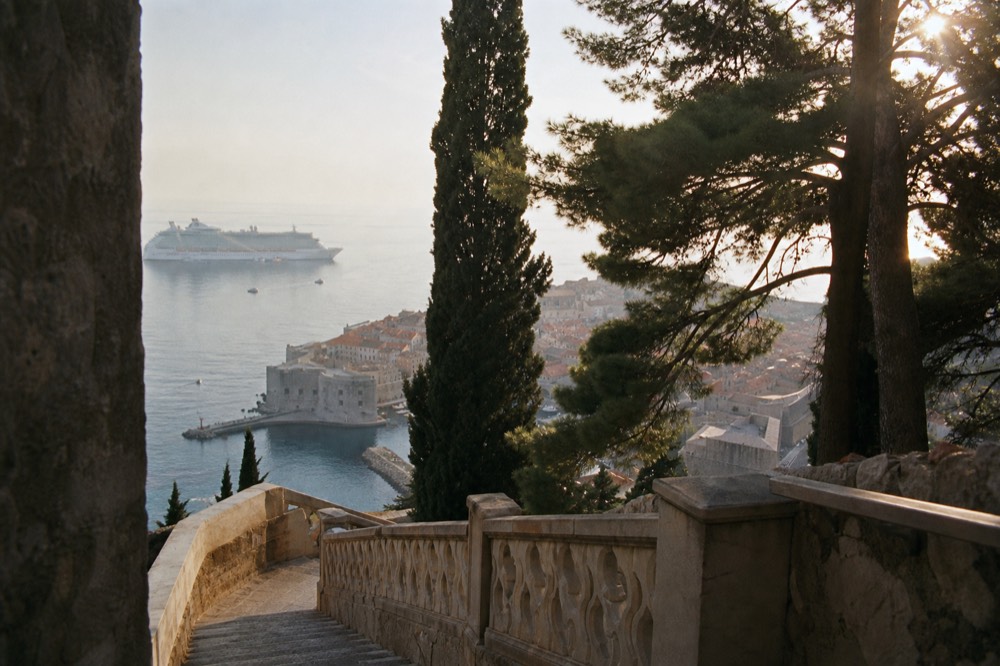
That September-and-October cruise peak is the single most useful planning fact about Dubrovnik, and it runs against every instinct. The city's official visitor-counting system, six counters at every Old Town entrance updating every fifteen minutes, recorded a real curve on 8 September 2026: 3,139 people at 07:00, 5,419 at 08:00, a 7,739 peak at 10:00, then 7,205 at 11:00. The official carrying capacity, from the UNESCO carrying-capacity assessment, is 11,275. What that means in practice is that even on a busy September day the town is busy at mid-morning and calmer both before and after it.
The Port Authority limits cruise passengers to 8,000 a day in most cases, with a "2+1" berthing arrangement, and refused about forty cruise call requests in a single season. These are ship capacity figures, not a headcount of people actually walking ashore. The current rules and numbers are published by the Port Authority itself, which is the source worth trusting on this question.
For the weather angle: the sea's long-run averages for this coast, from the NOAA OISST 1991 to 2020 climatology, put July at 24.9 degrees and August at 25.8, with September at 23.6 and October at 21.0. Those are open-water averages, not beach readings; sheltered bays run warmer, and the Croatian met service's own Dubrovnik buoy read 27.0 to 27.4 degrees on 8 September 2026 against that 23.6 September mean. The practical read: avoid the midday crush of July and August, and know that September brings the cruise peak but still brings swimmable water. The month-by-month detail, including the rain question, is in our best time to visit guide.
Is Dubrovnik Good for Beaches?
Yes, but not in the postcard-sandy sense: Dubrovnik's beaches are mostly stone slabs, pebbles and rocky shelves on clean, clear water, with the best swimming in sheltered coves like Sveti Jakov and the sandy stretch at Sunj on Lopud island, reachable by boat. The sea is genuinely warm from June through September, with long-run averages of 22.5, 24.9, 25.8 and 23.6 degrees across those months. Come for the water quality and the settings, not for sand castles.
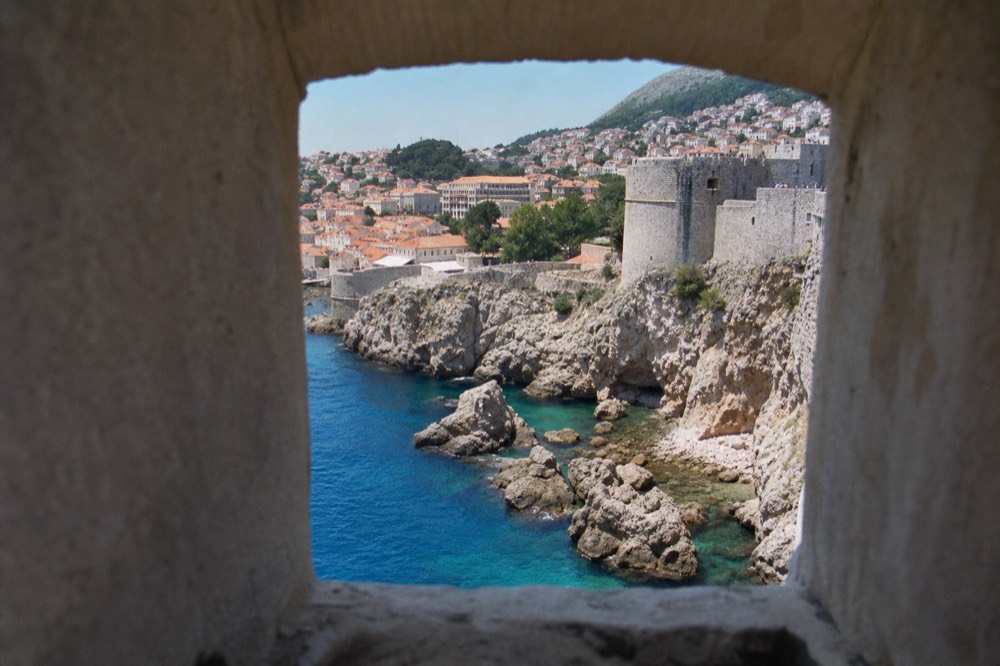
The beach map splits by geography. Banje sits just outside the Ploče Gate with the Old Town walls behind you, which makes it the classic bag-drop-then-swim stop. Copacabana and the Lapad beaches sit on the northern side, near the port side of town and the hotels. Sveti Jakov, below a monastery garden with the Old Town view, is the one people photograph. None of them involves sand between your toes except via a boat trip: Sunj on Lopud, in the Elaphiti chain, is the sandy exception, and a full-day Elaphiti cruise with lunch runs from $59.16 per person, rated 4.9 across 10,312 reviews, which makes it the most-reviewed product in the city.
The pairing of storage and swimming is the real point in a luggage guide. A morning on the walls in September heat, a bag stashed near the gate, and an afternoon at Banje is a near-perfect Dubrovnik day, and it only works bag-free. Towels and swimwear pack into a daypack; suitcases do not. The full rundown of where to swim and when is in our beaches guide, and the water-temperature month by month is in swimming in Dubrovnik.
| Beach | Surface | Setting | Best for |
|---|---|---|---|
| Banje | Pebble and stone platforms | Below the Ploče side, Old Town view | Swim straight after sightseeing |
| Lapad beaches | Pebble | Bay on the northern side, near hotels | Families, easy facilities |
| Copacabana | Pebble | Peninsula west of the Old Town | Watersports, space |
| Sveti Jakov | Stone and pebble | Cove below a garden, full Old Town panorama | The photograph, quieter water |
| Sunj, Lopud | Sand | Elaphiti island, boat trip required | The only real sandy day |
| Month | Long-run sea average | What it means for swimming |
|---|---|---|
| June | 22.5 degrees | Comfortable for most swimmers |
| July | 24.9 degrees | Peak season water, peak crowds on land |
| August | 25.8 degrees | Warmest open-water month of the year |
| September | 23.6 degrees | Still very swimmable, sheltered bays warmer |
| October | 21.0 degrees | Fine for a quick dip, cool for long swims |
Those averages are NOAA's 1991 to 2020 open-water climatology for this coast, corroborated by EMODnet within about a degree, and they are not this year's water and not a beach thermometer. They are, however, the right tool for choosing a month.
What Can You Do With a Few Bag-Free Hours?
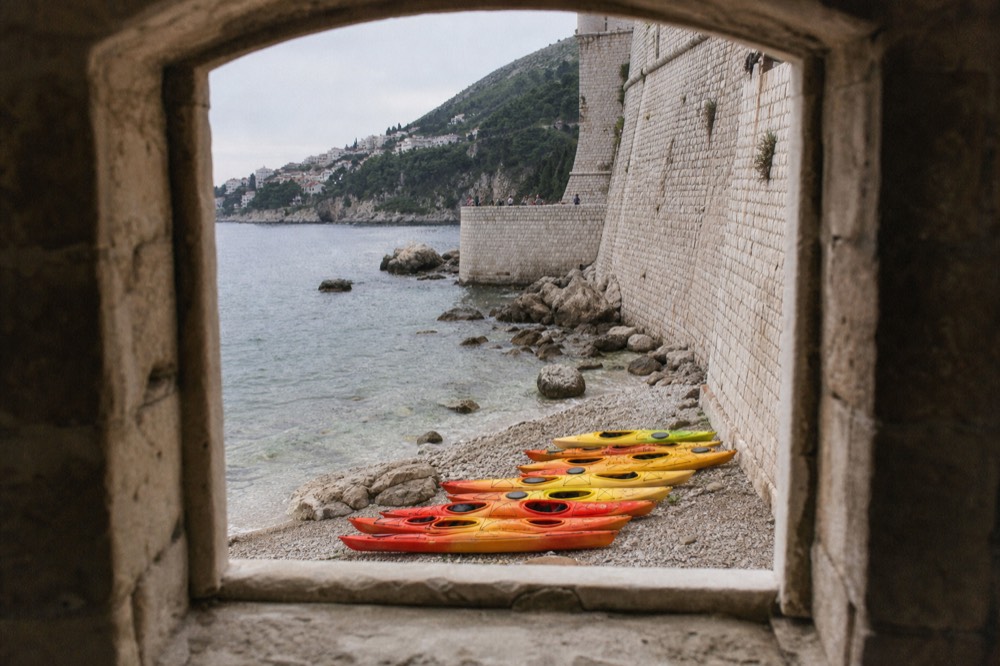
The best short plans are a two-hour city walls circuit early or late in the day, the cable car up Mount Srd for the panorama and a museum afterwards, a kayak session around Lokrum and Betina Cave, or a swim at Banje. A multipass that bundles the cable car with the museums starts from $24 per person, a kayak tour from $35.49, and the walls ticket is 40 euro in main season. None of these are possible with a suitcase in hand.
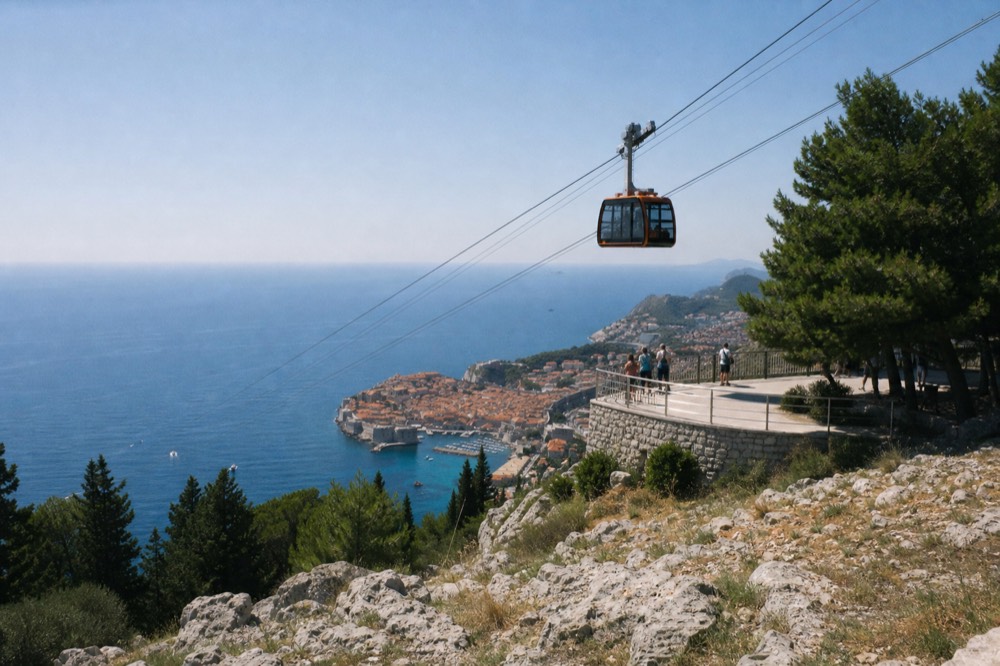
The cable car deserves the first mention because it fits the smallest time budget. Two cabins climb the 778.2-metre track in three and a half minutes, a 367-metre rise to the upper station at 405 metres above sea level, with the operator quoting a view range of up to 60 km on a clear day. Adult round trip is 30 euro in 2026, one way 17 euro, children 4 to 12 at 8 and 5 euro, under 4 free, and the ride is closed January to March. Combine it with a couple of museums on a multipass, from $24 per person rated 4 across 101 reviews, and you have a full afternoon for the price of a lunch. The full logistics, including whether to book ahead, are in our cable car tickets guide.
If your hours fall in the middle of the day and the heat rules out the walls, the E-Tuk Tuk panorama ride is the air-moving option: an hour and 45 minutes around the viewpoints above the city, from $59.24 per person and rated 5 across 1,799 reviews, which is the kind of satisfaction score that turns a hot afternoon into a highlight.
And if the bag-free window is a whole day rather than an afternoon, Montenegro is the ambitious answer. A day trip from Dubrovnik runs from $58 per person, rated 4.4 across 5,611 reviews, and crosses a border, so it is emphatically a leave-the-luggage-behind excursion. One guest review sums up both the value and the one variable that decides the day:
We booked the semi-private tour. 6 people total. Robert was fantastic! He was so knowledgeable and enthusiastic about everything. The tour was well organized and we had just the right time at the spots. Extremely satisfied with this tour and would certainly recommend to anyone. Also the border in September only took us 15 minutes.
Nithya
Fifteen minutes at the border is the good scenario. In peak weeks it can be much longer, which is exactly why this trip belongs on a flexible, bag-free day.
Whatever you choose, the sequencing rule holds: store the bags before the first ticket, not after. The walls, the kayak, the cable car and the border queue all punish the person still holding a suitcase, and the city rewards the traveller who arrived an hour early enough to be empty-handed. More ideas for the hours between check-out and departure are in free things to do in Dubrovnik, and for the wider picture, Things to Do in Dubrovnik is where this site keeps the full inventory.
If the afternoon has turned into a full spare day, the three options below cover the spread: the cheap multipass, the open-air panorama ride and the border-crossing day trip.
Common Questions About Luggage Storage in Dubrovnik
Is There Left Luggage at the Old Town Gates?
No. The walled city itself has no left-luggage office, and the city walls accept no large bags. Use a hotel luggage room, a bookable service near the port or the gates, or your cruise ship's hold.
How Much Does a Locker Cost per Day?
Per-item daily pricing is typical for bookable services, but the figure moves with the season and the only reliable number is on the operator's live listing when you book. Hotel storage after check-out is normally free.
Can I Store Luggage on a Cruise Day?
Yes, and the ship is usually the best locker: cruise lines hold luggage on port days. If you are leaving from the airport instead, use a bookable drop point near the port or the airport bus route.
is dubrovnik good for beaches?
Yes, with a caveat: most beaches are stone or pebble rather than sand, on very clean water. The sandy exception is Sunj on Lopud, reachable by boat. Long-run sea averages run 22.5 degrees in June to 25.8 in August and 23.6 in September.
When Should I Avoid Dubrovnik?
Avoid midday in July and August, when heat and crowds peak together, and note that September and October are actually the two busiest cruise months: 101,246 and 100,132 cruise passengers in 2025, above July and August.
Can I Take a Suitcase on the City Walls?
No large bags are allowed, and there is no storage at the gates. The adult ticket is 40 euro in main season, 1 March to 30 November, and 20 euro in December; store your luggage before you climb.