Fort Lovrijenac: The Cliffside Fortress Across From the Old Town
Fort Lovrijenac stands on a 37-metre-high sea rock just outside the Old Town walls, and it is the one fortress in Dubrovnik you should never skip. Here is how the ticket works, when to go, and what the view gives you.
Short answer
Fort Lovrijenac sits on a 37-metre sea rock a short walk from Pile Gate. Entry is included with the 40 euro main-season city walls ticket, or 15 euro bought alone. Visit in the morning or late afternoon, allow about an hour, and combine it with the walls circuit for the best value.
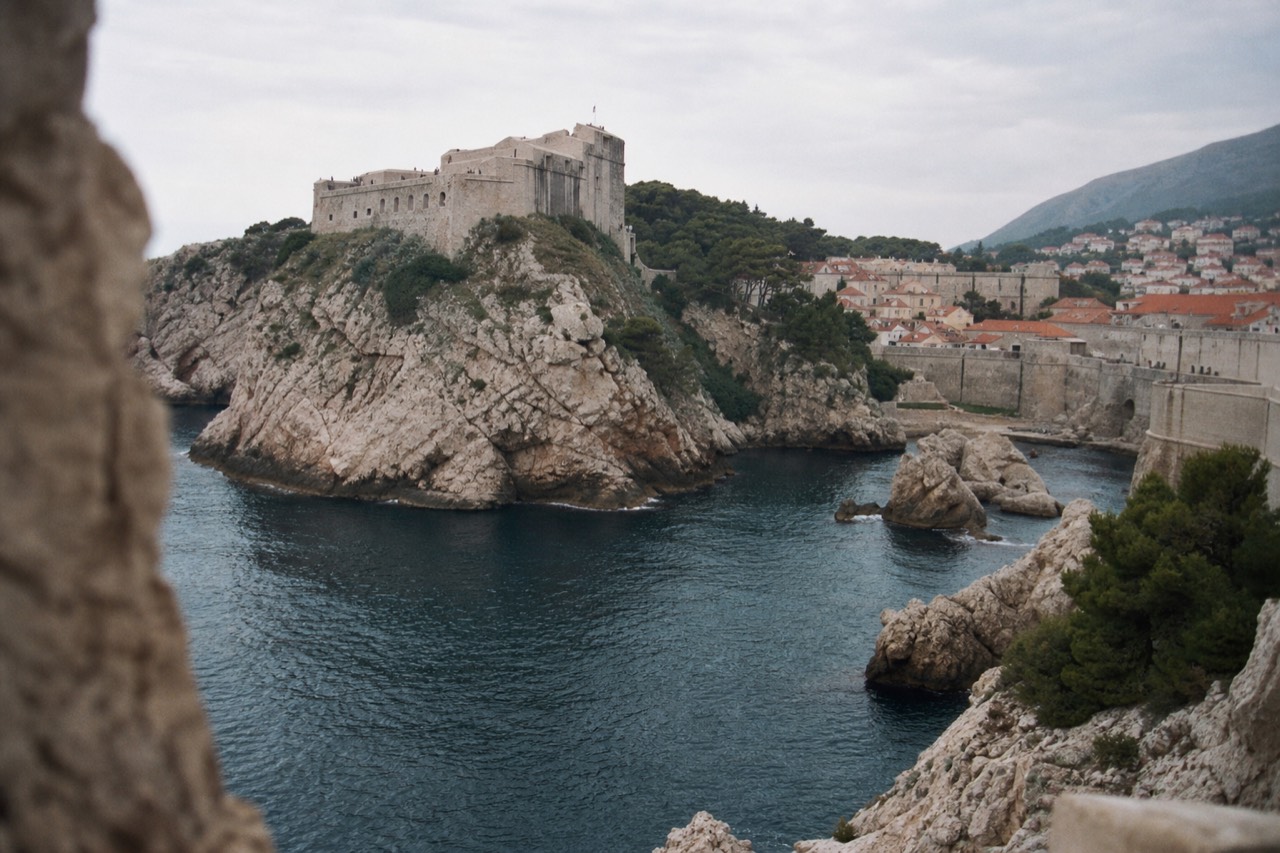
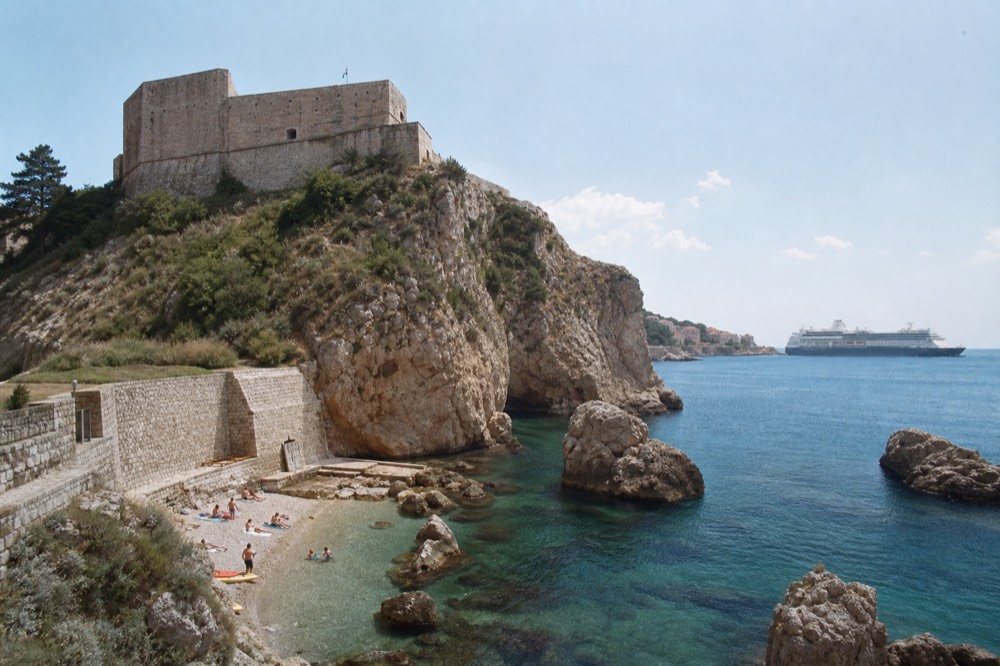
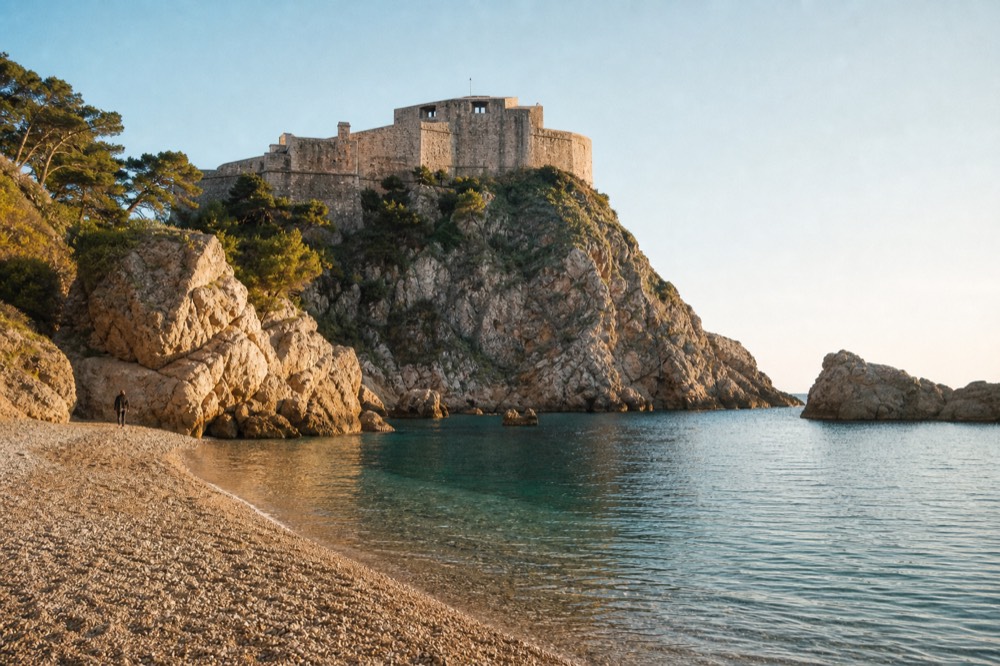
Fort Lovrijenac is the fortress most visitors photograph from the walls and then never actually enter, which is a mistake I see every week from my side of the bay. It stands on a 37-metre-high sea rock on the western side of the Old Town, close enough that you can walk to its gate from Pile in a few minutes, far enough that most of the crowd never crosses the little bay to do it. The result is a fortress with the single best view of the walled city, and usually a fraction of the people you will find up on the walls themselves.
The trade the Republic of Ragusa made when it built here is visible the moment you arrive: the seaward walls of Lovrijenac are thick, the landward walls are deliberately thin, so that a garrison commander who turned against the city could be shelled out of his own fort from the town. Whether or not you care about the history, the geometry tells the story on its own. This page covers the ticket, the walk over, the timing, and the questions I get asked most often about Dubrovnik as a whole, from what not to do here to whether the beaches are actually any good.
What Is Fort Lovrijenac and Why Does It Matter?
Fort Lovrijenac is Dubrovnik's independent cliff fortress, standing on a 37-metre-high sea rock just west of the Old Town, and it guards the one stretch of coast the main wall cannot cover. It is part of the city's UNESCO-listed defence system, it appears in Game of Thrones as the Red Keep, and its ramparts give the finest single view of the walled town anywhere. Allow about an hour.
The Old City of Dubrovnik was inscribed on the UNESCO World Heritage List in 1979 under criteria (i), (iii) and (iv), covering a property area of 24.7 hectares with a large buffer zone around it. Lovrijenac sits inside that protected landscape, and it is the outlier of the system: the main wall runs 1,940 metres around the town with sixteen towers, three fortresses, six bastions and more besides, but Lovrijenac stands apart, on its own rock, across a small inlet from the western wall. The fortress reached its final form as part of the same long building programme that finished the last bastion of the main circuit in 1660.
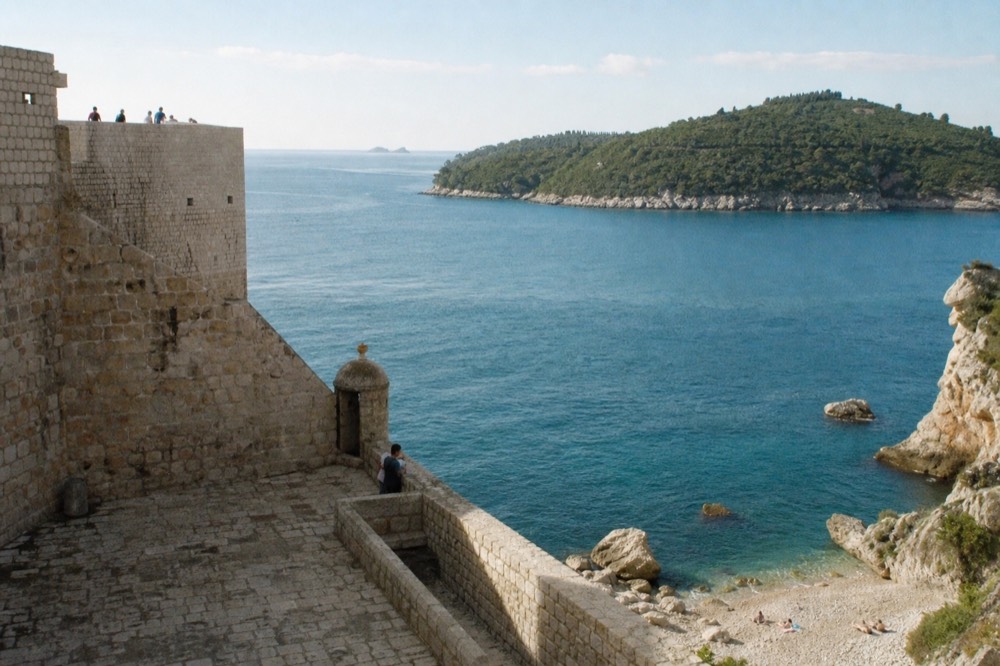
What makes it matter for a visitor is practical as much as historical. The walls circuit is a one-way walk with stairs, sun and, in summer, queues, while Lovrijenac is an open site you can wander at your own pace, with shade inside the courtyard and a terrace that faces the entire Old Town front. If you want the postcard photograph of Dubrovnik, the one with the whole walled city stacked above the sea, this terrace is where it is taken. If you want the Game of Thrones connection, this is the Red Keep, and the Game of Thrones filming locations guide covers the rest of the set.
The interior is sparser than the town museums: a courtyard, a chapel space, terraces, and the ramparts themselves. That sparseness is the point. You come for the position, not for exhibits, and the position is extraordinary.
How Do You Get to Fort Lovrijenac and What Does It Cost?
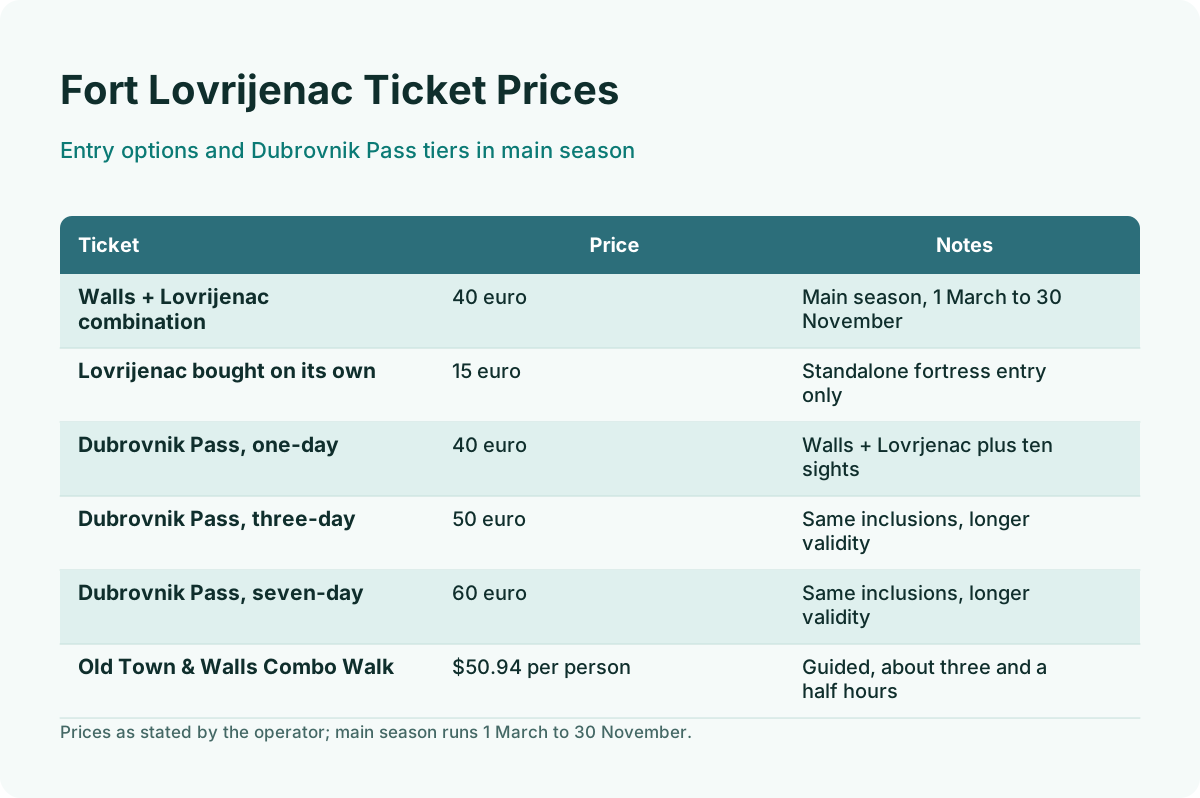
Walk out of Pile Gate, turn left along the shoreline path outside the walls, and follow it around the small bay: the fortress entrance is a ten-minute stroll from the gate, up a modest flight of stone steps. Entry is included with the main-season city walls ticket at 40 euro, or 15 euro bought on its own, and the operator's stated hours at the entrance are 08:00 to 19:30.
The ticket arrangement is the part that confuses people, so let me be precise. The 40 euro adult walls ticket, sold for the main season from 1 March to 30 November, is actually a combination: walls plus Fort Lovrijenac, plus the Western Outer Wall and the Collection of Coins of the Republic of Ragusa. There is no cheaper walls-only ticket. Lovrijenac bought on its own is 15 euro. Children aged 7 to 18 pay 15 euro on the walls combination in main season, and under 6 goes free. There is no family ticket, only those two paid types.
| Ticket | Main season (1 Mar to 30 Nov) | December |
|---|---|---|
| Adult, walls + Lovrijenac combination | 40 euro | 20 euro |
| Child 7 to 18, same combination | 15 euro | 5 euro |
| Child 6 and under | free | free |
| Lovrijenac alone | 15 euro | 15 euro |
The Dubrovnik Pass complicates this in a good way. The one-day pass costs 40 euro in main season, exactly the same as the standalone walls ticket, and its first listed inclusion is verbatim "City Walls + Lovrjenac Fortress", on top of ten more sights and a 24-hour bus ticket. Every tier allows a one-time visit to each institution, the walls included. The three-day pass is 50 euro and the seven-day is 60 euro, both adding suburban bus coupons and House Bukovac in Cavtat. In December the standalone walls ticket drops to 20 euro and no pass tier is on sale at all, so the "pass costs the same as the walls" line is a main-season claim only. The full breakdown is in the Dubrovnik Pass guide, and the operator's own site carries the current prices at citywallsdubrovnik.hr.
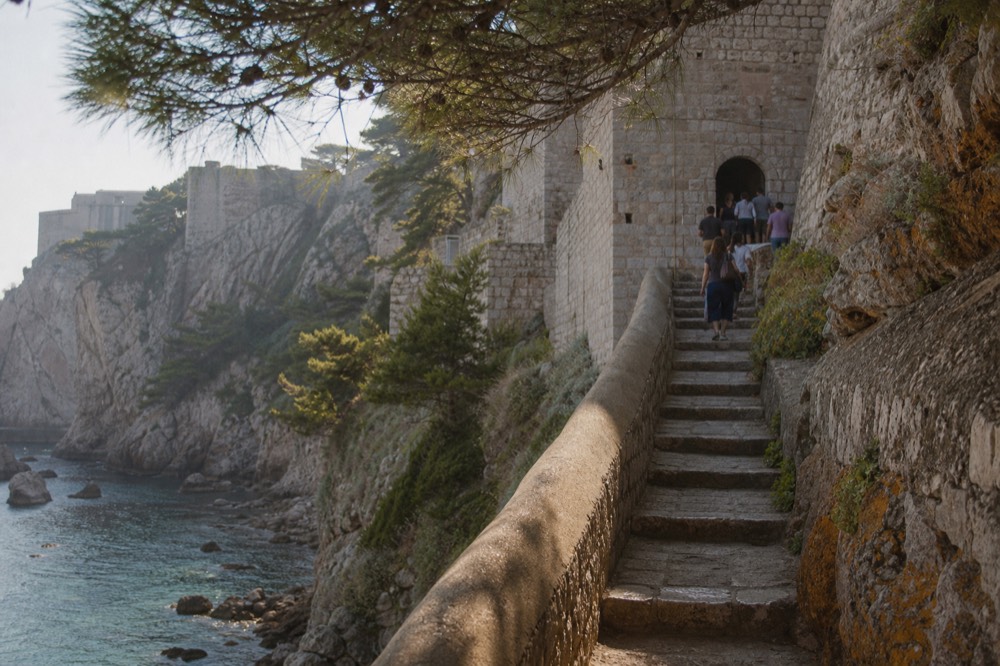
Because Lovrijenac is on the walls ticket, most people visit both in one morning: walls first at opening, then cross the bay to the fortress when the circuit drops you back near Pile. That order works, but the reverse works too, and in high summer the fortress terrace in the late afternoon, with the sun behind you lighting the whole Old Town face, is the better photograph. A guided option ties it together neatly: the 2-Hour City Walls Walk from Dubrovnik Walks runs about two hours from $29.58 per person, rated 4.8 across 1,387 reviews, and covers the walls story the fortress was built to complete.
If you would rather have the whole story in one outing, the Old Town & Walls Combo Walk runs about three and a half hours from $50.94 per person, rated 4.8 across 1,183 reviews, and links the town, the walls and the fortress narrative into a single loop.
What Not to Do in Dubrovnik?
The three mistakes I see constantly: walking the walls at midday in July and August with no water, trying to drive into the Old Town, which is pedestrianised and closed to traffic, and buying a standalone Lovrijenac ticket when your walls ticket already includes it. Add eating lunch on the Stradun itself and you have the classic first-day error set.
Start with the ticket mistake because this page exists to prevent it. If you are walking the walls at all, the 40 euro combination already covers Lovrijenac, so paying 15 euro separately is paying twice for the same fortress. The only travellers who should buy the standalone ticket are those who genuinely will not do the walls circuit, perhaps for mobility or heat reasons, and Lovrijenac alone is a fair consolation: it is a shorter visit, with fewer stairs and a better view per step climbed.
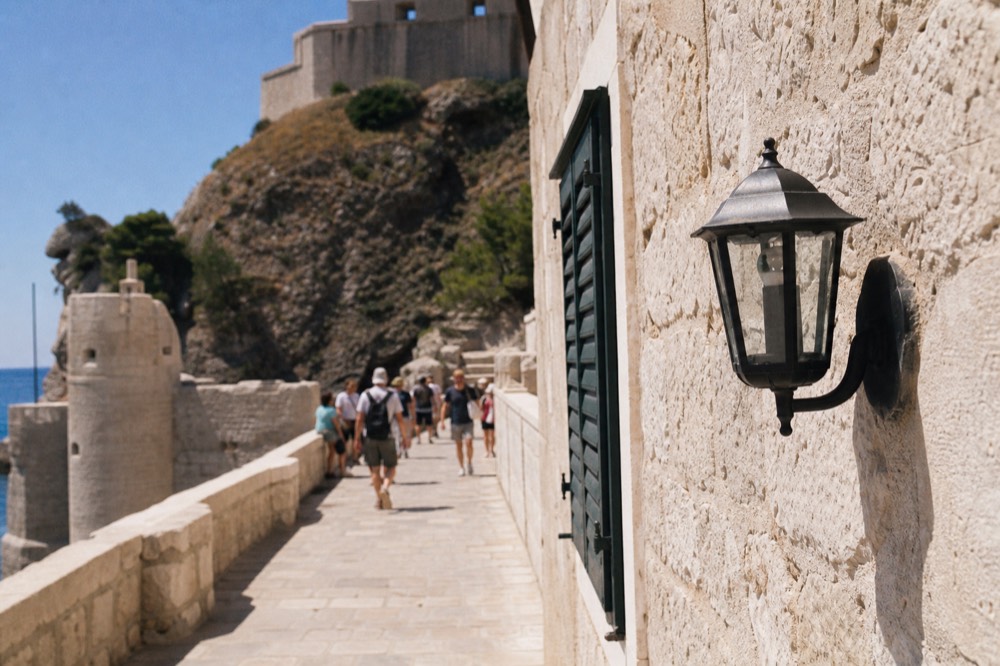
The midday walls walk deserves its own warning. The circuit is almost entirely unshaded, the stone radiates heat, and the operator's stated hours run 08:00 to 19:30, so there is no reason to be up there between 12:00 and 15:00 in high summer. Go at 08:00 or after 17:00. The same logic applies to the fortress terrace, though it has more shade inside. Water is sold near the entrances, at prices you can predict.
| Common mistake | Why it fails | Do this instead |
|---|---|---|
| Buying Lovrijenac separately after walking the walls | The 40 euro walls ticket already includes it | Keep your ticket and show it at the fortress gate |
| Walls at midday in July or August | No shade, hot stone, peak crowds | Start at 08:00 or go after 17:00 |
| Driving to the Old Town | The core is fully pedestrianised | Park outside and walk in, or use the bus |
| Lunch on the Stradun | Same food, higher price, in the sun | Walk two streets into the side lanes |
| One day only in peak season | Crowds eat the daylight | Two days minimum, or visit in shoulder months |
The pedestrianisation point matters more than people expect. There is no driving into the walled core at all, no drop-off at your apartment door if that apartment is inside the walls, and luggage gets carried over stone steps that have been polished smooth by four centuries of feet. The parking guide covers where to leave a car; the short version is outside the core and on foot from there.
One more, softer mistake: treating Dubrovnik as a checklist of sights rather than a small city you walk through. The town inside the walls covers just 24.7 hectares, the Stradun is 298 metres end to end, and everything worth seeing is within a quarter-hour walk of everything else. The travellers who enjoy it most are the ones who pick two things a day, one of them the walls or Lovrijenac, and give the rest of the time to a swim and a long dinner.
Is Dubrovnik Worth Visiting?
Yes, and the numbers back it up: Dubrovnik recorded about 4.2 million overnight stays in 2025, sharing first place among Croatian destinations with Rovinj, and it remains the country's most complete walled city. It is expensive and crowded in peak season, but the Old Town, the walls and the island setting justify the trip if you time it right and budget honestly.
The honest case for Dubrovnik is that nothing else on the Croatian coast does what it does. The walled core is intact, walkable and genuinely lived-in, a city of 41,562 people at the 2021 census with a working daily life running underneath the tourism, from the market at Gruž to the konobas in the back lanes. The walls themselves, 1,940 metres of them, are the single best-value paid sight in the country when you count what the 40 euro combination ticket covers: the full circuit, Lovrijenac, the Western Outer Wall and a coin collection.
The honest case against is cost and congestion. A summer visit puts you in the busiest months of a very busy year: the city took 625,257 cruise passengers in 2025, up from 582,499 in 2024, and 461 cruise calls are scheduled for 2026. Prices for food and lodging run high for Croatia, and the Stradun at midday in August is a river of people moving at one speed. If your only window is July or August, go with early starts and lowered expectations for tranquillity. If you can shift to May, late September or October, you get the same city with more room in it.
This well organized tour helped put Dubrovnik's past (and present) into perspective. It's incredible that the city walls have withstood the test of time. Antun was a wonderful guide.
linda_a
That review is from the 2-Hour City Walls Walk, and it captures the argument for worth in one line: the walls withstood the test of time, and a guide who can explain how turns a hot stair-climb into the best two hours of the trip. The same operator runs the walk from $29.58 per person, rated 4.8 across 1,387 reviews.
For the balance sheet, the is it worth visiting guide runs the full cost-per-day maths, and the trip cost guide breaks down a realistic daily budget. The short version: worth it, not cheap, and much better in shoulder season.
When to Avoid Dubrovnik?
Avoid the peak cruise days of July through October if crowd-avoidance is your priority, because the counter-intuitive truth from Port Authority data is that September, with 101,246 cruise passengers in 2025, and October, with 100,132, both out-drew July at 96,072 and August at 87,385. For heat, avoid late July and August. For closures, avoid January to March, when the cable car is shut.
That September and October lead the cruise table surprises everyone, and it is the single most useful planning fact on this site. The story that "summer is busiest" is true for heat and for general tourism, but for cruise passengers specifically, the two autumn months are the heaviest of the year. October also brings the last big cruise days of the 2026 schedule: 6 October carries two ships and up to 5,798 passengers by capacity, and 29 September two ships and up to 5,675. Everything else covered here is indexed on Things to Do in Dubrovnik.
The city manages this with a counting system worth knowing about: six counters at every Old Town entrance update a headcount every 15 minutes, and the official carrying capacity from the UNESCO assessment is 11,275 people. On a real September morning the curve ran 5,419 people at 08:00, 7,297 at 09:00, a 7,739 peak at 10:00, then 7,205 by 11:00. Read that curve again and the advice writes itself: the Old Town is emptiest before 09:00 and after about 17:00, and the worst hours are 10:00 to 14:00.
| Period | Crowds | Heat | Verdict |
|---|---|---|---|
| January to March | Very low | Cool, sea about 14 degrees | Quiet but cable car closed, some closures |
| April to May | Moderate | Pleasant | Excellent window |
| June | Building | Warm, sea 22.5 degrees | Good, book ahead |
| July to August | High | Hottest, sea 25.8 in August | Go early, swim at midday |
| September to October | Highest cruise months | Warm, sea 23.6 in September | Best weather-to-crowd trade if you start early |
| November to December | Low | Mild, sea 18.5 to 16.0 | Walls ticket drops to 20 euro in December |
Two notes on those sea figures. They are NOAA long-run averages for 1991 to 2020, open-water grid-cell values rather than beach readings, so a sheltered bay in high summer runs warmer: the Croatian met service's own Dubrovnik buoy read 27.0 to 27.4 degrees on 8 September 2026 against a 23.6 September average. And cruise passenger figures are ship capacity, not people who actually walk ashore, so "up to X scheduled" is the honest phrasing. The Port Authority's own statistics, at portdubrovnik.hr, are the primary source.
Is Dubrovnik Good for Beaches?
Yes, but not in the long sandy sense: Dubrovnik's beaches are mostly small, stony or rocky, with clear water and easy access from town, and the swimming season runs roughly from June into October on the sea-temperature averages. Banje sits below the Old Town, Copacabana and Lapad Bay serve the hotel side, and the islands carry the best swimming of all.
Manage expectations first. This is a limestone coast, and most beaches here are concrete terraces, pebble patches or rock shelves with ladder entries. What you get in exchange is water clarity that sandy beaches rarely match, and a swimming season anchored by real numbers: the long-run sea averages run 22.5 degrees in June, 24.9 in July, 25.8 in August, 23.6 in September and 21.0 in October. Those are open-water averages, not a beach thermometer, but they frame the season honestly: June through September is comfortable, May is brisk, October is a matter of taste.
| Beach | Type | Where | Best for |
|---|---|---|---|
| Banje | Pebble and rock | Just outside the walls below Ploče | Old Town views, shortest walk |
| Lapad Bay | Pebble, developed | Lapad peninsula | Families, cafes, easy day |
| Copacabana | Pebble and concrete | Babin Kuk, Lapad west | Watersports, sunsets |
| Sveti Jakov | Pebble, fewer people | Below the Srd road, east | The view back to the walls |
| Island beaches, e.g. Šunj on Lopud | Shallow sandy | Elaphiti Islands | The best actual sand, by boat |
The fortress connection is real, not a segue. A morning at Lovrijenac plus an afternoon swim is the ideal Dubrovnik day in summer: the terrace by 08:00, the walls circuit if you have the legs, then out of the heat and into the water by early afternoon when the Old Town curve peaks. On 8 September 2026 the count inside the walls hit 7,739 at 10:00; the water at Banje at that hour has a fraction of that company. The beaches guide ranks them all properly, and the swimming season guide charts every month.
If sand genuinely matters, take a boat. Šunj beach on Lopud, one of the Elaphiti Islands, is the region's real sandy shallow, and the full-day Elaphite cruises call there: the most-reviewed runs about eight hours from $59.16 per person with lunch included, rated 4.9 across 10,312 reviews, and turns a beach day into an island day without any planning on your part.
How Does Lovrijenac Fit Into a Full Walls Day?
The efficient pattern is walls at 08:00 from Pile, finish the circuit where you started about two hours later, then walk the few minutes around the bay to Lovrijenac while your legs still work and your ticket still covers it. In main season the one-day Dubrovnik Pass at 40 euro matches the walls ticket price and adds ten sights plus buses, which turns the fortress into one stop on a museum day.
I have walked people through this order more times than I can count, and the sequencing is the difference between a good day and a wrecked one. The walls circuit is the harder half: stairs, sun, one-way flow, and it is best done at opening when the stone is cool and the cruise-day curve is still climbing. Lovrijenac is the gentler half, self-paced, shadier, and it rewards the late light. Doing it second also means your walls ticket is already in hand, since the combination covers both.
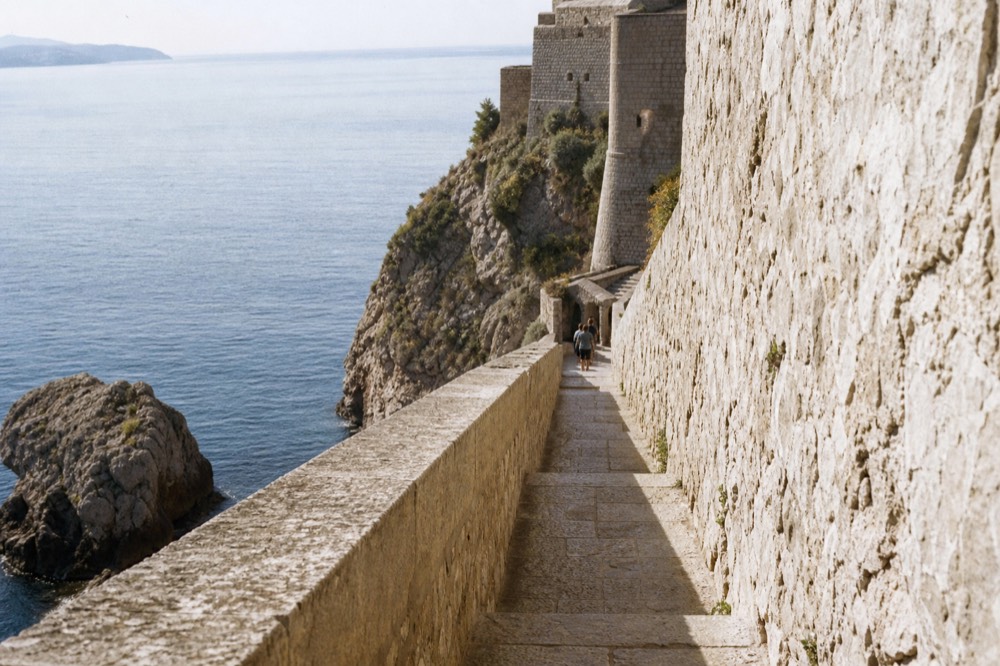
For the pass question, run the arithmetic against your own plan. One day, walls plus Lovrijenac only: the 40 euro standalone ticket and the 40 euro one-day pass cost the same in main season, so the pass wins by default, adding the Rector's Palace, the Maritime Museum, the Franciscan Monastery Museum and more, plus a 24-hour bus ticket. Three days or more: the 50 euro three-day pass adds suburban coupons usable for Cavtat and House Bukovac, and it beats buying walls plus museums separately for almost any museum-positive itinerary. Remember the one-time-visit rule per institution, and remember December: walls at 20 euro, no pass on sale. The city walls tickets guide has the full comparison.
A middle path for anyone who wants context without a full commitment: the Convertible Bus Panorama Tour with audio guide, from $34.77 per person and rated 4.6 across 796 reviews, loops the outside of the city including the vantage over the bay where Lovrijenac and the walls face each other, which is a useful orientation before you commit your legs to either.
What Will You Actually See From the Ramparts?
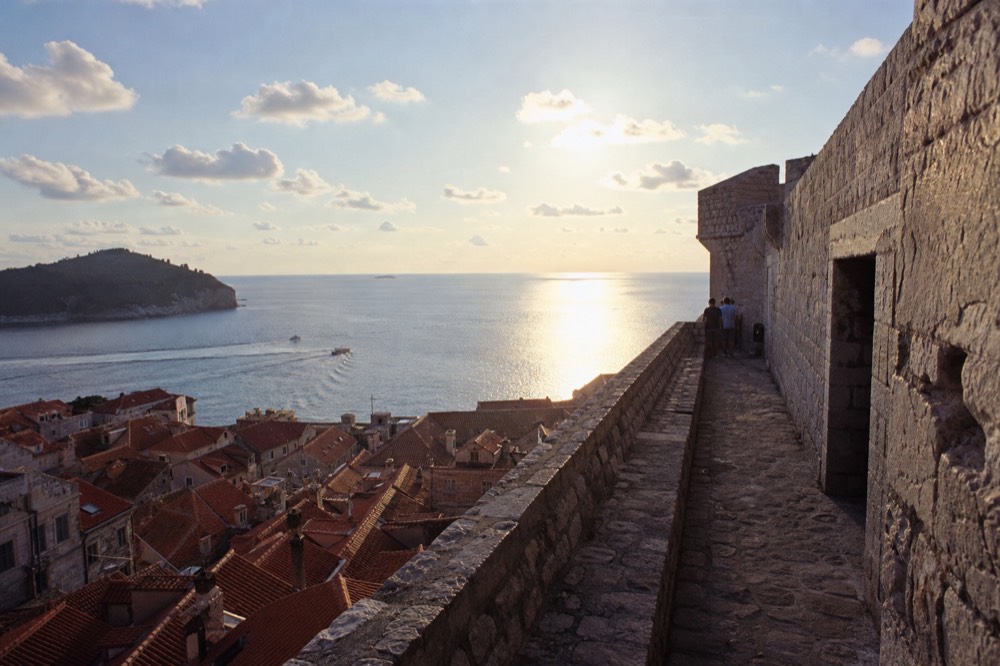
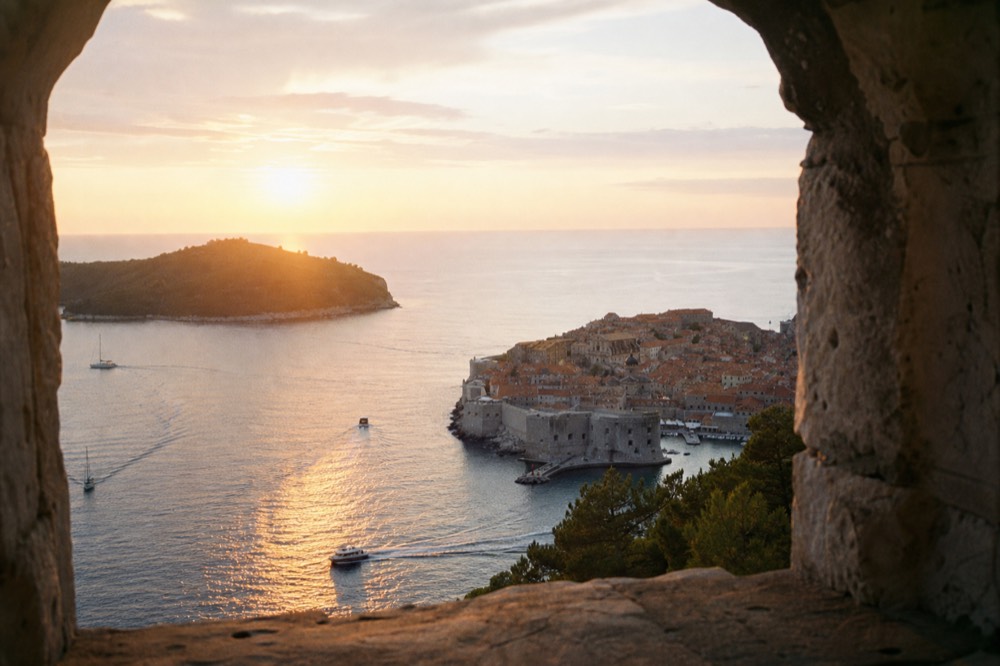
From Lovrijenac's terraces you get the complete western face of the Old Town walls, the full terracotta roofscape stacked above the sea, Lokrum island to the south-east, and, on a clear day, the Dinaric hills behind the city, with the cable car line visible climbing Mount Srd at 405 metres above the lower station's 38. It is the single best composition of Dubrovnik available anywhere.
Photographers should work the terrace in the last two hours of daylight, when the sun moves behind the fortress and lights the town face flat and warm. Morning light backlights the Old Town and silhouettes the towers, which suits moody frames but not the classic postcard. The fortress itself, with its thick seaward walls and thin landward face, photographs well from the walls circuit opposite, particularly from the stretch near the Bokar bastion, so the two sights photograph each other.
For the wider view, the cable car on Mount Srd is the complement rather than the competitor: the upper terminal sits at 405.0 metres above sea level, a 367.0-metre rise over a 778.2-metre track, three and a half minutes each way, with the operator stating a clear-day view range of up to 60 km. Adult round trip is 30 euro in 2026, one way 17 euro, child 4 to 12 round trip 8 euro, under 4 free, and it closes January to March. The operator's own pages at dubrovnikcablecar.com carry the monthly timetable, which stretches to midnight in high summer. The cable car guide covers the full decision.
The combination I recommend to anyone with two clear evenings: Lovrijenac terrace for the town at golden hour, then the cable car or a sunset cruise for the whole coast after. The sunset spots guide ranks every option, and the shortlist is the fortress terrace, the Srd upper station, and a boat on the water, in that order of cost.
If one guided outing has to carry the whole defence story, the Old Town & Walls Combo Walk is the one that does it: about three and a half hours from $50.94 per person, rated 4.8 across 1,183 reviews, walking the town and the circuit with the fortress narrative included.
Whichever of these you choose, the fortress itself costs you nothing extra once the walls ticket is in your pocket, and that is the closing argument of this page: cross the bay, climb the steps, and claim the view most of the crowd photographs only from a distance.
Common Questions About Fort Lovrijenac
Is Fort Lovrijenac included in the city walls ticket?
Yes. The 40 euro main-season adult ticket is a walls plus Lovrijenac combination, and it also covers the Western Outer Wall and the Collection of Coins of the Republic of Ragusa. Lovrijenac bought on its own is 15 euro, so only buy that if you are skipping the walls entirely.
what not to do in dubrovnik?
Do not walk the walls at midday in high summer, do not buy a separate Lovrijenac ticket when your walls ticket already includes it, do not try to drive into the pedestrianised Old Town, and do not eat every meal on the Stradun. Start early, keep the fortress for the afternoon light, and move two streets inland for food.
When Is the Best Time of Day to Visit Fort Lovrijenac?
The fortress is at its best either early, before the heat and the tour groups, or in the last two hours of daylight, when the sun lights the whole Old Town face from behind you. The operator's stated hours are 08:00 to 19:30, and the terrace is the classic golden-hour photograph of the walled city.
When to avoid Dubrovnik?
Avoid the peak cruise months if crowds are your main concern: September and October actually out-drew July and August for cruise passengers in 2025, with 101,246 and 100,132 against 96,072 and 87,385. For heat, avoid late July and August. For closures, avoid January to March, when the cable car is shut and some seasonal operations pause.
Is Dubrovnik good for beaches?
Good, but mostly stony and rocky rather than sandy. Banje sits just below the Old Town, Lapad Bay and Copacabana serve the hotel side, and the clearest, calmest swimming is off the islands, especially the sandy shallow at Šunj on Lopud. The sea averages 23.6 degrees in September, so the season runs well into autumn.
How Long Should I Spend at Fort Lovrijenac?
About an hour covers the courtyard, the ramparts and the terraces at a relaxed pace. Add another half hour if you are photographing seriously, since the light changes across the Old Town face and the best compositions take patience. Combined with the walls circuit, plan a full morning.