Dubrovnik in May: Weather, Crowds and What to Book
May is the month when Dubrovnik turns the corner: the sea warms past swimmable, the cable car stretches its evening hours and the cruise calendar is still a month away from its true peak. Here is how to plan it.
Short answer
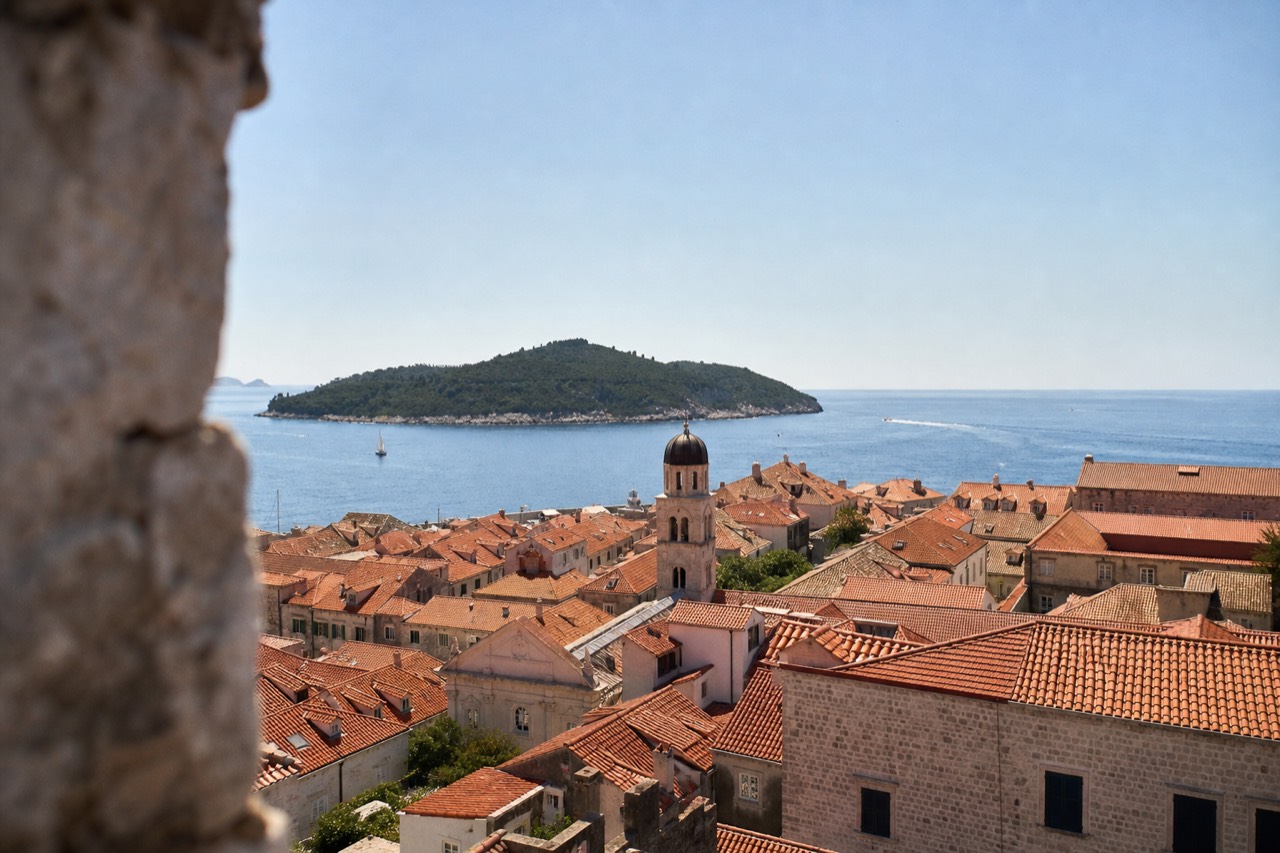
May is one of the best months to visit Dubrovnik. The long-run sea average reaches 18.6 degrees, the cable car runs to 23:30 late in the month, and cruise passengers are far below the September peak of 101,246. Expect prices below July levels and book the walls and boat trips a few days ahead.
Dubrovnik in May: Weather, Crowds and What to Book
May is the month I point people toward when they ask me for a Dubrovnik trip with warmth but without the full weight of summer. The city is fully open, every boat and cable car is running its long-hours schedule, and the Adriatic has finally crossed into water you can stay in. The cruise calendar is climbing, but the real crush is still months away, because September and October, not July, are the busiest cruise months here. If you want the full picture across the year, my best time to visit guide breaks down all twelve months, and for what the water feels like later in the season, swimming season in Dubrovnik covers it in detail.
Is May a Good Time to Visit Dubrovnik?
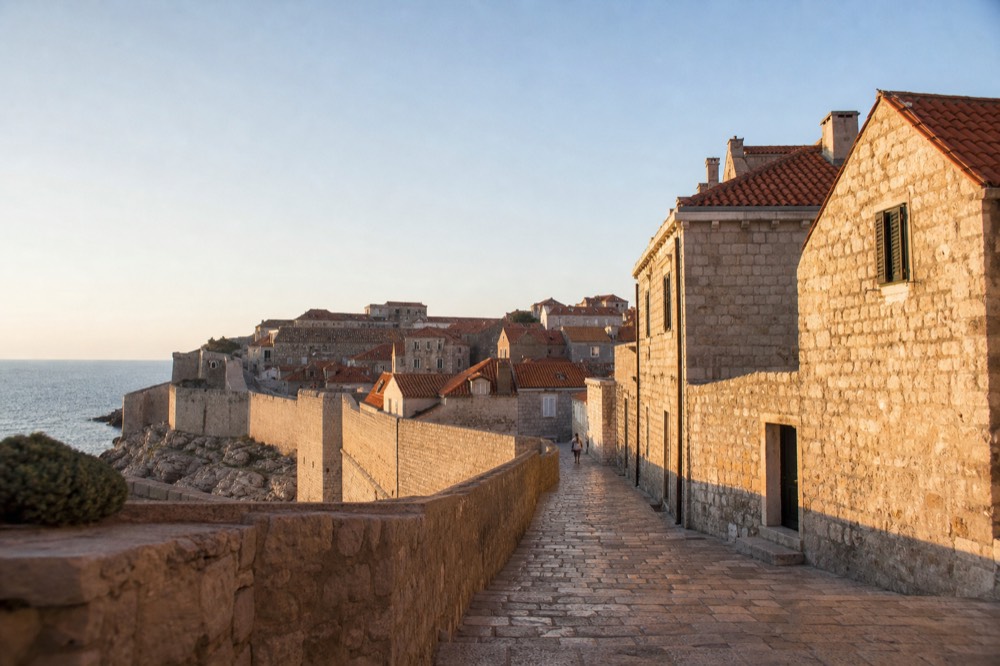
Yes, and for most travellers it is the best balance of the year. Air and sea temperatures are warm without the July furnace, the Old Town's daily headcount sits well below the 11,275 carrying-capacity ceiling, and every seasonal operation is fully running. Prices sit below the July and August peak, and the sea, at a long-run May average of 18.6 degrees, has crossed into genuinely swimmable territory.
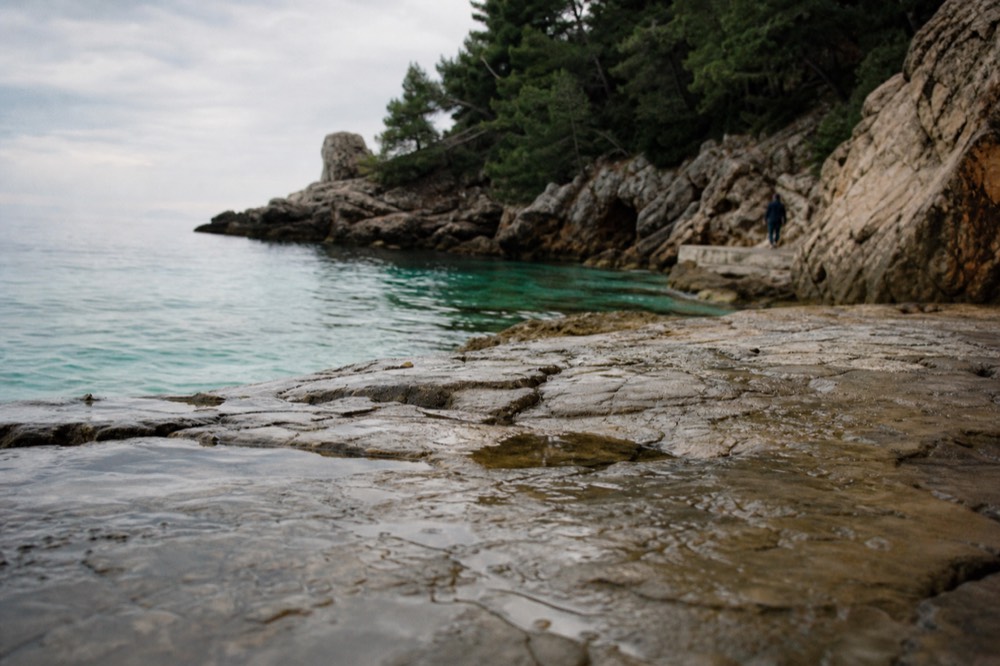
The honest way to talk about sea temperature here matters, so let me be precise. The figures I use are the NOAA OISST v2.1 long-run averages for 1991 to 2020, an open-water grid-cell value for this coast, not a beach thermometer and not this year's reading. May's average of 18.6 degrees is corroborated by an independent EU dataset, EMODnet, which reads 18.58 for the same waters. Sheltered bays in the afternoons run warmer than that open-water number, which is why swimmers in Banje or Copacabana in late May often report water that feels several degrees kinder than the climatology suggests.
Crowds deserve the same precision. Dubrovnik's Old Town is counted by six counters at every entrance, updating every 15 minutes, against an official carrying capacity of 11,275 people from the UNESCO carrying-capacity assessment. On a September morning I checked, the count passed 5,419 at 08:00 and peaked at 7,739 at 10:00. May mornings run lighter than that, and more importantly, May has fewer of the four-ship days that produce those peaks. The city recorded about 4.2 million overnight stays in 2025, sharing first place among Croatian destinations with Rovinj, so no month is empty, but May spreads its visitors more gently than any summer month.
What you give up in May is almost nothing. The walls are open, the pass is on sale, the island cruises run daily, and the Dubrovnik Summer Festival has not yet started, so the evenings are quiet rather than theatrical. If a festival matters to you, look at July instead. For everyone else, May is the month when the city is at full capability and not yet at full occupancy.
How Hot Is Dubrovnik in May?
Daytime highs typically sit in the low twenties Celsius, with the sea at a long-run average of 18.6 degrees, up from 15.4 in April and heading toward 22.5 in June. It is warm enough for the beach by mid-month and warm enough that you will want shade at midday, but it is not the July heat that pushes people off the walls by 11:00.
Evenings cool down enough that a light layer earns its place in your daypack. The month warms steadily as it goes. Early May can still carry a cool wind off the sea and the odd rainy afternoon, while the last week of the month often feels like a preview of June. The sea follows the same curve: the May average is 18.6 degrees, but that blends a cooler first fortnight with a warmer second one, and June's 22.5 is only weeks away. For swimmers, the practical advice is simple: swim in the afternoon, in a sheltered bay, and the water will feel noticeably kinder than the open-coast average.
| Month | Sea average (C) | What it means for swimming |
|---|---|---|
| April | 15.4 | Brief dips for the hardy, dry-suit territory for everyone else |
| May | 18.6 | Swimmable, best in sheltered bays in the afternoon |
| June | 22.5 | Comfortable for long swims |
| July | 24.9 | Bath-warm, peak beach season |
| August | 25.8 | The warmest month on this coast |
| September | 23.6 | Still excellent, with thinner crowds |
Those numbers are the NOAA OISST v2.1 1991 to 2020 climatology for the open water off this coast, and I always state the provenance because it matters. The Croatian met service's own Dubrovnik buoy has read 27.0 to 27.4 degrees on a warm early-September day against a 23.6 September mean, which tells you exactly how much sheltered, shallow water can run above the open-coast average. In May, expect the same gap in your favour at beaches like Copacabana in Lapad.
Air temperature follows a similar gentle curve. You will want sunscreen from mid-morning onward, and the limestone of the Stradun, all 298 metres of it, radiates heat by early afternoon even in May. The difference from July is recovery: by evening the air cools, the terraces are pleasant without fans, and you can walk the walls at midday without the heat cutting your circuit short. That last point is not small. The walls circuit is 1,940 metres of largely unshaded stone, and in peak summer many visitors abandon parts of it; in May you can do the whole thing comfortably.
If May's balance appeals but you are weighing it against high summer, read Dubrovnik in June for the next step up in heat and crowds.
May is also when the boat season hits full stride, and this is where a shoulder-season visit pays off most. The three tours below are the ones I would shortlist first: a full Mljet day, a Mljet-and-Elaphite combination, and a guided Old Town walk for your first morning.
What to Do in Dubrovnik in May?
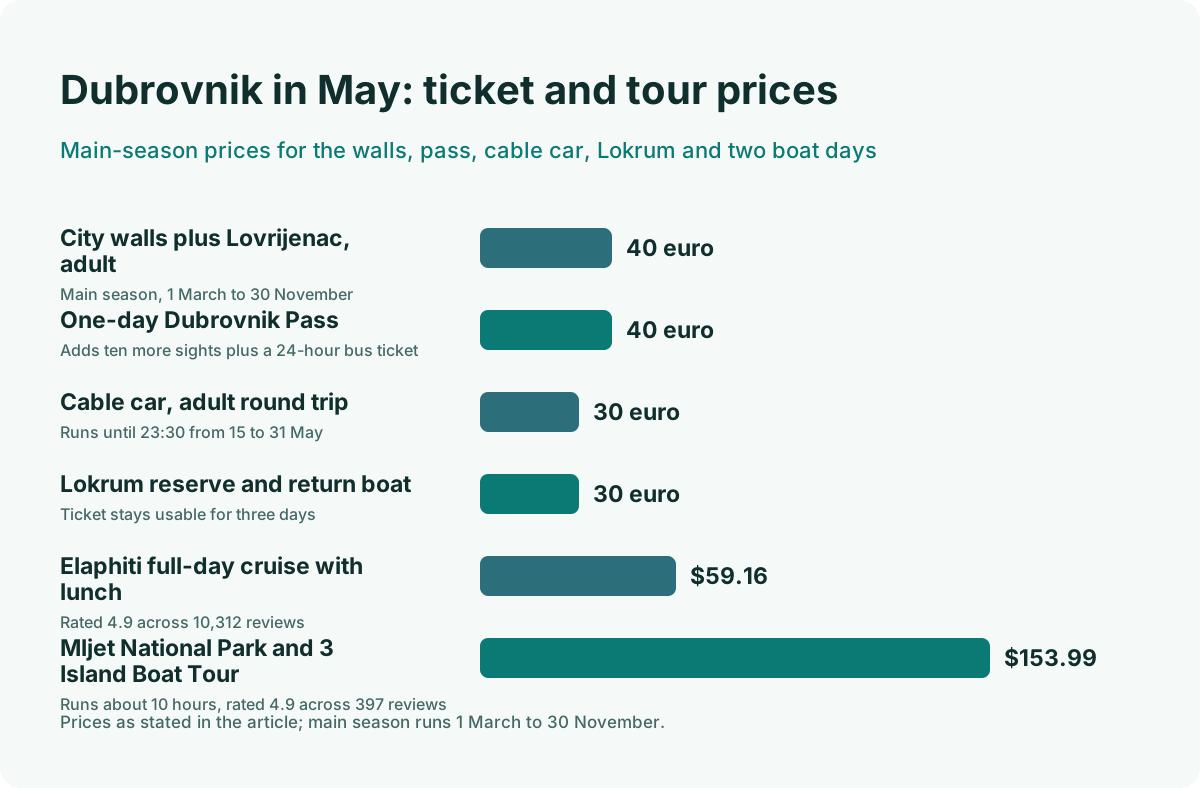
Walk the city walls early, ride the cable car late, and spend at least one full day on the water. In May the walls cost 40 euro for the adult walls-plus-Lovrijenac ticket, the cable car runs until 23:30 in the second half of the month, and the Lokrum boats leave the City Harbour at 09:00 and then every 15 minutes from 10:00 to 18:00.
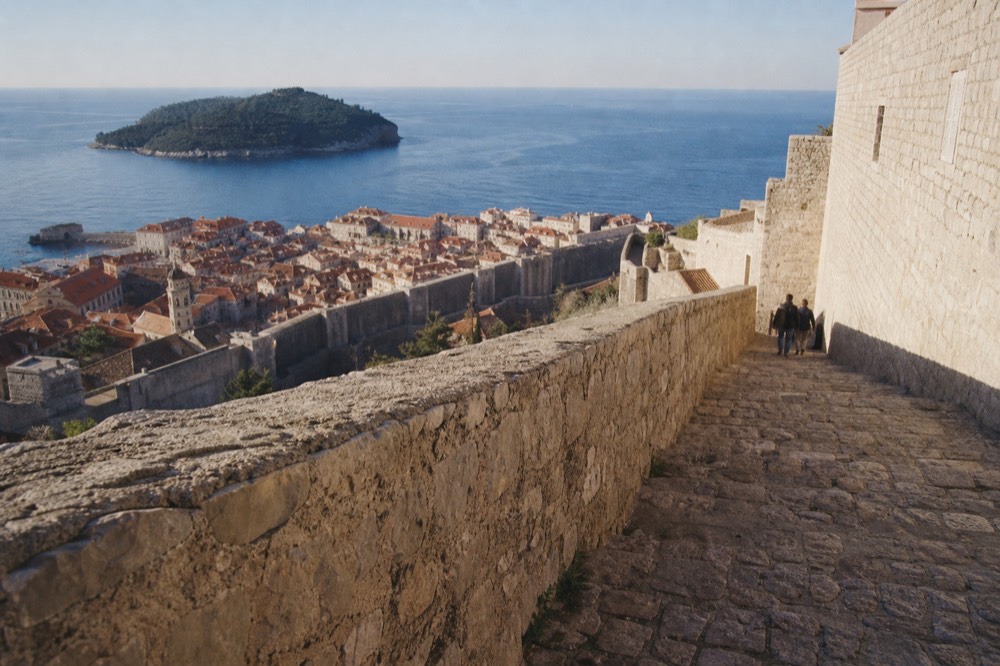
A boat day to Mljet or the Elaphiti islands is the signature May move, while the sea is calm and the fleets are small. Start with the walls, and start early. The operator's stated hours run 08:00 to 19:30, and the difference between an 08:00 start and a 10:30 start is the difference between empty ramparts and a queue at the staircases. The adult ticket is 40 euro in main season, which runs 1 March to 30 November, and it is genuinely a combination ticket: it covers Fort Lovrijenac across the bay, the Western Outer Wall and the Collection of Coins of the Republic of Ragusa, not just the main circuit. There is no family ticket, only adult and child 7 to 18 at 15 euro, with under 6 free. You can check the current details on the walls operator's own site.
The one-day Dubrovnik Pass also costs 40 euro in main season, exactly the same as the walls ticket, and adds ten more sights plus a 24-hour bus ticket. That equivalence is a main-season fact only: in December the standalone walls ticket drops to 20 euro and no winter pass tier is on sale at all. In May the pass is the better buy for almost everyone, and the details are in my Dubrovnik Pass guide. If you are still weighing the two, is the pass worth it answers the advance-purchase question too.
The cable car deserves a May evening. The operator's timetable stretches through the month: 09:00 to 22:00 from 1 to 14 May, then 09:00 to 23:30 from 15 to 31 May. The ride itself covers 778.2 metres of track in 3 minutes 30 seconds, rising 367 metres to the upper station at 405 metres above sea level, and the operator claims a view range of up to 60 km on a clear day. An adult round trip is 30 euro. Current prices and hours are on the cable car's official price page.
Lokrum is the easy half-day. The 30 euro ticket covers both the reserve entry and the return boat transfer, whether you use the official boat or your own transport, and a ticket stays usable for three days. The boats leave the City Harbour at 09:00, then every 15 minutes from 10:00 to 18:00, and the ticket office at Luža works 08:00 to 18:00. In May the island's gardens are at their freshest and the peacocks have the paths largely to themselves.
| Activity | Cost | May notes |
|---|---|---|
| City walls (adult, includes Lovrijenac) | 40 euro | Go at 08:00; unshaded circuit |
| One-day Dubrovnik Pass | 40 euro | Same price, adds ten sights and 24h buses |
| Cable car round trip (adult) | 30 euro | Runs to 23:30 from 15 May |
| Lokrum ticket with return boat | 30 euro | Boats 09:00, then every 15 min from 10:00 |
| Elaphiti full-day cruise with lunch | from $59.16 | Calm May seas, small fleets |
The water is where May separates itself from the winter calendar. The standout is Mljet National Park, the greenest island on this coast, with two saltwater lakes inside pine forest. The Mljet National Park and 3 Island Boat Tour runs about 10 hours, from $153.99 per person, rated 4.9 across 397 reviews. In May you get the lakes before the summer boat traffic builds, and the sea crossing is usually at its calmest of the year.
If the full Mljet day is the centrepiece of your May trip, it is worth locking in early rather than leaving it to chance. The lakes and the national park entry are the parts of the Dubrovnik coast that feel least like a city break, and May is the month when you can have them almost to yourself. The operator's live listing carries the current departure details and the cancellation terms.
If a ten-hour day feels long, the Elaphiti islands are the softer version. The full-day cruise with lunch, from $59.16 per person and rated 4.9 across 10,312 reviews, is the most-reviewed trip on this coast, and May's calm seas make it the ideal month to try it. Kolocep, Lopud and Šipan sit close enough that the crossings are short and the swimming stops are frequent. For planning the islands themselves, my Elaphiti islands guide covers each one.
Back in the city, your first morning belongs to a guided walk. The Old Town Walking Tour with Local Guide starts at $20 per person, rated 4.8 across 5,826 reviews, and it is the cheapest paid walk on the roster. A guide turns the Stradun from a pretty street into a readable one, and in May you can stand still in the shade and listen without the July crush behind you.
What Clothes to Wear in Dubrovnik in May?
Pack for two climates in one day: shorts, t-shirts and swimwear for afternoons in the low twenties, plus a light jacket or jumper for evenings that cool sharply once the sun drops behind the hills. Bring proper walking shoes with grip, because the Old Town's polished limestone and the walls' stone staircases punish smooth soles.
Add a layer for boat trips, where the on-deck wind runs cooler than the shore. The layering advice is not filler. Dubrovnik sits on a south-facing coast, so May afternoons bake while evenings cool fast, and the sea breeze on any moving boat adds several degrees of chill to what the shore thermometer says. Locals in May are still in trousers in the evening; visitors in shorts are the reliable marker of a first-night table. A packable rain layer is worth its weight too, because May carries the last of the spring showers, and a wet limestone street is genuinely slippery.
| Item | Why it earns its place in May |
|---|---|
| Grippy walking shoes | Polished limestone and wall staircases, wet or dry |
| Light jacket or jumper | Evenings and boat decks after sunset |
| Swimwear | Sea at 18.6 degrees and warming, sheltered bays warmer |
| Sun hat and sunscreen | Midday sun is already strong on unshaded stone |
| Packable rain layer | Occasional spring showers, slick streets |
| Refillable bottle | Walls circuit is 1,940 metres with little shade |
One clothing decision people get wrong is the walls themselves. There is no shade on the main circuit beyond a couple of turret alcoves, the stone reflects heat upward, and the staircases are steep enough that you feel it in your calves by Minčeta. Light, loose clothing and real shoes beat sandals on that walk in any month, and in May you will be comfortable doing the full loop rather than retreating at the halfway mark, which is what happens to people in July.
What Not to Do in Dubrovnik?
Do not walk the walls at midday without water, do not assume the Dubrovnik Pass is always the better buy without checking the December exception, do not plan a Mljet day on your departure day, and do not arrive in the Old Town by car expecting to park nearby. The deepest mistake is treating May as empty: it is not, and the best boat trips reward being booked a day or two ahead.
Some of these deserve expansion because they cost real money. The walls ticket has no family option, so a family of four pays two adult tickets at 40 euro and, if the children are 7 to 18, two child tickets at 15 euro; budget for that rather than discovering it at the gate. The pass-versus-walls comparison flips in December, when the walls ticket falls to 20 euro and no winter pass is on sale, but in May the 40-euro pass is the clear winner for anyone visiting more than the walls. The rest of the planning pages sit on Things to Do in Dubrovnik.
| Mistake | What happens | Do this instead |
|---|---|---|
| Walls at midday | Heat and queues at the staircases | Enter at 08:00 opening |
| Booking Mljet on your last day | A 10-hour trip with no slack if seas turn | Put boat days mid-trip |
| Driving to the Old Town | Scarce parking, expensive lots | Bus or stay in Lapad or Ploče |
| Skipping the pass maths | Paying 40 euro for walls alone | Same 40 euro buys ten sights plus buses |
| Assuming May is empty | Full boats and sold-out walks | Book tours two to three days ahead |
The timing mistakes matter most on the water. A Mljet day is roughly ten hours door to door, and the Elaphiti cruise is about eight. Both are worth it, but neither belongs on the day before an early flight, because a rough-sea cancellation leaves you with no second chance. I always tell people to put their boat day in the middle of the trip and keep a flexible day near the end as the backup. On the same logic, do not book the cable car for your final evening: it closes for maintenance in the low season and hours shift, so check the operator's page for your dates.
Finally, do not swim off the walls or climb the rocks below Buža for a jump, however tempting the water looks. The sea side of the walls drops straight to deep water with boat traffic below, and the bars and bathing spots are the places built for it. The safe swimming in May is at the beaches: Banje on the east side, or the calmer, warmer bays of Lapad.
When to Avoid Dubrovnik?
Avoid the four or five heaviest cruise days if you can identify them, avoid midday in July and August if heat is your enemy, and avoid January to early March if you want the cable car, because it is closed those months. The counter-intuitive fact from the Port Authority's own data: cruise passengers peaked in September at 101,246 and October at 100,132 in 2025, both above July and August.
Late summer and autumn, not midsummer, are the crowded months to dodge. That September and October peak surprises nearly everyone, and it is the single most useful planning fact on this site. The Port Authority's monthly figures show the full 2025 total reached 625,257 cruise passengers against 582,499 in 2024, with 461 cruise calls scheduled for 2026. The Authority limits cruise passengers to 8,000 a day in most cases, and of 243 cruise days a year only 18 exceed 8,000, with only 4 days slightly above 10,000. May sits comfortably below all of that: the heaviest cruise months are still ahead, and the Old Town breathes accordingly. The Port Authority publishes its full cruise statistics if you want the month-by-month picture.
Cruise passenger figures are ship capacity, not people who actually walk ashore, so treat them as a ceiling rather than a headcount. Even so, the shape of the year is clear. If your goal is thin crowds with warm weather, May and the first half of June are the strongest window; if your goal is the warmest sea, August wins but you share it with the most swimmers. The cruise schedule guide covers how to read the calendar for your exact dates.
The other avoid-windows are simpler. January to mid-March brings the cable car's annual closure and short days, though the walls stay open and the December walls ticket drops to 20 euro. Late July and early August bring the heat that empties the walls by late morning, and the evenings when the Old Town's count pushes toward its 11,275 capacity ceiling. None of these make Dubrovnik bad; they make it a different trip, and knowing which trip you are buying is the whole point of planning.
| Window | Verdict | Why |
|---|---|---|
| May | Excellent | Warm sea, thin crowds, full schedule of tours |
| June | Very good | Warmer sea at 22.5 average, crowds building |
| July and August | Busy and hot | Peak heat, peak occupancy, book everything |
| September and October | Great weather, most cruise passengers | 101,246 and 100,132 cruise passengers in 2025 |
| November to February | Quiet | Cable car closed January to March, 20-euro walls ticket in December |
How Many Days Do You Need for a May Trip?
Three nights is the honest minimum and five is the sweet spot. Two days cover the walls, the Old Town and the cable car; a third day belongs to a boat, either the Elaphiti cruise or Mljet; a fourth and fifth let you add Lokrum, a kayaking morning and a day trip toward Ston or Cavtat without rushing anything.
In May, with long daylight and full schedules, four to five days produces the trip people remember. The reason May stretches well is that nothing closes early. The cable car runs to 23:30 in the back half of the month, the terraces stay warm, and the sea is calm enough that a kayak morning around Lokrum and Betina Cave is a realistic plan rather than a hopeful one. A 2-hour kayaking tour of Lokrum and Betina Cave starts at $35.49 per person, rated 4.9 across 1,518 reviews, and May's cooler mornings are the comfortable time to do it.
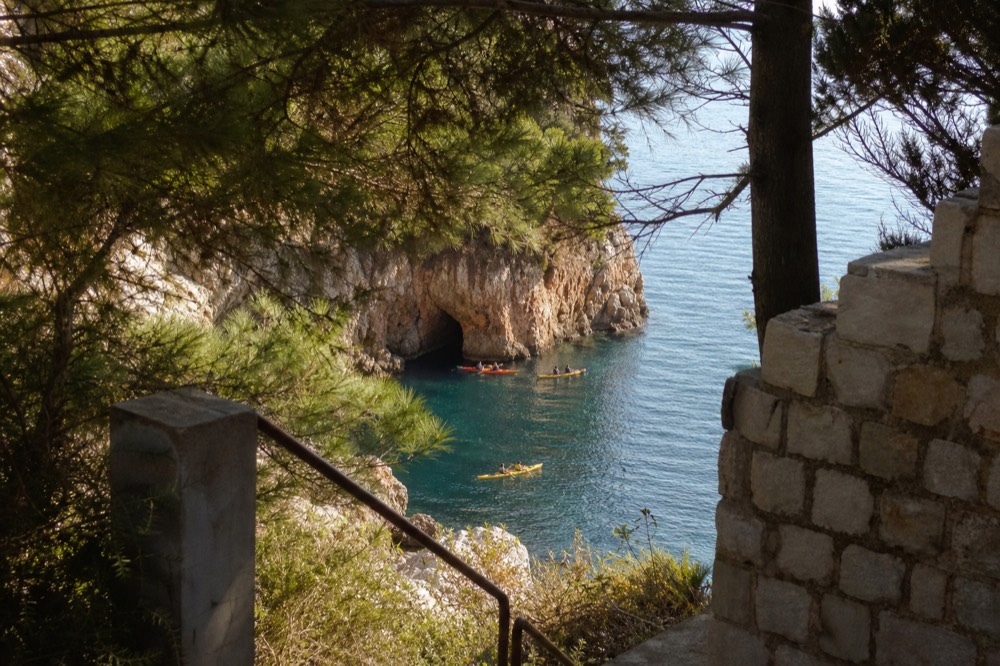
A sample shape for five days: day one, the Old Town walk and the walls in the afternoon light; day two, Mljet by boat; day three, a slow morning, Lokrum after lunch and the cable car for sunset; day four, kayaking and a beach afternoon in Lapad; day five, the Elaphiti cruise or a Ston oyster and wine trip, depending on your appetite. That is a full week's worth of peak-season Dubrovnik compressed into shoulder-season comfort. If you only have a weekend, my two days in Dubrovnik itinerary shows what to cut without losing the essence.
What Should You Book Before You Arrive?
Book three things ahead: your walls-or-pass ticket for the first morning, one boat day placed mid-trip, and the cable car if you want a specific sunset evening. In May nothing is sold out weeks in advance, but the best-reviewed walks and boats fill their small-group places days ahead, and arriving without a plan means losing the 08:00 walls window to a ticket-office queue.
Rooms in May cost less than July but the best-located ones still go early. The booking order I recommend is rooms first, boat second, everything else flexibly. The boat is the one item with real weather risk, so book it with free cancellation and place it mid-trip with a fallback day. The walls and the pass can be bought on arrival, though buying the pass online saves the queue at the Pile gate. Walking tours are cheap enough, from $20 per person, that adding one on the ground is painless, but the small-group formats cap their numbers.
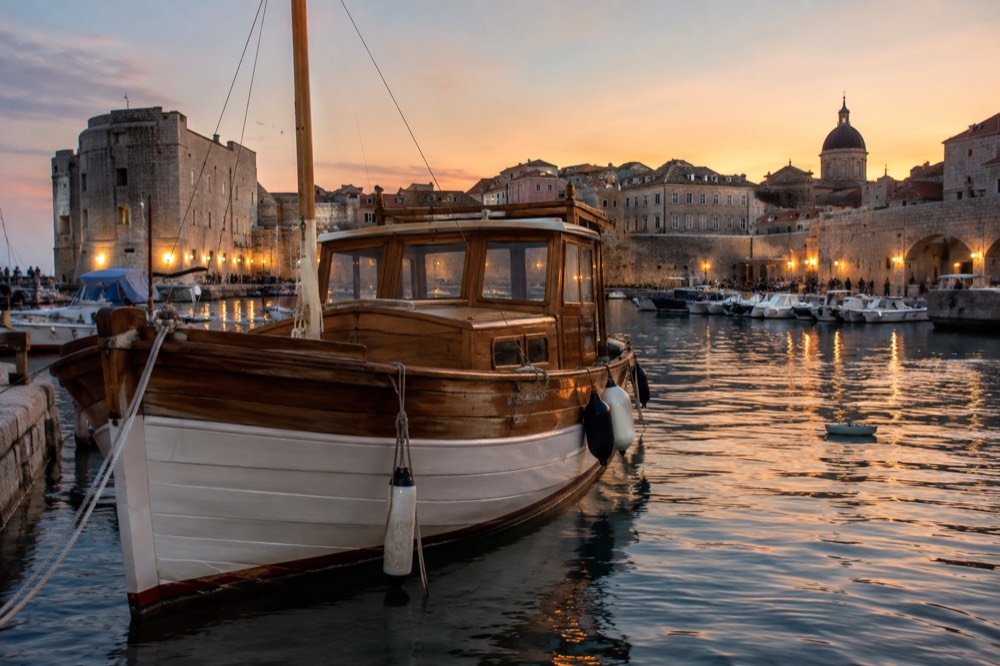
For the full picture of what a May week costs, trip cost in Dubrovnik breaks down tickets, meals and rooms, and the first-timers guide covers the arrival basics, from the airport bus to which gate to enter by. Between those two pages and this one, you have the whole shoulder-season plan.
Whichever way you build the week, the trio below is the shortlist I would start from: the Mljet full day for the water, the Mljet-and-Elaphite combination if you want both island worlds in one trip, and the local-guide Old Town walk for your first morning's orientation.
Common Questions About Dubrovnik in May
How Hot Is Dubrovnik in May?
Daytime highs typically sit in the low twenties Celsius, with cool evenings. The sea's long-run May average is 18.6 degrees, up from 15.4 in April and heading to 22.5 in June, and sheltered bays run warmer than that open-water figure in the afternoon.
Can You Swim in Dubrovnik in May?
Yes, especially from mid-month. The May average of 18.6 degrees is a long-run open-water figure, so swim in the afternoon in a sheltered bay like Copacabana in Lapad and the water will feel noticeably kinder than the climatology suggests.
What Clothes to Wear in Dubrovnik in May?
Shorts and t-shirts for afternoons, a light jacket or jumper for evenings and boat decks, and grippy walking shoes for the polished limestone and the walls staircases. Add a packable rain layer for the last of the spring showers.
When to Avoid Dubrovnik?
Avoid the heaviest cruise days and the midday heat of late July and August, and avoid January to March if the cable car matters, since it closes then. Cruise passengers actually peak in September and October, not midsummer, so those are the crowded shoulder months to watch.
Is the Dubrovnik Pass Worth It in May?
Yes. In main season, 1 March to 30 November, the one-day pass costs 40 euro, the same as the standalone walls-plus-Lovrijenac ticket, and adds ten more sights plus a 24-hour bus ticket. The equivalence is a main-season fact only, so in December the maths changes.
What Not to Do in Dubrovnik?
Do not walk the walls at midday without water, do not book a ten-hour boat day on your departure day, and do not assume May is empty. Book the best-reviewed walks and boats two to three days ahead, and enter the walls at the 08:00 opening.