Banje Beach Dubrovnik: the Old Town's Closest Proper Swim
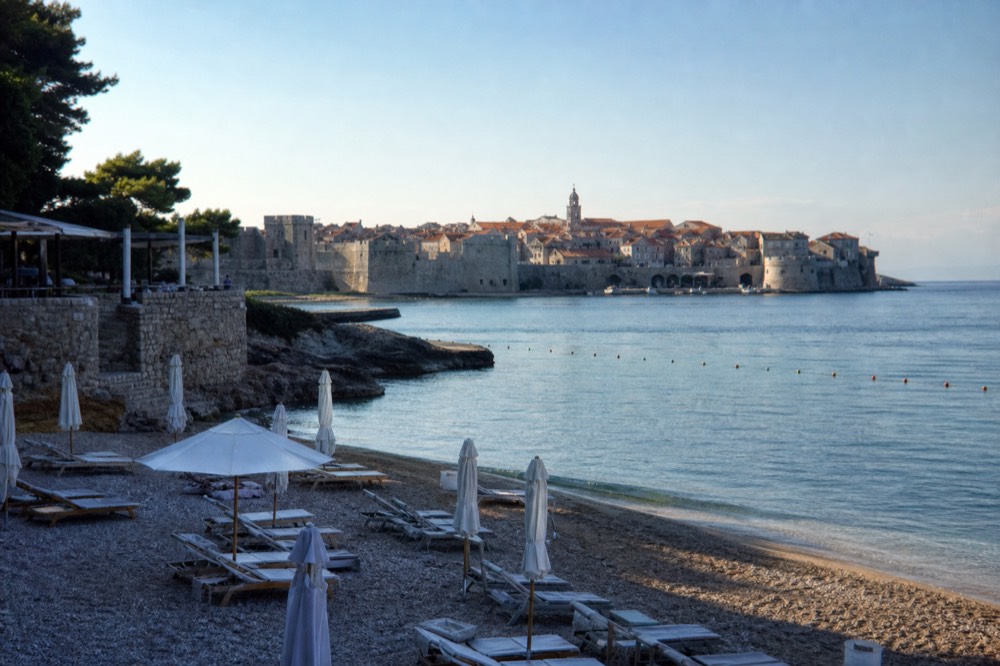
Banje Beach is the stretch of pebbles and clear water you see in almost every photograph of Dubrovnik's Old Town, lying directly below the eastern walls and a few minutes on foot from Ploče Gate. Here is what to expect from the water, the sunbeds, the crowds and the kayak launches.
Short answer
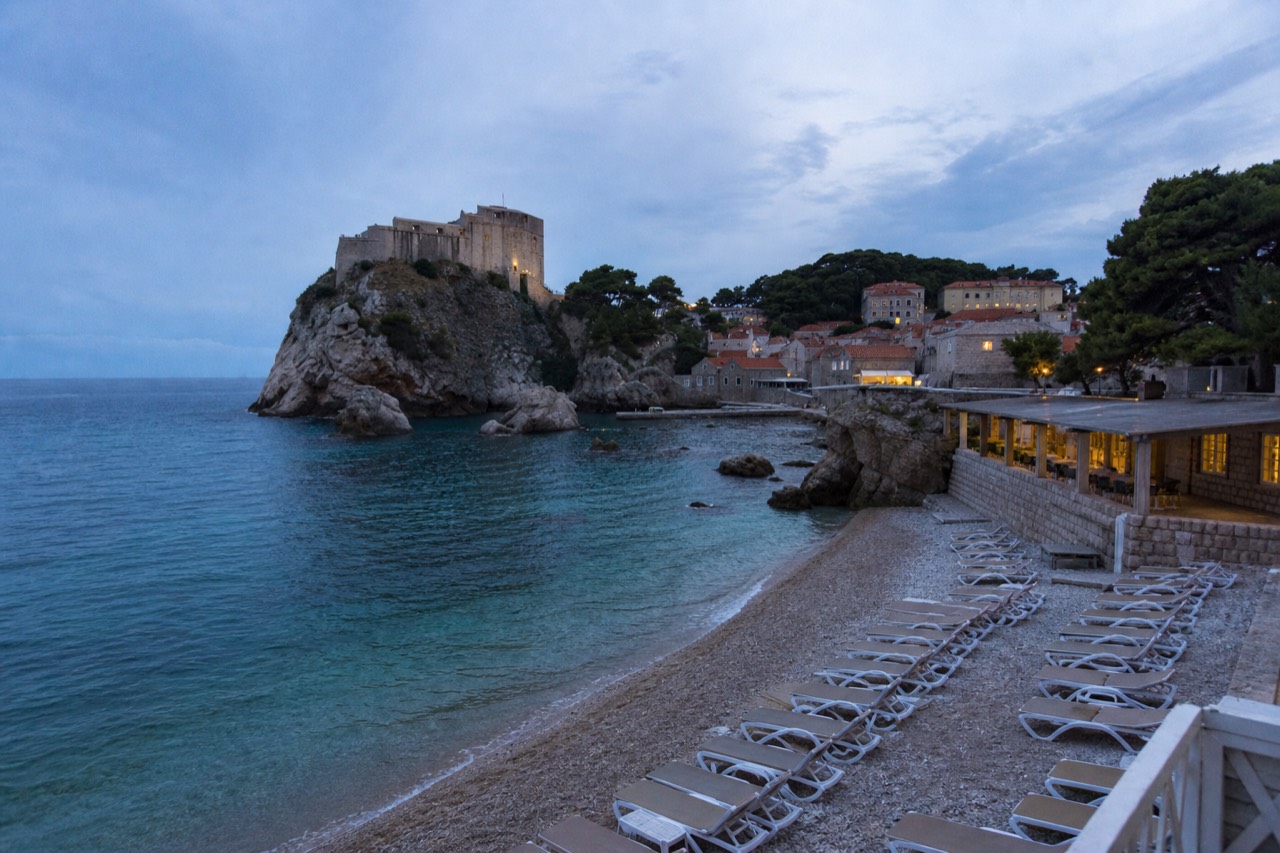
Banje Beach sits just outside Ploče Gate, a short walk from the Stradun, with a pebble shore, clear swimming water and the classic view back at the walls and Fort Lovrijenac. The September sea average is about 23.6 degrees, and the beach is busiest between late morning and mid-afternoon, especially on cruise days.
What Is the Best Beach in Dubrovnik?
There is no single best beach in Dubrovnik, because the city's shore is almost entirely pebble and rock rather than sand, and the right choice depends on what you want from the water. For most first-time visitors the practical answer is Banje Beach: it is the closest proper swimming beach to the Old Town, it has services, and its view back at the walls and Fort Lovrijenac is the one people come to Dubrovnik to photograph.
I say this as someone who has walked this coast in every month of the year. The beach sits below the Ploče side of the city, with the walled town rising directly behind it and the island of Lokrum floating just offshore. You can be standing on the Stradun, the 298-metre main street whose final plan was fixed by the 1272 Statute, and be on a sunbed within ten minutes at an unhurried pace. No other swimming spot in the city combines that proximity with that view.
The honest qualification is that "best" splits into categories. Families with small children often prefer a shallow, gradual entry, which Banje only partly offers, since the shelf drops off fairly quickly and the surface underfoot is smooth pebble rather than sand. Swimmers and snorkellers love exactly that drop-off, because the water clarity over it is remarkable on a calm day. Sunbathers who want a lounger, a waiter and a shower want a beach club, and Banje has those in a way that the more secluded coves do not.
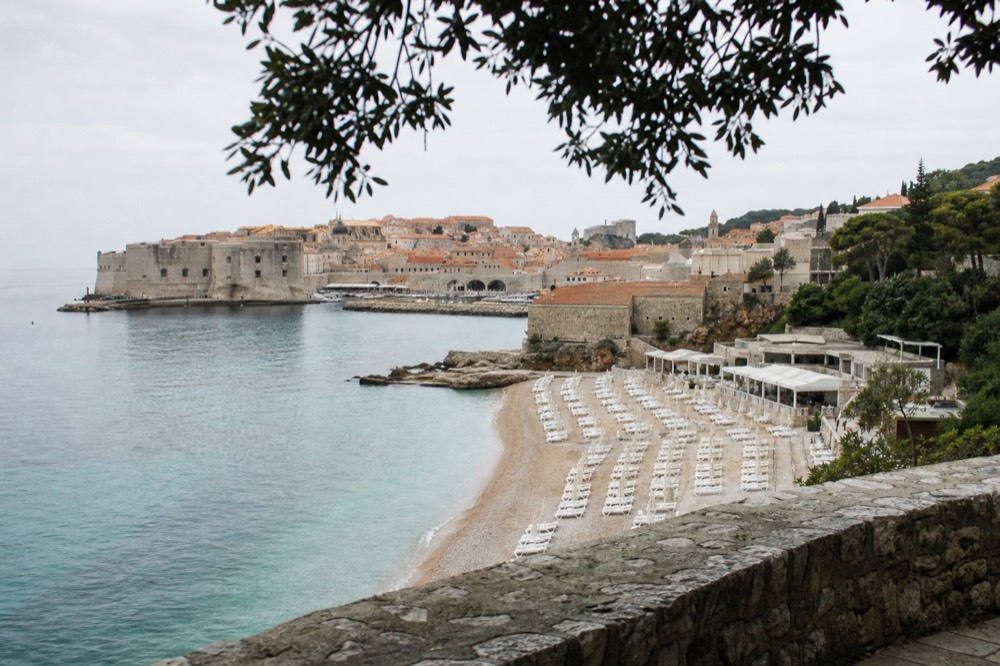
For a wider picture of the whole shoreline, read our guide to the best beaches around Dubrovnik, which covers the sandy options further out. If your heart is set on the postcard shot of the walls rising over turquoise water, though, this is the beach, and the rest of this guide is about making the most of it.
Can You Swim in Dubrovnik Beaches?
Yes, swimming is safe and normal on Dubrovnik's beaches, and the season is longer than most visitors expect. The open-water September average for this coast is about 23.6 degrees Celsius, August about 25.8 and July about 24.9, while May's 18.6 is bracing but swimmable. Those are long-run averages, not a beach thermometer, and sheltered spots like Banje often run a degree or two warmer in high summer.
The figures deserve a word of explanation, because sloppy sea-temperature claims are everywhere. The monthly numbers above come from a long-run satellite climatology, a 1991 to 2020 average for the open water off this coast, corroborated within about one degree by an independent European marine dataset. They are not this week's reading and not a forecast. The practical takeaway is solid anyway: from late June through early October, swimming in Dubrovnik is genuinely warm, and plenty of locals swim well beyond that window.
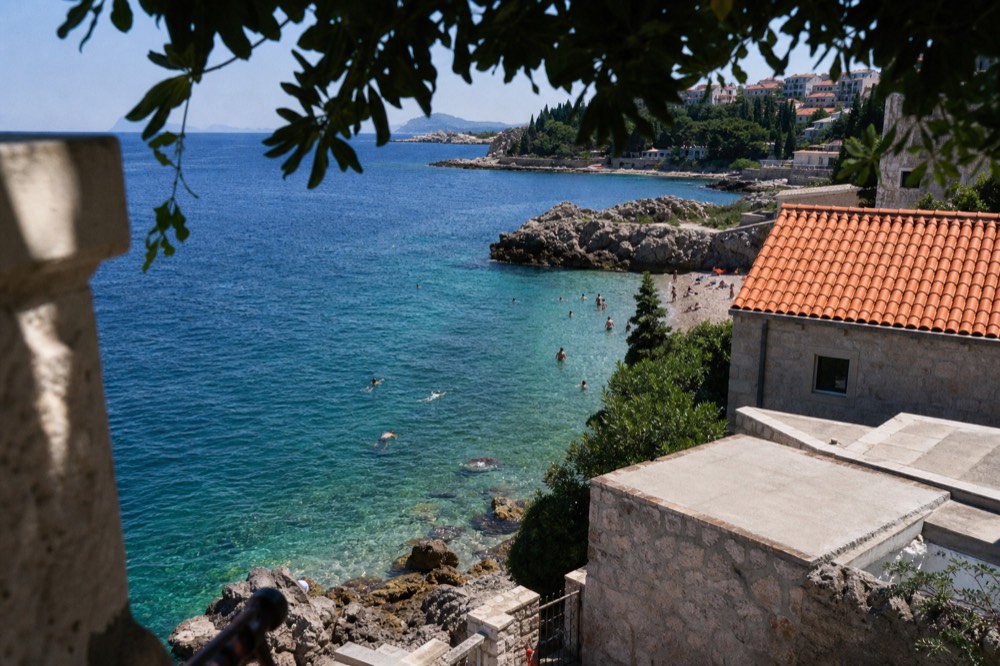
At Banje specifically, the swimming is of a piece with the rest of the city shore. The entry is pebble, so water shoes earn their place in your bag, and the bottom drops away within a few metres, which is why the water stays so clear. On a calm morning you can float on your back with the whole eastern wall of the Old Town stacked above you, Fort Lovrijenac standing on its 37-metre sea rock off to the west, and Lokrum dark green across the channel. On a stiff jugo wind from the south-east the water chops up, weed drifts in and the red flag goes up; on those days the lifeguard's flag is the only forecast you need.
| Month | Open-water average, °C | What swimming feels like |
|---|---|---|
| May | 18.6 | Bracing; short dips, locals only |
| June | 22.5 | Comfortable, fresh on entry |
| July | 24.9 | Properly warm, busy beaches |
| August | 25.8 | Warmest average of the year |
| September | 23.6 | Warm, thinner crowds, my favourite month |
| October | 21.0 | Fresh but very swimmable early in the month |
One more honest note on the water: the Croatian met service's own Dubrovnik buoy has read 27.0 to 27.4 degrees on an early September day against that 23.6 monthly mean, which tells you how much warmer sheltered, shallow water runs against the open-sea average in late summer. Banje, tucked below the walls, sits somewhere between the two. If you want the full picture of the season, our Adriatic swimming season guide breaks down every month.
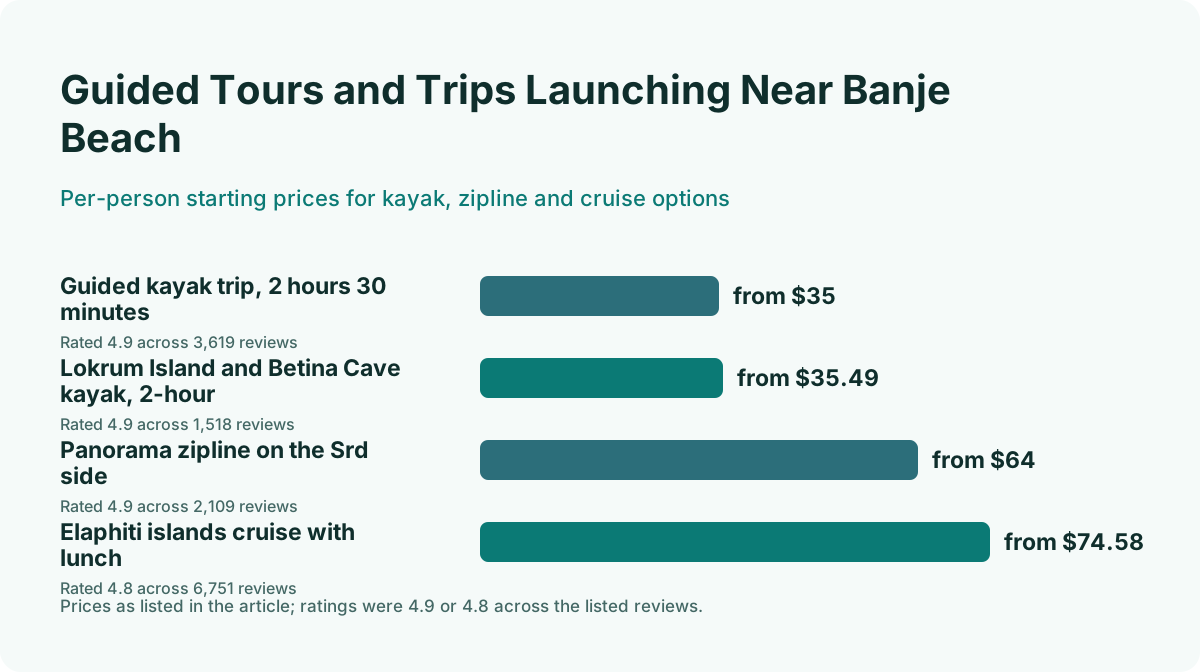
If your idea of enjoying this water involves more than swimming out and back, the two most popular ways to do it are a guided kayak and snorkel trip along this exact coast, or a boat out to the islands. These three are the ones worth comparing first.
What Is the Nicest Beach in Dubrovnik?
"Nicest" usually means the best all-round experience rather than the prettiest postcard, and on that measure most visitors settle on either Banje for its proximity, services and view, or one of the Lapad bay beaches for space, shallower water and an easier family day. Banje wins on setting and convenience; Lapad wins on room to spread out and a gentler entry for children.
The Lapad side of the city, around a twenty-minute bus ride or a pleasant coastal walk from Pile, holds the beaches locals actually use on their days off. The bays there are broader, the entry more gradual, and there is enough shoreline that you are not laying your towel a metre from a stranger. Our Lapad beach guide covers the whole stretch, and if you are basing yourself out that way it is worth reading before you book anything.
Banje's case is different and, I think, stronger for a short visit. You are not travelling to the beach; the beach is simply where the Old Town meets the sea. You can swim before breakfast, walk up to the Stradun for coffee, and be back in the water before the day-trippers arrive. The trade-off is space: in July and August the public pebble section fills early, and the beach clubs take up a large share of the usable shore.
| Beach | Surface | Best for | Main drawback |
|---|---|---|---|
| Banje | Pebble | View, proximity, beach clubs, people-watching | Crowded in peak season, quick drop-off |
| Lapad bay beaches | Pebble and rock | Families, space, shade, easy bus access | No Old Town view, 20 minutes from Pile |
| Sveti Jakov | Pebble | The most beautiful setting, quiet water | Long staircase down, a hike back up |
| Copacabana, Lapad side | Pebble | Water sports, casual vibe | Functional rather than beautiful |
For the full ranking with directions, see our best beaches in Dubrovnik guide; the table above is the short version for people choosing today.
What Is the Most Beautiful Beach in Dubrovnik?
If the question is pure beauty rather than convenience, the answer most locals give is Sveti Jakov, the small pebble cove below a monastery garden on the way to Cavtat, with the Old Town and Lokrum framed across the water. Banje is the most spectacular beach to look at from the water; Sveti Jakov is the most beautiful one to sit on. It costs you a long staircase to reach.
The distinction matters because the two beaches are often confused in photographs. The famous image of Dubrovnik, walls stacked above turquoise water with an island behind, is the view from a boat or a kayak off Banje, looking back. The famous image of a near-empty cove with a church above it is Sveti Jakov. They are different beaches doing different jobs, and you can do both in one day if your legs are willing: Banje in the morning, the staircase down to Sveti Jakov for the late-afternoon light.
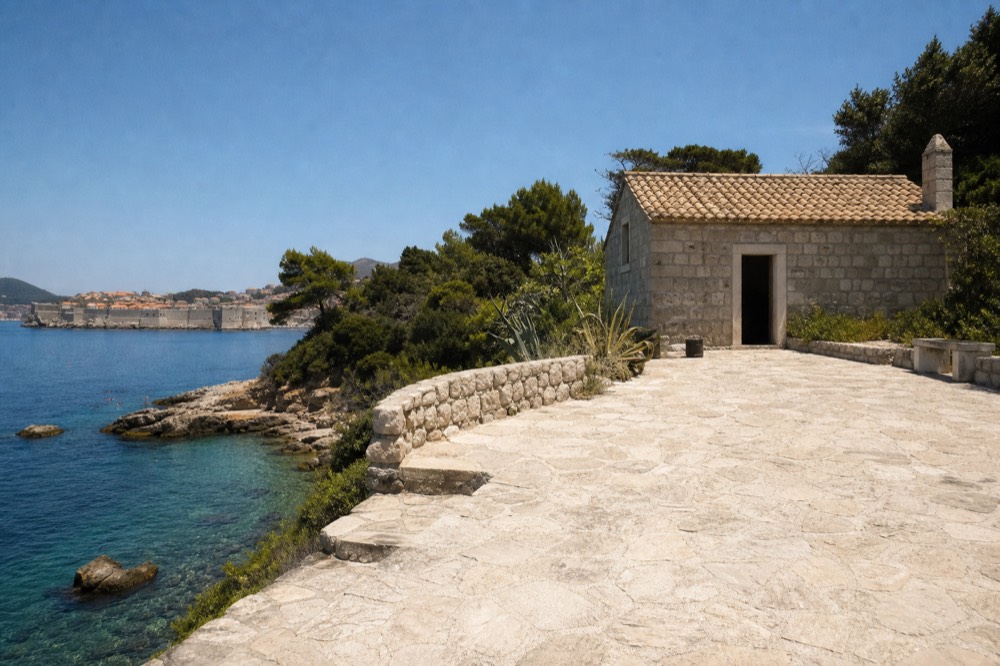
What makes Banje genuinely beautiful, rather than merely famous, is the geometry. The beach sits at the foot of the Ploče slope, so the whole eastern face of the city wall stands above you at an angle that photographs impossibly vertical. Lokrum sits low and green directly offshore, close enough that swimmers heading out have a fixed landmark to steer by. At sunset the wall turns gold and the water goes flat and glassy, and for ten minutes this is the best view on the entire coast, from anywhere.
Our Sveti Jakov guide has the staircase details and the best time of day for the light, if beauty is the priority over convenience.
Where Exactly Is Banje Beach and How Do You Get There?
Banje Beach lies immediately south-east of Ploče Gate, the eastern entrance to the Old Town, between the walls and the sea on the way toward the Hotel Excelsior. From the Stradun it is roughly a five-minute walk: out through Ploče Gate, left along the coastal path, and the pebbles begin where the ramp ends. From Pile Gate on the far side, allow fifteen minutes at a stroll.
The walk itself is part of the point. Leaving Ploče Gate you pass immediately above the beach, and the view down over the sunbeds, the water and Lokrum beyond is the moment most people recognise from photographs. The coastal path continues east past the beach toward the Excelsior and on toward Sveti Jakov, so Banje also works as a waypoint on a longer shoreline walk rather than a destination you must commit to. The full index of guides sits on Things to Do in Dubrovnik.
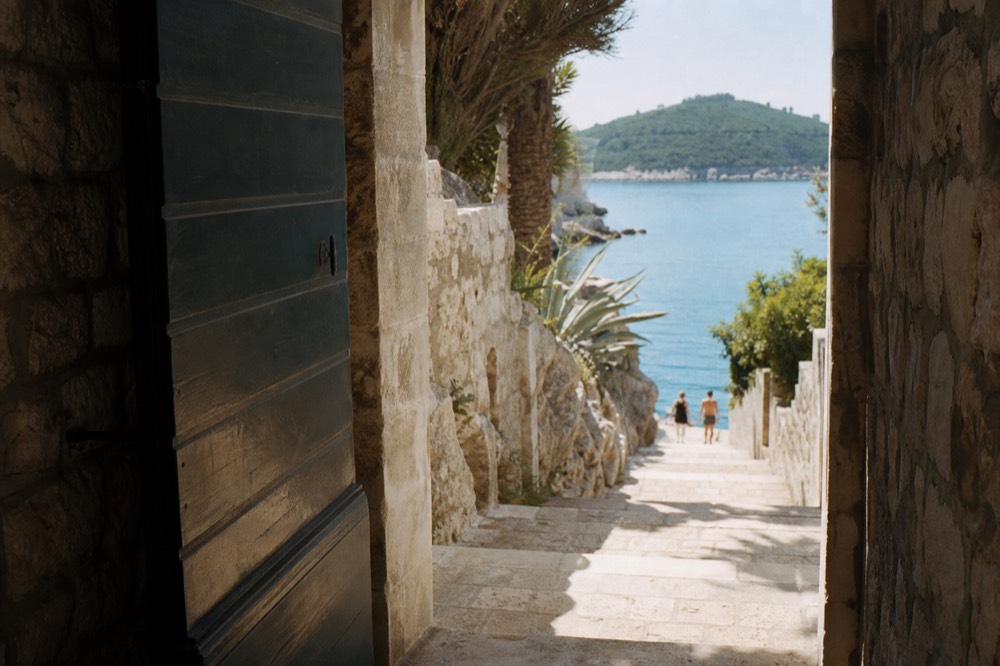
Practical notes for getting there and away. Taxis and rideshares cannot set down at the beach itself; the nearest drop-off is on the road above Ploče, from which it is a short downhill walk, and our taxis and rideshares in Dubrovnik guide covers fares and pickup spots if you are coming from further out. If you are staying in Lapad, the buses toward Ploče or Pile drop you within a few minutes' walk. Cruise passengers arriving at the port should read our cruise port to Old Town page, since the walk from the pier to Ploče Gate is entirely flat and pleasant along the old harbour.
One warning that costs people real money: do not try to drive to Banje. Old Town parking is a myth in high season, and the nearest public garages fill early. Our parking in Dubrovnik guide explains where the realistic spaces are, but the honest advice is to arrive on foot or by bus and save yourself the circling.
Sunbeds, Beach Clubs and How Banje Is Laid Out
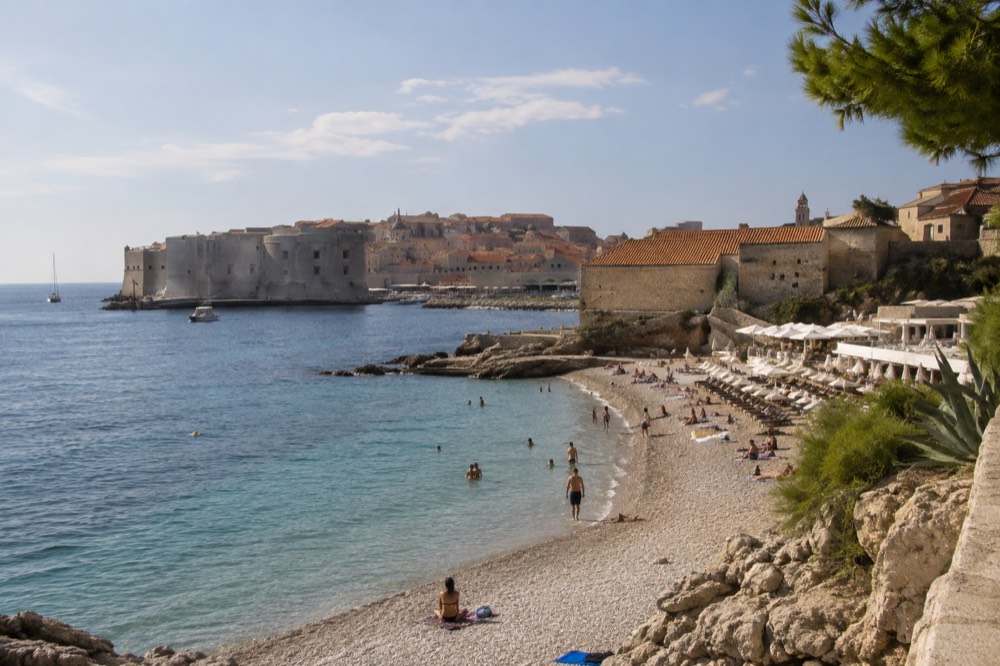
Banje is split between organised beach clubs with sunbeds, showers and waiter service, and a narrower public pebble strip where a towel is all you need. The clubs sit closest to Ploče Gate with the public section continuing east; in peak season the public pebbles fill by mid-morning, so either arrive early or budget for a lounger. Check current rates at the beach itself, since club pricing changes through the season.
I will not quote you sunbed prices, because they move with the season and the clubs do not publish a fixed tariff; the number a friend paid in June will not be the number you are quoted in August. What is stable is the structure. The clubs occupy the prime western end, nearest the gate, with rows of loungers, parasols, a restaurant and a bar, and often a roped swimming zone of their own. The public beach continues beyond, pebble underfoot, with a shower or two and not much else. Both halves share the same water, and the water is the main attraction anyway.
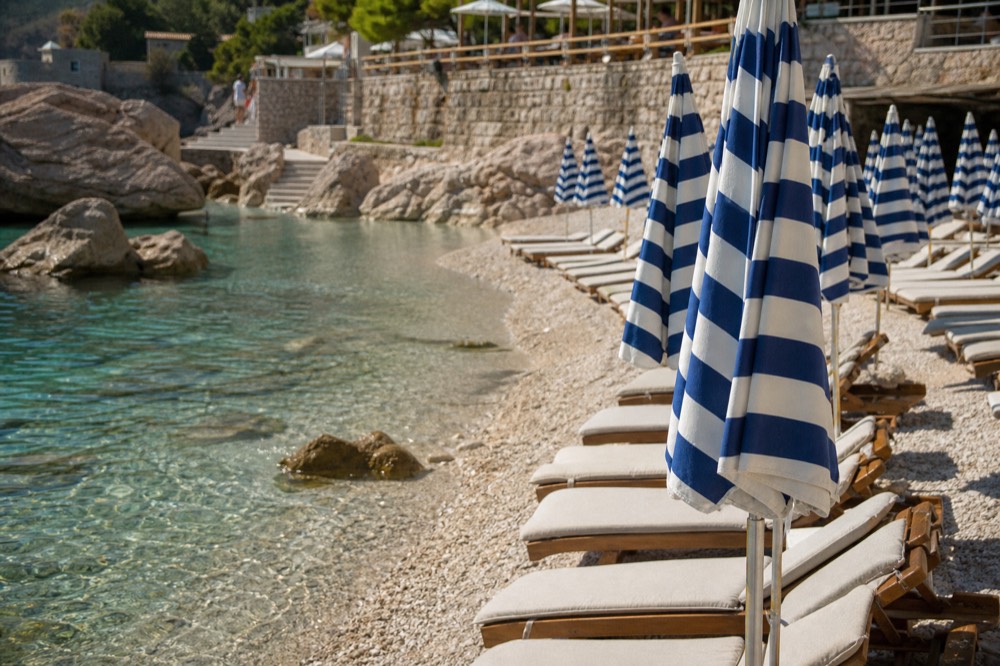
What to bring, in order of importance: water shoes for the pebbles, a hat and serious sunscreen, since shade is scarce on the public strip until late afternoon when the wall itself throws shadow, and a dry bag if you plan to swim out toward the buoys. The clubs will store belongings for guests; on the public pebbles, your towel is your safe. Petty theft is not a Dubrovnik epidemic, but an unattended phone on a crowded beach is an unattended phone on a crowded beach.
| Section of Banje | What you get | Who it suits |
|---|---|---|
| Beach club sunbeds | Lounger, parasol, waiter service, showers, changing | Anyone wanting a full day of comfort without logistics |
| Public pebble strip | The same water, free, bring everything yourself | Short visits, swimmers, budget travellers |
| Water off the buoys | Deep, clear water with the full wall view | Confident swimmers and snorkellers |
The beach clubs also run the evening economy here, and the terrace above the sand is one of the better places in the city to watch the wall go gold. Our sunset spots in Dubrovnik guide places Banje in the full ranking alongside the cable car and the western walls.
Kayaking From Banje: the Water Side of the Beach
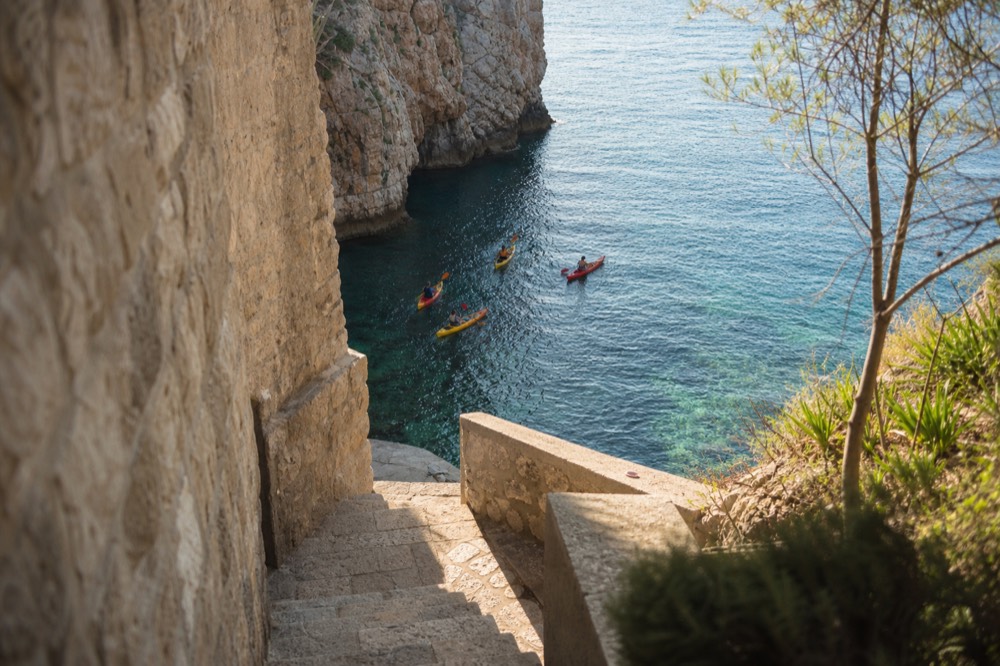
The best way to experience this coast is from the water looking back, and guided kayak trips launch from this exact stretch, paddling past the walls, out toward Lokrum and across to Betina Cave for a snorkel stop. The most popular guided option runs about 2 hours 30 minutes, from $35 per person, rated 4.9 across 3,619 reviews.
I have kayaked this coastline myself many times, in my own boat and in borrowed ones, and the stretch between Banje and Lokrum is the finest short paddle on the entire Croatian coast, a claim I will defend anywhere. The water is deep and clear, the wall rises sheer out of the sea, and the caves on the Lokrum side hold water lit from below like glass. A guided trip adds the two things a visitor cannot supply alone: local knowledge of the wind, which turns a pleasant paddle into a grind if you get it wrong, and the small cave beaches that are invisible unless you know the line to take.
The guided option above is the 2 hours 30 minute trip at from $35 per person, rated 4.9 across 3,619 reviews, and it is the natural fit for anyone based near the Old Town since the launch is effectively on this beach. If you would rather combine the paddle with a full circuit of Lokrum's caves, there is also a 2-hour tour of Lokrum Island and Betina Cave, from $35.49 per person, rated 4.9 across 1,518 reviews, which you can compare in our Dubrovnik kayaking guide. Independent rental exists on the Lapad side, but for this stretch a guide earns their fee on the wind alone.
For the view from above rather than below, the panorama zipline on the Srđ side is the other half of the pair, from $64 per person and rated 4.9 across 2,109 reviews, and it looks straight down over this beach and the wall. And if your day on the water deserves a whole day rather than two hours, the Elaphiti islands cruise with lunch, from $74.58 per person and rated 4.8 across 6,751 reviews, is the classic full-day version.
When to Go: Crowds, Cruise Days and the Light
Go before 09:00 or after 17:00. The Old Town's own counting system, six counters at every entrance updating every 15 minutes, recorded 5,419 people at 08:00 on one September day, a 7,739 peak at 10:00 and 7,205 still present at 11:00, against an official carrying capacity of 11,275. The beach tracks that curve with a lag of about an hour.
That curve is worth internalising, because it is the single most useful planning fact on this whole site. The counting system is real, public and live: Dubrovnik measures the number of visitors inside its historic core with six counters at every entrance, updating every 15 minutes, and publishes the carrying capacity of 11,275 from the UNESCO assessment. On a busy September day the count climbs steeply through the morning, peaks around 10:00, and stays high through the afternoon. The beach empties and fills with the same tide of people.
Cruise traffic is the hidden variable, and it does not behave the way you would guess. Port Authority data shows 2025 cruise passengers peaked in September at 101,246 and October at 100,132, both above July's 96,072 and August's 87,385, so the shoulder season is actually the heavier cruise season, Port Authority statistics record it plainly. The Port Authority limits cruise passengers to 8,000 a day in most cases, and of 243 cruise days a year only 18 exceed that number, so most days are managed rather than overwhelmed. Note that these are ship-capacity figures, not a count of people who actually walk ashore. The official visitors platform carries the live prediction if you want to check your own dates.
| Time of day | Old Town count, one September day | What it means for Banje |
|---|---|---|
| 07:00 | 3,139 | Beach nearly empty, water at its calmest |
| 08:00 | 5,419 | Still quiet; the best swimming window |
| 10:00 | 7,739 | Peak; public pebbles filling fast |
| 11:00 | 7,205 | Full sun, full beach, wall shadow gone |
| After 17:00 | Easing | Clubs quieten, golden light on the wall |
For the wider picture of which month to choose, our best time to visit Dubrovnik guide weighs weather, water temperature, cruise traffic and price together, and our Dubrovnik in September page is the one to read if you are drawn by that warm water and heavy cruise calendar at once.
A One-Day Plan Built Around Banje
Swim at Banje before 08:30, walk up for coffee on the Stradun while the town is still thin, spend the late morning on the walls or in the water, and give the late afternoon to the kayak trip or the staircase at Sveti Jakov. The beach rewards the early start more than any other sight in the city, because its best hour is the one most visitors spend at breakfast.
Here is the shape of the day I would run, and have run with visiting friends many times. Be on the pebbles by 08:00, when the water is calm, the count is still climbing and the light comes low across Lokrum. Swim out toward the buoys and look back: this is the view, and you have it nearly to yourself. By 09:30 walk up through Ploče Gate for coffee, by which point the town is filling and the beach is filling behind you, and neither fact matters to you anymore.
Late morning belongs to the walls. The full circuit is 1,940 metres, up to 25 metres high at points, and the operator's stated hours run 08:00 to 19:30; the adult ticket is 40 euro in main season, 1 March to 30 November, and drops to 20 euro in December, with children 7 to 18 at 15 euro then 5 euro, under 6 free, and no family ticket sold. The 40-euro ticket is actually a combination covering the walls, Fort Lovrijenac, the Western Outer Wall and the coin collection, and in main season the one-day Dubrovnik Pass costs the same 40 euro while adding ten more sights and a 24-hour bus ticket, a comparison that only holds in main season since no winter pass tier is on sale. Our city walls tickets and is the pass worth it guides carry the full breakdown.
Late afternoon, back to the water. A kayak trip off this coast in the 17:00 light, with the wall turning gold as you paddle, is the single best two hours a first-time visitor can buy here, and the launch is on this beach. Or, if your legs want a workout instead, take the staircase down to Sveti Jakov for the quiet cove and stay for the sunset. Either way, end on the beach club terrace with a drink, watching the last light leave the wall. If you are fitting all of this into a single day, our one day in Dubrovnik itinerary sequences it minute by minute.
If Banje has done its job and you want more of this water, these are the three trips that pair best with it.
Common Questions About Banje Beach
What Is the Best Beach in Dubrovnik?
For most first-time visitors, Banje Beach: it is the closest proper swimming beach to the Old Town, it has beach clubs and a public pebble section, and its view of the walls and Fort Lovrijenac is the classic Dubrovnik image. Families often prefer the shallower, roomier Lapad bay beaches instead.
Can You Swim in Dubrovnik Beaches?
Yes. The open-water averages run from about 22.5 degrees in June to 25.8 in August and 23.6 in September, so the swimming season comfortably spans late June to early October, and hardier swimmers go well beyond. At Banje the entry is pebble and the shelf drops off quickly, so bring water shoes and swim within sight of the lifeguard flags.
What Is the Nicest Beach in Dubrovnik?
It depends what "nicest" means. Banje wins on setting, convenience and services; the Lapad bay beaches win on space, shade and a gentler entry for children; Sveti Jakov wins on raw beauty at the cost of a long staircase. Many visitors do Banje in the morning and Sveti Jakov for the late light.
What Is the Most Beautiful Beach in Dubrovnik?
Sveti Jakov, the quiet pebble cove below the monastery garden on the way to Cavtat, is the usual local answer for pure beauty. Banje is the most beautiful beach to look at from the water, which is one reason the guided kayak trips that launch there are so popular.
Is Banje Beach Sandy or Pebble?
Pebble, like nearly every beach in Dubrovnik. The shore is smooth stone and the entry drops off within a few metres, which is exactly why the water stays so clear. Water shoes make the whole experience more comfortable, especially for children.
When Should I Go to Banje Beach to Avoid Crowds?
Before 08:30 or after 17:00. The Old Town's own counting system recorded a 7,739 peak at 10:00 on one September day against a carrying capacity of 11,275, and the beach fills on roughly the same curve with about an hour's lag. September and October are the busiest cruise months of the year, ahead of July and August, so the shoulder season is no escape from crowds.